
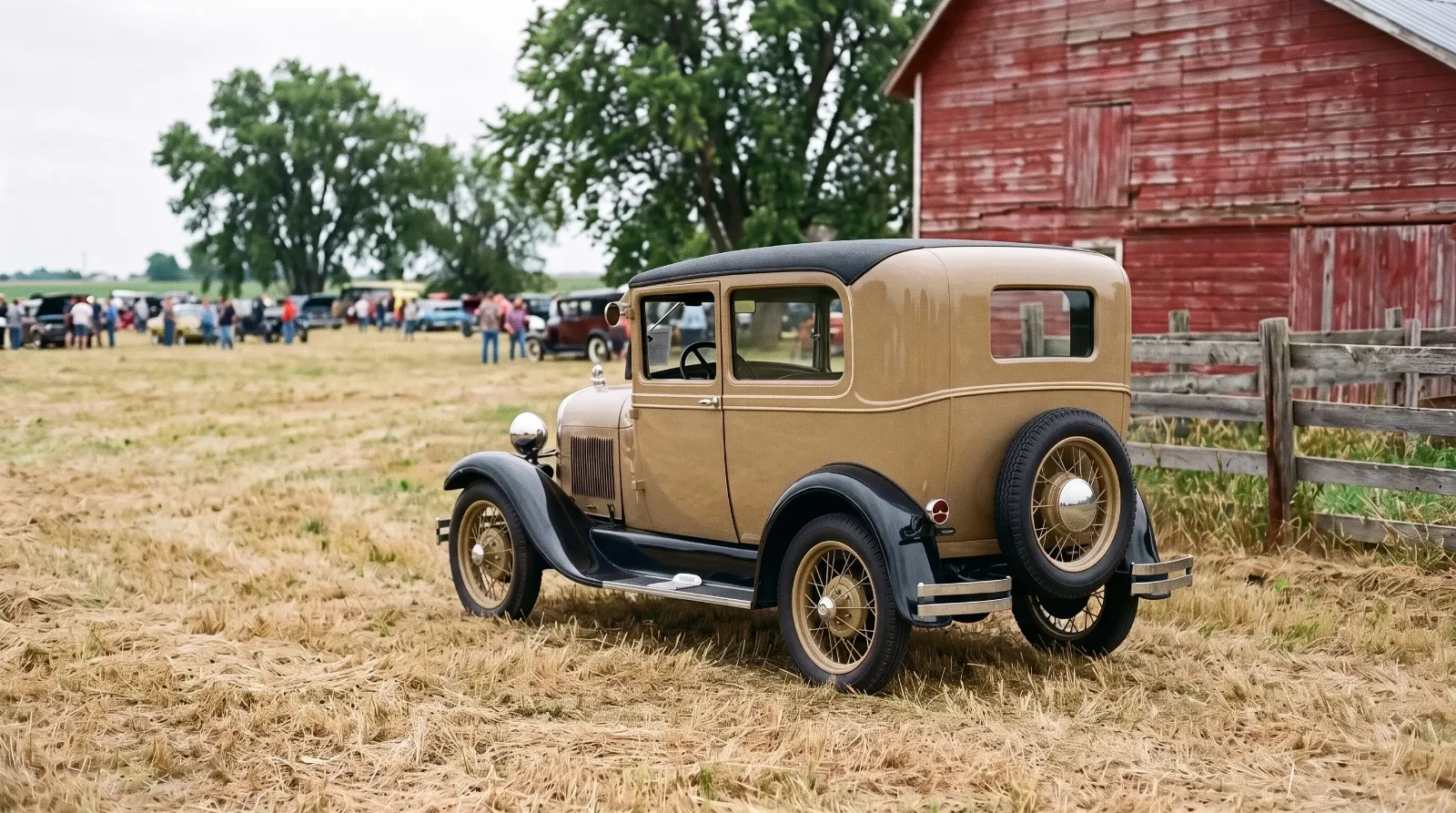
Short answer: a stock Model T tops out at about 40 to 45 mph. The model t top speed most often quoted is 42 mph, some sources say 45, and a tired car on a rough road will struggle to see 40. That spread is not sloppiness. No period magazine ever ran a proper road test on the car, so the number comes from later sources, owners and museums, and it moves with the year, the body, the axle ratio and the condition of the engine.
Car Features
6 min read
How Fast Was a Model T? Top Speed and Real-World Pace
A stock Model T topped out at about 40 to 45 mph. Here is why, what it could hold on real roads, and how the TT truck and Model A compare.
What matters more than the peak is how the car got there and how long it could stay there. This piece covers the hardware that sets the ceiling, the pace a T could hold in real driving, and how far off that ceiling the special cars and the trucks were. For how the engine itself made its power, read the full story.
The numbers behind the model t top speed
Top speed is a simple equation: power against drag and gearing. The Model T does not have much of the first and has a fixed answer for the third.
The engine is a 177 cubic inch four rated at 20 horsepower, the standard figure for the run (The Henry Ford's record for its 15 millionth car lists 22.5). Torque is given as 83 lb-ft. That is a period brake rating, not a modern net figure, and there is no SAE net number to compare it with. The power goes through a two-speed planetary transmission, low and high, so top speed is whatever the engine can pull in high gear.
The final drive is the other half. The standard rear axle ratio on the car was 3.64:1. Ford also authorized a 4:1 set. A shorter ratio like 4:1 helps on hills and costs you at the top end, because the engine reaches its limit at a lower road speed. That alone explains part of the 40 versus 45 mph argument.
| Vehicle | Power | Final drive | Top speed |
|---|---|---|---|
| Model T car, stock | 20 hp | 3.64:1 standard (4:1 optional) | About 40 to 45 mph |
| Model TT truck, standard gearing | 20 hp | 7.25:1 worm drive | Just under 20 mph (Ford advised 15 mph) |
| Model TT truck, special gearing | 20 hp | 5.17:1 worm drive | About 22 mph |
| Frank Kulick's 1912 Model T racer | Modified | Not recorded | Just under 108 mph |
| Model A car, stock (for comparison) | 40 hp | Not compared here | About 65 mph |
Real-world pace: what a Model T could hold
Peak speed is a party trick. Sustained speed is what owners cared about. On a good paved highway, a healthy T with the standard axle could hold 40 to 45 mph for hour after hour, which is how one auction house describes the car's natural lope. That is close to its maximum, and it tells you the engine was not straining much to get there. It simply had nothing left above it.
Now the caveat. Most American roads in the Model T's early years were unpaved dirt, and the car's high-riding suspension was designed for them. On those roads nobody was cruising at 45. The speedster crowd of the 1920s, who bought used Ts for about $25 and stripped them, found that a stock T struggled to reach 40 mph, which is why they bothered building speedsters in the first place. Put the two accounts together and you get the honest picture: 40 to 45 on smooth pavement in a sound car, a good deal less in ordinary use.
Cooling is another limit on sustained running. After the first 2,447 engines, the Model T used thermosiphon cooling, which moves water by heat alone with no pump. It works, but it gives a driver one more reason to watch the engine on long climbs and hot days rather than hold full throttle.
Why going faster was a bad idea anyway
Here is the number that matters more than 45 mph: zero wheel brakes for normal stopping. The Model T's right pedal clamps a band inside the transmission. The hand lever works the rear drum brakes, mainly as a parking and emergency brake. There are no service brakes at the wheels the way the Model A had them, with four-wheel mechanical drums.
A car stopping through its transmission does not want to go much faster than it already could. Owners added auxiliary brakes with outer drums on the rear hubs, the best known sold as Rocky Mountain brakes and still reproduced today, for exactly that reason. Ford's designers did not need a faster car. They needed one that could get up a farm track and keep running, and the gearing reflects that.
"Forty-five is the ceiling, not the cruise for most cars, and that is fine. With a band brake in the transmission, the speed the car could reach was always ahead of the speed it could safely stop from."
Dan Reeves
Gearing tricks: Ruckstell, trucks and speedsters
The planetary box only had two forward speeds, and owners wanted more. The Ruckstell axle was the popular fix: a two-speed planetary set inside the rear axle that gave direct drive or an underdrive. It did not raise top speed. It split the big gap between low and high so a loaded car or truck could climb without screaming in low gear. It went mostly on trucks but was available for cars.
The Model TT truck shows what gearing does to the same 20 horsepower engine. With its 7.25:1 worm drive, the truck's top speed was just under 20 mph, and Ford recommended no more than 15. The optional 5.17:1 gearing pushed that to about 22 mph. Same engine, half the speed, a lot more pull.
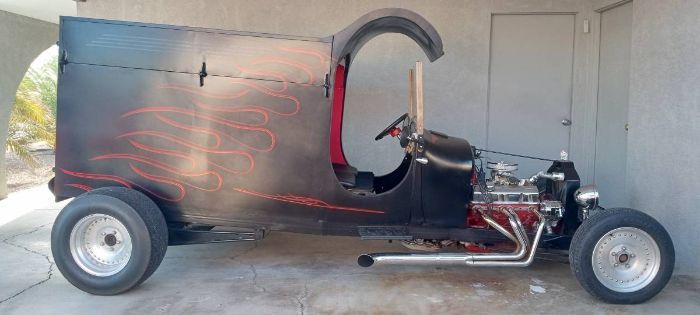
Going the other way took real work. The speedsters of the 1920s threw away the stock body for a light one, bought from a maker, built from a kit or cut by a tinsmith from paper patterns. Kulick's 108 mph car was nothing like a showroom T, and it should not be counted as a Model T speed in any normal sense.
How the Model A changed the answer
The Model T's replacement doubled the power to 40 hp at 2,200 rpm and moved to a three-speed sliding-gear transmission. Top speed rose to about 65 mph, with sources ranging from 60 to nearly 70 for a new car, and the A would cruise at 45 to 50 mph all day. In other words, the Model A's comfortable cruise was the Model T's absolute limit.
That gap is the clearest way to read the T's numbers. Ford built a car that did 40 to 45 mph on roads where that was plenty, sold more than 15 million of them, and then replaced it once roads and expectations caught up. Both of Ford's first mass market cars were honest about their limits; the T's limit just happened to be about 45 mph.
Sources and notes
Related Reading
Have a
Ford Model T
for Sale?
Reach thousands of serious classic car collectors across the US.
Sell It Here →
Selling a classic? Here's how: the best sites to sell a classic car
Are You a Classic Car Dealer?
List your full inventory and connect with targeted classic car buyers.
Join as a Dealer →

About the author
Dan Reeves
Performance engine builder from North Carolina's motorsports corridor, focused on swaps, forced induction and making real, repeatable power.
Related Listings - Ford Model T
Comments
Be the first to comment on this article.