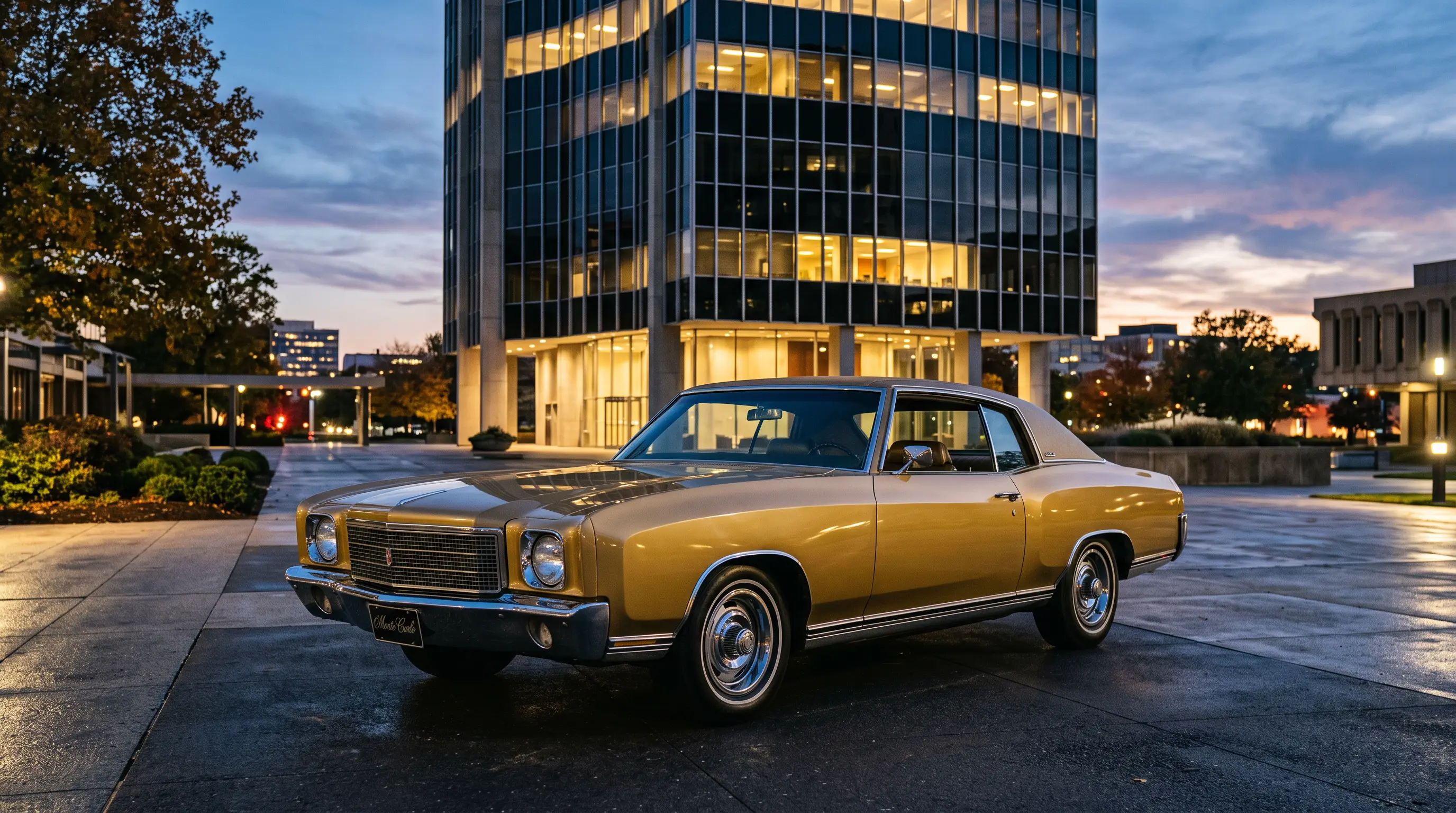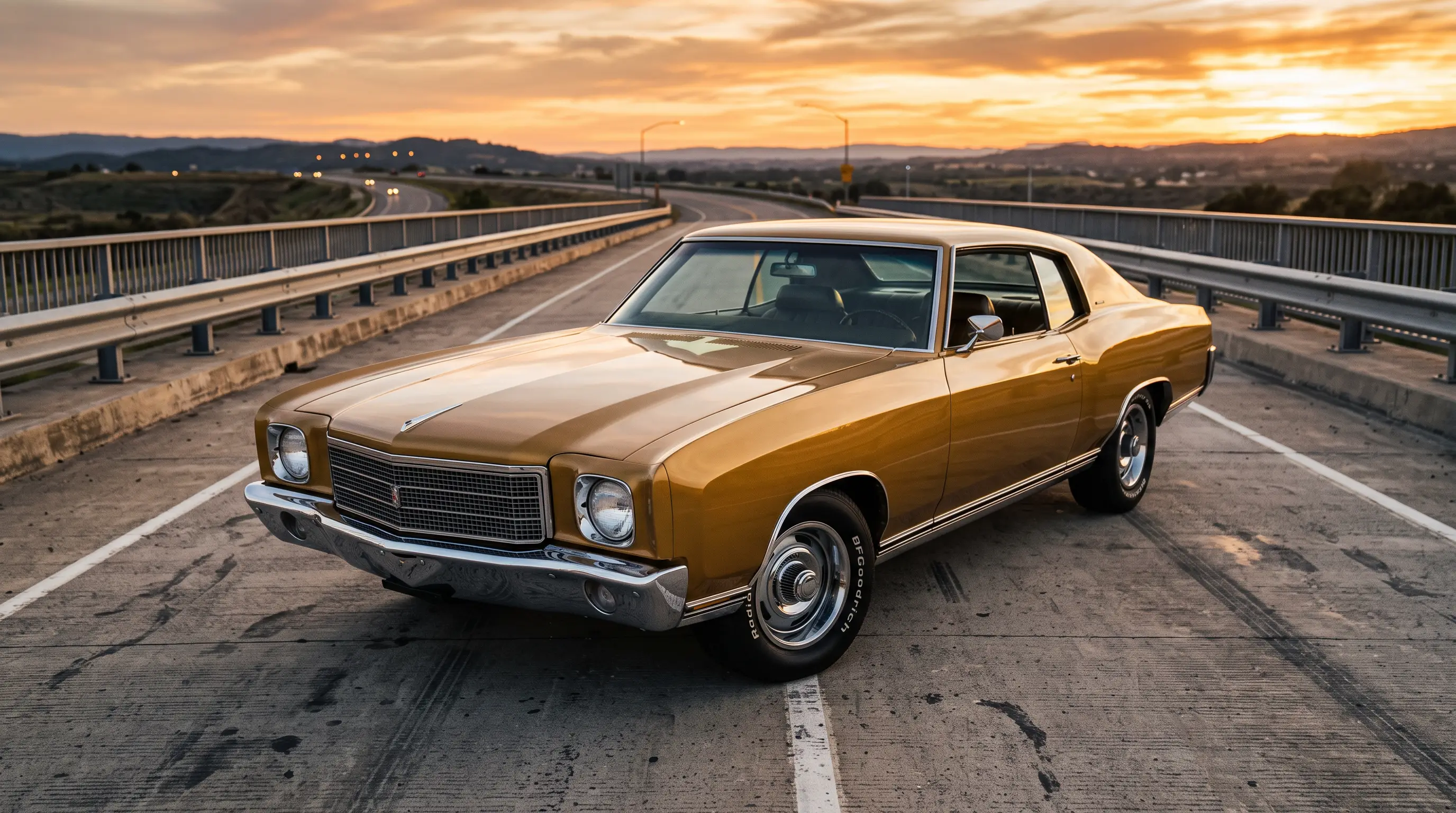
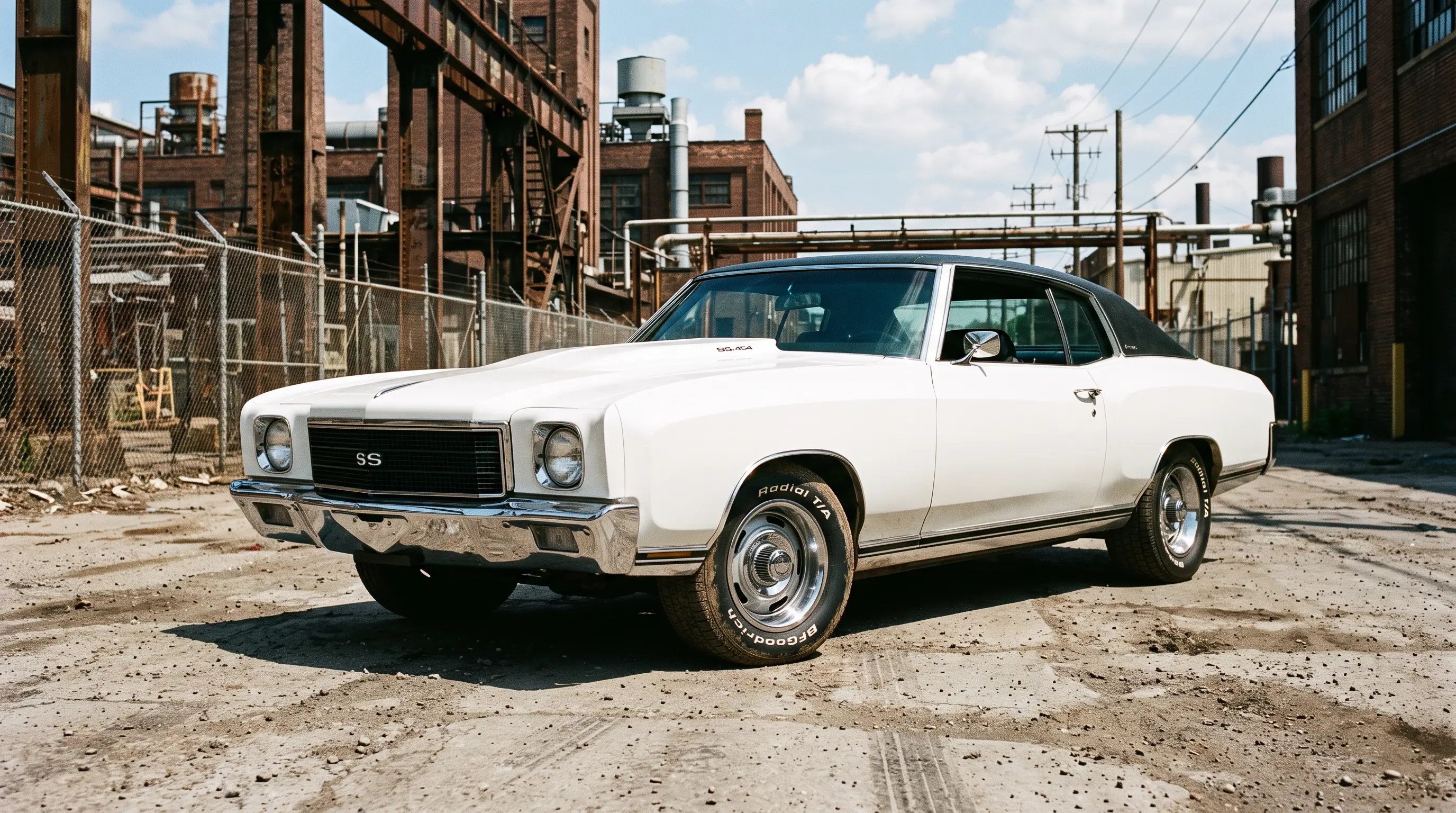
The 1970 Monte Carlo SS454 is an easy car to misjudge on paper. Order codes, a single engine option, and a modest production run make it look like a footnote next to the Chevelle SS454 it shared showroom space with. Run the actual numbers on the monte carlo 1970 ss454 flagship, though, and a different picture emerges: a car that took Chevrolet's brand-new personal luxury coupe and bolted the same big-block hardware underneath as its more famous muscle-car sibling, with less fanfare and, today, a much smaller surviving population to draw from.
The engine, stated plainly
RPO Z20 was the only way into an SS454 for 1970, and it paired the Monte Carlo body with the LS5 version of the 454 cubic inch big block, rated at 360 horsepower and 500 lb-ft of torque. That torque figure is the number that actually matters for how the car drives. Horsepower peaks late in the rev range on an engine like this; torque arrives early and stays flat, which is exactly what a two-ton personal luxury coupe needs to move with authority off the line without requiring the driver to wind it out. Chevrolet did not offer the higher-output LS6 454 in the Monte Carlo the way it briefly did in the Chevelle and Corvette lineups that same era, which kept the SS454's ceiling fixed at LS5 output for both production years.
What the drivetrain around that engine looked like
A Turbo Hydra-Matic 400 three-speed automatic was the standard transmission pairing for the SS454, which tells you something about who Chevrolet expected to buy this car. This was not marketed as a manual-shift driver's machine the way a Camaro Z/28 was; it was a comfort-first coupe that happened to carry serious displacement under the hood. A heavy-duty suspension package came bundled with the Z20 option, along with a specific F41-adjacent handling setup and larger front and rear stabilizer bars to keep that additional engine weight from turning every corner into an understeer exercise. Chevrolet engineers clearly understood the physics problem they had created by dropping a big block into a chassis designed primarily around small-block packaging, and the suspension changes read as a direct, sensible response to that math rather than a marketing afterthought.
Production numbers and why they are smaller than people expect
Total SS454 production for 1970 sits at roughly 3,823 units, a fraction of the overall Monte Carlo run for that debut year. Compare that against the Chevelle SS454, which sold in meaningfully larger volume the same season, and the gap makes sense once you consider the buyer profile. Chevelle SS454 buyers were shopping specifically for a performance image; Monte Carlo buyers were shopping for a luxury coupe first; and layering a 454 option onto a luxury-first buying decision was always going to be a smaller slice of an already-smaller overall audience. That scarcity is not evidence of a flawed product. It is evidence of a correctly targeted one that simply had a narrower audience by design.
How the SS454 compares against its own engine option chart
Put the SS454 next to the standard 1970 Monte Carlo engine lineup and the gap in both output and intent becomes obvious. The base 350 cubic inch V8 made 250 horsepower, tuned for smooth, quiet operation rather than outright performance, and the step-up engines split the difference: a 400 cubic inch two-barrel small block, or a 402 cubic inch four-barrel big block (marketed as the Turbo-Jet 400) depending on configuration. The SS454's 360 horsepower rating sits well above both, but the real separation shows up in torque, where the 454's 500 lb-ft dwarfs anything the small-block options produced. That torque advantage is the entire engineering argument for choosing the SS454 over a well-optioned 400 car, assuming a buyer could stomach the insurance premium that came attached to a car this size carrying this much displacement.
| Engine | Displacement | Horsepower | Torque |
|---|---|---|---|
| Base V8 | 350 cu in | 250 hp | 345 lb-ft |
| Optional small block | 400/402 cu in | 265-330 hp | 400-410 lb-ft |
| SS454 (RPO Z20, LS5) | 454 cu in | 360 hp | 500 lb-ft |
"Horsepower tells you how fast it revs. Torque tells you how it actually feels leaving a stoplight in a two-ton coupe, and the SS454's number is the whole reason this option existed."
- Emily Chen
The insurance and emissions math that shortened its life
Two data points explain why the SS454 lasted only two model years instead of settling in as a permanent fixture of the Monte Carlo lineup. First, insurance underwriters in this era had started classifying big-block-equipped mid-size cars as a distinct high-risk category, and premiums on a 454-powered coupe could run high enough to erase any price advantage the option offered over a smaller-displacement alternative. Second, emissions regulations tightening through the early 1970s made big-block engines progressively harder and more expensive to certify without sacrificing the output numbers that justified buying one in the first place. Put those two pressures together and the math stopped working for Chevrolet's accountants well before it stopped working for enthusiasts, which is exactly why the option quietly disappeared after 1971 rather than evolving into a longer-running trim level the way some competitors managed with their own performance coupes.
Where the SS454 fits in the bigger 1970 story
The SS454 was never meant to be the volume seller of the 1970 Monte Carlo lineup, and treating its comparatively low production as a flaw misunderstands what Chevrolet built it to do. It existed to prove the new personal luxury platform could absorb genuine muscle-car hardware without compromising the ride quality and quiet cabin that convinced most buyers to choose a Monte Carlo over a Chevelle in the first place. For the fuller context on how this option fit into the debut year overall, our complete history lays out the rest of the lineup around it. Anyone shopping today with these numbers in hand should go in asking for a documented cowl tag and engine code before assuming a car badged SS454 actually carries the real Z20 hardware, since decades of parts swapping have made verification the only honest starting point. Ready to run those numbers against an actual for-sale listing? find a classic Monte Carlo and start checking codes.
What a buyer should actually verify before paying an SS454 premium
Three data points separate a genuine Z20 car from a well-dressed 350 or 400 wearing later badges: the engine block casting number matched against LS5 production, the cowl tag build date falling within the documented Z20 production window, and, where available, a Protect-O-Plate or original build sheet confirming the option code at the point of sale. Any one of these missing does not automatically mean fraud, since paperwork gets lost over fifty-plus years, but a car missing all three should be priced and negotiated as an unverified example rather than a confirmed SS454, regardless of what the seller's description claims. That distinction alone can represent a difference of tens of thousands of dollars at auction, which makes the verification work some of the highest-value research a buyer can do before signing anything.
Sources and notes
- Automobile Catalog - 1970 Chevrolet Monte Carlo 350 V-8 Turbo-Fire Specs
- ClassicCars.com Journal - High-Performance Monte Carlo with 402 CID V8 Engine
- First Generation Monte Carlo Club - Production Numbers
- SS396.com - 1970 Monte Carlo Restoration Information
- Wikipedia - Chevrolet Monte Carlo
- Conceptcarz - 1970 Chevrolet Monte Carlo Specifications