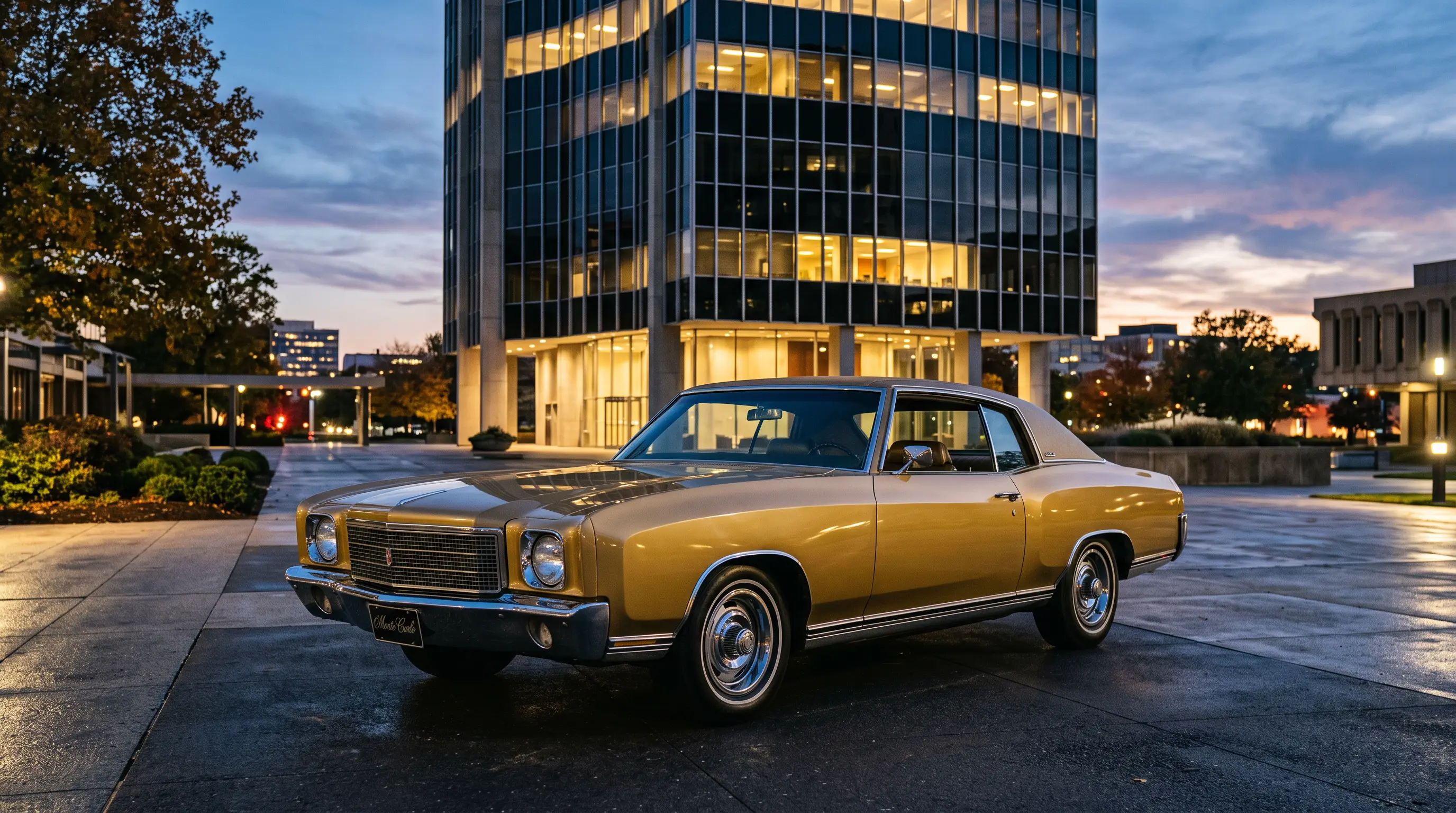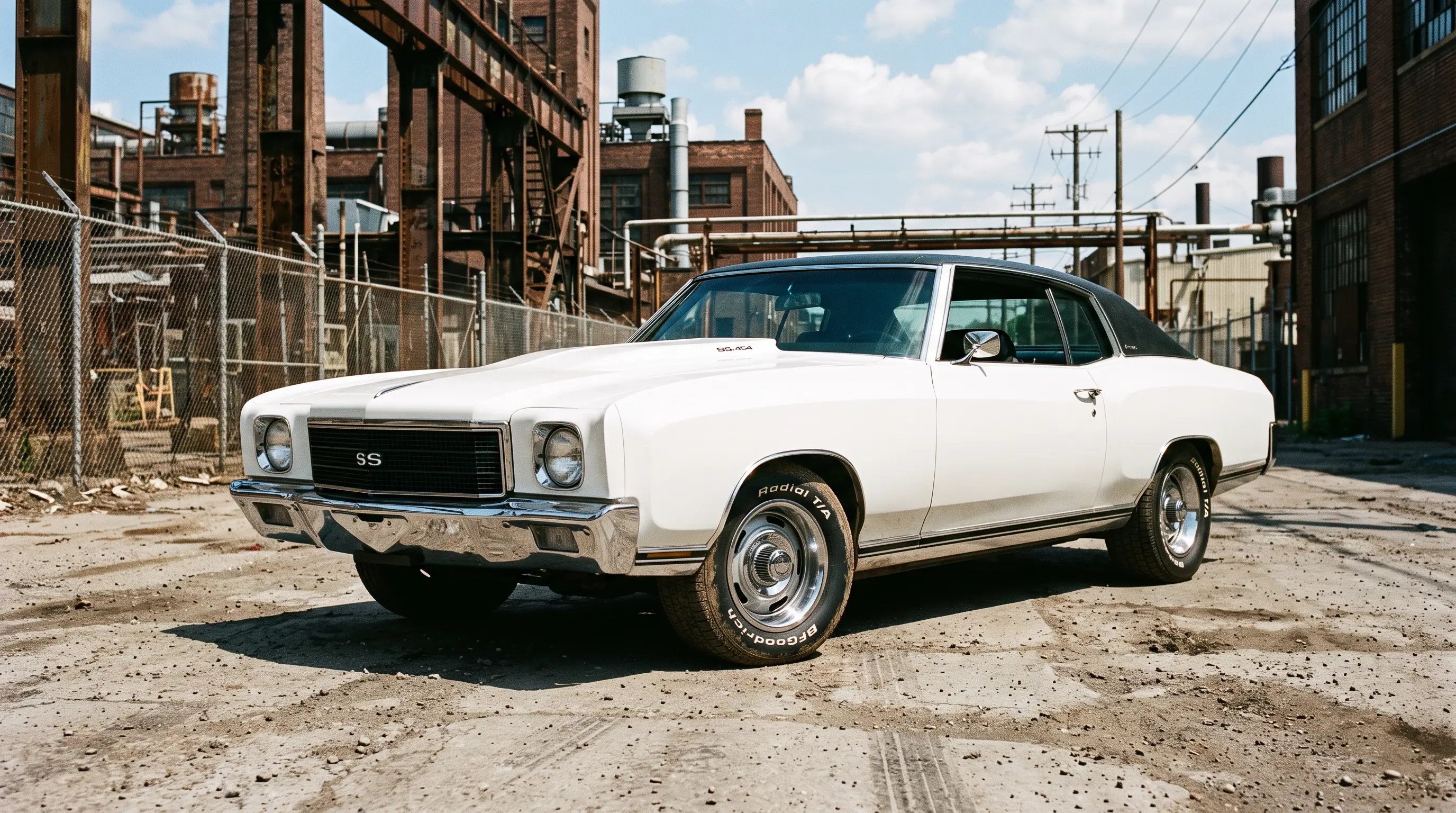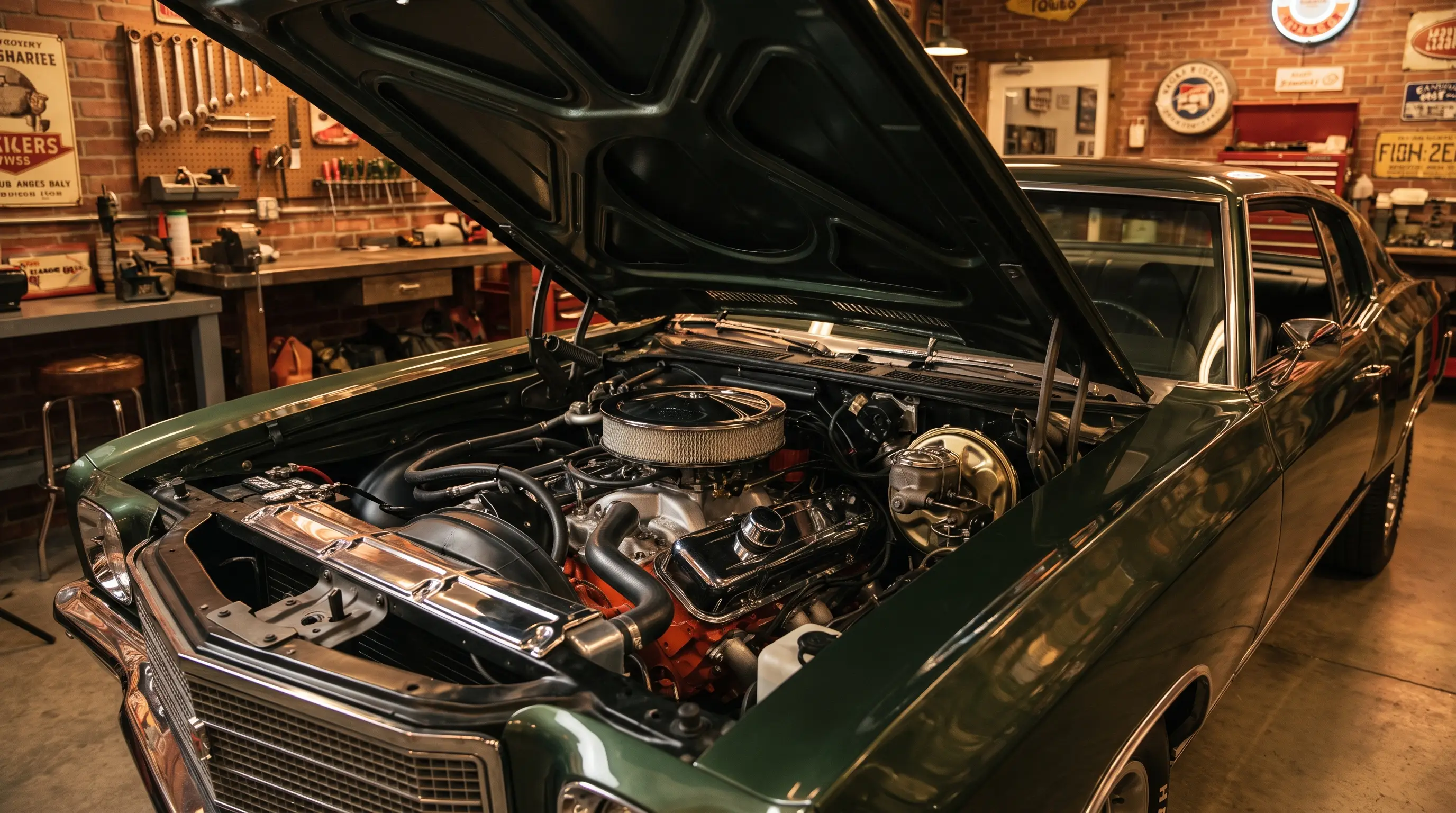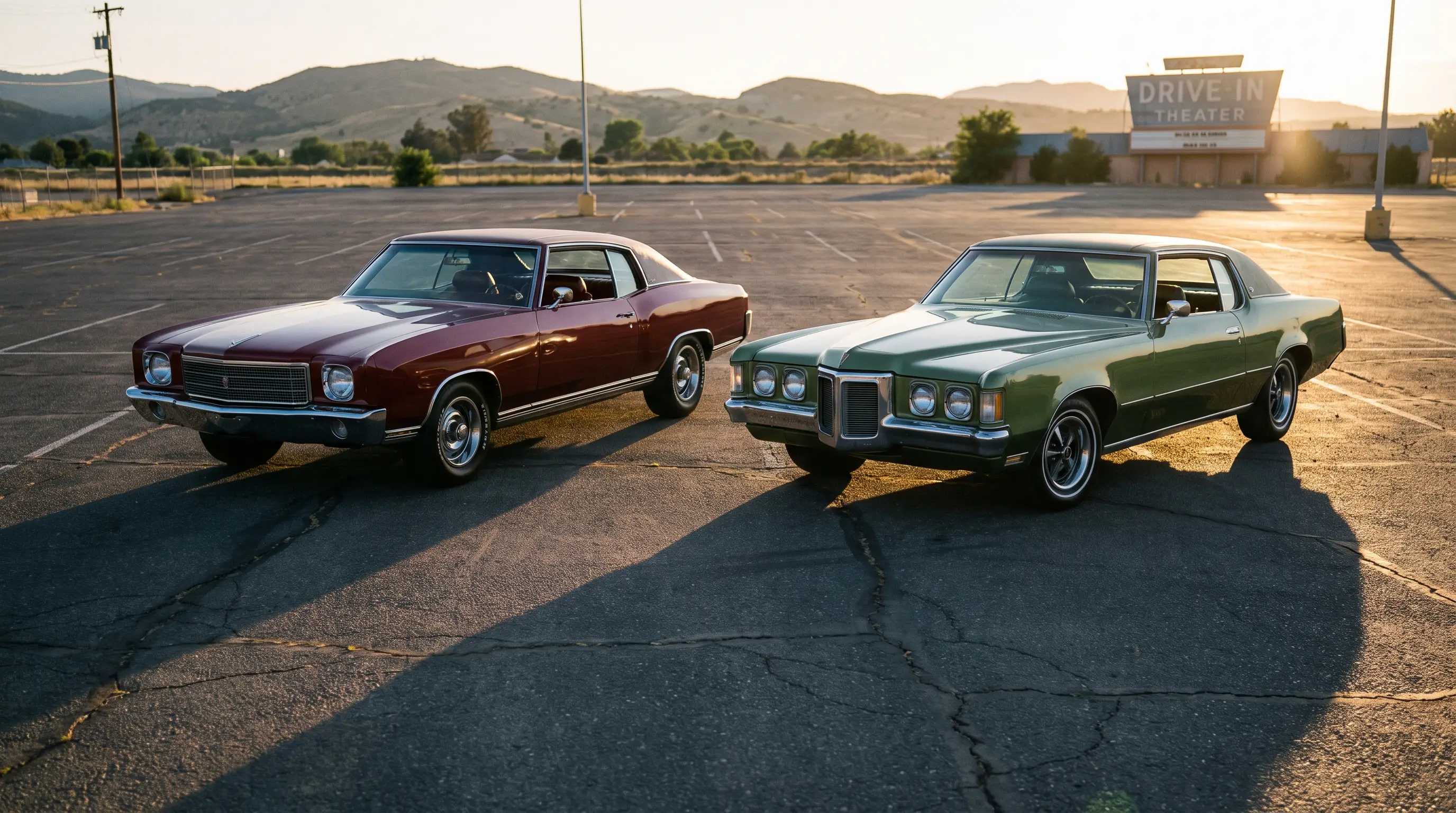
Two General Motors divisions walked into the 1970 model year with almost identical ambitions and almost nothing shared under the skin. Chevrolet's new personal luxury coupe and Pontiac's freshly redesigned flagship arrived within months of each other, chasing the same buyer, the same segment, and in some showrooms the same customer standing between two brochures. The monte carlo 1970 vs grand prix comparison is not a footnote in either car's history. It is the origin story of a rivalry that would define both nameplates for the next two decades.
Two GM divisions solving the same problem differently
Chevrolet built the Monte Carlo on a stretched Chevelle A-body platform, a pragmatic decision that kept tooling costs contained while still delivering the long-hood proportion the segment demanded. Pontiac took a more ambitious route with the redesigned Grand Prix, riding on its own SJ-series platform with a genuinely longer 118-inch wheelbase and a hood so long it required its own dedicated hinge engineering rather than a stretched version of an existing mid-size design. Both cars answered the brief Ford's Thunderbird had written years earlier, but Pontiac spent more to get there, and it shows in details like the Grand Prix's unique dashboard architecture, built specifically for the SJ rather than borrowed and reskinned from a lesser Pontiac line the way some competitors handled their own luxury coupes that decade.
Engines: torque versus outright output
Pontiac's standard Grand Prix engine for 1970 was a 400 cubic inch V8, already larger than the Monte Carlo's base 350, and buyers could step up to a 455 cubic inch H.O. option pushing output toward the 370 horsepower range. Chevrolet's answer sat lower on paper at the base level, with the 350 offering 250 horsepower, though the Monte Carlo's own flagship SS454 option, built around the LS5 454 cubic inch big block, closed that output gap considerably and arguably beat the Grand Prix on torque delivery depending on the exact comparison year. The honest read here is that Pontiac made bigger displacement standard practice across its Grand Prix lineup, while Chevrolet kept its biggest engine as a specific, lower-volume option rather than a mainstream configuration, a difference in market strategy as much as in raw engineering. For the full breakdown of what Chevrolet actually offered under that Monte Carlo hood in 1970, worth a look too covers the complete option chart.
Interior philosophy: Strato buckets versus a unique dash
Step inside either car and the difference in approach becomes obvious fast. The Monte Carlo offered Chevrolet's Strato-bucket seating and center console as part of its luxury pitch, wrapped around a dashboard shared conceptually with lesser Chevelle-family products even if the trim level was elevated well above them. The Grand Prix, by contrast, got a dashboard designed specifically for the SJ platform, with a distinctive wraparound cockpit-style instrument cluster that Pontiac marketed hard as evidence the car was not simply a dressed-up mid-size sedan underneath. Pontiac's approach cost more to engineer and tool, but it gave Grand Prix buyers a genuine argument that their car offered something a Chevelle-based competitor structurally could not match, regardless of how nicely Chevrolet trimmed the Monte Carlo's own cabin.
Sales results and what they actually proved
Both cars sold well in their debut seasons, and both proved the personal luxury segment had real legs beyond what Ford's Thunderbird had already demonstrated. Chevrolet's dealer network and lower base pricing gave the Monte Carlo a volume advantage that its SJ-platform rival, priced and positioned slightly higher, could not fully match unit for unit. That volume gap did not settle the argument about which car was the better engineering effort. It settled the much simpler question of which division had the larger dealer footprint and the more accessible base price, two factors that drive first-year sales figures more reliably than platform sophistication ever does. Collectors today weigh the two differently than 1970 buyers did, often prizing the Grand Prix's dedicated platform and unique dashboard as evidence of a more serious engineering commitment, while Monte Carlo buyers point to the SS454 option and Chevrolet's broader dealer support as their own counterargument.
"Pontiac built a bespoke platform to win this argument. Chevrolet won it anyway with a stretched Chevelle and a bigger dealer network. Both approaches worked, which is the most interesting part of this whole rivalry."
- Tom Ramirez
Pricing and trim strategy in the showroom
Sticker price told its own part of this story before a single option box got checked. The Monte Carlo entered showrooms priced to sit comfortably above a well-equipped Chevelle Malibu but noticeably below the Grand Prix's asking figure, a gap wide enough that some shoppers cross-shopped a loaded Monte Carlo against a more modestly optioned Grand Prix and still came out ahead on features per dollar. Pontiac countered by making the Grand Prix feel like a step above ordinary Pontiac products through standard equipment, bundling items like power steering, power brakes, and a more elaborate gauge package into the base price that Chevrolet often left as options on the Monte Carlo's window sticker. That pricing philosophy mattered enormously to buyers deciding between the two in period, and it still matters today when collectors compare original build sheets, since a well-optioned 1970 Monte Carlo can represent a higher factory investment than its base sticker price alone would suggest.
What this rivalry tells us fifty years later
The Monte Carlo and Grand Prix rivalry did not end in 1970. It stretched across two decades of redesigns, badge-engineered platform sharing, and eventually a shared front-drive W-body architecture in the 1980s and 1990s that made the two cars more mechanically similar than either division would have admitted in 1970. But the origin year is where the philosophical split is clearest: one division spent more money to build something structurally unique, and the other leaned on an existing platform and a bigger dealer network to win volume anyway. Neither approach was wrong, and the market rewarded both companies well enough to keep both nameplates running for years afterward. Readers wanting the complete 1970 Monte Carlo debut story, including how Chevrolet positioned it against exactly this kind of competition, should read the background before forming a final opinion on which car actually won the segment that year.
Buying either one today
Fifty-plus years on, the practical buying advice has converged even where the original engineering did not. Both cars need the same documentation discipline: cowl tags, matching engine codes, and honest assessment of rust in the long front fenders both designs share as a structural weak point. Parts availability tends to favor the Monte Carlo slightly, since its Chevelle-based mechanical components were shared across a much higher-volume platform, while Grand Prix parts, tied to Pontiac's more unique SJ tooling, can run scarcer and pricier for certain trim-specific pieces. Buyers chasing the Chevrolet side of this rivalry can shop classic Monte Carlo listings today and decide for themselves whether Chevrolet's volume-first strategy or Pontiac's bespoke-platform bet produced the better long-term collector car.
Sources and notes
- Wikipedia - Pontiac Grand Prix
- Over-Drive Magazine - 1970 Pontiac Grand Prix Fact Sheet
- Automobile Catalog - 1970 Pontiac Grand Prix SJ 455HO Specs
- Hagerty Valuation Tool - 1970 Pontiac Grand Prix Model J
- Wikipedia - Chevrolet Monte Carlo
- Automobile Catalog - 1970 Chevrolet Monte Carlo 350 V-8 Specs