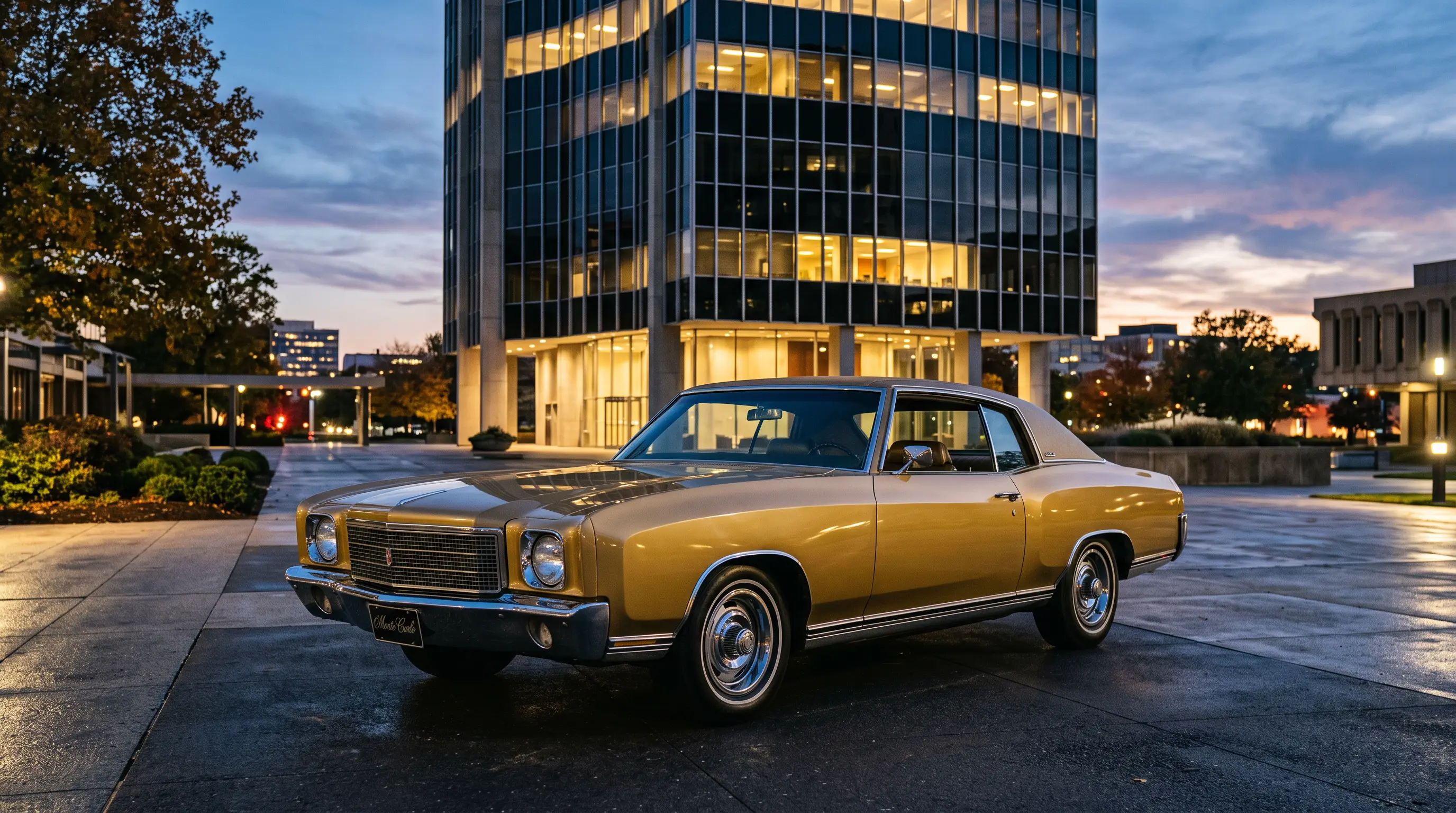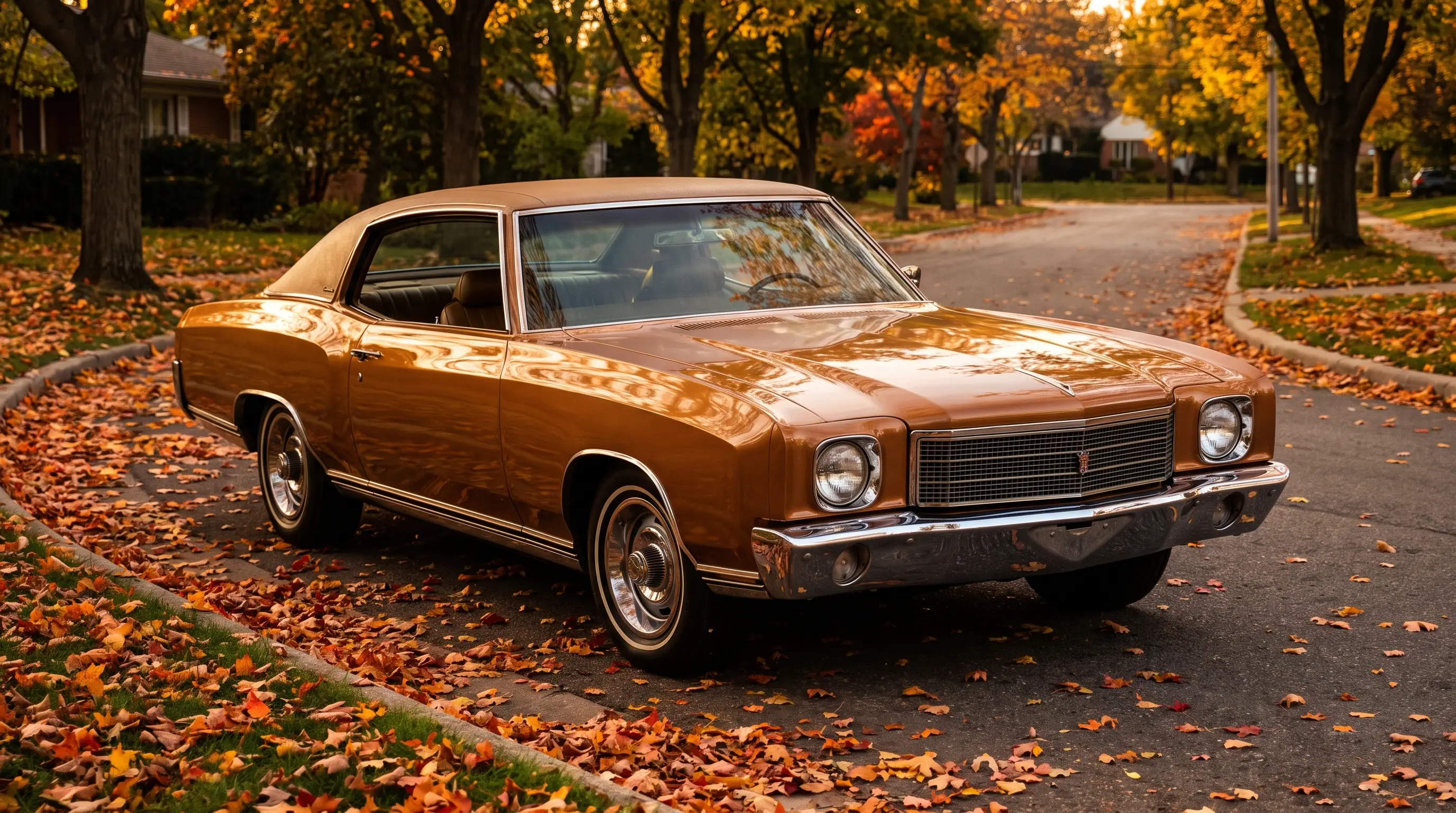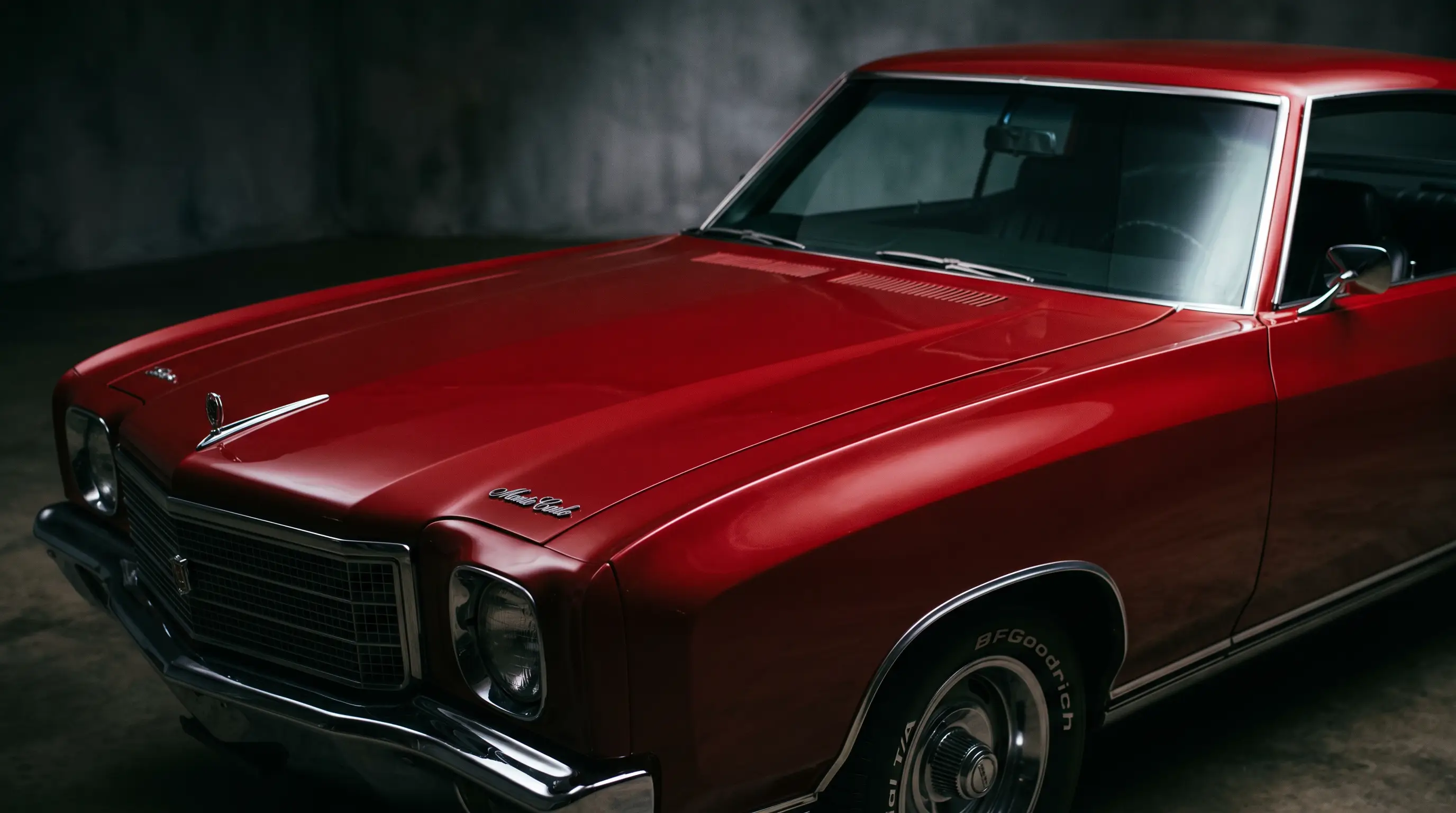
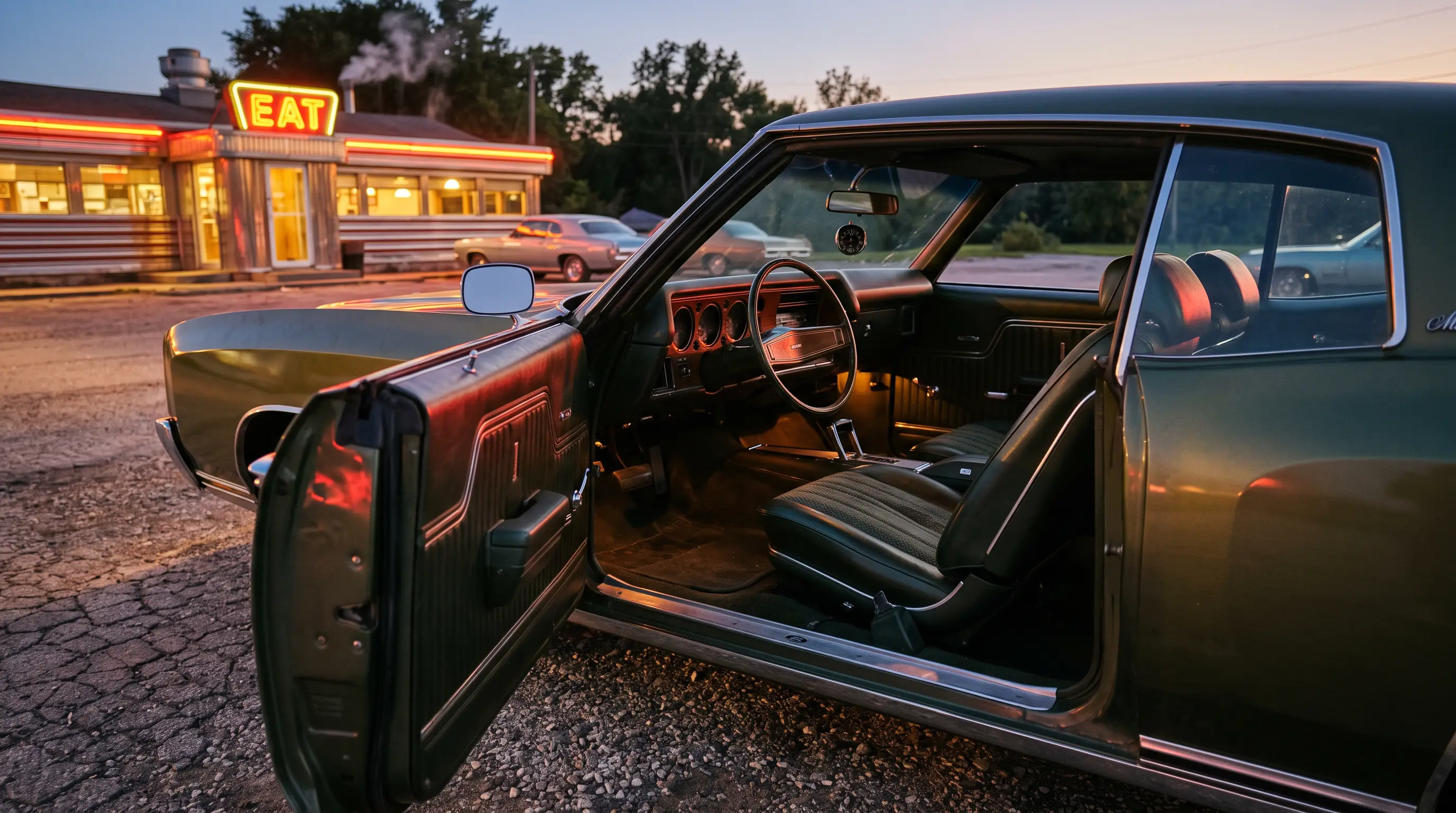
Open the door of a well-kept 1970 Chevrolet Monte Carlo optioned with Strato bucket seats and console, and the car tells you immediately what kind of buyer it was built for. This was not the vinyl bench and column-shift crowd. The Monte Carlo 1970 Strato bucket console package was Chevrolet's answer to a customer who wanted a personal car that felt like it, two contoured seats up front, a floor-mounted shifter or clock housed between them, and a cabin that read as a cockpit rather than a sofa on wheels.
What "Strato" actually meant at Chevrolet in 1970
Chevrolet had used the Strato name on bucket seating since the mid-1960s, applying it across Impala, Caprice, and Chevelle option sheets whenever a car offered contoured individual front seats in place of the standard bench. On the 1970 Monte Carlo, Strato bucket seats came as part of a console option that also included a floor-mounted automatic shift for cars equipped with the Turbo Hydra-Matic, or a housing for the manual linkage on the rarer stick-shift cars. The console itself carried simulated wood-grain trim to match the dash, a lockable storage compartment, and in many build combinations a set of gauges or a clock ahead of the shifter.
The seats themselves were deeply cushioned, high-backed buckets with integrated headrests standard by 1970 federal mandate, upholstered in the same cloth or vinyl choices offered on the bench seat but cut and stitched for a more tailored look. Chevrolet wanted the option to feel like an upgrade a buyer chose deliberately, not a sport package bolted on for looks.
Why buyers checked this box
The base Monte Carlo came with a bench seat and column shift, a configuration that suited the car's core mission as a quiet, well-isolated personal coupe. But a meaningful share of first-year buyers wanted something closer to a driver's seat. The bucket and console combination gave them lateral support the bench could not match, a shifter within easy reach of the right hand, and a visual signal to passengers that this particular Monte Carlo had been ordered with intent. Dealers reported that buyers cross-shopping the Pontiac Grand Prix, a car built on the same corporate architecture and sold with buckets and console as a much more central part of its identity, often added the Monte Carlo's Strato package specifically to close that gap.
There was also a practical case for the console beyond seating. It gave the front seat passengers a stable armrest and storage for small items, useful in a car this size with a long, flat dash and comparatively little else in the way of front cabin storage. For couples who bought the Monte Carlo as a genuine his-and-hers personal car rather than a family hauler, the console read as a small but real quality-of-life improvement on long drives.
How the option shows up on a car today
Finding an original, numbers-matching Strato bucket and console car forty-plus years on takes some care. Consoles were sometimes removed later by owners who wanted bench-seat practicality back, or damaged and discarded during a decade when nobody thought a 1970 Monte Carlo interior part was worth preserving. A correct console assembly, particularly one with intact wood-grain appliques and an unbroken storage lid, has become a harder find than the seats themselves, since reproduction seat covers exist in most factory colors but console shells and trim are a thinner aftermarket category.
Inspecting the build sheet or cowl tag against the option code for buckets and console is the first step for anyone trying to confirm originality, since a car can be reupholstered in bucket-style seats without ever having left the factory that way. Collectors chasing exact originality also look at the stitching pattern, the headrest shape, and whether the shift pattern on an automatic console car matches the correct Turbo Hydra-Matic detent layout for the model year.
| Element | Base Monte Carlo | Strato bucket and console option |
|---|---|---|
| Front seating | Bench seat, three-across | Two contoured bucket seats |
| Shift location | Steering column | Floor-mounted, in console |
| Center storage | None | Lockable console box with wood-grain trim |
| Headrests | Standard, bench-mounted | Integrated into bucket seat backs |
Placing it in the 1970 story
The bucket and console option only makes full sense against the backdrop of the car's debut, when Chevrolet was still defining exactly who the Monte Carlo buyer was going to be. For the fuller account of how the nameplate arrived and what Chevrolet was chasing with it, read the background on that first season. The bucket and console package was one of several ways Chevrolet let individual buyers tune the car's personality within a single body, from plush and isolated to something with a bit more driver focus.
"A console car tells you the original buyer thought about how they wanted to sit in it, not just how they wanted it to look parked in the driveway."
- Sarah Whitfield
For buyers today chasing an original Strato bucket and console car, patience matters more than urgency. These configurations show up in the market in both directions, well-preserved originals that never lost their console, and cars that have had one added back using a mix of correct and reproduction parts. Either can make a satisfying restoration, but only one carries the full originality premium serious collectors will pay for. Those ready to start the search can find a classic Monte Carlo currently listed and begin comparing interior configurations directly against known-correct examples.
What to look for before you buy
A prospective buyer should treat the console and bucket combination as one interconnected system rather than separate parts. A correct console needs a matching floor pan cutout and mounting points, meaning a car retrofitted later in life may show mismatched carpet seams or extra holes under the console footprint. The bucket seats themselves should have consistent wear patterns with the rest of the interior; a driver's seat that looks decades newer than the passenger side and dash often signals a replacement rather than an original survivor. Anyone serious about documenting a Strato bucket console 1970 Monte Carlo should also track down the factory build sheet if it still exists inside the car, since it will list the option by code and settle any ambiguity the seats and console alone cannot.
Color matching is another thing worth double-checking before money changes hands. Chevrolet offered the Strato buckets in the same range of interior color choices as the standard bench, which means a console car should show a console finish that agrees with the seat color rather than a mismatched piece pulled from a donor car in a different shade. Small variations in wood-grain pattern between the dash appliques and the console lid are common enough not to raise alarm on their own, factory suppliers were not always perfectly consistent between batches, but a wildly different pattern or a console clearly cut down to fit is a signal worth pursuing further before treating the car as fully original.
It also helps to talk to people who have handled several of these cars rather than relying on a single example as a reference point. Originality standards for a niche option like this one are still being refined by the small community of owners and researchers who specialize in the model, and a detail that looks wrong on first glance sometimes turns out to be a documented factory variation once enough cars have been compared side by side.