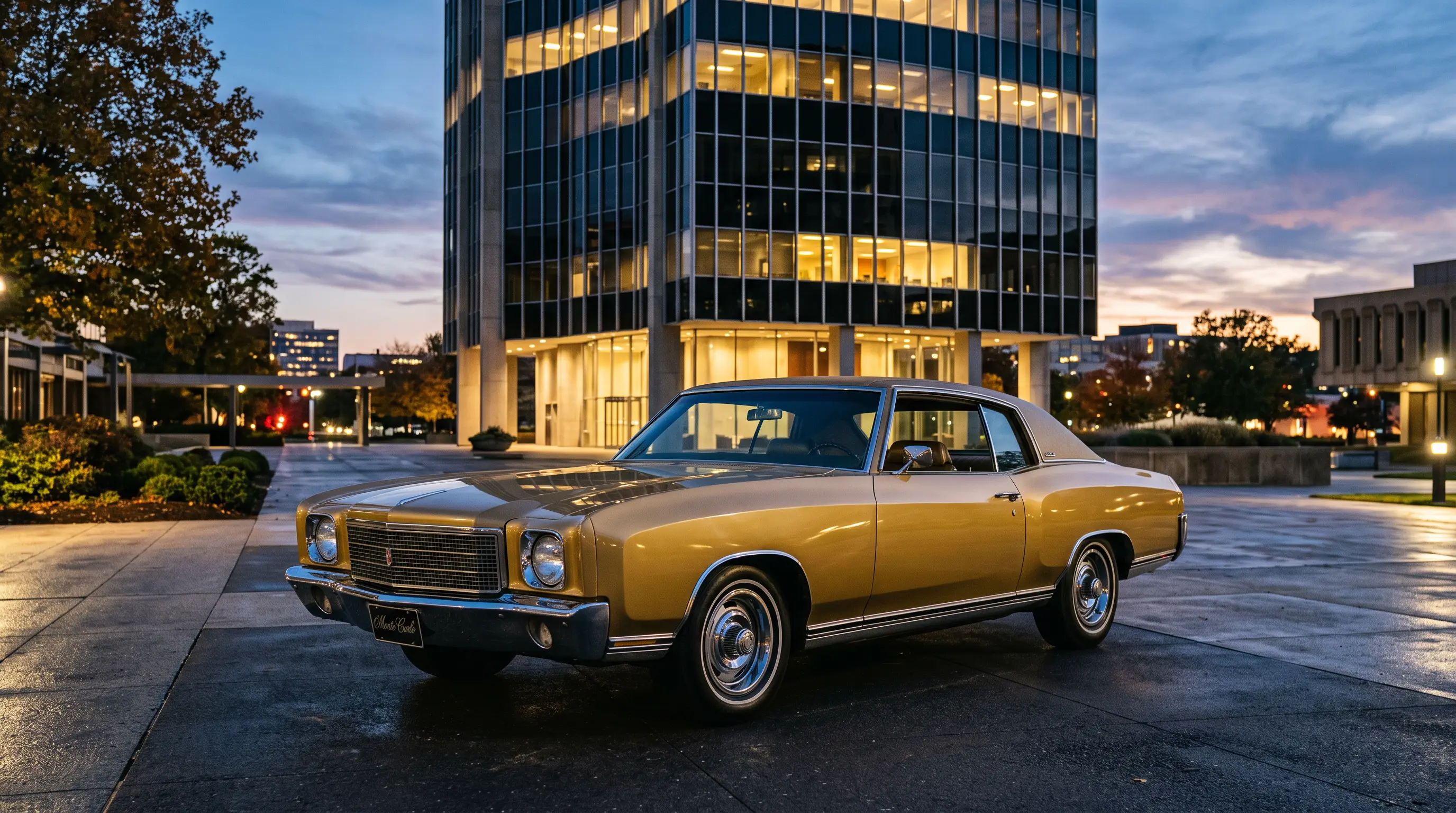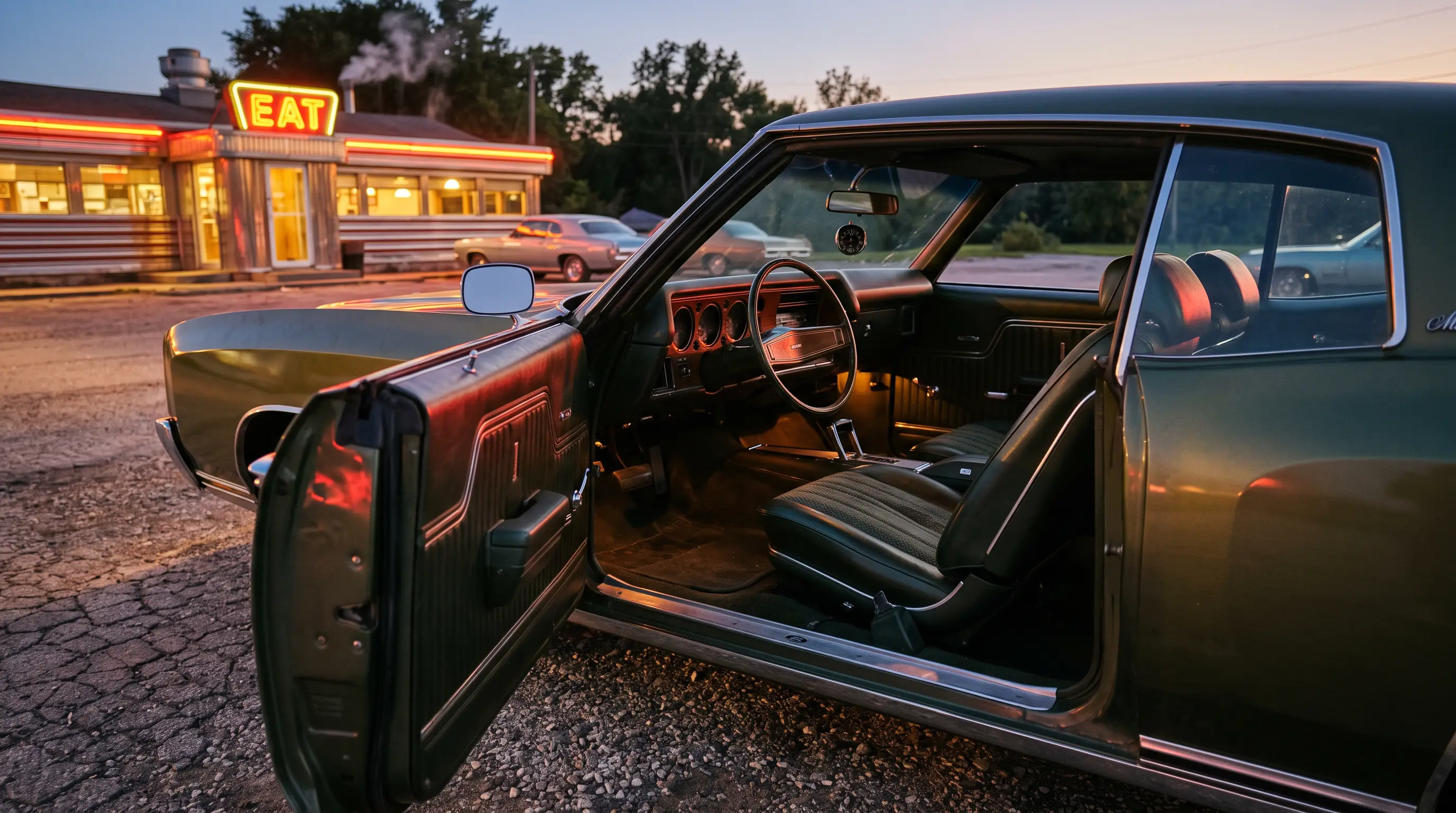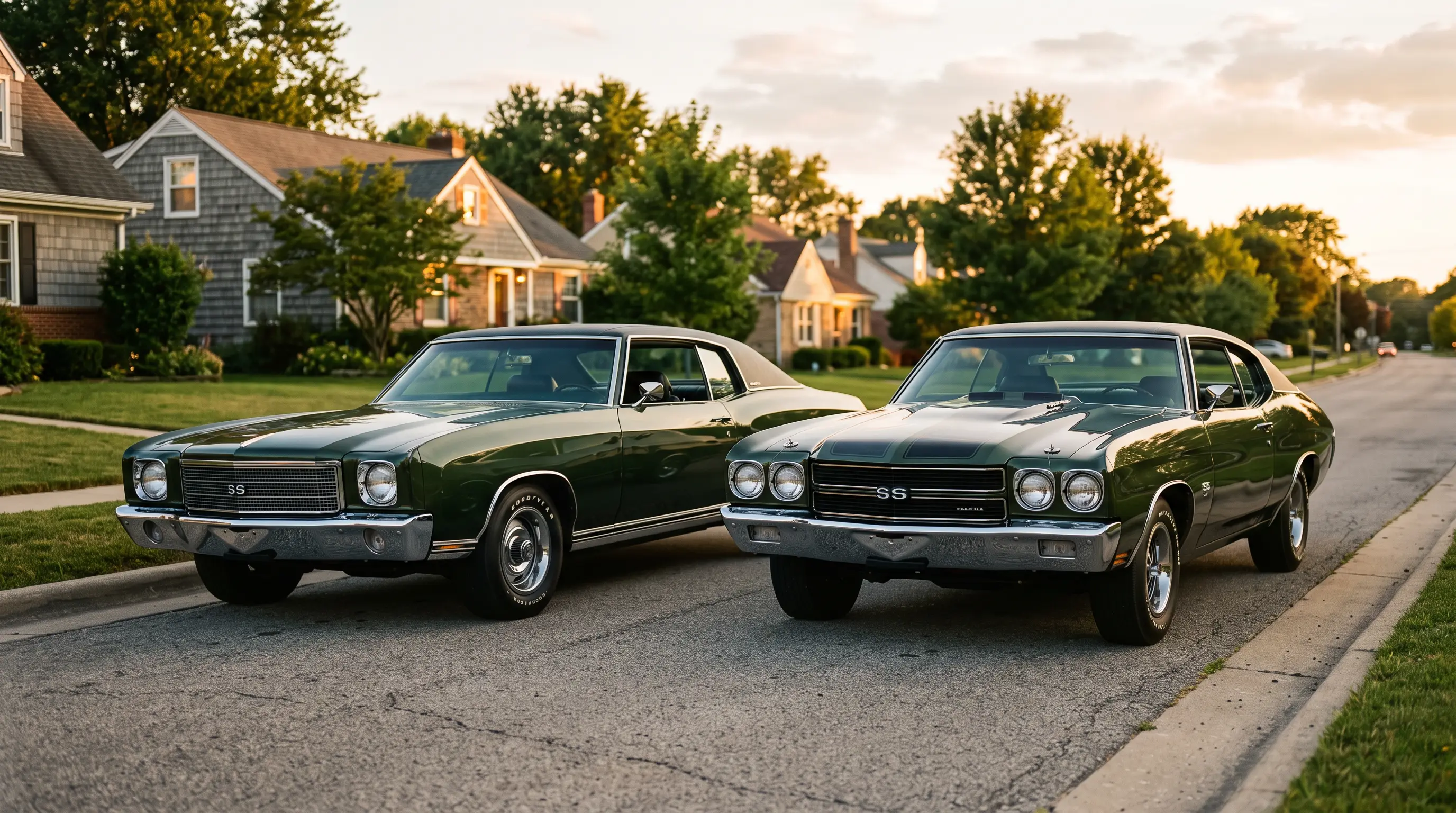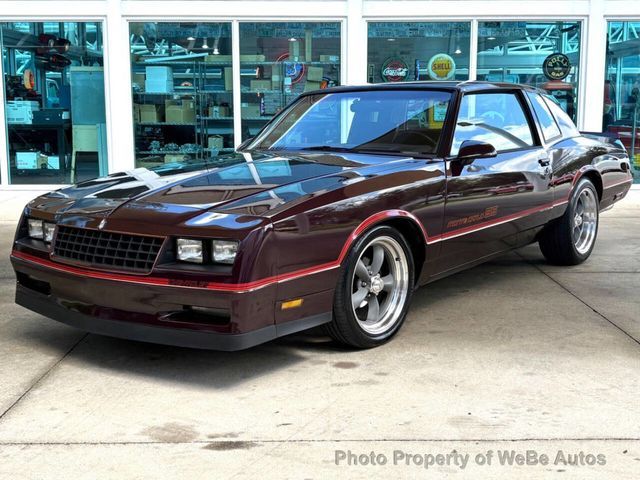
Spend enough time under one of these cars with a flashlight and you start to see the 1970 Chevrolet Monte Carlo the way the guys in the design studio must have seen it, panel by panel, gap by gap. Most people talk about this car in terms of "personal luxury" and leave it there. I care about the monte carlo 1970 svc styling details that actually took work to get right, the ones a lazy repaint or a rushed panel swap gets wrong every time, because those are the tells that separate a car built to factory intent from one that just looks the part from ten feet away.
The long hood, short deck proportion nobody faked well
The 1970 Monte Carlo sits on a 116-inch wheelbase, four inches longer than the two-door Chevelle it shares its chassis engineering with, and every inch of that extra length went forward of the cowl. That gives the car its signature proportion, a hood that runs on and on before you ever reach the base of the windshield, paired with a short, tucked deck out back. When you're doing bodywork on one of these, that hood length matters. The panel is long enough that a hood with any twist in it shows immediately under raking light, and I've seen more than one "restored" Monte Carlo with a hood that doesn't sit flush at the cowl because somebody rushed the alignment instead of shimming it patiently at all four points.
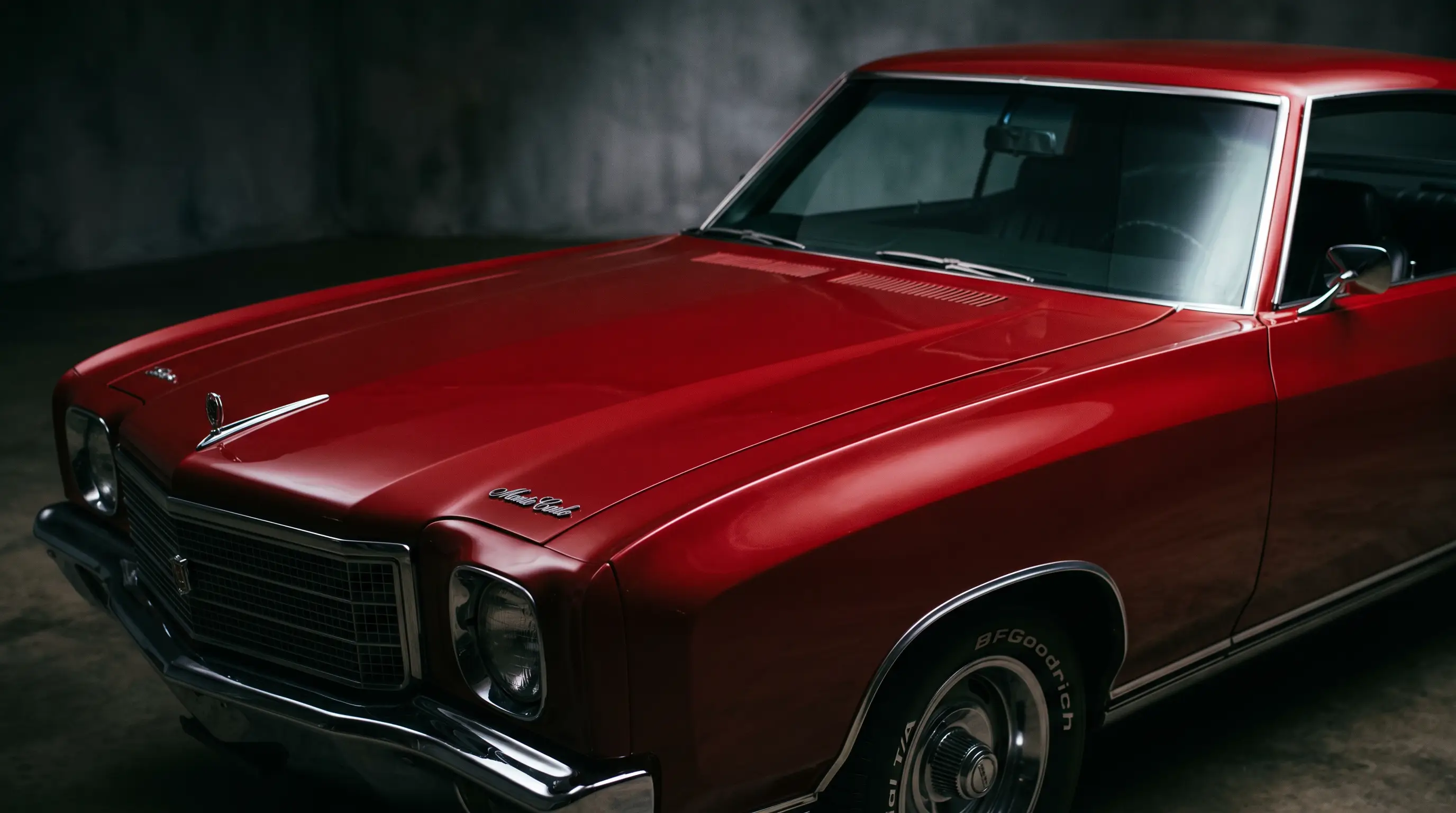
The twin-domed hood itself is a detail worth understanding before you ever pull one off a car. It's not flat stamped steel, there's a shallow crown running down each side that catches light differently depending on the angle, and that crown is part of what makes the factory hood look right in a way reproduction panels do not always nail. If you're sourcing a replacement hood for a project, check that crown against a known good original before you commit to paint.
Concealed wipers and the loop-style front bumper
Chevrolet hid the wiper arms under a rear lip of the hood on the 1970 car, a styling move meant to keep the front end clean and uninterrupted when the wipers weren't in use. It looks good. It also means that panel gap and hinge alignment along that hood trailing edge has to be spot on, because a poorly fitted hood reveals the wiper mechanism instead of hiding it, which instantly reads as wrong to anyone who knows the car.
Up front, the 1970 Monte Carlo carries a loop-style bumper that wraps into the grille opening rather than sitting as a separate horizontal bar, giving the nose a more integrated look than a lot of its GM cousins from the same year. Getting that bumper to sit correctly relative to the grille surround, with even reveals on both sides, is one of those jobs that separates a careful restoration from a bolt-it-on-and-move-on job. I've straightened enough of these bumpers to know the mounting brackets are not as forgiving as they look, and a bumper hung a half inch off centerline throws off the whole front-end symmetry in a way that's hard to unsee once you notice it.
Coke-bottle flanks and the fastback roofline
The body sides carry the Coke-bottle contour that was everywhere in GM design at the turn of the decade, a subtle pinch behind the front wheel opening that flares back out over the rear fender. On a car this size, that contour does a lot of work visually, it keeps a long body from looking like a slab. Bodywork on these flanks needs a light touch, because the contour line is a compound curve, not a simple crease, and filler applied without matching that curve leaves a flat spot that catches shadow wrong under any decent shop light.
Above that, the roofline pitches down into a semi-fastback rear window, giving the car a lower, sportier profile than a formal notchback roof would have. It's a detail people undervalue when they're shopping a car, but it's part of why the proportions read as "personal coupe" instead of "family sedan with two fewer doors."
What separates period-correct from poseur
Here's where I get opinionated, because somebody should. A lot of cars on the market wearing 1970 Monte Carlo sheet metal have been through at least one repaint where corners got cut on exactly the details covered above, hood crown softened by heavy block sanding, bumper reveals uneven, wiper door gap sloppy enough to show hardware. None of that stops the car from looking decent in a listing photo taken from twenty feet away. It absolutely shows up in person, and it absolutely affects value to anyone who actually knows what they're looking at.
If you're evaluating a car, get close. Sight down the hood from the front bumper. Check the wiper door gap with the hood closed. Run a hand along the Coke-bottle flank and feel for flat spots a straightedge would catch. These are the same monte carlo 1970 svc styling details a factory paint inspector would have checked before the car left the plant, and they're still the fastest way to separate a genuinely well-restored car from one that's just wearing fresh paint over old shortcuts.
I'd also add that trim and chrome condition deserves the same scrutiny as sheet metal, because the reveal moldings running along the beltline and the surrounds framing the taillights were fitted with tight tolerances at the factory. Pitted or re-chromed trim that doesn't seat flush against the body tells you something got forced into place during a reassembly rather than fitted the way the line workers originally set it. None of that is a dealbreaker on its own, plenty of honest, well-loved cars carry a few compromises like that, but it changes what a fair price looks like, and it changes what you should expect to spend correcting it if getting every detail right matters to you.
"Anybody can spray a panel and make it shine. Getting the hood crown, the bumper reveal, and the flank contour to all agree with each other, that's the part that actually takes a builder's eye."
- Jim Vasquez
None of this styling detail exists in a vacuum, it was all part of the case Chevrolet was building for the car's very first season on the market, when the whole personal-luxury pitch had to land in one shot. For the whole picture of how that debut came together, the origin story fills in the rest. And if reading about hood crowns and bumper reveals has you wanting to go look at real sheet metal instead of photos, you can shop classic Monte Carlo listings and start putting these details to the test on actual cars.