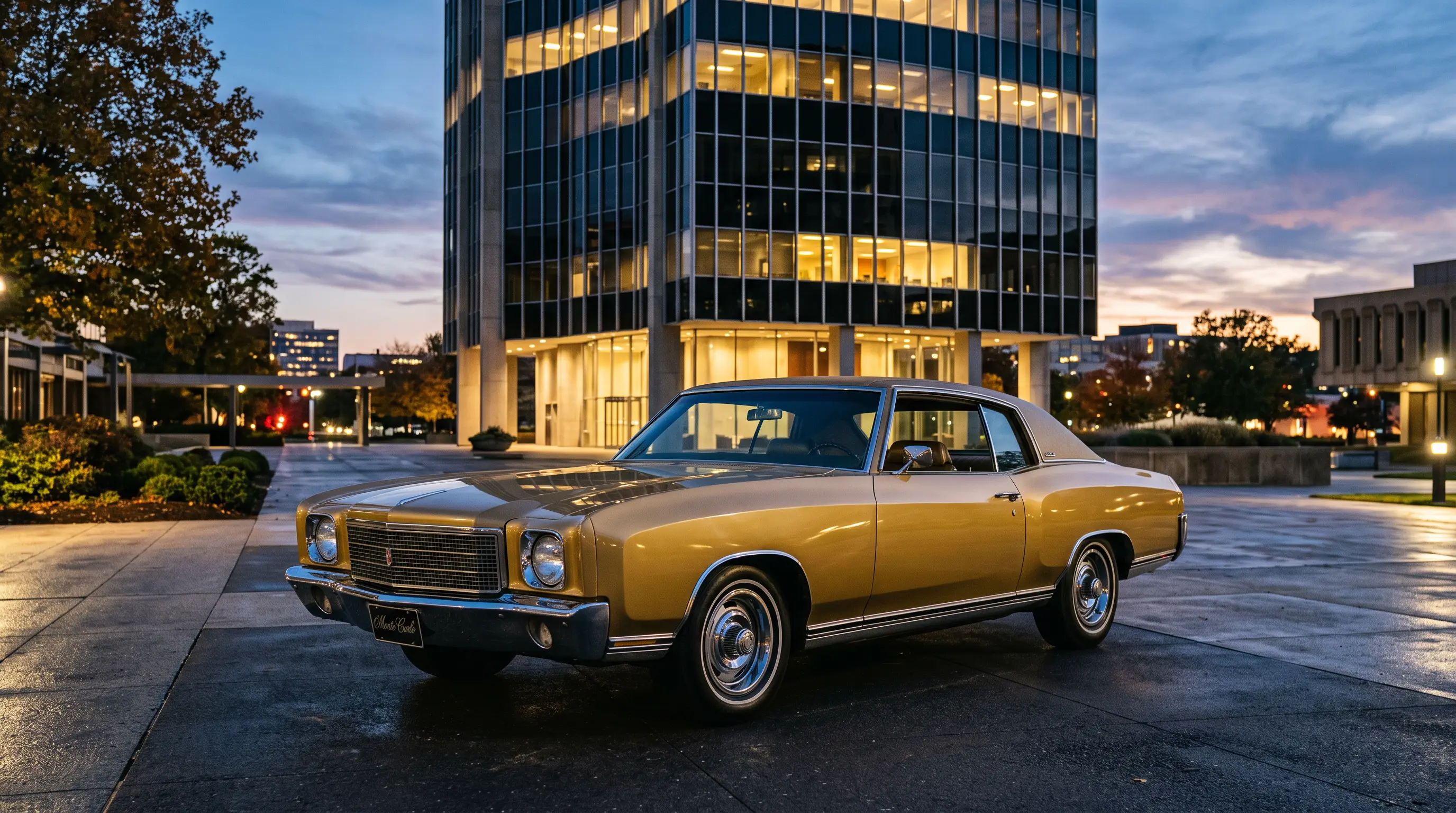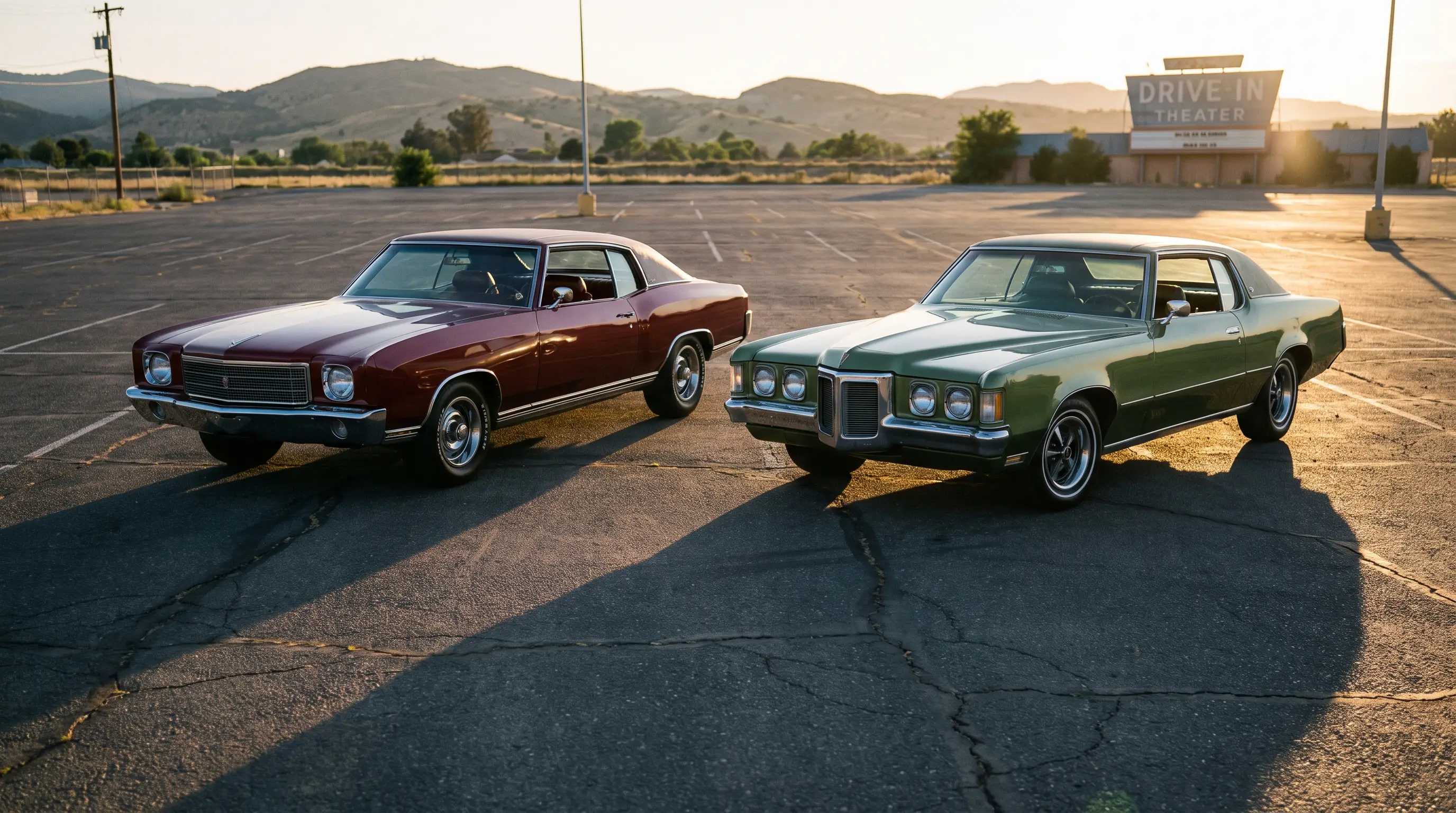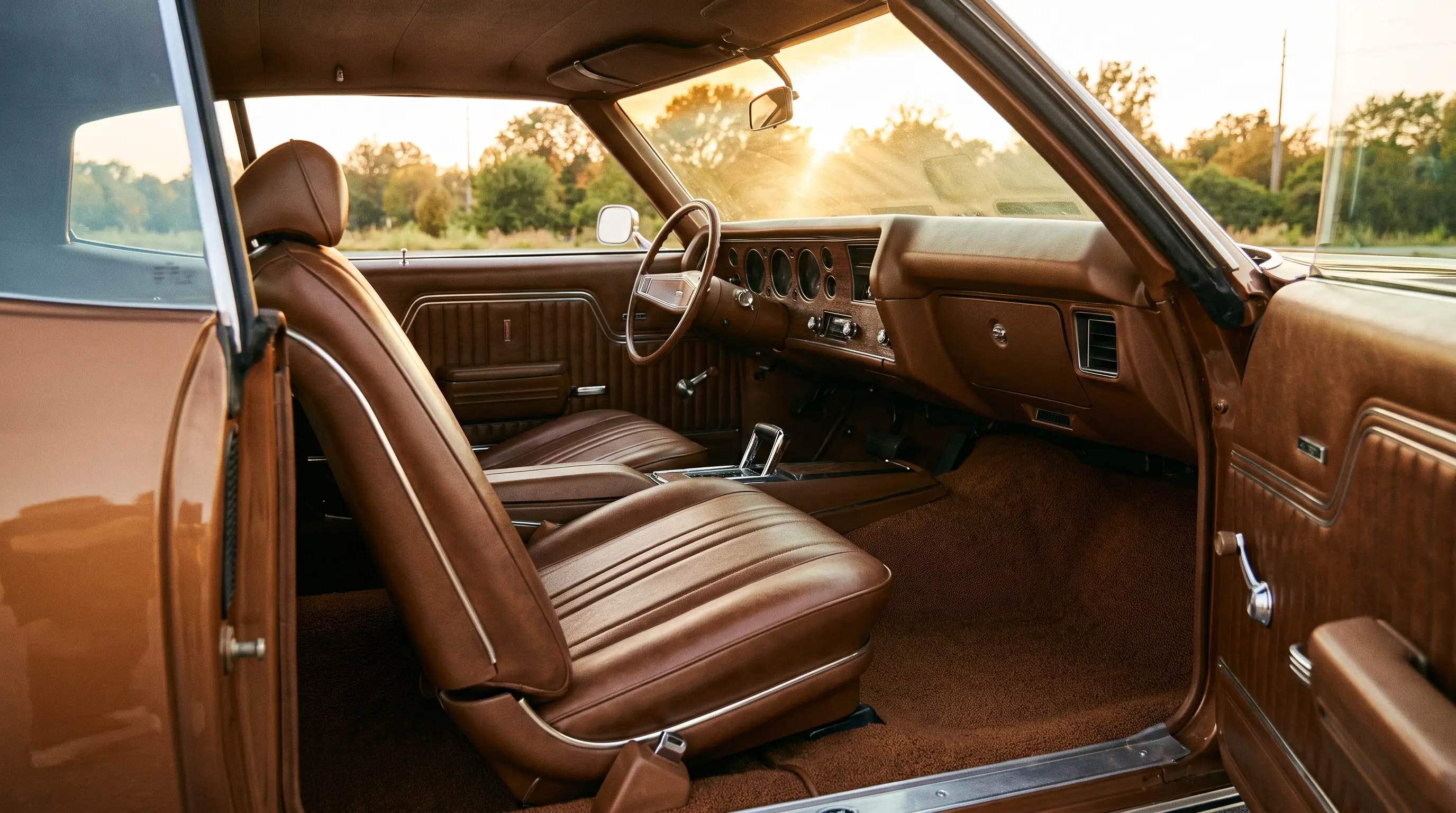
Every debut-year option chart has at least one number that gets repeated so often it stops getting checked. For the monte carlo 1970 350 402 engine lineup, that number is 402, a displacement figure that shows up constantly in forum threads and classified ads without much scrutiny of whether Chevrolet actually offered it in this specific car. The straightforward small-block story, the 350 and the 400, is where the real engineering decision lived for most 1970 Monte Carlo buyers, and it deserves more attention than the bigger-number rumors it keeps losing to online.
The 350: Chevrolet's default answer
The base engine for the 1970 Monte Carlo was the Turbo-Fire 350 cubic inch V8, rated at 250 horsepower and tuned squarely for smooth, quiet operation rather than outright performance. This was the engine most buyers drove home in, and it reflects exactly what Chevrolet understood about its new personal luxury coupe's audience: comfort and confident cruising mattered more to this buyer than a stoplight-to-stoplight time slip. The 350 had already proven itself across the Chevrolet lineup by 1970, giving the Monte Carlo a well-sorted, low-risk starting point rather than an unproven engine choice for a brand-new nameplate.
The 400: the step-up small block
Buyers wanting more than the base 350 without stepping all the way up to the SS454's big block had a "400" option on the order sheet, though that single name actually covered two different engines: a 400 cubic inch small-block V8 with a two-barrel carburetor rated around 265 horsepower, and a larger 402 cubic inch big-block V8 (marketed as the Turbo-Jet 400) with a four-barrel carburetor rated at 330 horsepower. The small-block 400 shares the same basic architecture as the 350 but is built on a taller deck to accommodate the larger displacement, a detail that matters to anyone doing engine identification work on a survivor car today, while the Turbo-Jet 400 is a genuinely different, heavier engine family entirely. It represented the sensible middle ground in the lineup: more torque and a slightly more assertive exhaust note than the base 350, without the insurance surcharge and fuel appetite that came with ordering the SS454's 454 cubic inch monster.
Untangling the 402 question
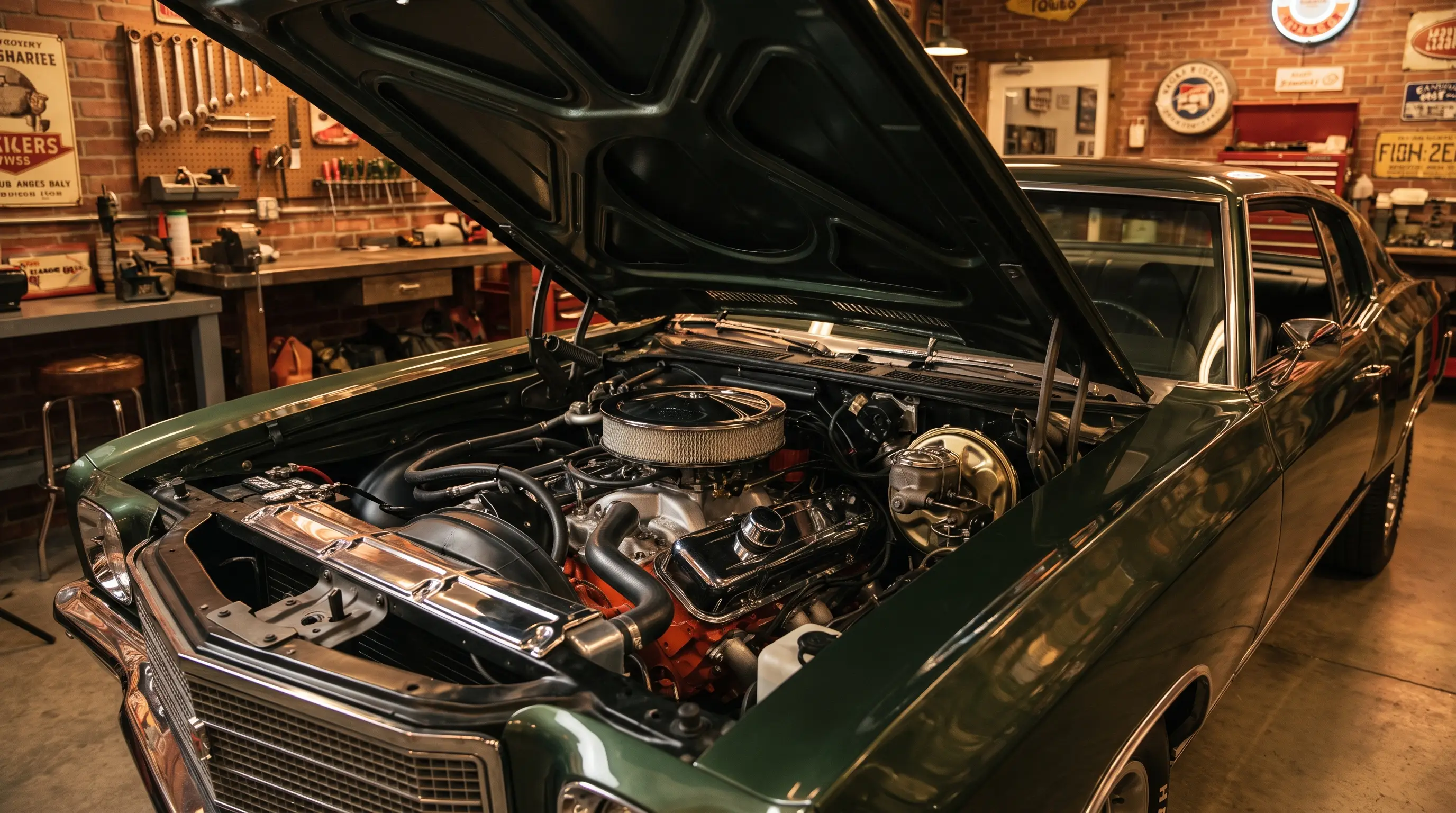
Here is where the record needs correcting, but in the other direction from what most forum posts assume. The number 402 belongs to Chevrolet's big-block engine family, which by 1970 actually displaced 402 cubic inches under the hood despite the factory continuing to badge it "400" on the Monte Carlo's own option chart rather than "396", a quirk of Chevrolet's naming that still confuses engine identification today. That 402-cubic-inch big block, sold as the Turbo-Jet 400 with a four-barrel carburetor, was a genuine factory option in the 1970 Monte Carlo, rated at 330 horsepower and 410 lb-ft of torque, sitting alongside the small-block 400 two-barrel as a distinct, higher-output choice under the same "400" name. Estimates suggest no more than about five percent of 1970 Monte Carlos left the factory with this big-block Turbo-Jet 400 rather than the small-block version, which is exactly why it gets treated as rumor: it is real, it is just uncommon, and Chevrolet's decision to give two different engine families the same "400" badge is the real source of the confusion, not an invented option. Anyone shopping a car advertised with this engine should still ask for cowl tag and engine code verification, since the big block's taller deck and casting numbers are the only reliable way to separate a genuine Turbo-Jet 400 from the small-block 400 or a later engine swap.
Why the engine choice mattered more than horsepower numbers suggest
Looking purely at horsepower ratings undersells how differently these engines actually behaved in a two-ton personal luxury coupe. The 350's modest output paired with tall gearing meant relaxed highway cruising and better fuel economy, genuinely important to a buyer who saw this car as a daily driver first. The 400 split the difference, offering noticeably stronger midrange pull for passing and merging without pushing the car into big-block insurance territory. Choosing between them in 1970 was less about bragging rights and more about how a buyer actually planned to use the car, a distinction that gets lost when modern collectors rank these engines purely by horsepower figures on a spec sheet.
"The 350 and small-block 400 did most of the actual work in this lineup. The big-block 402 was real and it was on this car's option chart too, Chevrolet just hid it behind the same '400' name and that is why people argue about it online."
- Emily Chen
Transmission pairings across the small-block lineup
Engine choice was only half of the drivetrain decision for a 1970 Monte Carlo buyer. The base 350 typically paired with either a three-speed manual as a no-cost starting point or, far more commonly given this car's buyer profile, the Turbo Hydra-Matic automatic that most personal luxury coupe shoppers expected in a car built around comfort. The 400 small block leaned even harder toward automatic-only ordering in practice, since the buyers stepping up to this engine were typically chasing smoother highway torque rather than a manual-shift driving experience. That transmission pattern reinforces the broader point about how this car was actually used: enthusiasts chasing three-pedal engagement gravitated toward the Chevelle SS lineup, while Monte Carlo buyers, even ones checking the 400 option box, were shopping for effortless cruising with a bit more muscle in reserve.
What this means for buyers checking engine codes today
A Monte Carlo advertised with anything larger than the 402 Turbo-Jet 400, outside a documented SS454, deserves a closer look at its casting numbers and cowl tag before a price gets agreed on. Engine swaps happened constantly over five decades of ownership changes, and a big block dropped into a small-block chassis years after the fact does not carry the same value, or the same originality, as a factory-built configuration. For the fuller context on how this engine lineup fit into the debut year overall, more on the 1970 monte carlo covers the rest of the story, and readers curious about how the whole Monte Carlo nameplate got here in the first place should check where this started. Buyers ready to compare engine codes against an actual listing can browse classic Monte Carlos on the market and start asking sellers the right questions before writing a check.
Reading the block casting number correctly
Every small-block Chevrolet V8 carries a casting number on the block itself, usually on the passenger side near the distributor, and cross-referencing that number against known 350 and 400 casting records is the single most reliable way to confirm what is actually under the hood without pulling a valve cover or trusting a decades-old air cleaner decal. The 400's taller deck height also leaves a visible clue at a glance for anyone who has handled enough small blocks to recognize the difference in block height between it and a standard 350, a quick field check that experienced buyers use before even reaching for a casting number reference. None of this replaces a full casting and date-code verification, but it is a fast first pass that separates an obviously mismatched engine from one worth investigating further.
Sources and notes
- ClassicCars.com Journal - High-Performance Monte Carlo with 402 CID V8 Engine
- Automobile Catalog - 1970 Chevrolet Monte Carlo 400 V-8 Turbo-Jet 330-hp Specs
- Automobile Catalog - 1970 Chevrolet Monte Carlo 350 V-8 Turbo-Fire Specs
- Barn Finds - 402 Big Block: 1971 Chevrolet Monte Carlo
- SS396.com - 1970 Monte Carlo Restoration Information
- Wikipedia - Chevrolet Monte Carlo