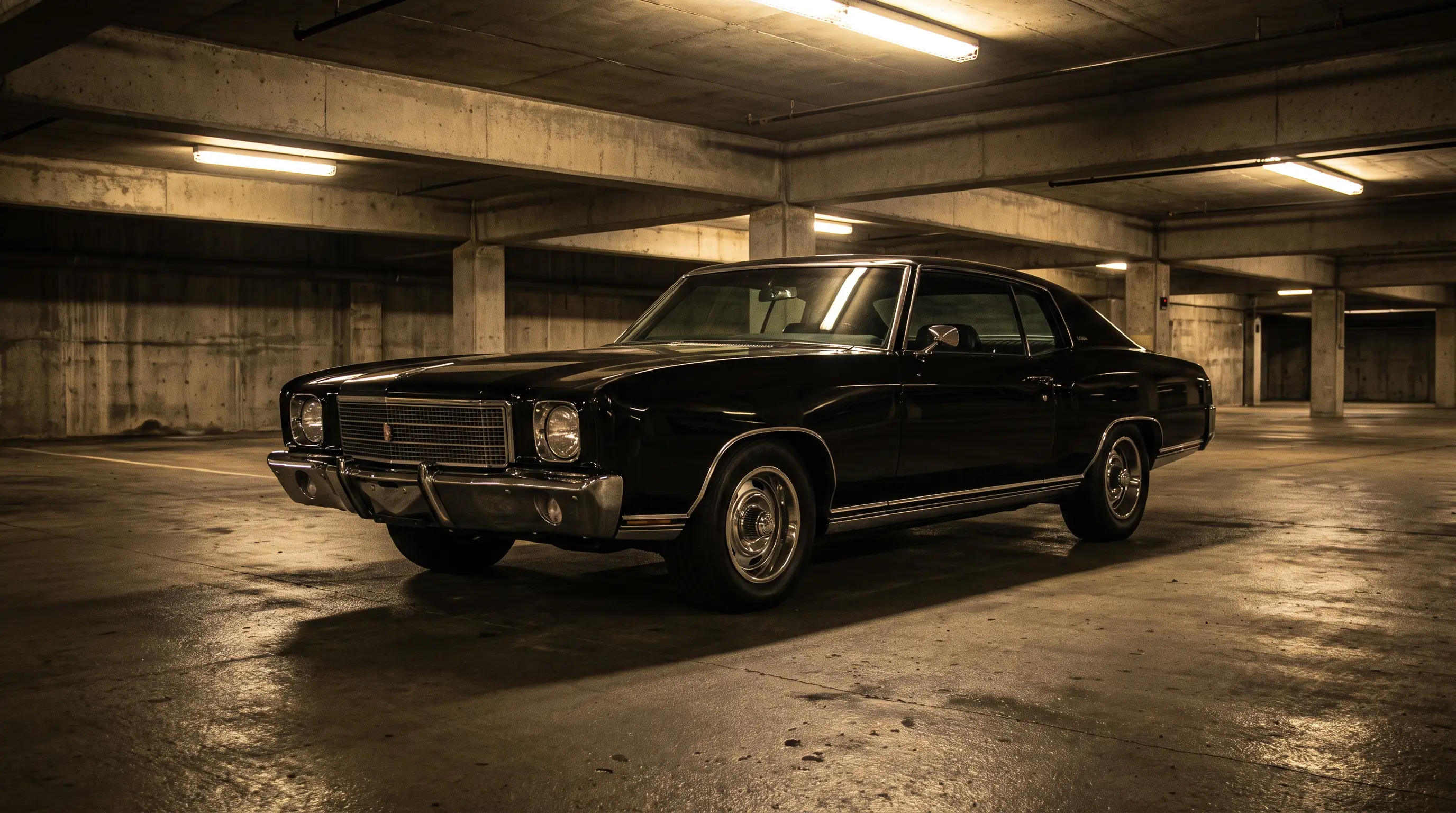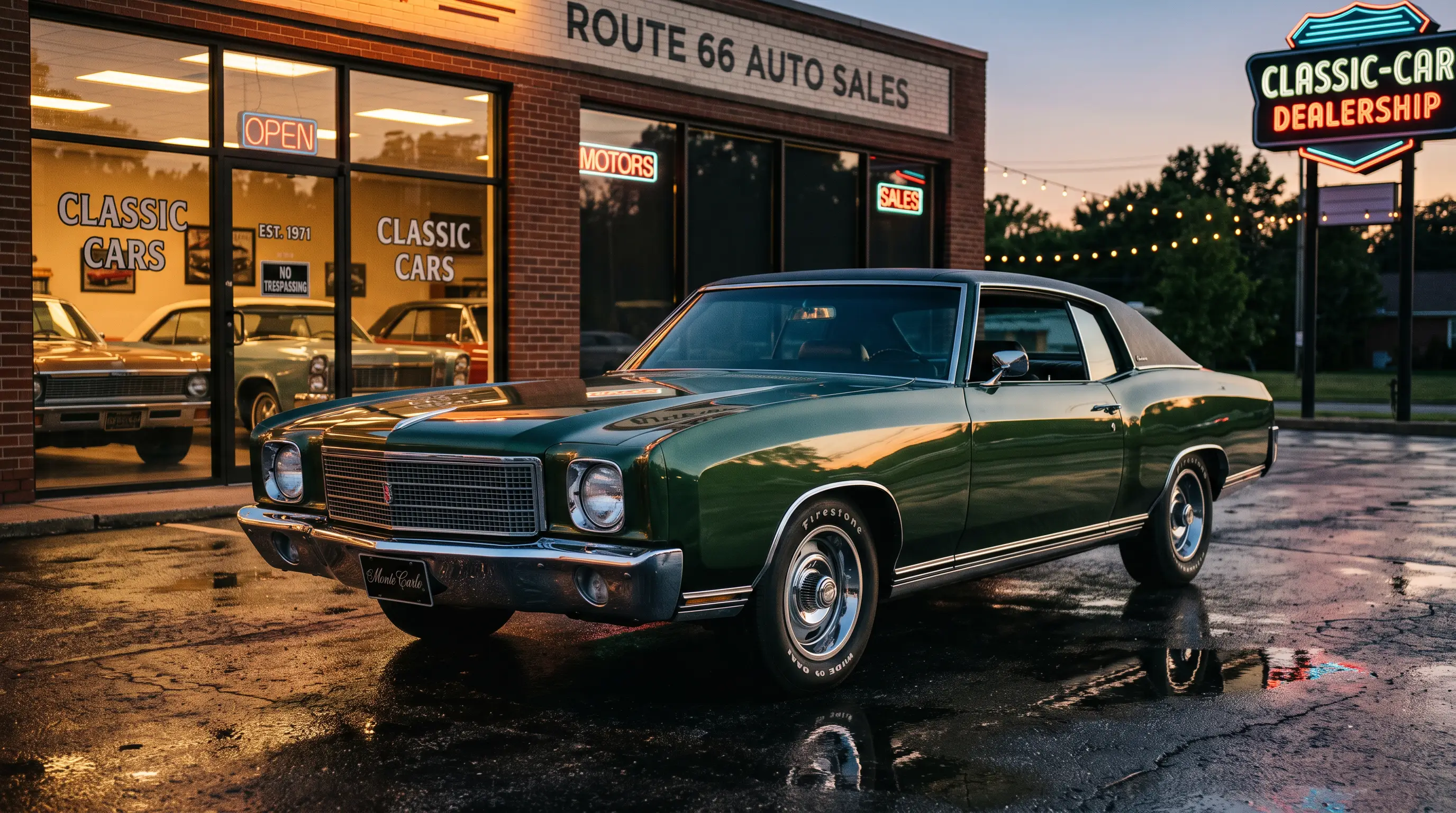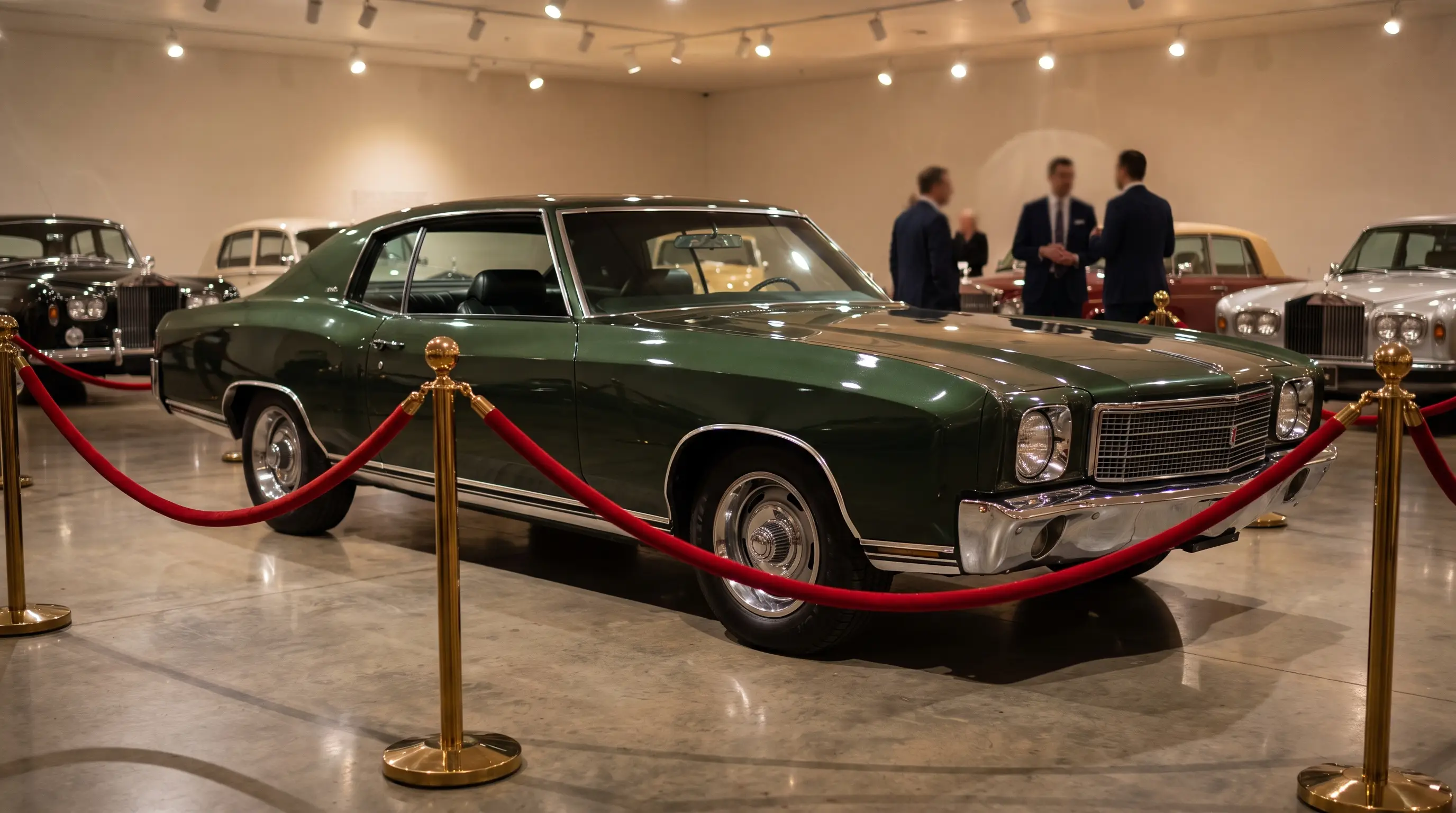
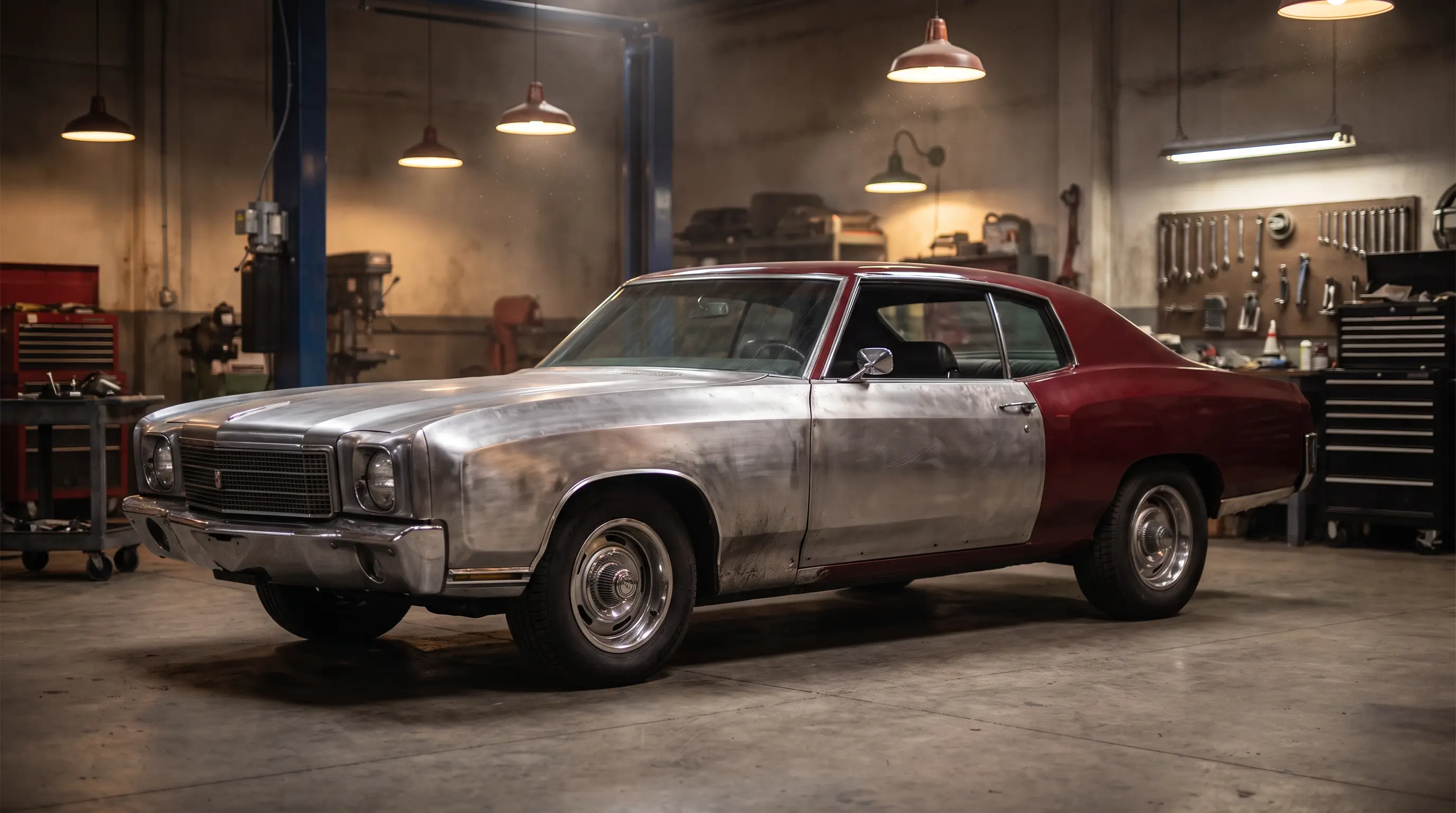
Treat a 1971 Monte Carlo as an artifact rather than a used car and the questions change entirely. Instead of asking what it drives like, you start asking what it can still tell you about the year it was built. That shift in framing is exactly what defines the modern monte carlo 1971 restoration scene, a community that has moved steadily from simply fixing up old cars toward something closer to historical preservation, and the difference between those two mindsets shapes everything else this scene does.
From backyard project to documented preservation
In the 1980s and 1990s, restoring a Monte Carlo from this era usually meant solving whatever problem was in front of you with whatever parts were available, often without much regard for factory correctness. Reproduction interior pieces, aftermarket trim, and repaint jobs in colors the original owner never chose were common, and nobody thought much of it because the goal was simply keeping a beloved car on the road. The scene around this generation of Monte Carlo has since matured considerably. Judged concours classes now scrutinize details that would have seemed irrelevant thirty years ago, correct spring clamp orientation, factory-style hose clamps, the right paint texture on an inner fender, because a growing number of owners and judges have decided the car's history is worth preserving with the same rigor a museum piece would receive.
The our complete history feature covers how this generation was originally built, and that factory record has become the baseline every serious restoration in this scene now measures itself against.
The researchers behind the restorers
What separates this community from a typical car club is how much of the work happens before a wrench ever touches the car. Dedicated researchers spend years cross-referencing factory literature, dealer training materials, and surviving build sheets to establish exactly what a correct 1971 Monte Carlo should look like down to the specific supplier codes stamped on small hardware. That research gets shared through club newsletters, registries, and increasingly through online archives, and it has raised the bar for what counts as an accurate restoration considerably higher than it stood a generation ago.
This kind of documentation work is unglamorous and rarely gets the attention that a finished, gleaming car does at a show field, but it is the foundation the entire scene depends on. Without it, "correct" restoration would just be a matter of opinion rather than something a judge could verify against a primary source.
Why period correctness became the standard
Part of this shift reflects the broader collector market rewarding documented originality over cosmetic perfection, but part of it is generational. Owners and researchers who grew up around these cars when they were simply used vehicles are now the ones setting the standards for how they get treated as historical objects, and that generational memory carries real weight. They remember what the factory interior fabric actually felt like, what the correct exhaust note sounded like before an owner swapped mufflers, small sensory details that do not show up in any parts catalog but shape what "correct" means to people who lived through the era.
That standard has real, tangible consequences for anyone entering the hobby today, not just an abstract point of pride among longtime club members. A restoration done to a high cosmetic standard but ignorant of these period details will not compete seriously in the top judging classes anymore, no matter how good the paint looks under the lights, because the scene has collectively decided that accuracy to the original artifact matters more than a subjective sense of "looking finished."
"A concours-quality Monte Carlo from this era is not really being judged on how new it looks. It is being judged on how honestly it represents 1971, and those are two very different standards that only look similar from a distance."
- Sarah Whitfield
The show field as a living archive
Walk a national meet built around this generation of Monte Carlo and you are effectively walking a distributed archive, with each owner serving as custodian of a different piece of the same story. One car might preserve the exact factory carpet weave nobody has reproduced correctly yet. Another might be the last known example wearing a particular dealer-installed accessory that never made it into national advertising. Judges and researchers who work these show fields for years develop a mental catalog of which cars hold which pieces of evidence, and that informal network of knowledge often proves more valuable to an accurate restoration than any single reference book, because a book can only record what someone thought to photograph at the time. Ask the right person at the right show and they can often point you directly to the one surviving car that still has the answer to a question no publication ever bothered to document.
This is also where the generational handoff happens in practice. Younger enthusiasts entering the hobby learn far more standing next to an older researcher at a show field, hearing why a particular detail matters, than they would from reading the same fact in a newsletter. That direct transmission of institutional memory is arguably the scene's most fragile asset, since it depends entirely on people willing to keep showing up and explaining what they know rather than treating their expertise as private capital.
Where the scene goes from here
The community around this generation of Monte Carlo faces the same challenge every preservation-minded hobby eventually faces: the supply of untouched original cars and unrestored factory reference material is finite and shrinking every year. Each car that gets over-restored without proper documentation, and each piece of factory literature that gets lost rather than archived, makes the next generation's job of establishing correctness that much harder. The response from serious researchers has been to digitize and share what remains more aggressively than earlier generations did, treating open documentation as a form of preservation in its own right rather than a competitive advantage to hoard. Photographic archives that once existed as a single fading print in someone's album now get scanned and cross-posted across registries within weeks of being found, and that speed of circulation has already saved detail that would otherwise have been lost the next time a house was cleared out after an estate sale. For anyone drawn into this world by the cars themselves rather than the research behind them, there is still an easy entry point: you can browse classic Monte Carlo listings and see what is currently available before deciding how deep into the documentation side of the hobby you eventually want to go.