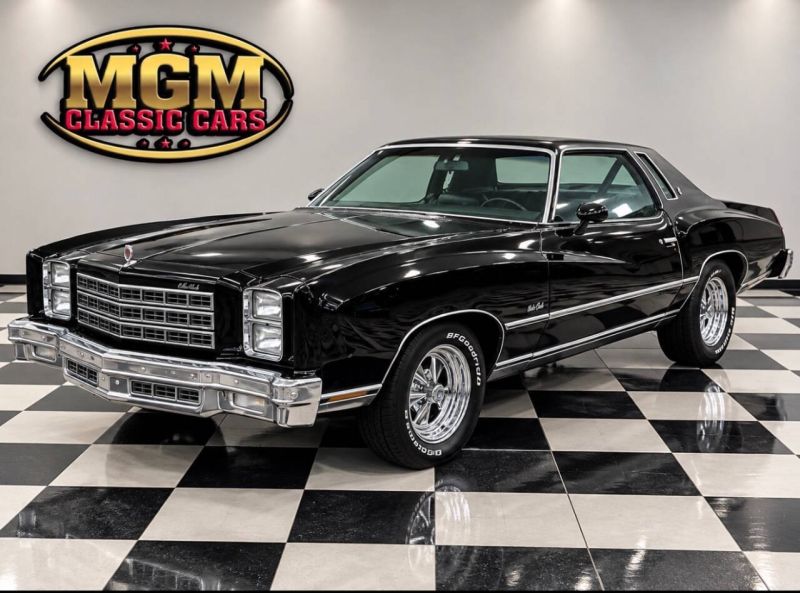
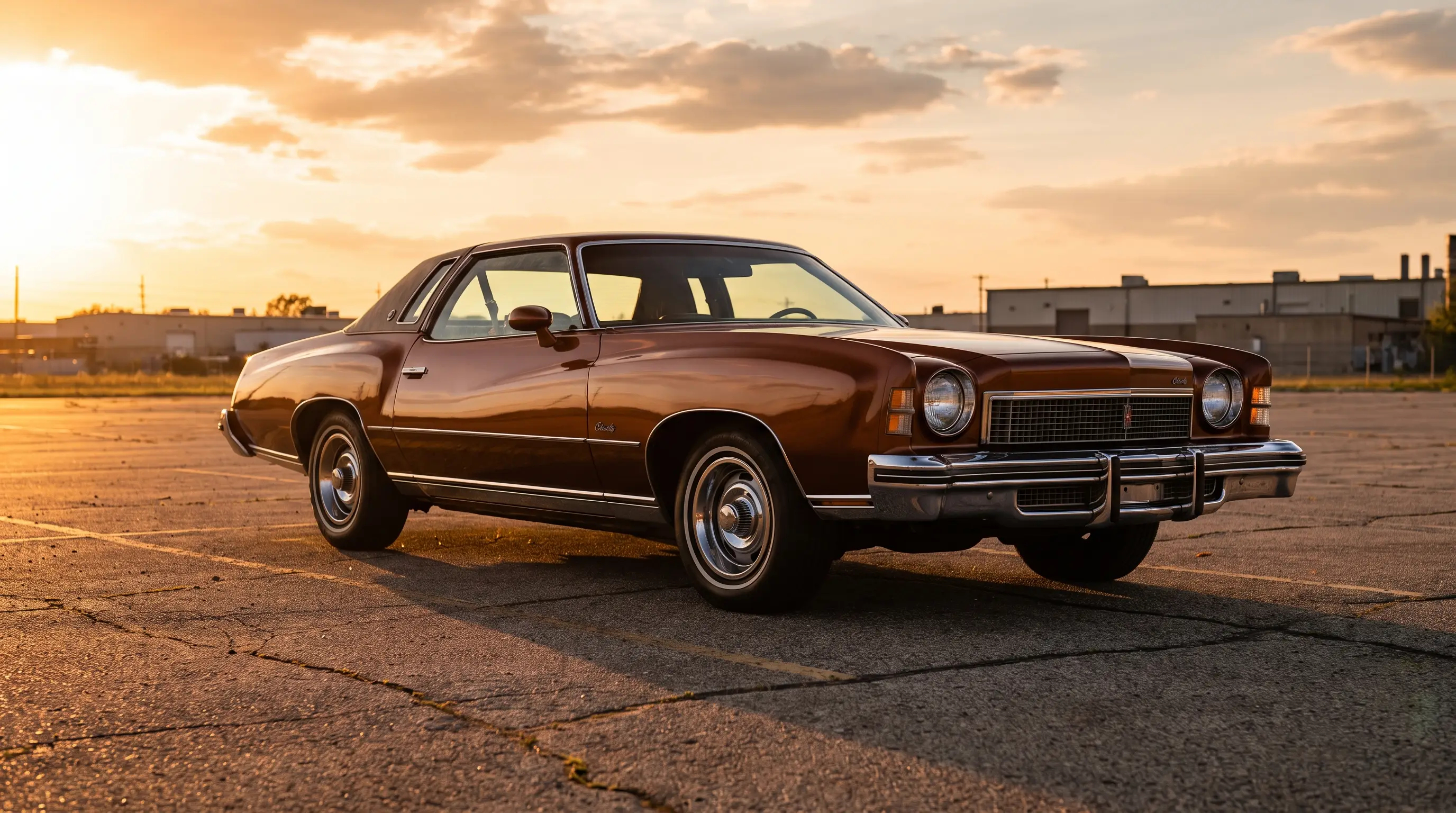
I have had my hands on enough sheet metal to know when a body panel was drawn by someone who actually cared about how light moves across a fender. The 1973 Monte Carlo styling, swoopy fenders and a formal roof stacked on the same car, is that kind of design. It should be a contradiction. On the real car it is not.
Colonnade styling meant a whole new body, not a facelift
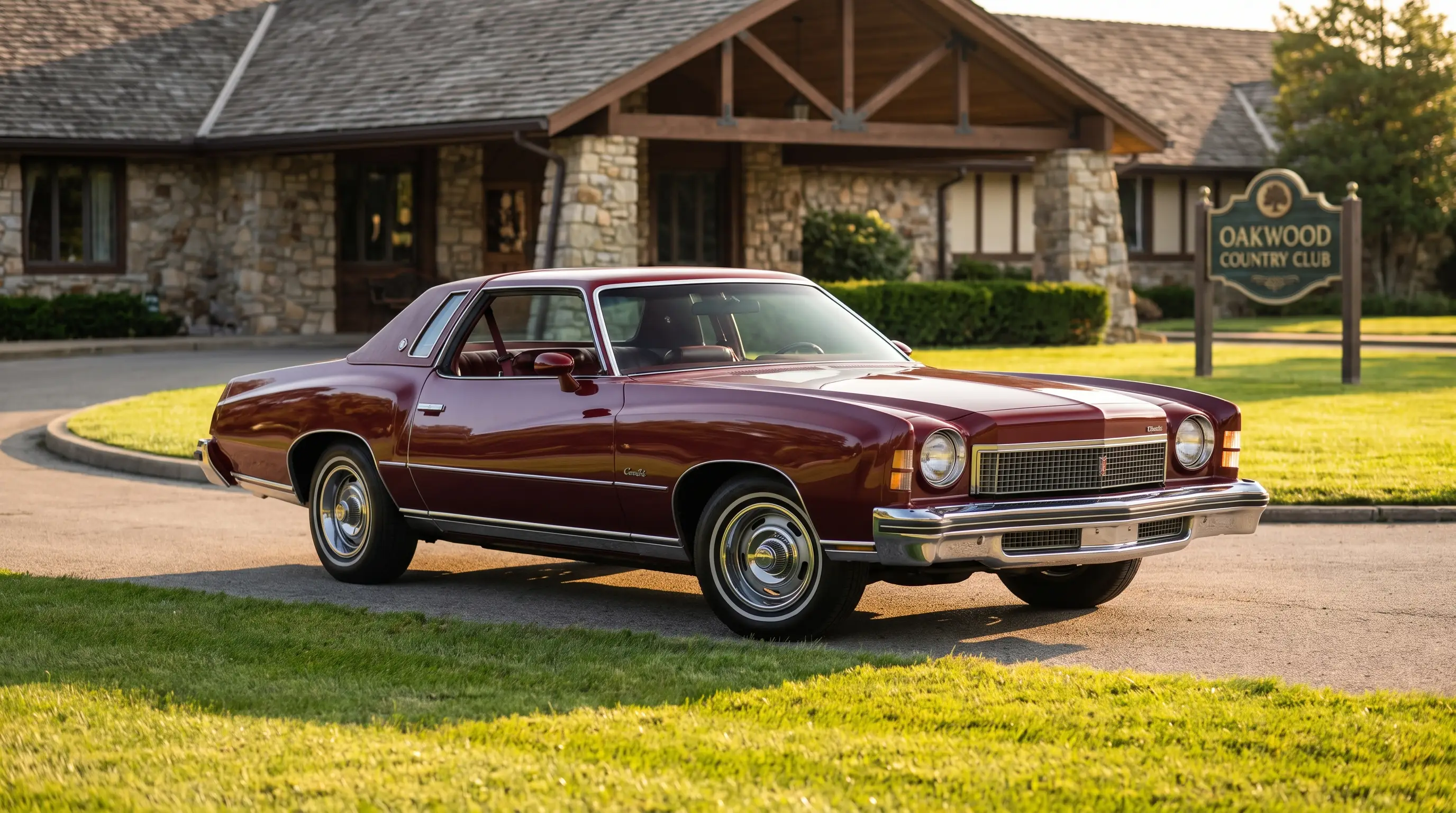
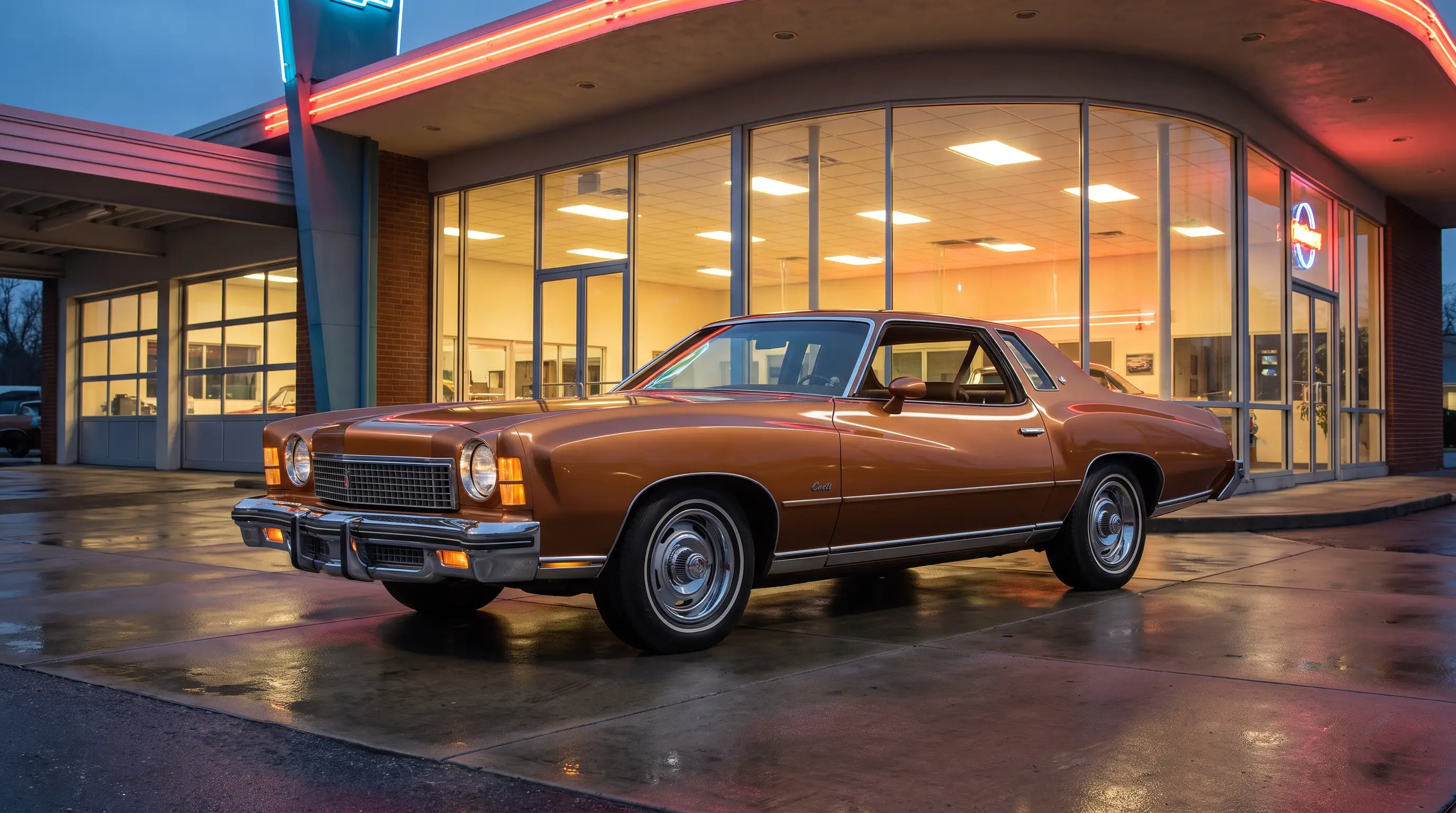
1973 was the year Chevrolet moved the Monte Carlo onto General Motors' new Colonnade body architecture, and that is a bigger deal than it sounds. This was not a trim update over the 1970-72 first-generation shell. It was an entirely new structure, built to meet coming federal rollover standards, with fixed door frames replacing the previous hardtop's pillarless design. Plenty of cars handled that transition by going bland. The Monte Carlo did not. Designers took the mandate for structural pillars and turned them into a styling feature instead of hiding them, wrapping the car in fender lines that swell out over the wheel openings with a confidence that still reads as sculptural.
Anyone who has stripped paint off a fender from this era knows the panel is doing real work. There is compound curvature running front to rear that most 1970s American iron never attempted, and it is why a straight, unmolested 1973 fender is worth chasing rather than replacing with a reproduction that never quite matches the factory crown.
The formal roof was the other half of the equation
Set against those swoopy fenders is a roofline that goes the opposite direction entirely: upright, formal, almost limousine-like in its restraint, with a wide C-pillar and a distinct absence of the sweeping fastback lines other personal luxury coupes leaned on. That contrast, aggressive lower body against a stately greenhouse, is the actual trick of the 1973 design. It let Chevrolet sell the same car to a buyer who wanted a boulevard cruiser and a buyer who wanted something with visual muscle, without compromising either audience.
Builders restoring one of these cars today need to respect that balance. I have seen more than one project get lowered and painted in a way that fights the formal roof instead of working with it, and the result never looks right no matter how clean the paintwork is. The car wants presence, not aggression, and the factory proportions knew that better than most modifications do.
Why the sheet metal still holds up in person
Photographs undersell this car. The fender lines are subtle enough that a two-dimensional image flattens them out, and it is not until you walk around one in daylight that the surfacing actually registers. That is true of a lot of 1973 GM design work, but the Monte Carlo pulled it off with less ornamentation than most of its Colonnade siblings, which is part of why bodywork purists rate it highly. There is very little chrome trim doing the visual work here. The panels themselves are the design.
For the fuller 1973 monte carlo history, the redesign story goes well beyond styling into engineering and market reception, but the sheet metal is where I always start when I am evaluating a car for a build. If the fender crowns are gone from decades of poor bodywork, no amount of paint fixes what has been lost.
"You can tell within thirty seconds if a 1973 Monte Carlo has been touched by someone who understood the factory lines or someone who just wanted it shiny. The fenders do not forgive bad decisions."
- Jim Vasquez
What the panels were doing structurally, and what that means on the bench
Look closely at the front fender and you will notice the crown line is not a single continuous arc, it actually shifts character twice between the headlamp bezel and the door cut, rising to a peak over the wheel opening before settling into a flatter plane that meets the door skin cleanly. That is not an accident of stamping tolerances. It is a deliberate three-stage surface that took real tooling investment to execute, and it is why reproduction fenders from lower-quality suppliers rarely match the factory panel exactly. I have put a straightedge against both and the difference is visible even to someone who has never worked bodywork professionally.
The rear quarter panel picks up a similar theme, though more subdued, tapering toward the formal rear deck in a way that echoes the front fender's rise without directly copying it. That kind of restrained repetition across a car's whole body, related shapes without literal duplication, is a hallmark of confident design work, and it is part of why the 1973 Monte Carlo photographs so well from three-quarter angles that flatten out lesser designs.
On the bench, this car rewards patience and punishes shortcuts. Filler applied to disguise a collapsed fender crown never holds its shape the way the factory metal did, and it shows within a season or two as the surface starts to read differently in raking light. I tell people considering a full respray to walk the car outside in direct sun before committing to paint and body work, because indoor shop lighting hides exactly the kind of surface irregularity that daylight exposes instantly on a design this dependent on subtle crown work.
Original trim pieces matter here too. The brightwork along the beltline is minimal by design, which means what little trim exists carries outsized visual weight. A pitted or replaced piece of trim throws off the whole visual balance in a way it would not on a busier, more heavily chromed competitor from the same era.
How it compares against the competition of the moment
For a related story on how the industry judged this redesign against rivals like the Pontiac Grand Prix and Oldsmobile Cutlass Supreme, the short version is that the Monte Carlo's combination of aggressive lower body and formal roof gave it a distinct identity those competitors did not quite match. The Cutlass leaned softer, the Grand Prix leaned more traditional, and the Monte Carlo split the difference in a way buyers responded to immediately.
That original design language is worth understanding before you touch a single panel on a restoration. There are Monte Carlos for sale now with that factory fender crown still intact, and it is the detail that separates a car worth building on from one that is going to fight you the whole way.
I have walked competing intermediates from the same show field looking for a fender that did the same thing the Monte Carlo's does, and I have not found one that pulls off quite the same trick without either overdoing the flare or flattening it into something forgettable. That is not brand loyalty talking. It is thirty years of running a hand along sheet metal at cruise nights and paying attention to what actually holds up under close inspection versus what only reads well from ten feet away in a magazine photo. The 1973 Monte Carlo rewards close inspection in a way a lot of its contemporaries simply do not, and that is the whole case for treating the styling as a genuine achievement rather than a nostalgia-tinted footnote.