
She was seventeen in 1986 and her father let her drive his new Monte Carlo SS exactly once, down a straight stretch of county road with the windows cracked and the AM radio catching static from a station two towns over. She does not remember the top speed or whether the odometer read anything remarkable that afternoon. She remembers the bucket seats holding her in place through a curve, the way the gauge cluster glowed amber at dusk, and how the whole cabin felt like it had been built by someone who wanted her to feel like she was piloting something rather than just riding in it. That memory is the real subject of monte carlo 1986 ss interior conversations, more than any spec sheet ever will be.
Car Features
7 min read
Inside the Eighties SS - Buckets, Gauges, and Attitude
The 1986 Monte Carlo SS interior traded a bench seat for bolstered buckets and a real gauge cluster, and the memory of sitting in one often outlasts any spec sheet detail.
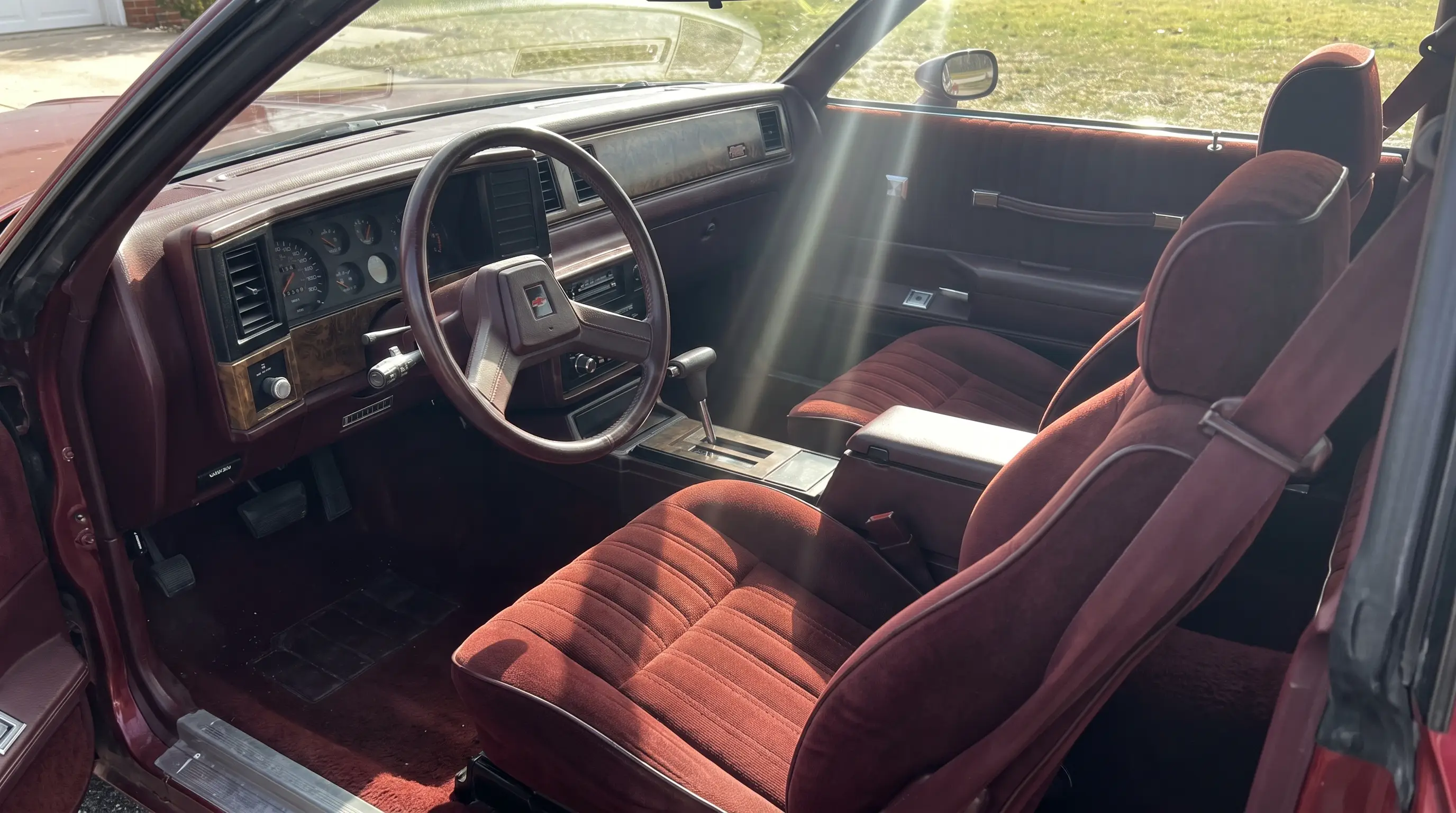
Buckets that meant business
Chevrolet dropped the bench seat option for the SS package and replaced it with bolstered bucket seats, a small change that reoriented the entire relationship between driver and car. A bench seat invites a passenger to slide across the vinyl toward the driver on a date, an old ritual that a lot of 1970s cars were built around. Bucket seats say something different. They say this car has a driver, and everyone else is along for the ride in their own designated space. That shift in the SS cabin mirrored what Chevrolet was doing on the outside with the aero nose and monochrome trim, building an identity around performance rather than accommodation.
The seats themselves were upholstered in a combination of cloth and vinyl depending on the specific trim ordered, with bolstering pronounced enough to hold a driver in place through a turn without feeling like a race seat bolted into a family sedan. That balance, aggressive enough to matter, comfortable enough to drive four hundred miles in, is easy to take for granted now and was not automatic to get right in 1986.
The gauges that told the truth
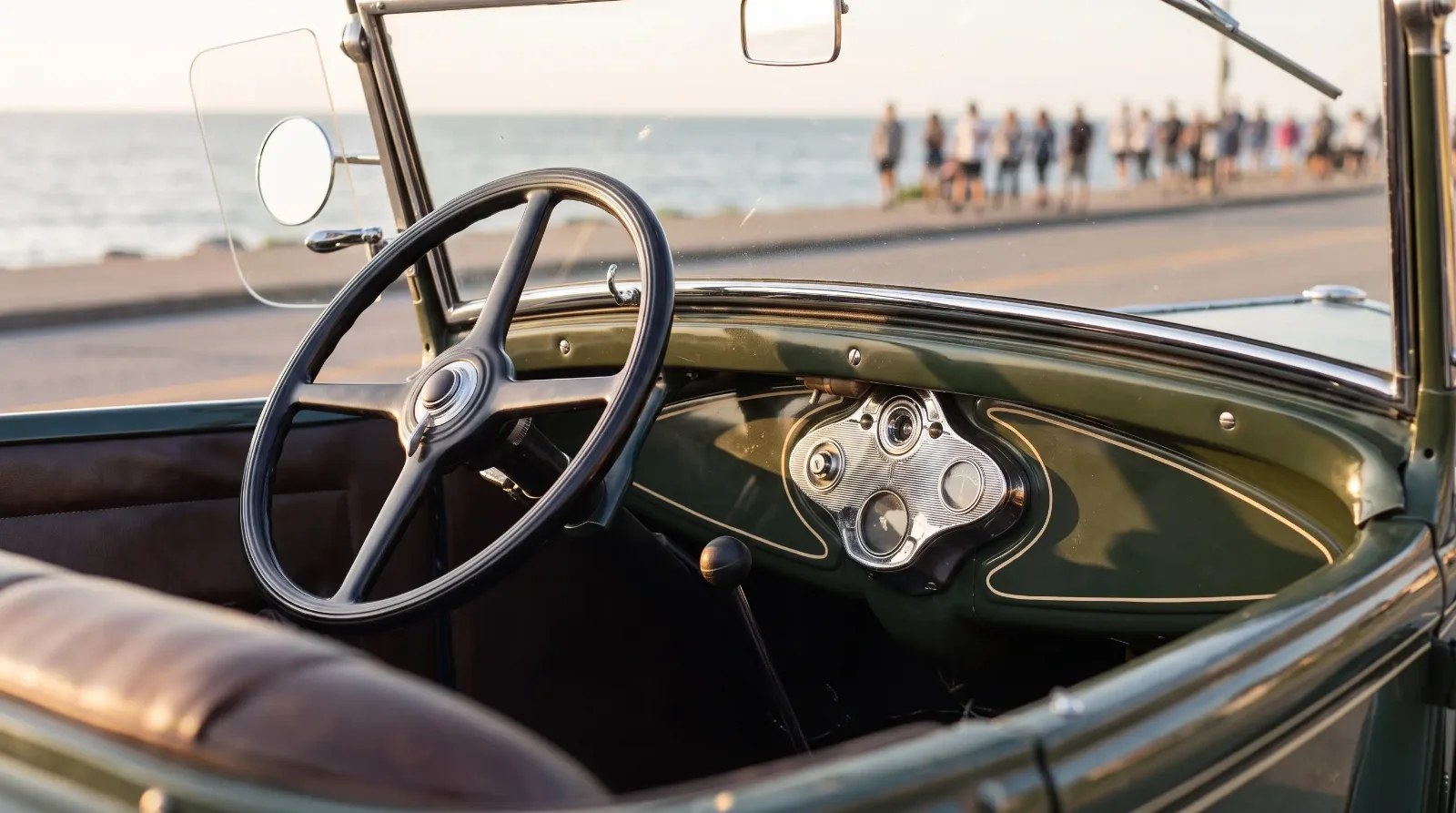
Where a lot of contemporary domestic cars still leaned on idiot lights and a speedometer as the entire instrumentation story, the SS package pushed toward a fuller gauge cluster, oil pressure, temperature, and a tachometer positioned where a driver's eye actually landed rather than buried in a center stack. That amber glow at dusk was not an accident of styling. It was Chevrolet acknowledging that a car wearing an SS badge needed to look like it was telling a driver something real, not just decorating the dashboard with warning lights nobody trusted anyway.
There is something almost tender about how deliberately that cluster was laid out, the needles sweeping instead of digital numbers flashing, at a moment when other manufacturers were rushing toward digital dashboards that dated badly within a few years. The SS cluster aged into something closer to a keepsake than a piece of 1980s excess, because it never tried to look futuristic. It just tried to look purposeful.
Attitude, not just equipment
What made the SS cabin distinctive was never any single feature in isolation. It was the accumulation of small decisions, the buckets, the gauges, the smaller wheel, the door panel trim that matched the exterior's restrained monochrome philosophy instead of clashing with it, all pointed in the same direction. Sit in a base Monte Carlo of the same year and the difference is not subtle once you know what you are looking for. The SS cabin has an attitude that the ordinary car simply does not carry, and that attitude was Chevrolet's way of making sure the driver felt the SS badge every time they opened the door, not just when they looked at the exterior in a parking lot.
That kind of interior storytelling gets undervalued in how we talk about 1980s performance cars, because horsepower numbers are easier to quote at a dinner table than the way a seat bolster held someone through a curve on a summer evening thirty years ago. But ask anyone who actually owned one what they remember, and it is rarely the quarter mile time. It is the gauges glowing at dusk, or the seat that fit like it was built for them specifically, or a single drive down a county road that ended too soon.
"People remember the exterior of these cars in photographs. They remember the interior in their bodies, the seat bolster, the wheel diameter, the exact angle the gauges sat at. That kind of memory does not show up in a brochure, but it is the reason so many owners will not sell theirs no matter what a buyer offers."
- Nora Beckett
The door panels nobody photographs
Ask most people to describe a classic car's interior and they will talk about the seats and the dashboard, because those are the pieces that show up in every advertisement and every auction listing photograph. Almost nobody photographs the door panels, and almost nobody remembers them either, but the SS door trim carried the same restrained monochrome philosophy that defined the exterior, matching material and stitching that tied the whole cabin together instead of leaving the doors feeling like an afterthought bolted on after the seats and dashboard got all the design attention.
That kind of consistency is easy to overlook precisely because it succeeds quietly. A driver does not consciously register that the door panel color matches the seat bolster or that the stitching pattern echoes the dashboard trim. They just feel like they are sitting inside one coherent space instead of a collection of parts assembled from a shared bin. Getting that right required someone at Chevrolet caring about a detail that would never appear in an advertisement, purely because the person designing it understood that a cabin either feels considered or it does not, and there is no faking that feeling with flashier features elsewhere.
Carpet color, dash pad texture, even the specific grain pattern stamped into the vinyl trim pieces, all of it followed the same logic. None of these details individually justified a magazine callout in 1986, and none of them do today either. But strip any one of them away and the cabin stops feeling assembled with intention. That is the quiet work behind an interior people remember decades later without being able to say exactly why.
What survives in memory
The seventeen year old on that county road is in her fifties now, and she still describes that single drive with more precision than she describes cars she has actually owned since. That is what a well built interior does when it gets the small things right. It does not just transport a person from one place to another. It becomes the room they remember a specific afternoon happening inside, amber gauges and all, long after the specific horsepower figure has faded from memory entirely.
Read the background on the broader 1986 SS story if this particular corner of the car has you curious about the rest of the package. If a cabin like this one is calling to you, find a classic Monte Carlo and go sit in one yourself.
Sources and notes
Related Reading
Have a
Chevrolet Monte Carlo
for Sale?
Reach thousands of serious classic car collectors across the US.
Sell It Here →
Selling a classic? Here's how: the best sites to sell a classic car
Are You a Classic Car Dealer?
List your full inventory and connect with targeted classic car buyers.
Join as a Dealer →
#1986 Monte Carlo SS
#Monte Carlo SS interior
#G-body bucket seats
#eighties muscle car cabin
#SS gauge cluster

About the author
Nora Beckett
Automotive features writer and photographer who tells the human stories behind the cars, from show fields to cross-country road trips.
Related Listings - Chevrolet Monte Carlo
More in Car Features
Comments
Be the first to comment on this article.