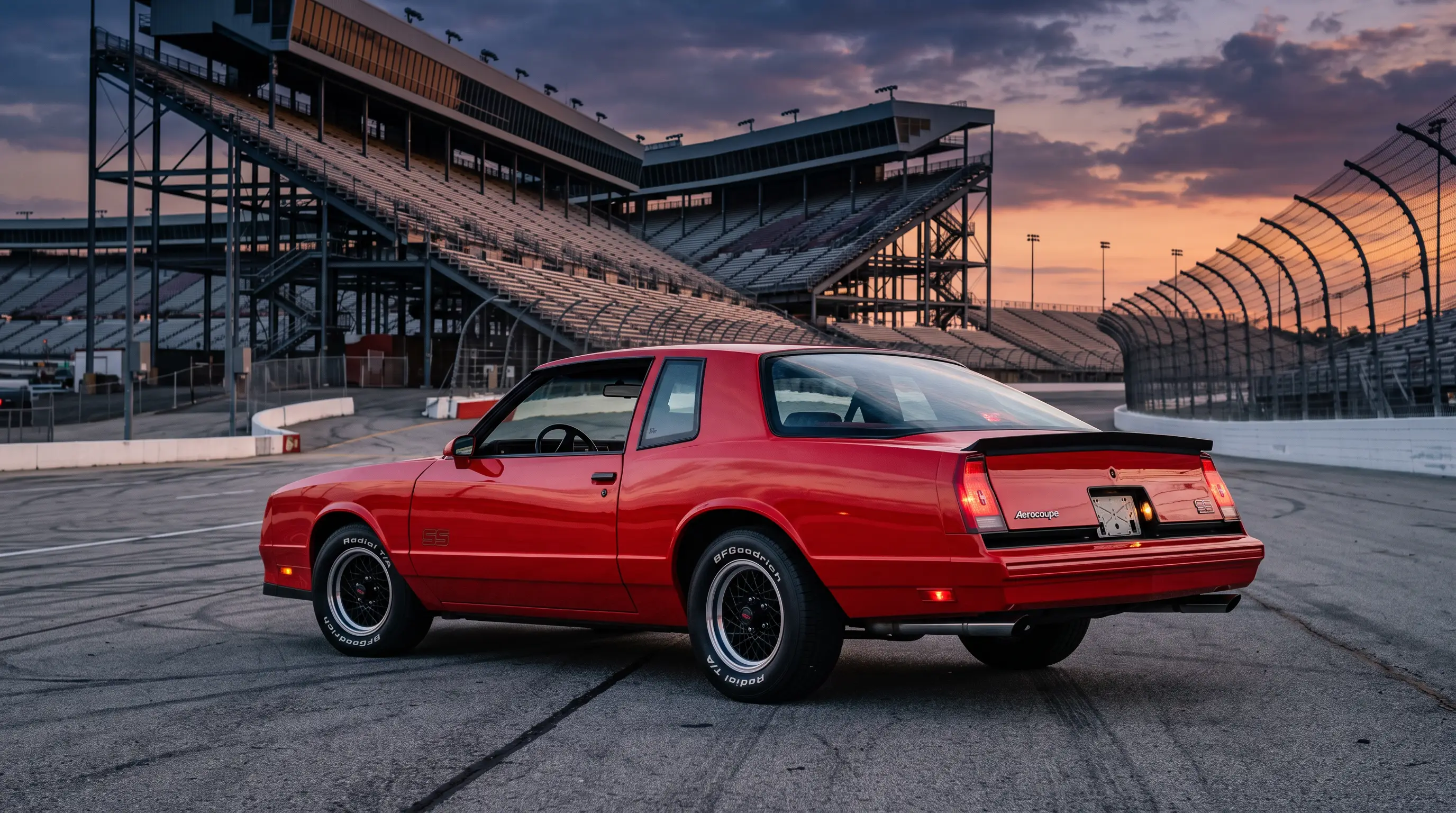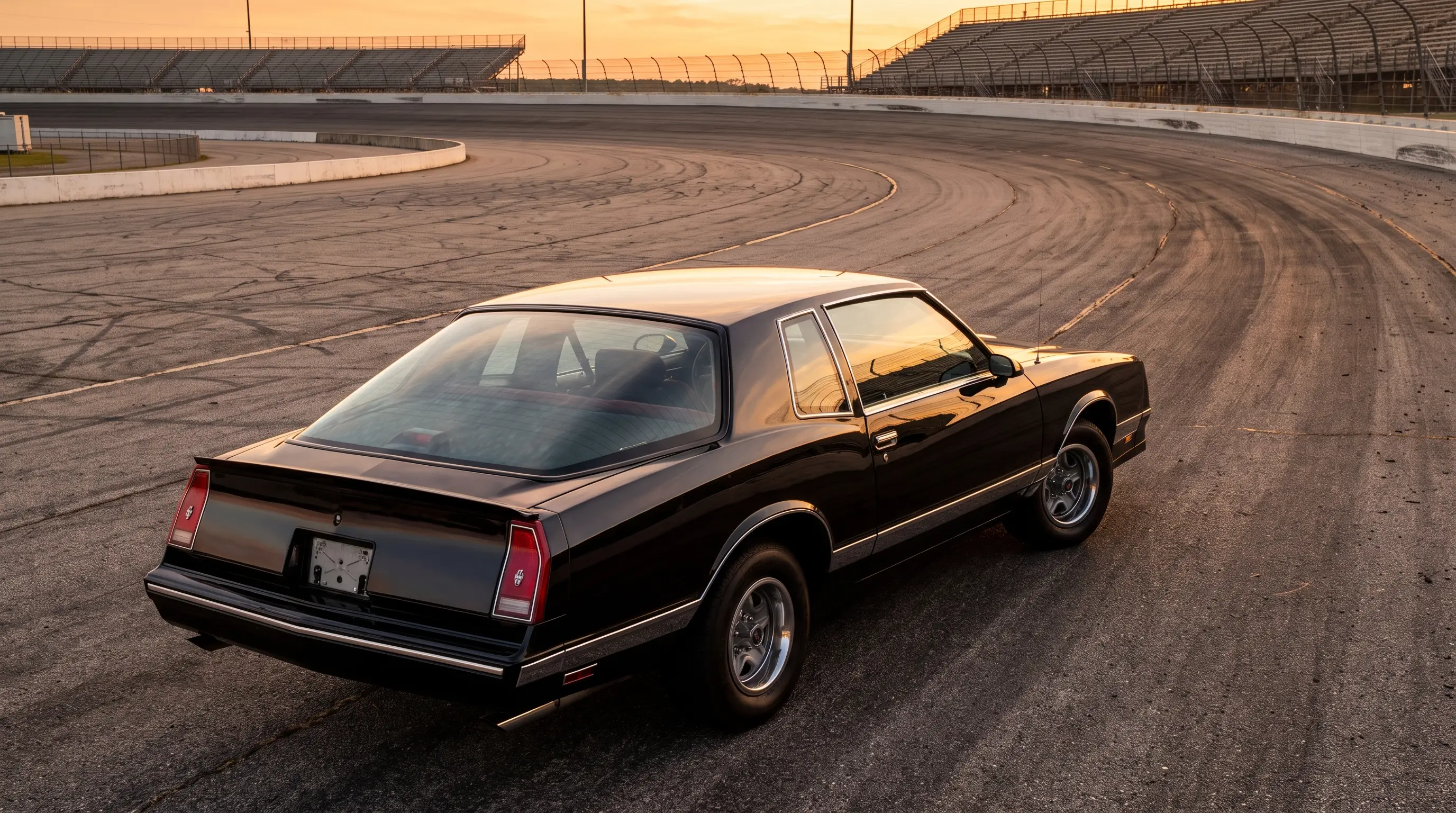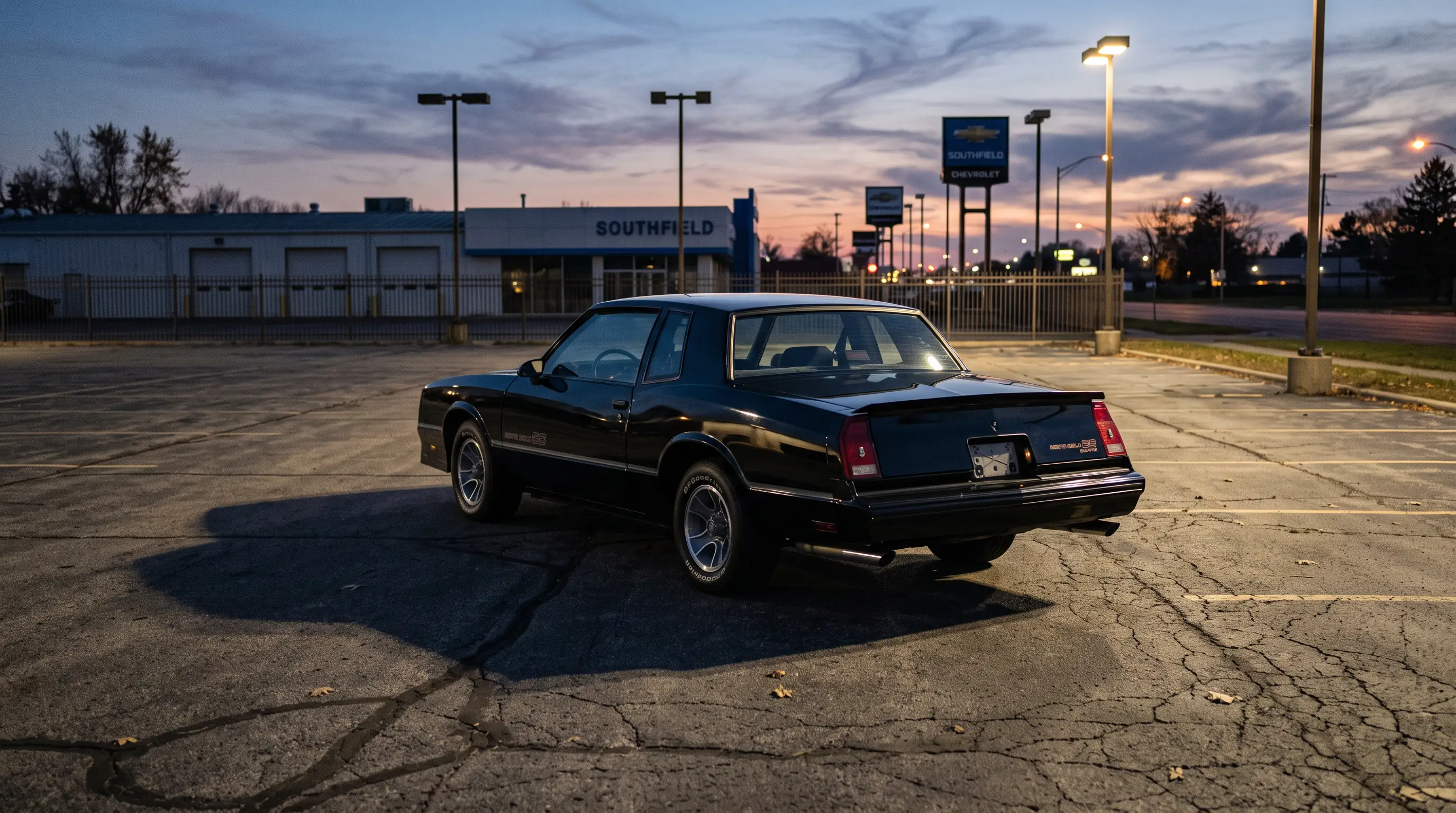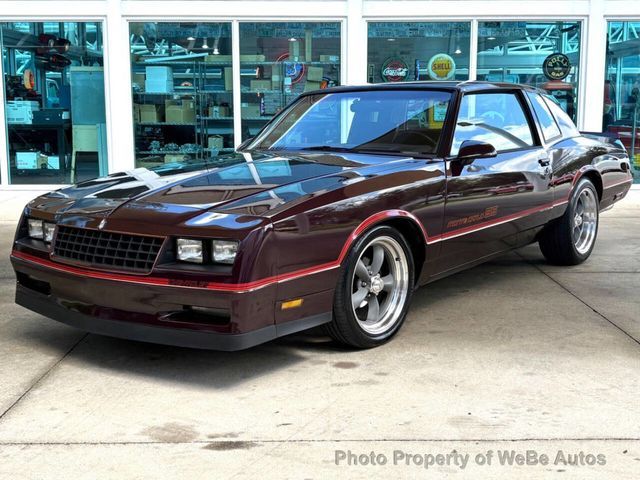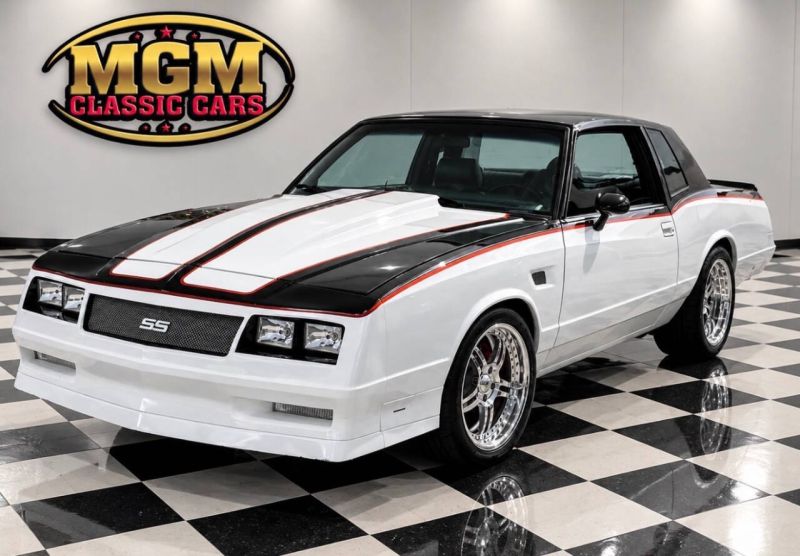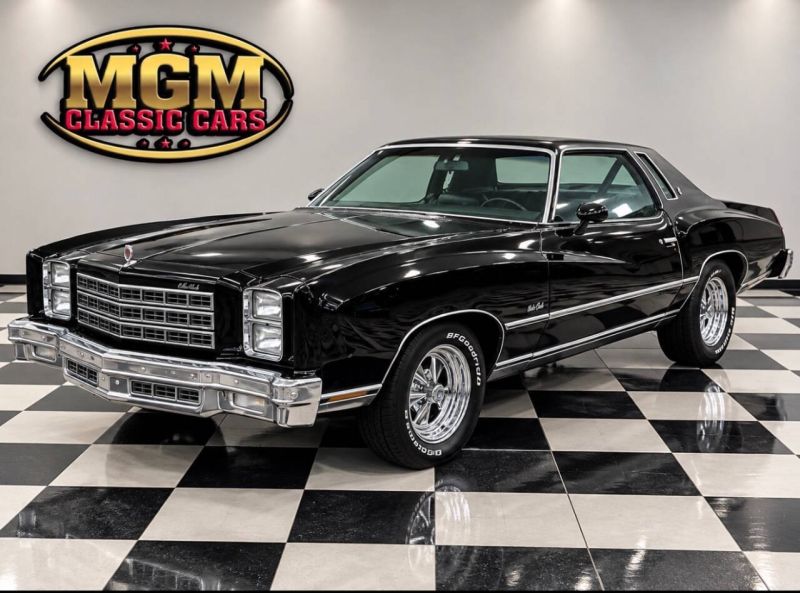
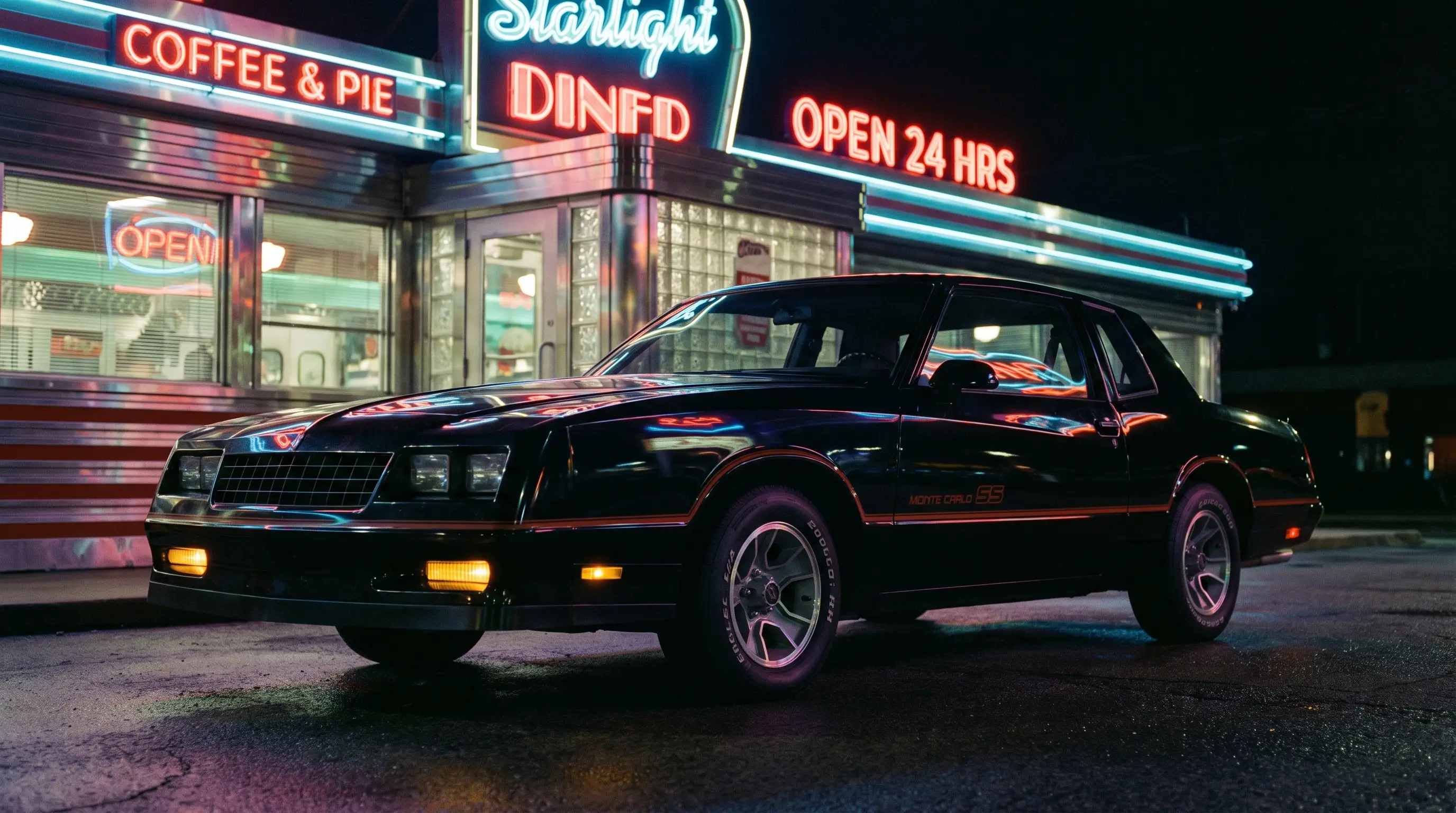
Park a 1986 Monte Carlo SS next to almost anything else Chevrolet built that year and the room goes quiet. The Monte Carlo 1986 SS legacy, why it endures, has less to do with horsepower than with timing: this was a personal luxury coupe grafted onto a NASCAR aerodynamics program at the exact moment American performance cars were supposed to be dead. It should not have worked. It did.
A coupe built for a wind tunnel it never officially visited
The G-body Monte Carlo SS arrived for 1983 as a factory answer to a problem Chevrolet had on the superspeedway: the boxy notchback roofline of the standard Monte Carlo was giving up ground to Ford's Thunderbird in NASCAR competition. The SS package brought a distinctive sloped nose, a rear spoiler, and a tuned suspension, all wrapped around a 305 cubic inch V8 rated at 175 horsepower for that first 1983 model year. By 1986 the formula had matured. Chevrolet had three seasons of feedback from stock car racing to refine what the SS actually needed to be on the street, and the result was the most cohesive version of the car to that point.
What makes the 1986 model specifically important is that it sits at the hinge point of the SS story. The high-output L69 305, the same basic engine block shared with the Camaro Z28's parts bin, had its rating climb to 180 horsepower in the Monte Carlo starting with the 1984 model year and was still on the order sheet in 1986 with that same figure (the Z28's version of the L69 carried a different air cleaner setup and was rated 190 horsepower, a detail people sometimes conflate with the Monte Carlo's own rating). That overlap year, where the old and the coming aero-conscious thinking sat side by side, is part of why collectors treat 1986 as a distinct chapter rather than just another model year on a long production run.
Why the shape mattered more than the spec sheet
Compare the numbers to a contemporary muscle car and the SS looks modest. Compare the silhouette to a standard Monte Carlo LS and the difference is obvious even from across a parking lot. Chevrolet's designers were not chasing quarter mile bragging rights with this car; they were chasing air. Every panel change on the SS, from the front fascia to the decklid spoiler, existed to reduce drag and generate stability at triple digit speeds on a superspeedway. That the same shape also looked aggressive and cohesive sitting still in a driveway was almost a bonus.
Read the background on how the SS package came together, because the short version tends to shortchange how deliberate the aerodynamic work actually was. This was not a styling exercise dressed up as a performance package. It was a performance package that happened to look sharp.
Scarcity, documentation, and why prices climbed
Production numbers for the SS package were never small in the way a limited-edition halo car's numbers are small, but they were finite, and the cars that survived in unmolested condition are not common. A meaningful share of SS Monte Carlos from this era were driven hard, modified, or simply used up as daily transportation through the 1990s before anyone treated them as collectible. What is left with matching numbers, an unaltered interior, and clean build sheet documentation commands real attention at auction now, and the gap between a rough driver and a documented, low-mile example has widened every year this decade.
That widening gap is the practical answer to why the legacy endures. Enthusiasts did not rediscover the SS because of a sudden nostalgia wave; they rediscovered it because the cars that remain honest are genuinely scarce, and scarcity plus a real performance story is a combination the market rewards every time.
"People ask me why a 305 with 180 horsepower gets treated like a big deal. It is not the number. It is that Chevrolet built this car with a wind tunnel in mind during a decade when almost nobody else bothered."
- Sarah Whitfield
The 1986 model in the wider G-body story
Every Monte Carlo generation from the swoopy first-generation cars of 1970 through the downsized 1978-80 models tells a piece of the personal luxury coupe story, but the G-body SS is where that lineage collided with motorsport necessity. The 1986 car is neither the first SS nor the most extreme Aerocoupe that would follow in 1986 and 1987 in tiny numbers for homologation. It is instead the year the formula was fully sorted, sold in real volume, and driven by ordinary buyers who wanted the look and the tighter suspension without chasing a NASCAR homologation footnote.
Collectors researching this era should browse classic Monte Carlo listings to see how wide the condition spread actually is in the current market, from tired project cars to sorted, documented survivors. That spread is itself part of the story. This is a car whose value depends heavily on what has and has not been done to it since 1986, and buyers who understand the aerodynamic reasoning behind the shape tend to be the ones who pay for originality rather than modification.
Step inside a 1986 SS and the cabin does not shout the way a lot of era-appropriate performance packages did. Chevrolet resisted the urge to bolt in oversized gauge clusters or gaudy graphics packages beyond the SS-specific badging and available two-tone paint. Bucket seats with reasonable bolstering, a floor-mounted shifter for cars ordered with the manual, and a straightforward instrument layout kept the cabin feeling like an extension of the exterior's restraint rather than a costume. That restraint is part of why the car has aged so well. Contemporaries that leaned harder into loud graphics packages from the same era now read as dated in a way the SS does not.
Documentation buyers should specifically request includes the factory build sheet, which confirms whether a given car left the factory with the SS package versus having decals and a spoiler added later by a dealer or a previous owner chasing the look without the underlying content. This distinction matters enormously to value, and it is one of the first things a knowledgeable appraiser checks before taking a genuine SS seriously.
The G-body Monte Carlo that carried the SS package from 1983 through 1988 was itself a downsized successor to the much larger Colonnade cars of 1973-77 and the further-downsized 1978-80 models. Chevrolet had spent most of the decade steadily reducing the car's footprint in response to fuel economy pressure, and the SS package proved that a smaller, lighter platform could still deliver genuine motorsport credibility rather than simply chasing efficiency numbers. That context matters because it shows the SS was not an isolated performance halo grafted onto an otherwise unrelated model. It was the natural conclusion of a decade of the Monte Carlo adapting to changing regulatory and market pressure while still finding room for a genuine performance variant.
Enthusiasts sometimes treat the SS as though it appeared out of nowhere in 1983, but the groundwork for a factory performance package had been building since the earliest downsizing decisions Chevrolet made for the 1978 model year. Understanding that lineage helps explain why the SS felt like a natural fit for the nameplate rather than a marketing afterthought bolted onto a car that had spent most of its life as a straightforward personal luxury coupe.
What actually endures
The Monte Carlo SS did not become a cult classic because it was the fastest thing Chevrolet sold in 1986. It became one because it represented a rare case of a factory taking a genuinely practical design problem, aerodynamics for stock car racing, and solving it in a way that also produced a coherent, good-looking street car. That kind of alignment between motorsport necessity and showroom appeal is unusual, and it is the reason the 1986 SS still draws a crowd at a cruise night four decades later.
What keeps demand steady rather than fading with each passing generation of new collectors is that the car's story holds up under scrutiny. It is not nostalgia built on an exaggerated legend. The aerodynamic reasoning was real, the production numbers were genuinely finite, and the styling has not needed decades of revisionist appreciation to look good. Few cars from this specific era of American manufacturing can say the same thing without qualification.
Sources and notes
- Hagerty: 1983-88 Chevy Monte Carlo SS Buyer's Guide
- Automobile Catalog: 1986 Chevrolet Monte Carlo SS specifications
- Old Car Memories: 1983-1988 Chevrolet L69 5.0L (305 CID) H.O. V8
- Wikipedia: Chevrolet Monte Carlo
- MonteCarloSS.com: SS L69 vs Z28 L69 discussion
- EPautos: Almost Fast, 1983-1988 Monte Carlo SS