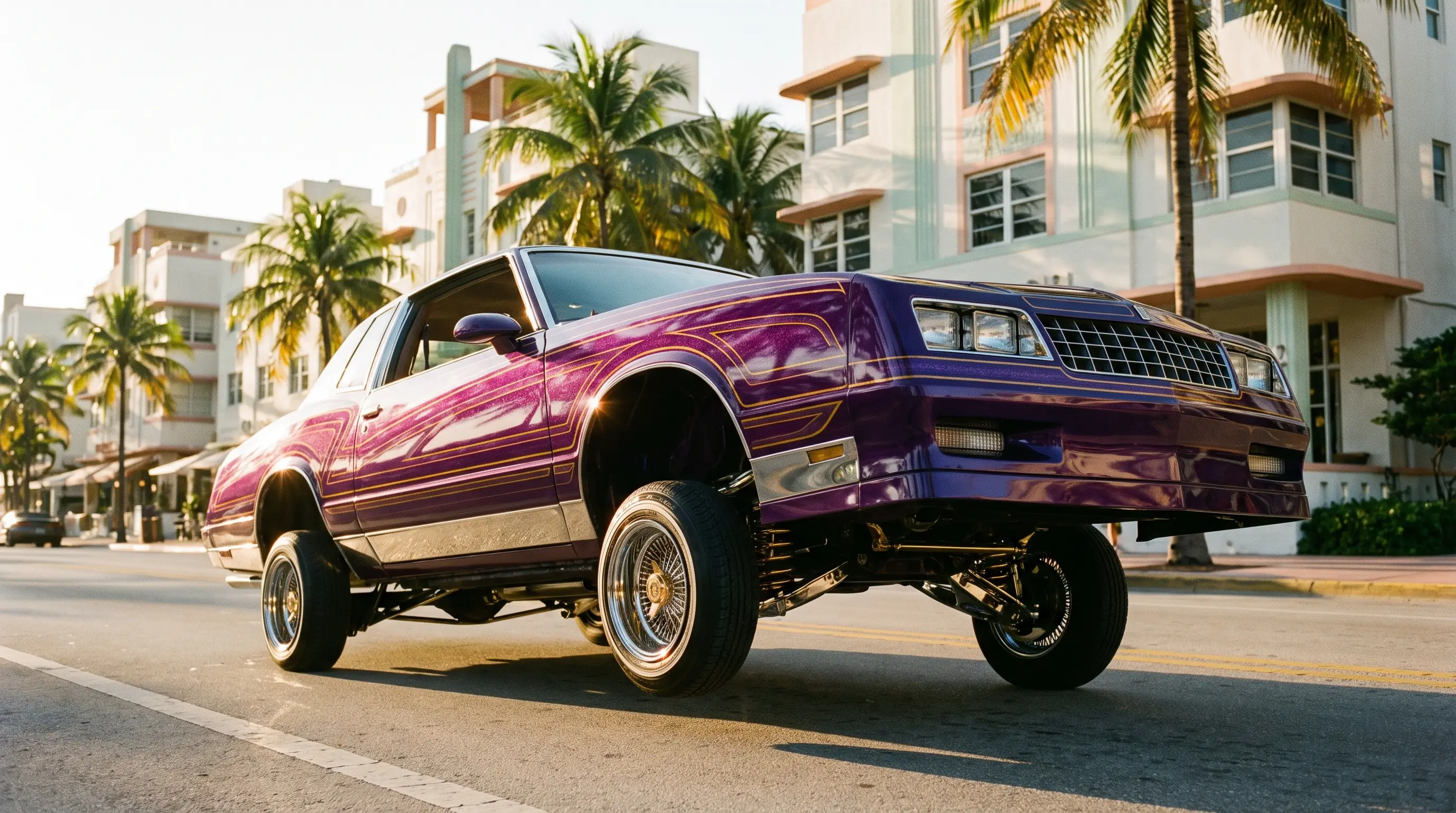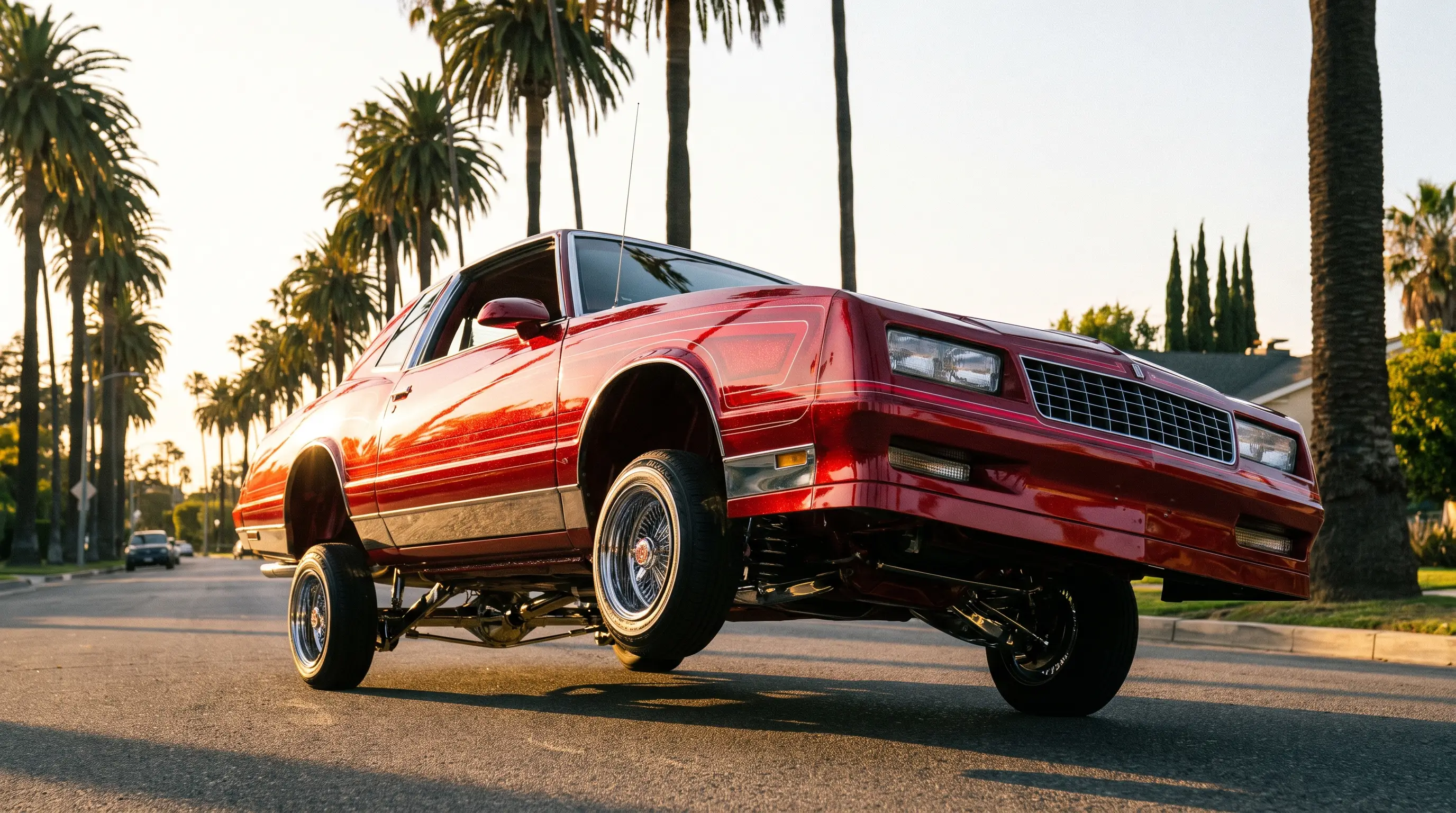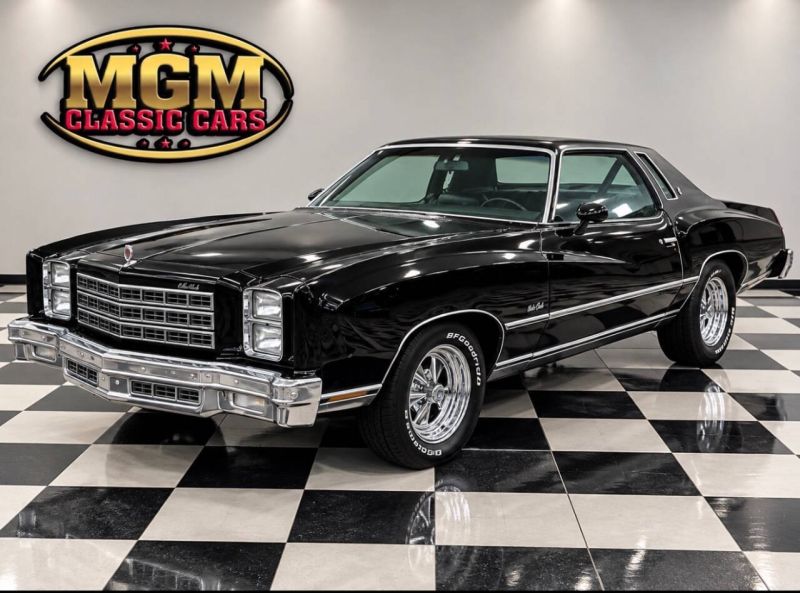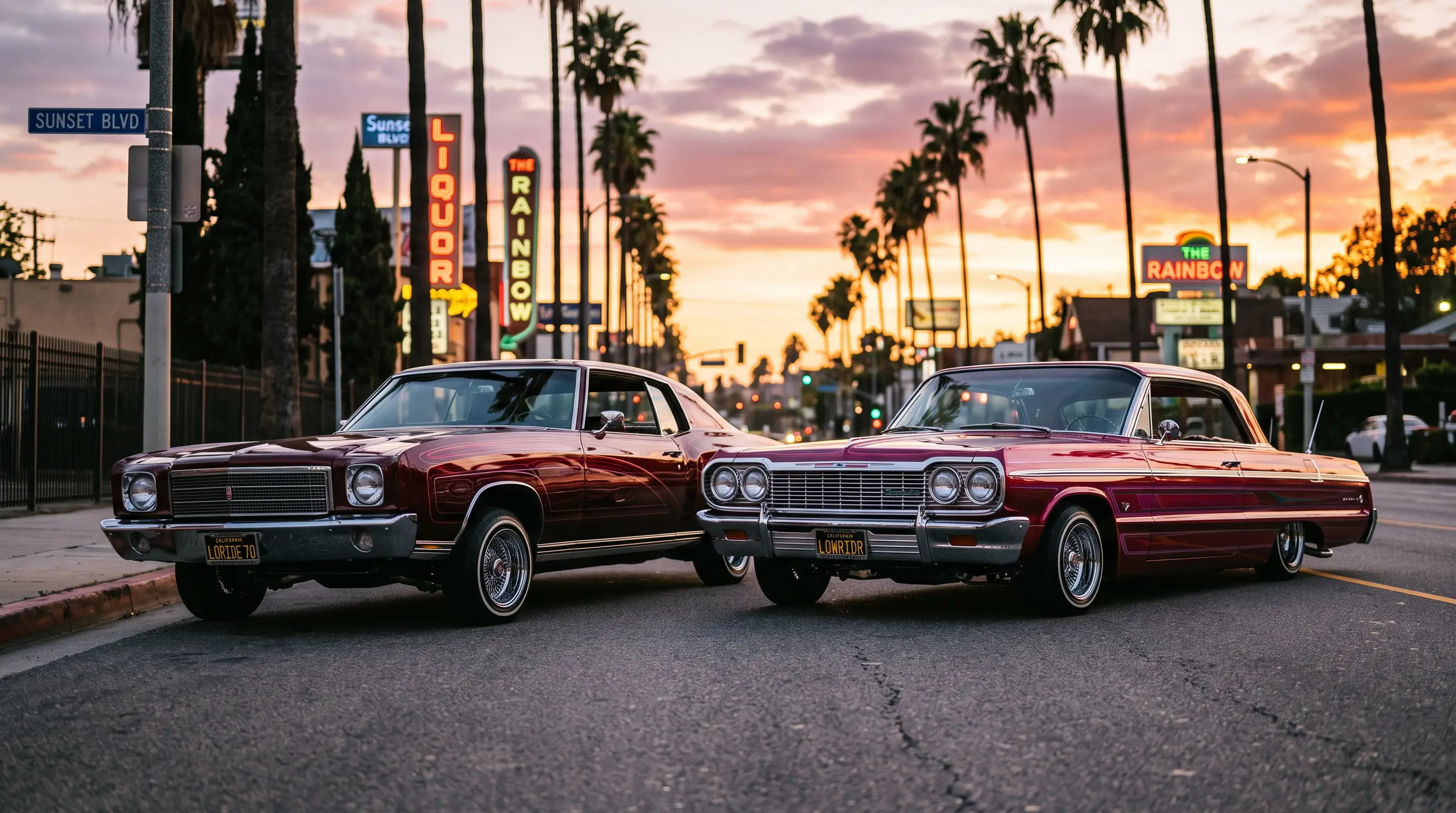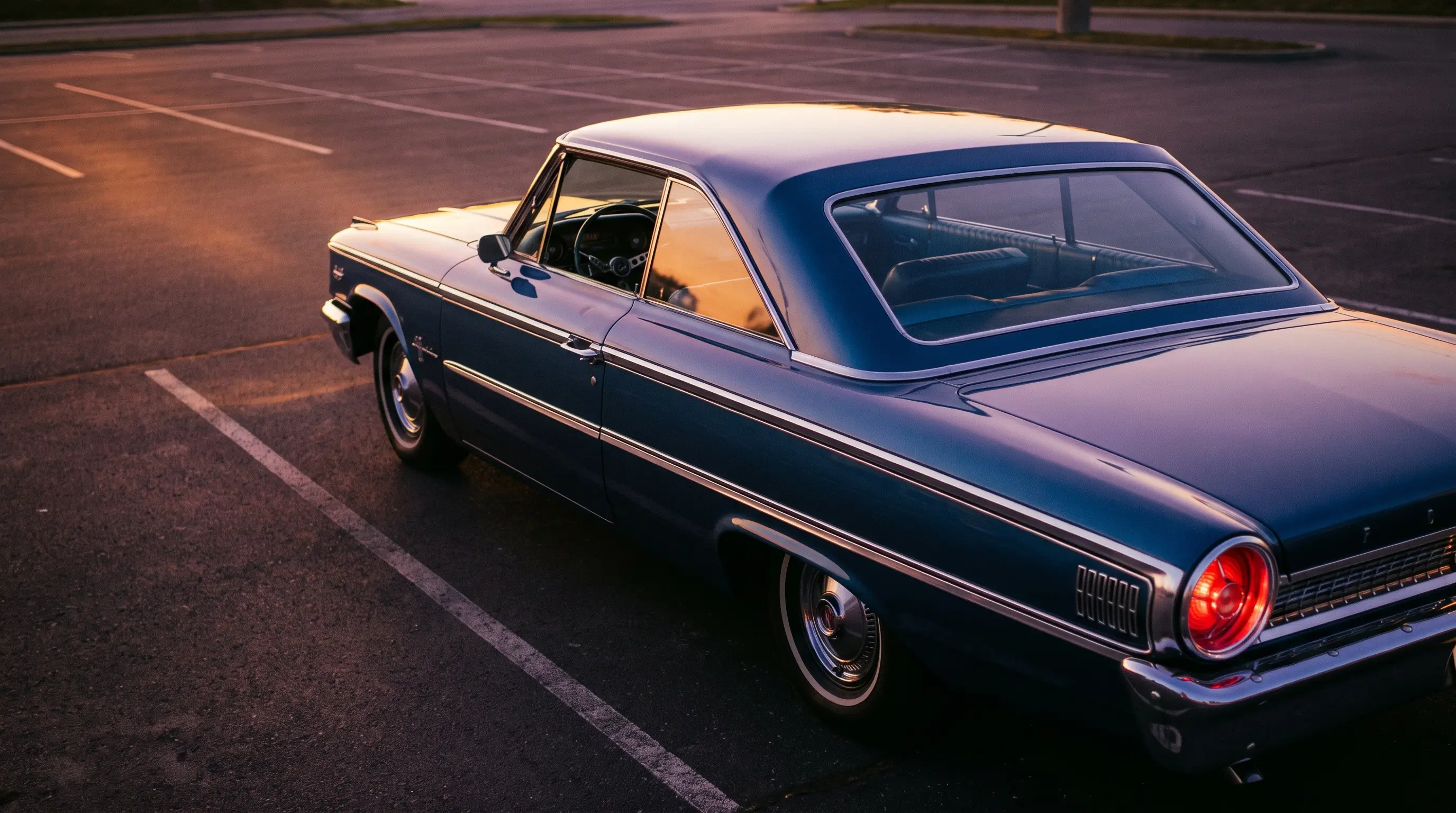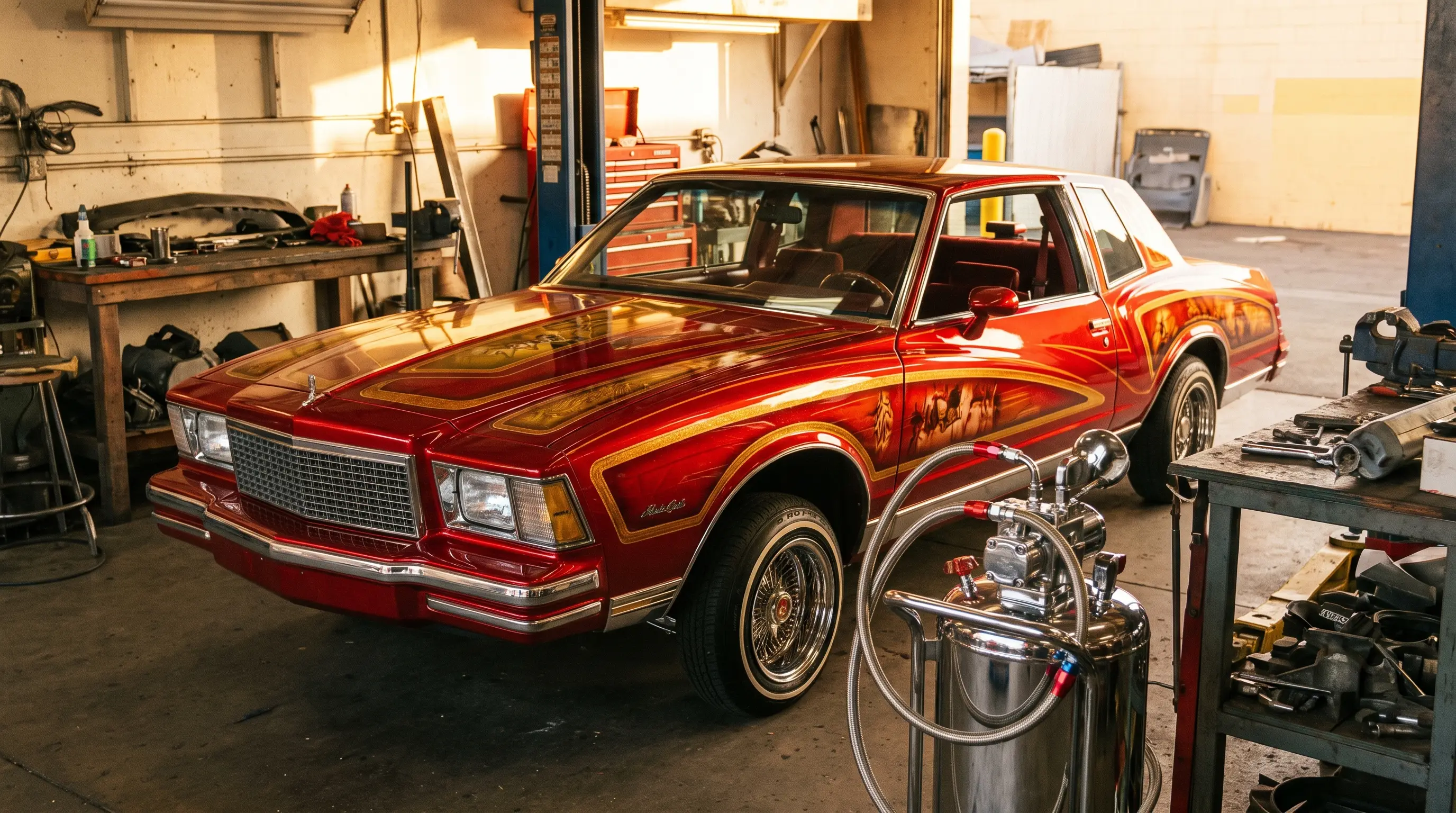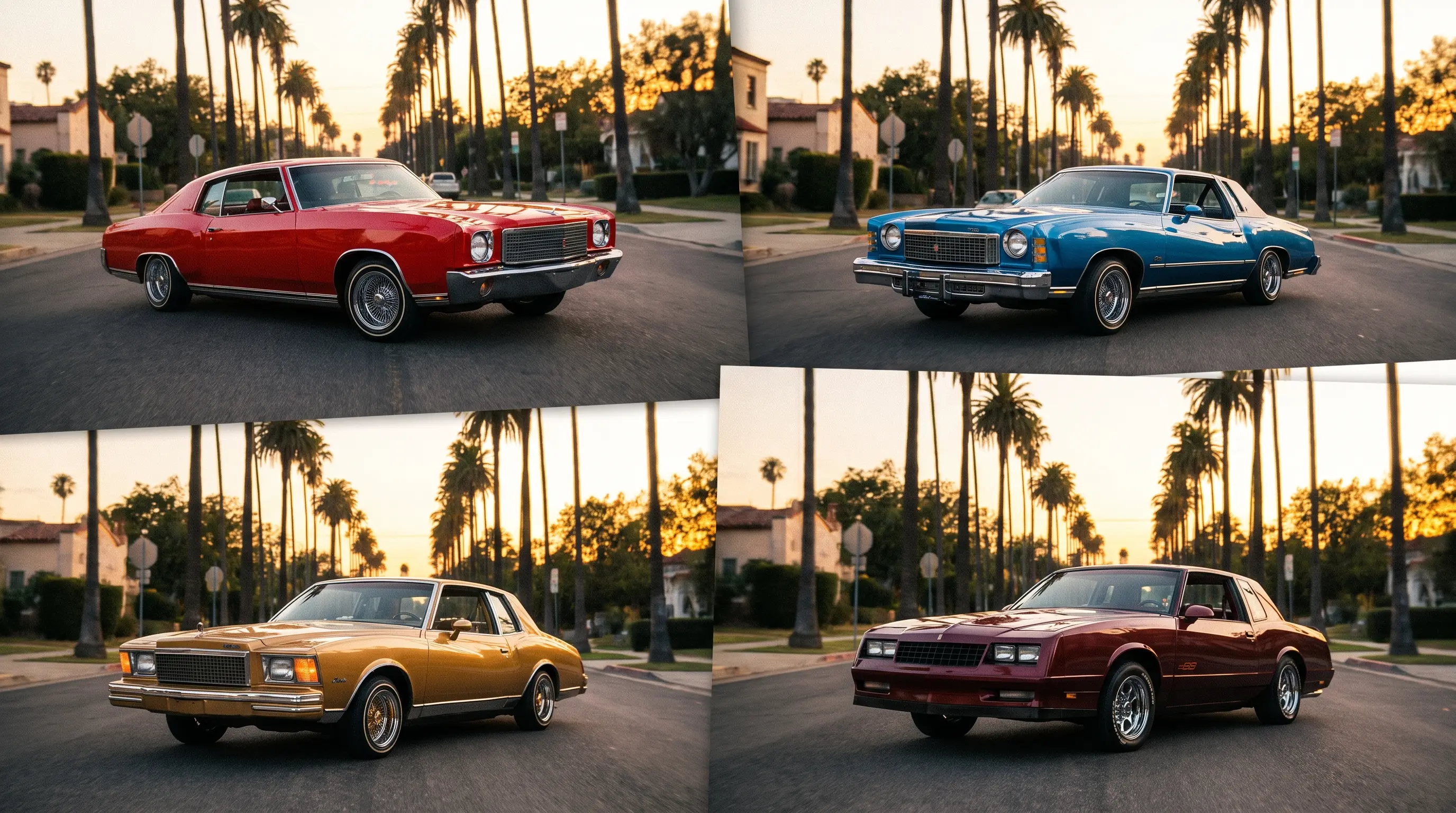
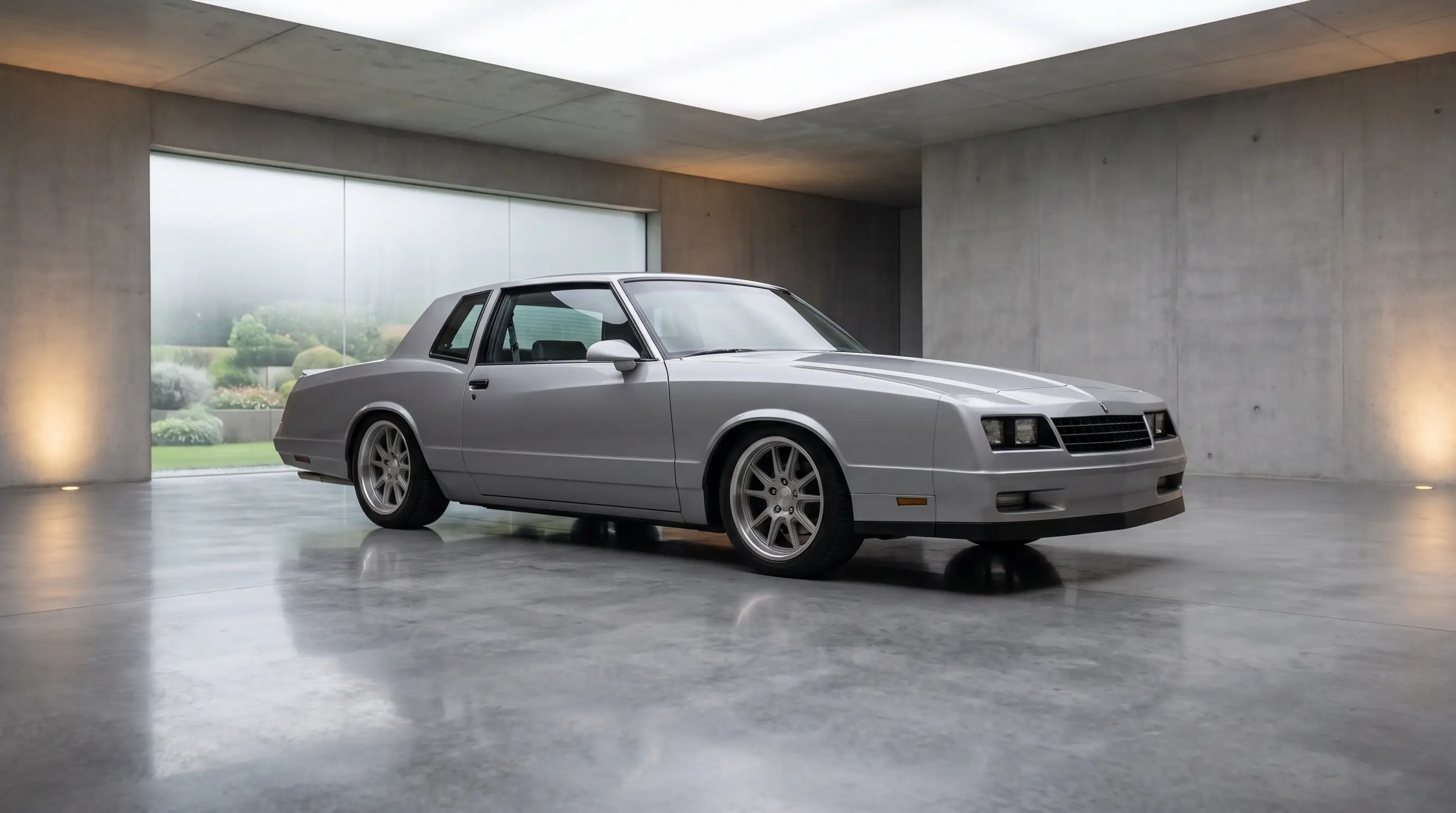
Not every serious Monte Carlo lowrider chases murals and chrome undercarriages. Somewhere in the late 1980s and through the 1990s, a different current developed inside the culture, one that traded elaborate ornamentation for restraint. Builders call it the Euro style, sometimes clean style, and a well-executed Monte Carlo in this vein can be just as respected on a show floor as its more elaborate cousin, judged on a completely different set of standards. We have always found this branch of the culture underappreciated by people outside it, because subtlety photographs worse than a full mural, even when it takes just as much skill to pull off.
What Euro style actually means on a Monte Carlo
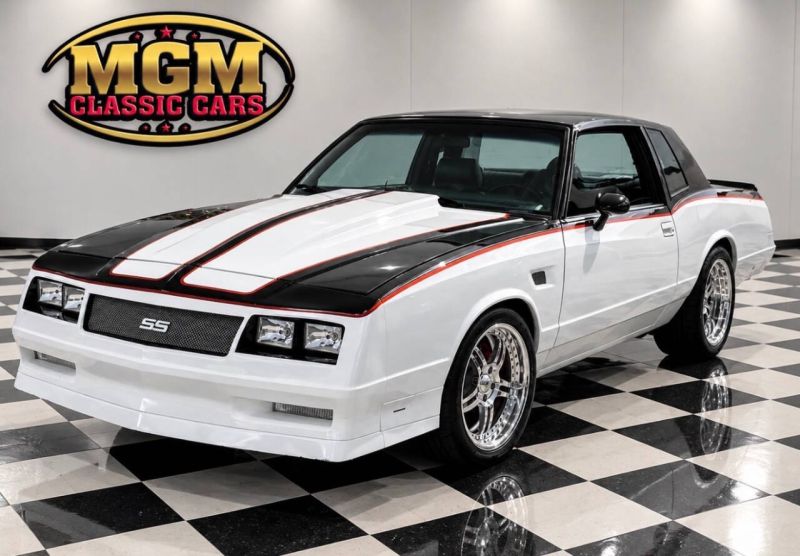
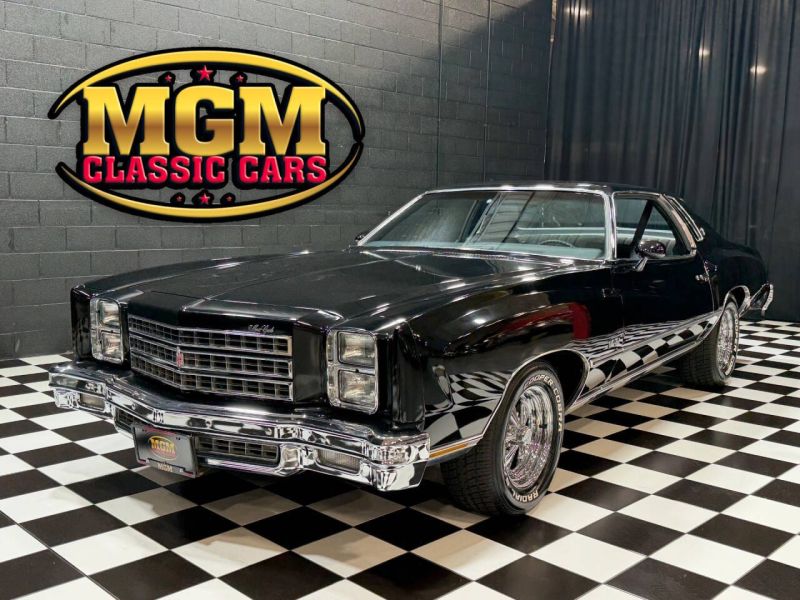
The Euro or clean style aesthetic emphasizes a smooth, monochromatic exterior, often in a deep single-stage color with minimal or no graphics, paired with smaller diameter wire or European-style alloy wheels rather than the large chrome wires associated with more traditional builds. Ride height still drops low, hydraulics are frequently still present, but the overall visual statement leans toward precision and understatement rather than maximalist display. A clean-style G-body Monte Carlo can look almost factory-stock from a distance, until you notice the stance, the wheels, and the flawless paint that no factory line ever produced.
This restraint requires its own discipline from a builder. Without a mural or elaborate graphics to distract the eye, every panel gap, every reflection line, and every seam has to be perfect, because there is nowhere to hide a flaw. A clean-style build lives or dies on execution alone.
"Anybody can hide a bad panel gap under a big mural. Clean style does not give you that option. Every inch has to actually be right."
- Hector Morales
Where the name and the influence came from
The Euro label reflects a real cross-pollination with European tuning culture that some American builders picked up through car magazines, imported wheel brands, and eventually the internet, borrowing the low-key, precision-focused aesthetic associated with certain European tuning scenes and applying it to an American platform that had never been designed with that sensibility in mind. Putting a subdued, monochromatic Euro-influenced treatment on a Monte Carlo, a car originally built as an American personal luxury coupe, created an interesting cultural mashup that some traditionalists in lowrider culture initially resisted, viewing it as a departure from the community's visual roots.
That resistance softened over time as builders proved the approach could still respect the underlying craft traditions, the same attention to hydraulic engineering, paint quality, and stance that defined lowrider culture from the start, just applied toward a quieter end result. Getting monte carlo lowrider history in full context helps explain how a culture built on bold visual statements came to also embrace this more restrained branch without losing its identity.
The wheel and stance choices that define the look
Wheel choice separates clean-style builds from traditional ones more than almost any other single element. Where a classic build reaches for large-diameter chrome wire wheels with wide whitewalls, a clean-style Monte Carlo more often runs smaller, deep-lip alloy wheels, sometimes finished in gold or a color matched to the body, paired with lower-profile tires that emphasize the car's stance rather than the wheel itself. The overall effect reads closer to a European luxury sedan lowered for aggressive styling than to a traditional American lowrider, even though the underlying hydraulic culture and community are exactly the same.
The debate that never fully settled
Within the culture, the argument over whether clean style represents a legitimate evolution or a departure from lowrider tradition never fully resolved, and it probably never will. Traditionalists sometimes argue that the maximalist, mural-driven approach is not just an aesthetic choice but a form of cultural storytelling, using imagery to represent family, faith, and neighborhood pride in a way that a monochromatic clean build simply cannot express. Clean-style advocates counter that restraint is its own form of respect for the craft, refusing to hide imperfect work behind decoration and instead standing entirely on execution.
Neither side has fully won the argument, and most builders who have been around long enough have come to see both approaches as legitimate expressions of the same underlying values, patience, precision, and pride in ownership, even when the final visual result could not look more different from one build to the next.
How it compares within the broader Monte Carlo scene
If you want to see how this restrained approach sits alongside the more elaborate, mural-heavy tradition, a related story covers the cars that made magazine covers largely through maximalist visual statements, a useful contrast to everything the clean style deliberately avoids. Both approaches draw from the same well of hydraulic engineering knowledge and community mentorship, they just express it toward opposite visual conclusions, and both remain fully legitimate within the culture today.
Judges at contemporary shows generally recognize clean style as its own category rather than forcing it to compete directly against elaborate mural builds, acknowledging that the two approaches pursue different goals and should be measured by different standards. That recognition has helped the clean-style tradition grow its own following rather than being dismissed as simply an unfinished or under-decorated build.
Paint and finish standards unique to this approach
A clean-style Monte Carlo demands a different paint conversation than a mural-heavy build. Rather than layering candy toners and clear coat over an already elaborate base, clean-style painters focus on flawless single-stage or two-stage application, often in colors chosen specifically because they show every imperfection under direct light, deep blacks, dark blues, and rich burgundies among the most common choices. Choosing a color that punishes sloppy work is, in a real sense, the whole point. It forces the builder to be honest with themselves about the quality of the bodywork underneath.
Some clean-style builders also pay unusual attention to details most viewers never consciously register, consistent panel gaps, perfectly aligned trim, door handles and emblems either deleted entirely for a smoother look or replaced with subtler aftermarket pieces. None of these choices scream for attention the way a mural does, but together they create the kind of quiet confidence that experienced judges and fellow builders notice immediately, even if a casual passerby walks past without a second glance.
Starting a clean-style project of your own
A clean-style Monte Carlo build rewards patience with paint and bodywork more than almost any other approach in the culture, since there is no mural to distract from an imperfect surface. If this restrained aesthetic appeals to you more than the elaborate tradition, the good news is that either a Colonnade or G-body base car works fine as a starting point, since the style is defined by execution and wheel choice rather than any specific body generation. There are Monte Carlos for sale now across both eras, and a patient search will turn up a straight, solid example worth the investment a proper clean-style build demands.
Sources and notes
- Chevrolet Monte Carlo, Wikipedia
- The History of Lowrider Cars, Gauge Magazine
- Carros y Cultura: Lowriding Legacies in Texas, Texas Standard / Bullock Texas State History Museum
- Amigos Car Club Collection, University of San Diego Lowrider Archival Project
- 1972 Monte Carlo Becomes a Nationwide Lowrider Showstopper, Motorious via Yahoo Autos