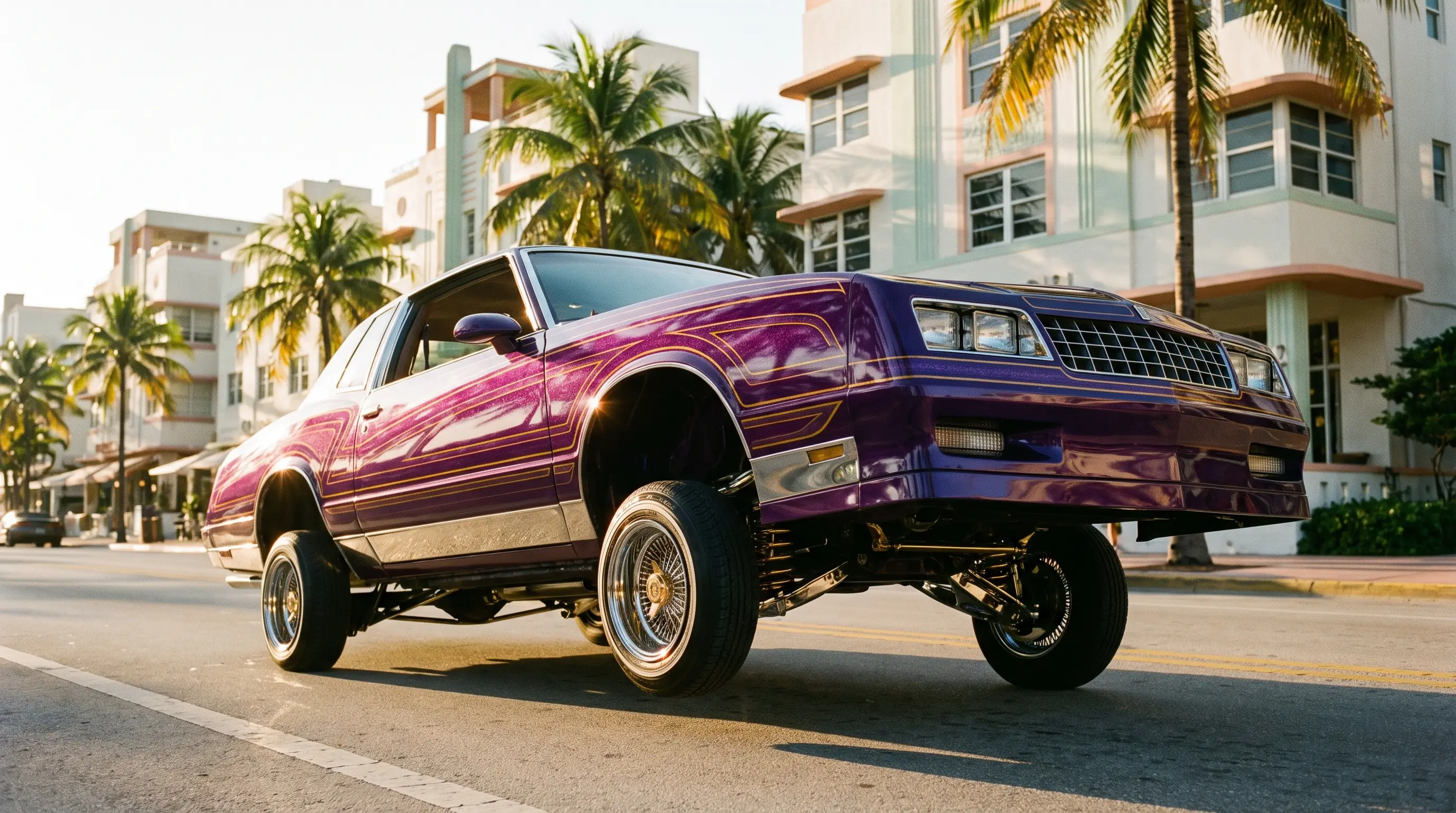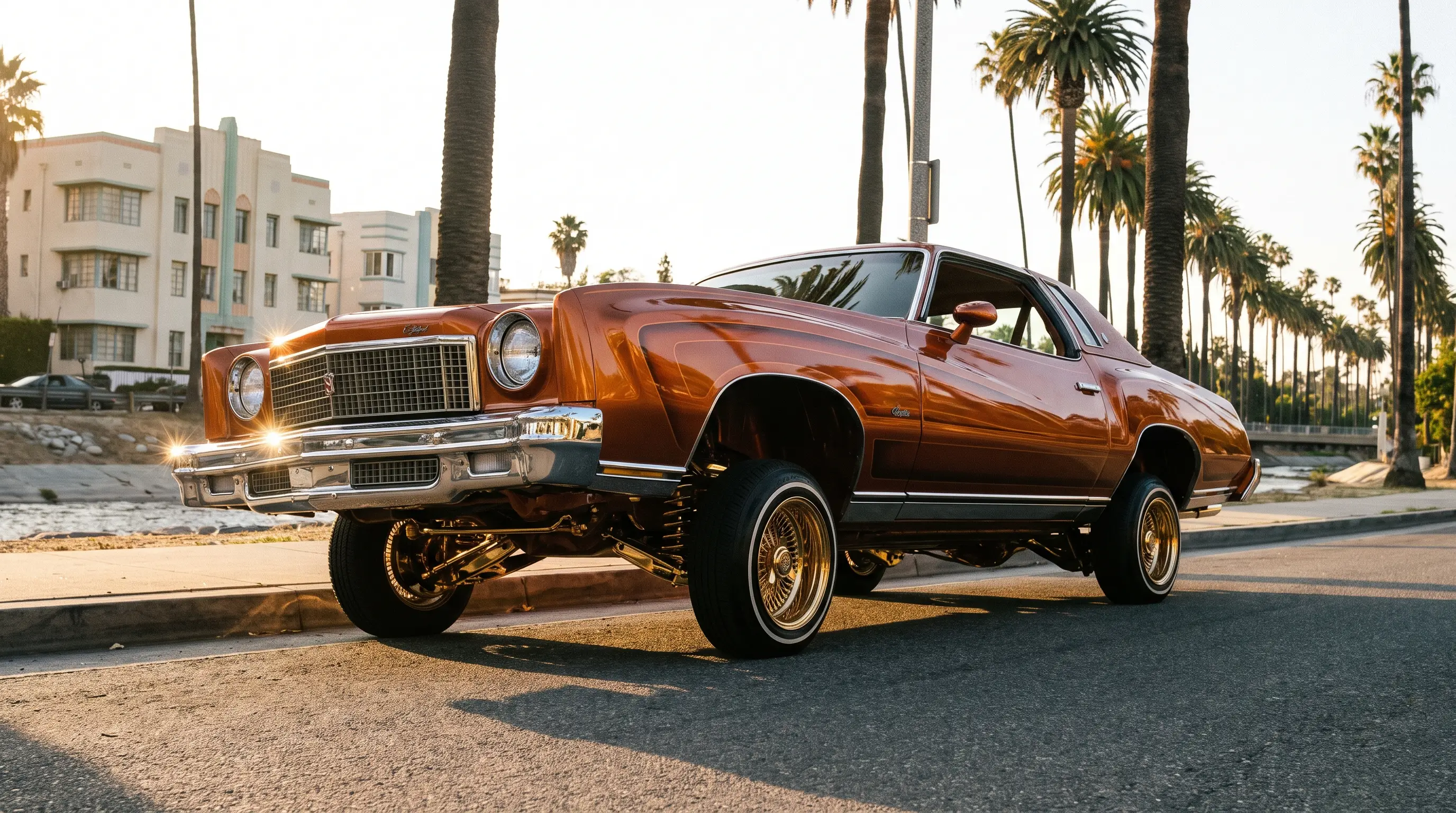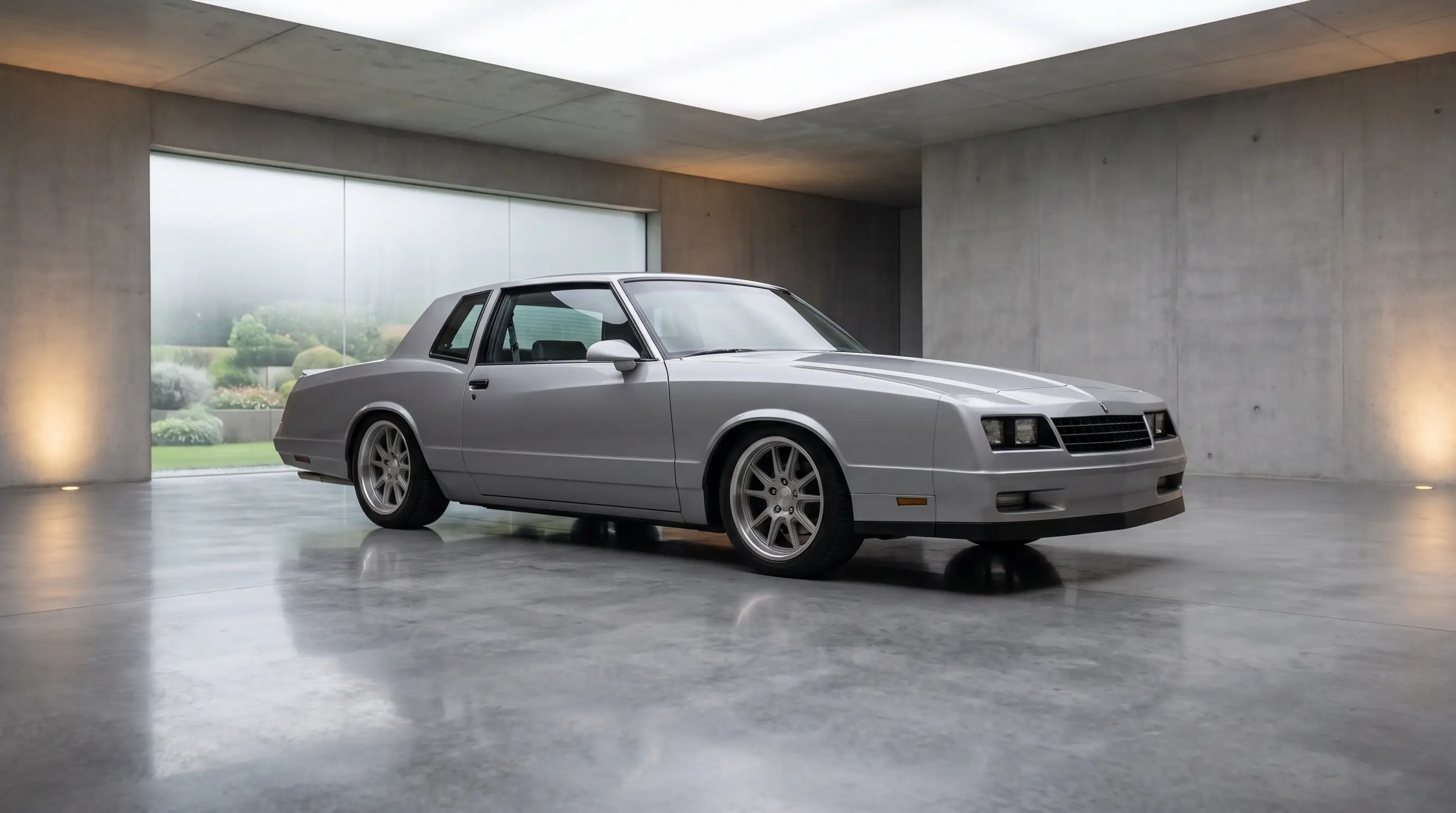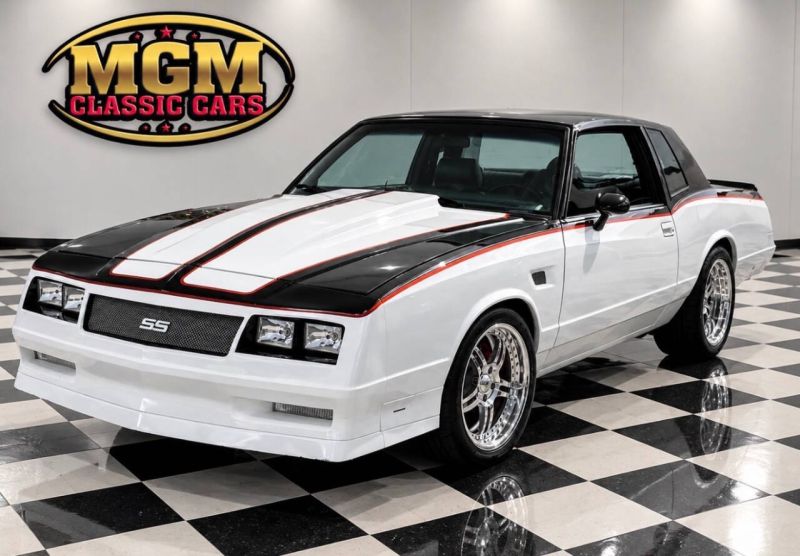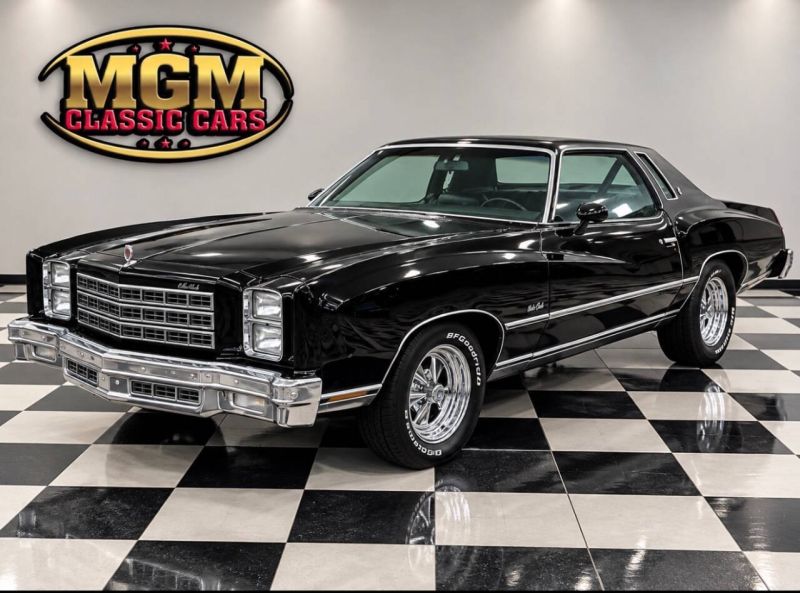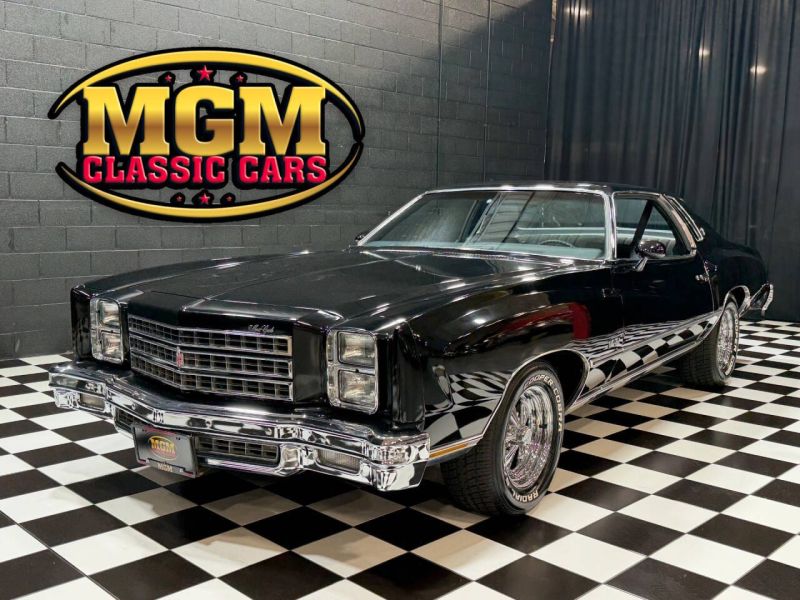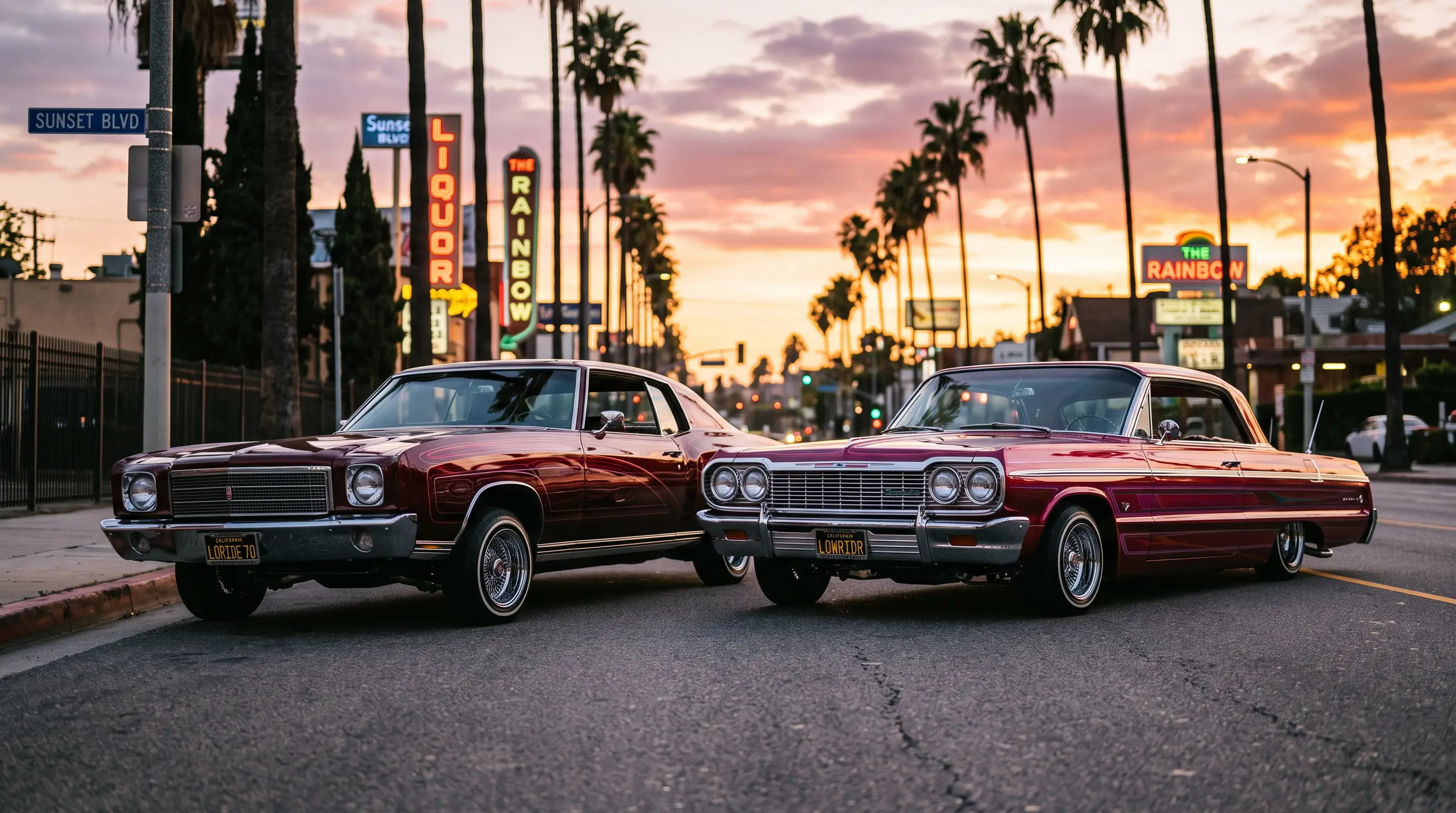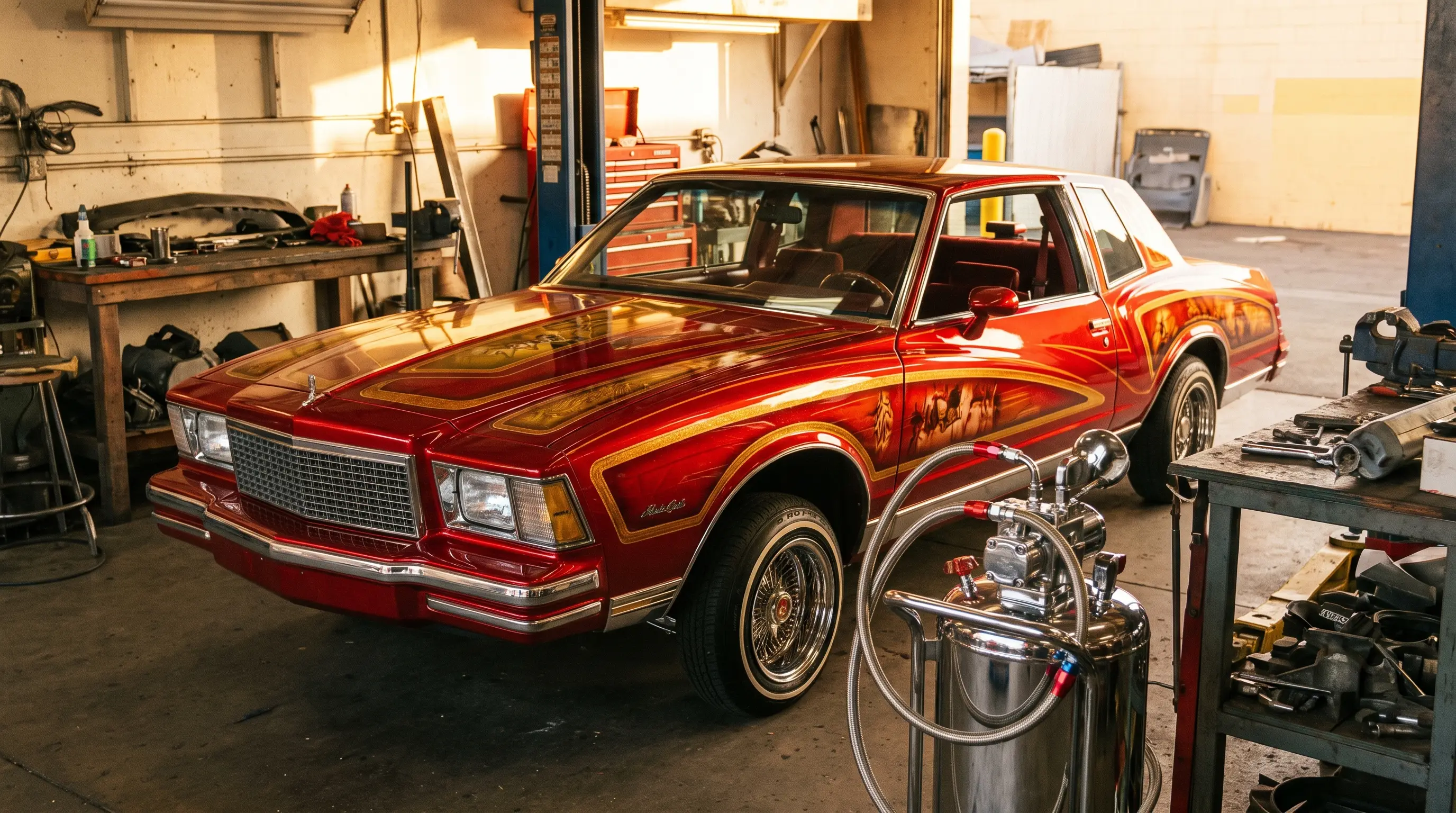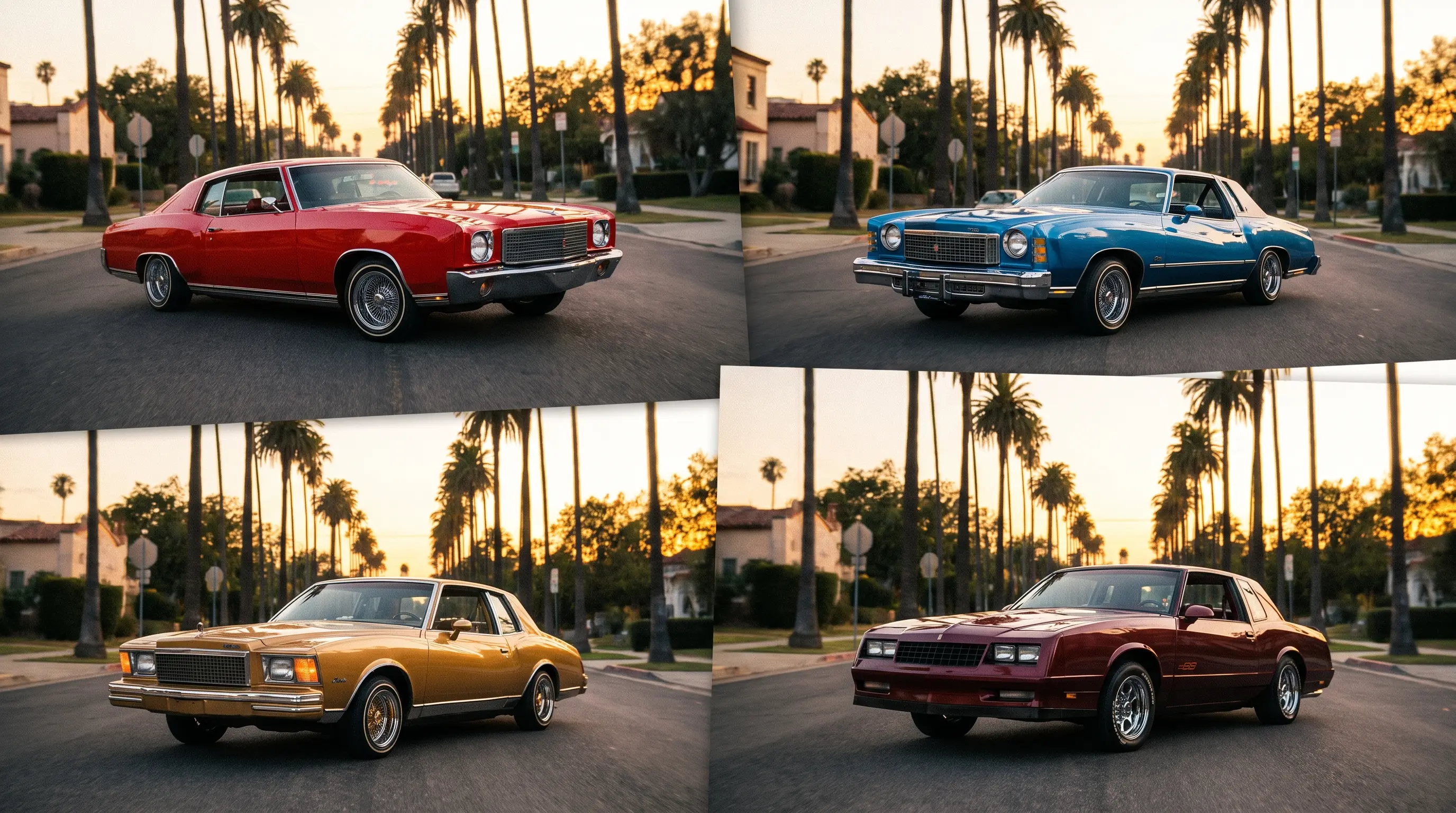
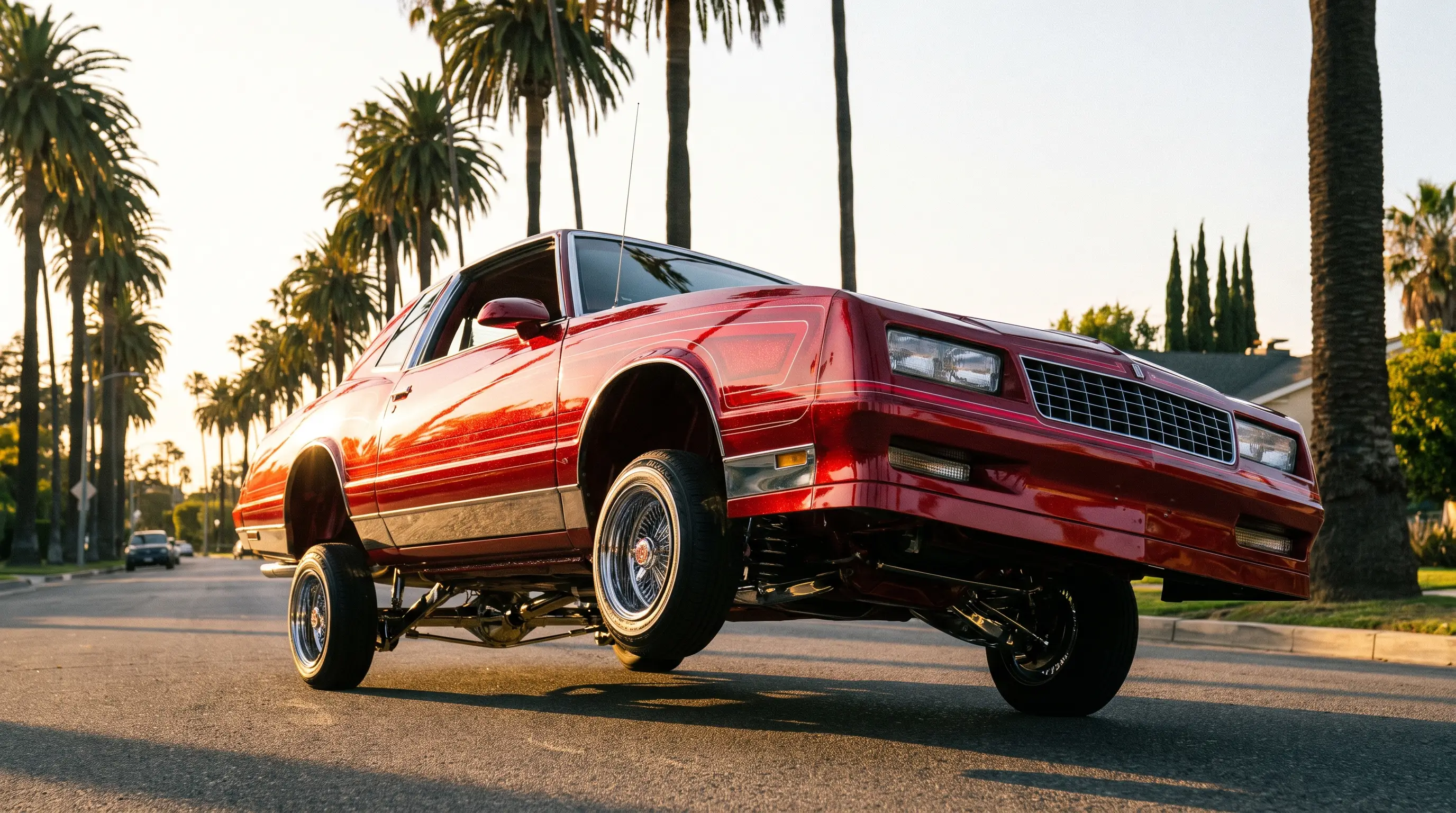
The 1981 through 1988 G-body Monte Carlo is the version most people picture when they hear "lowrider Monte Carlo." That is not an accident. Chevrolet downsized the car for 1978 and then refined it further into the crisper, more angular shape it wore through the 1980s, and that tighter body arrived right as lowrider culture was expanding beyond its traditional Impala and Cadillac roots into newer, more affordable platforms. We watched an entire generation of builders adopt the G-body Monte Carlo as their canvas, and the results still define a huge share of what people picture today.
Why the G-body found its moment
By the early 1980s, the Impalas and full-size Chevrolets that had anchored lowrider culture since the 1960s were getting harder to find in good condition and, for younger builders, increasingly expensive. The G-body Monte Carlo offered a newer alternative that was still rear-wheel drive, still body-on-frame, and still mechanically straightforward enough for a home garage to modify. It was also, critically, affordable. A used G-body Monte Carlo in the mid-1980s could be had for a fraction of what a clean 1964 Impala cost, which mattered enormously to young builders working with limited budgets.
The body itself cooperated with the culture's aesthetic goals. Its squared-off rear end, crisp character lines, and relatively flat door panels gave painters and muralists clean surfaces to work with, while the frame underneath, shared in modified form with the Chevrolet Malibu and Buick Regal of the same era, proved sturdy enough to handle serious hydraulic modification without excessive structural failure.
"The G-body caught on because it let a kid with a part-time job build something real. That accessibility built the whole next generation of the culture."
- Hector Morales
The SS and the tension it created
Chevrolet's own 1983 through 1988 Monte Carlo SS, with its distinctive nose-down front air dam and available L69 305 cubic inch high output V8, rated at 175 horsepower for 1983 and 180 horsepower from 1984 through 1988, sat in an interesting spot relative to lowrider culture. The SS was factory performance oriented, built for NASCAR homologation and street credibility among muscle car buyers, and its aggressive stance and ground effects did not always suit the low, slow, hydraulic aesthetic lowrider builders were chasing. Some builders embraced the SS anyway, appreciating the factory attitude and adapting it to their own vision. Others preferred the standard Monte Carlo body precisely because its cleaner lines left more room for their own custom statement rather than competing with a factory design already making its own loud argument.
Either choice was legitimate within the culture, and both approaches produced memorable builds. The debate over SS versus standard body for a serious lowrider project is still one you will hear argued at car shows today, decades after the last G-body Monte Carlo rolled off the line.
Hydraulics, wire wheels, and the visual signature
A typical 1980s G-body Monte Carlo lowrider build combined a multi-pump hydraulic setup, often with visible chrome accumulator tanks and battery banks in a built-out trunk, with a set of wire wheels wrapped in white-wall tires, a body dropped low over those wheels, and a paint job ranging from deep single-stage candy colors to elaborate airbrushed murals depicting everything from religious imagery to neighborhood pride themes. That combination, the low stance, the wire wheels, the candy paint, became the visual template that still defines lowrider aesthetics in the popular imagination today, and the G-body Monte Carlo was one of the primary platforms where that template got refined.
Community and continuity through the decade
Car clubs organized around the G-body Monte Carlo specifically grew throughout the 1980s, often centered in Los Angeles, but spreading to cities across California, the Southwest, and eventually nationally as the culture's visibility increased through magazines and eventually music videos. These clubs provided more than just social connection. They shared painters, upholsterers, and hydraulic installers, pooled knowledge about which suppliers had the best chrome plating, and created informal mentorship structures where experienced builders guided newer members through their first real project.
That community structure is a core part of why the G-body Monte Carlo's lowrider history runs so deep. It was never just individual builders working in isolation. It was a network, and understanding our complete history of that network helps explain why certain clubs and certain builders' names still carry weight decades after their most famous cars were built.
Regional variations across the decade
Los Angeles remained the cultural center for G-body Monte Carlo builds through most of the 1980s, but the platform's affordability and availability meant the style spread quickly to other regions with their own established car scenes. Builders in Texas, Arizona, and eventually cities further from the West Coast adapted the same fundamental approach, low stance, hydraulics, wire wheels, custom paint, while adding their own regional flavor through color preferences, mural subject matter, and even the specific style of engraving favored on hydraulic accumulator tanks and dash accents.
This spread mattered for the culture's long-term survival. A style concentrated in a single city remains vulnerable to local economic shifts, changing zoning enforcement against modified vehicles, or shifting police attention. A style that took root in multiple regions simultaneously, each with its own supply of painters, upholsterers, and hydraulic specialists, proved far more resilient, which is a real part of why G-body Monte Carlo lowrider culture persisted strongly through the 1980s and into the following decades even as individual local scenes went through their own ups and downs.
What set the decade's best builds apart
Not every lowered G-body Monte Carlo from the 1980s reached the level people remember decades later. The builds that lasted in cultural memory typically combined three things at once: a hydraulic system engineered by someone who genuinely understood the mechanics rather than just copying a friend's setup, paint and bodywork executed with real patience rather than rushed for an upcoming show deadline, and an owner willing to keep refining the car over multiple years rather than considering it finished after the first round of modifications. That combination was rarer than the sheer number of modified G-body Monte Carlos on the road might suggest, which is exactly why the standout examples still get discussed today while countless other decent but unremarkable builds have simply faded from memory.
Finding your own G-body today
The good news for anyone wanting to start their own G-body Monte Carlo lowrider project today is that survivorship worked in this generation's favor compared to the earlier Colonnade cars. Chevrolet built the G-body Monte Carlo in large numbers across eight model years, and enough have survived, particularly in drier Southwest climates, that finding a solid base car remains realistic without the extended search a Colonnade project often demands.
You can browse classic Monte Carlo listings across those 1981 through 1988 model years and find a starting point that fits your budget and your vision, whether that means a factory SS you plan to keep closer to stock or a base model you intend to transform completely into the next chapter of a tradition that has been building since the early 1980s.