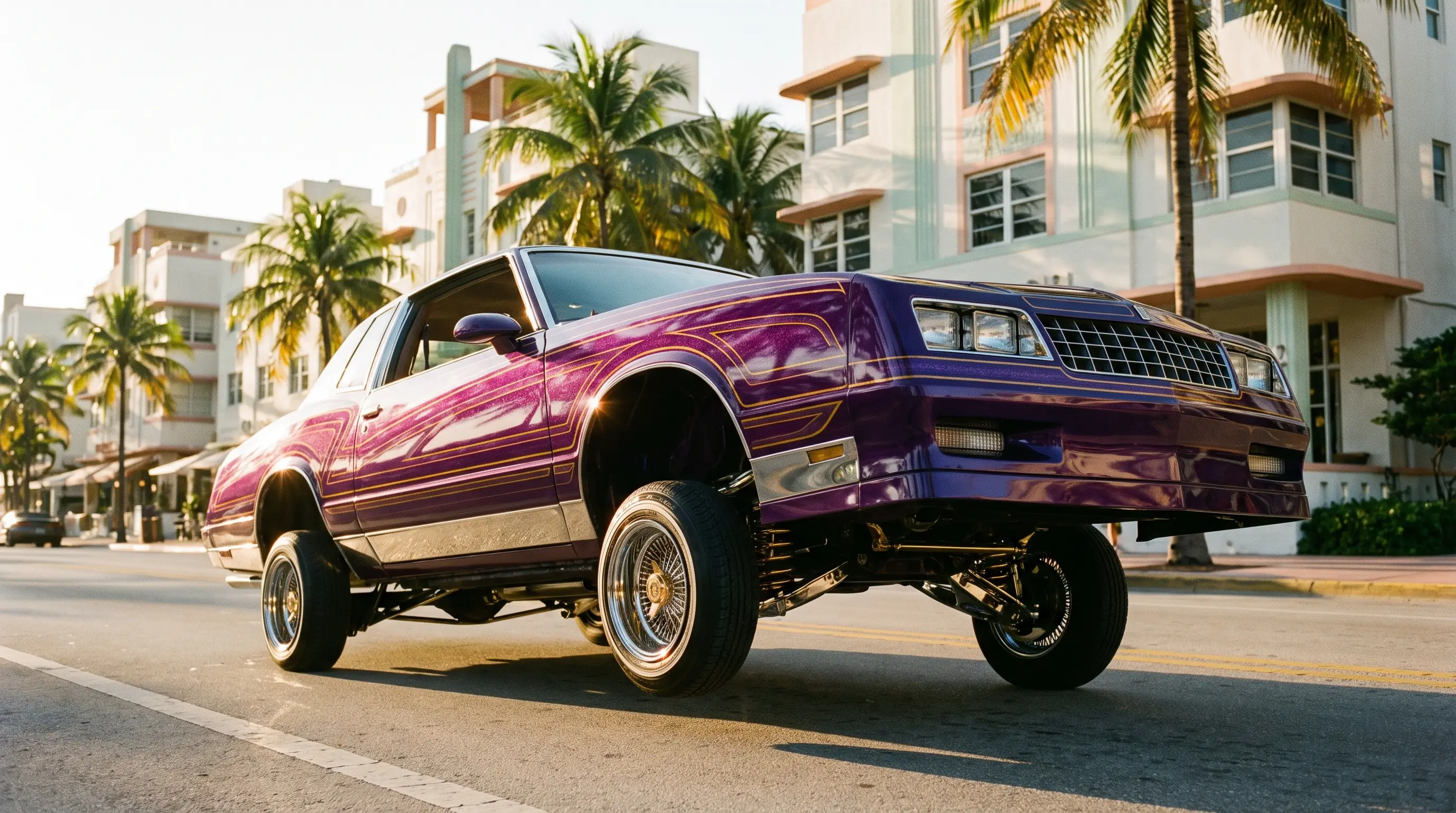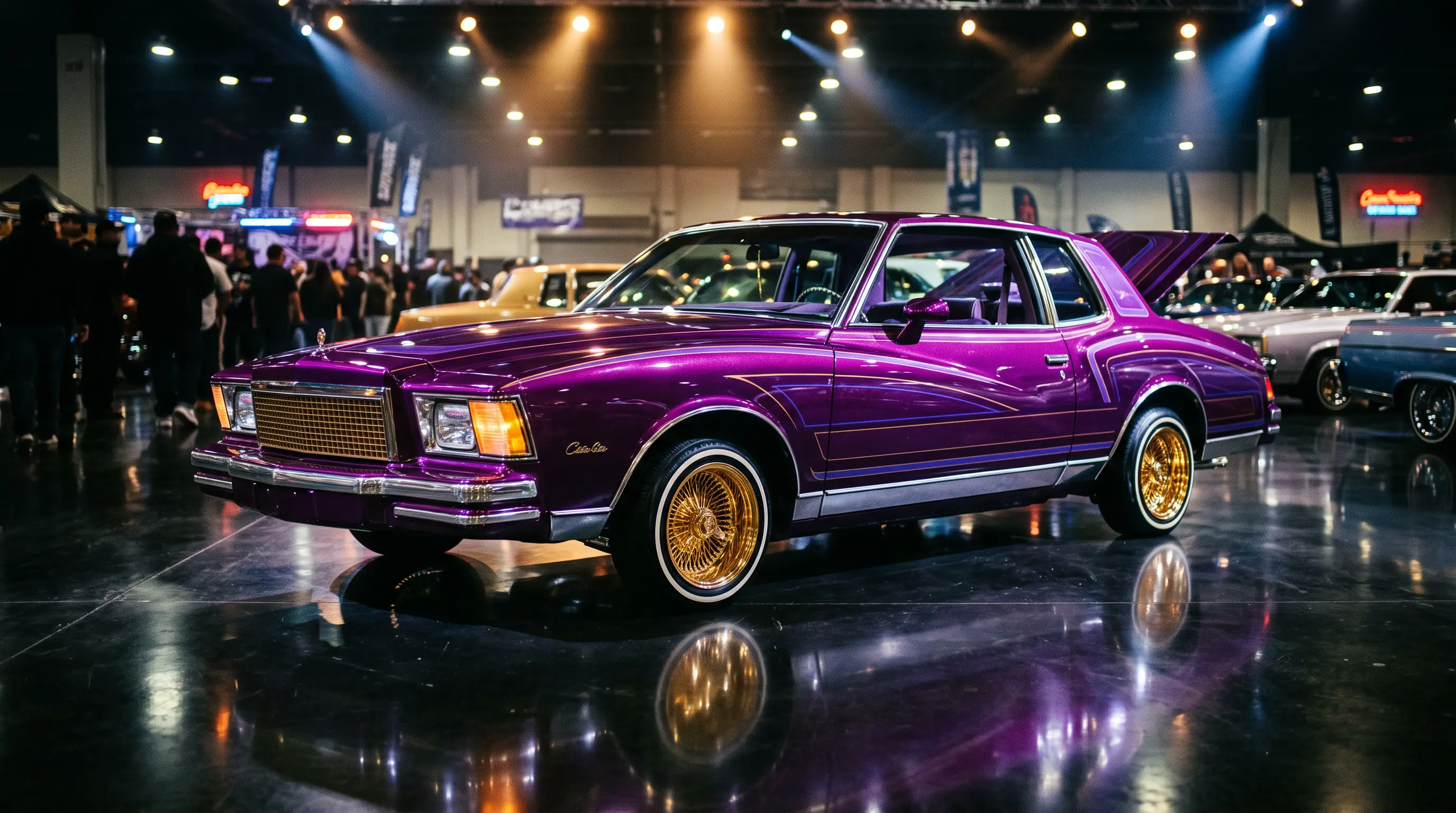
When we talk about the Monte Carlo in hip-hop, we are talking about a car that showed up on screen without asking permission from Detroit's original marketing plan. Chevrolet built the Monte Carlo as a personal luxury coupe for guys who wanted a Cadillac ride on a Chevy budget. West Coast rap took that coupe, dropped it on hydraulics, and turned it into a visual signature for an entire genre. By the early 1990s, a lowered Monte Carlo rolling into frame told the audience exactly what city and what sound they were about to hear before a single bar got spit.
We grew up watching this happen in real time. Before YouTube, before streaming, the way you learned what a serious lowrider looked like was Yo! MTV Raps, The Box, and whatever tape got passed around the neighborhood. Directors filming West Coast rap videos in the late 80s and through the 90s leaned hard on car culture that already existed in South Central, Compton, and the Eastside of Los Angeles. They did not invent the lowrider scene for the camera. They pointed the camera at a scene that had been building since the 1960s and just happened to be rolling through frame at the right moment.
Why the Monte Carlo fit the frame
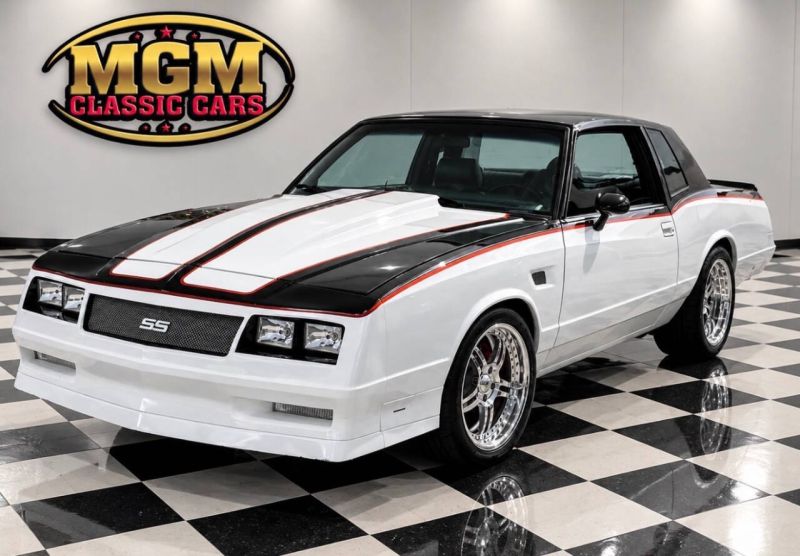
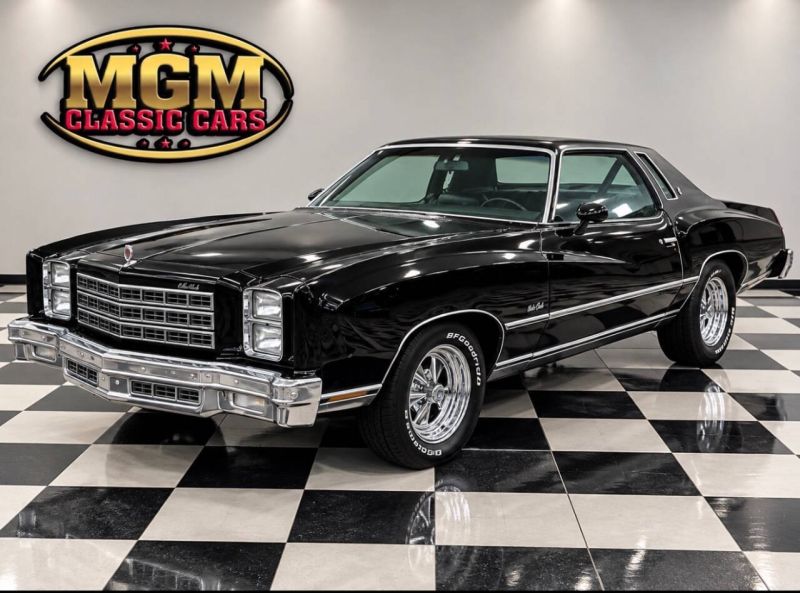
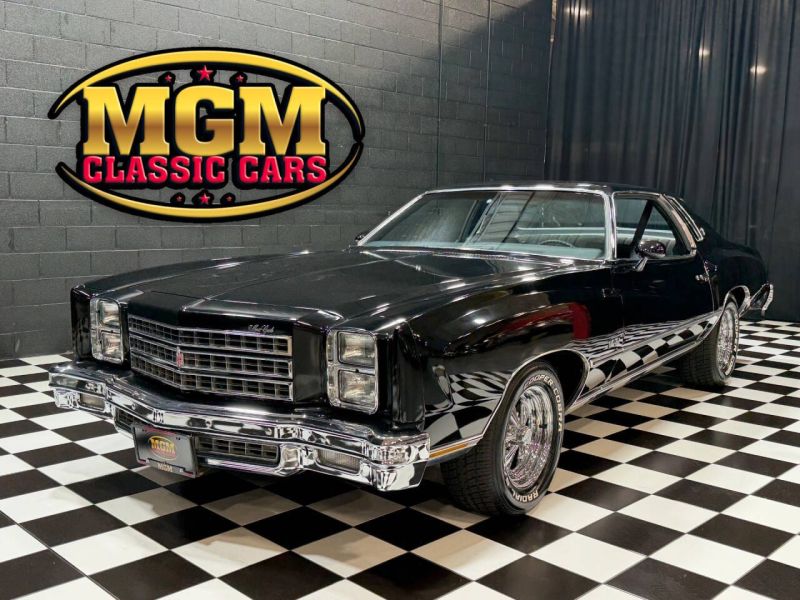
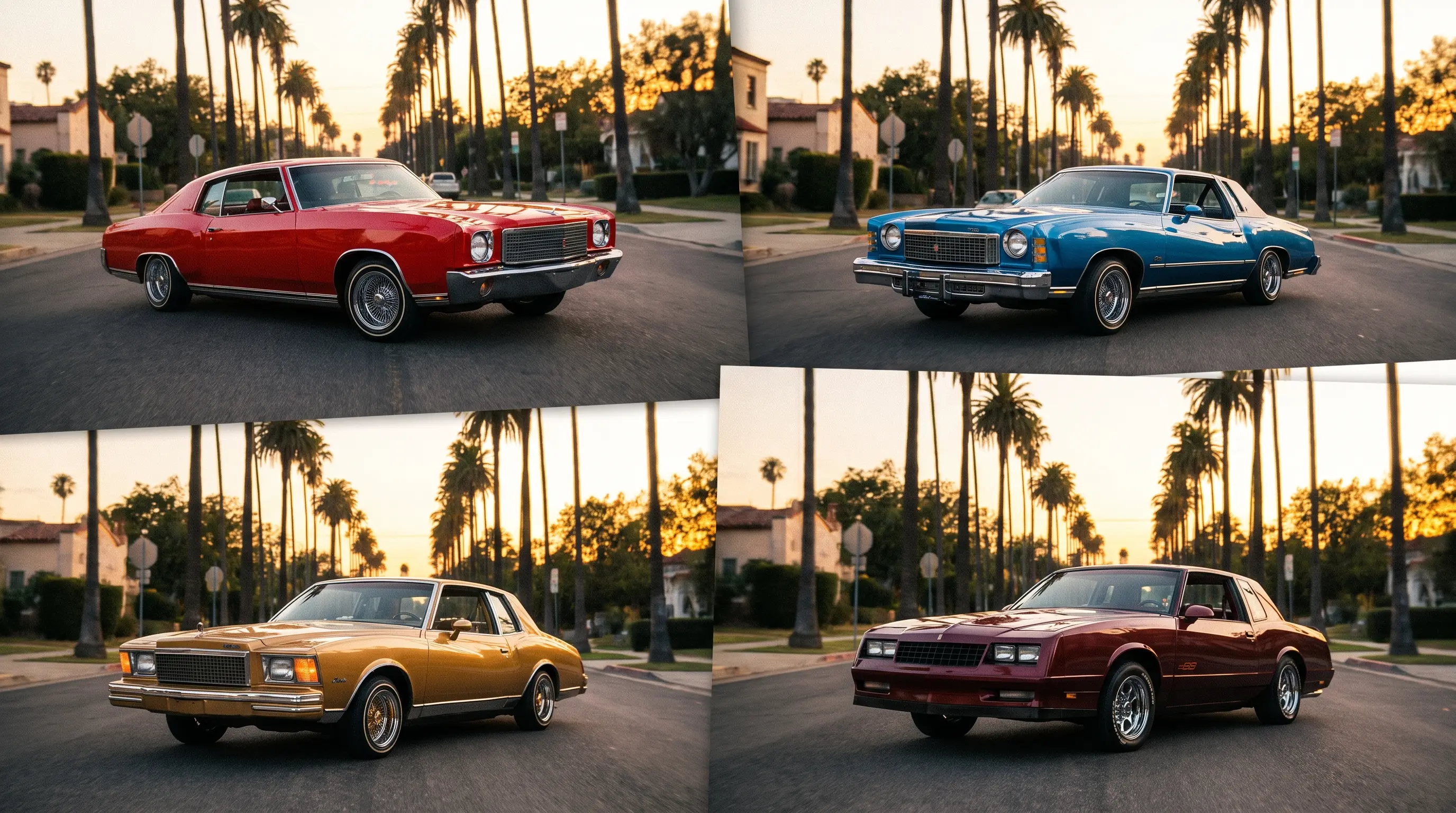
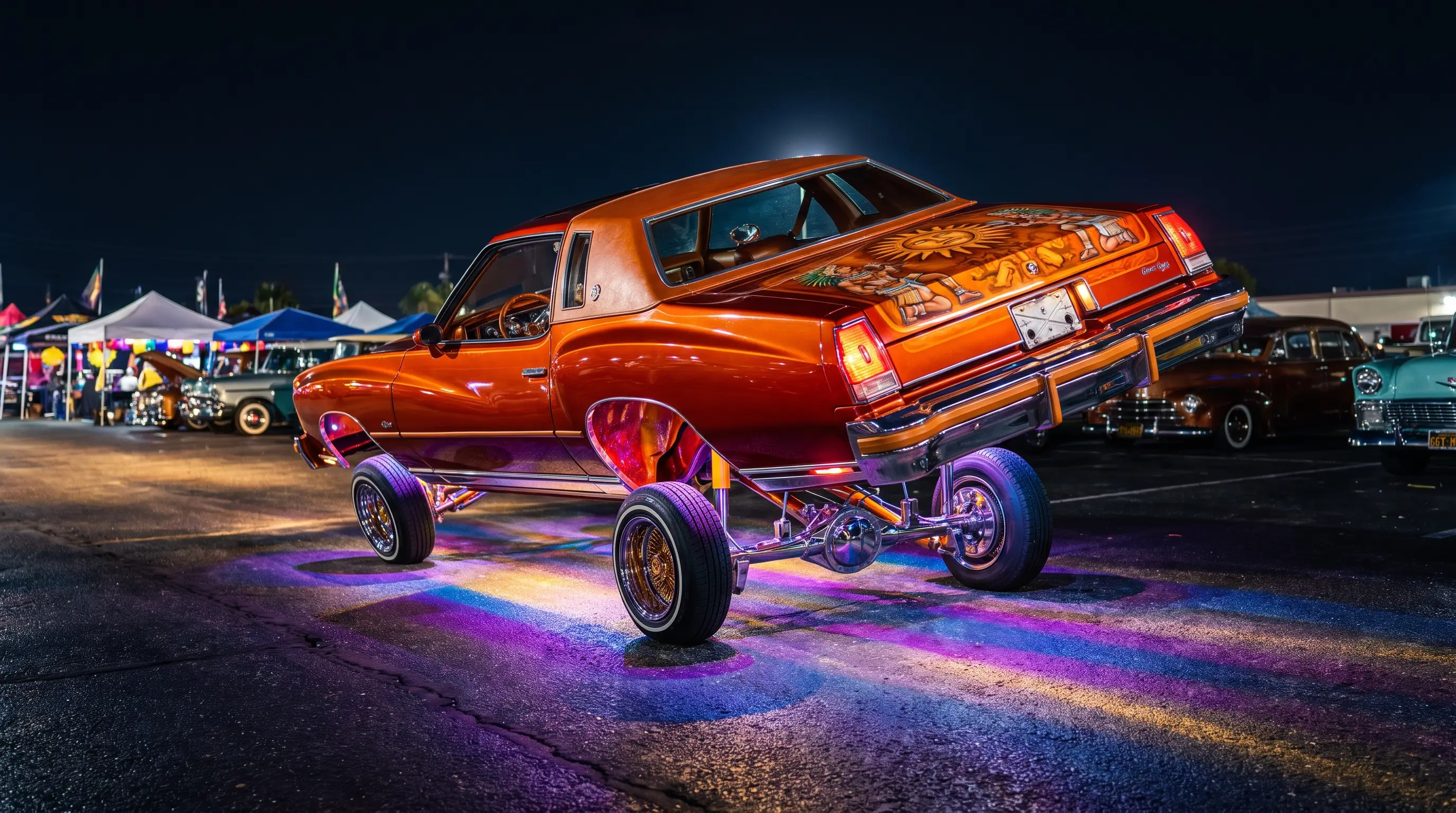
The Colonnade Monte Carlo from 1973 through 1977 and the G-body Monte Carlo from 1981 through 1988 both have long hoods, a formal roofline, and enough sheet metal on the flanks to make a paint job look like a canvas rather than an afterthought. That matters on camera. A director shooting a low angle wants a car that reads as a shape first and a Chevrolet second. The Monte Carlo, especially in G-body form with its crisp greenhouse and squared-off rear end, photographs as pure attitude when it is laid out on Reverse chrome wire wheels and hopping on switches.
Impalas and Cadillacs get more credit in the popular memory of this era, and fairly, since both were foundational to lowrider culture going back decades before rap videos existed. But the Monte Carlo carved out its own lane because it was newer, cheaper to find in the 1980s and 1990s than a clean 60s Impala, and mechanically simple enough for a home garage to convert. A rapper's video budget office did not always have connections to a pristine 1964 Impala SS. A Monte Carlo out of a cousin's driveway, freshly painted and hopping, was often the more realistic ask.
The G-funk era and the visual grammar of the video
The sound that came out of Los Angeles in the early to mid 1990s, built on Parliament-Funkadelic samples and a slow, rolling bass line, needed a visual language to match, and lowrider culture supplied it instantly. Slow motion hydraulic hops, chrome wire wheels catching sunlight, and a coupe gliding through a residential street at walking pace became shorthand for the whole G-funk sound. A Monte Carlo bouncing on three wheels said more about the tempo of a track than any lyric could.
Car clubs that had spent years building show cars for Lowrider Magazine and the Lowrider Super Show circuit suddenly found their rides in demand for video shoots. This crossed money and culture in a way that changed the scene. Some builders welcomed the exposure. Others felt the videos flattened decades of craft into a two-second cutaway shot, the car reduced to a prop instead of the ongoing project it actually was for its owner. Both reactions were fair, and we have heard both from people who lived it.
"The car was never a prop to the guy who built it. It just also happened to look incredible in somebody else's video."
- Hector Morales
The cars behind the cameo
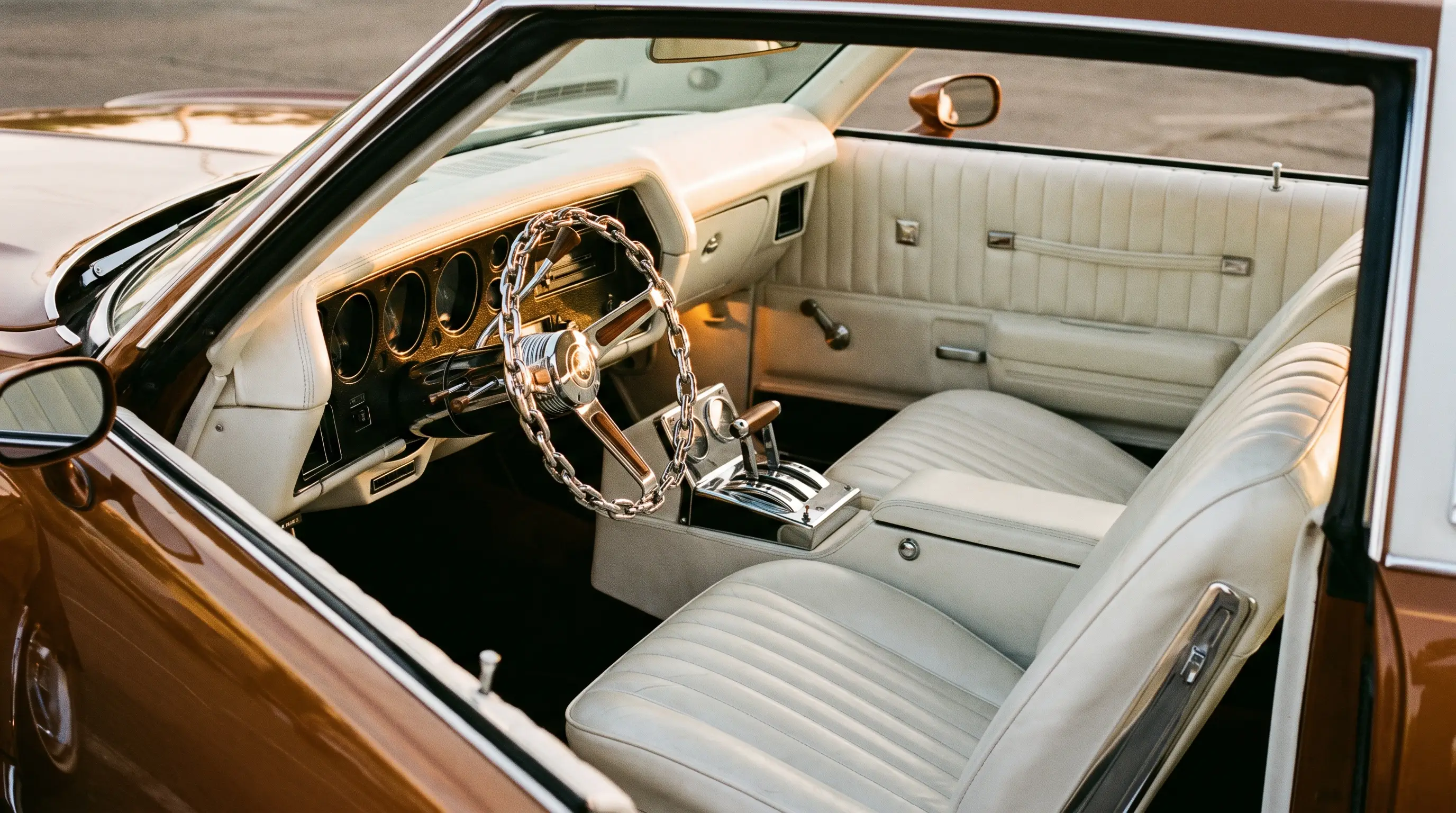
What most viewers never saw was the work that got a Monte Carlo camera-ready. A tuck and roll interior, a candy or house of kandy paint job with real flake, a set of hydraulic pumps and batteries hidden in a trunk built out like a display case, and wheels that cost more than some people's whole car. That work happened in garages and body shops across Los Angeles, San Bernardino, and beyond, often over months or years, long before any music video producer came calling. Read the background on how that culture built itself up decades before the cameras arrived, one club and one build at a time.
The Monte Carlos that ended up on screen were not rentals dressed up for a day. They belonged to real owners, real clubs, and represented real investment. When a video crew asked to feature a car, the answer from a serious builder was as much about protecting the paint and the chrome as it was about the fee. A hydraulic setup under stress from repeated hops for multiple takes could damage components that took real money to replace, so a smart owner negotiated more than a flat rate. They negotiated care.
Why this still matters to buyers today
For collectors and buyers looking at a Monte Carlo today, that hip-hop era visibility did something practical: it kept demand for clean G-body coupes alive in communities where they might otherwise have been scrapped for cheap transportation and forgotten. A car that got noticed on screen, even briefly, became a car somebody wanted to keep nice. That is part of why running, solid G-body Monte Carlos with straight bodies are harder to find today than the production numbers alone would suggest. Culture protected inventory that market logic alone would not have.
If you are chasing that same look today, whether restoring a period-correct lowrider build or just wanting the coupe that started the conversation, the Colonnade and G-body years are both fair game. You can find a classic Monte Carlo and decide for yourself which era speaks to you, the formal 1973 through 1977 body or the tighter, more aggressive 1981 through 1988 shape that dominated so much of that video era.
There is also a quieter side to this history that rarely gets discussed. Not every Monte Carlo that appeared in a rap video belonged to a club with deep institutional history. Some belonged to first-time builders who put everything they had into one car, hoping exposure might open doors for a shop, a paint line, or a hydraulic setup business. For a few of those builders, a fifteen-second appearance behind an artist genuinely changed their trajectory, turning a hobby into a career. For most, it stayed exactly what it started as, a labor of love that happened to get lucky timing.
The legacy on screen
Decades later, the Monte Carlo's hip-hop cameo era still shapes how a lot of people first encounter the car. Younger fans discovering West Coast rap through old footage or reissued albums see the Monte Carlo before they ever see a spec sheet, and that is a strange kind of fame for a Chevrolet coupe that was originally pitched to commuters wanting a little extra style on the way to work. The car earned a second identity it was never designed for, and that identity has outlasted plenty of the videos themselves.
Sources and notes
- Chevrolet Monte Carlo, Wikipedia
- The History of Lowrider Cars, Gauge Magazine
- Amigos Car Club Collection, University of San Diego Lowrider Archival Project
- Carros y Cultura: Lowriding Legacies in Texas, Texas Standard / Bullock Texas State History Museum
- 1972 Monte Carlo Becomes a Nationwide Lowrider Showstopper, Motorious via Yahoo Autos