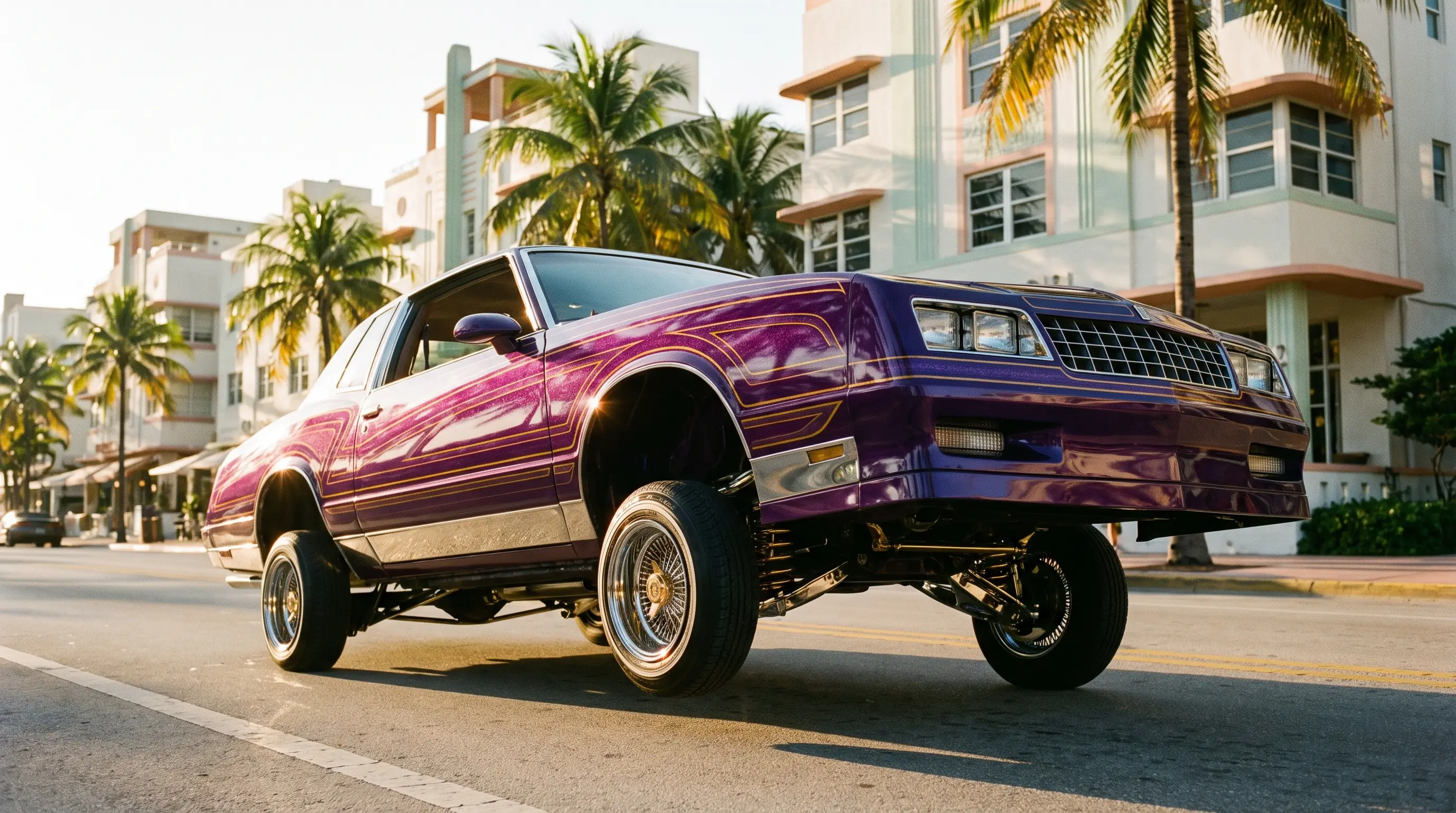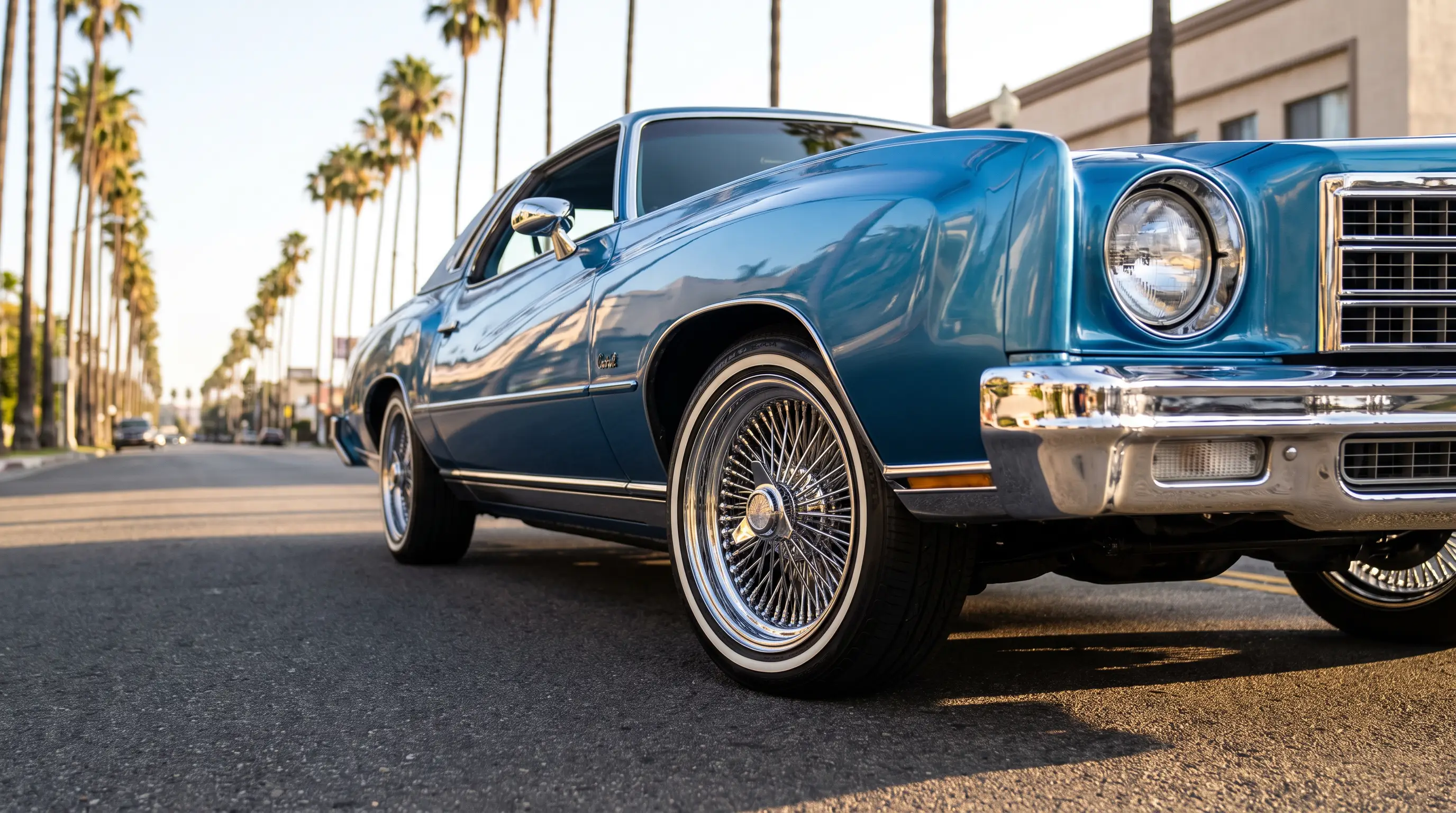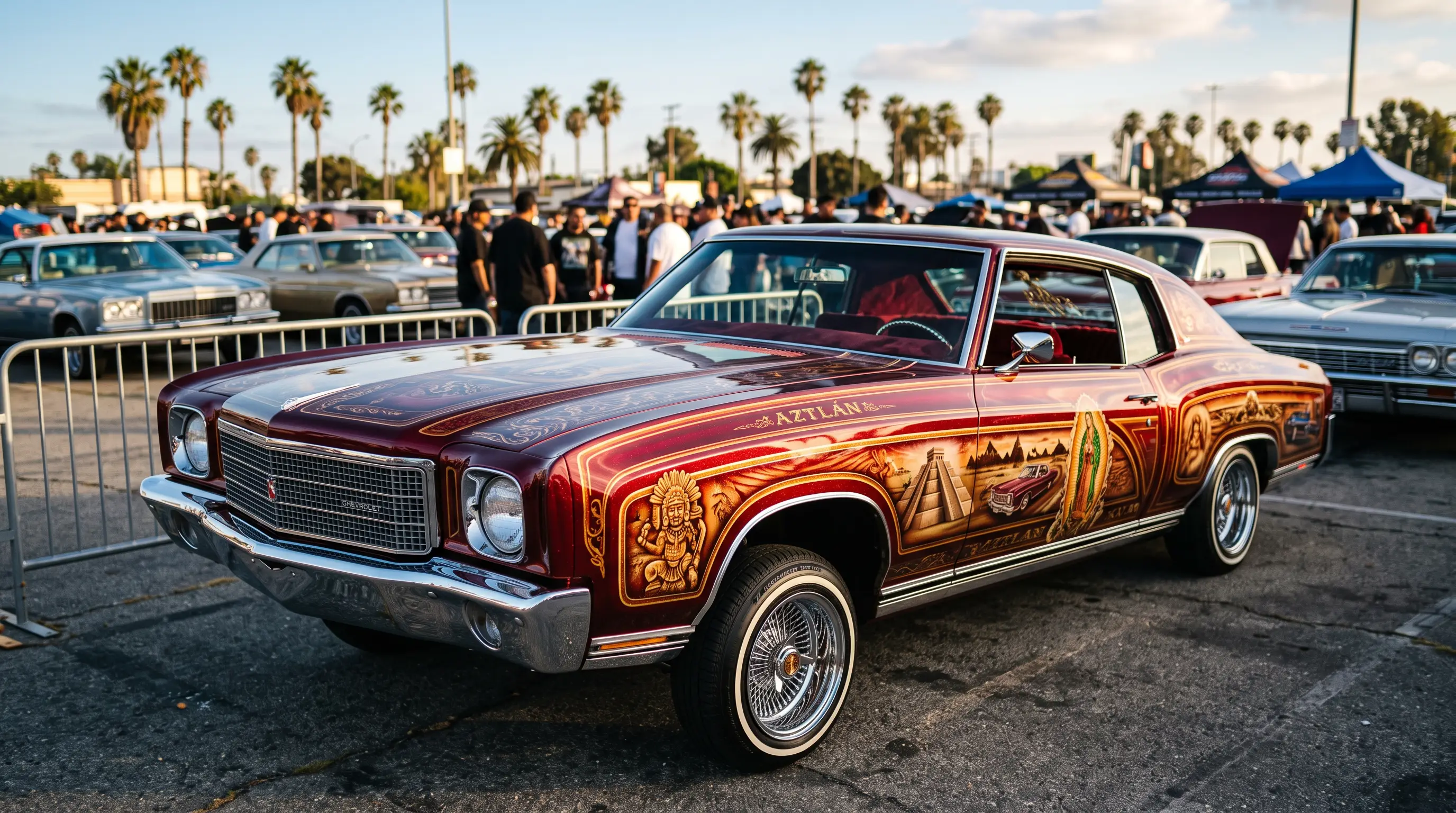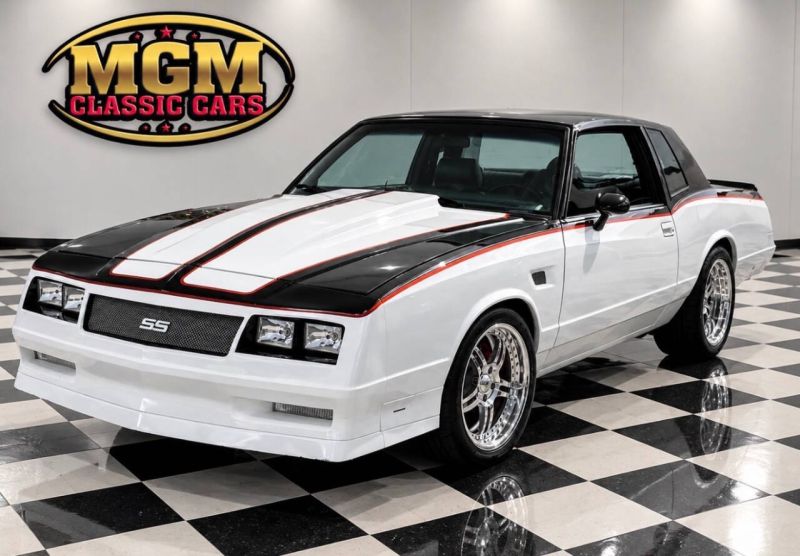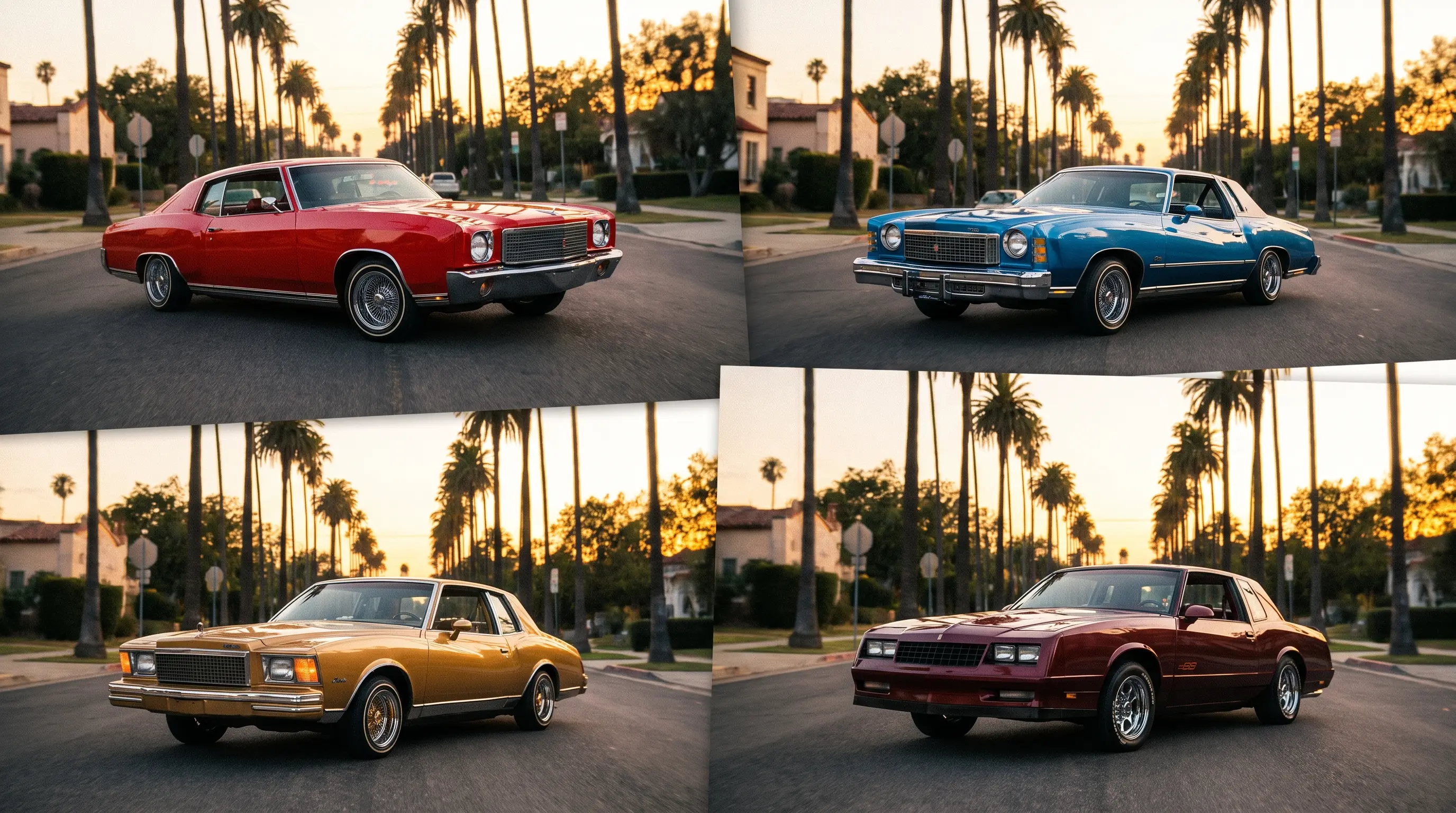
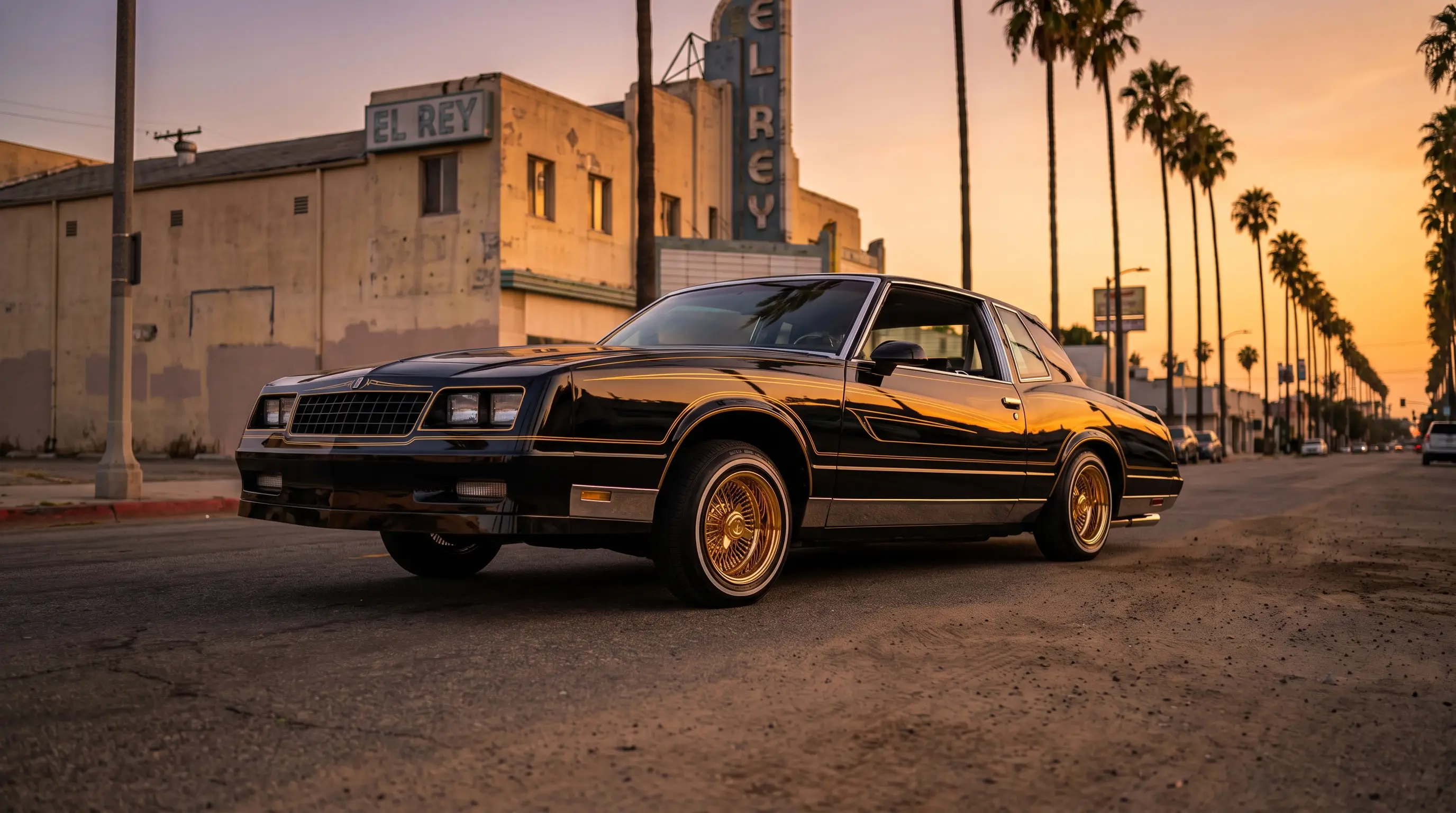
Long before the Monte Carlo became a fixture at shows across the country, this culture had a home address, and it was Southern California. We trace our history back to the boulevards of East Los Angeles and the neighborhoods around them, where builders were lowering cars and cruising long before the Monte Carlo even existed as a nameplate. By the time Chevrolet's G-body coupe arrived in the early 1980s, the West Coast scene had decades of tradition already in place, waiting for the right platform to carry it forward, and the monte carlo lowrider west coast history that followed proves it.
The roots that came before the Monte Carlo
Our tradition of lowering cars for style rather than performance goes back to the late 1940s and 1950s, when builders in Los Angeles started dropping suspensions on Chevrolets and other American cars to get a cleaner, lower look for cruising Whittier Boulevard and other main strips around the city. That early scene built the foundation, the emphasis on presentation over speed, the pride in a slow deliberate cruise rather than a quarter mile run, and the community structure of car clubs that organized and represented specific neighborhoods.
By the time hydraulics arrived in the 1960s, first as a workaround for strict lowering laws that targeted cars sitting too close to the ground, the West Coast scene had already established the values that would carry forward into every platform our community adopted afterward, including the Monte Carlo two decades later.
Why the Monte Carlo found its home here first
When the G-body Monte Carlo arrived, Southern California already had the shops, the painters, and the hydraulics specialists in place from earlier platforms. The Monte Carlo did not need to build a scene from nothing, it walked into an existing infrastructure of builders who immediately recognized the body-on-frame construction and the clean panel surfaces as exactly what they had been looking for in a new platform. That is a big part of why the earliest and most influential Monte Carlo builds trace back to Los Angeles area shops rather than anywhere else in the country.
Car clubs based in the region adopted the Monte Carlo quickly through the mid 1980s, and their build standards, deep, glossy paint, correct wire wheel fitment, subtle but functional hydraulics, became the template that builders in other regions studied and copied as the culture spread east and south over the following decade.
| Era | West Coast lowrider development |
|---|---|
| Late 1940s-1950s | Early lowering culture emerges around Los Angeles boulevards |
| 1960s | Hydraulics adopted, partly to work around lowering restrictions |
| 1970s | Car club structure formalizes, regional identity solidifies |
| Early 1980s | G-body Monte Carlo adopted as new platform of choice |
| Mid-late 1980s | West Coast Monte Carlo build standards spread nationally |
How the culture spread beyond California
Military service, family relocation, and simple word of mouth carried the West Coast Monte Carlo tradition to Texas, Arizona, and eventually across the country through the late 1980s and into the 1990s. Builders who grew up around Los Angeles shops took what they learned to new cities and started their own clubs, often keeping close ties back to the original Southern California scene through shared shows and family connections. That network is still visible today in how many major clubs trace their founding lineage back to a handful of original Los Angeles area chapters.
What never changed as the culture spread was the reverence for where it started. Builders in other regions still talk about California standards as the benchmark, and shops there continue to draw customers from across the country who want their Monte Carlo built by someone connected to the original tradition rather than a newer regional interpretation of it.
"Every region added something to this culture, but the root system is Southern California. You cannot tell this story honestly without starting there."
- Hector Morales
The role of specific streets and neighborhoods
Whittier Boulevard carries an almost mythic weight in this history, the stretch where cruising culture became a weekend ritual and where a builder's newest work got its first real public judgment from the community. Similar strips existed across the region, in San Bernardino, in the San Gabriel Valley, each with its own local flavor but all connected by the same underlying values. When the Monte Carlo entered this world in the early eighties, it did so on these same streets, alongside the older platforms that had carried the tradition for decades already.
Those Sunday cruises were never just about showing off a finished build. They were social events where builders traded information, painters found new clients, and younger enthusiasts learned the unwritten rules of the culture by watching rather than reading a manual. A Monte Carlo rolling down Whittier Boulevard in 1984 was participating in a ritual that already had thirty years of history behind it, which is part of why the car was absorbed into the tradition so quickly rather than needing to prove itself first.
What the history means for builders today
Understanding this West Coast foundation changes how a builder approaches a Monte Carlo project. It is not just picking parts off a catalog page. It is stepping into a lineage that stretches back over seventy years, through multiple platforms, multiple generations of the same families, and a set of values around presentation and community that predates the car itself by decades. That context is why so many builders treat their Monte Carlo project as something closer to preserving a tradition than simply customizing a used car.
For the fuller picture of how this all came together specifically around the Monte Carlo, where this started covers the clubs, the shows, and the builders who shaped the scene. And if this history has you looking to start your own chapter of it, classic Monte Carlo for sale listings are a good place to begin the search.
We think it matters to say this plainly for readers outside the culture. This history is not a footnote to the Monte Carlo's story, it is a central chapter that runs parallel to the factory history most people know, the Colonnade years, the downsizing, the NASCAR Aerocoupe. Ours is a different chapter, built by different hands for different reasons, and it deserves to be told with the same seriousness as any other part of this car's legacy. Southern California gave this car a second life the factory never planned for, and that second life is still being written today by builders who trace their craft directly back to those original boulevards. We are proud to keep telling it, and prouder still of the builders who keep adding new pages to it every single weekend, rain or shine, up and down the coast.