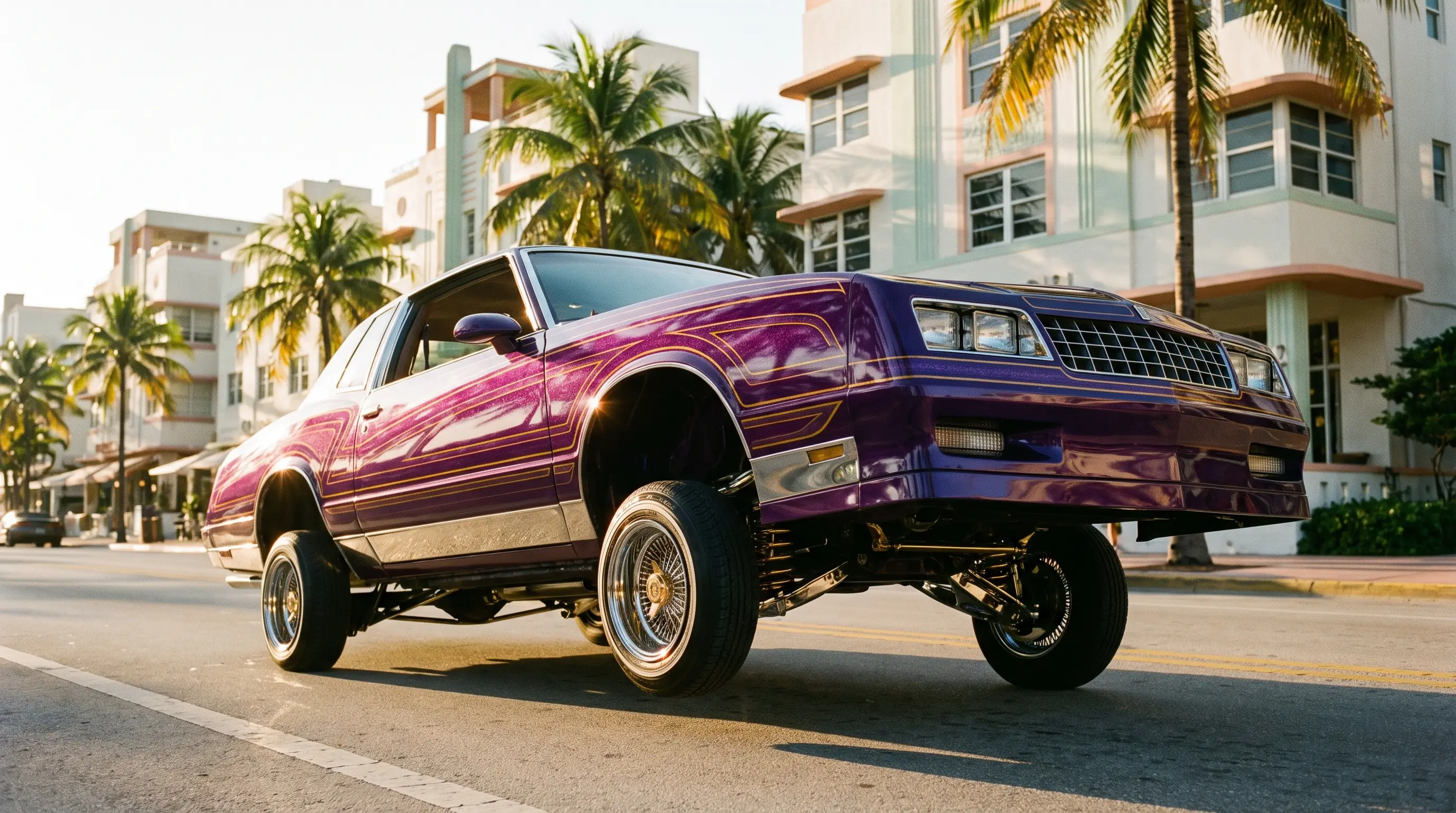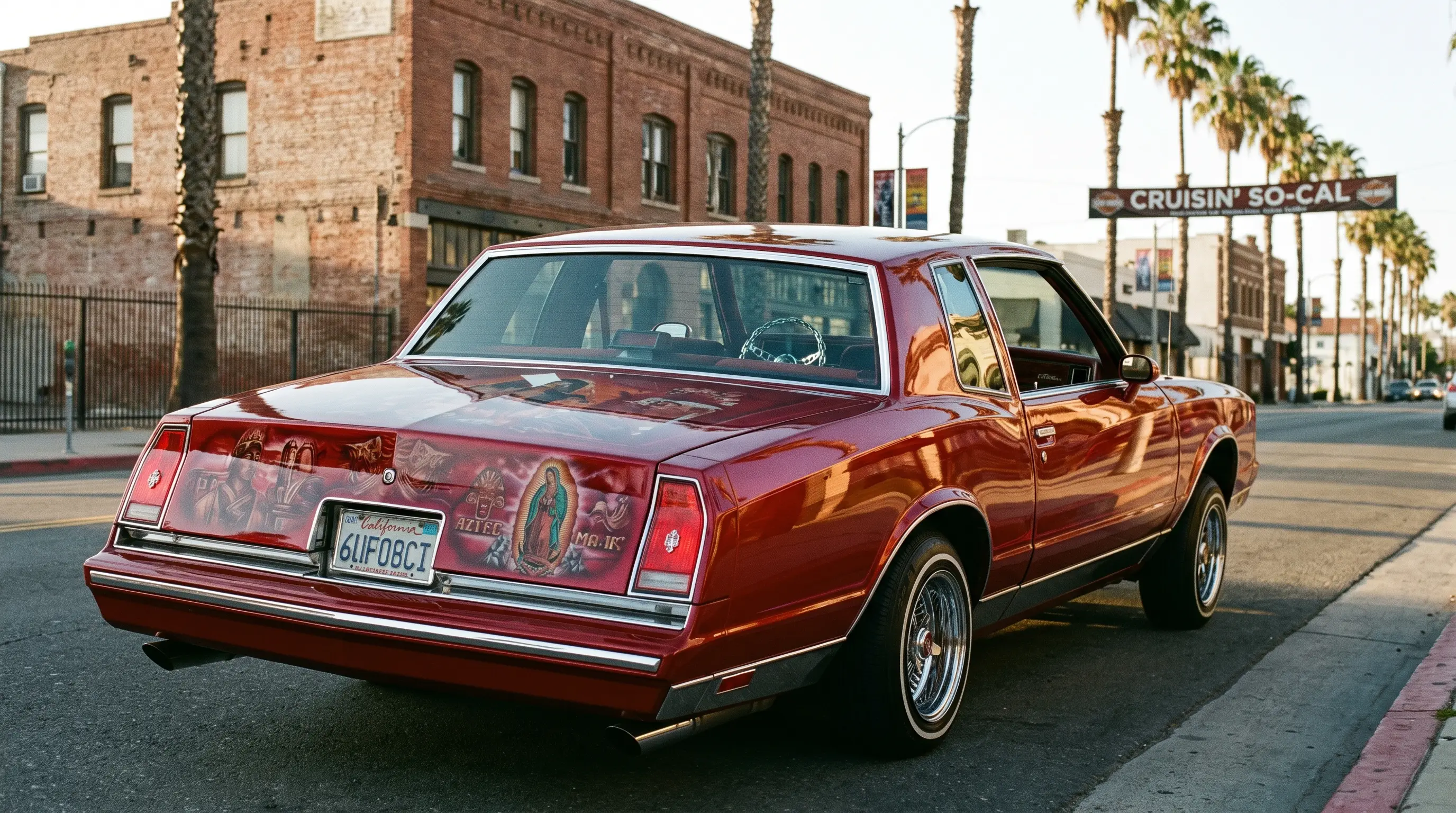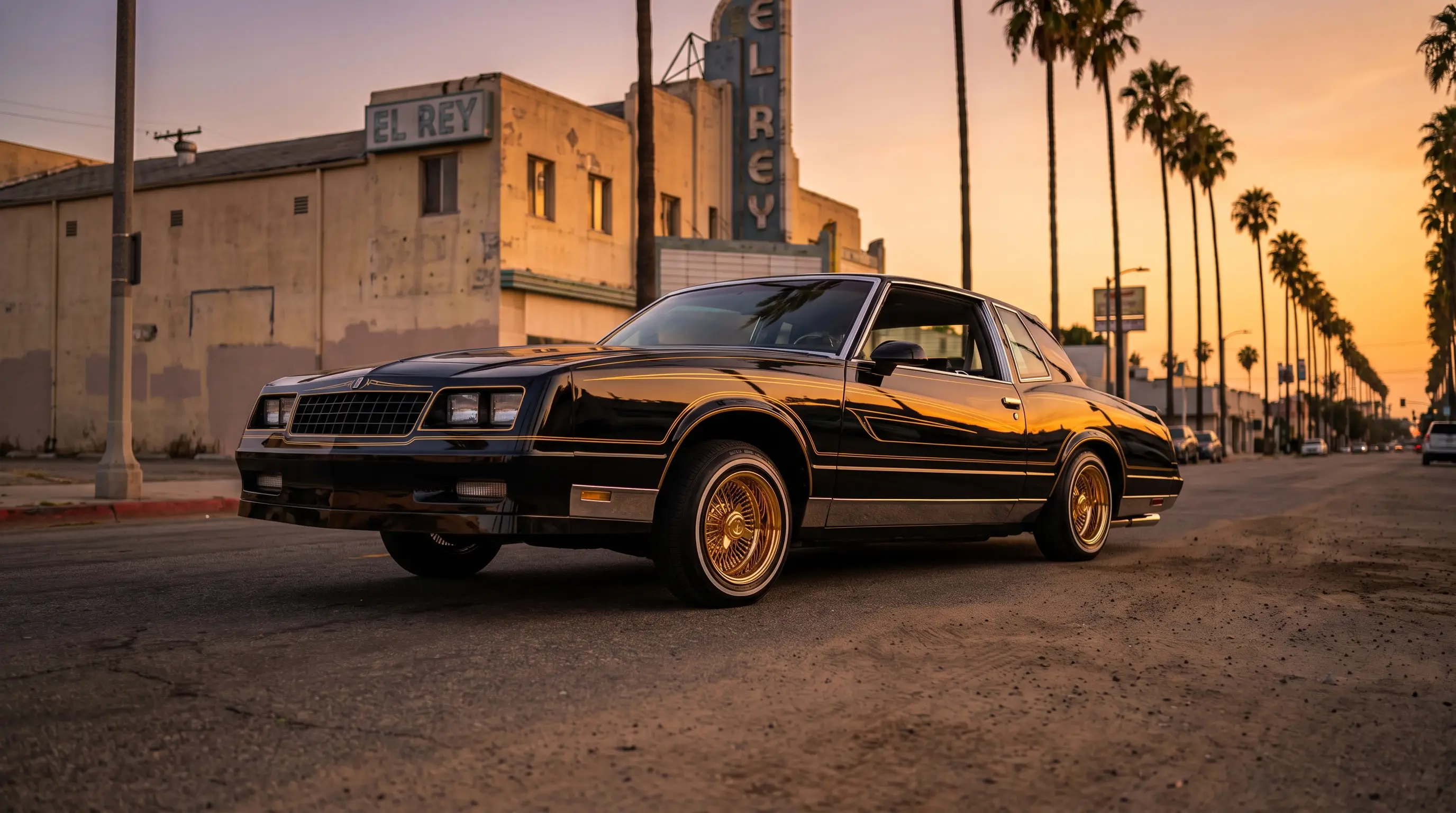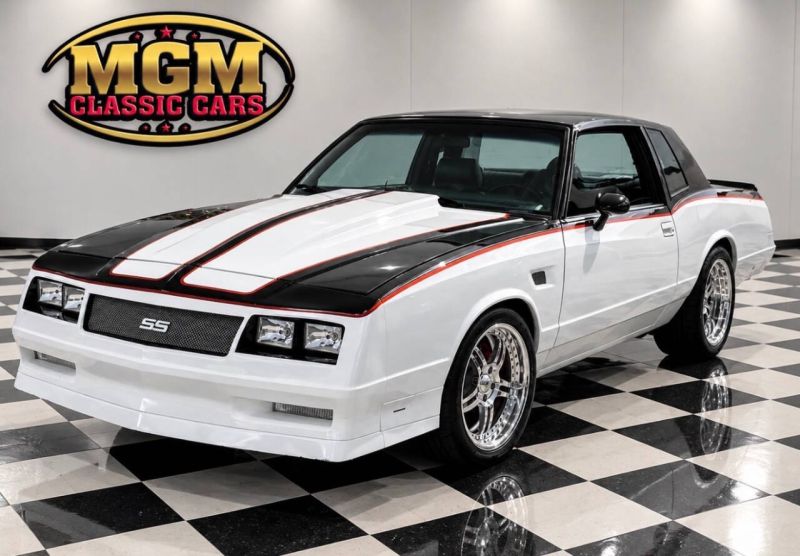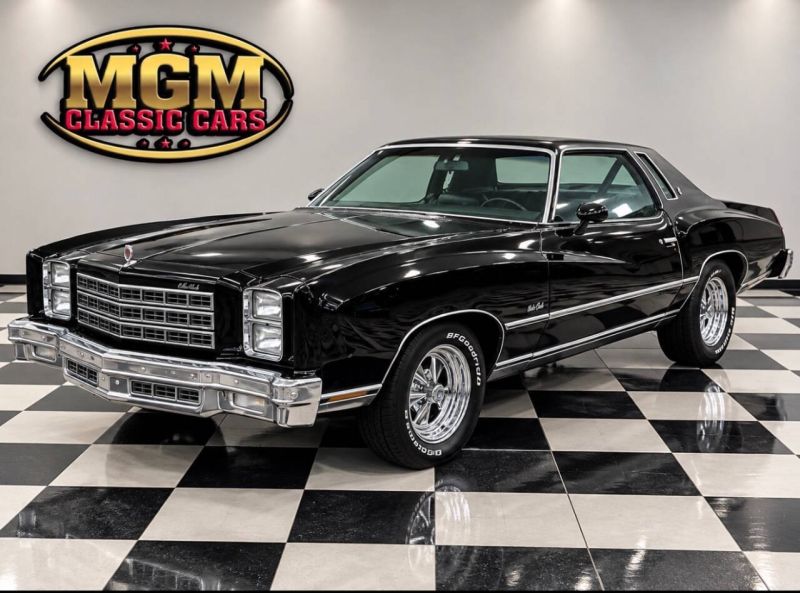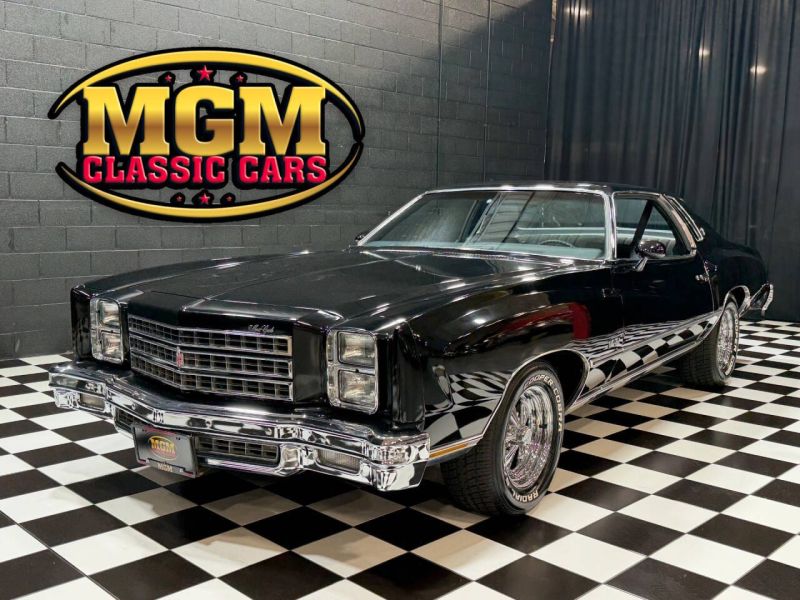
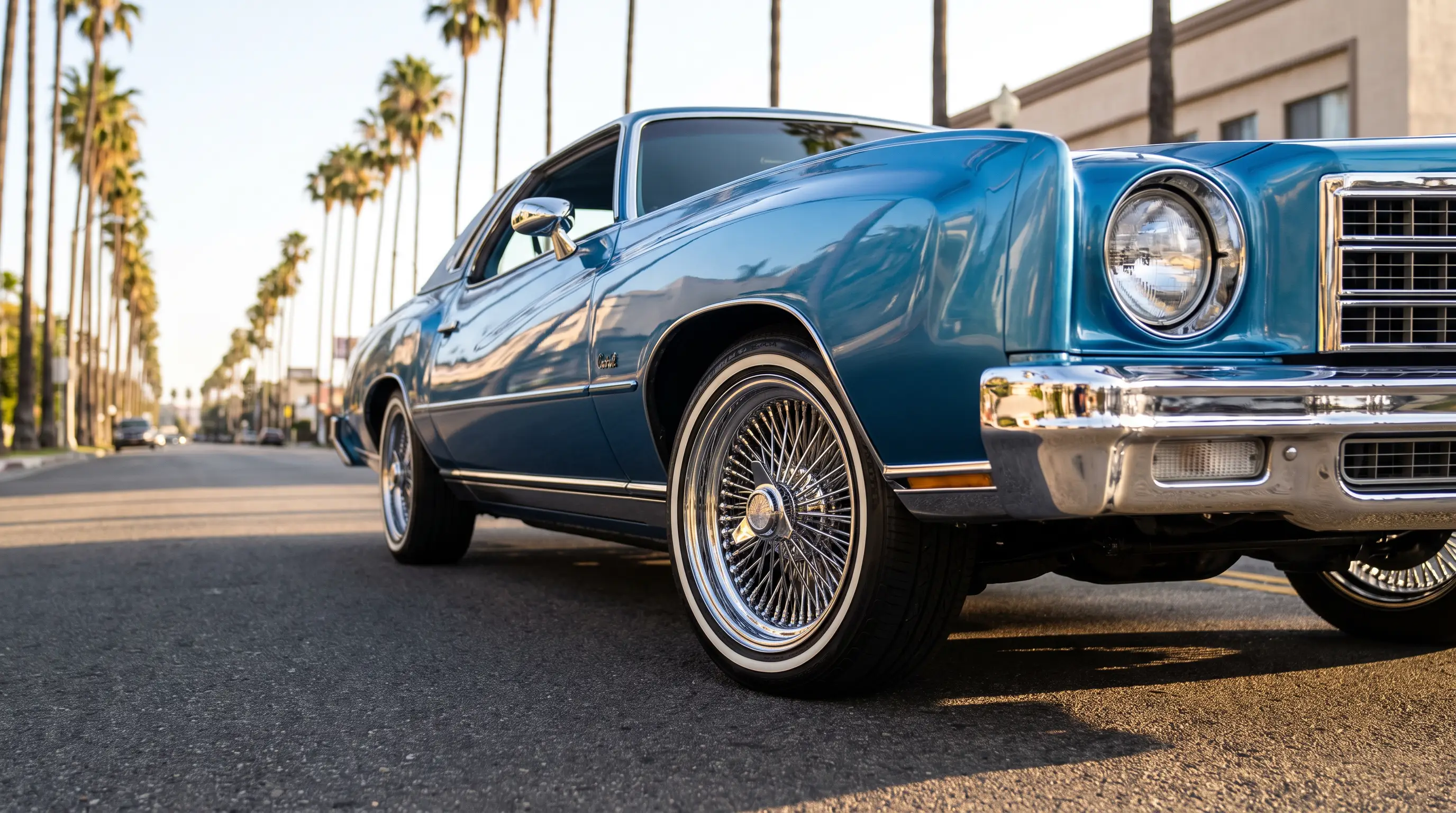
We can spot a proper Monte Carlo stance from across a parking lot before we ever see the paint. Body low, tires tucked, and a set of wire wheels catching the light with dozens of thin chrome spokes spinning slower than the car is actually moving. The monte carlo lowrider wire wheels spokes look did not happen by accident. It took decades of our community figuring out exactly which wheel, which tire, and which ride height made this particular Chevrolet look right, and the Monte Carlo turned out to wear that formula better than almost anything else GM built.
Where the wire wheel tradition actually comes from
Wire wheels arrived in our scene borrowed from an entirely different world, the knock-off spoked wheels that dressed up European sports cars decades earlier. Builders in Los Angeles adapted that same wheel style to American cruisers in the 1970s, pairing thin whitewall tires with wire wheels on cars that were never designed with that combination in mind. By the time the G-body Monte Carlo became the platform of choice in the 1980s, wire wheels were already the established look, and builders simply carried the tradition forward onto the new car.
The knock-off style spinner in the center, the one that actually spins independently while the car is moving, became the signature detail that separated a real wire wheel build from anything cheaper. Getting spinners to run true without wobbling took careful wheel balancing and quality hardware, and builders who cut corners here found out quickly when a spinner seized up mid cruise in front of everyone.
Why the fitment works so well on this car
The Monte Carlo's wheel wells were cut with enough room to accommodate a wire wheel and whitewall combination without the rubbing problems that plague tighter GM coupes from the same era. Combined with the low stance our community favors, a properly fitted wire wheel setup fills the fender opening in a way that reads as intentional rather than accidental. That fitment relationship between the body and the wheel is not something builders talk about often, but it is one of the quiet reasons this particular Chevrolet became the default canvas for the look.
Rear end width matters here too. The Monte Carlo's rear track gives enough clearance for wire wheels without the fender modification some narrower cars require, which kept builds simpler and let more people attempt one without specialized fabrication work.
| Element | Role in the classic wire wheel build |
|---|---|
| Wire wheel | Thin chrome spokes, usually 13 or 14 inch diameter |
| Knock-off spinner | Center hub piece that spins independently at speed |
| Whitewall tire | Traditional pairing, wide white sidewall band |
| Wheel well clearance | Monte Carlo's fender cut accommodates the combo cleanly |
| Rear track width | Allows fitment without extensive fender work |
The stance debate that never really ends
Ask ten builders how low a Monte Carlo should sit on wire wheels and you will get ten different answers, and that disagreement is part of what keeps the culture alive rather than static. Some argue for a stock ride height with wheels as the only statement, letting the spokes and whitewalls do all the talking. Others push for a dramatically lower stance that puts the fender lip nearly touching the tire, a look that demands precise suspension work to pull off without scrubbing. Both camps have deep roots in the tradition, and both produce cars that turn heads at the same shows for different reasons.
What nobody argues about is the wheel choice itself. Even builders who disagree on stance tend to agree that wire wheels are the correct finishing touch for a traditional Monte Carlo build, which says something about how thoroughly this pairing has become part of the car's identity rather than just one option among many.
"You can argue about ride height all night at a show. Nobody argues about the wheels. Wire and whitewall is just the correct answer on this car, full stop."
- Hector Morales
How wheel choice signals which era a builder is honoring
Experienced eyes at a show can usually tell what decade a build is referencing just from the wheel and tire combination before they even look at the paint. Narrower whitewalls paired with smaller diameter wire wheels tend to signal a build honoring the early eighties look, while wider whitewalls and larger diameter wheels usually point to a nineties inspired build. Builders who care about getting the era right research old show photographs and magazine spreads before committing to a wheel size, because an otherwise perfect Monte Carlo can read as slightly off if the wheel proportions do not match the rest of the build's period cues.
This kind of detail work rarely gets noticed by casual onlookers, but it matters enormously to the judges at serious shows and to the builders themselves. Getting the wheel era right is a quiet form of respect for the tradition, proof that a builder studied the culture rather than just copying whatever wheel happened to be available at the time.
Keeping the look correct over time
Wire wheels demand more upkeep than a standard alloy wheel, and owners who let that maintenance slide end up with spokes that dull, spinners that stick, and chrome that pits faster than it should. Regular cleaning and careful attention to the spinner hardware keeps a set looking right for years, and builders who take pride in the look treat that upkeep as part of owning the car, not a chore separate from it. Original spoke sets are also getting harder to find in good condition, which has pushed some builders toward modern reproduction wheels built to the same classic dimensions but with better metallurgy than what was available decades ago.
If you want the fuller story of how this whole culture came together around the Monte Carlo, more on the monte carlo lowrider covers the clubs and the history in depth, and for the car's own origin story going back to 1970, where this started lays out the full generational arc. When you are ready to find a candidate for your own build, classic Monte Carlos on the market is the place to start looking.
We have seen builders spend as much time picking the right wheel and tire combination as they spend on the paint itself, and once you understand what is actually at stake, that patience makes sense. A wheel choice on a Monte Carlo is not a minor accessory decision the way it might be on an ordinary daily driver. It is one of the two or three details that define whether a build reads as authentic to the culture or just borrows the look without understanding it, and our community has always been able to tell the difference at a glance.