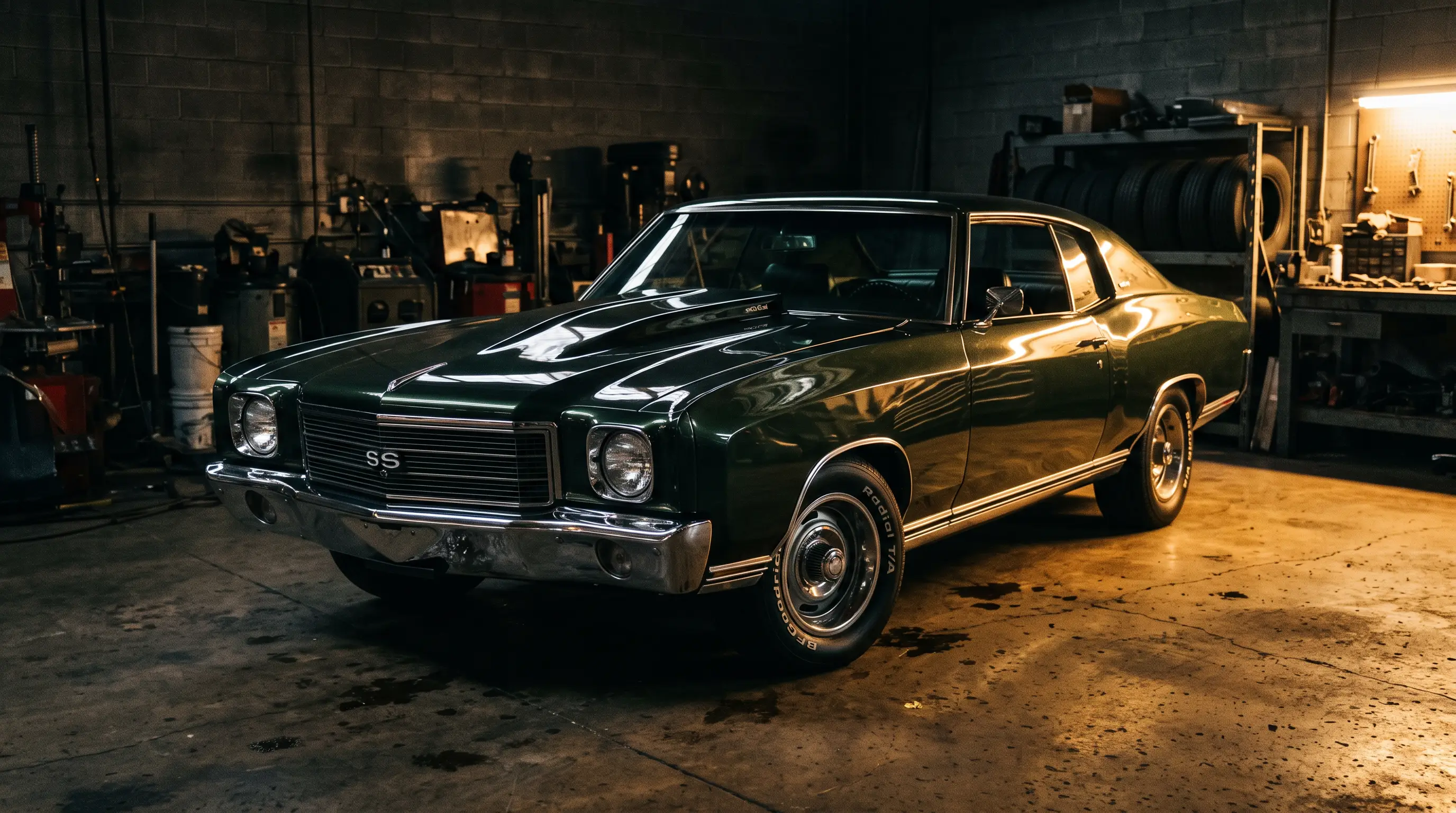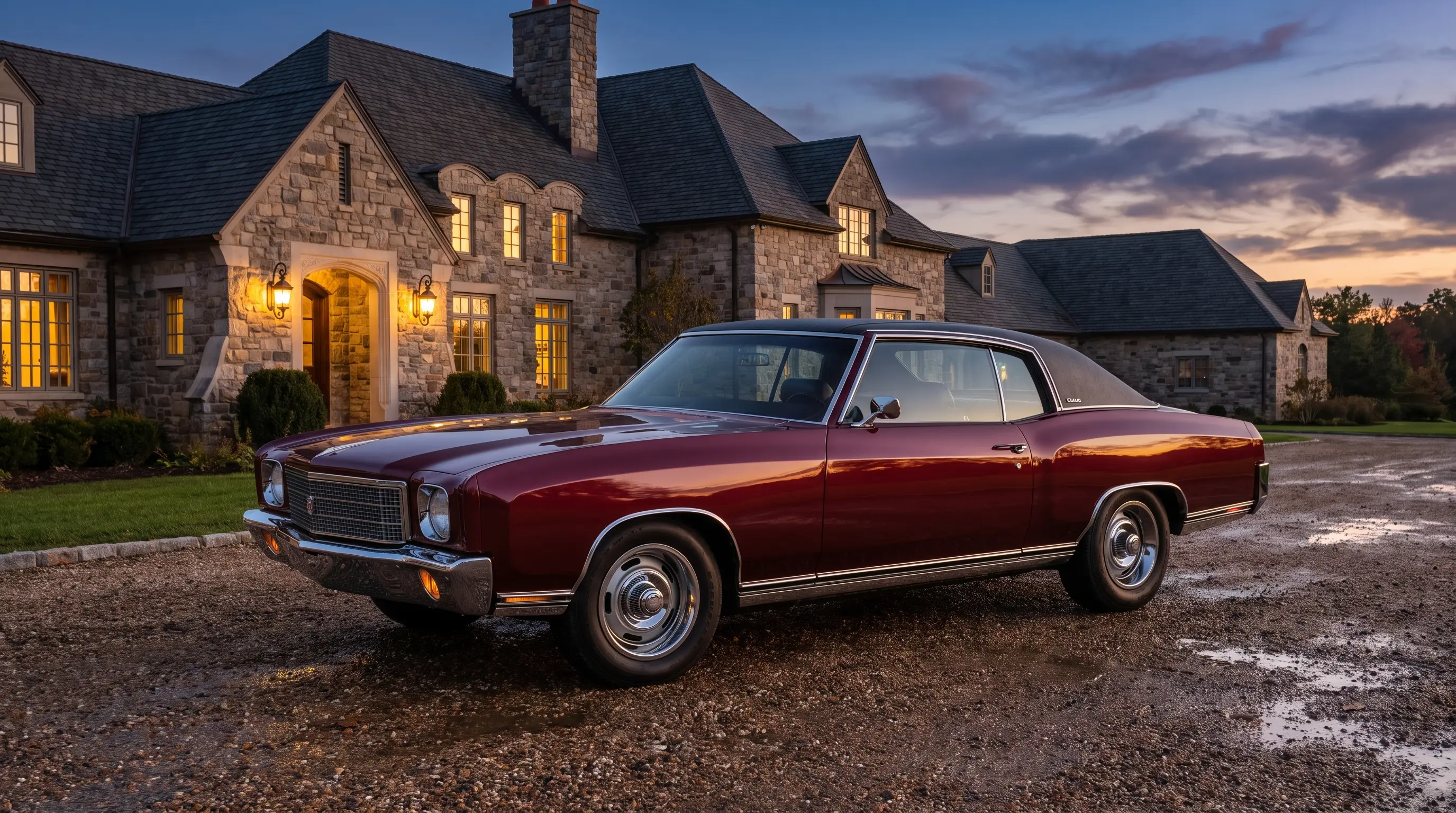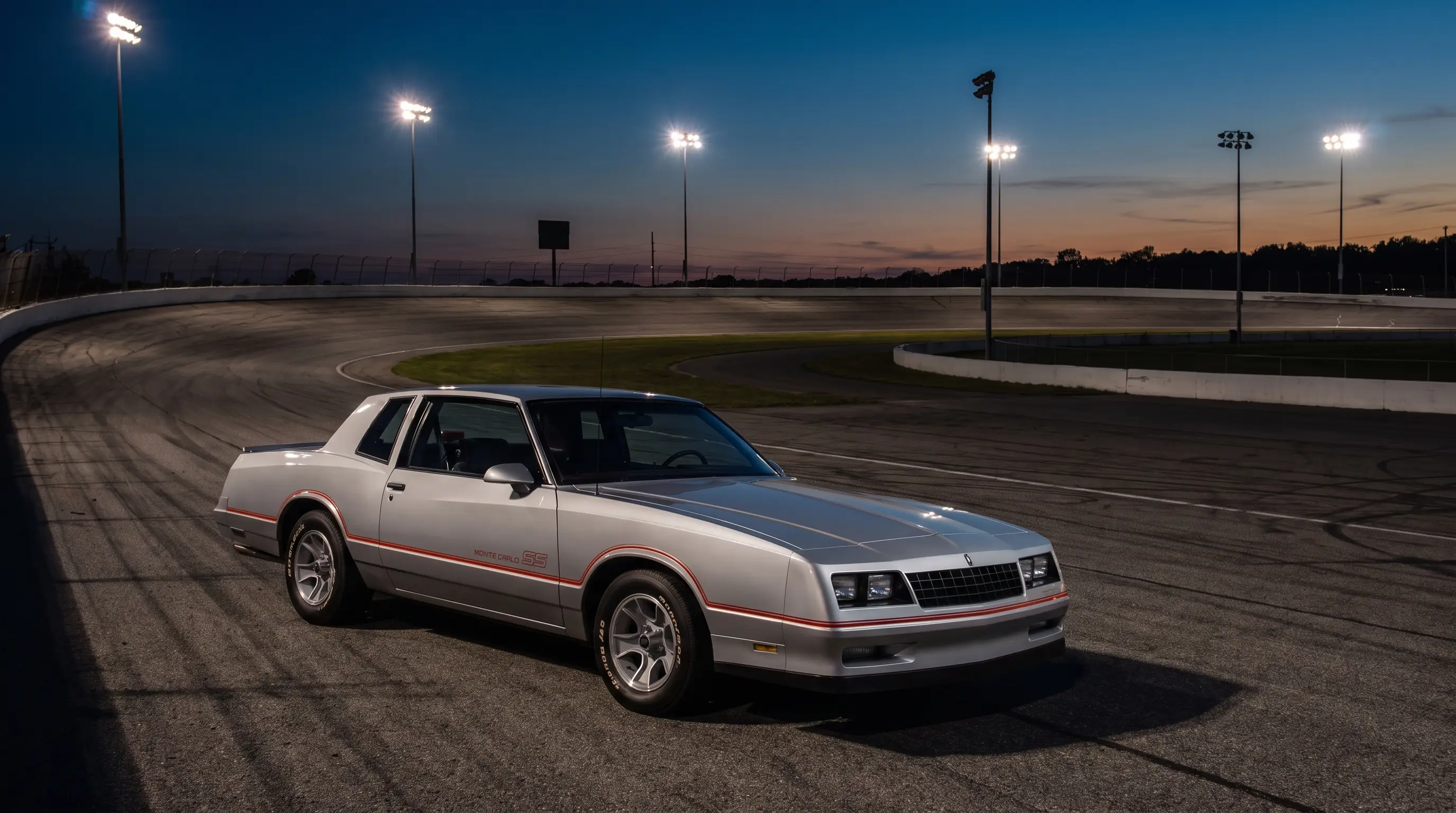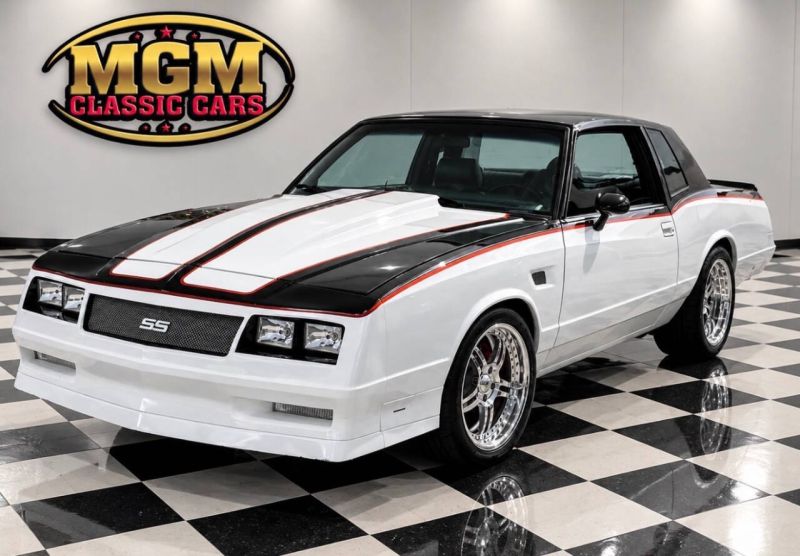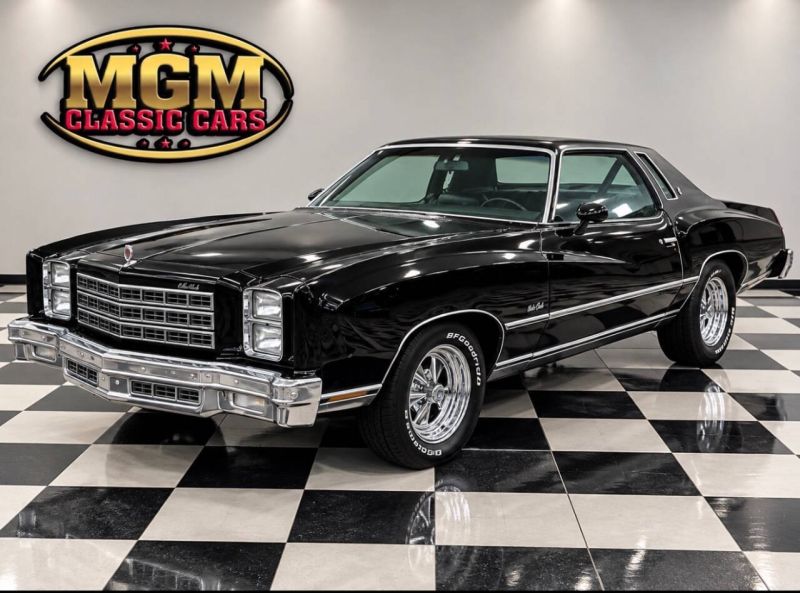
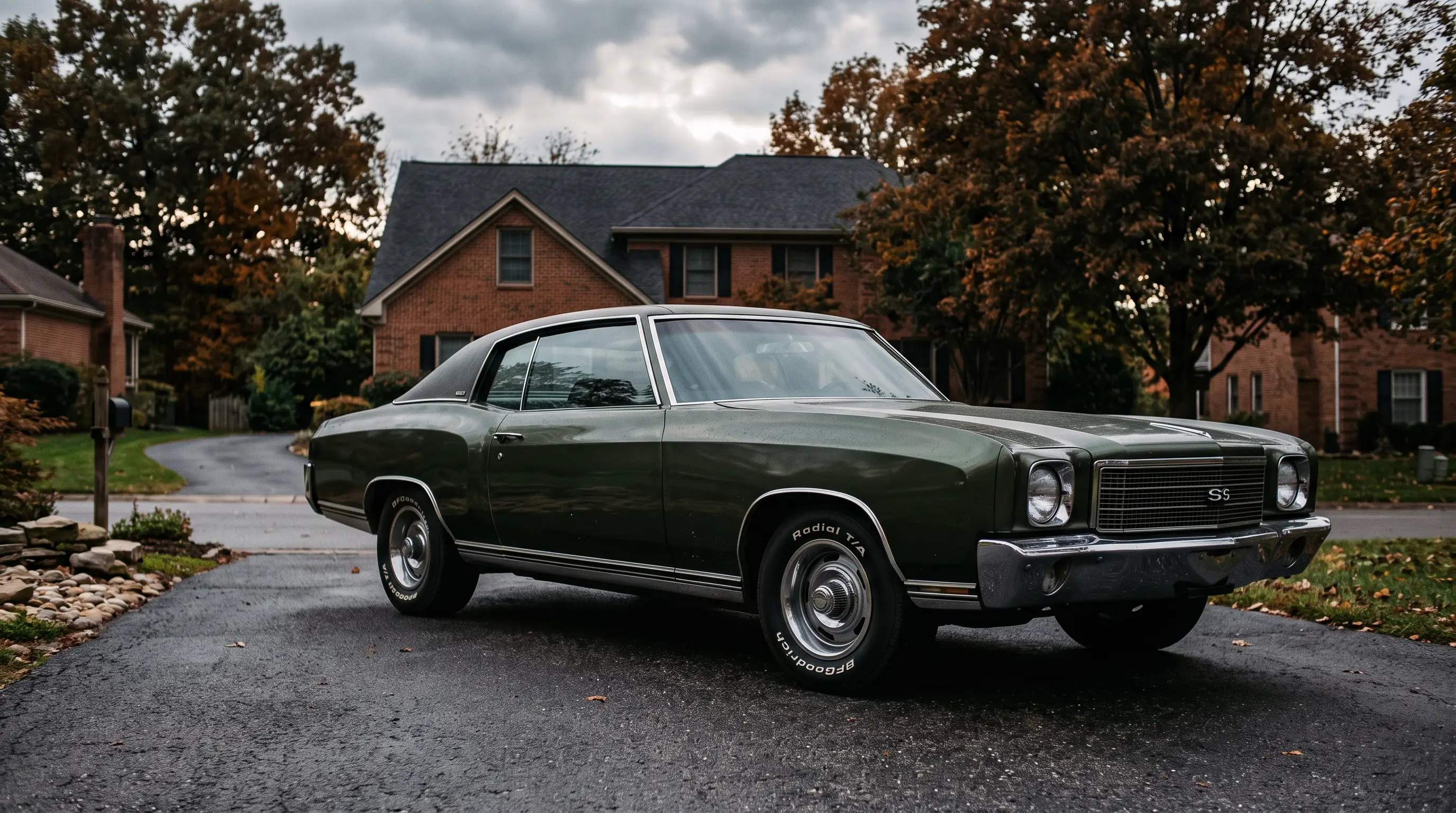
Factory records tell the monte carlo ss 1971 1972 detune story more precisely than the popular myths do, and the actual sequence of decisions is more interesting than a simple case of Chevrolet losing interest. The SS454 did not fade quietly over two model years so much as it hit a wall built from compression ratios, fuel quality, and corporate priorities, and it stopped rather than declined gradually the way many enthusiasts assume.
1971: the same idea, tuned down for a reason
Chevrolet carried the SS454 option forward into 1971 with the LS5 big block still available, still rated at a genuinely strong output, but built to a lower 8.5:1 compression ratio, down from 10.25:1 in 1970. This was not an isolated Monte Carlo decision. General Motors mandated compression reductions across its entire 1971 engine lineup in anticipation of lower-octane unleaded fuel becoming standard, a change driven by tightening emissions regulations that would fully take hold within a few years. Every big block GM built that year absorbed some version of this same detuning, and the Monte Carlo SS454 was no exception.
What the factory paperwork shows clearly is that this was a planned engineering response, not a slow drift caused by declining enthusiasm. Chevrolet's engineers knew the compression changes were coming and built the 1971 LS5 specification around that reality well in advance. The SAE gross horsepower rating actually edged up slightly to 365 for 1971, but torque dropped by roughly 35 lb-ft to about 465, so the car still carried real performance while the low-end punch that made the LS5 feel so strong had been deliberately softened before a single unit reached a dealership.
Why 1972 marks a full stop, not just another step down
Here is where the popular narrative gets it wrong most often. People assume the SS454 continued into 1972 in a further-detuned form, extending the "decline" for a third model year. The factory record does not support that. Chevrolet discontinued the Monte Carlo SS package entirely heading into 1972, and no SS454 option appeared on the order sheet that year at all. In its place Chevrolet introduced the one-year-only Monte Carlo Custom package, an appearance and convenience option that, unlike the SS454, was not tied to any specific engine or transmission. The "detune" story genuinely ends in 1971, and 1972 represents the actual end point, not a continuation of the trend.
That distinction matters for anyone researching build sheets or shopping for a genuine SS454. A 1972 Monte Carlo cannot carry a factory SS454 option no matter what a seller claims, because the option did not exist that model year. Buyers who encounter a 1972 car with SS badging should treat it as an aftermarket addition or a misunderstanding, not a documented factory package.
The industry forces behind the decision
Chevrolet was not making this call in isolation. Insurance surcharges on high-performance cars had been climbing steadily since the late 1960s, squeezing the exact demographic that bought SS-package personal luxury coupes. At the same time, GM corporate policy was steering compression ratios down across the board to accommodate the coming shift to unleaded fuel, a change finalized industry-wide within a couple of years. Layer emissions regulations on top of both of those pressures, and the SS454's business case had eroded from three directions simultaneously by the time 1972 planning happened.
Seen against that backdrop, dropping the option was less a retreat and more a rational response to a market that had genuinely changed underneath the car. Chevrolet had bet on the luxury-muscle idea in 1970, and by 1972 several of the conditions that made that bet profitable had already shifted enough that the company chose to let the option lapse rather than keep detuning it into irrelevance.
"The factory paperwork does not show a company that stopped caring. It shows a company reading insurance rates, fuel quality changes, and emissions rules correctly, and making a clean decision instead of limping the option along for another year."
- Tom Ramirez
What this means for documentation today
For collectors and researchers, the practical takeaway is straightforward. A genuine SS454 Monte Carlo can only be a 1970 or 1971 model, full stop, and the differences between those two years, primarily the compression ratio adjustment, are real but modest compared to the complete discontinuation that followed. Anyone tracing a car's history should treat 1971 as the true closing chapter of round one, not an intermediate step toward a 1972 version that never existed on the factory order sheet.
For the fuller arc of how this badge came back twelve years later in a completely different form, where this started covers the whole history from the original SS454 through the eventual G-body revival. And for anyone shopping this specific era with documentation questions in mind, comparing actual listings against verified build codes is the only reliable path forward. Classic Monte Carlo for sale is where that comparison starts, and every SS454 claim on a 1970 or 1971 car deserves the same scrutiny the factory records themselves demand.
How to verify a genuine 1971 car against a misrepresented one
Because 1971 is the last legitimate year for the SS454, it draws more attention from sellers hoping to pass off a base Monte Carlo as something it is not. The starting point for verification is always the cowl tag and trim tag, cross-referenced against Chevrolet's known production codes for that model year. The Z20 option code should appear alongside the correct engine code stamped into the block itself, and the two pieces of information need to match each other, not just look plausible independently.
A Protect-O-Plate, when it survives with the car, provides an additional layer of factory confirmation that is difficult to fake convincingly. Buyers should also expect the rear axle code to align with what Chevrolet paired with SS454 orders that year, since a mismatched final drive ratio is one of the more common tells on a car that has been dressed up after the fact rather than built that way from the factory floor.
None of this paperwork chase is unique to the Monte Carlo. Every desirable muscle-era option package from this period attracts the same scrutiny, and the same verification discipline applies whether you are looking at a Chevelle, a GTO, or a Road Runner. What sets the 1971 Monte Carlo SS454 apart is simply how tight the production window is. With the option vanishing entirely after that single model year, there is no ambiguity about whether a later car could plausibly carry a factory-correct SS454 badge. It cannot, and any listing suggesting otherwise should be treated with real skepticism until the paperwork proves it wrong.
Researchers who take the time to build a full documentation file, cowl tag, engine stamping, axle code, and any surviving dealer paperwork, end up holding a genuinely rare piece of a two-year window that Chevrolet closed decisively rather than let fade. That closure is precisely what makes 1971 the correct final chapter of the story, and 1972 the year the factory record shows the option simply was not there to buy.