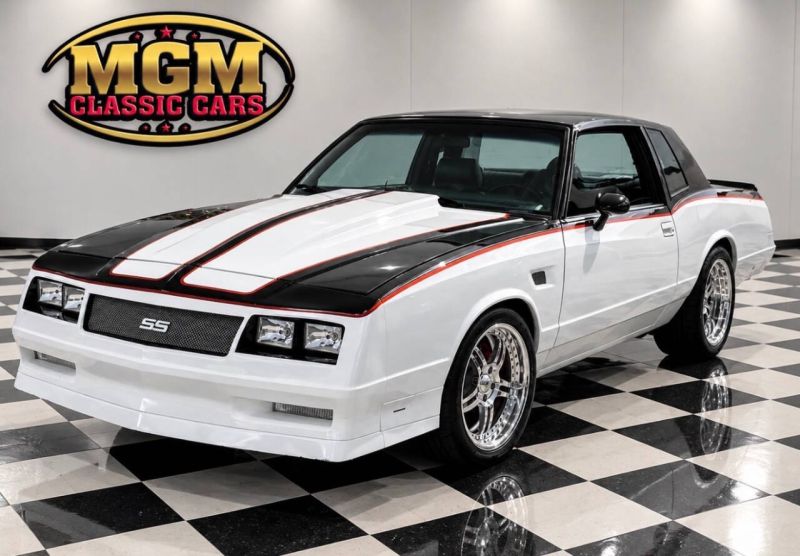
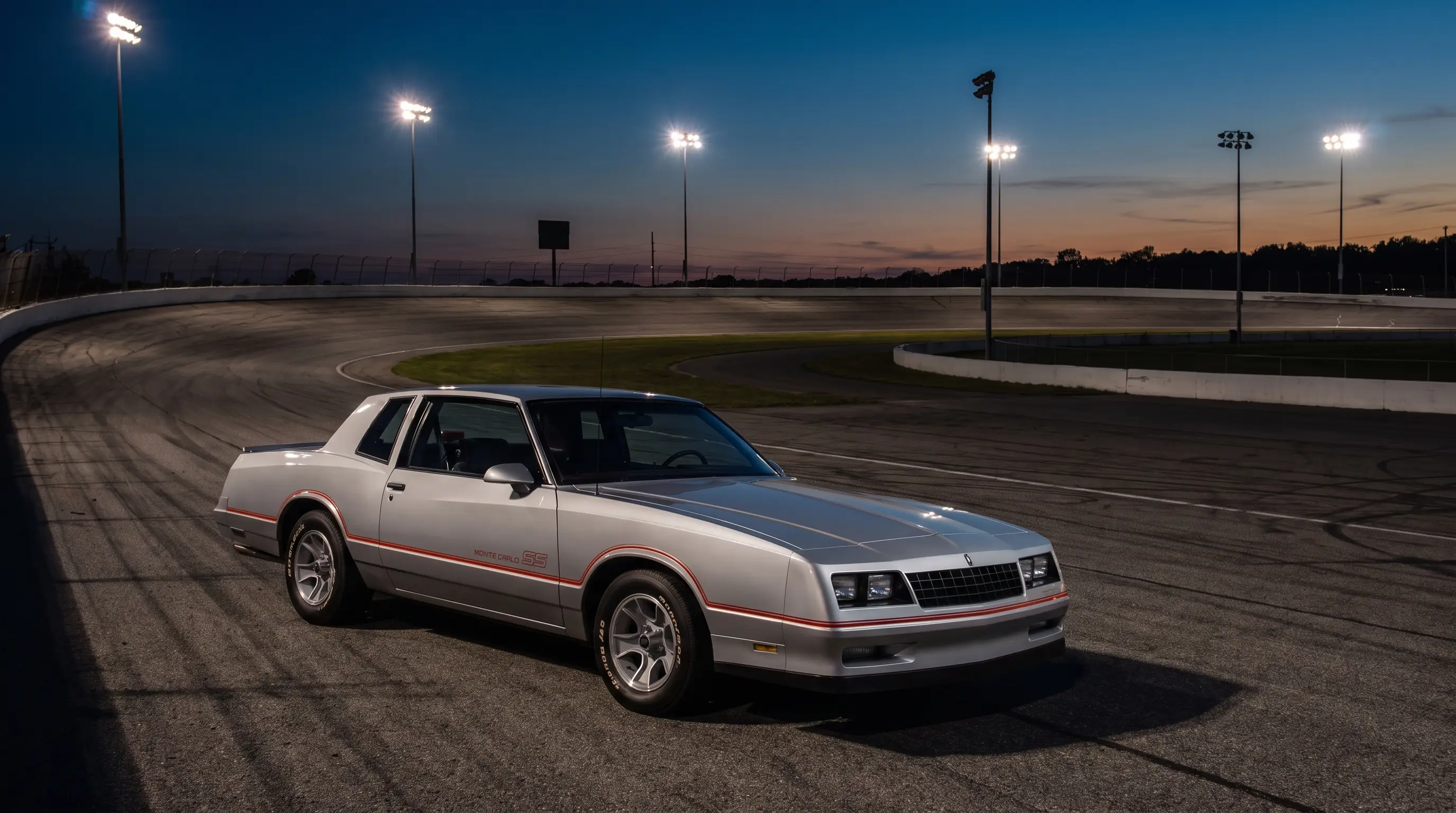
There is a guy in our club, been a member since the chapter started, who tells the monte carlo ss 1983 revival nascar story every single year at the fall show, and every single year somebody new hears it for the first time and asks why nobody told them sooner. It goes like this: the SS badge had been gone from the Monte Carlo for twelve years, and it came back not because Chevrolet marketing dreamed up a nostalgia play, but because a race team needed a body that would cut through the air on a superspeedway.
The story everybody in the club tells first
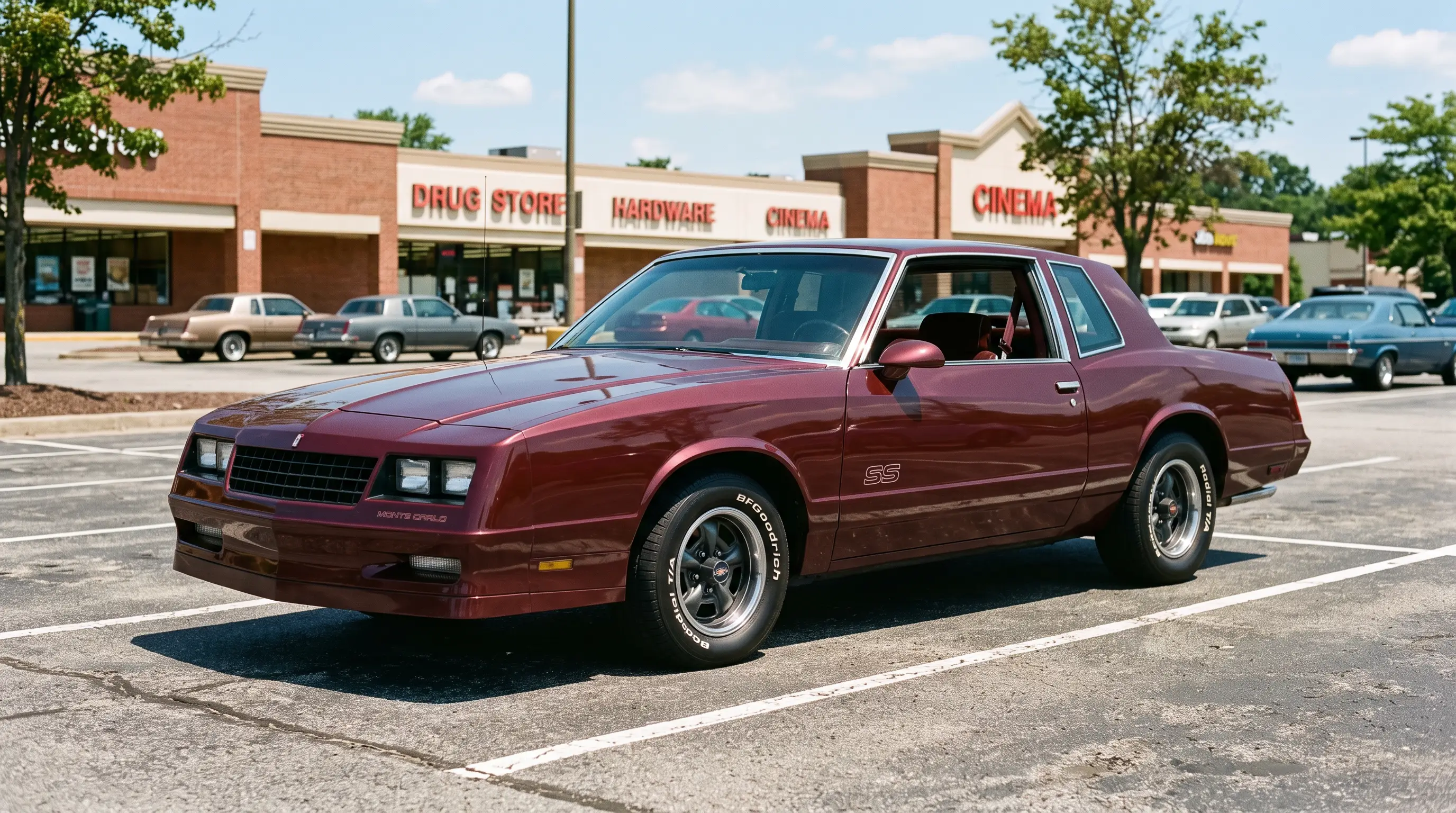
By the early 1980s, NASCAR racing had become an aerodynamics arms race as much as an engine race, and Chevrolet's stock car teams were running the G-body Monte Carlo against Ford and Buick bodies that sliced through the air more cleanly. The boxy notchback Monte Carlo of the late 1970s and early 1980s was not built with high-speed aero in mind, it was built to look like a proper personal luxury coupe in a driveway. Racing success demanded something Chevrolet's regular lineup did not offer.
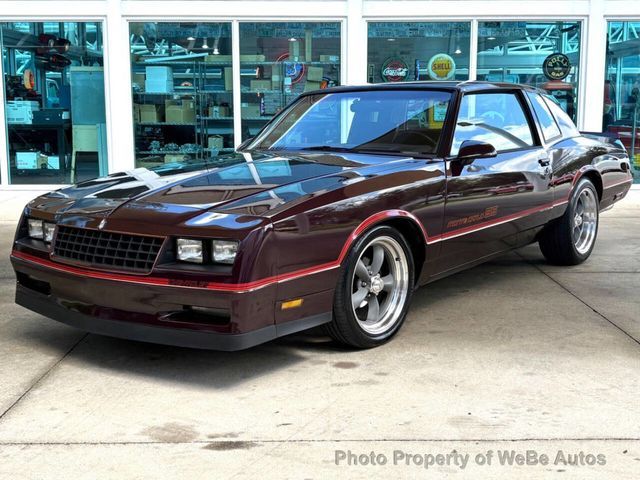
So Chevrolet built a production version with real performance intent to homologate the changes their race teams needed, and that meant bringing the SS badge back for 1983 after a twelve-year absence. Everybody at the show nods along here, because this is the part they already half-remember. What most people forget is what came next.
The part of the story people forget: the eighties SS was never about the biggest engine
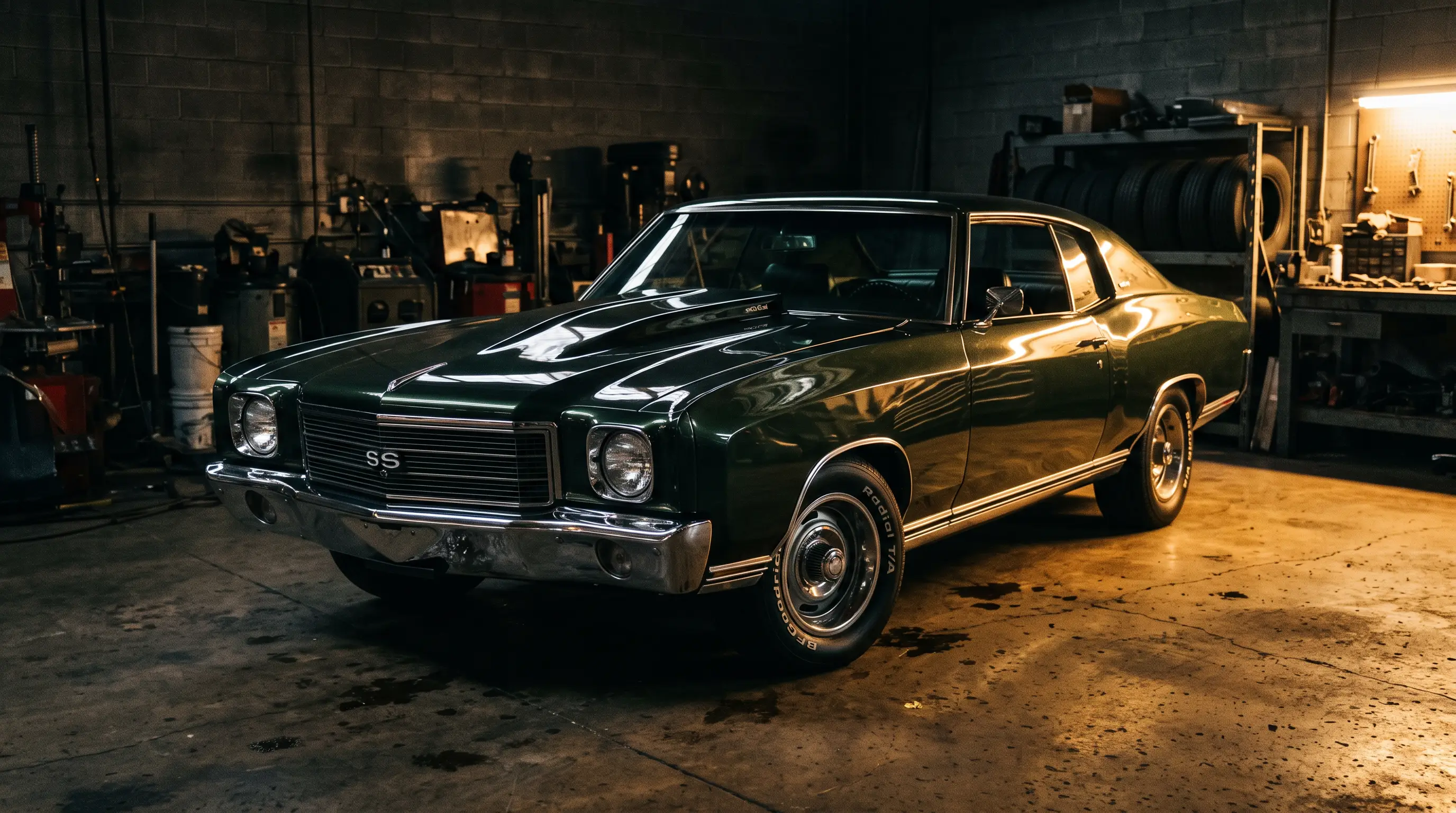
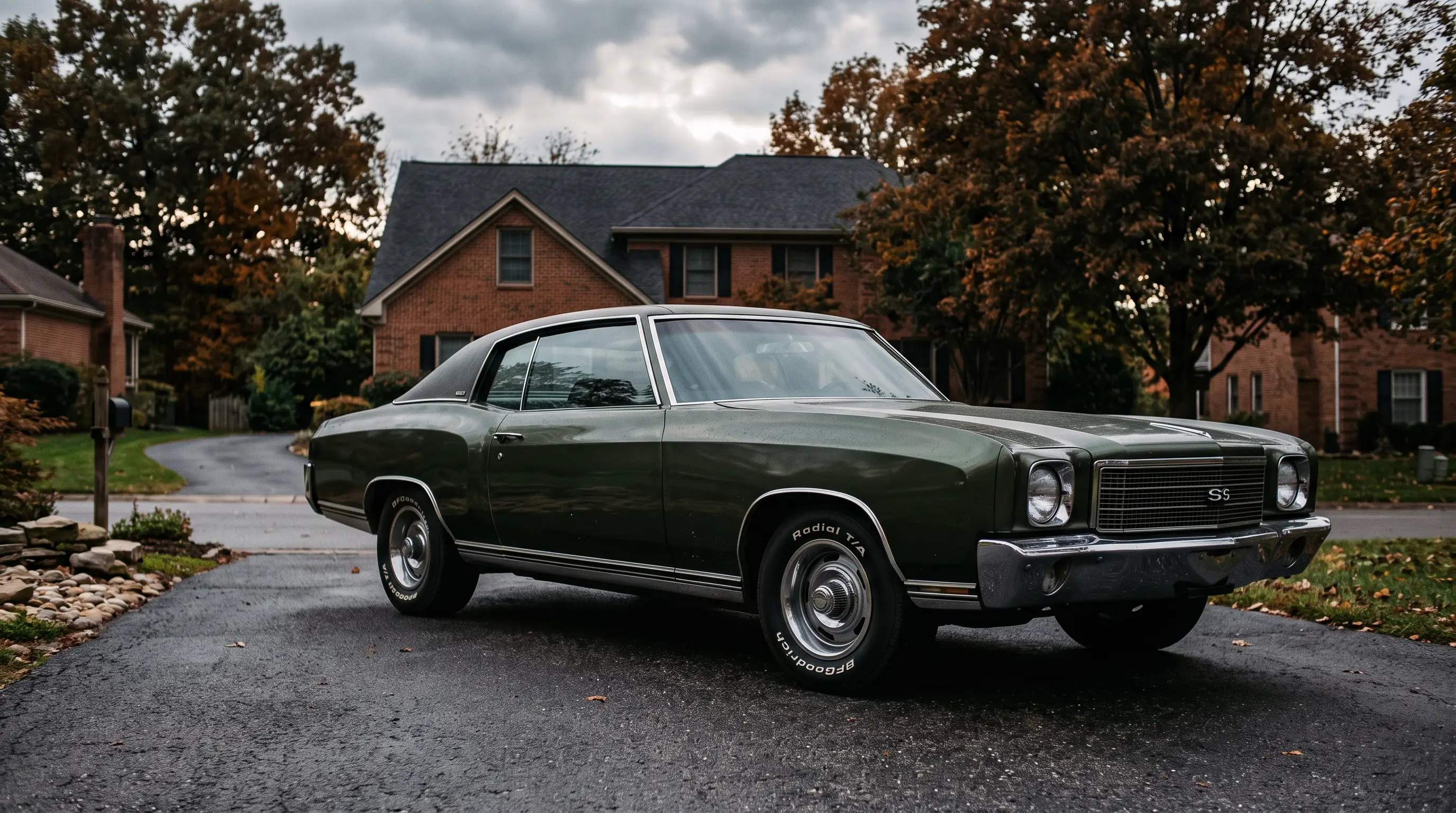
The 1983 SS launched with a 305 cubic inch small block, nowhere near the 454 big block that wore the badge back in 1970. Old-timers who only know the first-generation SS454 sometimes scoff at that number until you remind them what the car was actually trying to accomplish. This was not a horsepower play, it was a handling and aerodynamics play, tuned suspension, quicker steering, and a package built to be genuinely competent through corners rather than just quick in a straight line.
That distinction matters because it explains why the 1983 revival felt so different from the original SS454 despite sharing a name and a manufacturer. Chevrolet was not trying to recreate 1970. They were building a car for a completely different racing era, one where NASCAR rules rewarded shape and chassis balance as much as raw displacement.
Why the Aerocoupe is the punchline of the whole story
Here is where the club story earns its ending. The Aerocoupe was not built for buyers who wanted a comfortable coupe with sporty trim, it was built because NASCAR required Chevrolet to sell a matching production version of whatever aerodynamic changes their race cars used. That sloped, fastback-style rear glass looked unusual sitting in dealer lots next to the regular notchback SS, and plenty of buyers at the time did not understand why Chevrolet had made the change. Racers understood exactly why.
That homologation requirement is why so few Aerocoupes exist today compared to the standard SS notchback, and why documentation from that specific window commands serious attention from collectors now. The car was never meant to be a volume seller, it was meant to satisfy a rulebook, and that rarity is the direct result of Chevrolet building exactly as many as the sanctioning body demanded and not one more than necessary.
"Every year somebody at the show hears the Aerocoupe story for the first time and cannot believe a rear window shape came from a NASCAR rulebook instead of a design studio. That is the whole charm of this generation. The documentation is the real story, the sheet metal is just the evidence."
- Wayne Coburn
What this means for anyone chasing one today
If you are hunting a genuine Aerocoupe, the production numbers alone should tell you how careful you need to be about documentation, since a standard notchback SS with an aftermarket sloped rear window conversion is not the same car no matter how convincing the swap looks. Ask for build sheet confirmation and be skeptical of anything without paperwork tying it to the correct model year.
For the fuller history connecting this NASCAR-driven revival back to the original 1970 SS454, the full story traces the badge across both eras and explains how a twelve-year gap turned into two genuinely different collector categories. And if this story has you wanting to see what is actually available, whether that means chasing a rare Aerocoupe or finding a more affordable standard G-body SS to enjoy on weekends, browse classic Monte Carlo listings and see how the current market is pricing each version of this story.
What actually driving one at a club meet tells you
We keep two G-body SS cars in regular rotation at meets, a standard 1985 notchback and a friend's 1987 Aerocoupe, and lining them up side by side tells you everything the spec sheets cannot. The notchback feels planted and confident at moderate speeds, exactly the kind of car that made sense for a Sunday cruise or a local show. The Aerocoupe feels almost identical at parking lot speeds, right up until you get it moving and notice how much calmer the rear end stays. That calm is the whole reason the car exists, and you only really feel it once you have driven both back to back.
The other thing club members always mention is how quiet the whole revival story stayed for years before collectors caught on. A lot of these cars sat in regular driveways well into the 2000s, driven as normal used cars rather than treated as anything special, simply because the NASCAR connection was not common knowledge outside racing circles. That is changing fast now, and prices on documented Aerocoupes have moved accordingly, but there are still standard SS notchbacks out there priced like ordinary used cars because sellers do not always realize what generation of the story they are holding.
That gap between recognition and reality is exactly why this story keeps getting retold at the fall show every year. New members hear it, go home, and start looking at what is sitting in local classifieds with completely different eyes.
I have watched more than one club member walk away from a swap meet with a plain notchback SS after finally understanding the full arc of the story, engine choice, chassis tuning, and the aero rulebook that eventually produced the Aerocoupe. None of them regret it. A well-kept G-body SS is still an honest, affordable way into this era of Chevrolet history, even if the Aerocoupe sitting a few rows over gets all the attention on show day.