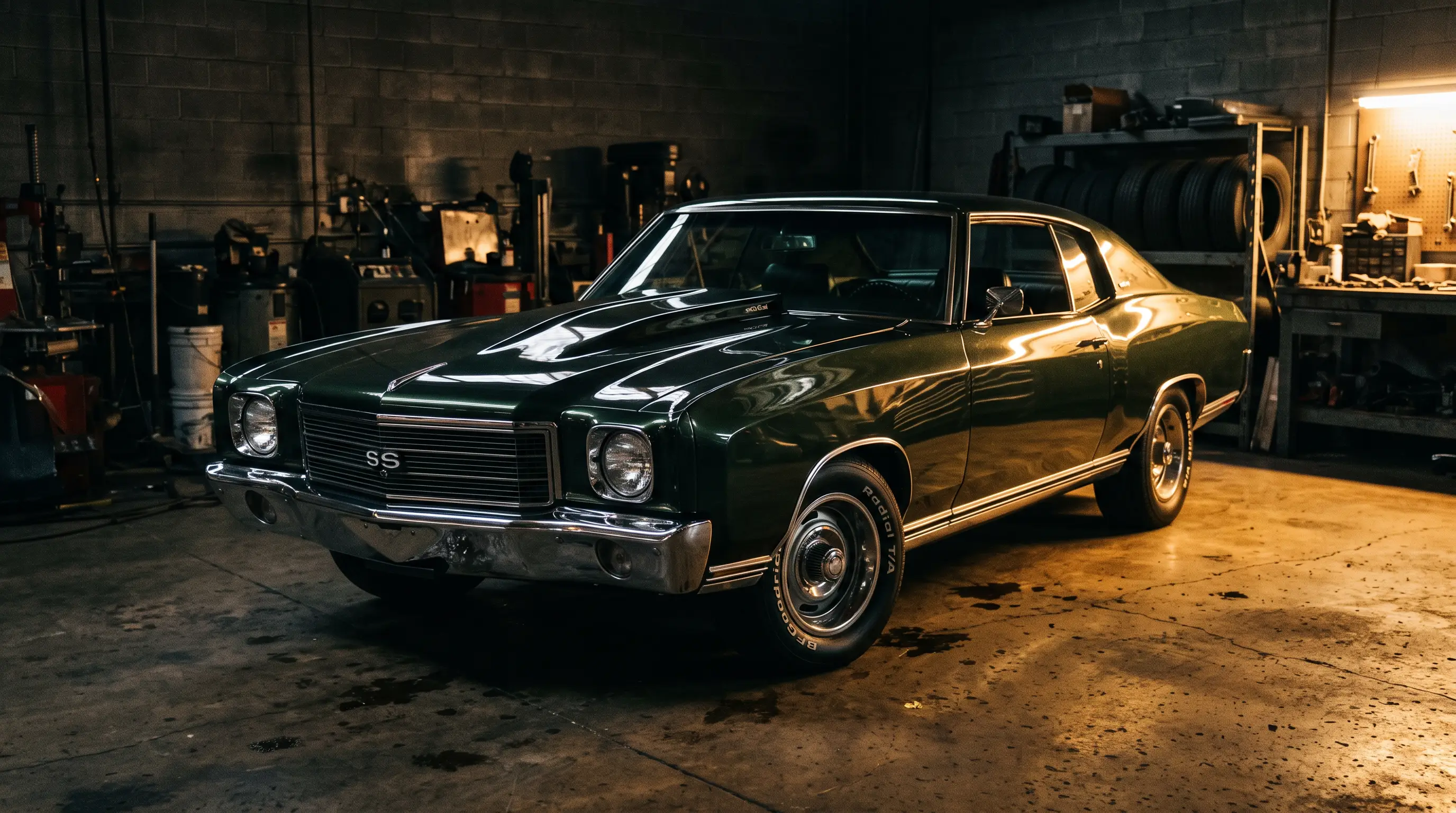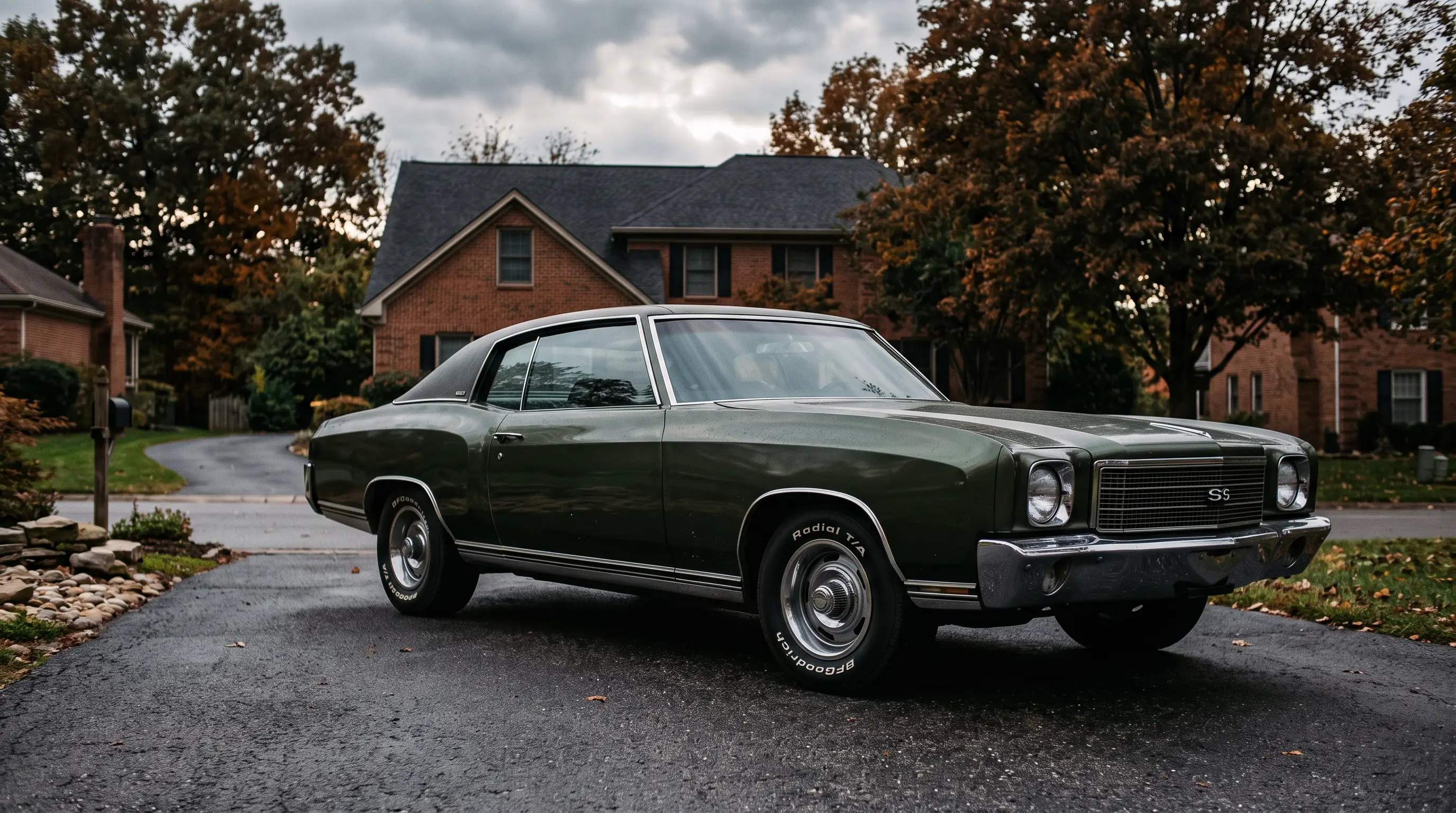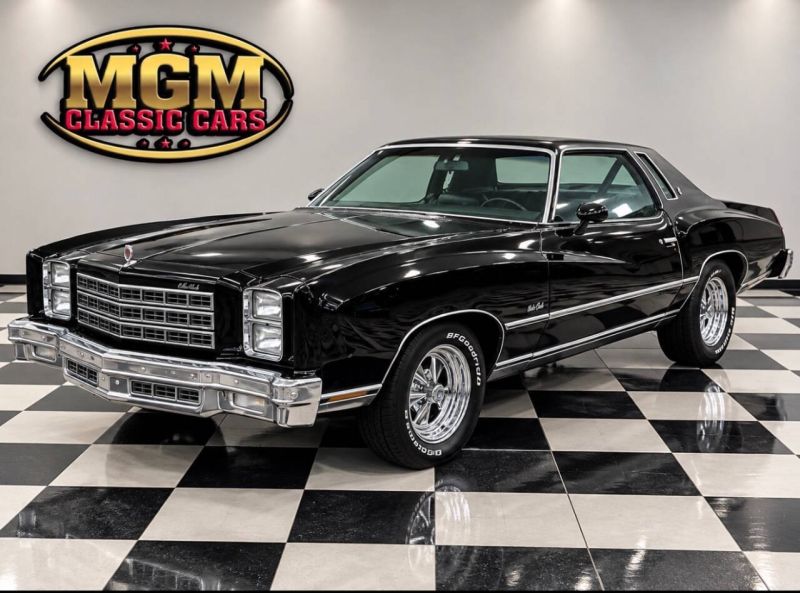
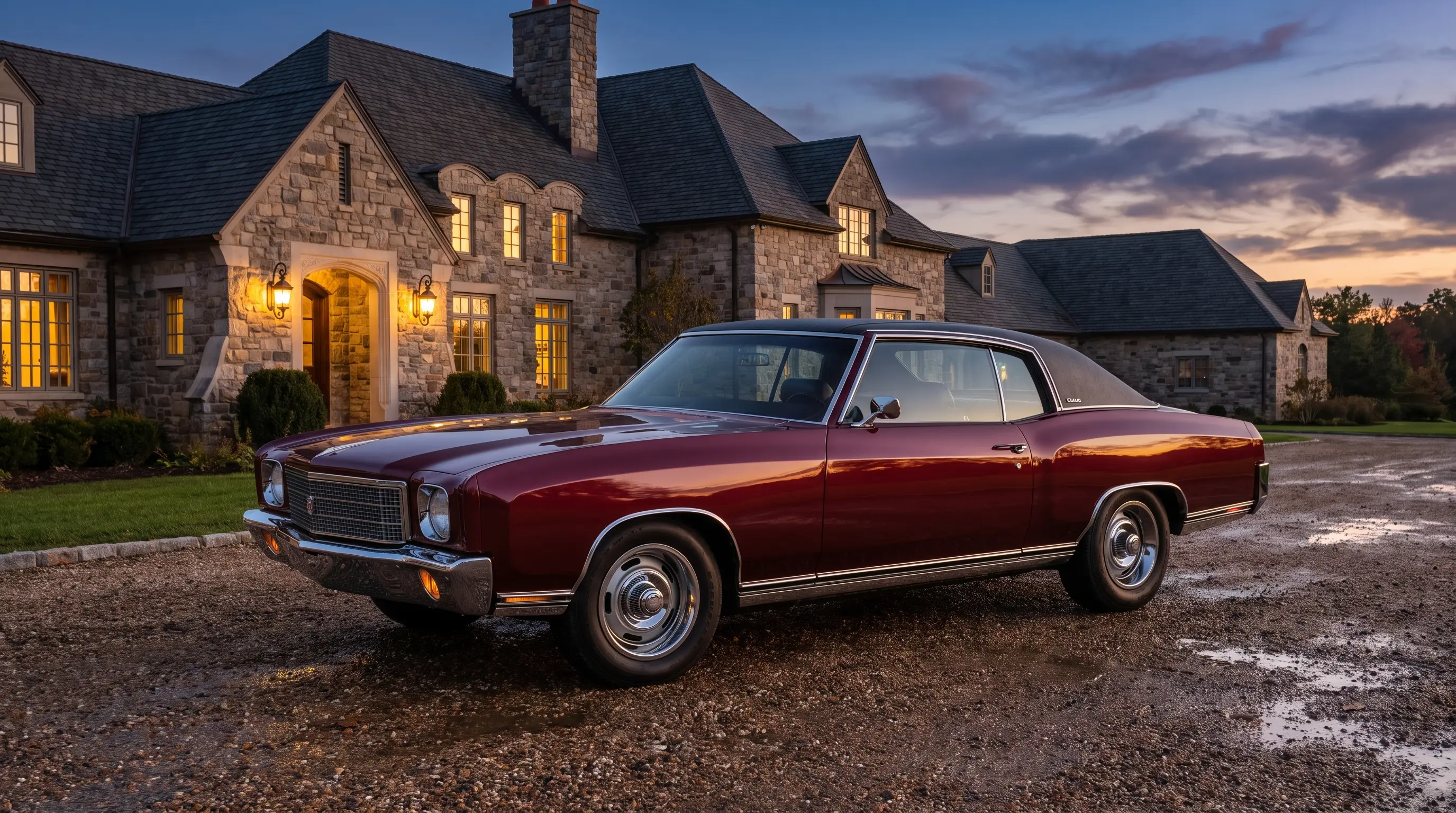
The monte carlo ss luxury muscle idea did not start as a marketing slogan, it started as a business bet, and the auction data from the last decade shows Chevrolet's bet paid off far better in hindsight than it looked in 1970. Pair a genuine big block with a formal, comfort-oriented body instead of a stripped-down muscle car shell, and you get a car that appeals to two completely different buyers at once. That crossover appeal is exactly what is driving values today.
The original pitch: comfort first, muscle as an option
Chevrolet's Monte Carlo launched in 1970 as a direct answer to the Pontiac Grand Prix, a personal luxury coupe built for buyers who wanted style and comfort more than a stopwatch. The SS454 option, built around the 360-horsepower LS5 big block, was Chevrolet betting that some percentage of that luxury buyer also wanted genuine performance without giving up the plush ride and formal roofline. It was a narrower bet than building a dedicated muscle car, and the production numbers prove it. Exactly 3,823 buyers checked that box in 1970, a small fraction of total Monte Carlo sales that year.
The data on that bet is interesting precisely because it was not the dominant seller. Chevrolet was not counting on the SS454 to move volume, they were counting on it to define the car's ceiling, to give the whole Monte Carlo lineup a performance halo even though most buyers drove home in a small block version. That is a classic luxury-brand strategy, and it worked.
What auction results say about that bet fifty years later
Documented 1970 and 1971 SS454 Monte Carlos now regularly bring anywhere from the mid-$30,000s for solid drivers up to around $50,000-plus for excellent, numbers-matching examples at major auctions, with the best documented cars occasionally pushing higher still, a number that has moved up steadily as buyers have recognized how few genuine cars survive. That is a meaningfully different price trajectory than the base small block Monte Carlo of the same years, which trades at a fraction of that figure even in excellent condition.
The gap between those two numbers is the clearest proof that the luxury-muscle idea worked as a value proposition, not just a sales pitch. Buyers are not paying a premium for the Monte Carlo nameplate generally, they are paying specifically for the combination of the luxury body and the documented big block underneath it. Strip out either half of that equation and the price drops hard.
My buy or no-buy read on this era
I will give a straight answer instead of hedging. A properly documented 1970 or 1971 SS454, with the cowl tag and engine stamping verified, is a buy at current market levels if you can find one below the high end of recent comparable sales. The combination of genuine scarcity, growing recognition of the luxury-muscle concept, and the fact that Chevelle SS454 prices have already run further ahead of it, gives this specific car real upside relative to its own segment.
An undocumented car wearing SS badges, or a small block Monte Carlo with a cosmetic SS package added later, is a no-buy at anything resembling documented-car pricing. That sounds obvious stated plainly, but the market still sees enough of these misrepresented or honestly mistaken listings that it is worth repeating. The premium belongs to the drivetrain and the paperwork, not the trim pieces.
"The luxury muscle idea only holds its value when both halves are real. A documented big block in a genuine luxury coupe is a legitimate collector asset. Everything short of that is a nice driver, not an investment."
- David Mercer
Where this fits in the wider collector market
The Monte Carlo SS454 occupies a specific niche that is arguably underappreciated relative to its rarity. It gets less attention than the Chevelle SS454 despite sharing the same drivetrain, and it gets less attention than later Pontiac Grand Prix performance variants despite arguably executing the luxury-muscle concept more convincingly. That relative obscurity is part of why documented examples still represent reasonable value compared to more heavily chased muscle car nameplates from the same period. More on the Monte Carlo SS covers how this badge developed across its full history, and understanding where this started helps explain why the luxury half of the equation was never an afterthought.
For buyers actually shopping this segment right now, the practical move is comparing documented cars against current asking prices before committing to any specific example. Classic Monte Carlos on the market gives a real-time read on what sellers are asking, which is the only reliable way to know whether a given SS454 listing is priced to the data or priced to a seller's hope.
How the idea resurfaced in the 1983 G-body SS
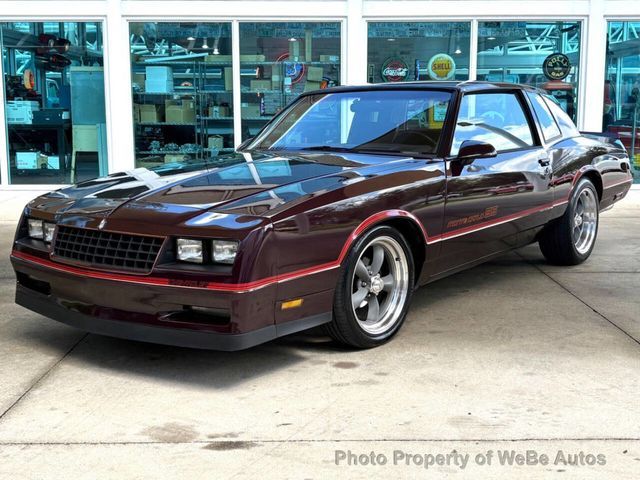
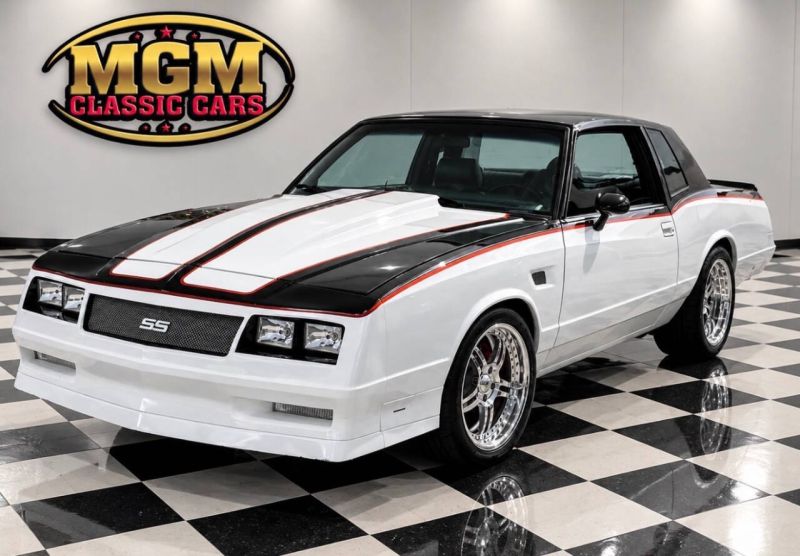
It is worth noting that Chevrolet did not abandon the luxury-muscle concept when the SS badge disappeared after 1971. When it returned for 1983, the formula shifted, a smaller 305 cubic inch V8 instead of a 454, but the underlying idea stayed intact: sell buyers a comfortable, well-trimmed coupe with a genuine performance edge layered on top rather than a stripped-down econobox with a spoiler bolted on. The context had changed completely, this was a NASCAR-driven era focused on aerodynamics rather than displacement, but the core business logic Chevrolet used in 1970 was still running underneath it.
From a market analyst's perspective, that continuity matters because it shows the luxury-muscle idea was not a one-off accident, it was a repeatable strategy Chevrolet returned to whenever the performance market conditions allowed it. That gives long-term collectors a reason to think about the Monte Carlo SS lineage as a coherent investment thesis spanning multiple decades, rather than treating the 1970 and 1971 cars as an isolated anomaly.
The numbers back this up in a different way than the big block era. G-body SS production ran into the tens of thousands across 1983 through 1988, a volume that keeps entry prices reasonable for most of the range, while the rare 1986 and 1987 Aerocoupe variants have climbed sharply as buyers recognized their genuine NASCAR homologation story. That split, common cars staying affordable while the rare halo variant appreciates, mirrors exactly what happened with the base small block Monte Carlos versus the documented SS454 cars a decade earlier.
My overall read for anyone building a collection around this concept: buy the rare, documented halo car in each era if the budget allows it, and use the common variants as drivers rather than investments. That approach has consistently outperformed buying the middle of the market in both the 1970s big block era and the 1980s G-body era, and there is no reason to expect that pattern to reverse now that both eras are firmly recognized as distinct chapters of the same underlying idea.