
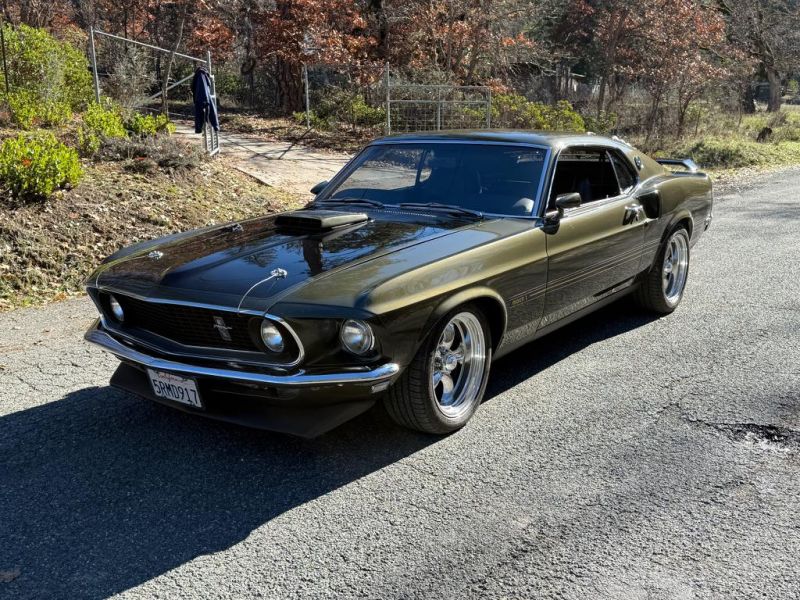
The Mustang shaker hood scoop is the only part of the car that tells you the engine is alive before you hear it. Fire up a 1969 or 1970 Mustang that has one and the scoop rocks in its hole in the hood, twitching every time you blip the throttle. That is not a loose part. It is the whole idea. The scoop is bolted to the engine, not the hood, and it moves with the engine on its mounts. Ford offered it for two model years, and it is still the most recognizable piece of hardware from that era.
Car Features
7 min read
The Shaker Hood: How Ford's Ram Air Scoop Worked
Bolted to the air cleaner and poking through the hood, the 1969-70 Mustang shaker moved with the engine. How it worked and who got it.
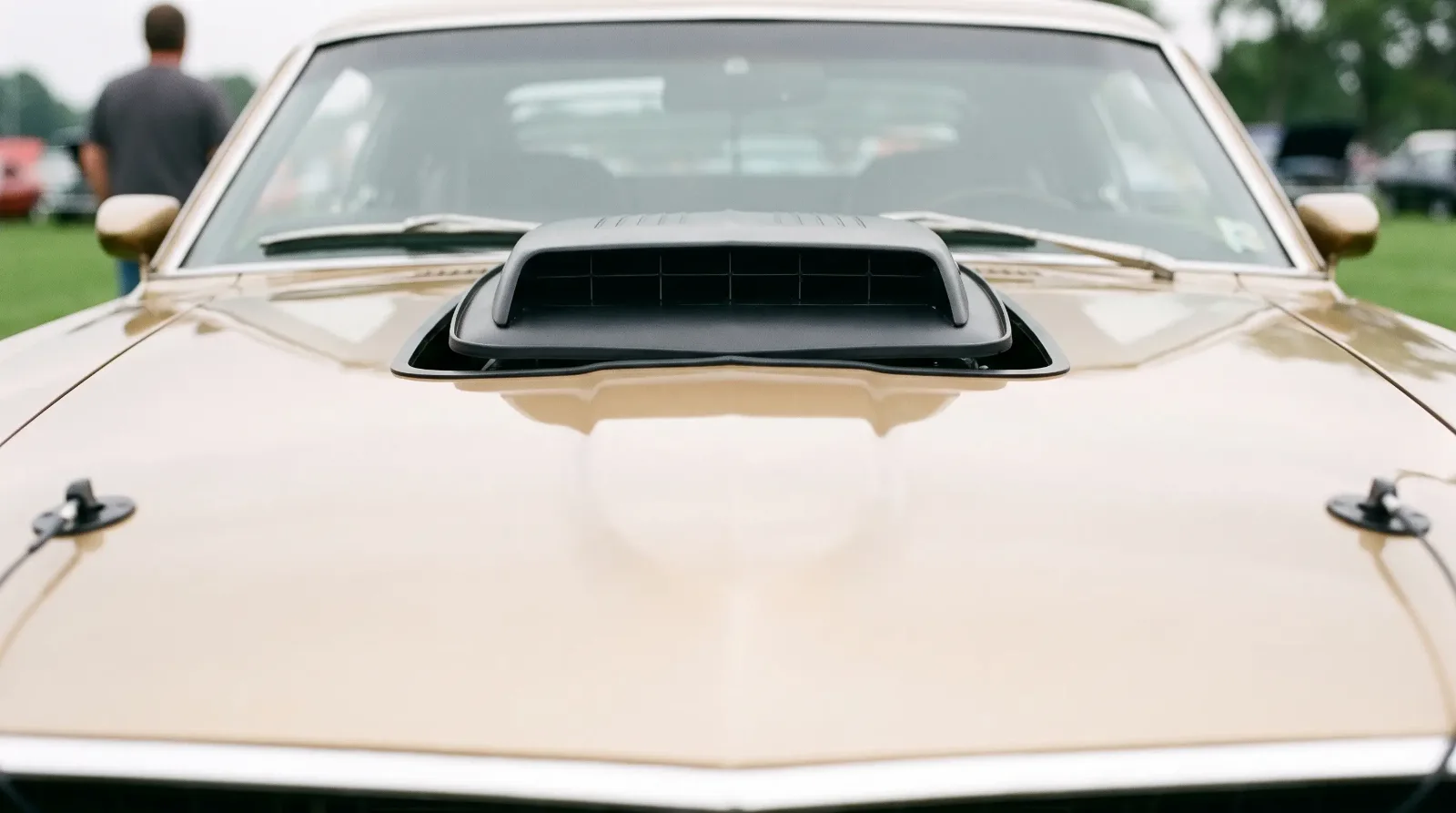
The shaker came along with a wave of new performance models for 1969, from the Mach 1 to the Boss cars, and there is more on that here. This piece stays on the scoop itself: what it is, how the air got from the front of it to the carburetor, which cars got it from the factory and why Ford walked away from it after 1970.
What the Mustang shaker hood scoop actually is
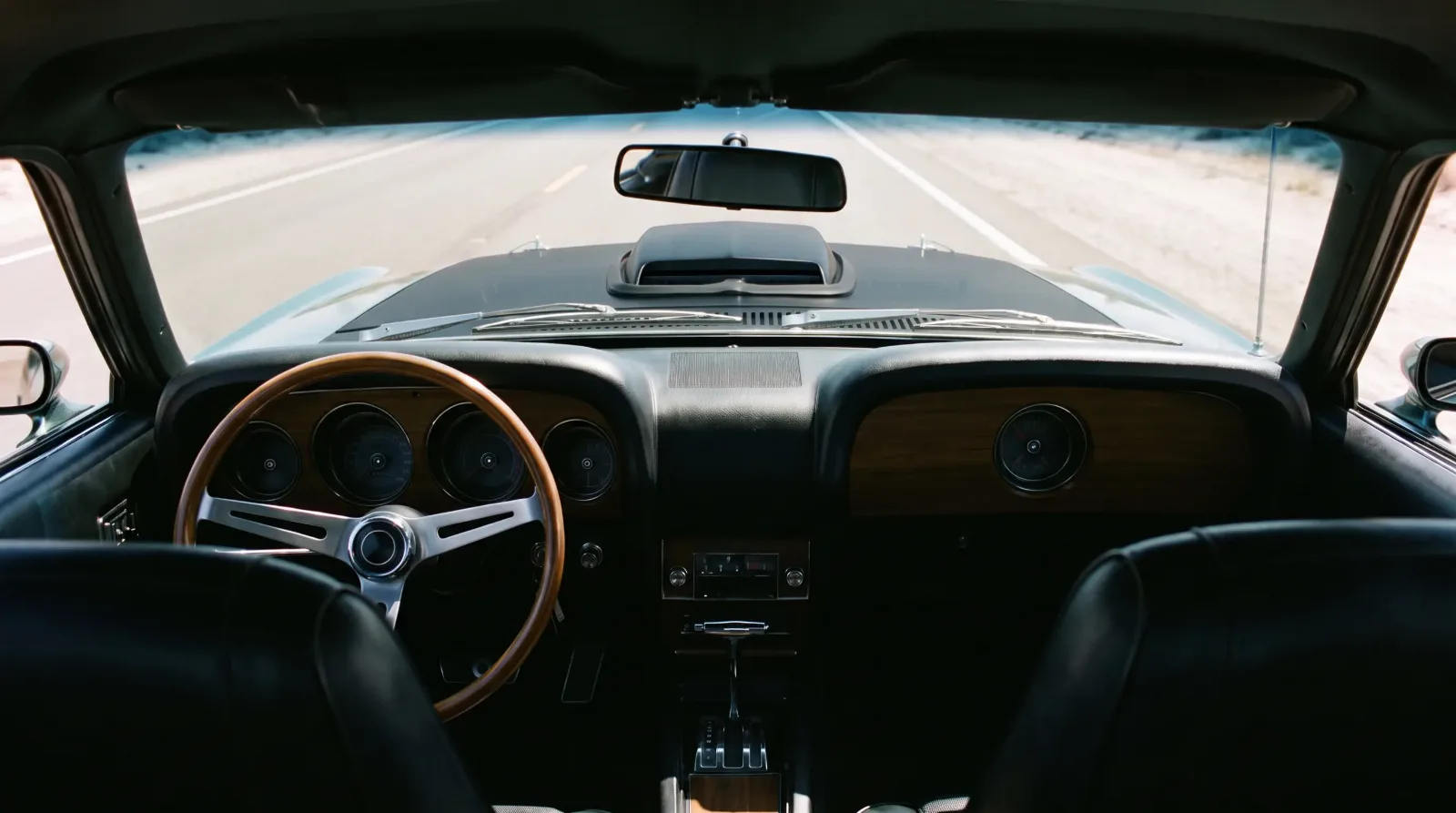
Strip the name away and a shaker is an air cleaner with a scoop on top. The scoop bolts to the lid of the air cleaner and pokes up through an opening cut in the hood. Close the hood and the scoop sits above the sheet metal with its mouth facing forward into the wind. Open the hood and the scoop stays with the engine, because that is what it is attached to.
That arrangement solves a problem every hood scoop has. A scoop fixed to the hood has to seal against the air cleaner when the hood comes down, and it has to keep sealing while the engine rocks on its mounts under load and the hood flexes at speed. The shaker skips that whole fight. The scoop and the carburetor never move relative to each other. The only joint that has to live with movement is the gap between the scoop and the hole in the hood, and a neoprene rubber seal around the base of the scoop took care of that.
The movement is also where the name comes from. A big-block V8 on rubber mounts twists every time it makes torque, and the scoop, sitting right on top of it, shows the motion to anyone looking through the windshield. Nobody had to sell that with an ad. You could see it from the driver's seat.
"Cutting a hood for a shaker is the easy part. Getting the gap even all the way around, so the scoop sits dead center and does not rub the paint when the engine torques over, that is where you find out who did the work. A factory hole looks like it was always meant to be there. A bad one looks like somebody used a jigsaw in a driveway, because usually somebody did."
Jim Vasquez
How the Ram Air path worked
The point of any Ram Air setup is simple. The air under a hood is hot, because it has just come through the radiator and over the engine. Hot air is thin. The air above the hood is cooler and denser, and an engine makes more power on dense air. A forward-facing scoop sitting up in the airstream grabs that cooler air and feeds it straight down into the air cleaner instead of letting the carburetor breathe what is cooking in the engine bay.
On the 1969 and 1970 cars the path was short. Air went into the mouth of the scoop, through the filter element in the air cleaner below it and into the carburetor. A vacuum motor in the air cleaner base worked a flapper door. Normal engine vacuum held the flapper shut in everyday driving, and when vacuum fell away under hard acceleration it swung open and let the engine breathe through the scoop.
How much power it added is harder to pin down. Ford rated the 428 Cobra Jet at 335 hp at 5,200 rpm and 440 lb-ft at 3,400, and the Ram Air R-code engine carried exactly the same rating as the non-Ram Air Q-code. Road-test data for the 1968½ Cobra Jet suggest something closer to 275 hp in SAE net terms. Cool air helps at speed and on a hot day. At a drag strip launch, with the car barely moving, the scoop is mostly working on looks.
Which 1969 and 1970 Mustangs got the shaker
The shaker is linked in most people's minds with one engine: the 428 Cobra Jet. In 1969 the fifth character of the VIN tells the story. An R was a 428 Cobra Jet with Ram Air, and a Q was a 428 Cobra Jet without it. Ford built 72,458 Mach 1s for 1969, and the Mach 1 came with a matte-black hood and hood pins and offered the shaker as an option, with the 428 Cobra Jet available with or without Ram Air.
Several published histories say the 1969 shaker was offered only with the 428 Cobra Jet and spread to other engines for 1970. The Boss 302 registry, which tracks these cars closely, lists it on the 351 Windsor and the 390 as well as the 428 Cobra Jet in 1969, and its list is the more detailed of the two. For 1970 the list grew to include the new 351 Cleveland and the Boss 302. The 1970 Mach 1 swapped its hood pins for twist-type hood locks and kept the shaker on the options list. Ford's 1969 and 1970 styling put a lot of attention on the hood, and you can read more here about how those cars were shaped.
| Model year | Factory hood hardware | Engines listed | Notes |
|---|---|---|---|
| 1969 | Shaker scoop on the air cleaner | 351 Windsor, 390, 428 Cobra Jet | VIN code R = 428 CJ Ram Air; Q = 428 CJ without |
| 1970 | Shaker scoop on the air cleaner | 351 Windsor, 351 Cleveland, 428 Cobra Jet, Boss 302 | First year for the shaker on the Boss 302 |
| 1971 to 1973 | Dual NACA ducts in the hood | 1971: Ram Air optional on the 429 Cobra Jet, standard on the Boss 351 | Ducts functional only with Ram Air; no factory shaker |
That engine list is also the quickest way to read a car's history, because a shaker on a 1969 car with a 302 two-barrel does not match it. It may still be a nice car. It is not how it left the plant.
Why Ford dropped it after 1970
The 1971 Mustang was a bigger, wider car, and it came with a different answer to the same question. Instead of a scoop riding on the engine, the hood got two NACA ducts, the flush, low-drag inlets borrowed from aircraft practice. On the 1971 Mach 1 the NACA hood was a no-cost option with the base engine and was functional only when Ram Air was ordered. The Boss 351 got Ram Air as standard, and the 429 Cobra Jet offered it as an option, the 1971 J-code covering the 370 hp 429 Cobra Jet Ram Air.
From the body side, the NACA hood is the cleaner design. There is no hole to fit a moving scoop through and no seal to wear out. But it has none of the shaker's theater. A flush duct does not twitch at idle. Ford kept the dual-duct hood through 1973, and when the big-block cars went away after 1971, the hardware stopped being the point.
The shaker's place in the story
Two model years is a short run for a part that people still recognize from across a parking lot. Part of that is the cars it sat on. A 1969 or 1970 Mach 1 with a 428 Cobra Jet, a four-speed and the shaker poking through a black hood is about as complete a statement as a Mustang made in that era, and the Toploader is the gearbox behind it in the big-block cars. Part of it is that the shaker was honest. You could watch it do its job.
Ford brought a factory shaker back on the 2003 Mach 1, more than three decades later, which tells you how much of the original idea had stuck. For the classic cars, the rule is simple: 1969 and 1970 only, on the engines the factory listed, bolted to the air cleaner and moving with the engine. If it does not move, it is not a shaker.
Sources and notes
- Wikipedia: Shaker scoop, how it works and its rivals
- Boss 302 Registry: the factory Shaker, engines and bases
- 428cobrajet.org: 1969 and 1970 shaker air cleaners, seal and flapper
- MustangSpecs: 1969 428 Cobra Jet Q-code and R-code ratings
- Wikipedia: Ford Mustang Mach 1, 1969 to 1973
- Classic Industries: 1964 to 1973 Mustang VIN decoder
Related Reading

Have a
Ford Mustang
for Sale?
Reach thousands of serious classic car collectors across the US.
Sell It Here →
Selling a classic? Here's how: sell my classic car
Are You a Classic Car Dealer?
List your full inventory and connect with targeted classic car buyers.
Join as a Dealer →

About the author
Jim Vasquez
Southern California hot rod and custom car builder with roots in the traditional kustom kulture scene.
Related Listings - Ford Mustang




Comments
Be the first to comment on this article.