
Tape is the cheapest way to change a car's personality and the easiest way to get it wrong. On a classic Mustang, a stripe in the wrong place or the wrong year tells anyone who knows the cars that somebody guessed. Mustang racing stripes went through three clear phases between 1965 and 1973: the rocker stripes and Le Mans stripes of the early GT and Shelby cars, the C-stripe of 1968, and the Boss graphics that Larry Shinoda drew for 1969 and 1970. Each one has its own logic, and each one gets faked.
Car Features
6 min read
Le Mans Stripes, C-Stripes and Larry Shinoda's Boss Graphics
Mustang racing stripes from 1965 to 1973: GT rocker stripes, GT350 Le Mans stripes, the 1968 C-stripe and Larry Shinoda's Boss 302 graphics.
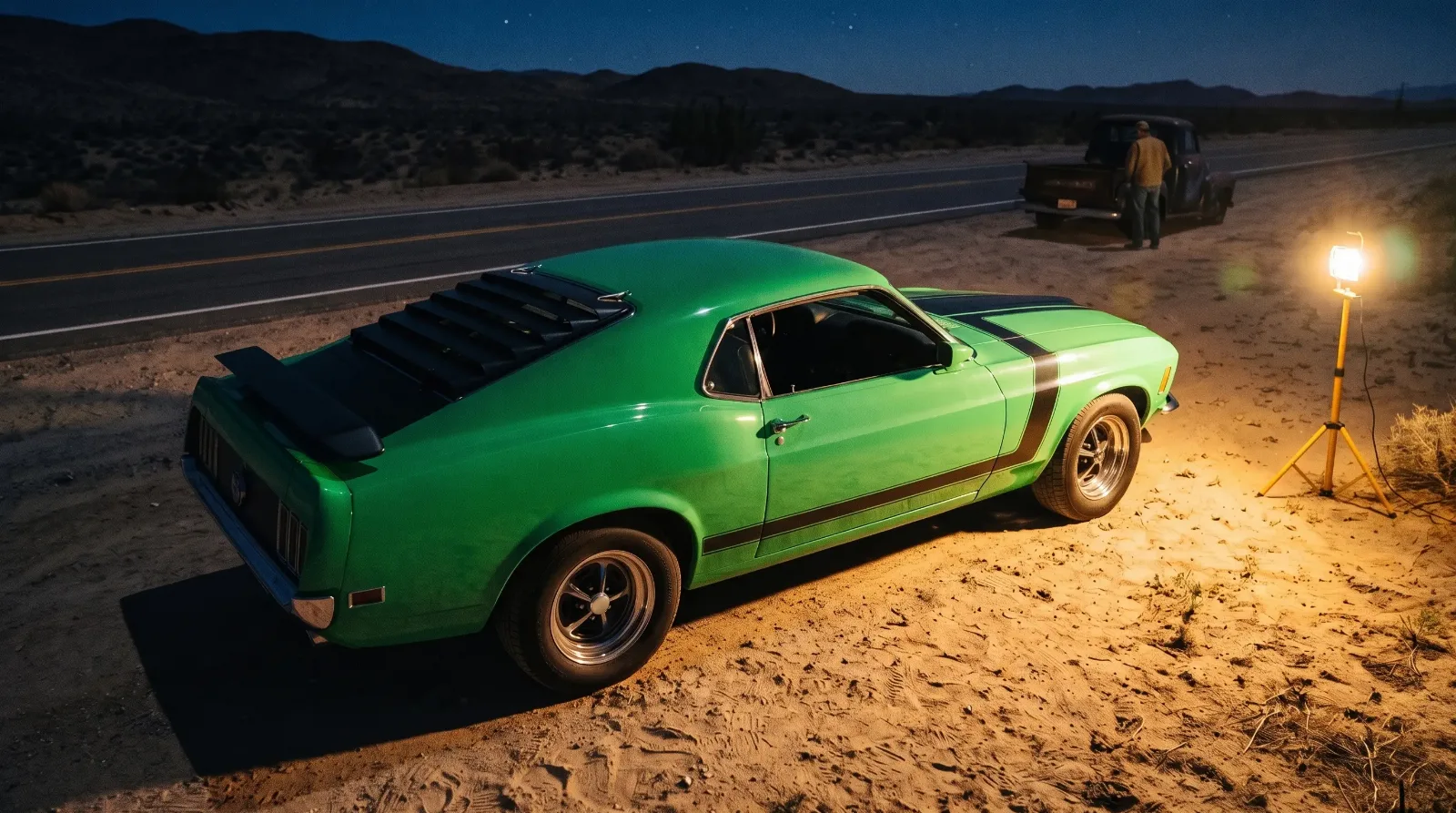
This piece is about the graphics only. For the sheet metal underneath them, from the long hood to the side sculpture, start with the Mustang design overview.
Where Mustang racing stripes started: the GT and the GT350
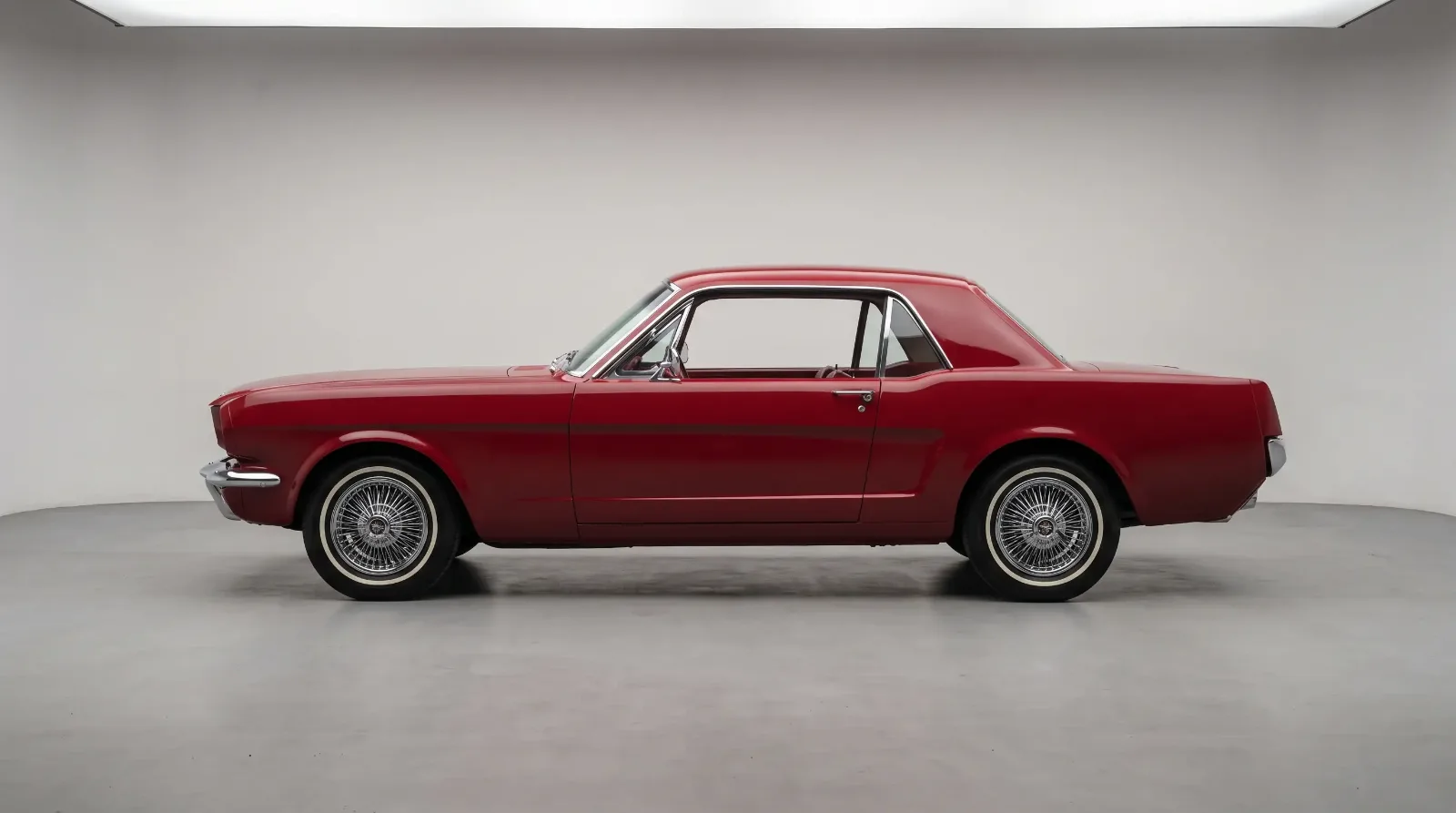
The first factory stripe on a Mustang was a working-class one. The 1965 GT Equipment Group put a stripe along the body just above the rocker panel, with GT lettering, in place of the regular car's side ornament. It ran with the front discs, quick-ratio steering, fog lamps and five-dial gauges that made a GT a GT. The stripe was the label on the package. The 1966 GT kept the same idea.
Shelby took the stripe and made it a statement. All 562 of the 1965 GT350s were Wimbledon White with Guardsman Blue rocker stripes. On top of that, about 28 percent carried the optional hood-to-tail Le Mans stripes, the bands that run over the hood, roof and decklid. Peter Brock handled the GT350's graphics. Ford's 1963 Mustang II show car had already worn blue stripes on white, but the GT350 is where over-the-top stripes became part of the Mustang vocabulary, and they have been copied on more cars than anyone can count.
Here is the catch for builders. On a regular 1965 or 1966 Mustang, Le Mans stripes were not part of the GT package, and whether they were offered as a dealer-installed option has not been confirmed. If someone tells you their 1965 coupe left the dealer with them, ask for the paperwork.
The 1967 rocker stripe and the 1968 C-stripe
The naming gets messy in 1967. The GT stripes that year were still lower rocker-panel stripes, but at least one major auction house calls them "Le Mans" stripes, which confuses people who expect the over-the-top kind. They are not. A 1967 GT with factory stripes has them low on the body. The automatic-equipped cars wore a GTA emblem on the lower front fender, set inside the stripe opening, and that badge was used only for 1967.
For 1968 Ford changed the shape completely. The C-stripe was a curved side stripe shaped like the letter that named it, and it showed up on three different cars: the 1968 GT, the spring Sprint A package and the California Special. On the GT/CS the stripe came in white, black, red or metallic medium blue over any standard 1968 color. The Sprint package also offered an optional hood stripe.
| Years | Stripe | Where it appeared |
|---|---|---|
| 1965 to 1966 | Rocker stripe with GT lettering | GT Equipment Group |
| 1965 | Guardsman Blue rocker stripes; optional hood-to-tail Le Mans stripes (about 28%) | Shelby GT350 |
| 1967 | Lower rocker-panel stripe (GTA badge inside on automatics) | Mustang GT |
| 1968 | C-stripe | GT, Sprint A, California Special |
| 1969 | Reflective side striping, matte-black hood | Mach 1 |
| 1969 | Reflective C-stripe, blacked-out hood | Boss 302 |
| 1970 | Hockey-stick stripe | Boss 302 |
| 1973 | Hockey-stick stripes as an option | Exterior Decor Group |
Larry Shinoda and the Boss 302
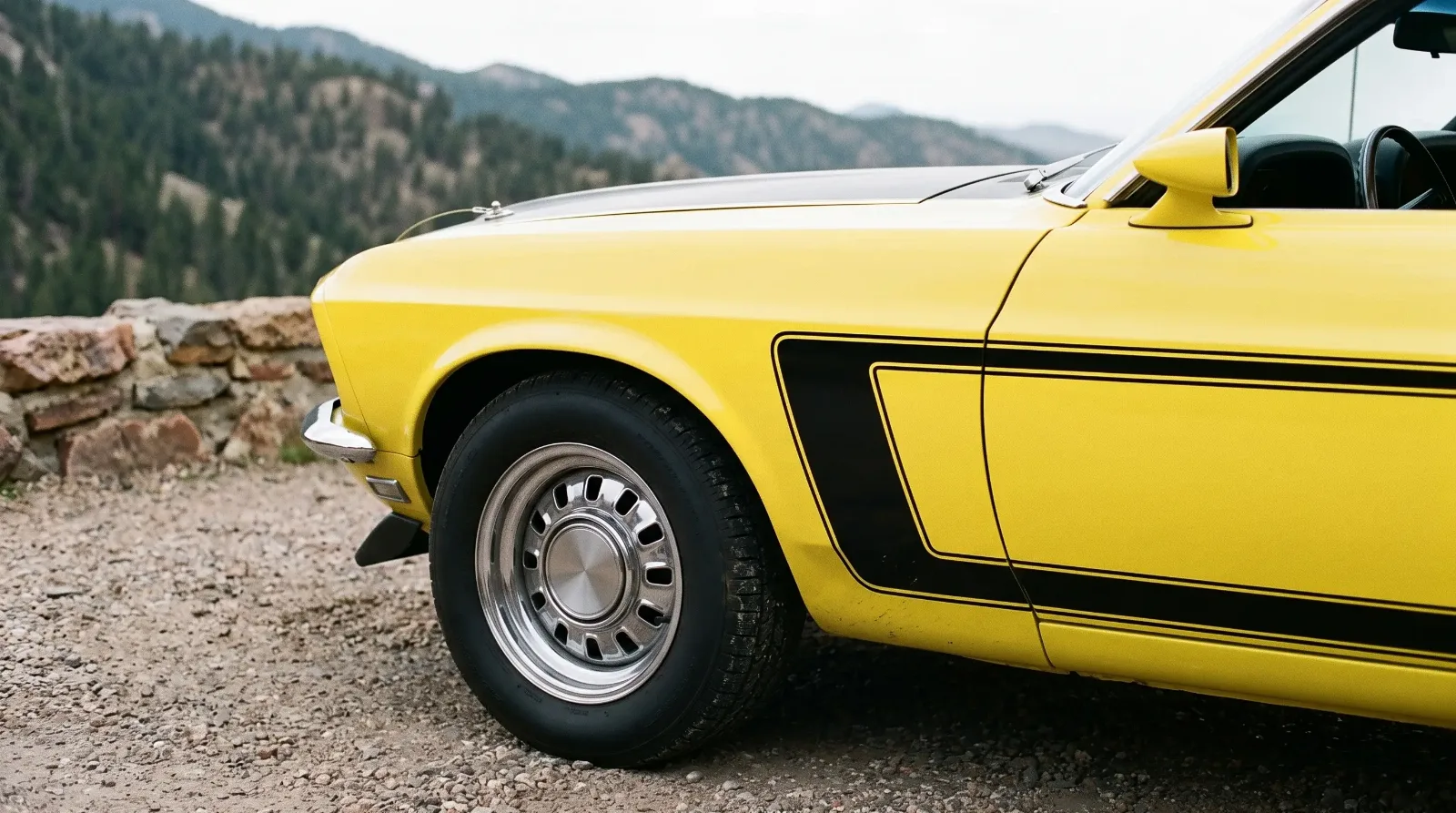
The stripes that people still argue about came from a designer who spent barely a year and a half at Ford. Larry Shinoda had worked in Bill Mitchell's Studio X at General Motors, on the 1963 Sting Ray, the Mako Shark and the 1968 Corvette. When Semon "Bunkie" Knudsen left GM for Ford, Shinoda followed him in May 1968. By February 1969 he was director of the Special Projects Design Office.
The project that became the Boss 302 was first going to be called SR2. Shinoda called it "the boss's car," the boss being Knudsen, and the name stuck. What he did to it is a lesson in taking things away. The planned chrome, side cladding, rocker moldings and fake quarter scoops came off. In their place went a C-stripe decal, a blacked-out hood, a front air dam, a rear spoiler and rear window slats.
On the 1969 Boss 302 that side stripe was a reflective C-stripe. For 1970 it changed to the shape the hobby calls the hockey stick. Mixing those up is an easy mistake on a Boss tribute. In 1969 the Mach 1 got its own treatment, with reflective side striping, a matte-black hood with hood pins and the optional Shaker scoop. For the car itself, there is more on the classic Mach 1 Mustang in this series.
"Shinoda knew a stripe should explain the car. On the Boss it says spoiler, air dam, no chrome. On a lot of tributes it says somebody bought a kit."
Jim Vasquez
His time at Ford ended suddenly. Henry Ford II fired Knudsen on September 11, 1969, and Shinoda was let go days later. The Boss graphics outlived both of them. When the last Shelbys were sold as 1970 models, they got a Boss 302-type chin spoiler and twin black hood stripes. By 1973 hockey-stick stripes were an option in the Exterior Decor Group, and the Mach 1 decals had been revised.
What the stripes became after 1973
The stripe vocabulary never left. The 1976 Cobra II was a direct answer to the Shelby look: dual over-the-top stripes, in white with blue, blue with white or black with gold, with white and red and white and green added for 1977. For 1978 Ford went to a single wide stripe with large COBRA lettering on the side. The 1979 Indy pace car replica wore orange and red graphics over pewter and black, a very different idea that fit the Fox Body's aero look. The 1984 GT350 anniversary car went back to the source with red GT350 rocker stripes on Oxford White.
Shinoda was inducted into the Mustang Club of America Hall of Fame in its first class, in 1995. Not bad for a man whose Mustang career lasted about sixteen months.
Getting the graphics right is not about being fussy. A stripe is a factory statement about what the car was built to do. Put the right one on the right car and it reads as history. Put the wrong one on and it reads as a costume.
Sources and notes
Related Reading
Have a
Ford Mustang
for Sale?
Reach thousands of serious classic car collectors across the US.
Sell It Here →
Selling a classic? Here's how: sell my classic car
Are You a Classic Car Dealer?
List your full inventory and connect with targeted classic car buyers.
Join as a Dealer →
#boss 302
#Ford Mustang
#larry shinoda
#mustang design
#Mustang racing stripes
#Le Mans stripes
#C-stripe

About the author
Jim Vasquez
Southern California hot rod and custom car builder with roots in the traditional kustom kulture scene.
Related Listings - Ford Mustang




Comments
Be the first to comment on this article.