
Wheels are the first part most owners change on a Mustang and the last part most people think to question. That is backwards. Ford changed its wheels and wheel covers every few years between 1964½ and 2000, and plenty of what gets called "correct" at a show is a later design, an aftermarket wheel, or a wheel that came with a different engine. This is a walk through classic Mustang wheels by year: what Ford bolted on, what it never sold, and the small details that give a swap away. Wheels are only one chapter of the Mustang's design story, but they are the chapter that gets rewritten the most.
Car Features
8 min read
Styled Steel, Magnum 500 and Pony Wheels: Mustang Wheels by Era
From 1964½ wheel covers to the 2000 Cobra R's 18s: the wheels Ford fitted to the Mustang in each era, and the famous one it never sold.
1964½ to 1968: wheel covers, wires and styled steel
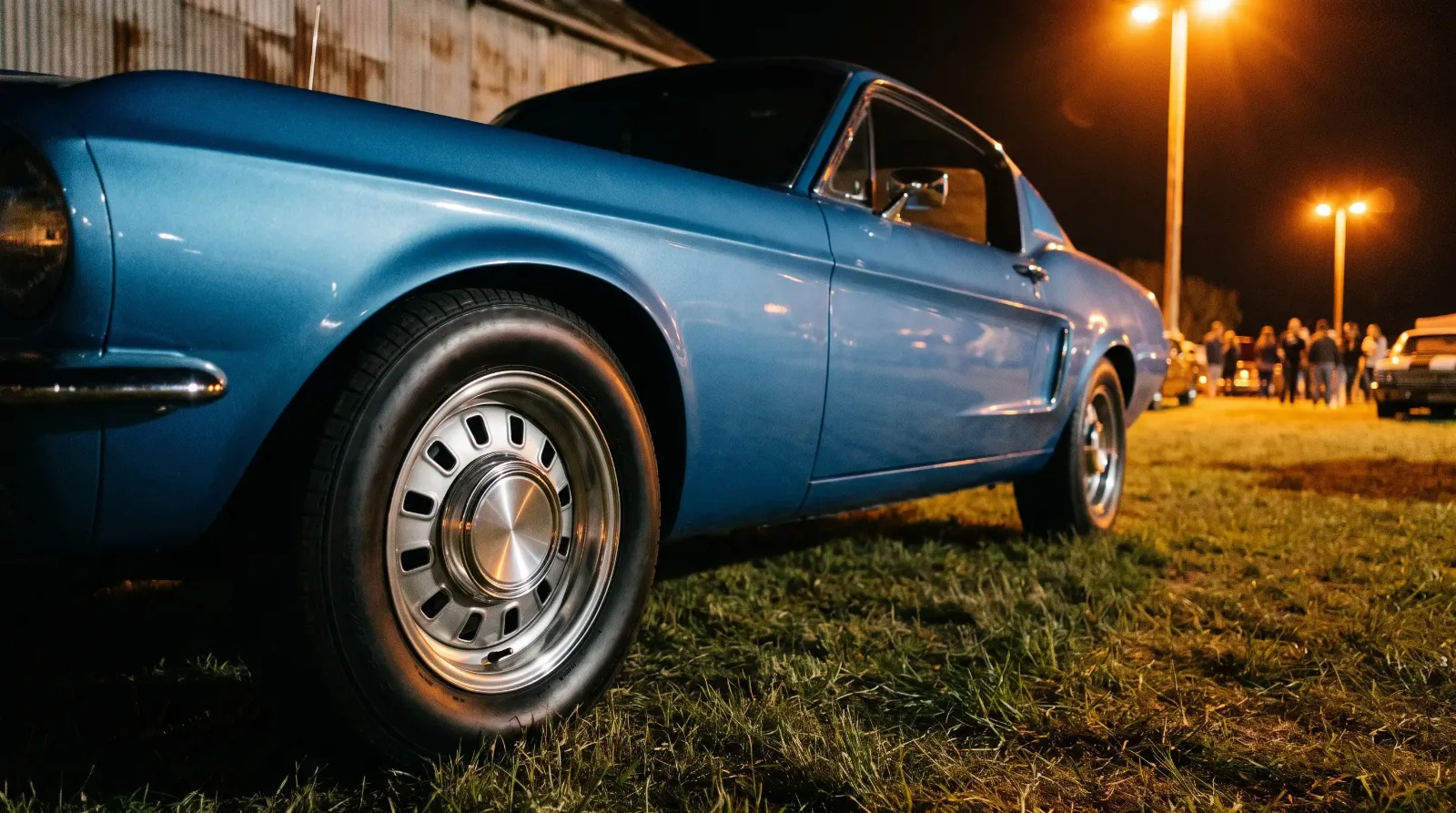
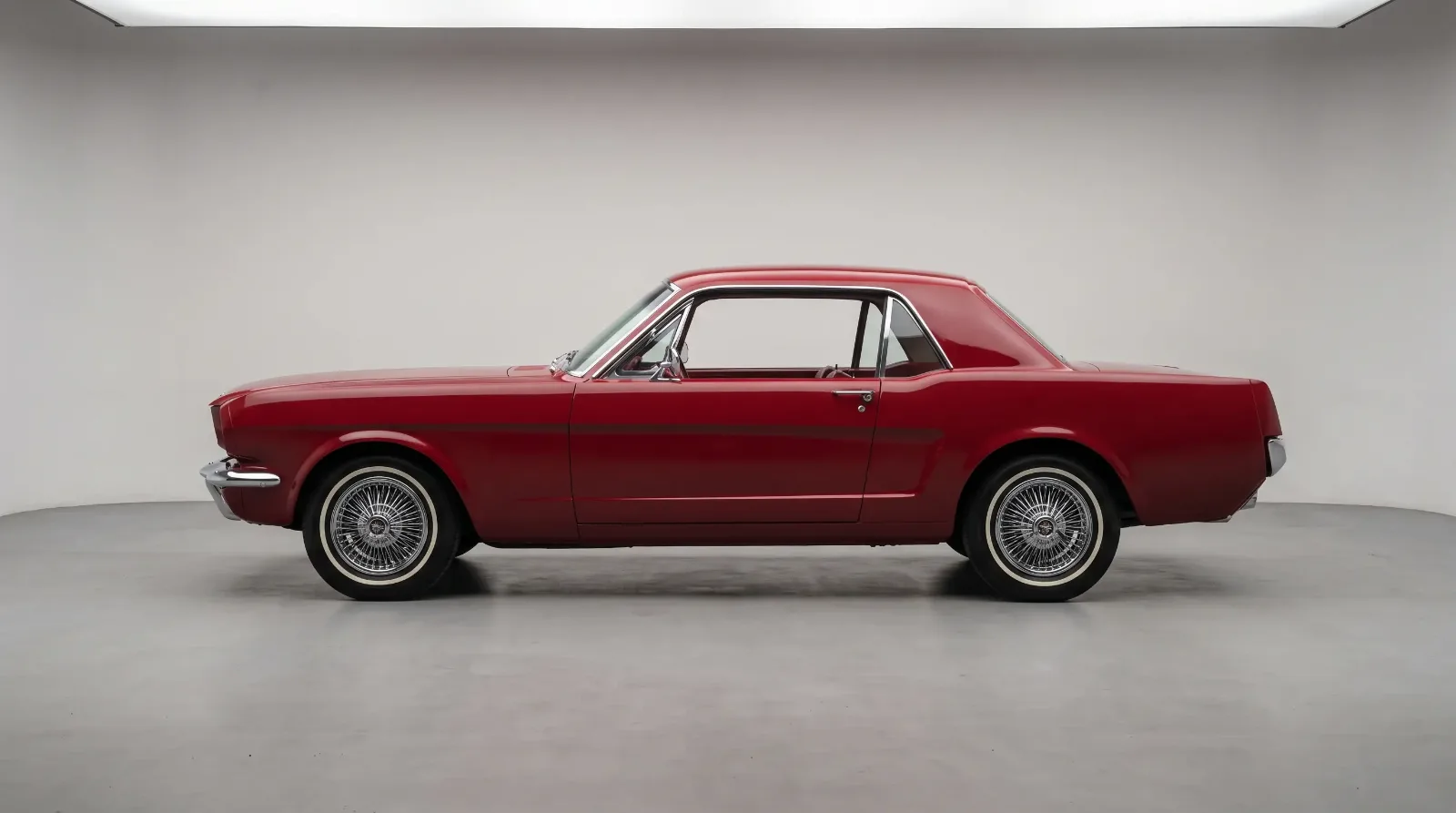
Start with what the standard car wore, because that is how most of these cars looked when they were new. Ford's press release of April 13, 1964 listed full wheel covers as standard on the new Mustang. The options were wire wheel covers, knock-off-style hub covers, and 15-inch wheels with sports tires. Under the covers sat a plain steel wheel. A 1965 coupe on full covers is not a stripper that somebody forgot to finish. It is a stock car.
The wheel most people picture is the styled steel wheel. It was a 14x5 five-spoke design for V8 cars, offered from 1965 through 1967, and it looked enough like a custom wheel that Ford made a 1965 hubcap to imitate it. The V8 part matters more than the spokes. In the early years every V8 Mustang left the factory with five lug nuts, and the six-cylinder cars got four. Styled steels on a car that started life as a six mean somebody converted it to five lugs, a job that reaches all four corners. That is a lot of wrenching for a look, and it tells you the car has been into more than its tires.
For 1966 Ford brought in new wheel covers, and the Sprint 200 package added 48-spoke wire wheel covers. The 1967 GT rode on F70x14 tires. By 1968 the Sprint packages split the difference: the Sprint A came with full wheel covers, while the V8-only Sprint B added argent-painted styled steel wheels on E70 Wide Oval tires, plus grille fog lamps.
Shelby wheels, the Magnum 500 and a wheel Ford never sold
Shelby went its own way from the start. The 1965 GT350 came on steel wheels or 15-inch cast-magnesium Cragars, and the GT350R race cars ran magnesium wheels. One documented 1966 GT350 dealer invoice lists $214 for Shelby 10-spoke wheels. For 1967 the cars used a 15-inch 10-spoke cast aluminum wheel. Early 1969 Shelbys came on wheels with an aluminum center in a steel rim, and those were recalled in June 1969: Shelby's own report to the safety agency said inadequate bolt-hole chamfers could let the lug nuts loosen, and it covered 1,277 GT500s. Club accounts disagree on what went on in their place, with some owners saying Magnum 500s and others an improved version of the same wheel.
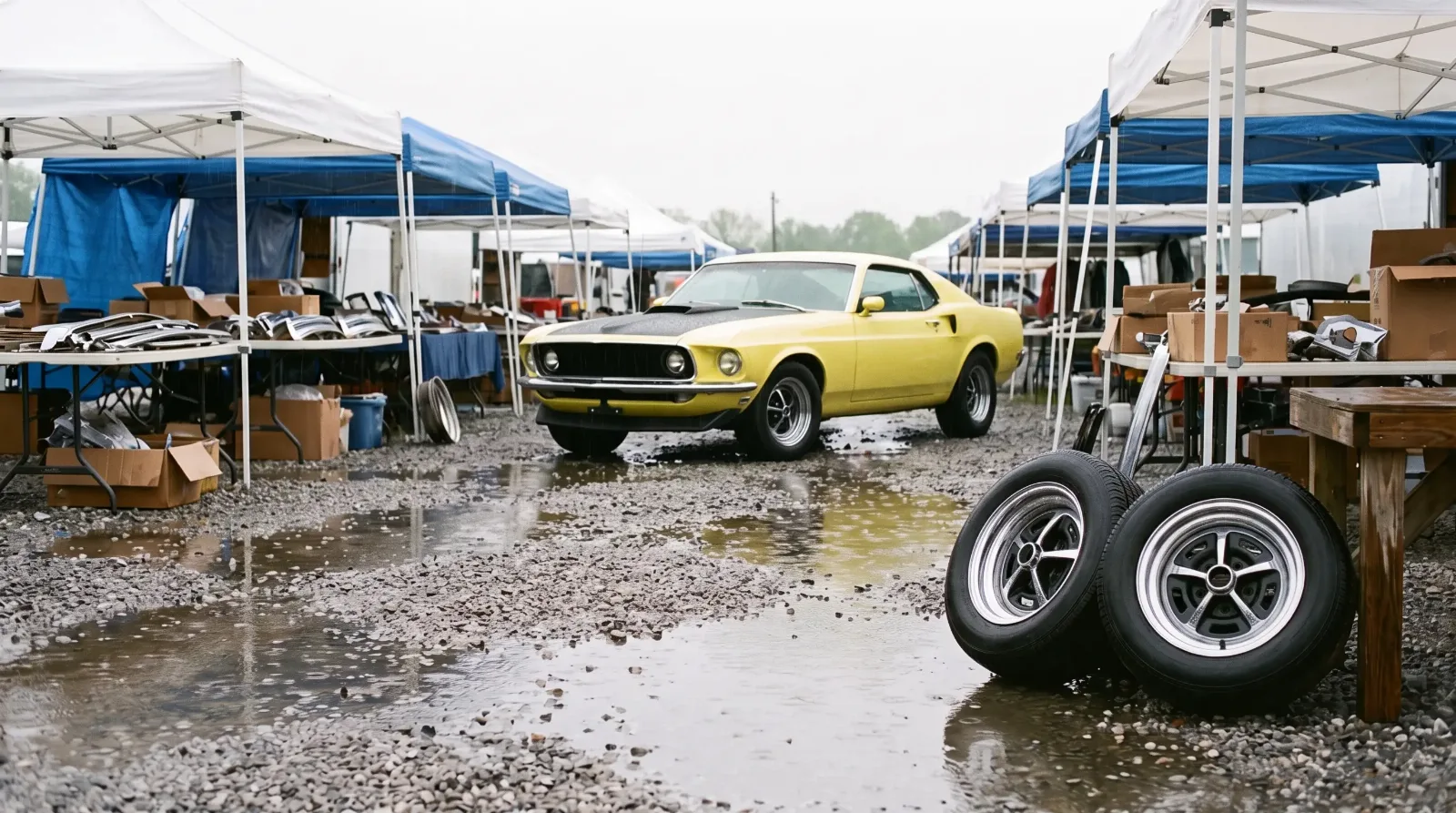
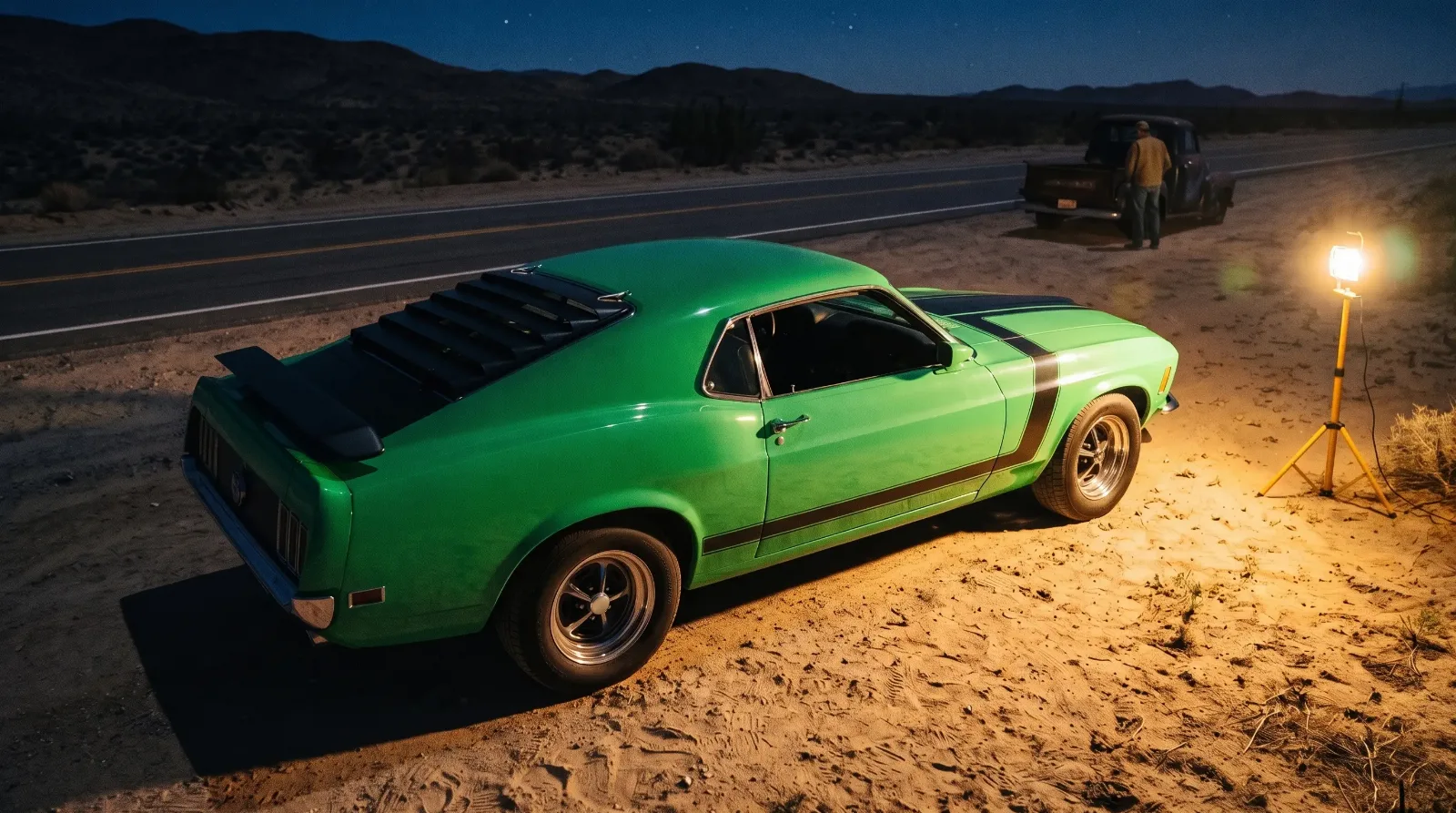
That Magnum 500 is the wheel of the late first-generation cars. Built by Motor Wheel Corporation, it arrived on the Mustang for 1969 on the Boss 302 and the Mach 1 in a 15x7 size, stayed on the option list through 1972, and gave way to forged aluminum wheels for 1973. A Magnum 500 on a 1967 coupe was added later, full stop. On a 1969 Mach 1 with its stripes and graphics intact, it is one of the looks Ford actually sold. The luxury side of the range went the other way: the 1969 Grande came with wire-style wheel covers as standard.
The wheel that starts the most arguments is one Ford never offered on a classic Mustang. The American Racing Torq Thrust was an aftermarket wheel, not a factory option. Ford only picked up the look decades later, for the Bullitt editions of 2001, 2008-09 and 2019.
1974 to 1986: trim rings, lacy spokes and the metric TRX
The Mustang II kept the styled steel name alive. The 1974 Mach 1 came with styled steel wheels and trim rings as standard, and the 1976 Stallion appearance group used styled steel wheels along with its blacked-out trim. The Ghia went for luxury with spoke-style wheel covers. The 1978 King Cobra, the loudest of the bunch, wore lacy-spoke wheels on raised-white-letter radials. The name is the same as in 1965. The wheels are not, so "styled steel" on a swap meet tag means nothing until somebody writes a year next to it.
The Fox body brought the oddest wheel of the lot. For 1979 Ford offered the Michelin TRX package: forged wheels in a metric 390 mm size, about 15.35 inches, with 195/60HR390 tires and a suspension tune to match. The whole package cost $298. It was standard equipment on the 1979 Indy pace car replica. Sources disagree on the 1982 GT: one lists the TRX as standard, another lists 14-inch cast aluminum wheels with the TRX as an option. Because the rim is metric, an ordinary inch-sized tire will not go on it. A Fox on standard 15-inch rubber is not on TRX wheels anymore, whatever the center caps say.
The specials went further. The McLaren M81 used BBS wheels. The SVO rode on 16x7 wheels with P225/50R16 tires, and it bolted them on with five lugs. Even the 1987 to 1990 GT turbine wheels were four-lug, so the lug count is a quick first check on any SVO. The 1993 Cobra R is the other factory five-lug Fox; any other Fox somebody claims came with five deserves a second look.
1987 to 2000: turbines, Pony wheels and 17-inch Cobras
The 1987 facelift gave the GT 15-inch four-lug turbine-style alloys, and they stayed through 1990. For 1991 Ford put 16-inch five-spoke "star" alloys on the V8 cars, both the GT and the LX 5.0, and owners nicknamed them "Pony" wheels. That name belongs to the 1991 to 1993 wheel. Saleen did its own thing: the 1989 SSC used white 16-inch five-spoke wheels, and the ASC McLaren convertibles wore Enkei wheels.
The 1993 SVT Cobra moved the goalposts. Its 17-inch wheels were the first on a factory Mustang, and the Cobra R that year got 17x8 wheels in black. The SN95 kept the sizes split by trim. The 1994 GT ran 16-inch wheels against the base car's 15s, while the 1994 Cobra put Goodyear GS-C P255/45ZR17 tires on 17s. The 1995 Cobra R went to 17x9, and the 2000 Cobra R closed the classic era on 18x9.5 wheels with BFGoodrich g-Force KD 265/40ZR18 tires. In seven model years the biggest factory wheel went from 17 inches to 18.
"Count the lug nuts before you look at anything else. Wheels come and go every weekend. A five-lug conversion on a car that left the factory with four is real work, and nobody does it without a reason. Find the reason and you usually find the car's history."
Mike Sullivan
Classic Mustang wheels by year at a glance
| Years | Wheel or cover | Where Ford used it | What to remember |
|---|---|---|---|
| 1964½ on | Full wheel covers on steel wheels | Standard equipment | Wire and knock-off-style hub covers optional at launch |
| 1965-67 | 14x5 styled steel, five-spoke | V8 cars | Five-lug; a 1965 hubcap copied its look |
| 1966 | 48-spoke wire wheel covers | Sprint 200 | A cover, not a wire wheel |
| 1965-69 | 15-in Cragar magnesium (1965); 15-in 10-spoke cast aluminum (1967) | Shelby GT350 and GT500 | GT350R ran magnesium wheels; early 1969 wheels recalled |
| 1969-72 | 15x7 Magnum 500 | Boss 302, Mach 1, option list | Forged aluminum wheels from 1973 |
| 1969 | Wire-style wheel covers | Grande, standard | The luxury answer to the Magnum |
| 1974-78 | Styled steel with trim rings; lacy-spoke wheels | 1974 Mach 1; 1978 King Cobra | Not the 1965 styled steel wheel |
| 1979 | Michelin TRX metric forged wheels | Option; standard on the pace car replica | Takes metric TRX tires only |
| Fox SVO | 16x7, five-lug | SVO | Five lugs; the 1987-90 GT had four |
| 1987-90 | 15-in turbine-style alloys, four-lug | GT | Came with the 1987 facelift |
| 1991-93 | 16-in five-spoke "Pony" wheels | GT and LX 5.0 | The nickname belongs to this wheel |
| 1993 | 17-in wheels | SVT Cobra | First 17s on a factory Mustang |
| 1994 | 16-in (GT), 15-in (base) | SN95 range | Cobra on 17s with P255/45ZR17 tires |
| 2000 | 18x9.5 | Cobra R | BFGoodrich 265/40ZR18 tires |
None of this makes a car on the wrong wheels a bad car. Plenty of owners run a later wheel because they like it better, and that is their business. It just means the wheels are a statement about taste rather than history, and the rest of the car has to be judged on what sits behind them. For where each of these eras fits in the bigger picture, read the whole story from the 1964 launch on.
Sources and notes
- Ford press release, April 13, 1964: launch equipment and wheel options (The Henry Ford, archived)
- SlashGear: the Mustang's most iconic wheels (styled steel, Magnum 500, Torq Thrust)
- MustangSpecs: 1968 Ford Mustang Sprint A and Sprint B
- NHTSA recall 69V089000: 1969 Shelby GT500 aluminum-center wheels (via Justia)
- The Autopian via Yahoo Autos: the Michelin TRX tire and the 1979 Mustang option
- Wikipedia: Ford Mustang SVT Cobra (1993 Cobra and Cobra R wheels)
Related Reading
Have a
Ford Mustang
for Sale?
Reach thousands of serious classic car collectors across the US.
Sell It Here →
Selling a classic? Here's how: sell my classic car
Are You a Classic Car Dealer?
List your full inventory and connect with targeted classic car buyers.
Join as a Dealer →
#Ford Mustang
#fox body mustang
#mustang design
#Magnum 500
#SVT Cobra
#Mustang wheels
#Styled steel wheels
#Classic Mustang restoration

About the author
Mike Sullivan
Detroit-area muscle car enthusiast and restoration specialist with three decades of hands-on experience working on American iron.
Related Listings - Ford Mustang




Comments
Be the first to comment on this article.