
The 1968 Chevy Nova looked longer and lower than the car it replaced, and it was. Chevrolet stretched the Chevy II platform, dropped the Chevy II name from the top of the lineup, and let Nova carry the whole car for the first time. What most people miss is that the redesign was not cosmetic. Chevrolet rebuilt the car from the frame up, and that structural change is the reason a 1968 Nova could carry a big-block engine that would have torn the old car's front end apart.
Car Features
6 min read
The 1968 Nova: The Muscle Redesign
The 1968 Chevy Nova redesign shrank the car but reengineered the subframe to take a big-block, setting up everything that came next.
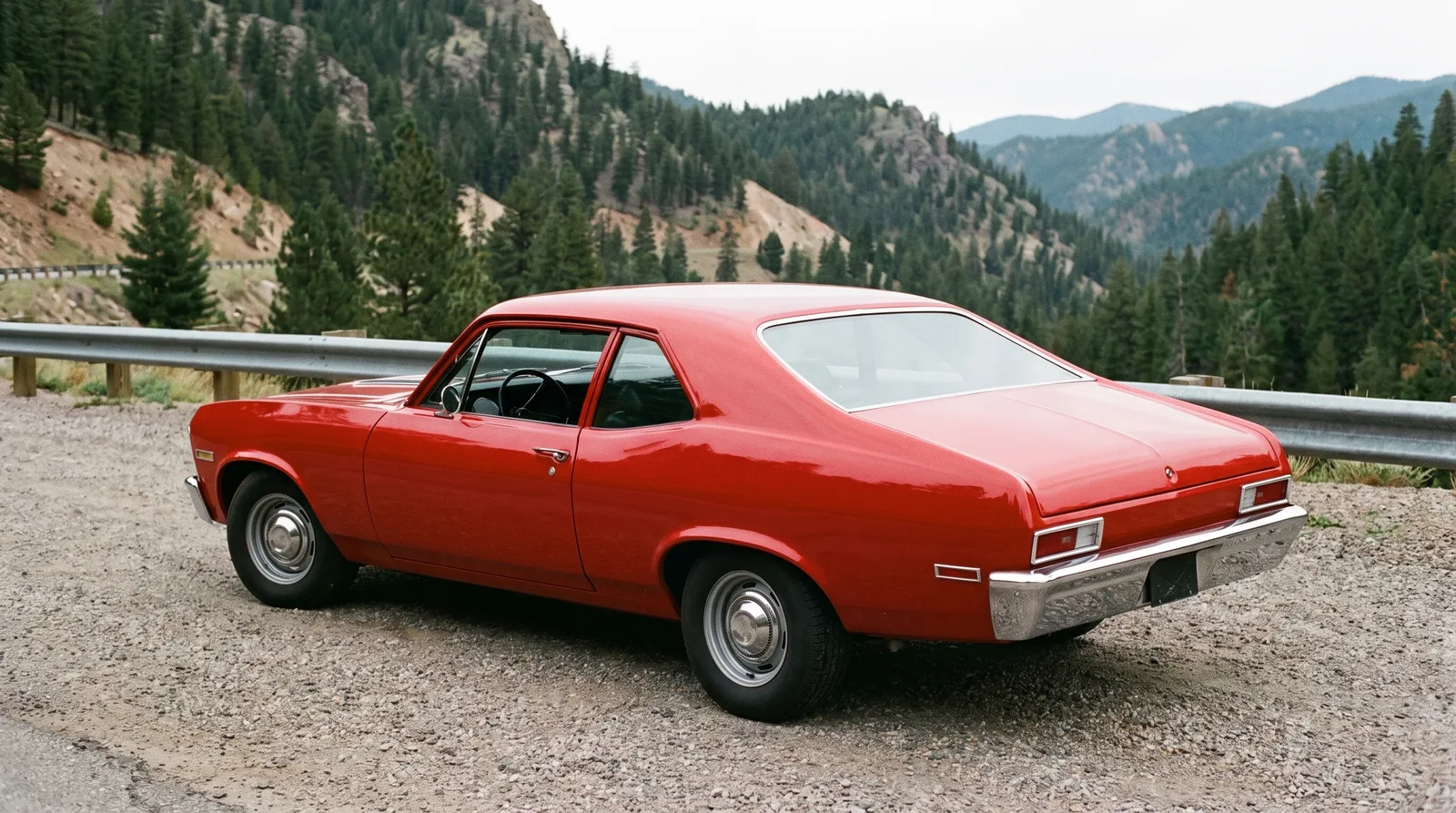
I've had a few of these on the lift over the years, and the third-generation Nova always surprises people who only know it as "the cheap Camaro." It wasn't cheap engineering. It was smart engineering aimed at a budget.
A new platform built for more than economy
Chevrolet moved the 1968 Nova onto a new GM X-body architecture that shared its front subframe and front suspension design with the Camaro. The wheelbase grew to 111 inches, one inch longer than the outgoing Chevy II, and overall length grew by about six inches with it. The body went to a semi-unitized design: a full perimeter subframe up front carrying the engine and front suspension, welded to a unitized rear structure. That front subframe is the detail that matters most to anyone shopping one today, because it is isolated from the passenger compartment with rubber body mounts, and it is also the piece that had to be reengineered to accept something heavier than a six-cylinder or small-block.
The styling changed just as much as the structure. Gone were the slab sides of the 1966 to 1967 cars, replaced by a coke-bottle profile with a pinched waist and flared fenders that borrowed visual language from the Camaro without being a copy of it. Chevrolet offered just two body styles, a two-door coupe and a four-door sedan, dropping the hardtop and wagon the old Chevy II had offered. Plenty of both went to buyers who never planned to option an SS package, but the two-door coupe, the only body the SS came on, became the body most collectors chase now.
The SS package, and what it actually bought you
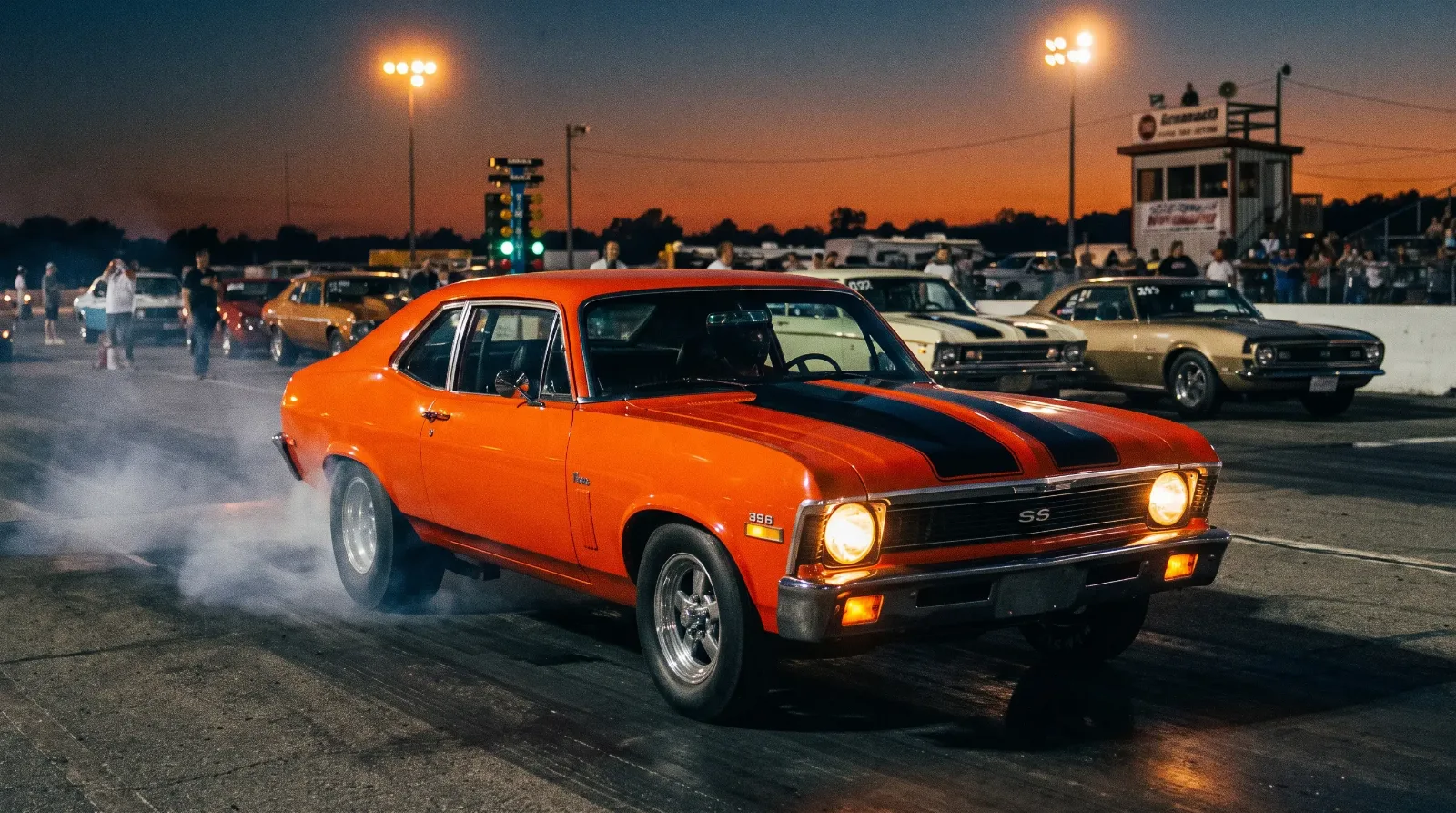
Chevrolet's Super Sport option on the 1968 Nova was more than a stripe kit, though it came with plenty of trim to signal what was underneath. Ordering the SS package got a buyer a 350 cubic inch small-block (RPO L48) rated at 295 horsepower, dual exhaust, a heavier-duty suspension, a specific SS grille and rear panel, and simulated hood louvers. Bucket seats and a center console were available but not mandatory, which is a detail people forget when they assume every SS came loaded.
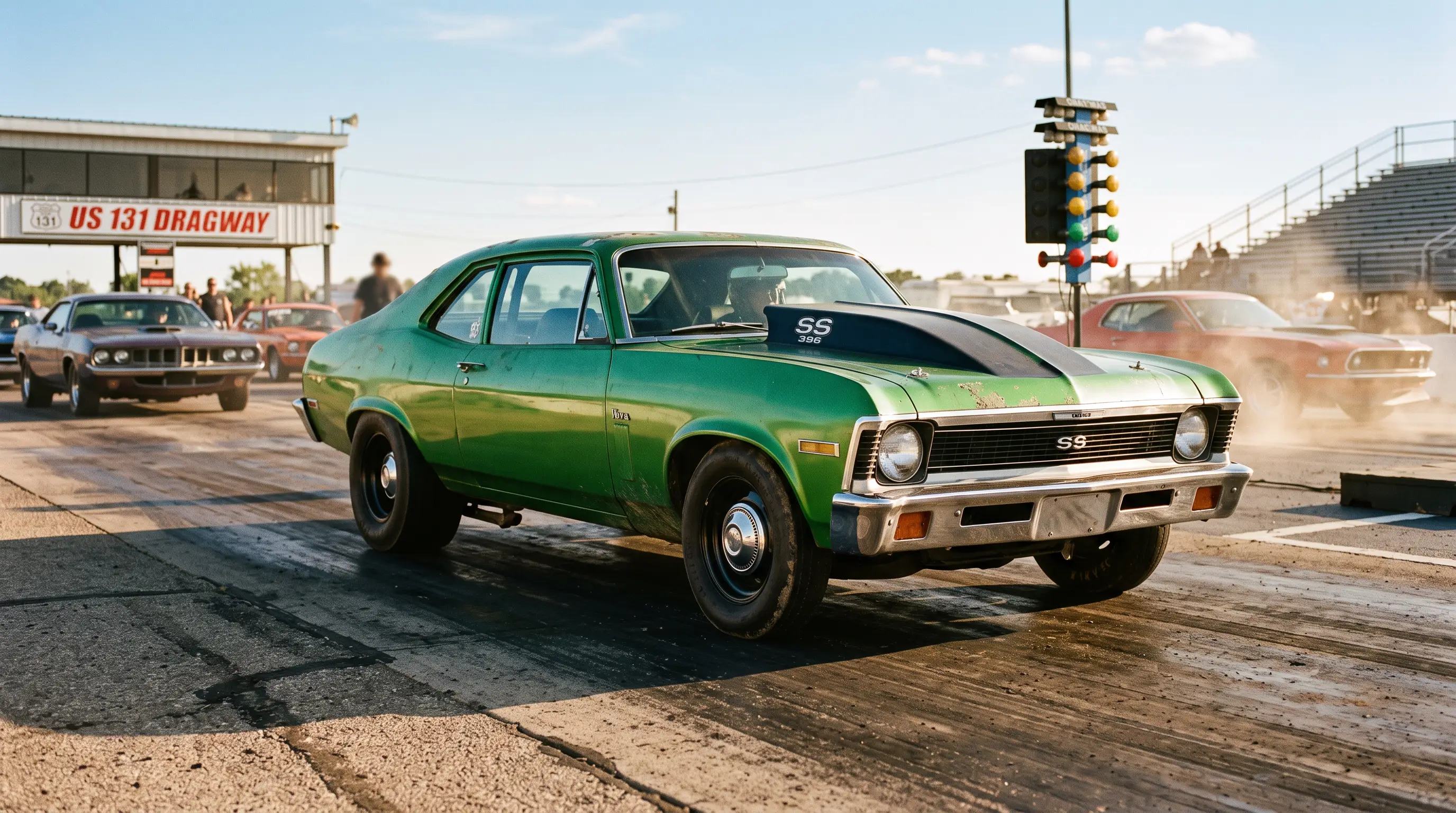
The important thing is what the SS package unlocked structurally. Because the engine bay and subframe were designed with a big-block in mind from the start, Chevrolet could offer the 396 cubic inch big-block as a running change partway through the model year, a story that gets its own attention in a companion piece on this site. The 1968 Nova is the car that made that engine swap possible in the first place. Without the wider front subframe and the reworked K-member, none of it happens.
| Spec | 1968 Nova SS 350 |
|---|---|
| Wheelbase | 111 inches |
| Base V8 | 350 cid small-block, 295 hp |
| Transmission options | 3-speed manual, 4-speed manual, Powerglide or Turbo Hydra-Matic |
| Body styles | Two-door coupe, four-door sedan |
What to check before you buy one
Rust is the first thing I look at, and on a 1968 Nova it starts in predictable places. The front subframe mounting points corrode from the inside, and a car that looks solid from underneath can still have soft metal right where the subframe bolts up. Pull the carpet and check the trunk floor and the rear frame rails too. The semi-unitized construction means rear structural rust is not cosmetic, it is load-bearing.
Second, verify the SS is real before you pay SS money. The cowl tag and VIN derivative should match, and the trim tag will tell you the original engine code. A lot of six-cylinder and small-block cars got SS badges and consoles added later because parts were cheap and interchangeable. That does not make a bad car, it just should not carry a big-block price tag.
Third, check the numbers on the engine block against the trim tag if the seller claims factory big-block or a documented L79 350. Casting numbers and date codes are not hard to read once you know where to look, and a five-minute check saves a five-figure mistake.
Why the 1968 redesign matters
The 1968 Nova is the hinge point for the whole muscle car chapter of this model's history. Everything that followed, the 396 option, the L78 cars, the SS 396 badge that collectors chase today, traces back to a decision Chevrolet made when it drew up this platform: build the compact car on hardware that could take a real engine if the demand showed up. It did, fast. For the wider arc of how that played out across the next three model years, the full Nova story covers the whole run, and the muscle Nova chapter gets into how this platform carried the SS badge from a small-block option to a genuine big-block muscle car in under a year.
"People walk up to a 1968 Nova expecting a Chevy II with new sheet metal. It's not that. Chevrolet built this thing to take a big-block before they ever put one in it, and that's the part of the story nobody puts on the window sticker."
Mike Sullivan
What to pay, and what it's worth
A driver-quality 1968 Nova SS 350 with a documented small-block typically trades in the five-figure range depending on region and condition, with sharp restored examples pushing well beyond that. Six-cylinder cars and non-SS coupes sell for a fraction of that, which makes them a reasonable entry point if you want the body style and plan to build rather than preserve. Whatever you land on, buy the car for what it actually is, not what a seller says it once was. The subframe tells the truth even when the paperwork doesn't.
Sources and notes
Related Reading
Have a
Chevrolet Nova
for Sale?
Reach thousands of serious classic car collectors across the US.
Sell It Here →
Selling a classic? Here's how: compare the places to sell classic cars
Are You a Classic Car Dealer?
List your full inventory and connect with targeted classic car buyers.
Join as a Dealer →

About the author
Mike Sullivan
Detroit-area muscle car enthusiast and restoration specialist with three decades of hands-on experience working on American iron.
Related Listings - Chevrolet Nova




Comments
Be the first to comment on this article.