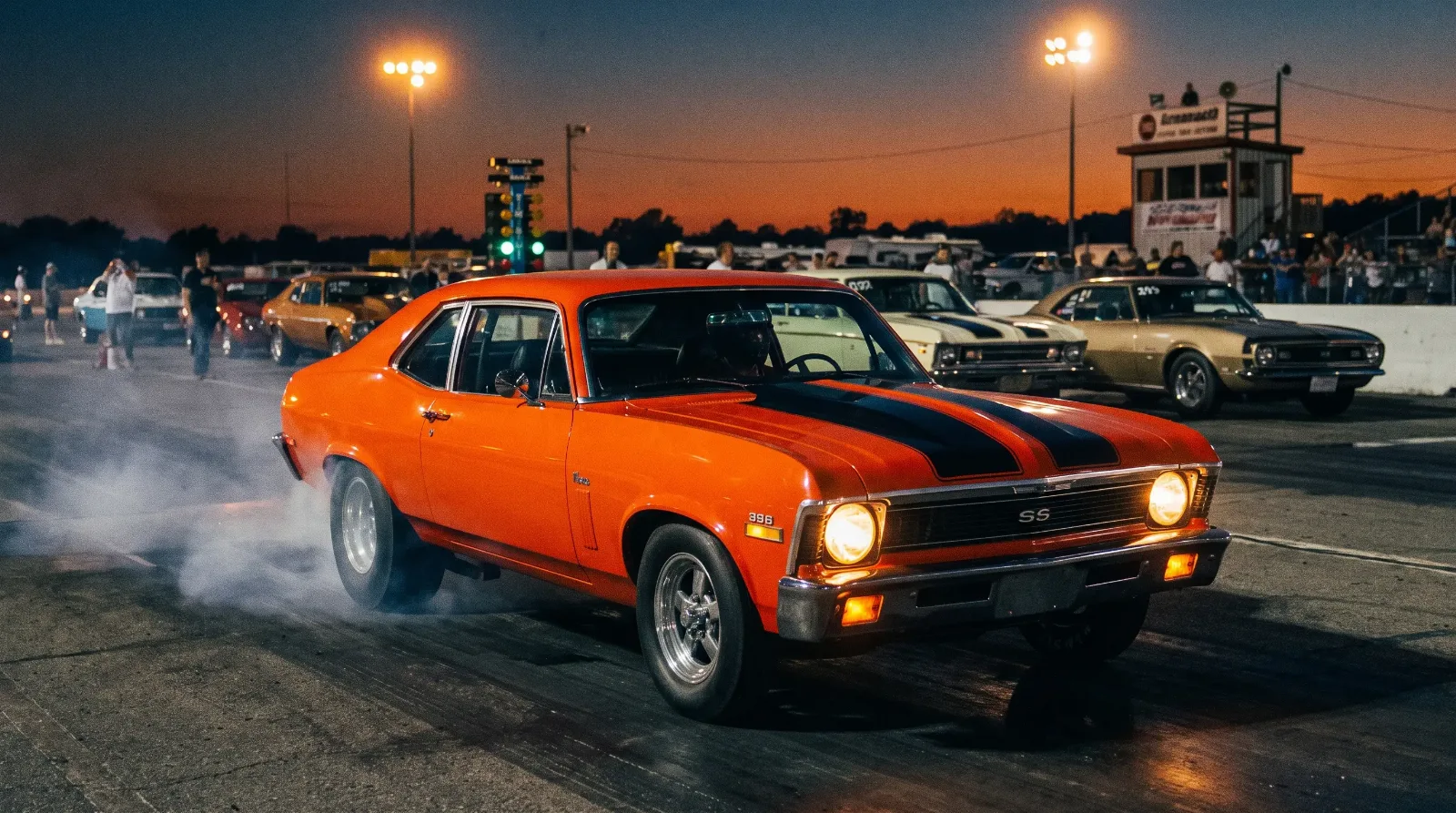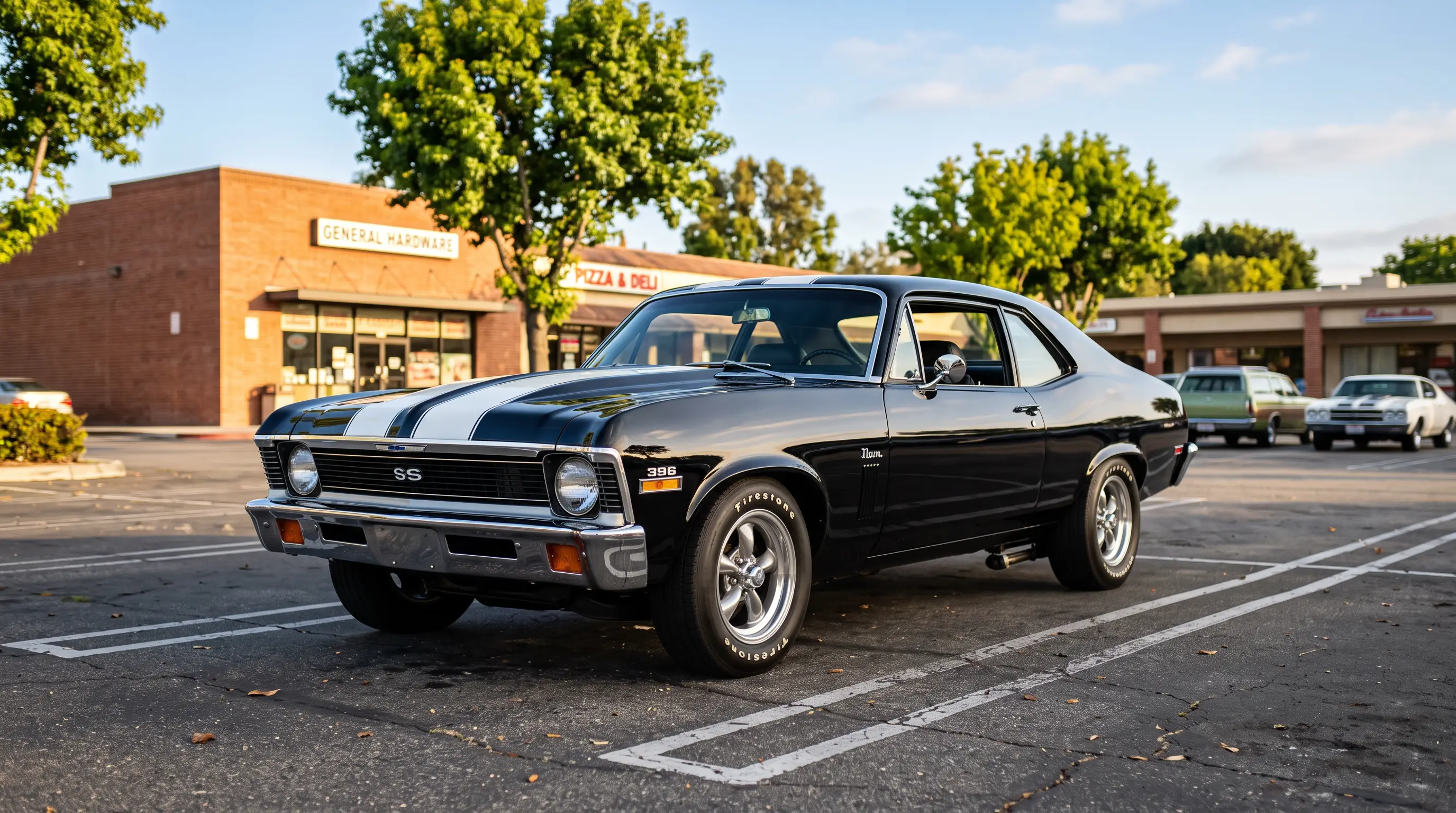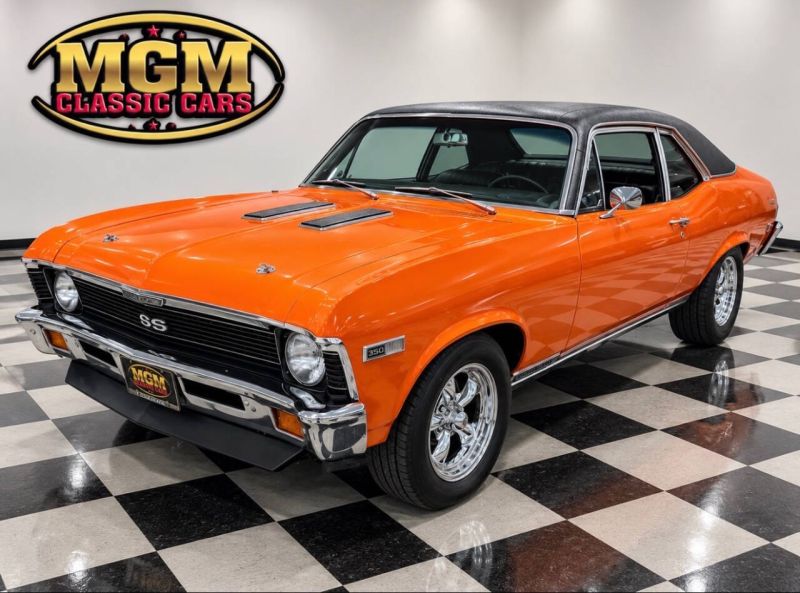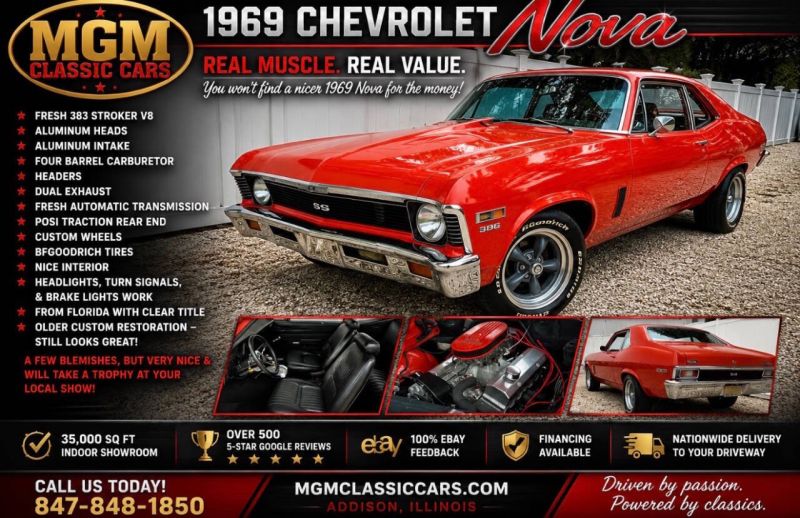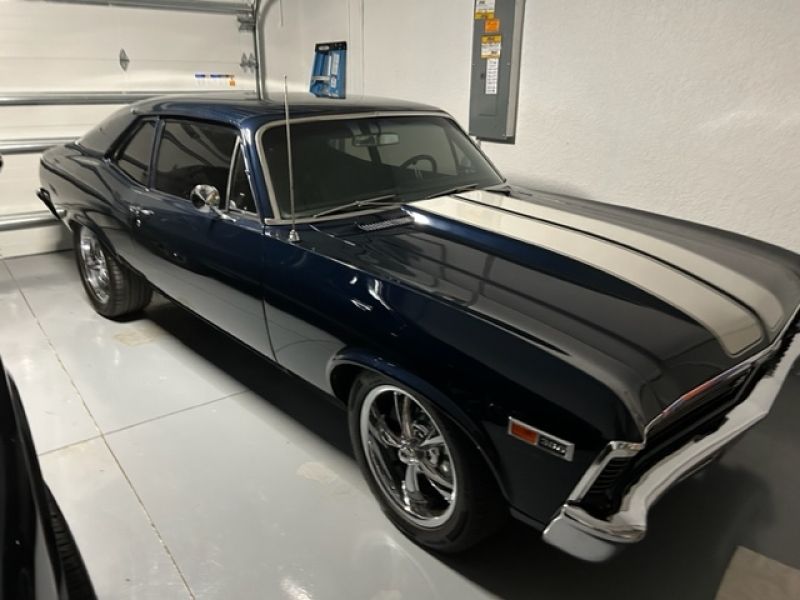
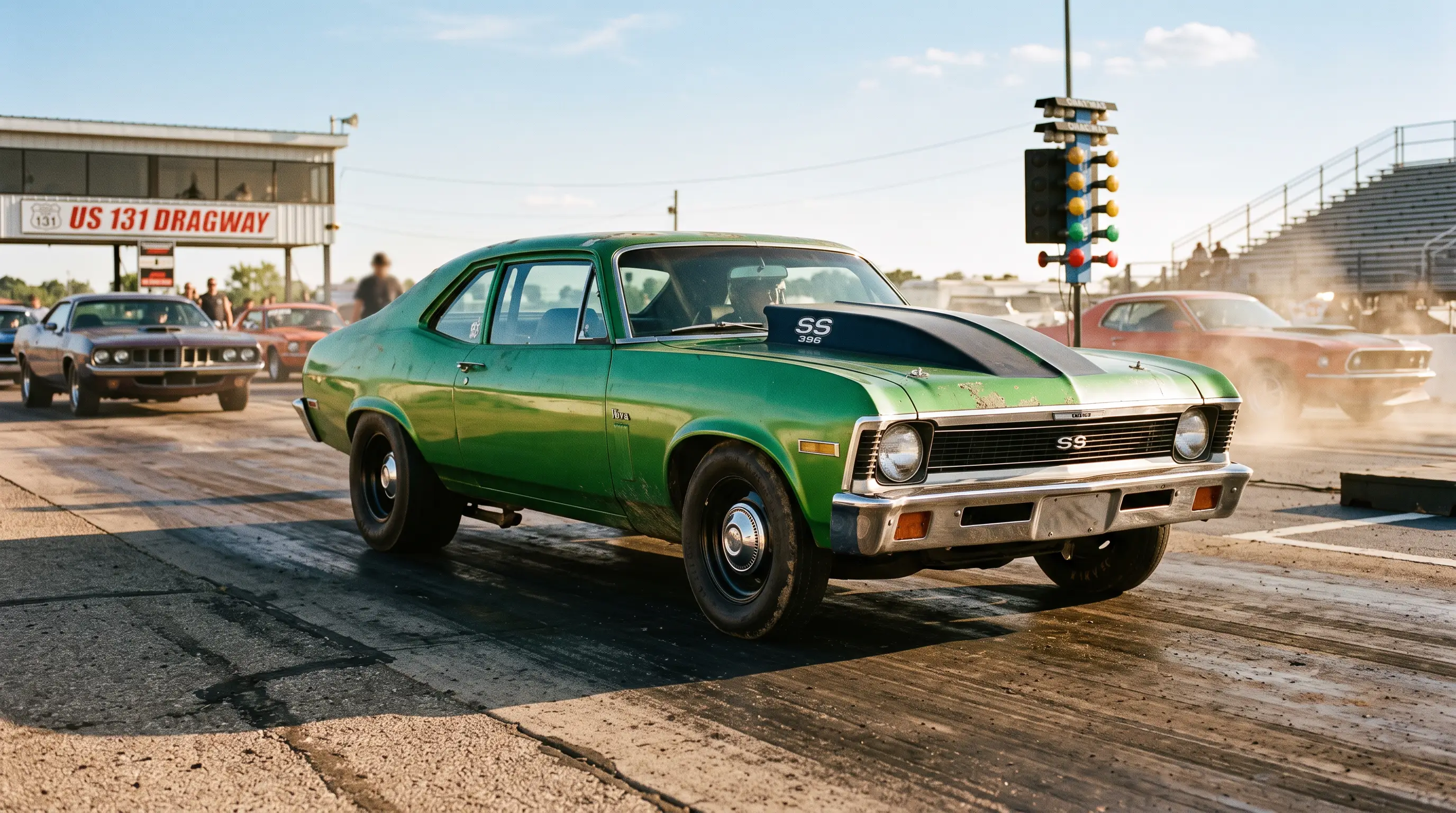
For most of the 1968 model year, the biggest engine a Nova buyer could order was a 350 cubic inch small-block. Then partway through the year, Chevrolet let the 396 big block into the engine bay, and the compact car that had been playing in the small-block class suddenly had teeth. The 396 big block Nova did not last long as a novelty. It became the reason people still talk about this generation of Nova fifty-plus years later.
I get asked all the time how Chevrolet managed to squeeze a big-block into a car that small. The honest answer is they planned for it. The 1968 redesign built the front subframe wide enough and strong enough to take the extra weight and torque, a decision covered in more depth over in the third-gen Nova story. This piece is about what happened once that engine actually landed under the hood.
Why the wait, and why mid-year
Chevrolet's internal politics played a role here as much as engineering did. The Camaro had the 396 first, and GM's compact and pony car lines were kept deliberately separated in the showroom pecking order for a while. The Nova platform could physically accept the engine from day one of the 1968 redesign, but corporate approval for the option came later in the model year, which is why 396 Novas from 1968 are scarcer than the 350-powered SS cars built earlier in the run.
Once approved, the 396 arrived as part of the SS package, not as a separate trim. A buyer checked the Z26 Super Sport box, then optioned up into the big-block, and RPO codes L34 and L78 defined which 396 you got. L34 was the mild version, rated at 350 horsepower gross, built for people who wanted the torque and the noise without the compression and fuel demands of the solid-lifter engine. L78 was the serious option, a solid-lifter big-block rated at 375 horsepower gross, and it is the version collectors chase hardest today.
The ordering process itself tells you something about how Chevrolet positioned this car. A buyer walking into a dealership couldn't simply ask for "a 396 Nova." The 396 rode on top of the Z26 Super Sport package, which meant every big-block Nova also carried the SS trim, the heavier suspension, and the dual exhaust that came bundled with it. There was no stripped-down big-block special order. If you wanted the engine, you bought the whole performance package around it, badges and all.
Dealers ordered these cars in limited numbers because the option arrived so late in the model year. Some regional zones had almost no allocation for the 396 package before the model year closed out, which is part of why surviving 1968 big-block Novas cluster in certain parts of the country more than others. A car with clean Midwest or West Coast provenance and an original build sheet carries real weight with serious buyers for exactly this reason.
The dealer paperwork problem cuts both ways for buyers today. On one hand, scarcity drives value. On the other hand, scarcity is exactly what tempts sellers to claim a car is something it never was. A six-cylinder or small-block Nova with the right cowl tag prefix can be dressed up convincingly, and the only real defense is knowing what to check before money changes hands.
What the swap actually changed
Dropping the 396 into a Nova was not a bolt-in exercise for Chevrolet's engineers. The front subframe needed reinforced mounts, the cooling system needed a bigger radiator and in some cases a different fan shroud, and the rear end needed a stouter differential to handle the torque. Chevrolet used a 12-bolt rear axle behind the 396, a real upgrade over the 10-bolt units found behind small-block Novas, and that rear end swap alone tells you how seriously the factory treated this option.
Weight distribution shifted too. A big-block over that front subframe put more mass ahead of the front wheels than the car's original engineering brief anticipated, and factory-installed heavy-duty springs and shocks came standard with the 396 option to compensate. Drive one back to back against a small-block Nova and the difference in the front end is obvious within the first turn.
| Option | RPO code | Rated output | Character |
|---|---|---|---|
| Base 396 | L34 | 350 hp gross | Hydraulic lifters, streetable torque |
| Performance 396 | L78 | 375 hp gross | Solid lifters, higher compression |
Buying one today: what to verify
The single biggest risk buying a 396 Nova now is a car wearing a big-block badge that never had one. Because the SS trim and the small-block Nova share so many body parts, it is mechanically simple to drop a 396 into a small-block car later and call it original. Check the cowl tag, cross-reference the engine suffix code against the block casting date, and if the seller claims L78, confirm the solid-lifter valve covers and correct carburetor and intake casting numbers match what left the factory that year.
Production numbers on genuine 1968 L78 Novas were low, just 667 units for the model year (including 50 built to COPO spec) given the option's late introduction, which is exactly why documentation matters more here than on almost any other Nova variant. A clean L34 car with solid paperwork is a better buy than an undocumented "L78" that cannot prove its own history.
The car this option built
Everything that came after this mid-year introduction, the full-year 1969 SS 396 program covered in another angle on this cluster, exists because the 1968 experiment worked. Chevrolet proved a compact car could carry a real big-block without falling apart at the first stoplight launch, and that proof point changed how the Nova was marketed for the rest of its muscle car years.
"A 350 Nova is a fun car. A real L78 Nova is a different animal entirely, and most people who've never driven one don't understand the difference until they've had the throttle open past 4,000 rpm."
— Mike Sullivan
If you're shopping one, budget for verification work before you budget for anything cosmetic. A documented L34 car in solid condition runs well into the five figures, with confirmed L78 examples climbing past that into six figures at auction. Paperwork is worth more than paint on these.