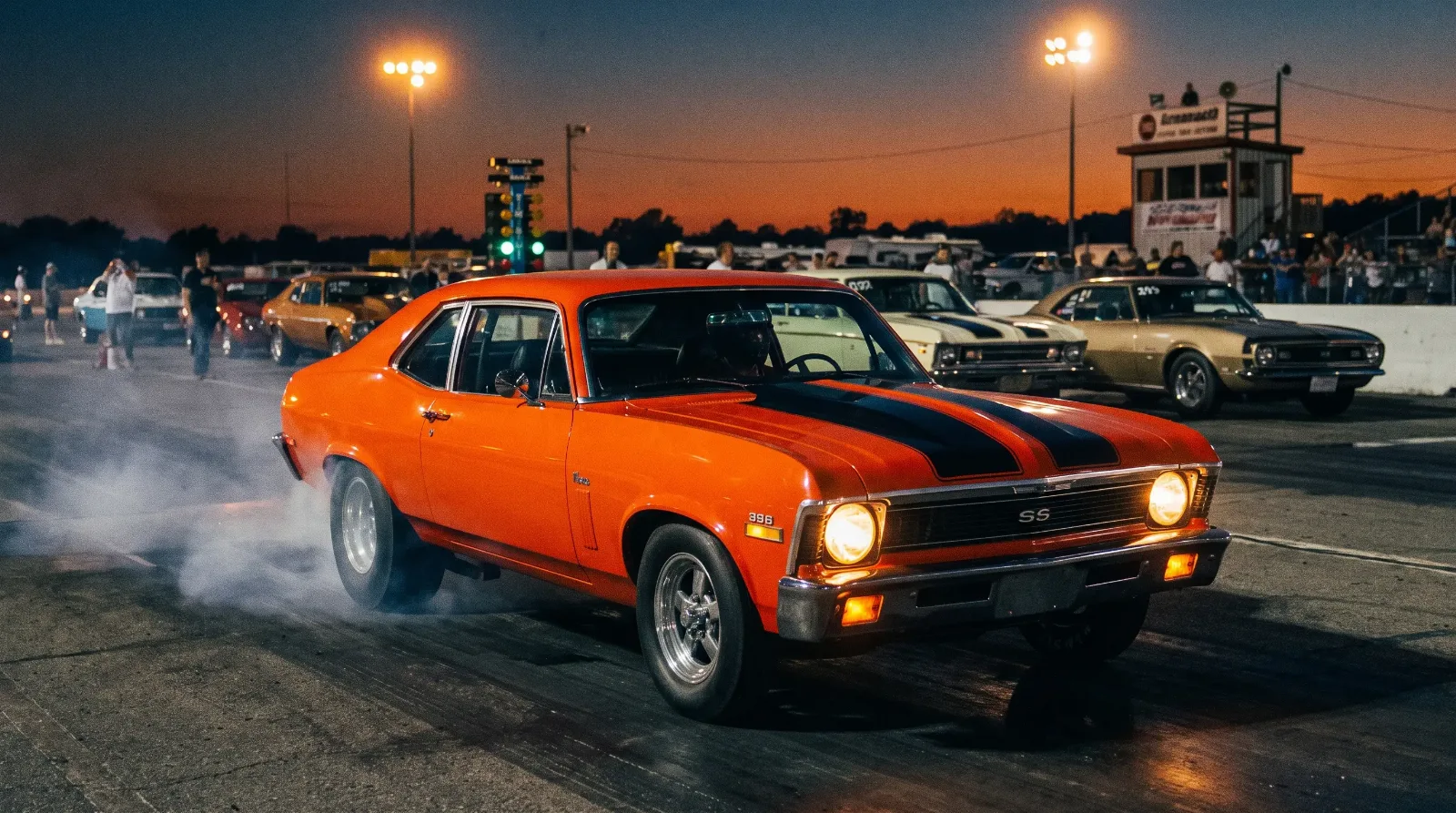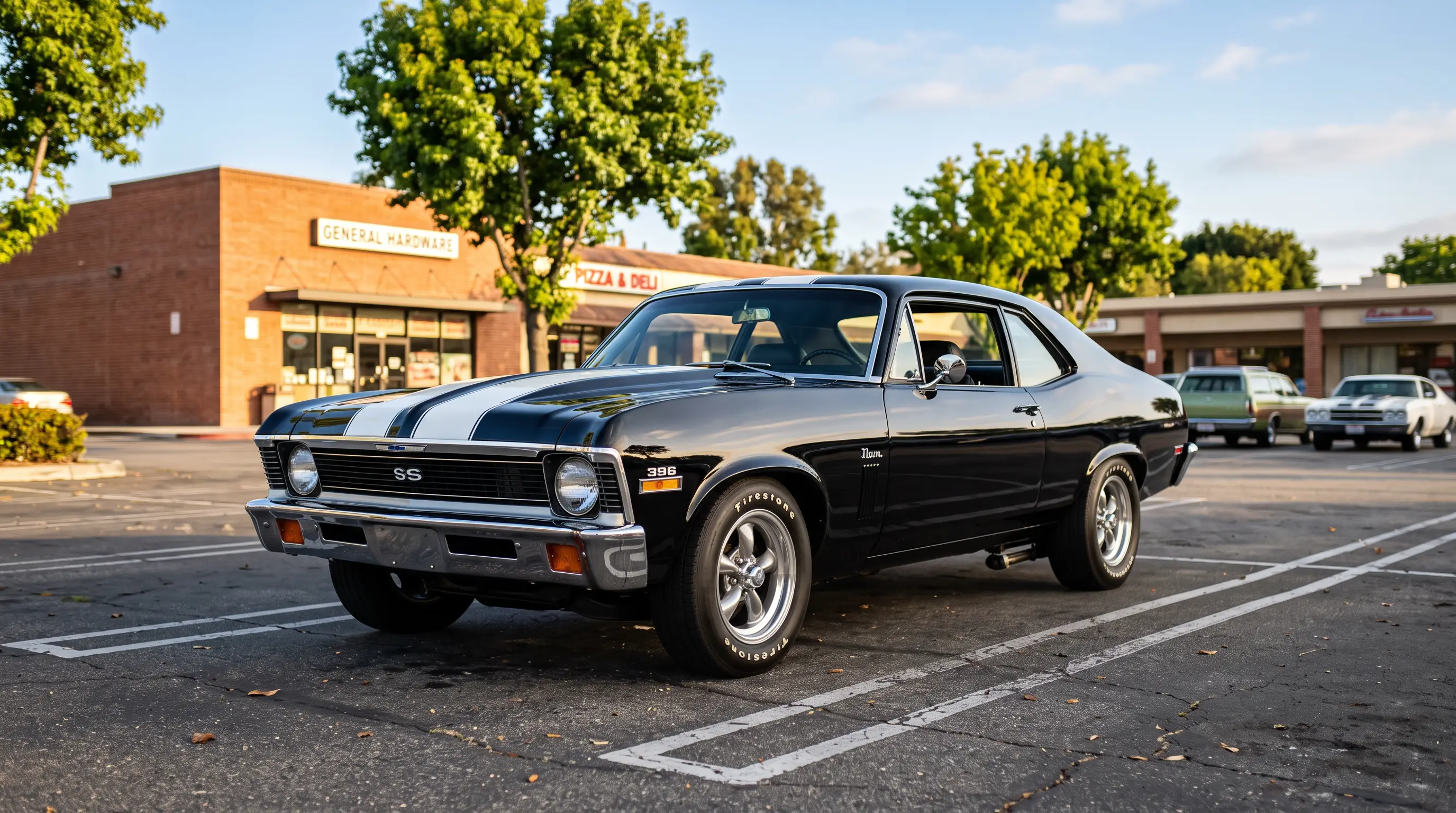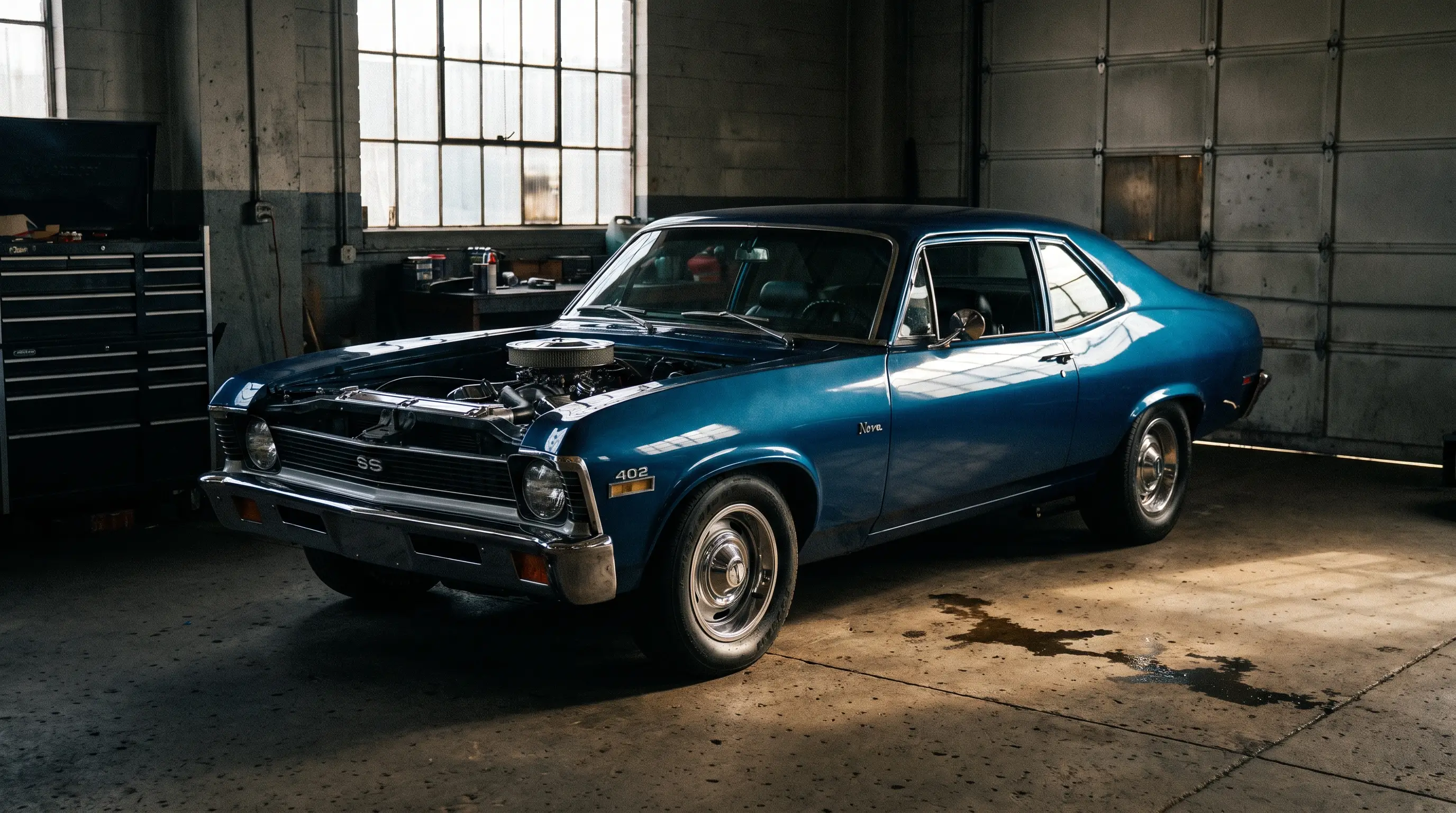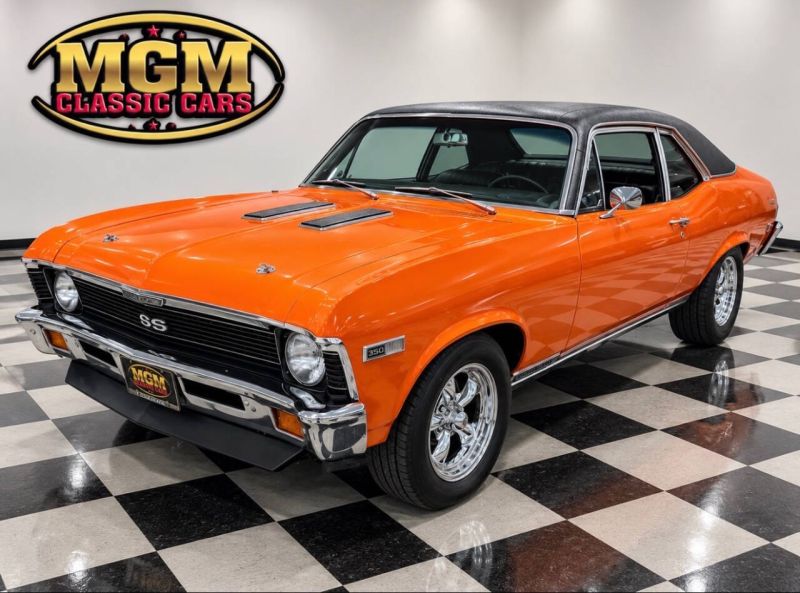
The 1970 Chevy Nova is the last year this platform got to run without a leash, and once you understand what happened the following year, that fact changes how you look at every 1970 SS that comes up for sale. This is peak muscle for the third-generation Nova, the final model year before corporate policy and insurance pressure pulled the big-block option off the table for good.
I tell people looking at 1970 Novas the same thing every time: you're not just buying a car, you're buying the last year of a specific era. That matters for how you shop one and what you should expect to pay.
The engine story: 396 in name, bigger under the valve covers
Chevrolet's corporate big-block family got a displacement bump for 1970, with the actual cubic inch figure growing to 402 even though the Nova's big-block option continued to be marketed under the familiar 396 designation in most factory literature. Buyers cross-shopping a genuine 1970 big-block Nova should understand this upfront, because the block itself is not the same casting as the original 1968 and 1969 396, even if the badge on the fender says otherwise.
Output figures stayed close to what the 1969 car offered: the L34 version rated at 350 hp and the L78 solid-lifter version at 375 hp. The extra displacement helped low-end torque more than it moved the horsepower number, which is exactly the kind of change that matters on the street and gets ignored in casual conversation about these cars.
Transmission and rear axle carryover was minimal from the year before. The 12-bolt rear end continued behind both big-block options, and the four-speed manual and Turbo Hydra-Matic automatic remained the two ways to put the power down. Buyers cross-shopping a 1969 and a 1970 SS 396 are mostly choosing based on trim details and price, not any meaningful driveline difference, since the two years share so much hardware in common.
Why 1970 was the end of the line
GM corporate leadership, under pressure from rising insurance premiums on muscle cars and shifting internal policy about engine displacement in smaller platforms, moved to cap big-block availability in compact cars starting with the 1971 model year. The Nova's big-block SS option did not return after 1970. For 1971 onward, the largest engine available in an SS Nova dropped to a 350 cubic inch small-block, a genuine step down in outright performance that reshaped the car's identity for the rest of its run.
That policy shift is the reason 1970 sits where it does in the collector hierarchy. It's not just another year in a three-year run, it's the last chapter of the story that started with the platform's 1968 redesign and the mid-year 396 introduction that followed it. If you want to see how the platform evolved after the big-block era ended, another angle on that transition covers the mechanical details of the switch.
Dealers moving 1970 inventory that fall had no way of knowing they were selling the end of an era, and neither did most of the buyers driving these cars off the lot. Hindsight is the only thing that turned an ordinary model-year changeover into a genuine collector inflection point. That's worth remembering when a seller tries to frame a 1970 SS as something the original buyer treated as special from day one. Most of them didn't. The car earned that status later, once the option disappeared for good.
| Spec | 1970 Nova SS big-block |
|---|---|
| Displacement | 402 cid, marketed as 396 |
| L34 output | 350 hp |
| L78 output | 375 hp |
| Final year for big-block SS | 1970 (dropped for 1971) |
What to inspect on a 1970 SS
The rust concerns carry over from the earlier cars in this run: front subframe mounts, trunk floor, rear frame rails. What's specific to the 1970 model is verifying the correct engine casting for the year, since a car with a 1969-spec 396 block dropped in later is not the same matching-numbers car as one built with the correct 1970 casting. Ask for casting numbers, not just a seller's word that it's "numbers matching."
Also check the trim tag against the build sheet if one survives. A genuine documented L78 from this final year carries the strongest premium of the whole third-generation run, precisely because buyers understand what they're holding: the last of something, not just one more year of it.
Suspension and brake components are worth a close look on any 1970 example that's spent decades on the road. The heavier-duty springs and shocks that came with the big-block option wear differently than the standard SS suspension, and finding correct replacement parts for the big-block specific hardware is harder than sourcing generic Nova suspension pieces. Front disc brakes were optional on these cars, and a car with the factory disc setup intact is worth more than one that's had drum brakes swapped in later for cost reasons.
Underhood detailing also matters more to serious buyers on a final-year car than it might on an earlier one. Correct factory-style hose clamps, decals, and paint markings on the block and other components are the kind of small details that separate a well-restored L78 from one that's simply been repainted and reassembled without attention to how it left the factory.
What these cars are worth now
A solid driver-quality 1970 Nova SS with a documented L34 typically sells in the $28,000 to $40,000 range, with confirmed L78 examples running well past that, into six figures for exceptional, low-mile, numbers-matching cars, depending on originality and documentation. Because this is the last year of the big-block option, condition and paperwork matter more here than on the 1968 or 1969 cars. Buyers know exactly what they're paying for.
"1970 is the year everybody wishes they'd bought new. It's the last one before the insurance companies and the corporate office killed the big-block option, and every buyer shopping one today knows it."
— Mike Sullivan
For the complete picture of how the Nova got here and what came after, the full Nova story covers the whole run, and the muscle Nova chapter ties this final big-block year back to where the whole thing started in 1968.
Sources and notes
- 1970 Chevrolet Nova SS 396 Has the Best Engine, Numbers Match - autoevolution
- 1970 Nova Parts and Restoration Information - SS396.com
- Nova Engine Options: 1970 - Chevy Hardcore
- 1970 Nova SS Sells for Record-Breaking $275k at Mecum Auction
- 1970 Chevrolet Nova SS Valuation - Hagerty
- Chevrolet Chevy II / Nova - Wikipedia