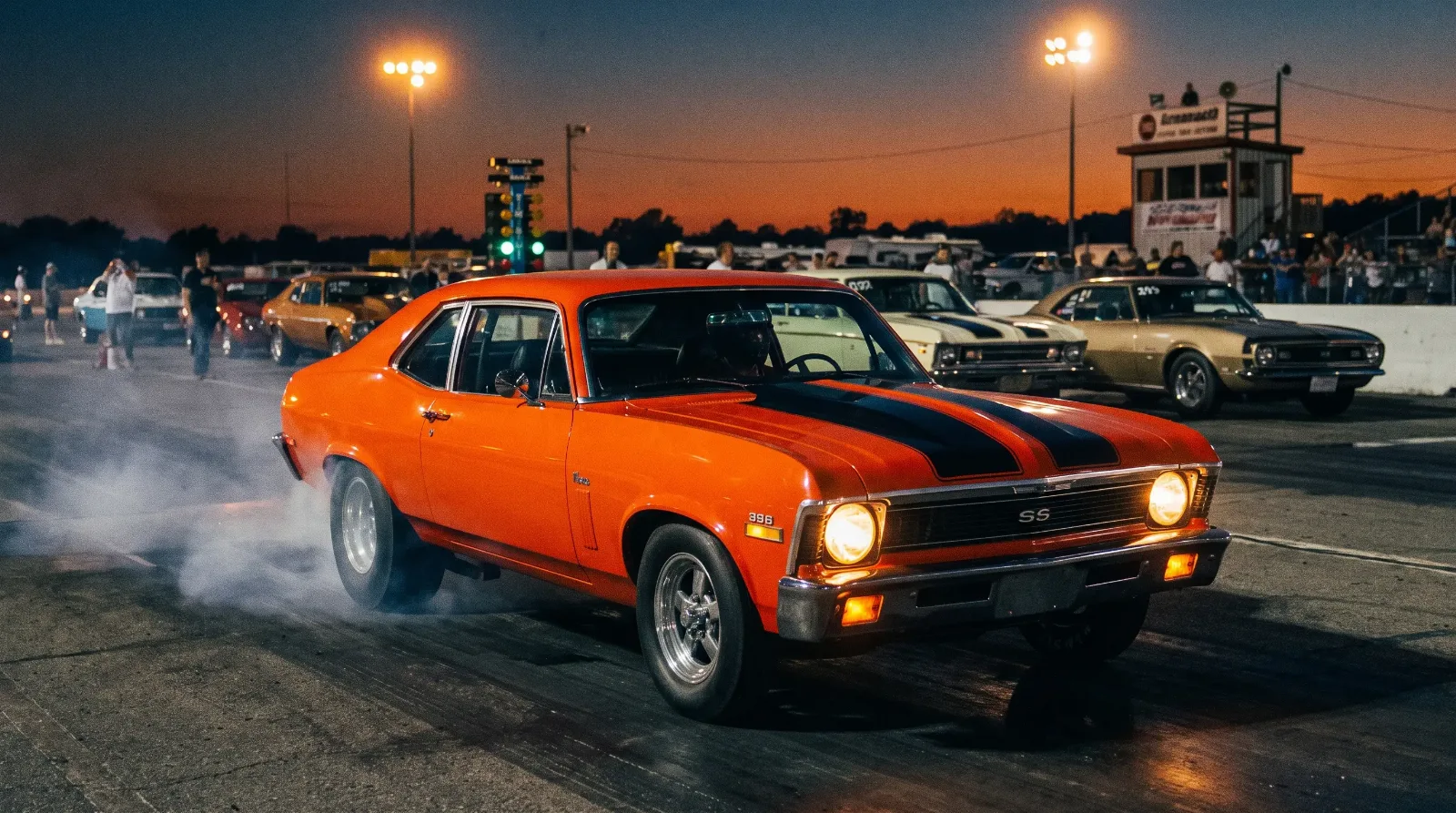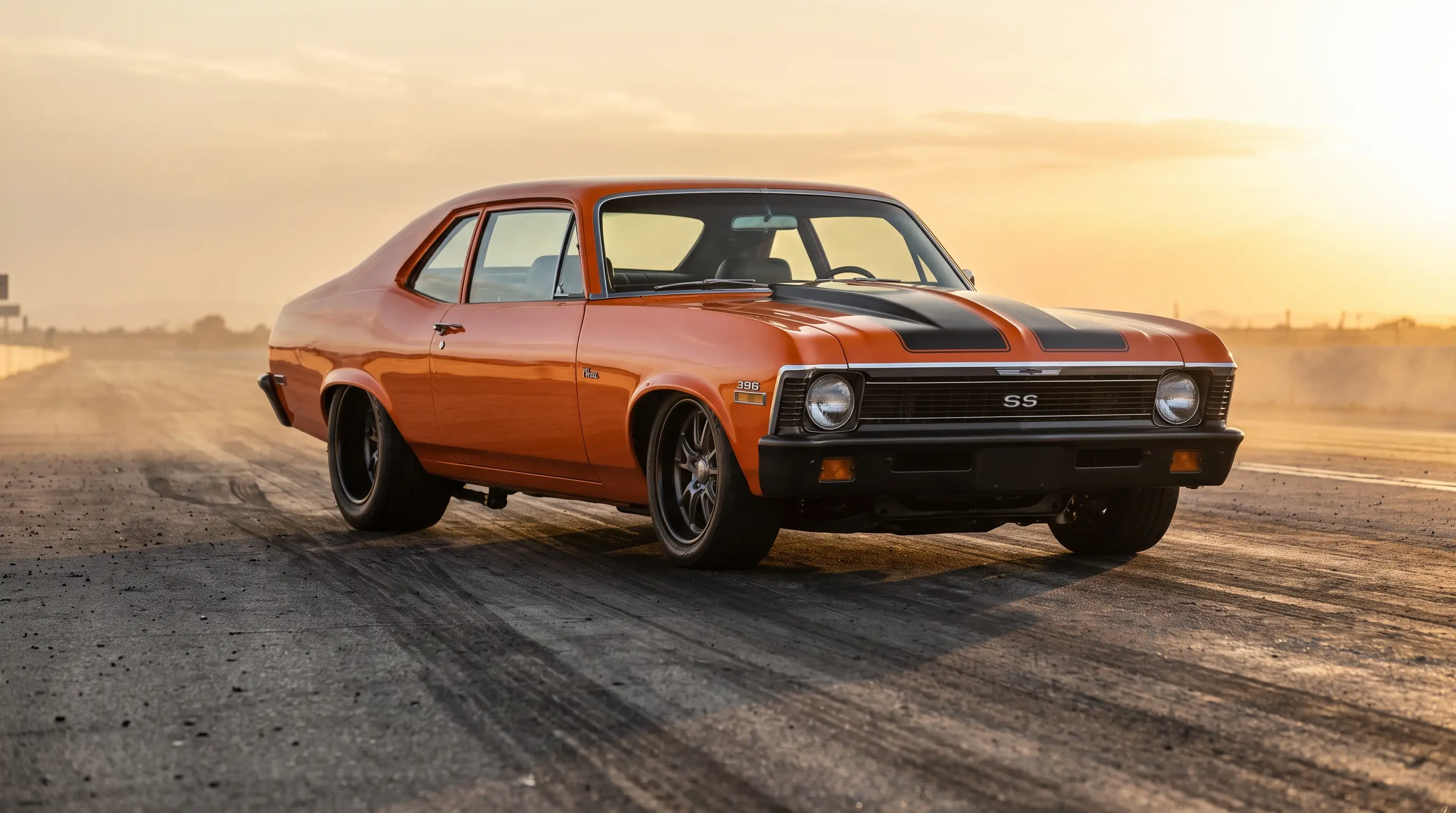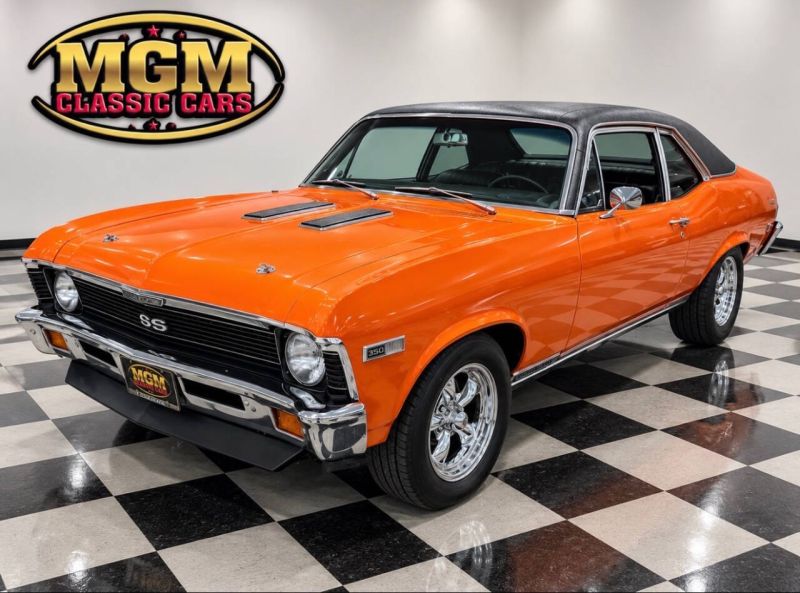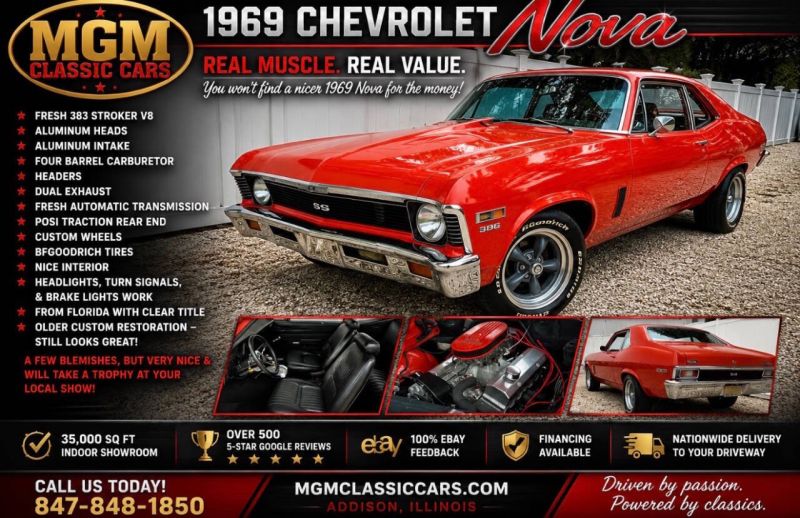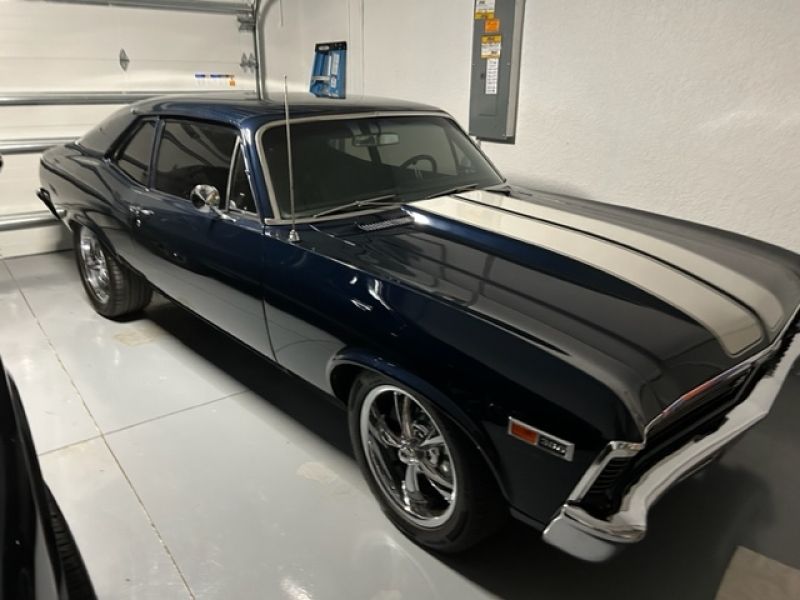
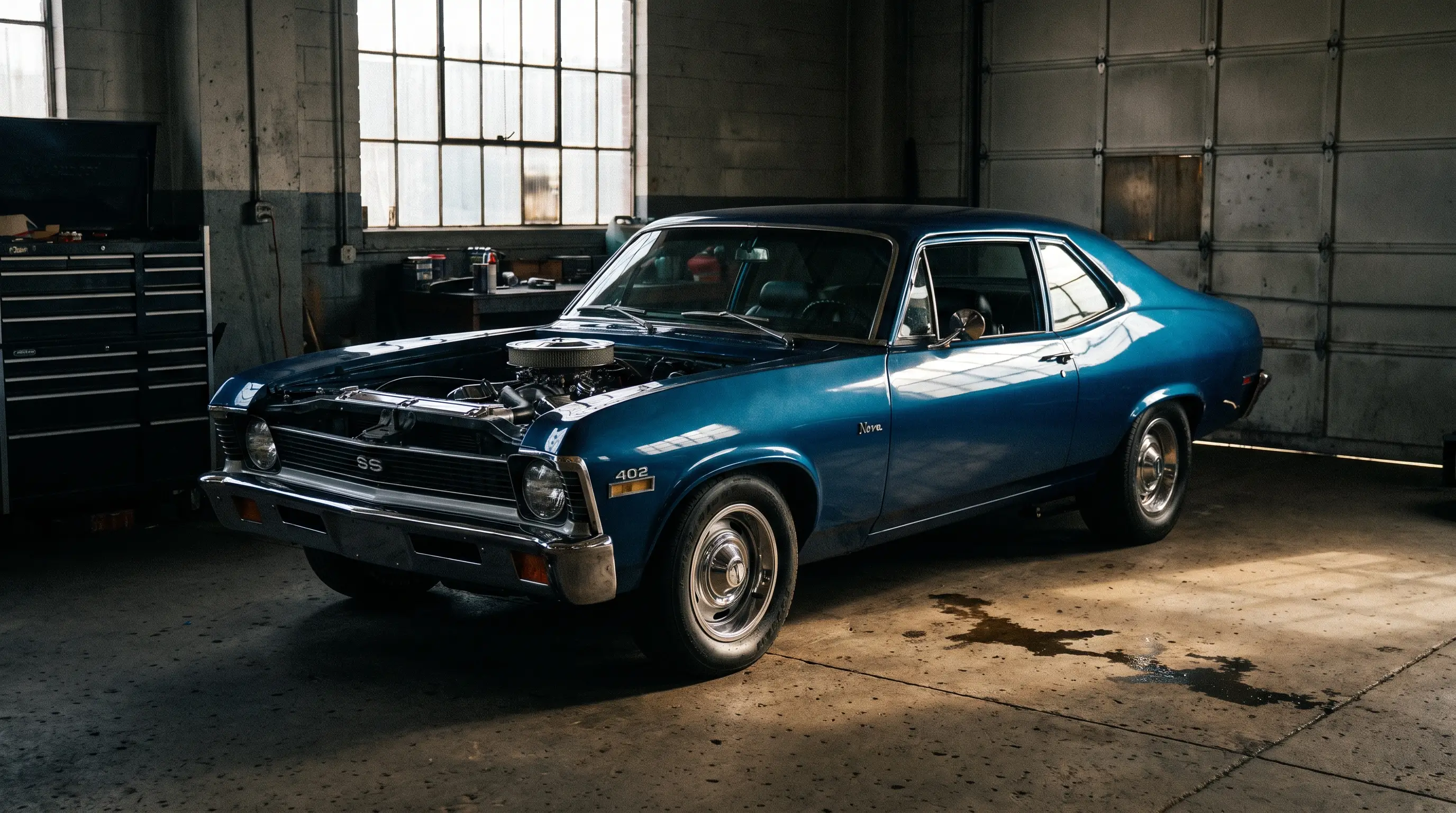
Say "396 Nova" to most collectors and they picture a 1968 or 1969 car. Say "chevy 402 nova" to someone who actually tracks the paperwork, and the conversation changes. For 1970, the only model year Chevrolet ever put a big block under a Nova's hood, the engine wearing that famous 396 badge on the fender was not a 396 at all. It was a 402 cubic inch big block, and the gap between the name on the car and the number on the block is exactly the kind of detail that moves prices at auction, one way or the other.
What "396" actually meant in 1970
Chevrolet bored out the 396 to 402 cubic inches for the 1970 model year across the full big block lineup, Nova included. The reason was simple business logic, not deception: the 396 name had built real equity through the Camaro, Chevelle, and Impala SS programs, and killing a recognizable badge over a bore job made no marketing sense. So the fender emblems stayed at "396" while the displacement tag under the hood quietly moved to 402. Chevrolet was not alone in doing this kind of badge-versus-block mismatch, and buyers who do not know the history assume something is wrong with a numbers-matching 1970 car when the block casting reads 402. It is not wrong. It is exactly as it left the factory.
This matters for anyone shopping the third-gen Nova because the badge-to-block discrepancy is one of the first things a documentation-focused buyer needs to understand before they start second-guessing a legitimate car.
The 402 under a Nova hood
In the Nova SS lineup, the big block arrived as an option over the standard small block cars, and buyers who checked that box in 1970 got one of two versions. The L34 was the mainstream 402, rated at 350 gross horsepower, while the solid-lifter L78 carried the higher state of tune at 375 gross horsepower. Both were gone from the order sheet after this single model year: Chevrolet dropped the big block option from the Nova lineup entirely for 1971, replacing it with the 350 cubic inch small block as the top factory engine choice. The L34 was the volume engine of the two, and it is the version most surviving cars will carry.
The bore job that took the 396 to 402 cubic inches was itself a response to tightening federal emissions rules of the era, which treated engines under 400 cubic inches differently than the ones above that line. Boring the block let Chevrolet keep the same basic big block architecture and output while working around that threshold. Because the Nova never carried the big block past 1970, there is no multi-year compression or output drift to track on this particular car the way there is on a Chevelle or Camaro that kept the option through 1972. A 1970 402 Nova is the only factory big block Nova there is, full stop.
| 1970 engine option | Big block designation | Factory output | Rating basis |
|---|---|---|---|
| L34 (standard big block) | 402 ci, badged 396 | 350 hp | Gross |
| L78 (solid-lifter big block) | 402 ci, badged 396 | 375 hp | Gross |
What the badge-versus-block gap does to today's market
Documentation carries more weight on these cars than on almost any other Nova variant, because the story is more complicated than a single number. A buyer who sees "396" on the fender and "402" on the block casting and assumes fraud will walk away from a correct car, and a seller who cannot explain the discrepancy loses credibility they never should have lost. I have watched private-sale prices swing on exactly this point. A well-documented 1970 big block Nova with a broadcast sheet or a dealer invoice tying the VIN to the correct engine option routinely commands a real premium over an otherwise similar car with no paper trail, because the paper removes the one question that stalls a deal.
Auction results for these cars are thinner than for Chevelles or Camaros carrying the same drivetrain, simply because fewer big block Novas were built and fewer survive with their original engines. That scarcity cuts both ways. It supports value for the documented cars. It also means a bad transaction, a swapped block with no history, sits on the market longer because informed buyers are cautious about exactly the ambiguity this article is trying to clear up.
Verifying a real 402 Nova
Start with the VIN derivative code, which on GM cars of this era identifies the engine the car left the factory with. Cross-reference that against the block casting number, which should correspond to a 402 casting for any 1970 big block Nova regardless of what the fender says. A cowl tag or trim tag adds another data point where present, and any surviving dealer paperwork or broadcast sheet is worth more than all of the above combined because it ties a specific engine to a specific chassis at the point of assembly, not decades later.
Watch for mismatched casting date codes that predate the car's build date by more than a few weeks, which can indicate a later service replacement rather than the original unit. None of this means a replacement engine makes a car worthless. It means the asking price should reflect what is actually there, not what the seller assumes is there.
"The 402-versus-396 confusion has cost buyers real money on both sides of the table, people underpaying for a correct car because they thought something was off, and people overpaying for a car with a swapped block because nobody checked. The paperwork settles it every time paperwork exists."
— David Mercer
The buy call
A documented 1970 big block Nova, badge discrepancy explained and casting numbers matching the build sheet, is a genuinely underappreciated entry point into big block Chevrolet muscle. The cars carry real performance, real scarcity, and a lower price of entry than a comparable Chevelle SS with the same drivetrain, largely because the Nova was never marketed with the same halo status. That gap has narrowed in recent years as informed buyers catch on, which is exactly why the documentation question matters now more than it did a decade ago. If you want to keep reading the series on how the specific 1972 model year fits into this bigger picture, that is the next logical stop. For the full production history behind these cars, the Classic Cars Arena Nova guide lays out the complete generational timeline. And if you are ready to look at what is actually on the market right now, we track classic muscle Novas for sale across the current listings.