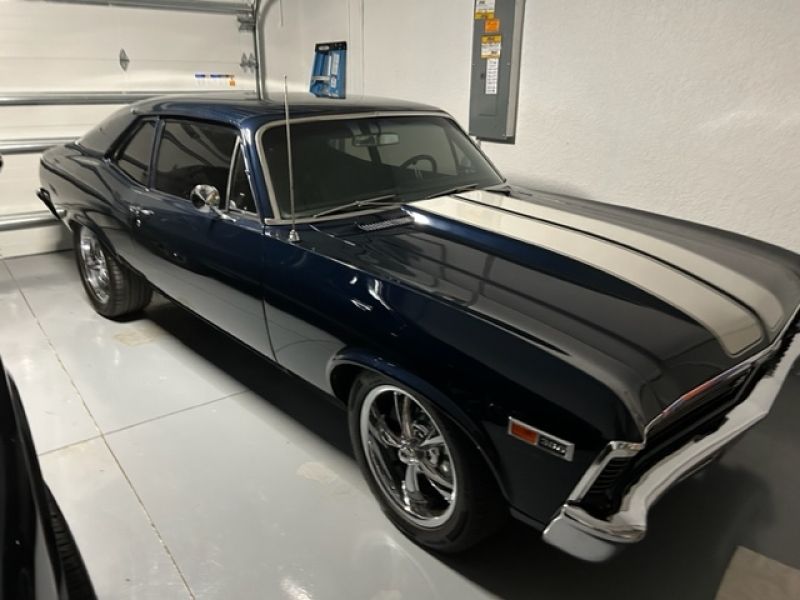
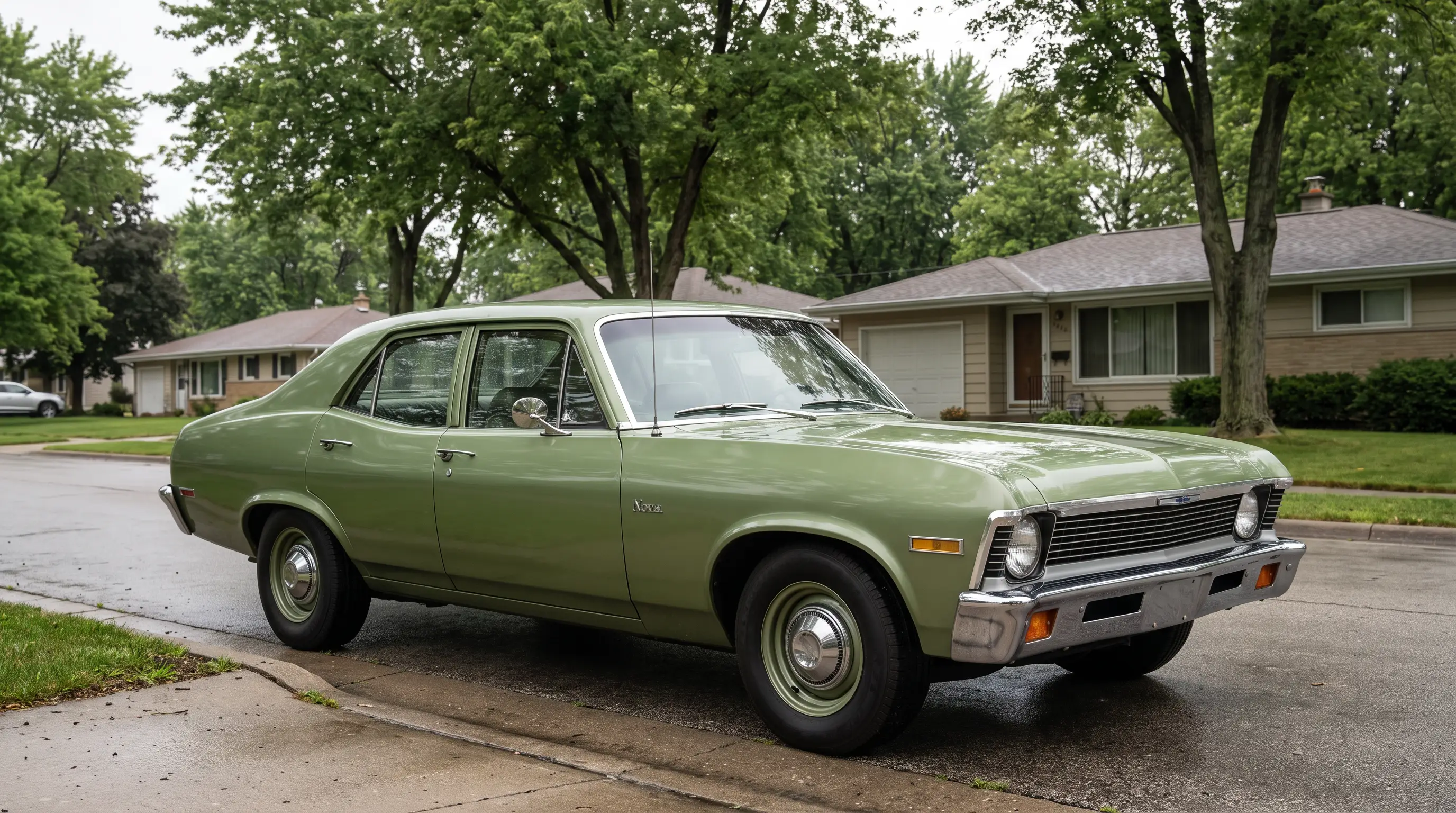
I've had more than one guy bring me a 1972 chevy nova expecting it to run like a 1970 and get frustrated when it doesn't. Same body. Same options list on paper. Different engine underneath, and not in a good way. 1972 was the year the numbers finally caught up with the small print, and if you're looking at one of these cars today, you need to understand exactly what changed before you decide what it's worth.
Why 1972 hits different than 1970 or 1971
By 1972, Chevrolet had switched every engine rating to net horsepower, measured with the accessories, exhaust, and air cleaner installed instead of the stripped-down setup used for the old gross figures. That alone makes a 1972 spec sheet look weaker than a 1970 one even when the hardware underneath hasn't changed much. Stack that on top of falling compression ratios chasing emissions rules and the move toward engines that could survive on lower-octane, lower-lead fuel, and you get a car that's genuinely down on power compared to the cars two years earlier wearing the same badges.
I'm not saying the 1972 Nova is a bad car. I'm saying you need to buy it with your eyes open about what it is. This was the last year for the muscle-era Nova before the SS package started fading into more of an appearance option, and that transition shows up under the hood before it shows up anywhere else.
What was actually under the hood
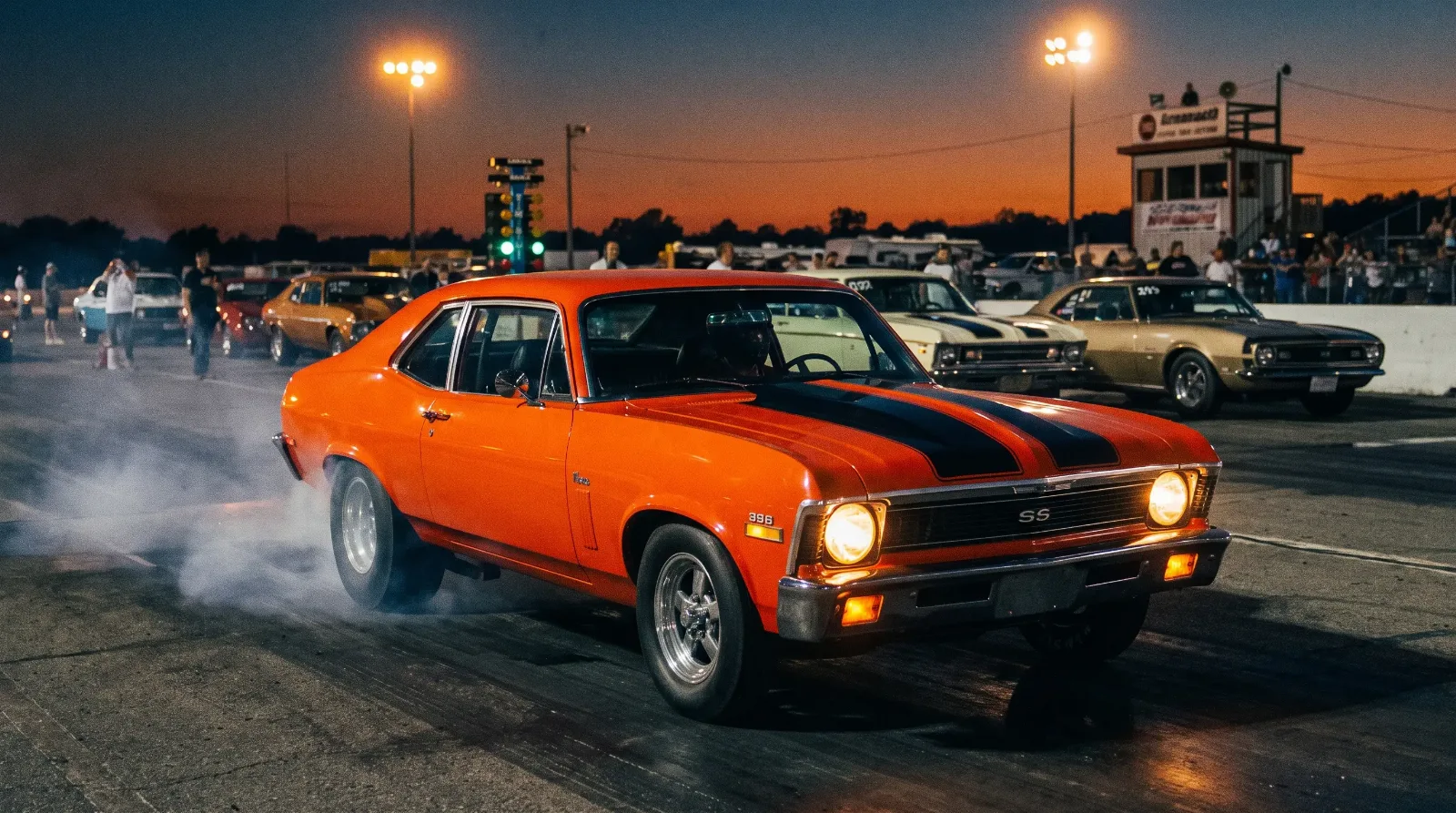
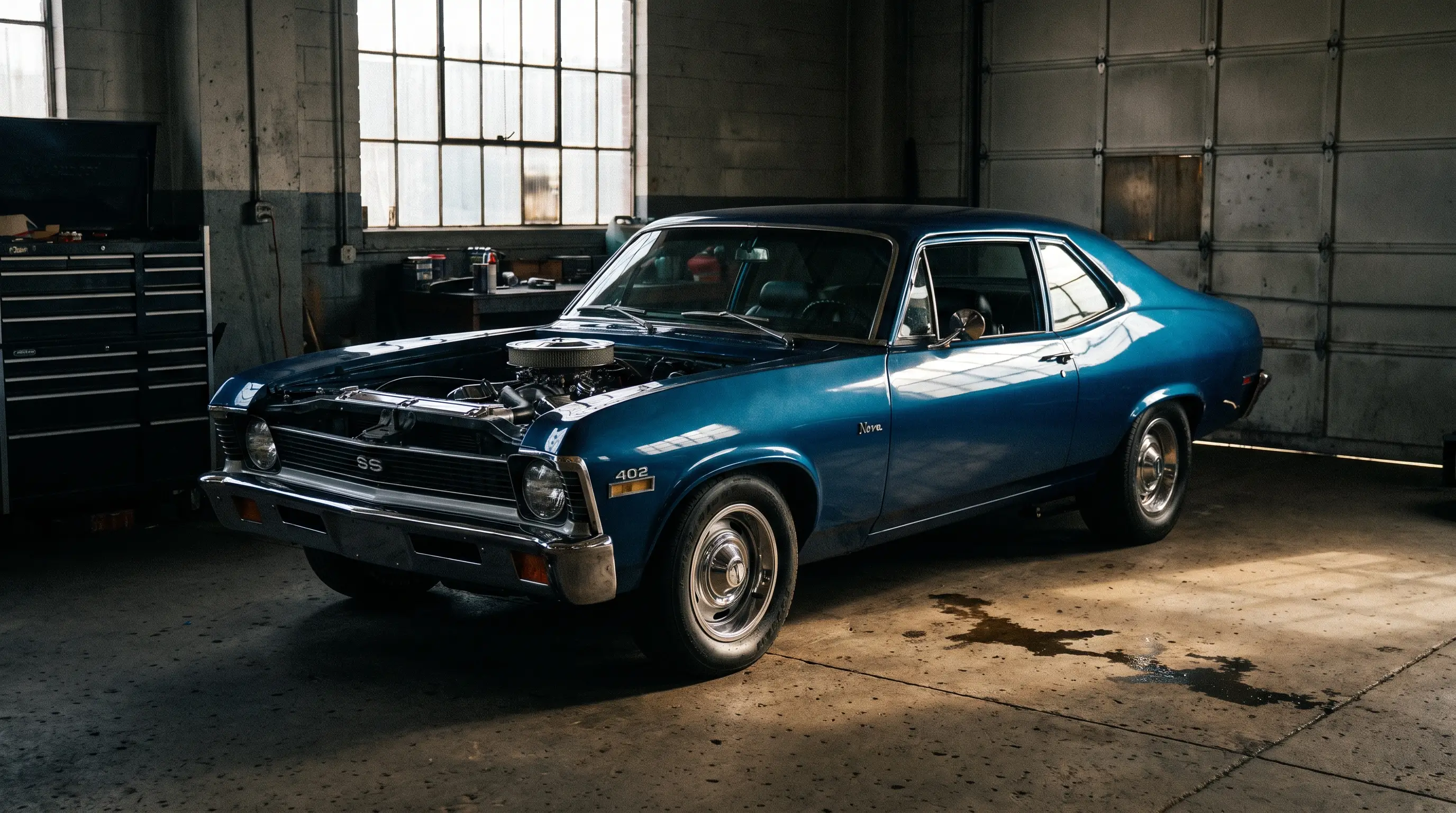
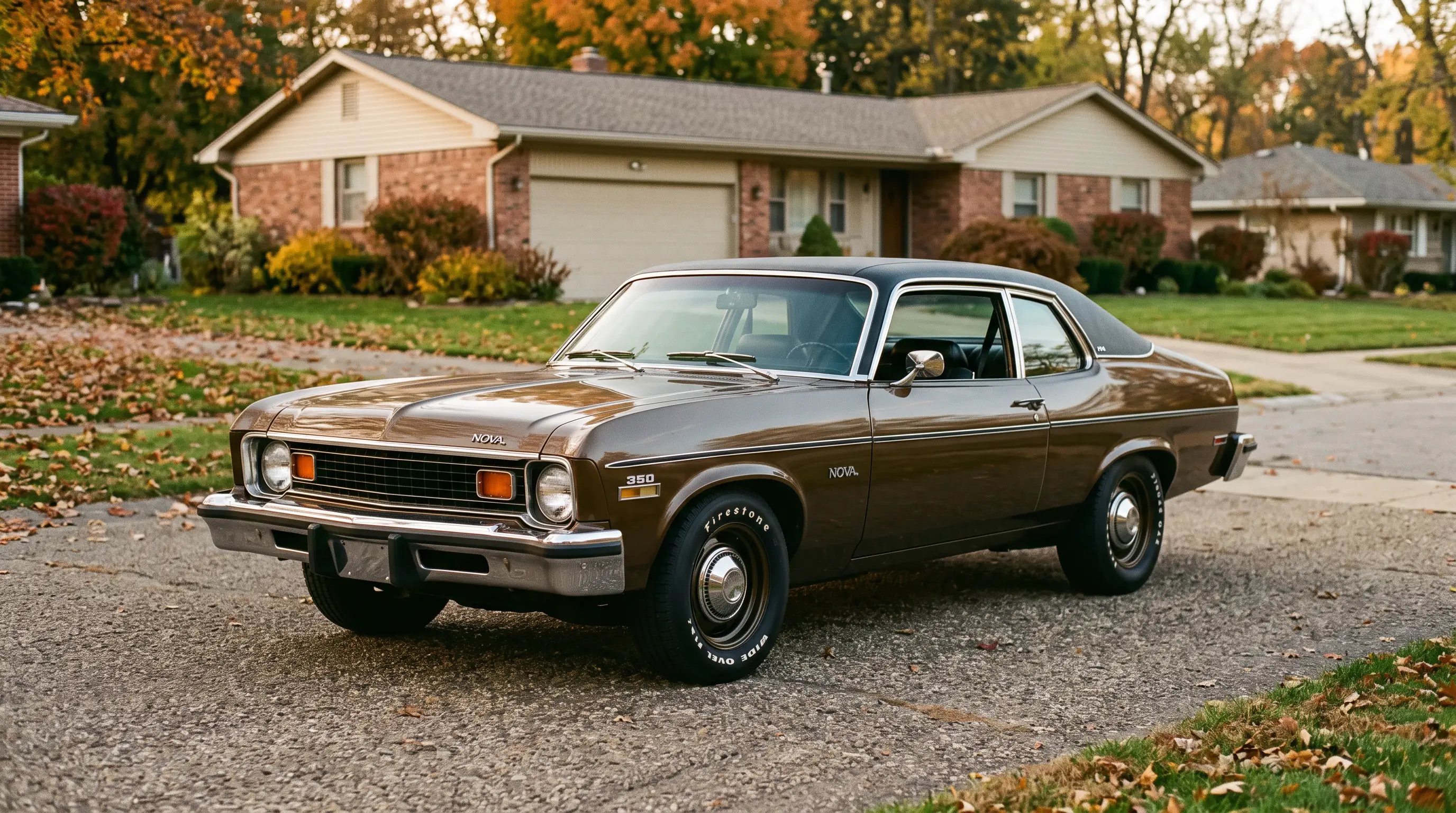
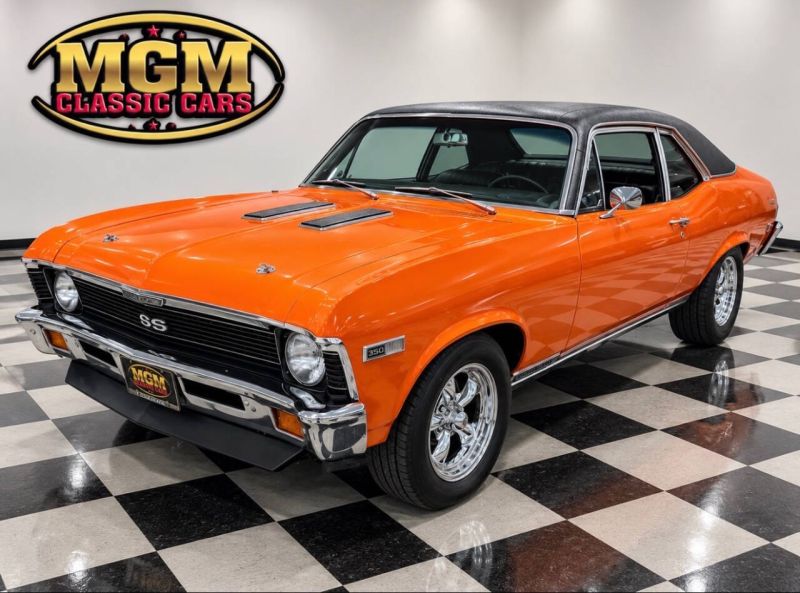
The base six-cylinder and the 307 and 350 V8 options carried the volume of production. The 350 in SS trim, the L48 with its four-barrel carburetor, was the reasonable performance pick for most buyers, rated at 200 net horsepower. There was no big-block option at all in 1972. Chevrolet had already pulled the 396 (by then actually a 402 cubic-inch engine) out of the Nova lineup after 1970, so the 1971 and 1972 SS never had a factory big-block on the order sheet, badge or no badge.
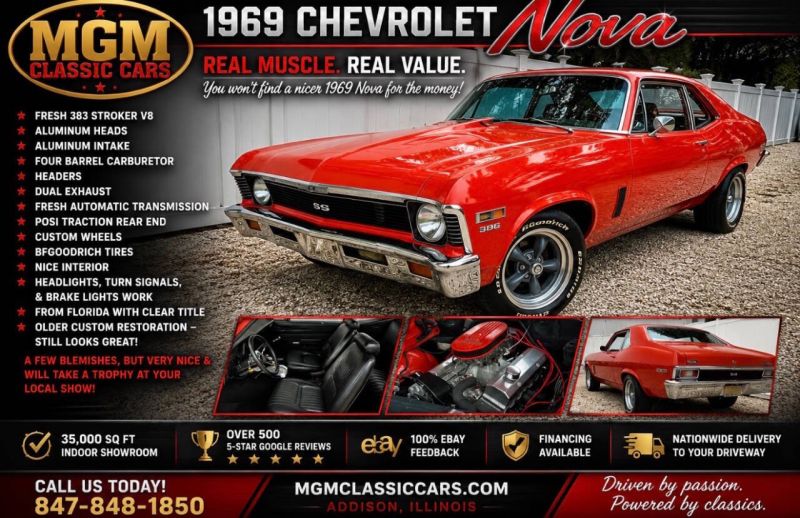
Here's the thing nobody tells you when they're trying to sell you a "numbers matching big block Nova" from 1972: there's no such thing. No 1972 Nova left the factory with a 396 or 402 under the hood. If you find one with a big block today, it's a car that was built up later with a period-correct engine dropped in, which is a perfectly fine hot rod but not a factory-original combination, and it should be priced and sold as exactly what it is.
| Engine | Displacement | Net output | Notes |
|---|---|---|---|
| Inline-six | 250 ci | 110 hp | Base engine, rare in SS trim |
| Small block V8 | 307 ci | 130 hp | Base V8, two-barrel |
| Small block V8 (SS, L48) | 350 ci | 200 hp | Only SS engine offered in 1972, four-barrel |
| Big block V8 | 396/402 ci | Not offered | Dropped from the Nova lineup after 1970 |
What to check before you write a check
Start where I always start on these: the cowl tag and the VIN derivative code, matched against the block casting number. Emissions-era engine bays get modified more than people admit, vacuum lines rerouted, smog pumps deleted, timing advanced past factory spec to claw back some of what the compression drop took away. None of that is automatically bad. It's just information you need before you decide what the car actually is.
Rust is the other half of the equation and it doesn't care what engine you ordered. Lower quarter panels, trunk floor, and the front subframe mounting points are where these cars fail first. A clean-looking 1972 SS with soft metal hiding under fresh undercoating is worth less than an honest driver with visible surface rust and no surprises. I'd rather buy the second car every time.
Production numbers tell you how rare this actually is
Total Nova production for 1972 ran to roughly 349,700 units across all trims, but the SS package itself was a small slice of that, with SS equipment going on around 12,300 coupes. That's the part people miss when they see "1972 Nova SS" listed and assume it's common because the base Nova sold in big numbers that year. The SS package was already trending toward niche territory by 1972, which is one reason genuine survivors with original 350 drivetrains carry a real premium over cars built up later with reproduction parts and a period-correct big block sourced from a donor car, since no 1972 Nova came from the factory with one.
I'd rather see a documented, numbers-matching small block SS than an undocumented big block car with a story attached to it. The paperwork is worth more than the cylinder count when you're the one writing the check.
What it's worth and who it's for
A solid, factory-correct 1972 Nova SS with its 350 small-block is a fair-priced way into third-gen muscle Nova ownership without paying 1970 prices for 1970 output. It's a good driver's car and a reasonable restoration candidate if the sheet metal is sound. It is not the car to chase if raw output is the whole point of the exercise. If you want to see how the story keeps going from here, another angle on this same generation covers what changed the very next year when the federal bumper rules landed.
"I've pulled the heads off enough of these 1972 350s to tell you the compression numbers don't lie. It's a real performance small-block, but it isn't the big block your buddy's 1970 has, and pricing it like one is how people get taken advantage of."
— Mike Sullivan