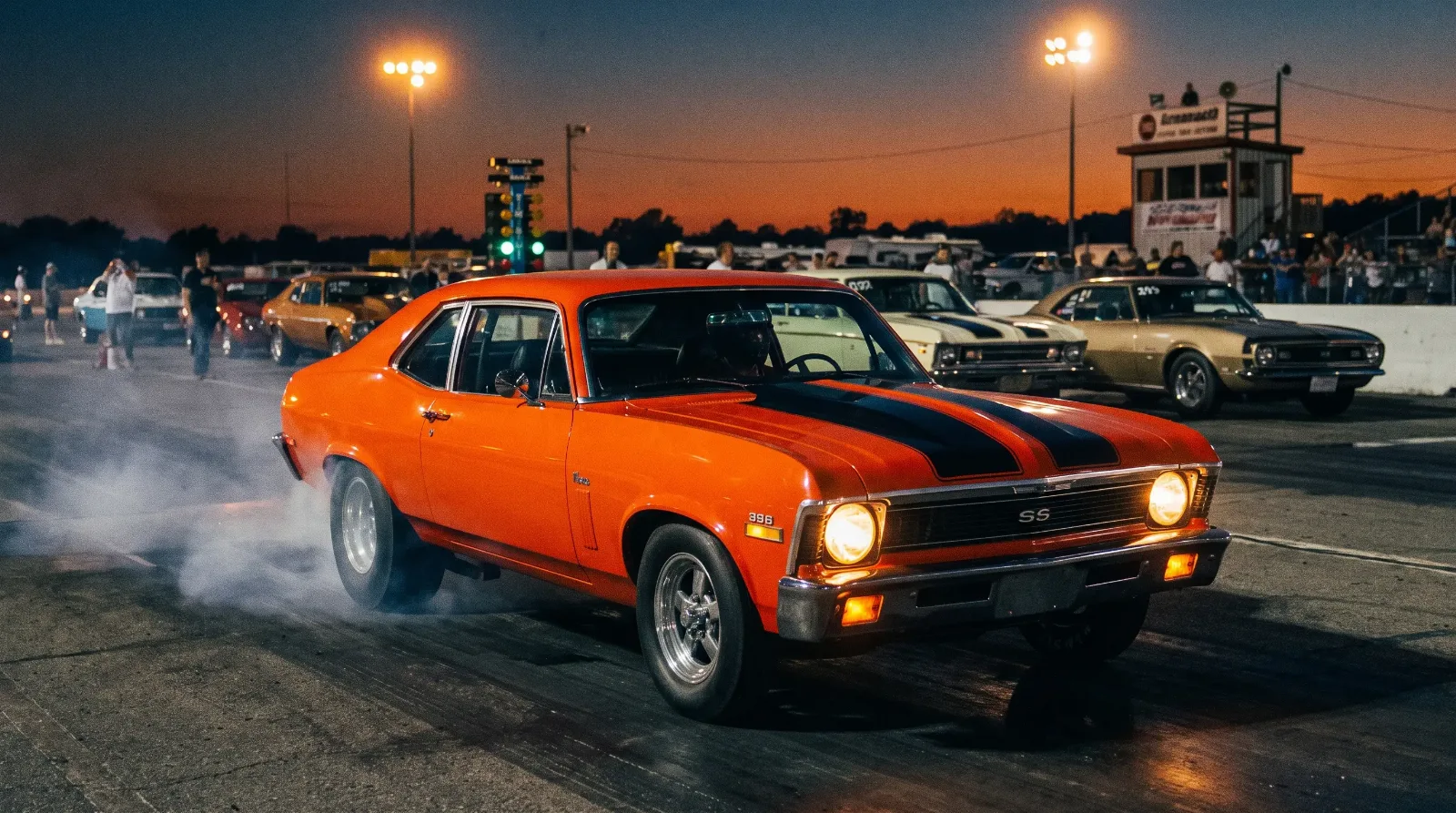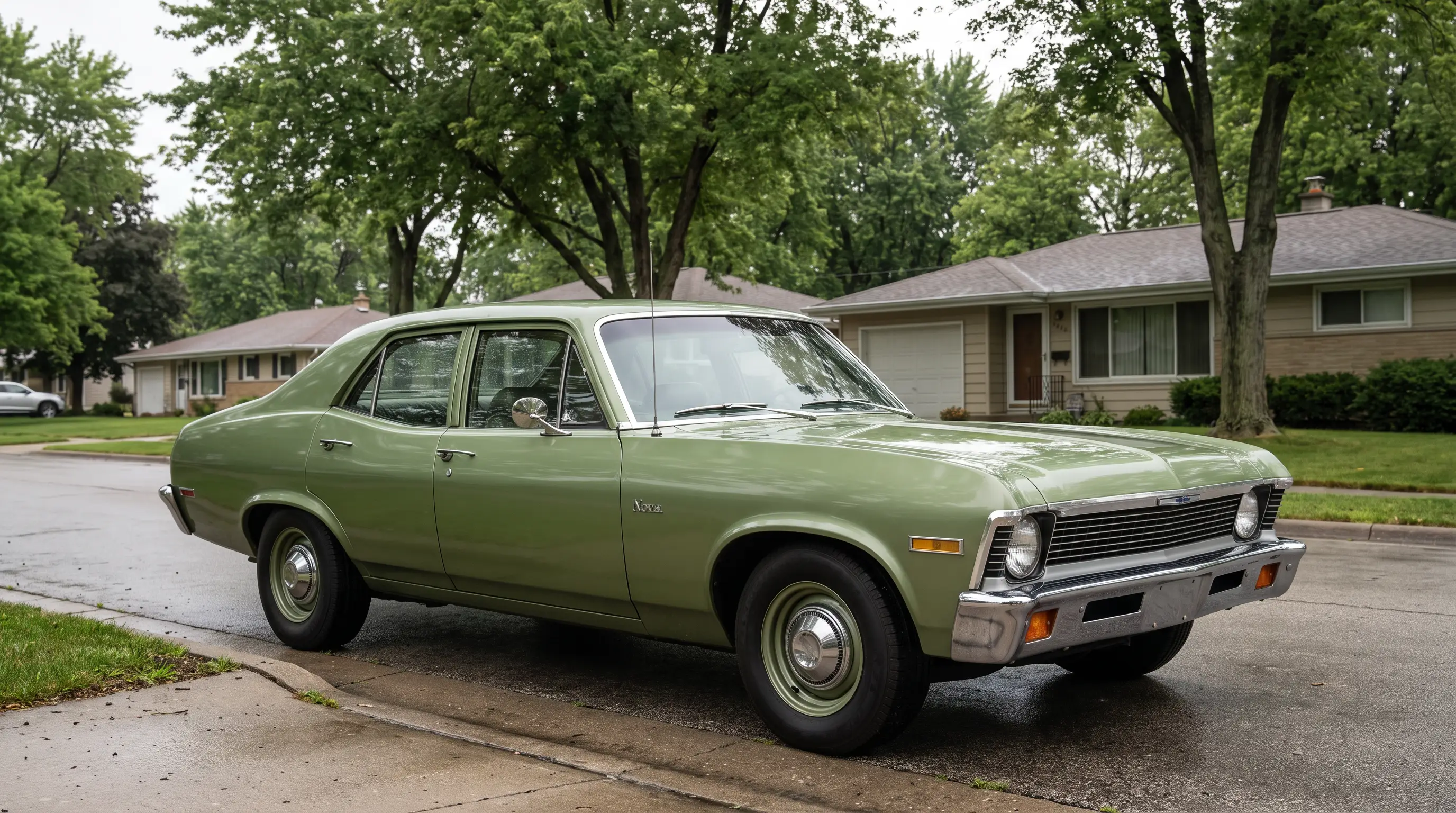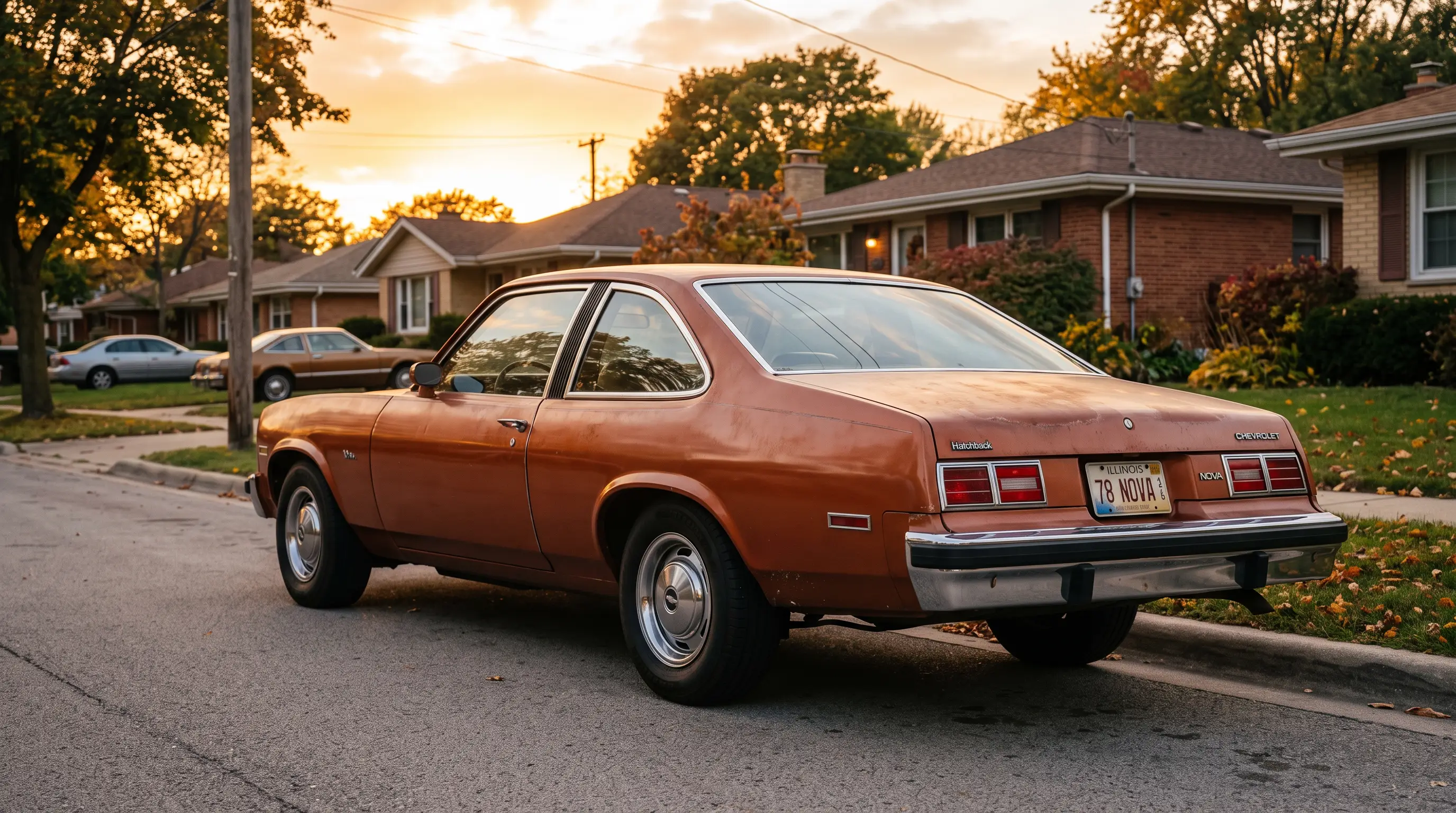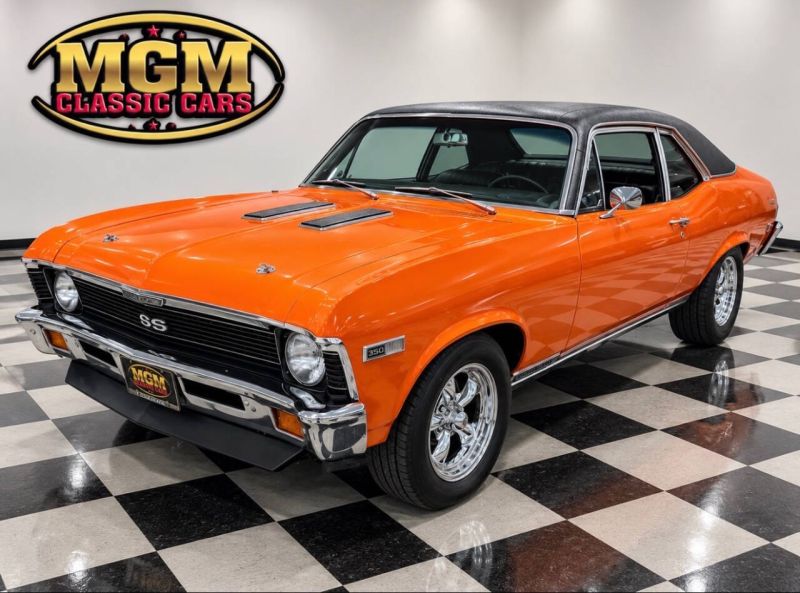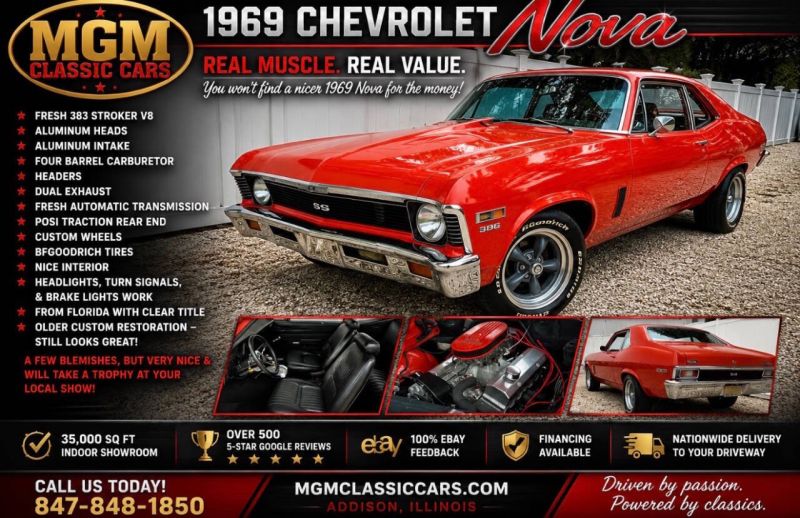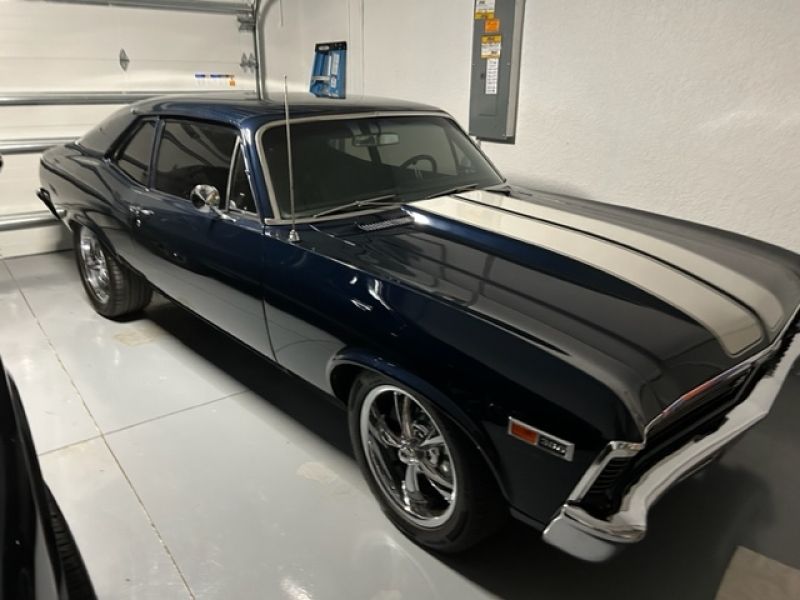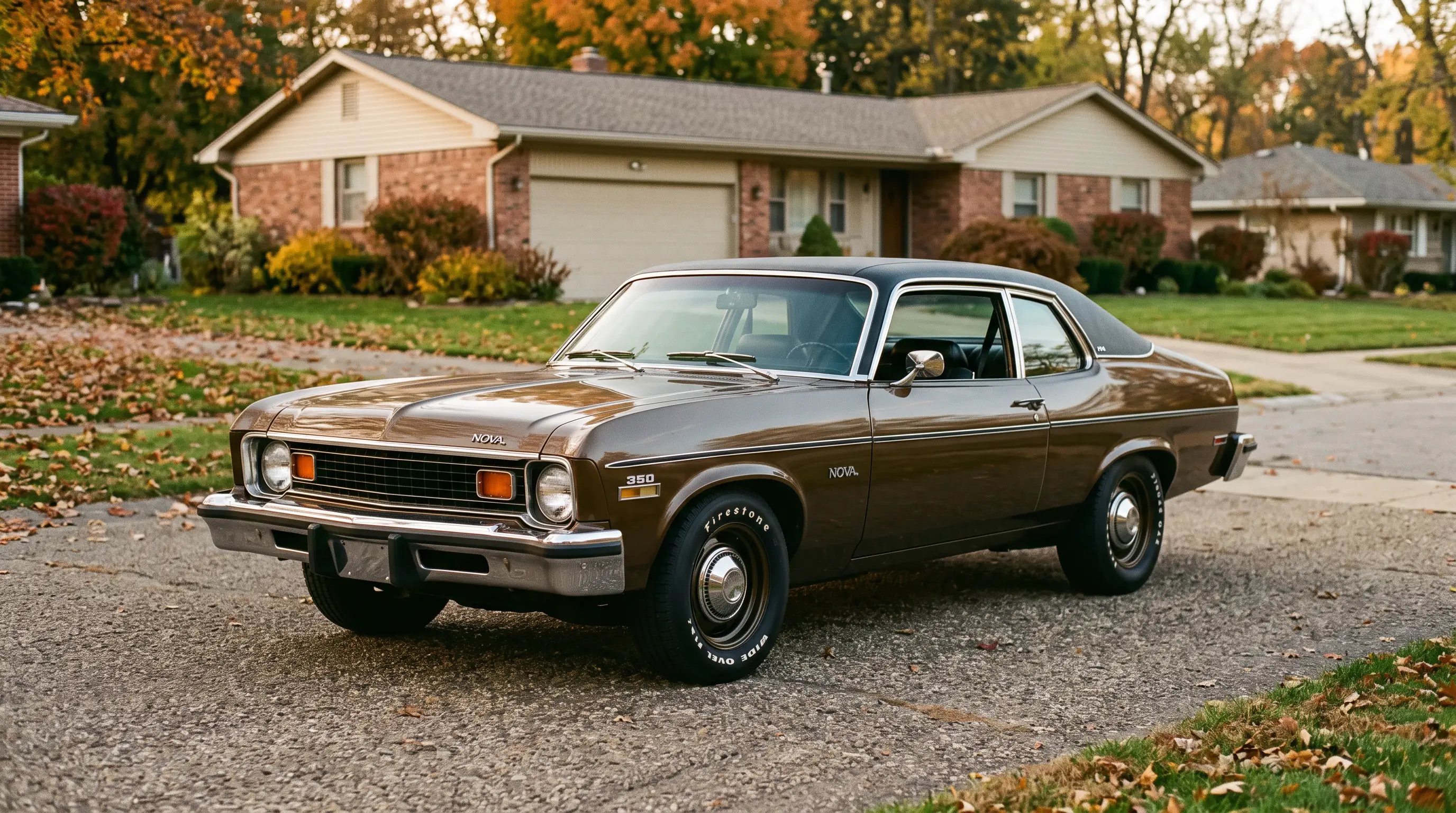
The 1973 chevy nova is the car that showed up to work looking different and running softer, and most people blame the wrong thing. It wasn't just Detroit losing interest in performance. It was Washington. Federal bumper standards landed on the whole industry in 1973, and the Nova wore the change on its face more obviously than a lot of its competition did.
What the government actually did to this car
Starting with the 1973 model year, federal regulation (FMVSS 215) required front bumpers capable of surviving a 5 mph impact without damage to safety equipment. Rear bumpers were only held to a softer 2.5 mph threshold for 1973, then the standard was raised so both front and rear bumpers had to survive a 5 mph hit for 1974. That meant heavier bumper structures, energy-absorbing mounts, and a nose that sat further out from the body than the clean 1971-72 front clip did. Chevrolet wasn't hiding it. The 1973 Nova got a genuine facelift, a new grille treatment and revised sheet metal up front to work with the new bumper hardware, not just a bolted-on afterthought.
I've had customers tell me the 1973-74 cars "look heavier" and they're not wrong. They are heavier, and that weight went almost entirely into crash structure that does nothing for you at a stoplight. If you're cross-shopping this generation against the muscle Nova chapter from a couple years earlier, understand you're looking at two different design priorities on the same platform.
The engine bay tells the rest of the story
By 1973 the big block option was gone from the Nova lineup entirely. Whatever performance case the SS package still made rested on the 350 small block, and even that engine was giving up compression and output year over year as emissions rules tightened further, down to a net 145 horsepower on the two-barrel 350 and 175 net horsepower on the four-barrel version for 1973. The 1973 oil crisis hit right in the middle of this model run and reset what American buyers wanted out of a compact car almost overnight. Fuel economy started mattering more than a quarter mile time, and the SS package increasingly sold on looks and handling extras rather than raw power.
None of that makes a 1973-74 Nova a bad buy today. It makes it a different kind of buy than a 1970 396 car, and pricing it like the earlier cars is a mistake I still see people make at swap meets.
| Model year | Bumper standard | Big block available | Top V8 option |
|---|---|---|---|
| 1972 | Pre-standard | Yes (402, badged 396) | 402 ci |
| 1973 | Front 5 mph | No | 350 ci small block |
| 1974 | Front and rear 5 mph | No | 350 ci small block |
What to look for on a real inspection
The heavier bumper mounts and reinforced front structure on these cars change where rust shows up compared to earlier third-gen Novas. Check the bumper shock mounting points and the frame horns behind them closely, since moisture gets trapped in that reinforced structure in a way the simpler 1971-72 setup didn't experience the same way. Beyond that, the fundamentals don't change: lower quarters, trunk floor, and the usual subframe connection points still need a magnet and a flashlight, not just a walk-around.
Parts availability is actually a point in these cars' favor. Because the 1973-74 cosmetic changes were significant enough to need their own trim and bumper parts, and because fewer people chase these years for restoration, some pieces are scarcer on the reproduction market than earlier-year trim. Budget extra time for sourcing before you commit to a full cosmetic restoration.
Bumper brackets and the energy-absorbing mounts behind them are a specific pain point. Original units get brittle with age, and reproduction pieces for this exact application aren't as widely stocked as the simpler chrome bumpers from 1971 and 1972. Factor that into your restoration budget early rather than discovering it halfway through a project when the car is already disassembled. A phone call to a reproduction parts supplier before you buy the car will save you a lot of frustration later.
"People walk up to a 1973 Nova expecting a smaller version of the bumper problem and it's actually the other way around. The front end got the reinforcement first. The rear didn't catch up until the next model year. Know which car you're looking at before you start comparing prices."
— Mike Sullivan
The SS package after the big block left
With the big block gone, the SS package on a 1973-74 Nova leaned harder on appearance and handling equipment to justify itself. Stripe packages, wheel and tire upgrades, and suspension pieces borrowed from the F41 handling package carried the SS identity in a way that horsepower used to. That's a real shift in what "SS" meant on this car, and it's worth knowing going in so you don't overpay expecting a big block driving experience out of a small block SS car.
None of that makes these cars worse to drive. A well-sorted 350 with the handling package underneath it is genuinely fun on a back road, arguably more balanced than a nose-heavy big block car ever was. It's just a different kind of fun, and the market has been slow to fully separate the two propositions when it comes to pricing.
Buying one today
A 1973-74 Nova is a fair entry point if you want third-gen styling and a small block that's easy to live with, easy to source parts for, and doesn't come with the documentation headaches of a big block car. It's not the car for someone chasing period muscle car numbers. It's the car for someone who wants an honest, driveable classic without paying a premium for an engine option that was never offered these two years anyway. If this generation is holding your interest, the next story in this set covers the body style change that arrived right around this same window.