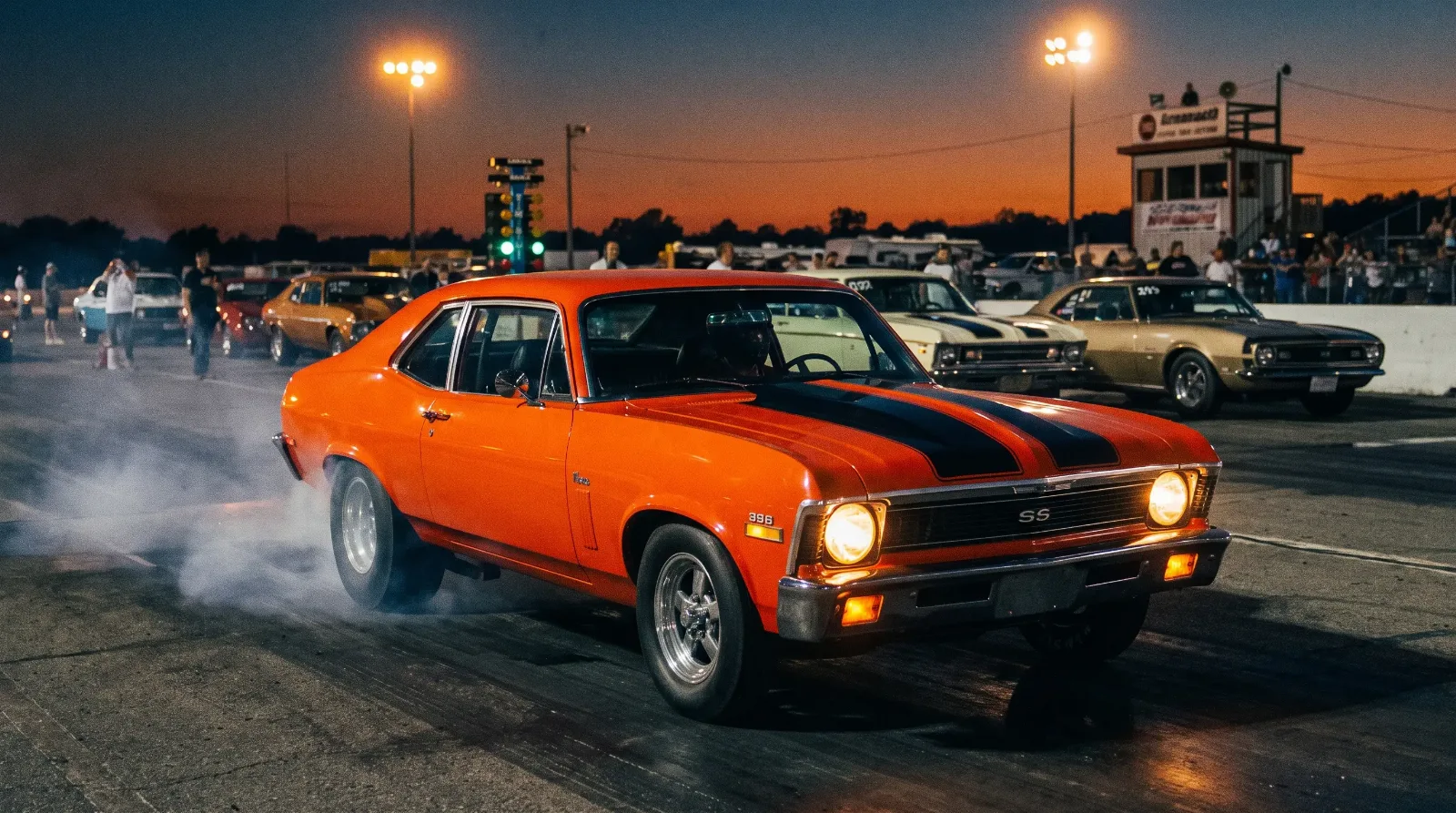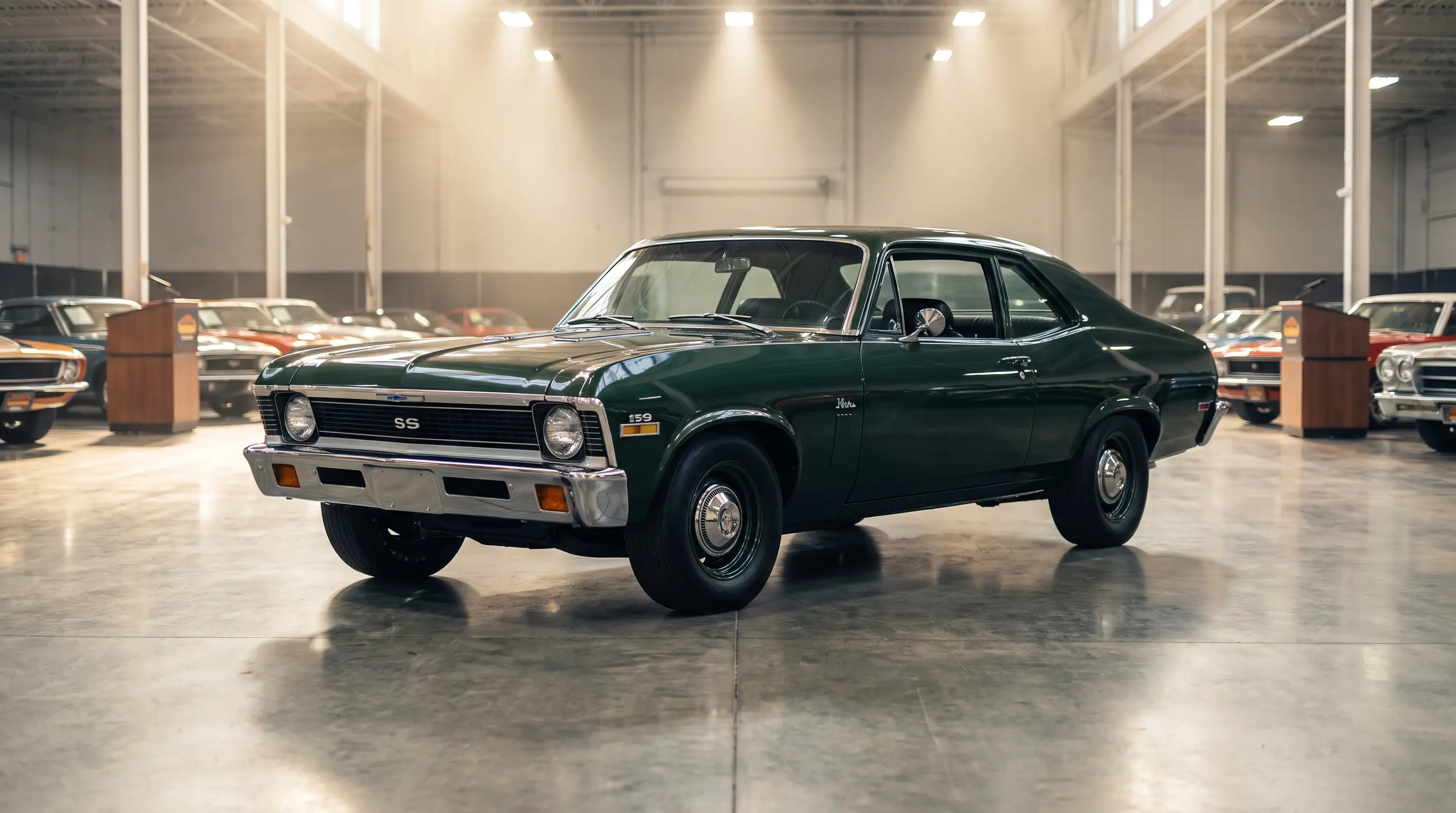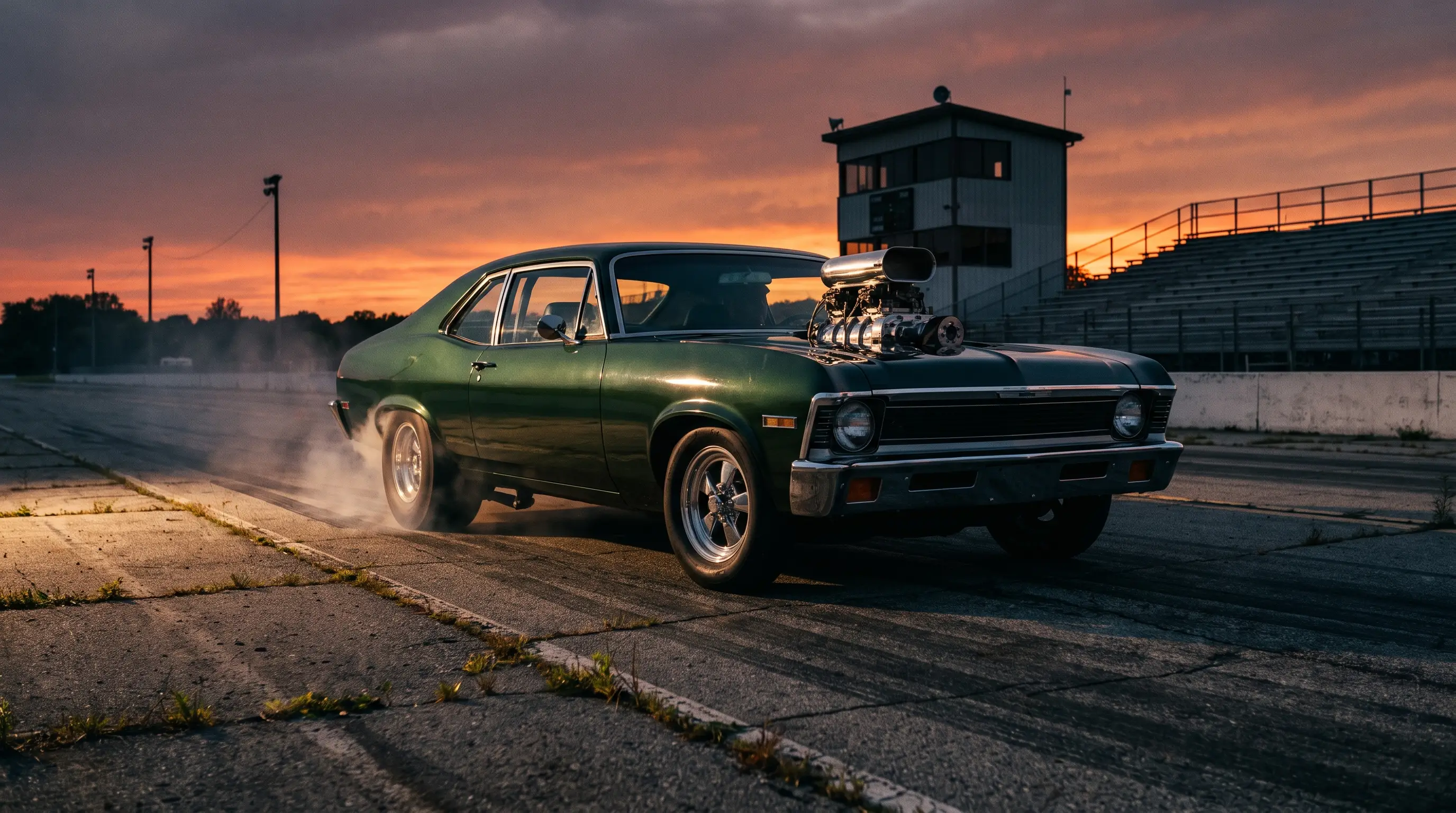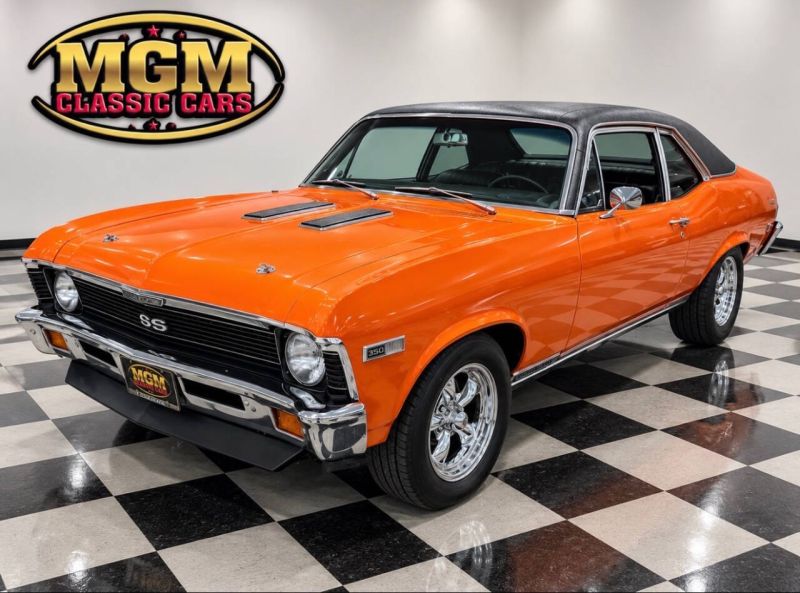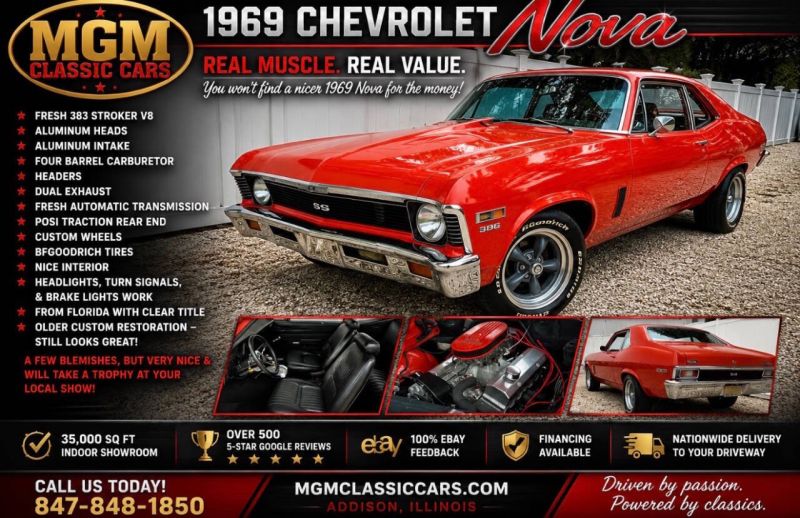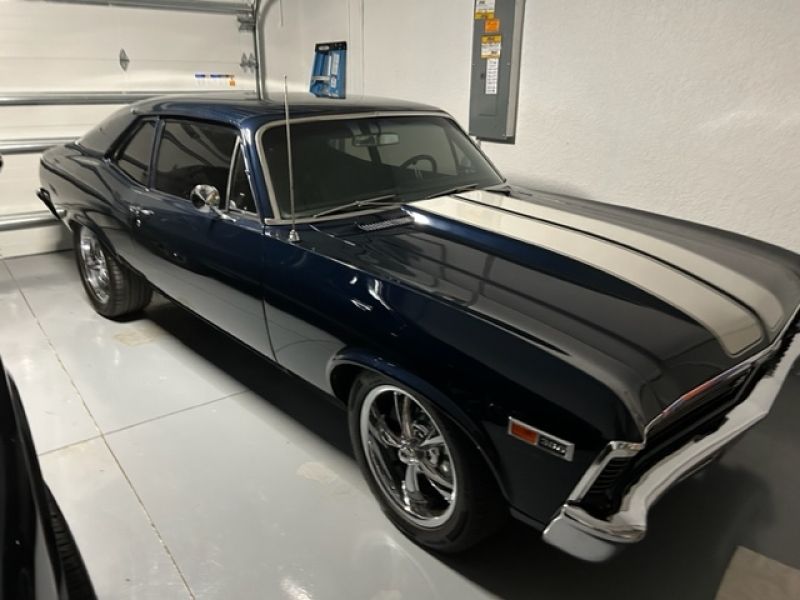
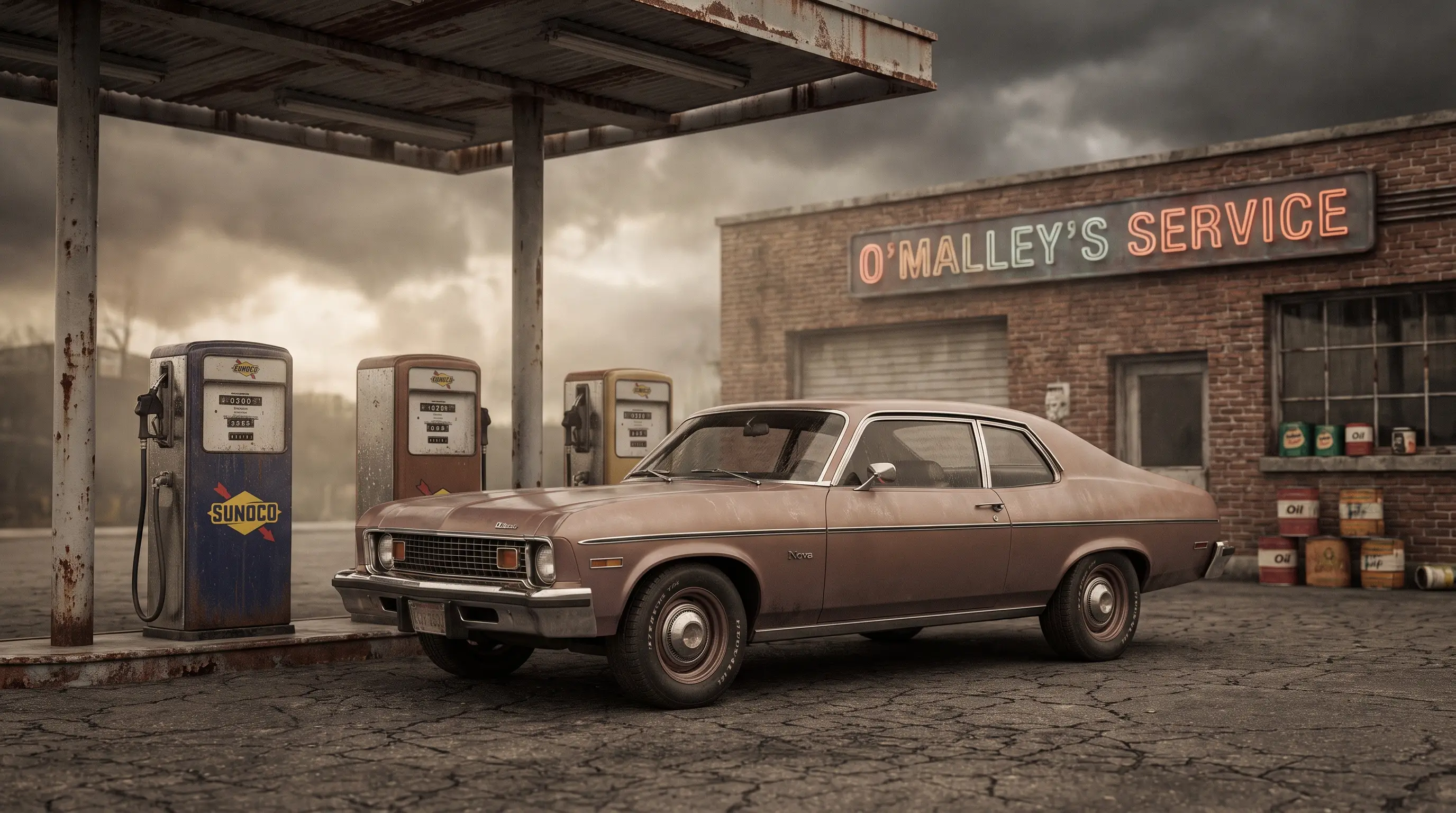
Talk to enough Nova owners and you'll hear the same story with slightly different dates attached. Somewhere around 1971 or 1972, the car in their garage stopped feeling like the one their older brother had in 1969. Same badge, same basic shape, noticeably less bite. That's not nostalgia talking. It's what actually happened to the Chevy Nova, and every other American muscle car, once federal emissions rules started reshaping what an engine was allowed to do.
The compression cut nobody advertised
The first real hit came from compression ratios, not exhaust hardware. Starting with the 1971 model year, Chevrolet and every other domestic automaker dropped compression across their engine lineups so the cars could run on lower-octane, eventually unleaded, fuel. A 396 (by then usually badged at its actual 402 cubic inch displacement) that had been squeezing higher compression in 1969 came out of 1971 with noticeably less of it. The horsepower numbers on paper didn't fall off a cliff immediately, but the character of the engine changed. Throttle response softened. The top end pulled less hard. Guys who owned both years back to back noticed it immediately, even before anyone explained the regulatory reason why.
Then came the bigger shock. Starting with the 1972 model year, the industry switched from gross horsepower ratings to SAE net horsepower ratings, which measured the engine as installed with all its accessories and exhaust restrictions rather than on a stripped test stand. On paper, that made every engine in America look like it had lost a huge chunk of power overnight. In reality the net number was simply more honest about what the engine could do bolted into the actual car. The four-barrel 350 across Chevrolet's intermediate lineup is a good illustration: a 1971 example carried a gross rating in the neighborhood of 270 horsepower, while that same basic engine was rated closer to 165 to 175 horsepower once GM switched to net figures for 1972. Either way, a Nova buyer reading a window sticker in 1972 saw a much smaller number than a buyer reading one in 1969, and that psychological hit mattered as much as the mechanical one.
What actually happened under the hood
I've had plenty of these on the lift, and the mechanical story is pretty consistent once you know what to look for. Compression ratios came down through reshaped combustion chambers and different piston designs. Camshaft profiles got milder to keep idle quality acceptable with the leaner, more restrictive setups the EPA was pushing toward. Exhaust systems picked up more restriction year over year as manufacturers anticipated catalytic converter requirements that would fully arrive later in the decade, past the third gen Nova's run.
The 402 big block did not survive long into this new era. 1970 was its final year in the Nova SS lineup, and from 1971 on the 350 small block was the largest engine Chevrolet offered in the car. The SS badge itself lasted considerably longer, riding out the compression and horsepower changes all the way through the 1976 model year before it was quietly replaced by a Nova Rally trim, but by the mid-1970s an SS Nova meant a stripe-and-badge package on a small-block car rather than a big-block threat. A buyer who wanted real straight-line performance out of a new Nova by the mid-1970s was working with a much smaller toolbox than a buyer had in 1969.
Why this matters to buyers today
If you're shopping for a Nova and comparing a 1970 SS to a 1973 SS, you are not comparing equivalent cars, even if the badges look the same on both fenders. The earlier car will generally carry higher compression, a more aggressive factory tune, and a bigger available engine option. That's not a knock on the later cars. A well-sorted 1973 Nova SS is still a good-looking, capable machine, and for some buyers the slightly softer factory tune actually makes it easier to live with day to day. But if you're buying specifically for straight-line performance and matching-numbers big block credibility, know which side of that 1971 line you're shopping on before you fall for a listing photo.
This is exactly the kind of detail that separates a documented, informed purchase from an expensive surprise. I'd rather a buyer walk into a deal knowing a 1972 350 Nova SS is going to feel meaningfully different than a 1969 396 than have them find out the hard way on the first test drive.
| Model years | What changed | What a buyer should expect |
|---|---|---|
| 1968-1970 | Peak compression, gross horsepower ratings, 396/402 big block available | The most aggressive factory tune of the generation |
| 1971 | Compression reduced for lower-octane fuel; big block dropped, 350 now the largest engine | Softer throttle response, same basic small-block architecture |
| 1972-1976 | Net horsepower ratings adopted, further tuning for emissions; SS badge continues on small-block cars only | Lower advertised numbers, milder cam profiles |
For the fuller picture of what this generation was before the emissions rules hit, the muscle Nova chapter covers the cars that came before this shift. And if you want to go even deeper on how the market values these different model years against each other, a related deep-dive lays out the specifics. The full arc of the car, start to finish, is covered in our Nova retrospective, which is worth reading if you're new to this platform.
"Guys bring me a 1973 Nova SS expecting it to feel exactly like the 1969 they remember from high school, and I have to tell them straight, it's not going to. The engineering changed. It's still a good car. It's just a different animal, and pretending otherwise just sets a buyer up for disappointment."
— Mike Sullivan
Buying into the right expectations
None of this means the emissions-era Novas are bad cars to own. They're honestly underrated in some corners of the hobby precisely because buyers overlook them chasing the earlier, harder-hitting years. A clean, documented 1970 Nova SS with the 402 still under the hood is a rarer find today than people assume, simply because the big block only lasted three model years before it was dropped entirely. If you know what you're buying and you're not expecting a 1969 experience out of a mid-1970s car, there's real value sitting in this window of the Nova's life. If you're shopping this generation specifically to drive rather than to chase auction headlines, you can find classic muscle Novas for sale across every one of these model years, and it's worth cross-shopping a few before you commit.