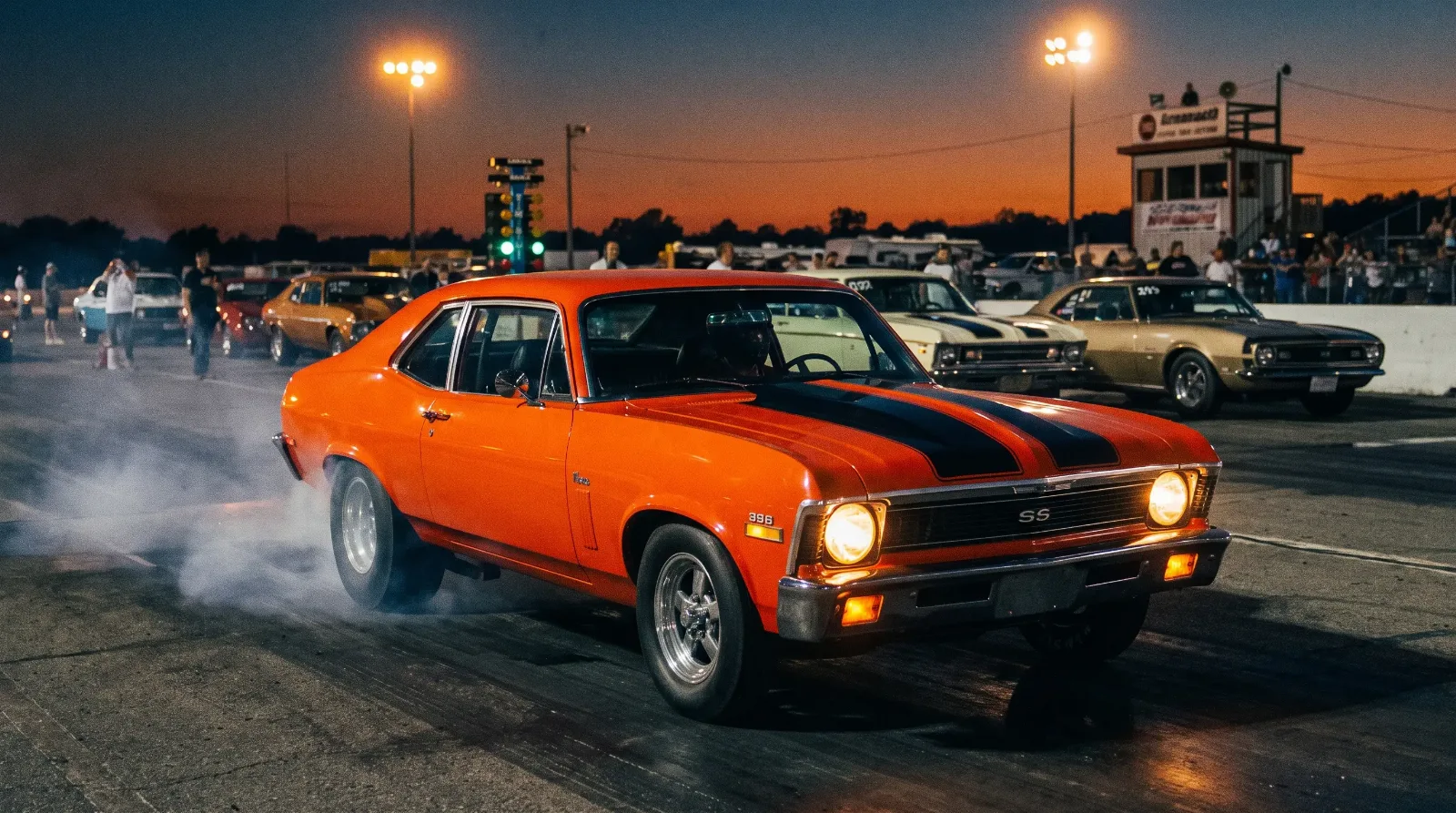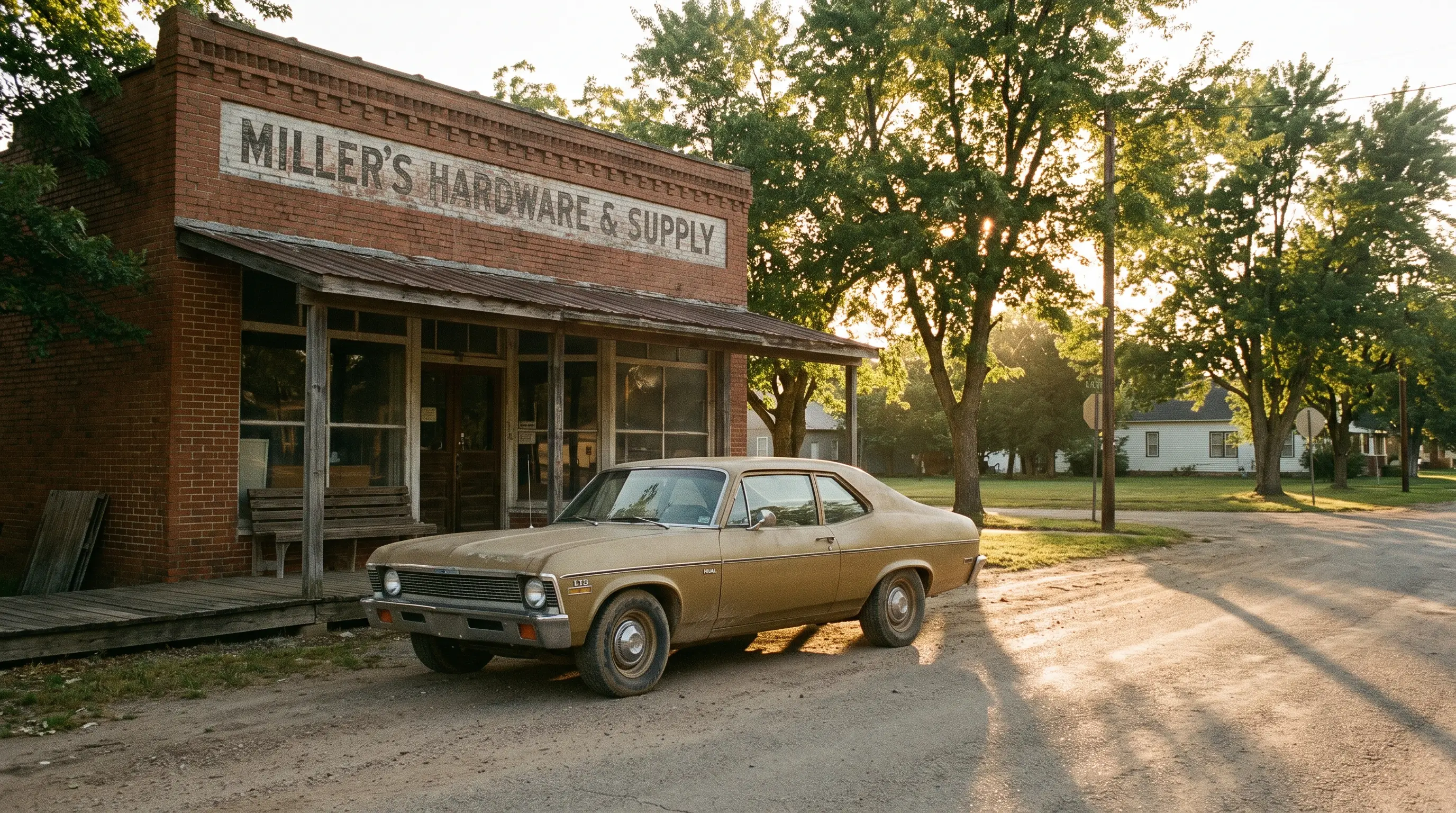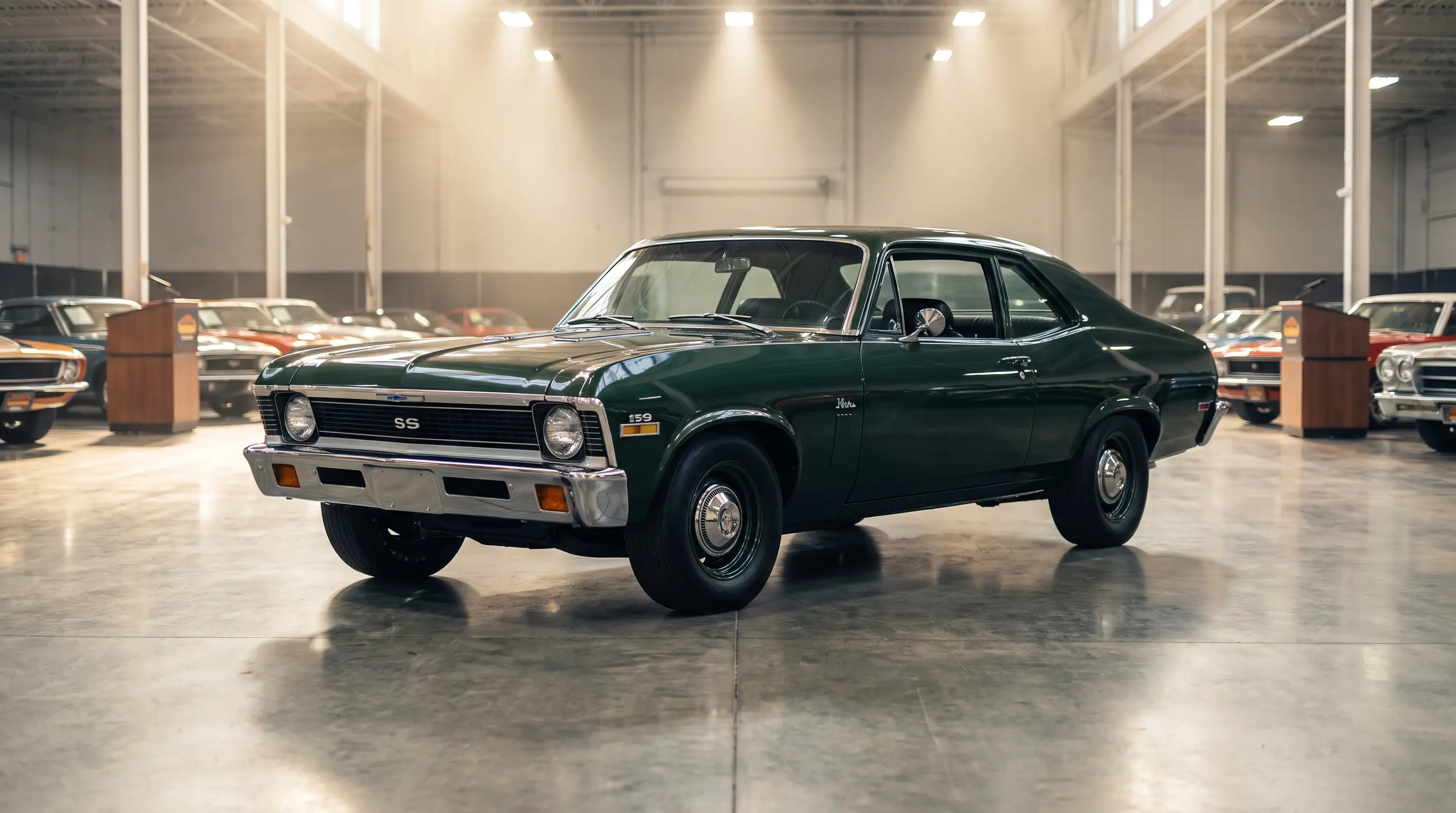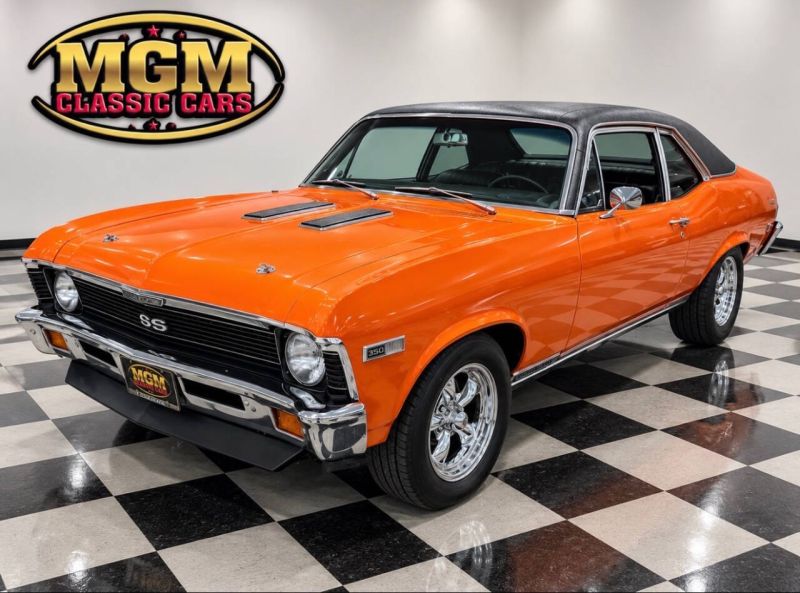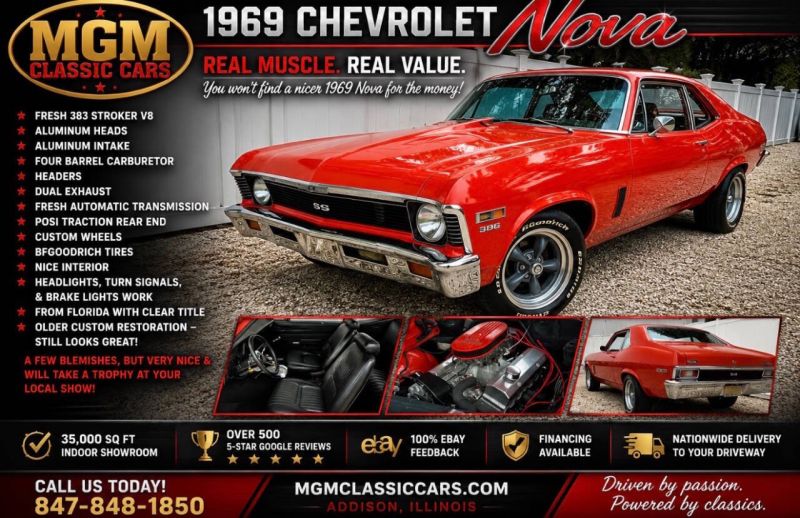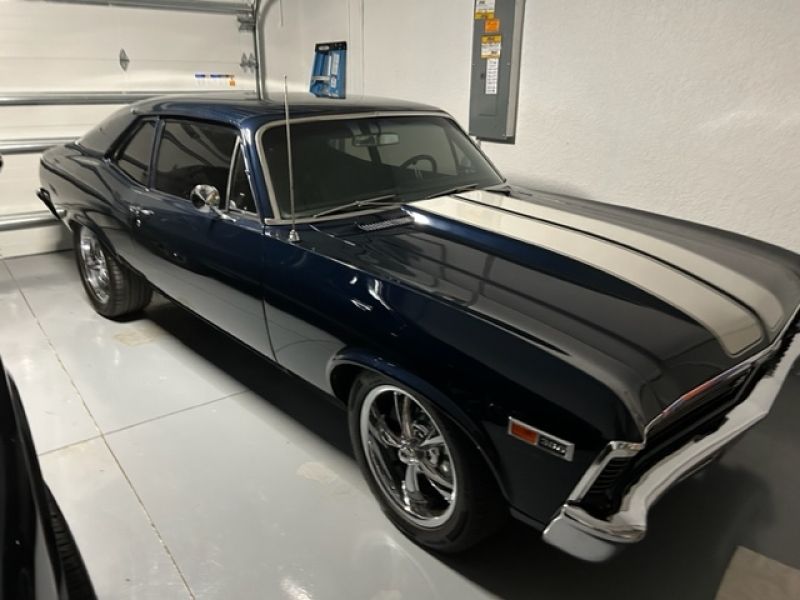
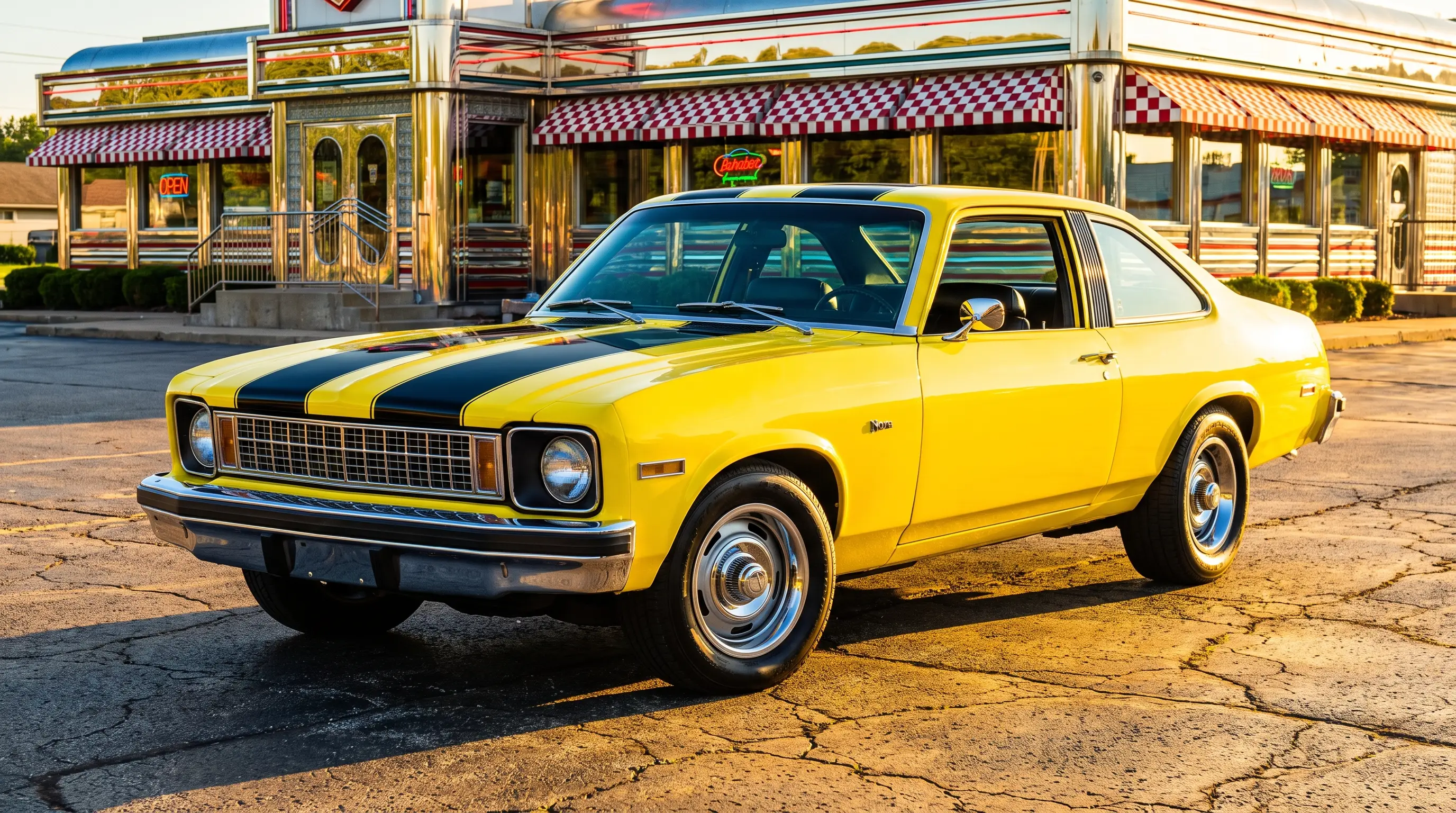
Color and stripe options do not get the same attention as engine codes when people talk about the third-gen Nova, but they should. A 1971 Nova SS in Nevada Silver with black stripes reads completely differently than the same car in Mulsanne Blue, and buyers today pay real money for the combinations they remember from childhood or from a magazine ad decades ago. Paint and tape are cheap to fake and expensive to verify, which makes this one of the more overlooked corners of Nova ownership.
I have repainted enough of these cars to know that getting the stripe package right is harder than it looks, and getting the original color code right is harder still once forty-plus years of repaints have piled up.
How Chevy coded and offered Nova colors
Every Nova left the factory with a cowl tag or trim tag carrying a paint code, and Chevrolet's color palette shifted noticeably year to year across the 1968-74 run. Early cars leaned toward more conservative period colors, while the early 1970s brought brighter, more saturated options as the muscle car color wars picked up across the whole industry. Codes translate to specific factory colors, and cross-referencing a tag against a verified color chart for the correct model year is the only reliable way to confirm what a Nova actually wore from the factory. For 1971, for example, the factory list ran from Antique White and Tuxedo Black through Ascot Blue, Mulsanne Blue, Nevada Silver, Sunflower Yellow, Placer Gold, and Cranberry Red, and the palette shifted again by 1973 to names like Midnight Blue Metallic and Chamois, so a chart pulled for the wrong model year will send you to the wrong answer even when the code number looks plausible.
Two-tone and accent stripe treatments got layered onto this base palette depending on trim level, with SS and Rally packages carrying their own specific stripe kits that were never meant to be mixed and matched across trim lines, even though owners over the decades have done exactly that more than once.
What the color wars actually looked like on a Nova
By the early 1970s Chevrolet, like the rest of Detroit, was pushing bold, saturated colors across its lineup, names that read more like a paint chip poem than an engineering document. Shades like Burnt Orange, Lime Green, and Cranberry Red showed up on Novas the same years they appeared on Camaros and Chevelles, because GM's paint offerings were shared across divisions more often than buyers realize. A Nova ordered in one of the bolder early-1970s colors reads as a period statement in a way a car in a conservative early-run color simply does not, and that difference shows up in what people are willing to pay today.
I've watched buyers walk right past a mechanically superior car because the color didn't speak to them, and pay a premium for a rougher car in the "right" shade. That's not irrational, it's just how this hobby works. Color is the first thing anyone sees, long before they check a build sheet or crawl underneath to look at the frame rails.
Stripe packages and why they are easy to get wrong
Stripe kits on these cars were trim-specific and often year-specific, meaning a stripe pattern correct for a 1971 SS is not necessarily correct for a 1973 car wearing the same badge. Reproduction stripe kits exist for most of the popular patterns, which is good news for restorers and bad news for buyers trying to verify authenticity from photos alone. A fresh, crisp stripe job tells you nothing about whether the pattern or placement is factory-correct.
The safest approach is always the same: find factory literature or a documented original photo for the specific model year and trim before assuming a stripe treatment is correct, rather than trusting what a previous owner or restoration shop decided looked right. I've done this kind of verification work at the bench more times than I can count, and the pattern is always the same. Somebody brings in a car with a stripe kit that looks great from ten feet away, and it isn't until you lay a factory photo next to it that the width, spacing, or endpoint of the stripe gives away that it's from the wrong year. It's not sloppy work necessarily, reproduction kits get made from whatever reference the manufacturer had on hand, and not every reference is correct. That's exactly why I tell people not to trust a stripe kit's box label as proof of anything.
What repaints and color changes do to value
A Nova repainted outside its factory color code is not automatically a lesser car, plenty of great driver-quality cars wear a color they never left the factory in, and there is nothing dishonest about that as long as it is disclosed. The trouble comes when a seller represents a repainted car as wearing its factory-original color and stripe combination when it does not, whether through honest confusion after years of ownership changes or something less honest.
Ask directly, and ask for documentation. A cowl tag decode, old photos, or a build sheet settle the question in a way that a seller's memory or a repaint shop's guess never fully will.
| Verification method | What it confirms |
|---|---|
| Cowl/trim tag paint code | Factory-original color, cross-referenced to a model-year chart |
| Build sheet (if surviving) | Full factory option list including stripe package |
| Period photography | Visual confirmation of as-delivered appearance |
| Stripe kit pattern comparison | Correct year and trim match for applied stripes |
"I've seen a beautiful repaint get pulled apart at a swap meet because the stripe kit was from the wrong year. Nobody was mad about the paint job, they were mad it got sold as something it wasn't."
— Mike Sullivan
Buying with color and stripe accuracy in mind
If originality matters to your purchase, treat color and stripe verification with the same seriousness you would give an engine block casting number. It is a smaller detail on paper, but it drives real dollars in the market once a car reaches show quality condition, and getting it wrong on a purchase is an expensive lesson to learn after the fact. None of this means a repaint or a non-original stripe kit should scare you off a car you otherwise like. Most Novas on the road today have been repainted at least once, and a well-executed repaint in a period-plausible color is a perfectly good driver. What it means is that the price you pay should reflect what's actually documented, not what a seller's description implies. Ask the question before you hand over a deposit, not after you've already fallen for the color.
For the broader picture on what makes the 1968-74 Nova a lasting favorite beyond just its paint options, and for another angle on how these details play out at auction, both are worth your time. You can also read our Classic Cars Arena feature covering the model's full history, and if you are ready to shop, browse classic muscle Novas for sale to see current color and trim combinations on the market.
Sources and notes
- 1971 Nova Cowl Tag Decoder (NovaResource)
- 1972 Nova Cowl Tag Decoder (NovaResource)
- 73-74 Paint Codes (Steve's Nova Site Forum)
- GM Color Codes: Nova Paint Cross-Reference (PaintRef)
- 1970 to 1979 GM Paint Codes and Color Charts (HD Paint Code)
- 1968-1976 Chevrolet Nova SS: 3rd-Gen Guide and Specs (Moto Gallery)