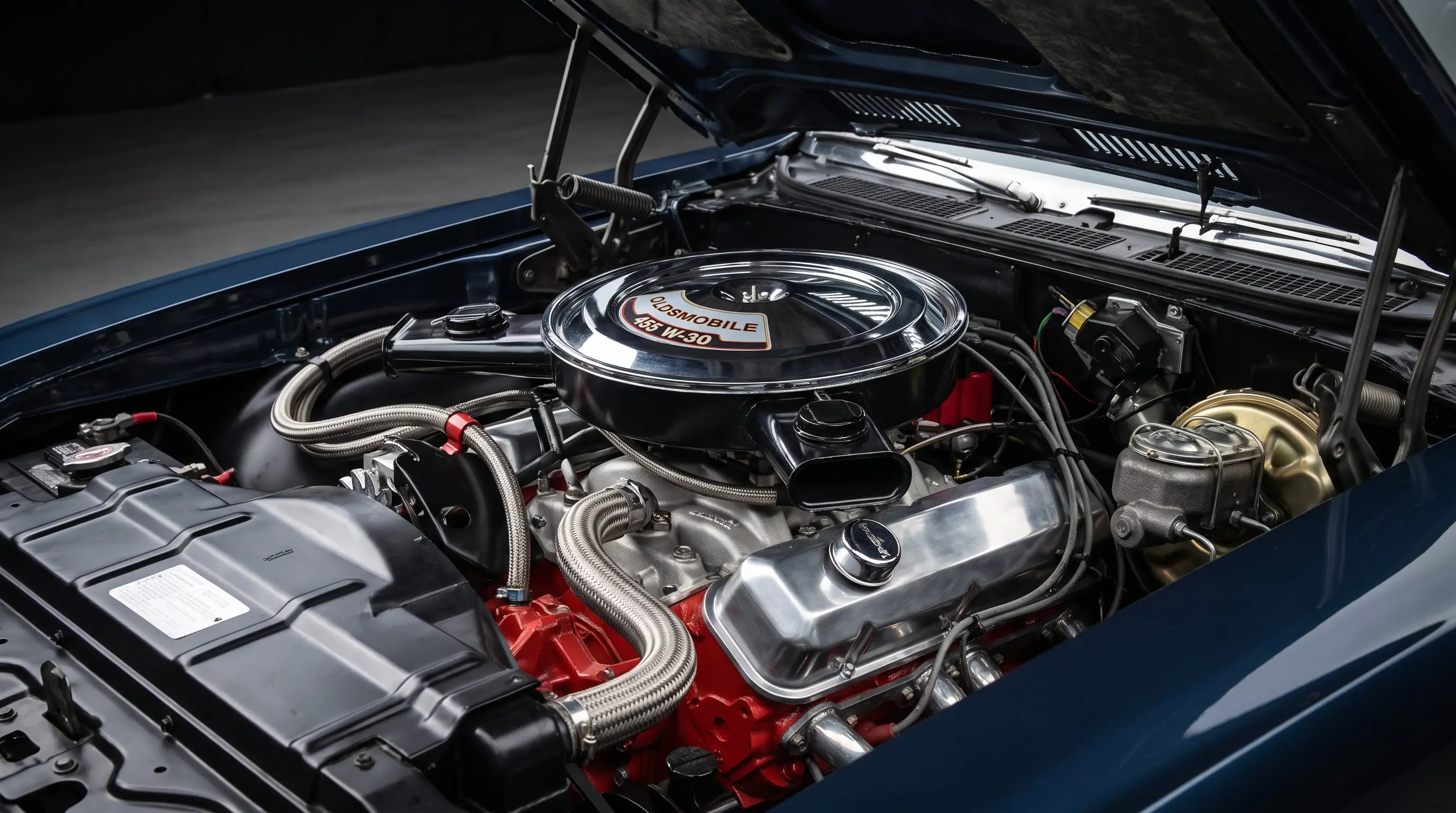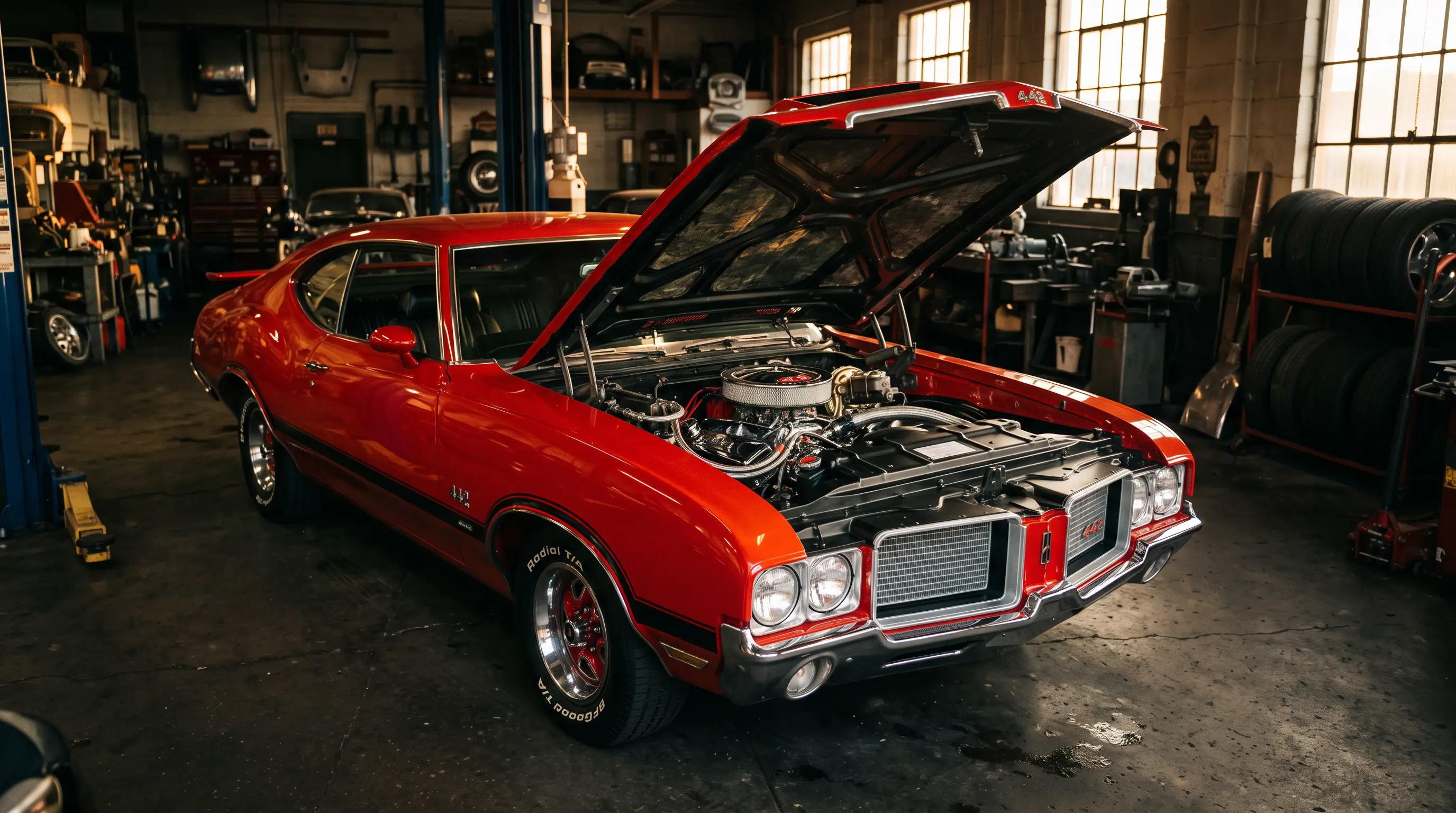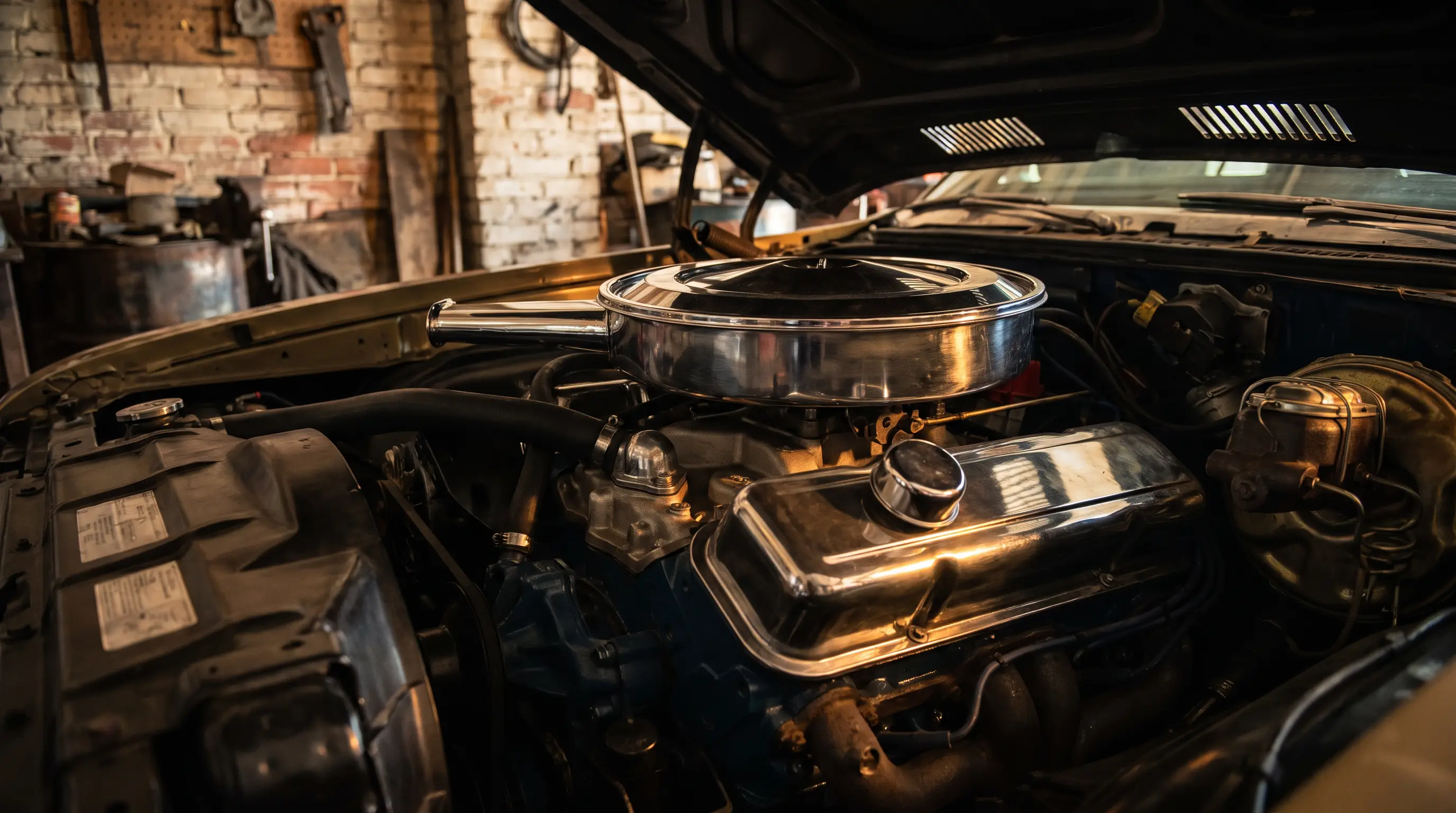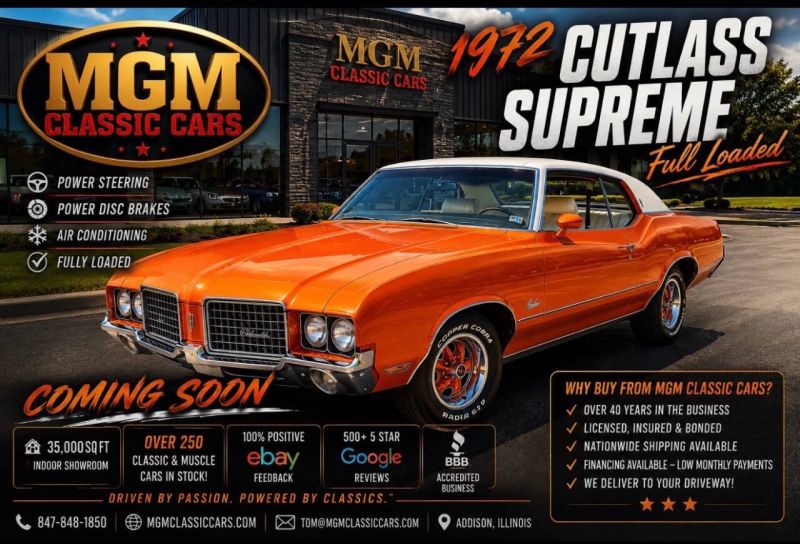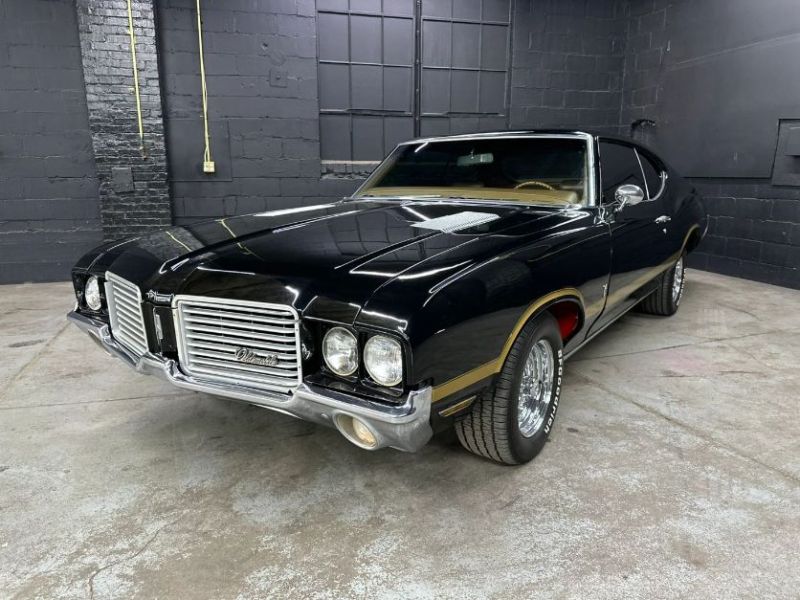
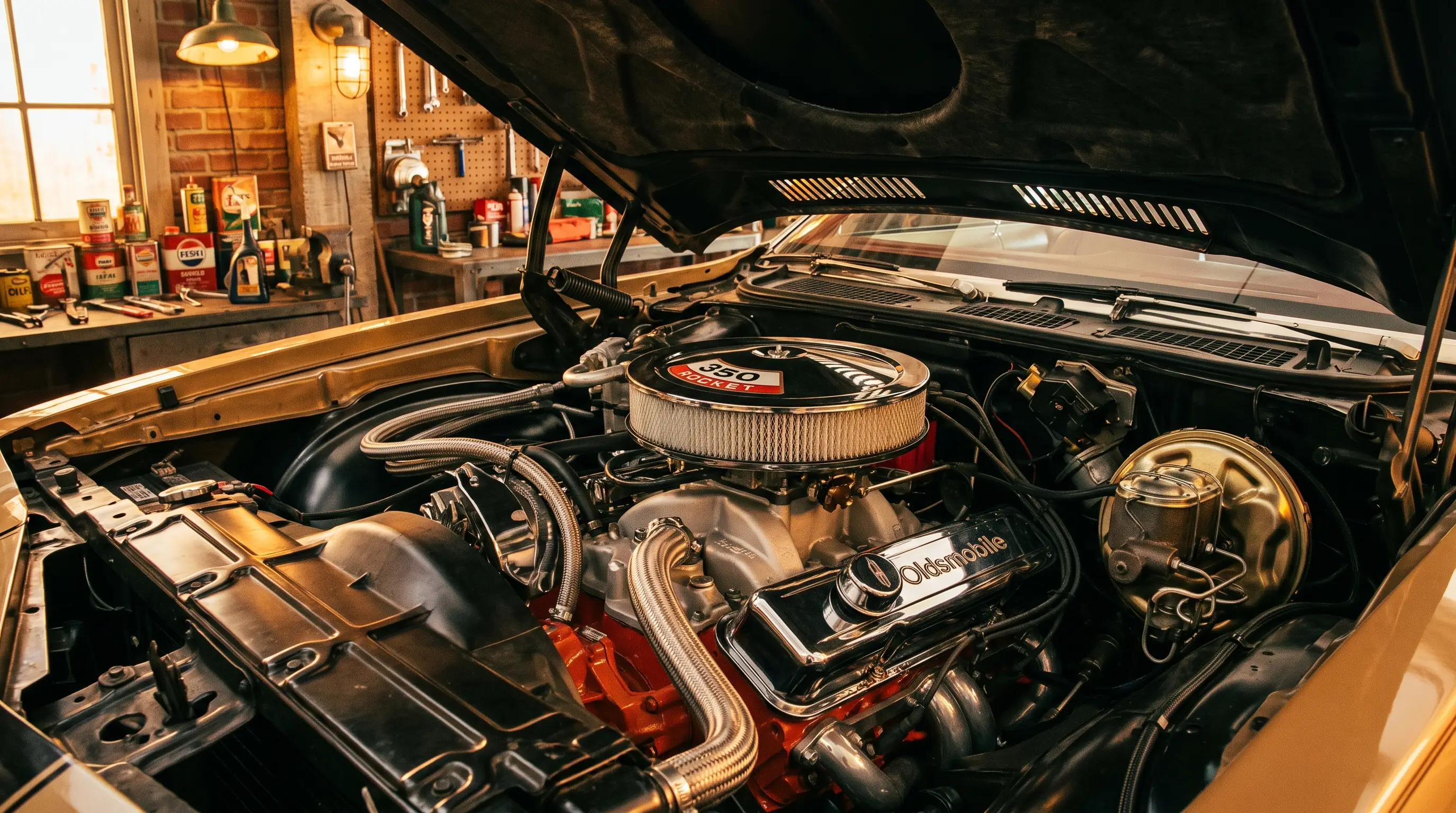
The Oldsmobile 350 Rocket is a small-block V8 that showed up in 1968 and stayed in Cutlass engine bays for well over a decade. 350 cubic inches, 4.057-inch bore, 3.385-inch stroke. Those numbers don't change no matter what the year, the carb, or the marketing department said. What changed constantly was the rated output, and that's where most people get the story wrong.
The block everyone assumes is one engine
Call it the 350 Rocket and people picture a single, fixed spec sheet. It wasn't. Oldsmobile ran this displacement across two-barrel work trucks of a car, four-barrel performance trims, wagons, and the high-output W-31 version covered in the engine chapter. Same bore and stroke, different cams, different compression, different intake, wildly different results at the wheel. Anyone quoting "the 350 makes X horsepower" without naming the year and the carburetor is quoting a guess.
In base two-barrel form, the 350 was built to be quiet and durable, not quick. Rated around 250 gross horsepower in the late 1960s, it moved a Cutlass Supreme around town fine and never got asked to do much more. The four-barrel version, sitting in the same block, ran higher compression and a better cam and landed in the 300 to 325 gross horsepower range depending on the exact year. Same displacement, different engine in every way that matters.
Gross numbers, net numbers, and why 1972 lied to everybody
Here's the number that actually explains the confusion: 1972. That's the year the industry switched from gross horsepower (engine on a stand, no accessories, no exhaust restriction) to net horsepower (engine as installed, with everything bolted on). A 350 that was rated at 200 gross horsepower in 1971 could show up rated at 160 net horsepower in 1972 with nothing mechanical actually changed. Buyers panicked. Insurance companies noticed. The muscle car era started dying partly because of a paperwork change, not just emissions hardware.
Compression dropped too, and that part was real. Unleaded fuel compatibility pushed Oldsmobile to lower static compression ratios starting around 1971, and the 350 lost real, measurable power alongside the rating-method switch. So when someone tells you their 1969 350 and their 1973 350 are "the same engine," the honest answer is: same bore and stroke, not the same engine.
None of this means the later 350s were bad engines. A lower-compression, net-rated 350 from the mid-1970s was built for a different set of rules, cleaner emissions, unleaded fuel, and a buyer who cared more about not stalling in traffic than about a quarter-mile time. Judging that engine against a 1969 four-barrel car's raw output is comparing two different design briefs, not two versions of a failure. The mistake is expecting one number to describe both.
Where it actually lived
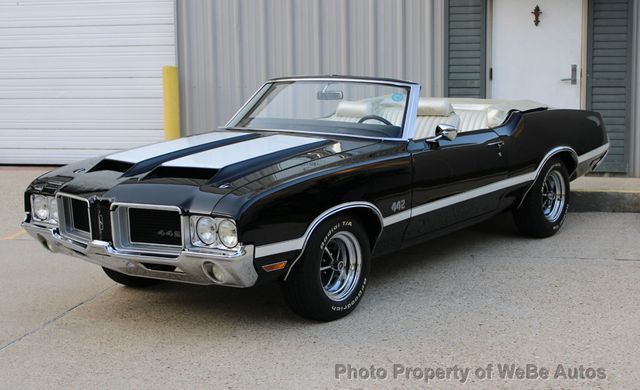
The 350 Rocket wasn't a Cutlass-exclusive engine, and treating it like one misreads the whole platform. It ran in Cutlass Supreme coupes, Cutlass S models, wagons, the 442 in years when the 455 wasn't specified, and full-size Oldsmobiles that needed adequate power without the weight and thirst of a big-block. That spread is the point: this was Oldsmobile's default V8 for most of a decade, the workhorse under the Rocket badge, while the big-block handled the halo duty. For the full picture of how the two displacements split the job, a companion piece covers the 455 side of that equation directly.
Transmission pairing matters more than people think when judging a 350's real-world feel. A four-barrel 350 behind a three-speed automatic and a 2.56 rear gear feels sleepy. The same engine behind a four-speed manual and a 3.42 or steeper rear gear feels like a genuinely different car. The engine didn't change. The gearing around it did all the work.
That's the piece buyers skip most often. Someone drives a slow, tall-geared 350 Cutlass, decides the engine is weak, and never checks the rear axle code. Someone else drives a properly geared four-barrel car and comes away convinced the 350 was underrated the whole time. Both are reacting to the drivetrain around the engine, not the engine itself. Before judging a 350's output, check the gear ratio and the transmission first. The block rarely lies. The gearing around it changes the story completely.
| Configuration | Era | Typical rating | Notes |
|---|---|---|---|
| Two-barrel | 1968-1971 | ~250 gross hp | Base trim, durability over output |
| Four-barrel | 1968-1971 | ~300-325 gross hp | Cutlass Supreme, 442 non-455 years |
| Four-barrel (net-rated) | 1972 onward | ~160-180 net hp | Same architecture, lower compression, new test method |
What actually matters when you're looking at one today
Buyers overpay for a "350 Rocket" tag on a build sheet without asking the two questions that determine everything: which carb, and which year. A 1969 four-barrel car and a 1974 two-barrel wagon share a displacement number and nothing else in how they drive. Ask for the specific rating on the original build documentation, not the general reputation of "the 350." The engine has one number that never lies: 350 cubic inches. Every other number on the spec sheet needs a year attached to mean anything.
"Displacement is a fact. Horsepower rating is a claim from a specific year with a specific test method behind it. Learn to tell those apart and you'll stop overpaying for a number that was never real to begin with."
— Dan Reeves
The 350 Rocket's real legacy isn't a single headline horsepower figure, it's longevity. It stayed in production, in one form or another, longer than most performance V8s of its generation because it did the ordinary job well: reasonable weight, reasonable thirst, enough power for a Cutlass to feel like a proper mid-size car rather than a penalty box. For the engine's place in the model's broader arc, our Cutlass retrospective lays out how the Rocket family fit into thirty years of the nameplate. The number to remember is 350. Everything else on the spec sheet needs a year stapled to it before you trust it.