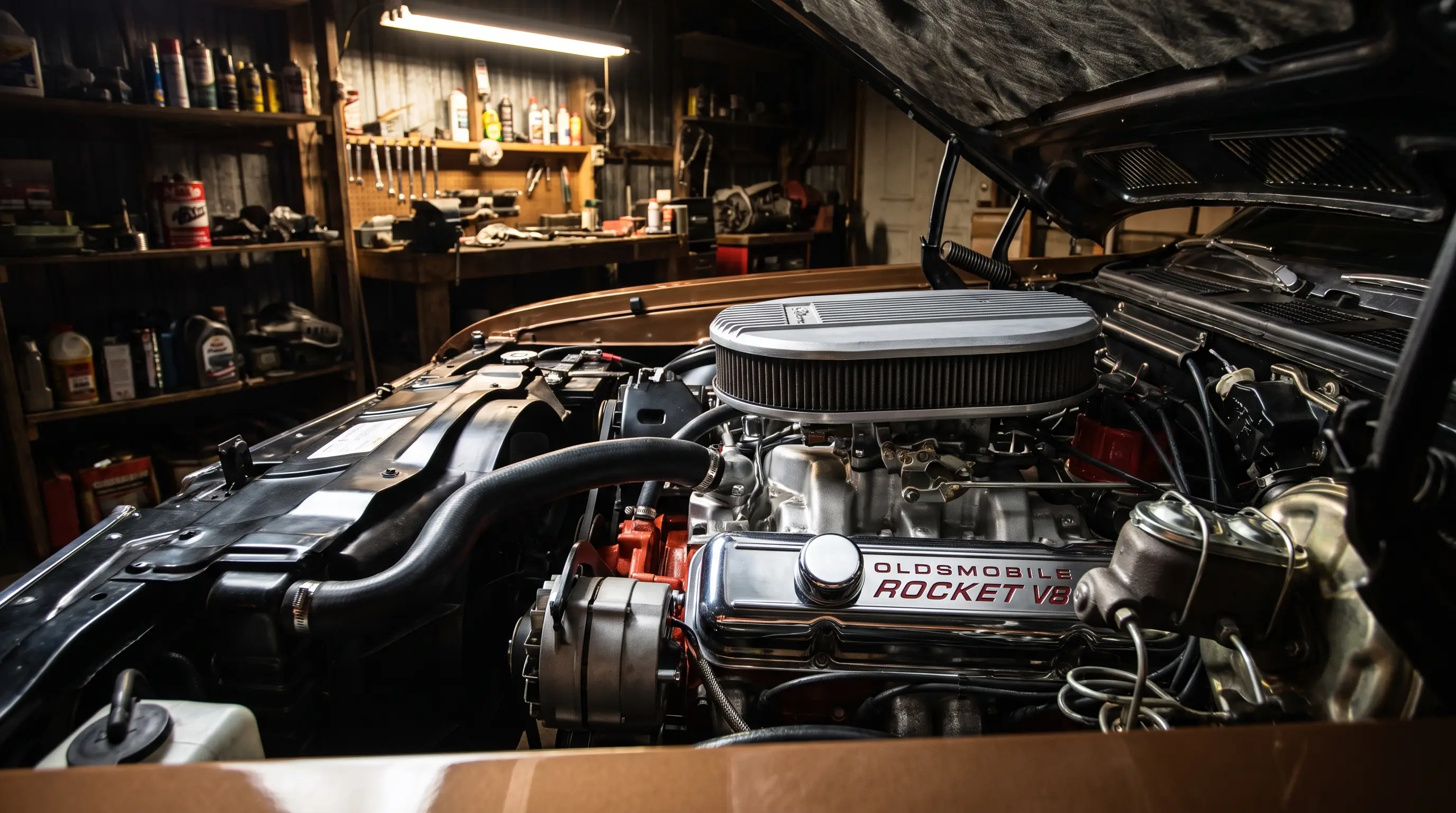
The Rocket V8 didn't ease into the market. Oldsmobile dropped it into the 1949 88 and it immediately embarrassed cars twice its price. That's the whole story in one sentence, but the numbers behind it are worth knowing, because this engine did more to shape the muscle car era than most people give it credit for.
1949: the engine that started it
The original Rocket V8 displaced 303 cubic inches, ran overhead valves instead of the flatheads everyone else was still building, and used a high compression ratio for the day, 7.25:1. Output was rated at 135 horsepower at 3,600 rpm, which doesn't sound like much now, but it was enough to make the Oldsmobile 88, a mid-size car with a big car's engine, the fastest thing on a lot of American roads in 1949 and 1950. Cadillac launched a similar high-compression V8 the same year. Oldsmobile just built the lighter, cheaper car around it, and that combination is what actually mattered.
The results showed up on the track, not just on paper. Rocket-powered Oldsmobile 88s won the majority of NASCAR's inaugural Strictly Stock season in 1949 and kept winning into the early 1950s, a run good enough that "Rocket 88" became shorthand for fast, and eventually became the title of a 1951 record widely cited as one of the first rock and roll songs. That's a strange kind of fame for an engine block, but it's real, and it tells you how far the Rocket name traveled outside the car world.
What made the Rocket V8 dangerous wasn't just the power number, it was the weight it was bolted into. Oldsmobile stuffed the big new engine into its smallest, lightest full-size body, the 88, instead of saving it exclusively for the larger 98. That decision, more than anything printed on a spec sheet, is why the Rocket 88 outran cars with bigger names and bigger price tags. Chrysler and Cadillac both had strong engines of their own by the early 1950s. Neither had put one into a package this light this early.
Growth through the 1950s
Oldsmobile didn't sit on the original 303. Displacement grew to 324 cubic inches in 1954, then 371 in 1957, and the 371 got the J-2 option: three two-barrel carburetors stacked across the intake, rated at 300 horsepower, up from 277 on the standard four-barrel 371. That was serious output for the era, and it kept the Rocket V8 credible against Chrysler's Hemi and Chevrolet's small-block through a decade when every GM division was racing to build the biggest number on the spec sheet.
| Era | Notable displacement | Where it mattered |
|---|---|---|
| 1949-1953 | 303 cid | Original Rocket 88, early NASCAR dominance |
| 1957-1958 | 371 cid (J-2 tri-power) | 300 hp rating, top of the Oldsmobile lineup |
| 1968-1976 | 455 cid | 4-4-2 and Hurst/Olds performance flagship |
| 1968-1990 | 350 and 307 cid small-block | Everyday Cutlass and Cutlass Supreme power |
The 455 is the one people actually remember
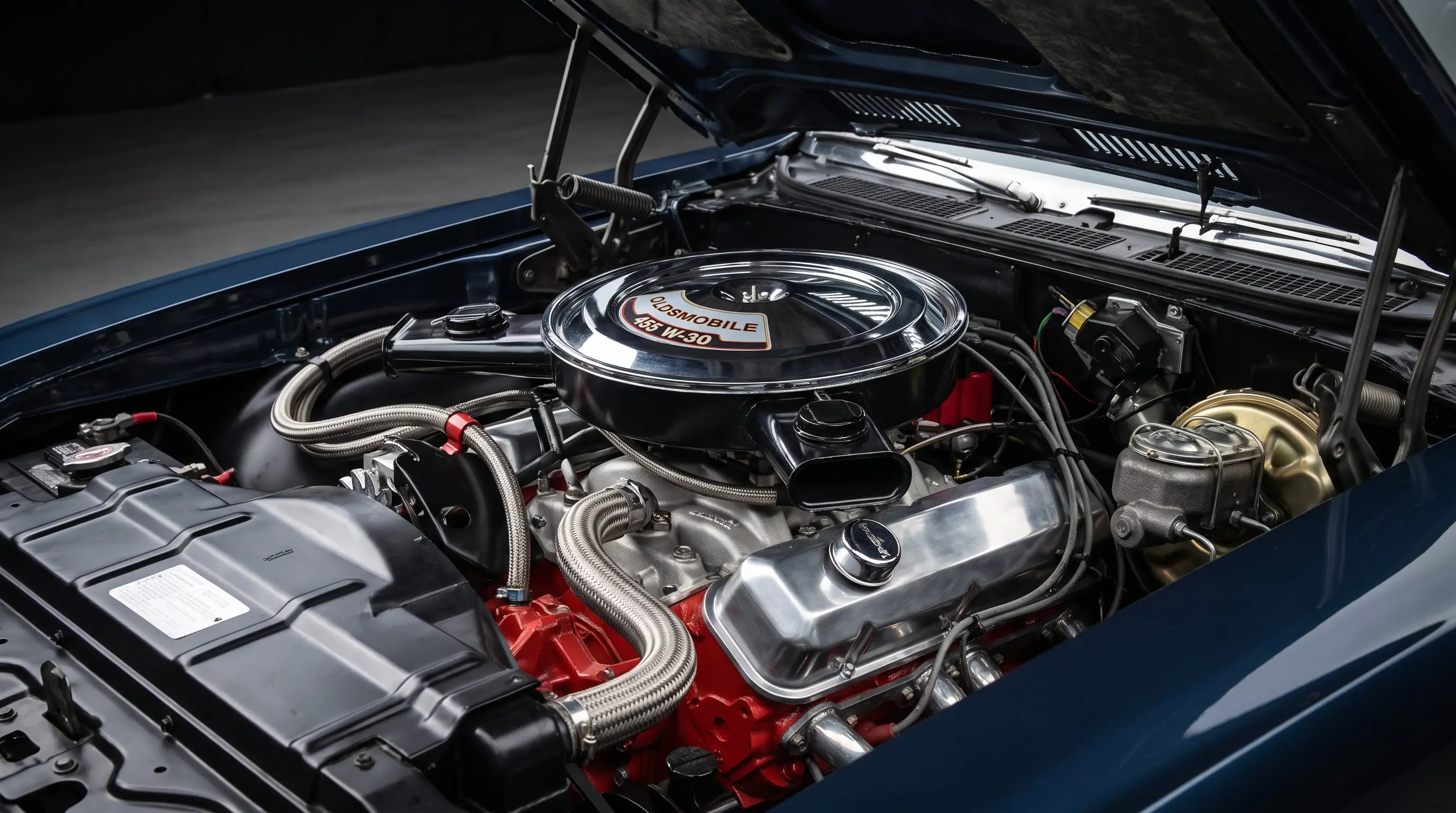
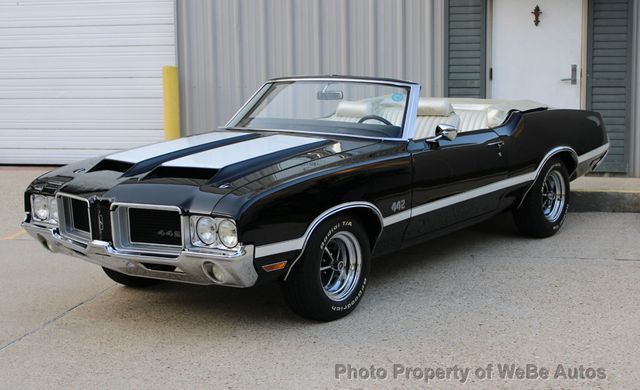
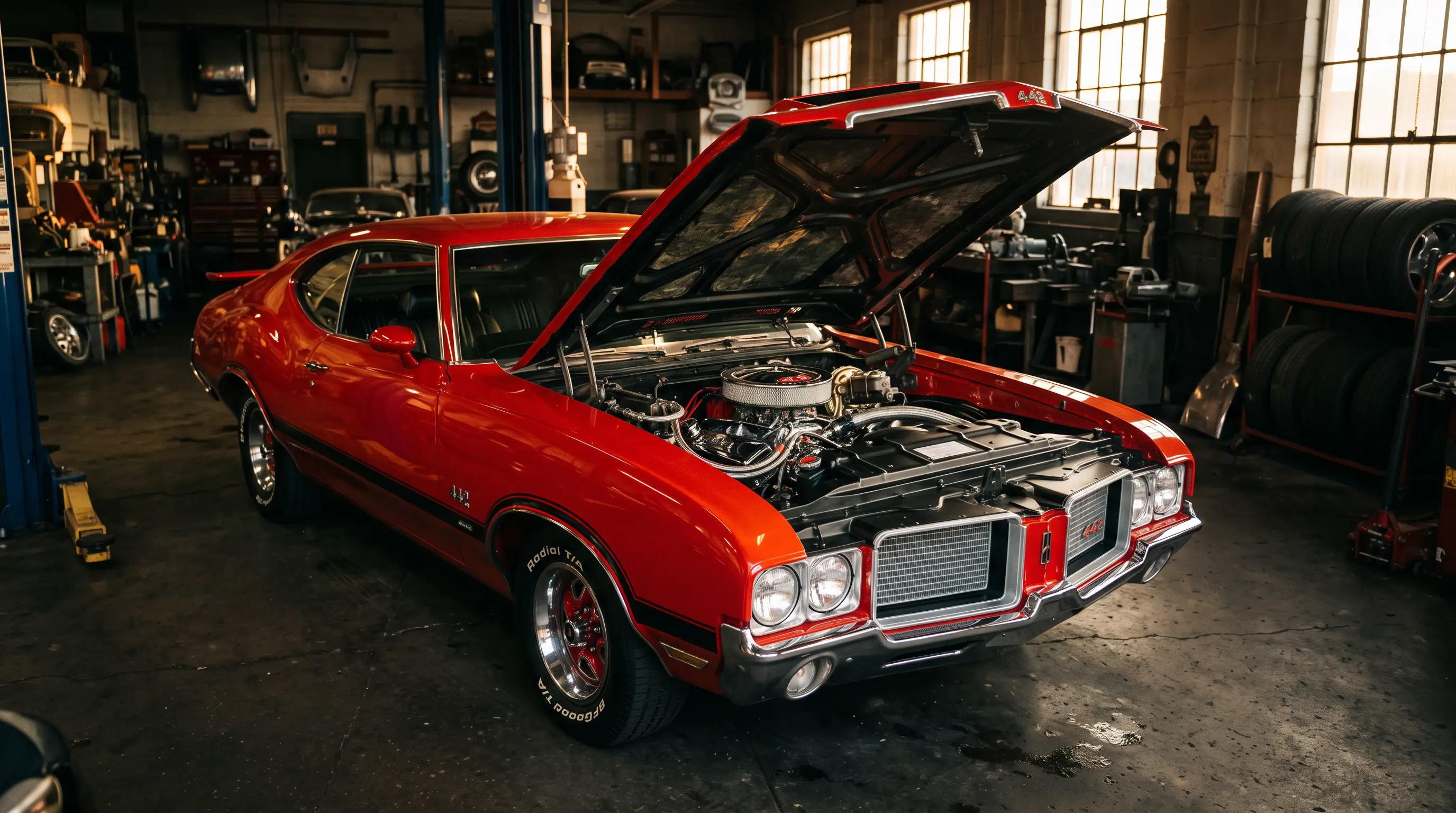
By the late 1960s the Rocket name had moved to a new engine family entirely, and the 455 cubic inch version became the one that stuck in enthusiasts' memory. Dropped into the 4-4-2 W-30 with functional Force-Air induction pulling cold air through the hood scoops, the 455 was rated at 370 gross horsepower in 1970, versus 365 for the standard 455, with torque numbers north of 500 lb-ft. That's the kind of output that made the Cutlass-based 4-4-2 a legitimate player against the Chevelle SS and GTO, not a badge-engineered pretender. The Cutlass engine story covers how that big-block fit into the broader Cutlass lineup alongside smaller, more practical options.
"People hear Rocket V8 and picture a 455 with a hood scoop. Fine, that's the loud version. But the same name was on a mild 307 in a Brougham your grandmother drove to church. Both are real Rocket engines. Only one of them will embarrass you at a stoplight."
— Dan Reeves
What killed the big numbers, and what survived
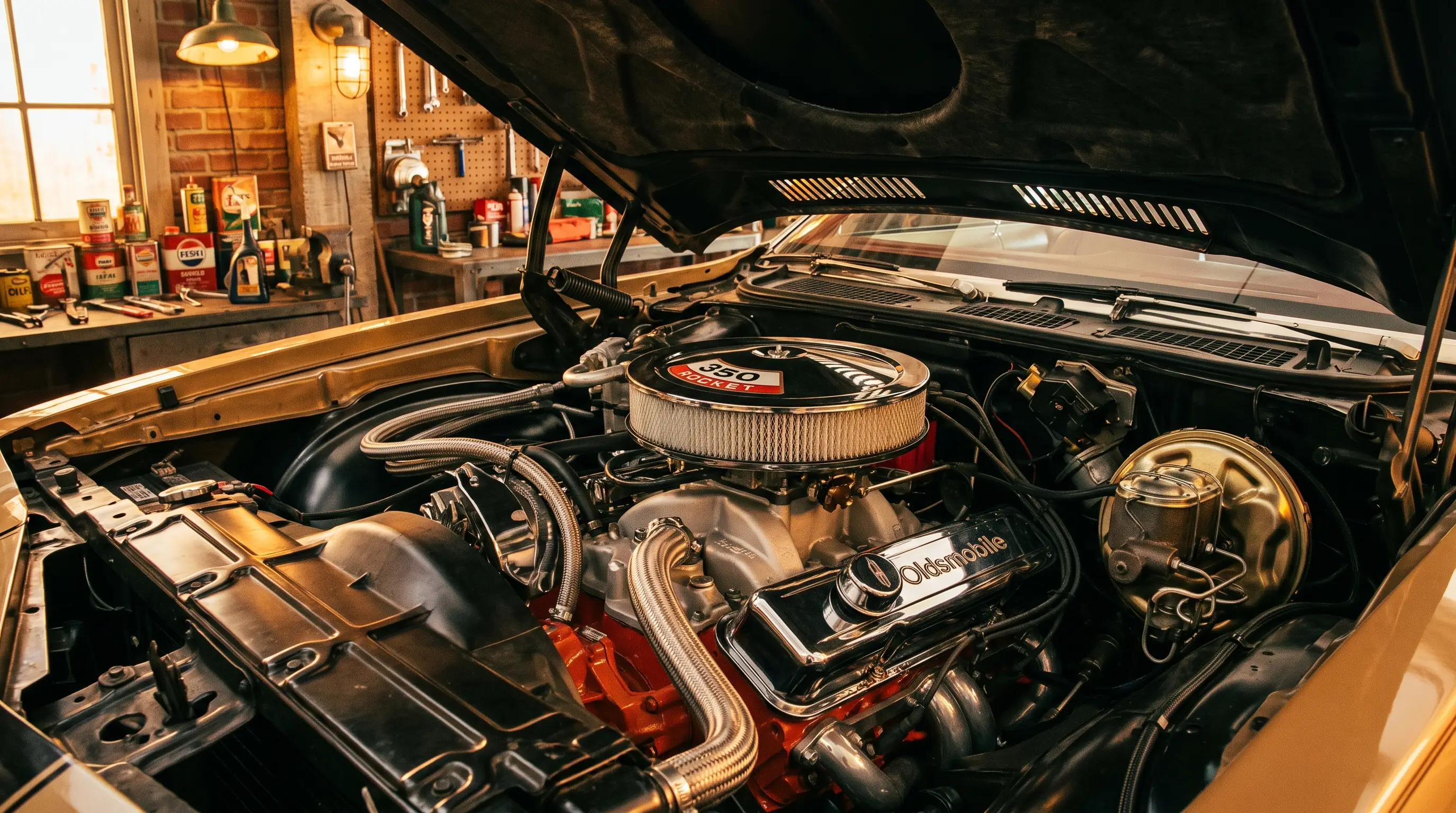
Compression ratios dropped hard starting in 1971 as GM prepped every engine for unleaded fuel and tighter emissions rules, and the industry-wide switch to net horsepower ratings in 1972 made the drop look even steeper on paper than it actually was in real terms. The 455 disappeared from the Cutlass line by 1976. What survived was the small-block Rocket, in 350 and later 307 cubic inch form, quietly powering Cutlass Supremes through the entire G-body run into the 1980s. It never made headlines the way the 455 did, but it kept the Rocket name on Oldsmobile hoods for four decades straight, which is a longer run than most performance engine names ever get.
None of that late-model mildness should be mistaken for irrelevance. A running Rocket V8 of any displacement, whether it's a numbers-matching 455 or a workhorse 307, is still the correct engine for its car, and correct beats big on a spec sheet every time a serious buyer is actually writing a check. Swapping in a different engine family might chase a bigger horsepower number, but it also erases the exact history this story is built on, and that's a trade very few knowledgeable buyers are willing to make.
That's the real Rocket V8 story: one engine family, one name, stretched from a 303 cid giant-killer in 1949 to a mild-mannered 307 in a 1980s Cutlass Supreme, with a genuine muscle car peak in between. Read more of Oldsmobile's Cutlass history to see how that engine lineage tracked against the body styles it powered, and keep reading the series for the 350's own chapter. If you're shopping rather than just reading, browse current classic Oldsmobile Cutlass for sale listings to see which Rocket-powered examples are actually on the market right now.