
The Oldsmobile 455 never got the reputation it earned, and that has always bothered me. Everybody talks about the Hemi and the LS6. Meanwhile the biggest engine Oldsmobile ever bolted into a passenger car was quietly out-torquing half of them from a stoplight. I have had a few Rocket 455s apart over the years. It is honest iron, built heavy, and in W-30 trim it turned a comfortable division's flagship into something that would ruin a bragging man's afternoon.
Car Features
5 min read
Oldsmobile 455 Rocket and the W-30
The Olds 455 Rocket made ~370 hp gross and near 500 lb-ft in W-30 form. Inside the underrated big-block that ran with the famous names.
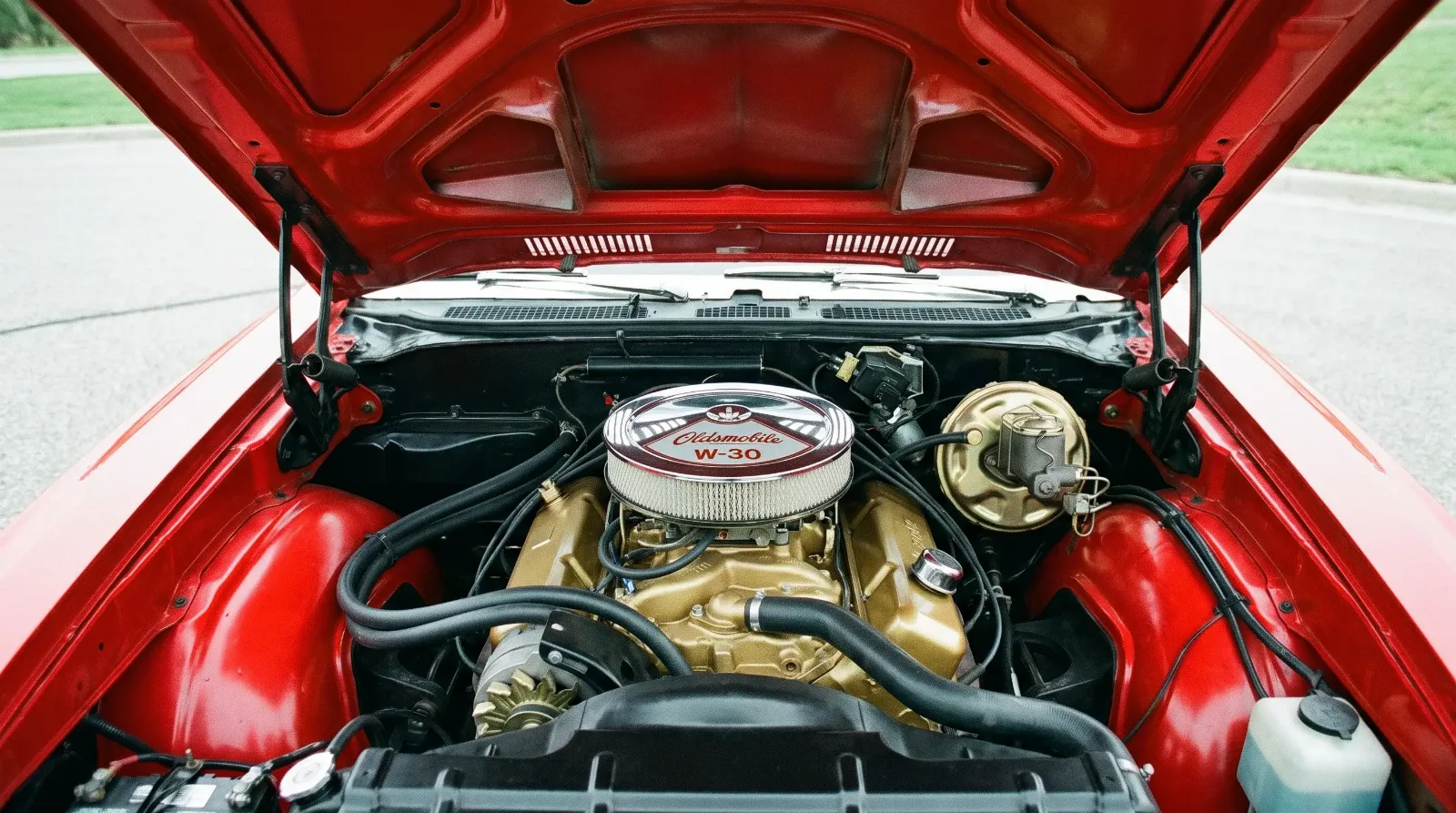
Olds built the 455 as a torque engine first. The division sold smooth, effortless motion, and the big Rocket delivered exactly that in a Ninety-Eight or a Toronado. Then the engineers in Lansing got hold of it for the 4-4-2, layered on the W-30 package, and the thing grew teeth. If you want more on muscle car engines and where the 455 fits in that pecking order, we cover more on muscle car engines elsewhere. The short version is simple. Underrated on the spec sheet, brutal in the seat.
Where the Rocket 455 came from
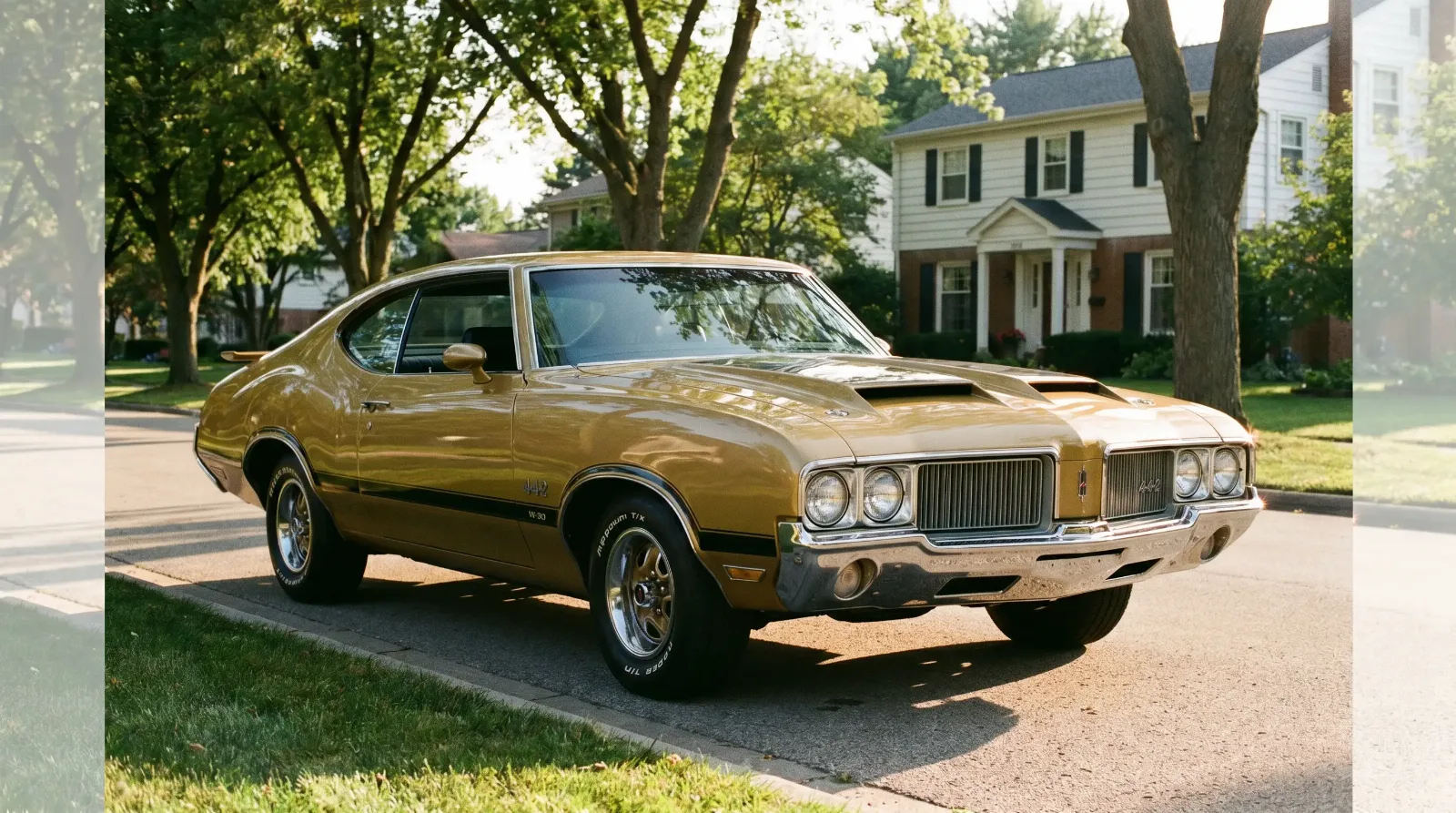
The 455 arrived for the 1968 model year, punched out from the earlier 425 that Oldsmobile had leaned on through the mid-sixties. It kept the Rocket V8 architecture the division had run since the fifties, a thin-wall cast-iron block with a reputation for taking abuse. Bore and stroke worked out to roughly 4.13 by 4.25 inches, which tells you everything about its character. Long stroke, big torque, not a high-revving screamer.
That long stroke is why the 455 pulls the way it does. It builds cylinder pressure low in the rev range and shoves the car forward before a small-block has woken up. Oldsmobile did not chase peak horsepower headlines. It built an engine that felt strong everywhere a normal driver actually spends time, from about 1,500 rpm on up. For a heavy intermediate like the 4-4-2, that was exactly the right recipe.
What the W-30 package actually did
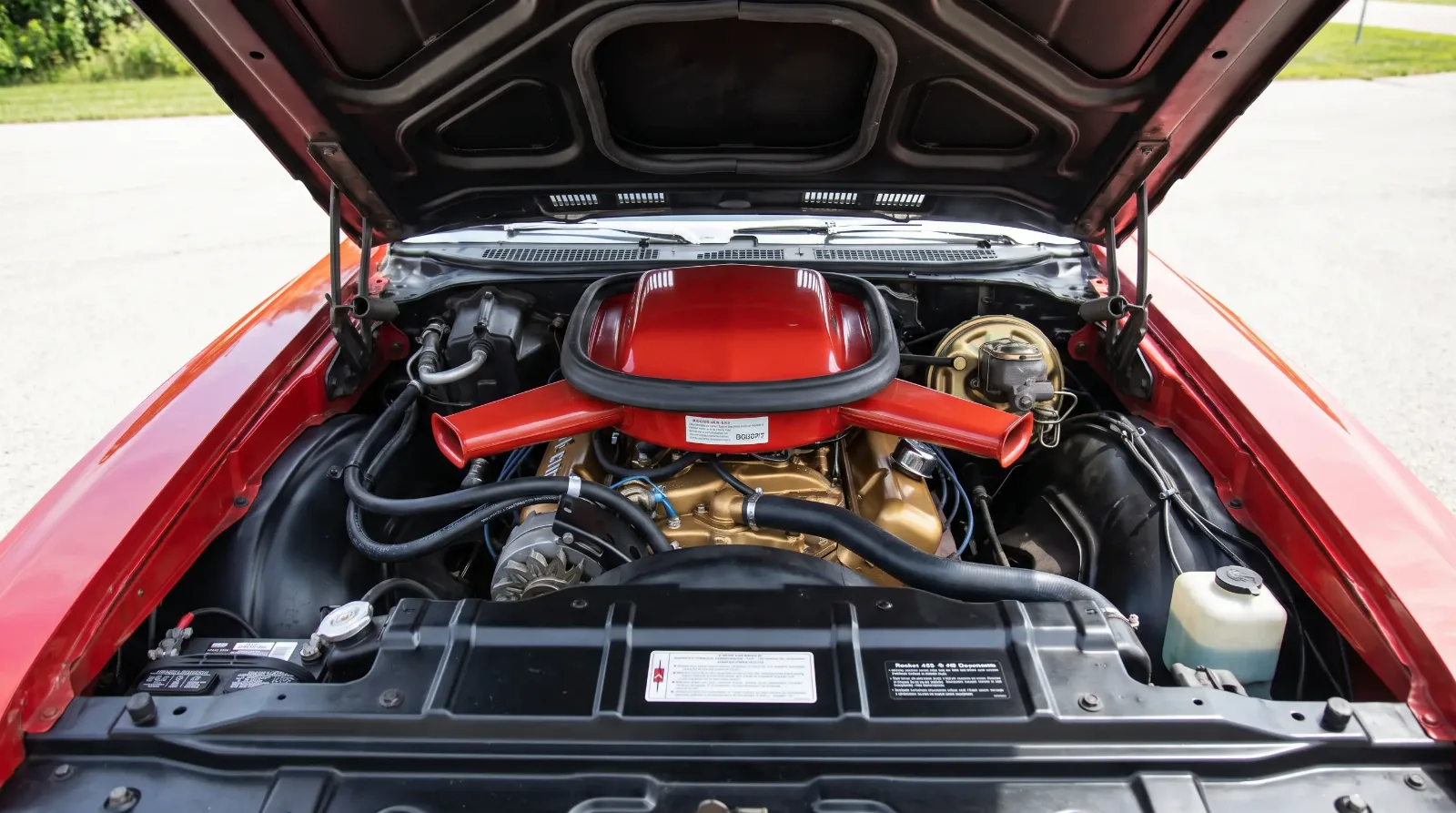
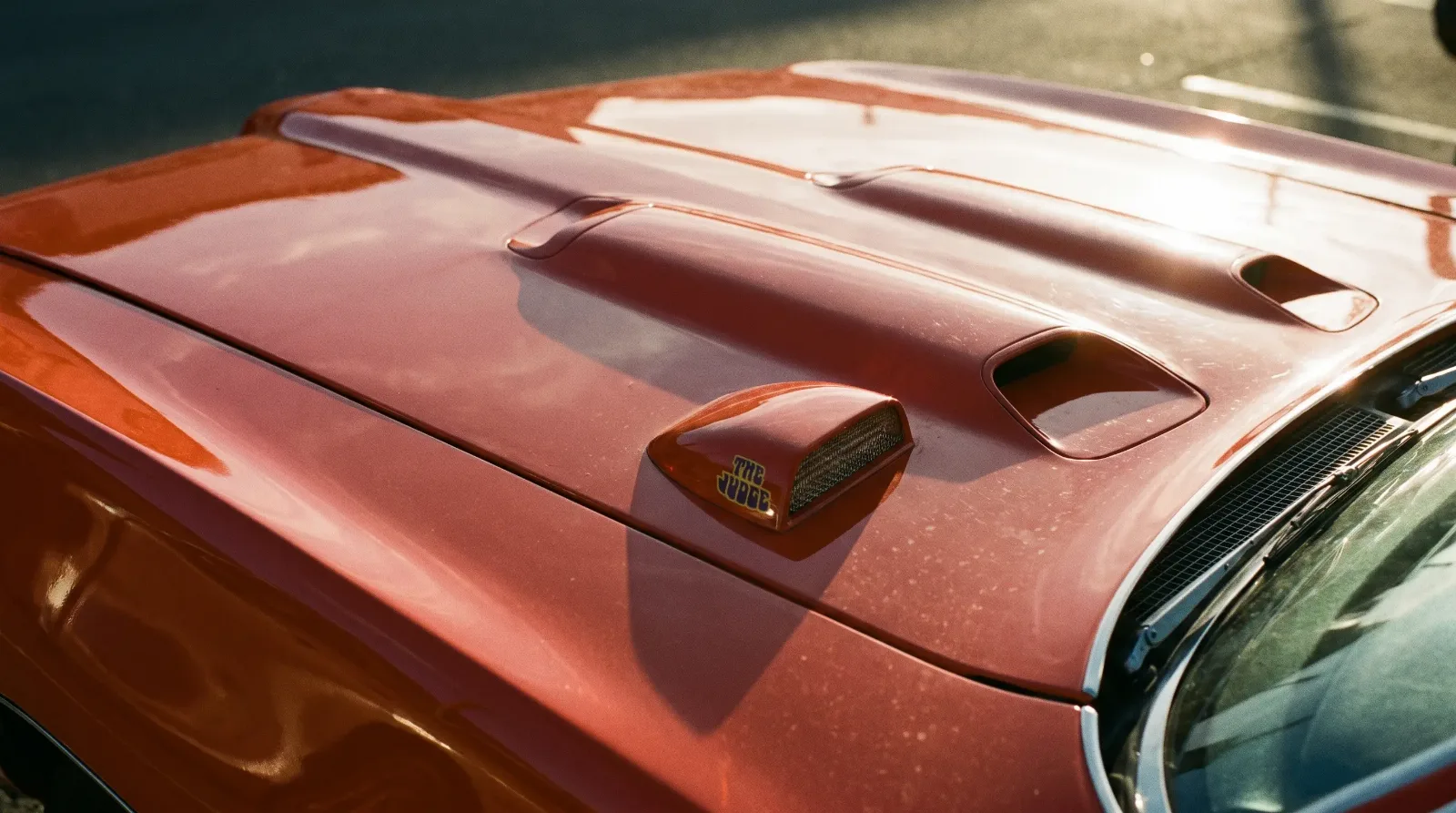
W-30 was the option code that mattered. It was not a stripe kit. Order it on a 1970 4-4-2 and you got a hotter camshaft, a low-restriction aluminum intake manifold, a Rochester Quadrajet tuned for the job, and the W-25 fiberglass hood with two functional scoops that fed cold outside air straight into the carburetor. Oldsmobile even painted the inner fenders red on early cars and lightened a few pieces to shave weight up front.
The factory rated the 1970 W-30 at around 370 horsepower gross at roughly 5,200 rpm. That number was conservative and everybody in the business knew it. The figure that told the real story was torque, somewhere near 500 lb-ft, and it came on early. Compression sat around 10.5 to 1 for 1970, which is why these cars want the good fuel and hate the pump swill we get now. Treat those figures as approximate. Oldsmobile shuffled ratings and running changes across the year, so a specific car should be checked against its own build documents.
How it ran on the strip and the street
A 1970 4-4-2 W-30 with the four-speed and a good driver ran the quarter in the mid-14s off the showroom floor, and magazine testers of the day got a few into the low 14s with slicks and a tune. That put it right in the conversation with the famous big-block cars, and it did it while riding better and behaving itself in traffic. The 455 never felt peaky. You could lug it, cruise it, then bury the throttle and feel the whole car squat.
The Hurst/Olds cars deserve a mention here too. Oldsmobile got around its own corporate ban on big engines in smaller bodies by handing partly finished cars to Hurst for final assembly, and those special-edition 455 cars became some of the most collectible Oldsmobiles built. Different badge, same fundamental Rocket muscle underneath.
"People buy the reputation, not the engine. I have watched a W-30 walk away from cars with twice the name recognition, and the owner just grins because he knows what he paid for it. That is the Oldsmobile way. Fast, and quiet about it."
Mike Sullivan
Rocket 455 W-30 by the numbers
| Spec | 1970 Olds 455 W-30 (approx.) |
|---|---|
| Displacement | 455 cu in (7.5L) |
| Bore x stroke | ~4.13 x 4.25 in |
| Compression | ~10.5:1 |
| Horsepower (gross) | ~370 hp at ~5,200 rpm |
| Torque (gross) | ~500 lb-ft at ~3,600 rpm |
| Induction | Rochester Quadrajet, functional cold-air hood |
After 1970 the story changes fast. For 1971 the whole industry pulled compression down to run on lower-octane low-lead fuel, and the 455 dropped to around 8.5 to 1. Power fell with it, and the switch to net ratings in 1972 made the paper numbers look even worse. The engine was still torquey and durable, but the peak years were behind it. That is the same arc that hit every big-block of the era.
What it is worth chasing today
A documented, numbers-matching 1970 4-4-2 W-30 is genuine top-tier muscle now, and prices reflect that. The catch is documentation. W-30 was an option, and over fifty years a lot of plain 455 cars have quietly grown a fiberglass hood and a W-30 story. Get the build sheet, the block casting numbers, and the date codes checked before you write a check. A real one is worth the trouble. A cloned one is a nice driver at a fraction of the money, and there is nothing wrong with that as long as the price matches the truth.
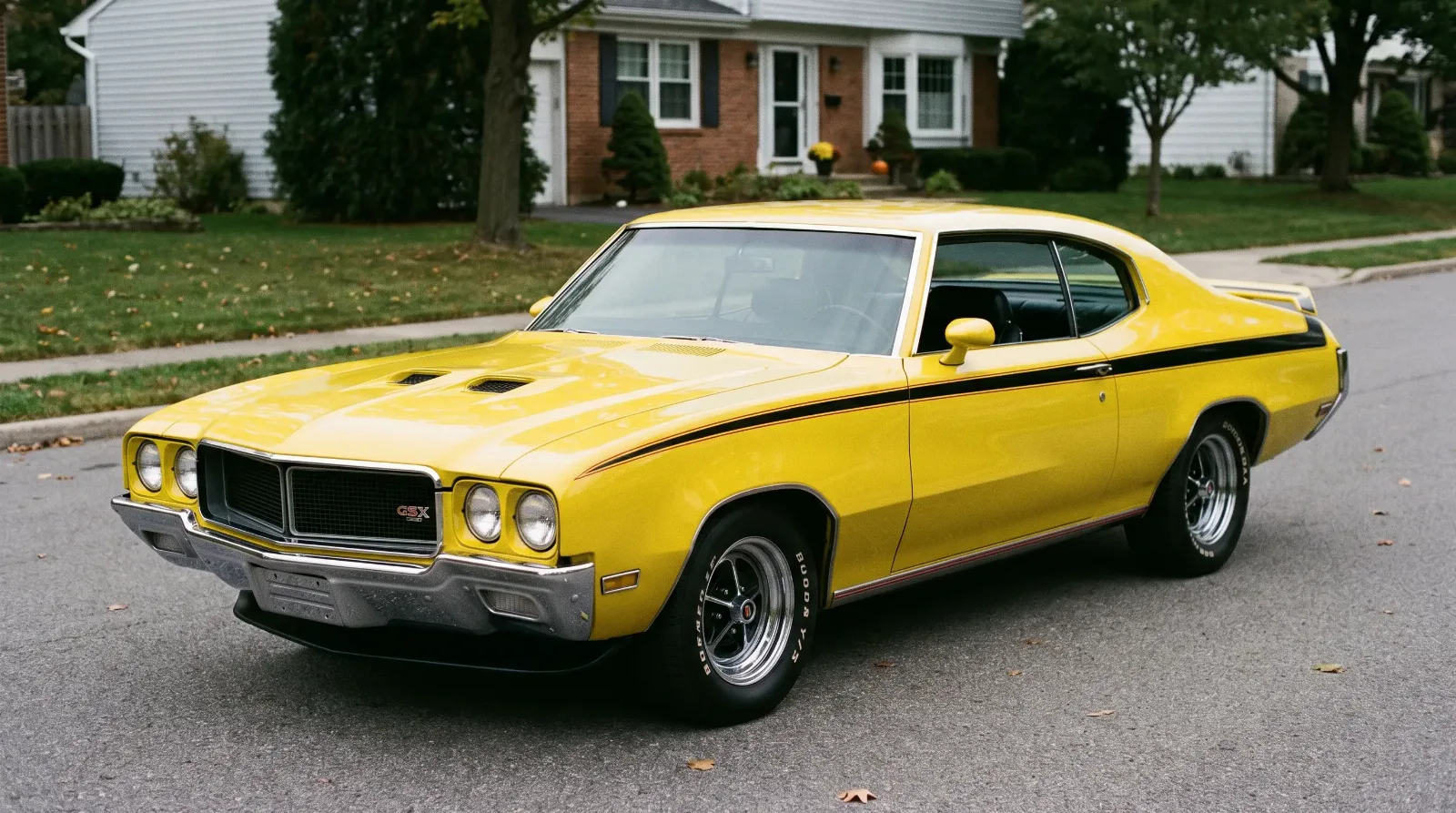
Buick built a 455 of its own in the same years, and it took the torque idea even further. If you want to see how the two GM giants attacked the same problem, read the full story on the Stage 1. Between them, Oldsmobile and Buick made the case that raw twist off the line beat headline horsepower every time the light turned green.
Related Reading
Have a
Classic Car
for Sale?
Reach thousands of serious classic car collectors across the US.
Sell It Here →
Are You a Classic Car Dealer?
List your full inventory and connect with targeted classic car buyers.
Join as a Dealer →

About the author
Mike Sullivan
Detroit-area muscle car enthusiast and restoration specialist with three decades of hands-on experience working on American iron.




Comments
Be the first to comment on this article.