
Ask ten Porsche people what "outlaw" means and you will get ten different answers, and about half of them will be wrong. Some think it is a body kit. Some think it is a color, that faded Signal Orange or flat black you see plastered across Instagram. It is not a look you can buy in a catalog. The outlaw movement started as a rejection, a bunch of guys in garages who looked at what Porsche said a 356 or an early 911 should be and decided they knew better. That is the whole story in one sentence, and everything else is just detail. It all traces back to the outlaw movement itself.
Car Features
8 min read
What "Outlaw" Means: The Culture's Origins
Long before it was a buzzword, outlaw was an insult thrown at 356 owners who broke the rules. Here is where the philosophy actually came from.
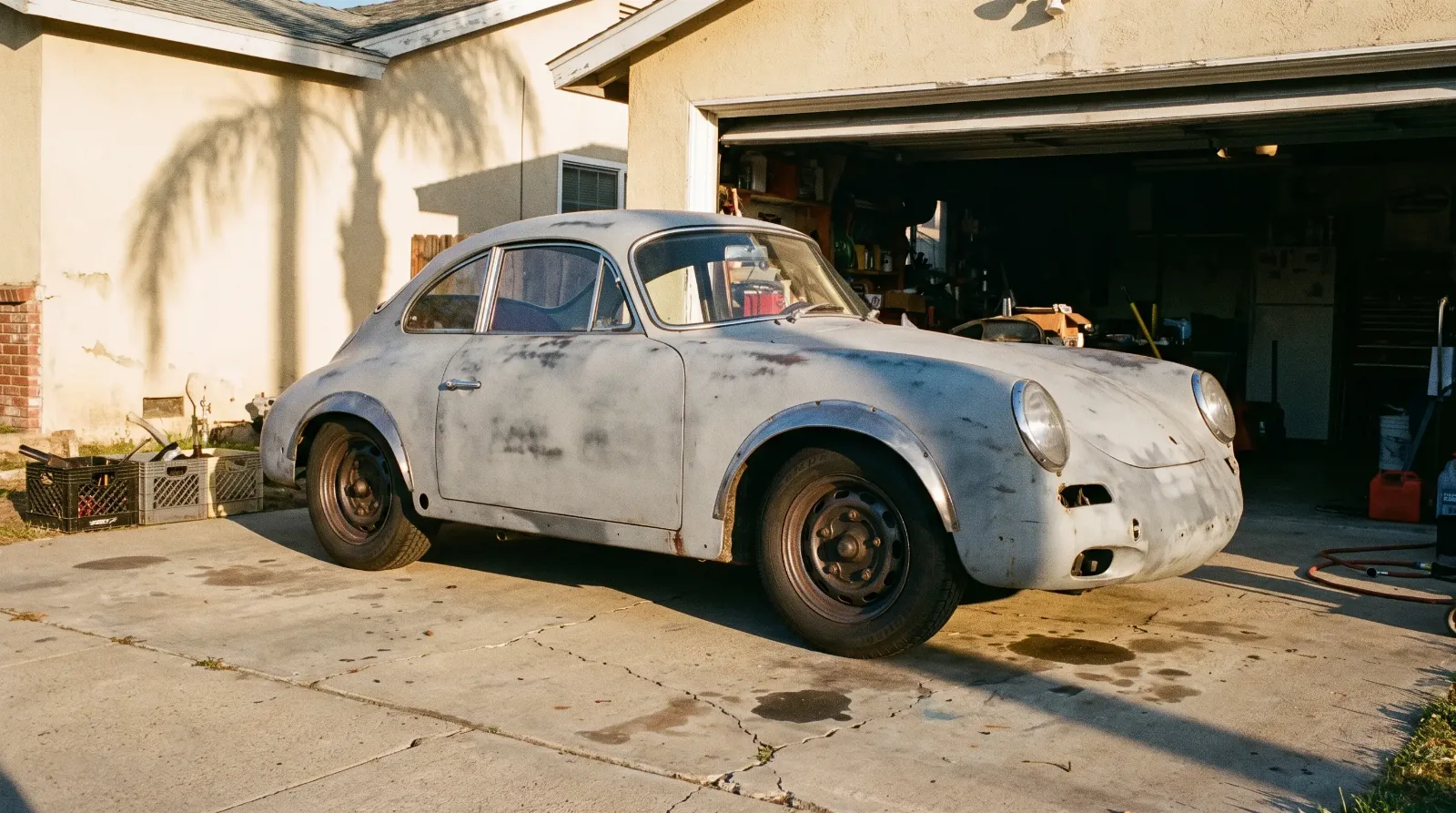
I have been building cars long enough to know the difference between a trend and a philosophy. Outlaw culture is a philosophy. It came out of necessity as much as rebellion. In the late 1970s and through the 1980s, a stock, numbers-matching 356 was not worth much. These were used cars, cheap and plentiful, and nobody was paying concours money for one. So the guys who owned them modified them. They dropped in bigger engines, cut fender flares to fit wider tires, ditched the bumpers, and stripped interiors down to what mattered. Not because they were trying to make a statement for the history books. Because they wanted a car that drove better and looked meaner than the one Porsche sold new.
The name comes from a badge on a fender, not a marketing department
Here is a detail most people get backwards. "Outlaw" was not coined by a magazine writer trying to sell copy. By Rod Emory's own account, he came up with the badge in the late 1980s after building a modified 356 coupe of his own, a car with non-factory touches like fog lights and hood straps that had no class to compete in at the shows of the day. He and a few friends started running small "356 Outlaw" deck lid badges on their own modified cars, half in-joke and half declaration that these builds did not answer to a judging sheet. If your car did not conform, if you had swapped in later brakes or a hotter engine, you were an outlaw. You were outside the definition of a correct, numbers-matching restoration.
That distinction matters because it tells you the culture was born adversarial. It was never about pleasing judges or matching a factory build sheet. It was about building the car you wanted, using parts and techniques that made sense to you, and accepting that some people would look down their nose at it. Builders wore that as a point of pride. I get it. I have had guys tell me my work is not "correct" plenty of times, and I have learned to just let the car answer for itself.
What actually separates an outlaw build from a hot rod
People lump outlaw Porsches in with American hot rodding, and there is some truth to that lineage, but the mechanics are different. A hot rod chases straight-line speed and visual drama. An outlaw 356 or early 911 chases balance. You are not trying to build the fastest car on the block. You are trying to build a car that handles like it should have from the factory, if the factory had not been worried about warranty claims and cost targets.
That means the changes tend to follow a pattern:
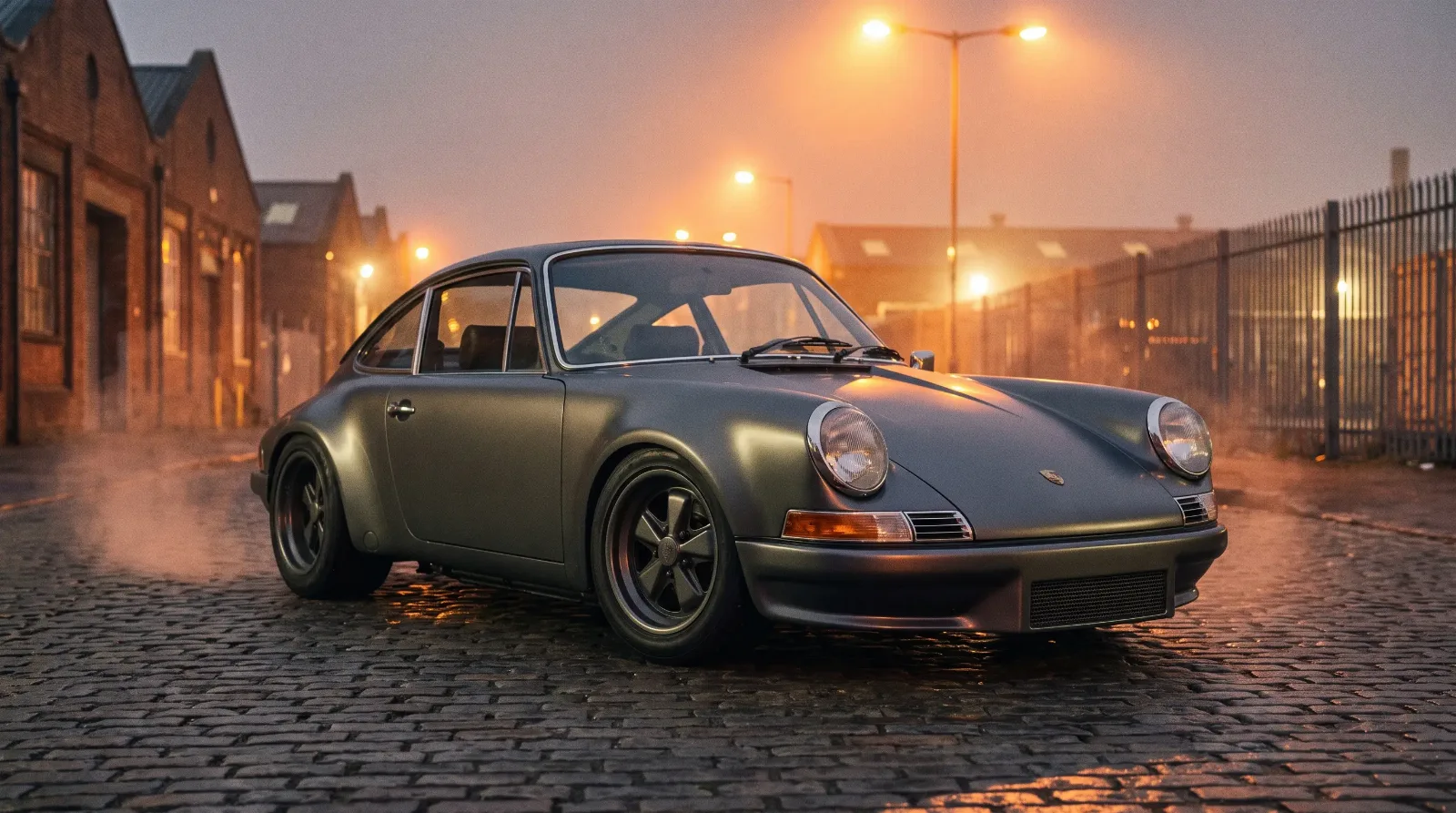
- Wider fenders, usually flared by hand rather than bolted on, to fit period-correct wheels with real width
- Deleted chrome trim, bumpers, and badges, both for weight and for a cleaner silhouette
- A built engine, often larger displacement, tuned for torque and drivability rather than a headline horsepower number
- Interior stripped to essentials, sometimes with a roll bar, always with better seats than Porsche shipped
- Suspension reworked for modern tire compounds while keeping the torsion bar layout the car was designed around
None of that is radical on its own. What makes it an outlaw build is doing all of it in service of one idea, that the car should feel like a sharper version of itself, not a different car altogether. That is the line I try to hold when a customer brings me a project. You are refining a design, not replacing it.
"A real outlaw build should still feel like a Porsche when you drive it. If it doesn't, you didn't build an outlaw, you built something else and slapped the name on it."
Jim Vasquez
From garage subculture to a recognized market
For a long time, this was a fringe scene. Guys building cars for themselves, trading parts and knowledge at swap meets, nobody expecting a payday. That changed as certain builders started producing work polished enough to draw outside attention, and as the broader collector market started paying real money for air-cooled Porsches in general. Once a stock 356 or early 911 started climbing in value, a beautifully executed outlaw version of the same car suddenly looked like a smart alternative, often cheaper than a numbers-matching original and, in the opinion of a lot of buyers, more fun to actually drive.
The shift from subculture to recognized category did not happen overnight, and there is a whole chapter of that story worth telling on its own, which is why we cover Rod Emory's role in building the 356 outlaw into a defined style, you can keep reading the series for that half of the picture. His work in the 1990s and 2000s took what had been informal garage modification and gave it a recognizable, repeatable vocabulary that collectors could point to and understand.
Why the philosophy still matters to builders today
I think the reason outlaw culture has outlasted plenty of other automotive trends is that it is not really about a specific look. It is a mindset. It says the factory spec is a starting point, not a finish line. That idea works on a 356, it works on an early 911, and honestly it works on plenty of cars that have nothing to do with Porsche. But it took root here because these cars were simple enough, mechanically honest enough, that a determined owner with a good welder could actually execute the vision without a team of engineers.
That accessibility is part of what is disappearing now, as parts get scarcer and donor cars get more expensive. But the philosophy travels fine even as the raw materials tighten up. If you want the fuller arc, from garage rebellion to today's builder-driven market, the Porsche history feature lays out the whole timeline in one place.
| Era | What defined the build | Typical donor car |
|---|---|---|
| Late 1970s to 1980s | Function-first modification, cheap used cars | 356 coupe or cabriolet |
| 1990s to 2000s | Refined, repeatable outlaw vocabulary | 356, early 911 |
| 2010s onward | Builder-branded, collector-recognized | 911 (up to early 1990s), 356 |
Where to see the idea in practice today
If you want to understand outlaw culture, the best move is to actually look at finished cars, not just read about the theory. Builders across the country are still doing this work, and the market for well-executed outlaw and restomod Porsches has never been deeper. Browsing current Porsche restomods for sale is a fast way to see how the philosophy has evolved, what buyers are paying for genuine craftsmanship versus a paint job with a story attached, and which details separate a serious build from a cosmetic one.
The outlaw label has survived forty-plus years because it describes an attitude, not a parts list. Every builder who takes it seriously ends up adding their own signature, which is exactly why the cars still look different from each other even decades later. That variety is the point.
Sources and notes
Related Reading
Have a
Porsche
for Sale?
Reach thousands of serious classic car collectors across the US.
Sell It Here →
Are You a Classic Car Dealer?
List your full inventory and connect with targeted classic car buyers.
Join as a Dealer →
About the author
Jim Vasquez
Southern California hot rod and custom car builder with roots in the traditional kustom kulture scene.
Related Listings - Porsche




Comments
Be the first to comment on this article.