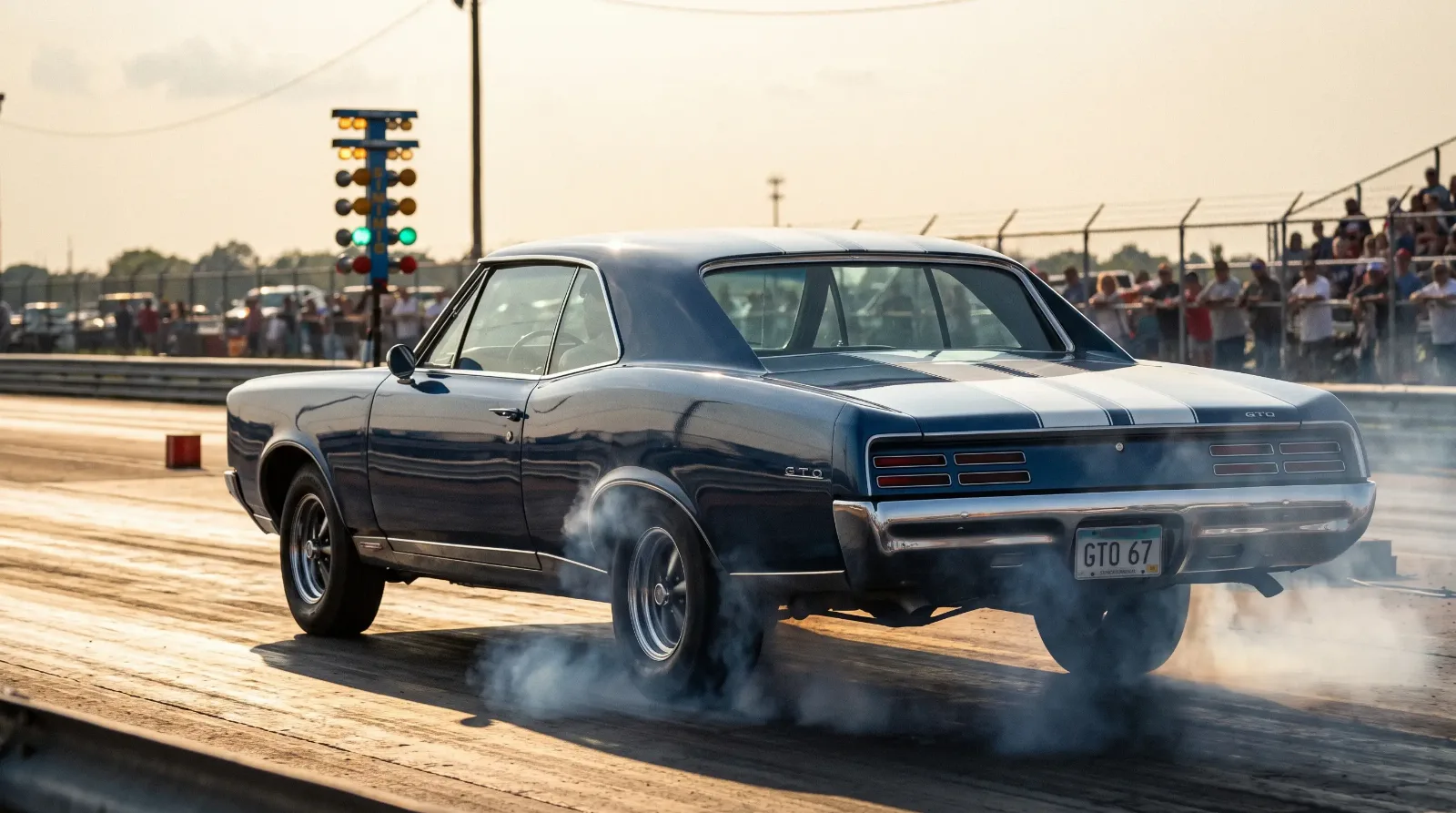
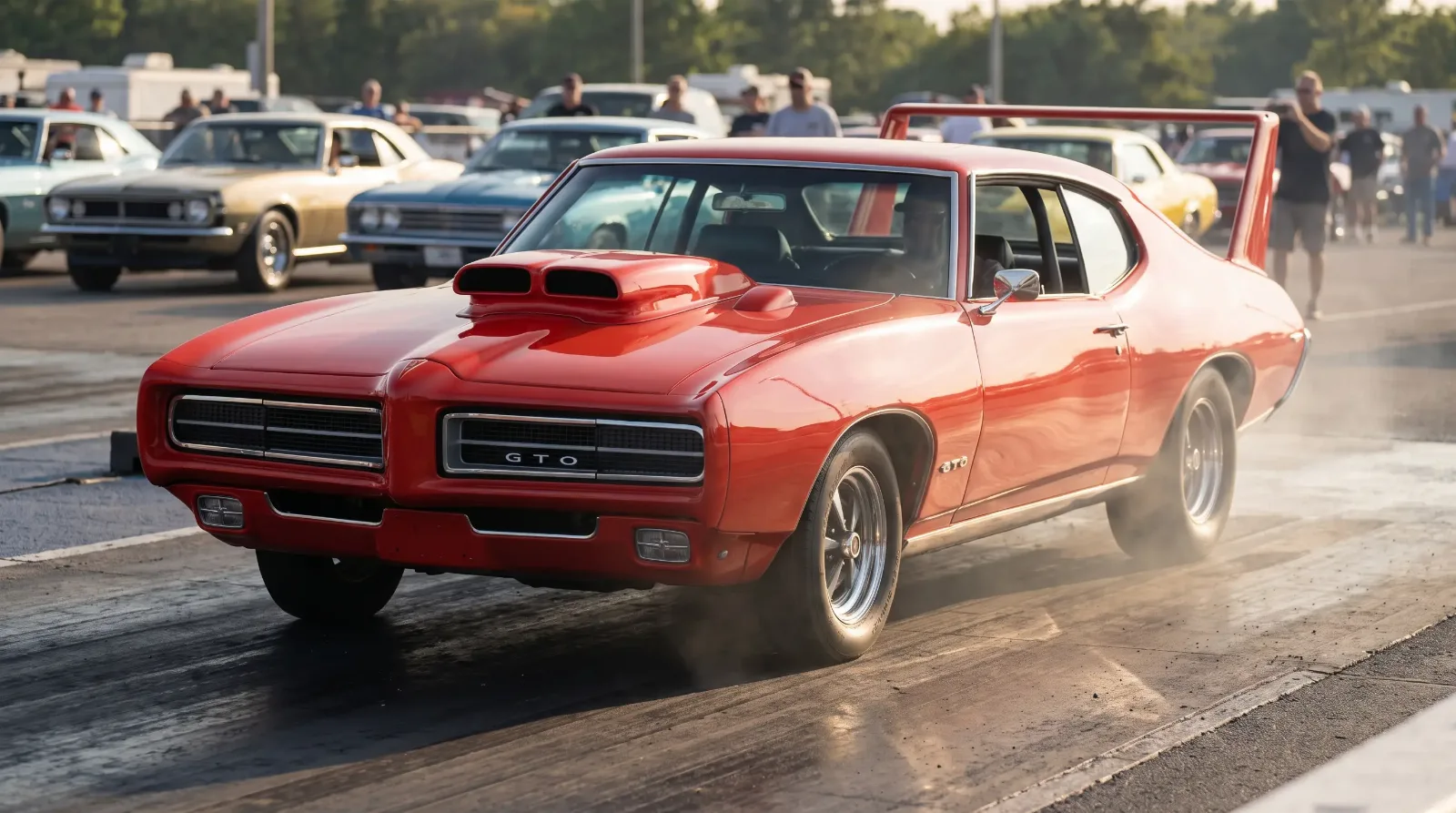
Acceleration figures from the muscle car era deserve more scrutiny than they usually get. Magazine testers in the 1960s worked with different fuel, different tires, different test procedures, and in more than a few documented cases, engines that were not quite as stock as the accompanying article implied. A GTO's published 0-60 time from a period road test is a useful data point, not gospel, and the honest way to talk about these numbers is to say what is reasonably well supported and flag what is not.
1964: the original and its documented testing
The first GTO, built as an option package on the Tempest LeMans with the 389 V8 and available Tri-Power carburetion, was tested by several period magazines with a real spread of results. Road & Track clocked its 348 hp Tri-Power test car at 5.7 seconds to 60 with a 14.1-second quarter mile at 104.2 mph, while Car Life's Tri-Power car came in slower at 6.6 seconds to 60. The most famous 1964 figure, a 4.8-second 0-60 and 13.1-second quarter mile published by Car and Driver, is the one to be most skeptical of: that test car is widely documented to have been a Royal Pontiac "ringer" secretly fitted with a 421 Super Duty engine and heavy-duty parts, not the 389 the article implied, so it should not be read as a representative Tri-Power figure. What matters more than the precise number is the context: this was a mid-size car with a big engine dropped into it running acceleration figures that competed directly with far more expensive performance cars of the day, which is exactly the point John DeLorean and his team were trying to make with the original package.
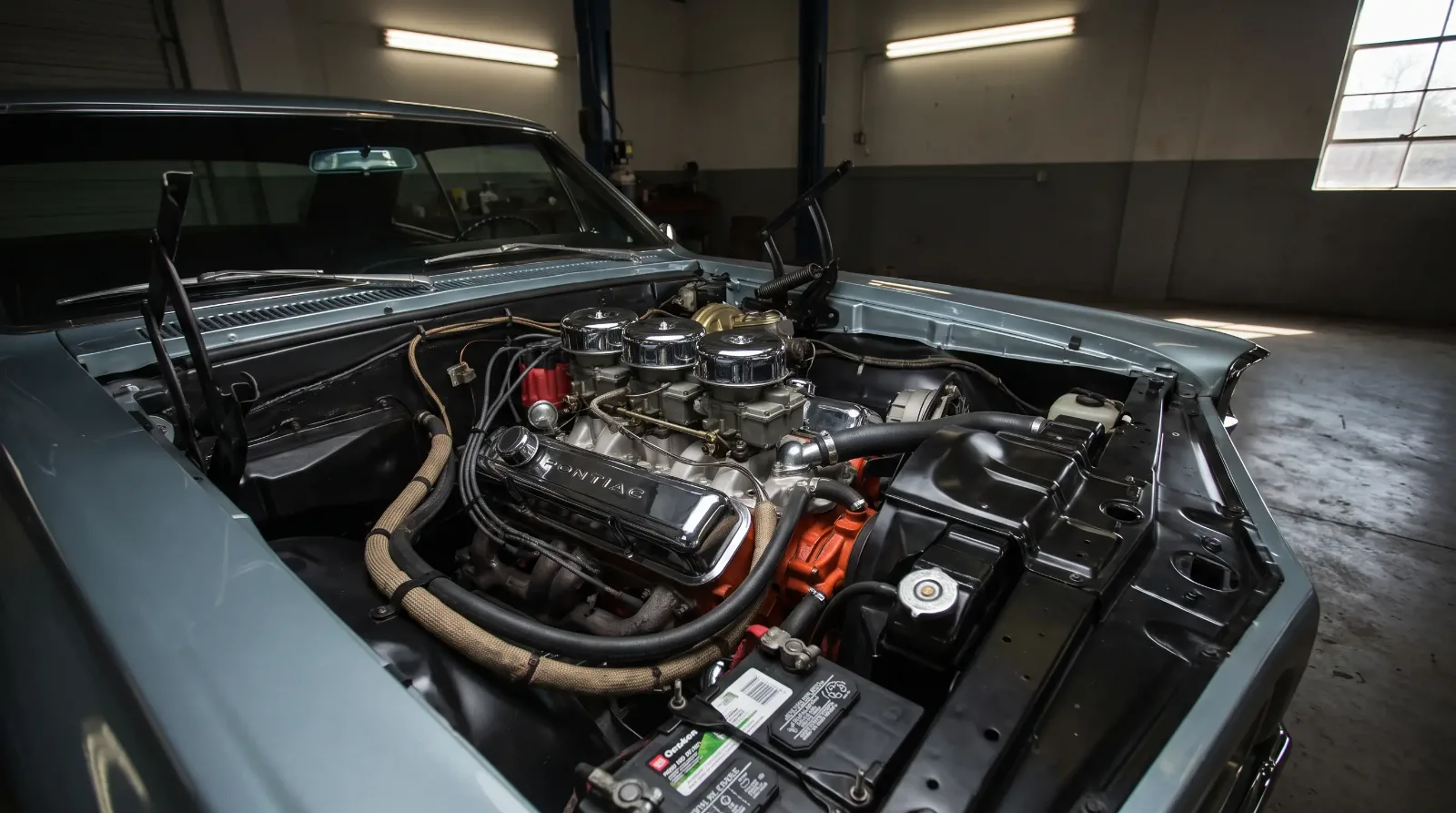
The full engineering story behind how that 389 with its optional Tri-Power induction actually made its power, and how that changed as the engine grew through the rest of the decade, is covered in GTO powertrains. That context is worth reading before putting too much weight on any single published acceleration figure, because engine specification and gearing varied enough car to car that a single number rarely tells the whole story for any given model year.
1966-1967: the standalone model years
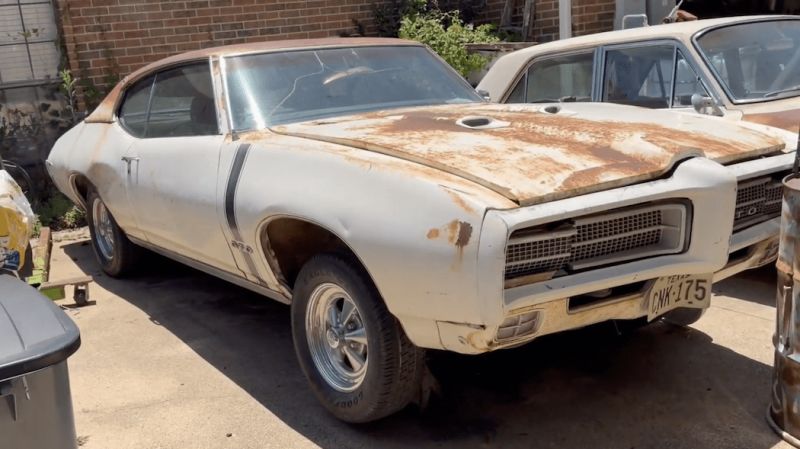
Once the GTO became its own model in 1966, separate from the LeMans lineup on paper, period testing kept landing in a tight band. Motor Trend put a 360 hp Tri-Power 1966 car at roughly 6.5 seconds to 60 with a 14.6-second quarter mile at 98 mph, and Car and Driver ran a similar car through the quarter in 14.0 seconds at 105 mph. The 1967 model year brought the introduction of a four-barrel Quadrajet carburetor engine option alongside the continuing Tri-Power setup for part of the year before General Motors corporate policy phased out multiple carburetion across most of its performance lineup. Car Life's 1967 Ram Air 400 test car ran 6.1 seconds to 60 and 14.5 seconds at 102 mph in the quarter, and Hot Rod's Ram Air test car ran the quarter in the 14.1 to 14.5-second range depending on tune, figures generally competitive with the outgoing Tri-Power setup despite the single four-barrel's official power rating.
| Model year | Notable engine option | General 0-60 range reported |
|---|---|---|
| 1964 | 389 Tri-Power | 5.7-6.6 seconds (Road & Track, Car Life) |
| 1966-1967 | 389 Tri-Power / 400 Ram Air | 6.1-6.5 seconds (Motor Trend, Car Life) |
| 1969 | Ram Air III / Ram Air IV, The Judge | Roughly 6.1 seconds for Ram Air IV (Car Life) |
| 1970-1971 | 455 / 455 HO | 6.1-6.6 seconds (Car Life, Motor Trend) |
1969: the Ram Air years and The Judge
The 1969 model year, with the Ram Air III and the more aggressive Ram Air IV as options, along with the mid-year introduction of The Judge package, generally produced the quickest documented acceleration figures of the classic GTO's run in period magazine testing. Car Life's Ram Air IV test car (400 cubic inches, 370 hp gross, four-speed, 3.55 gears) ran 6.1 seconds to 60 and 14.4 seconds at 98 mph in the quarter. Car and Driver's Judge, also fitted with the Ram Air IV, posted a quicker 13.7-second quarter mile at 103.6 mph, the best documented figure of the model year. Ram Air III cars, tested less often, generally ran in the mid-six-second range to 60 with quarter miles in the low-to-mid fourteens. It is worth being direct about why these numbers need a caveat: period magazines occasionally tested cars that were not entirely stock, whether through dealer-installed tuning, cherry-picked examples supplied directly by the factory for press use, or simply favorable atmospheric conditions on the day of the test. None of that means the underlying performance claim was fraudulent. It means a single published number from 1969 should be read as a strong data point about what a well-sorted example could do, not as an average or guaranteed figure for every car that left the factory with the same engine code.
Official factory horsepower ratings from this era also deserve the same scrutiny as the acceleration figures. Gross horsepower ratings published in factory literature through the 1960s were measured under laboratory conditions with accessories removed that would be present in a running car on the street, which inflated the numbers relative to what a driver actually experienced. The industry-wide shift to net horsepower ratings in the early 1970s, applied retroactively in some later documentation, is part of why comparing a raw factory horsepower figure across model years without accounting for the measurement standard can lead to a misleading conclusion.
1970-1974: the 455 years and the decline
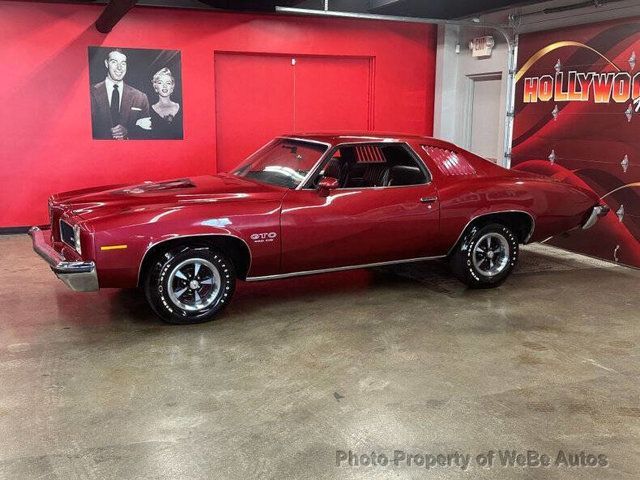
The 455 arrived for 1970 as the GTO's largest available engine, rated at 360 hp gross, and while its torque figures were substantial, its 0-60 performance in period tests generally landed in a similar or slightly slower range than the peak 1969 Ram Air cars. Car Life's automatic-equipped 1970 455 ran 6.6 seconds to 60 and 14.76 seconds at 95.9 mph in the quarter, while a four-speed 1971 455 tested by Motor Trend with deep 3.90 gears ran 6.1 seconds to 60 and 13.4 seconds at 102 mph, a reminder that gearing moved these numbers as much as the engine did. That pattern reflects both the 455's torque-focused rather than high-rpm-focused engineering and the added weight and tightening emissions requirements that began affecting the entire industry through the early 1970s. By 1974, with the GTO based on the smaller Ventura platform in its final classic-era model year, published acceleration figures had fallen well off the pace of the car's late-1960s peak, a reflection of both a smaller standard engine and the broader industry retreat from unrestricted horsepower that defined the entire early 1970s muscle car market.
Reading old numbers with the right amount of skepticism
The honest approach to any published GTO acceleration figure from this era is to treat it as evidence from a specific car, on a specific day, with a specific driver, rather than as a guaranteed baseline for every car with the same engine code. Rear axle ratio, transmission choice, tire compound, even the weather and the surface at the test track all move these numbers meaningfully. A buyer or owner citing a period 0-60 figure should understand it as the upper end of what a well-prepared example could do under favorable conditions, not as an average result a typical customer drove away with.
"I trust a build sheet more than I trust a magazine's stopwatch. The numbers on the paperwork tell you what left the factory. The numbers in the article tell you what one specific car did on one specific afternoon, and those are not always the same thing."
— Tom Ramirez
Straight-line acceleration figures also depended heavily on the engine underneath them, and Pontiac's approach to V8 design set the GTO apart from its GM stablemates in ways that go well beyond the horsepower rating on the window sticker. read on for why a Pontiac V8 is not just a Chevy small-block with different valve covers.
Sources and notes
- Curbside Classic - Car Life 1964 GTO road test
- Curbside Classic - Car and Driver's 1964 GTO ringer test
- Curbside Classic - Car Life 1969 Ram Air IV Judge road test
- Curbside Classic - Car Life 1970 GTO 455 and Ram Air 400 road test
- Wikipedia - Pontiac GTO
- FastestLaps - Pontiac GTO Judge Ram Air IV performance data