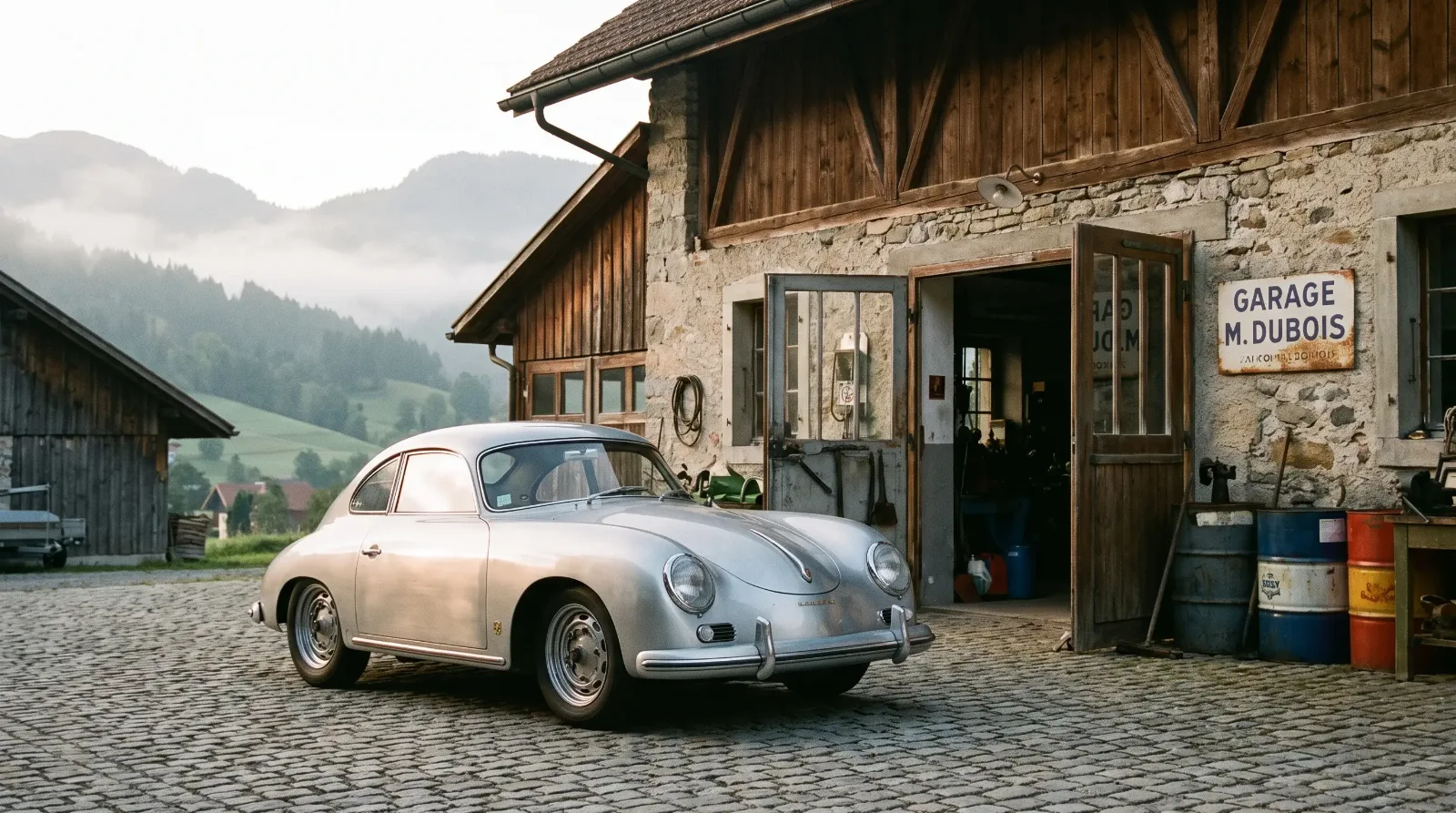
Ask why the Porsche 356 collectible market behaves the way it does and the honest answer is not nostalgia. It is a specific combination of scarcity, documented craftsmanship, and a competition record that a handful of variants can point to directly. Some 356s trade for the price of a modest house. Others, built on the same platform in the same decade, trade for a fraction of that. The gap between those two outcomes is where the real story sits.
Being first counts more than most buyers expect
Every 356 carries the weight of being the car that started the company as an independent automaker, and that fact alone puts a floor under values that a purely mechanical assessment would not justify. A buyer researching [the first Porsche] quickly learns that early low-production examples, particularly pre-A cars built in Gmünd before production moved to Zuffenhausen, carry a premium simply for representing the company's earliest, smallest-volume period. That premium has nothing to do with how the car drives. It has everything to do with how few of those early cars survive and how directly they connect to a founding story that Porsche itself still leans on in its marketing.
Coachbuilder craftsmanship as a documented asset
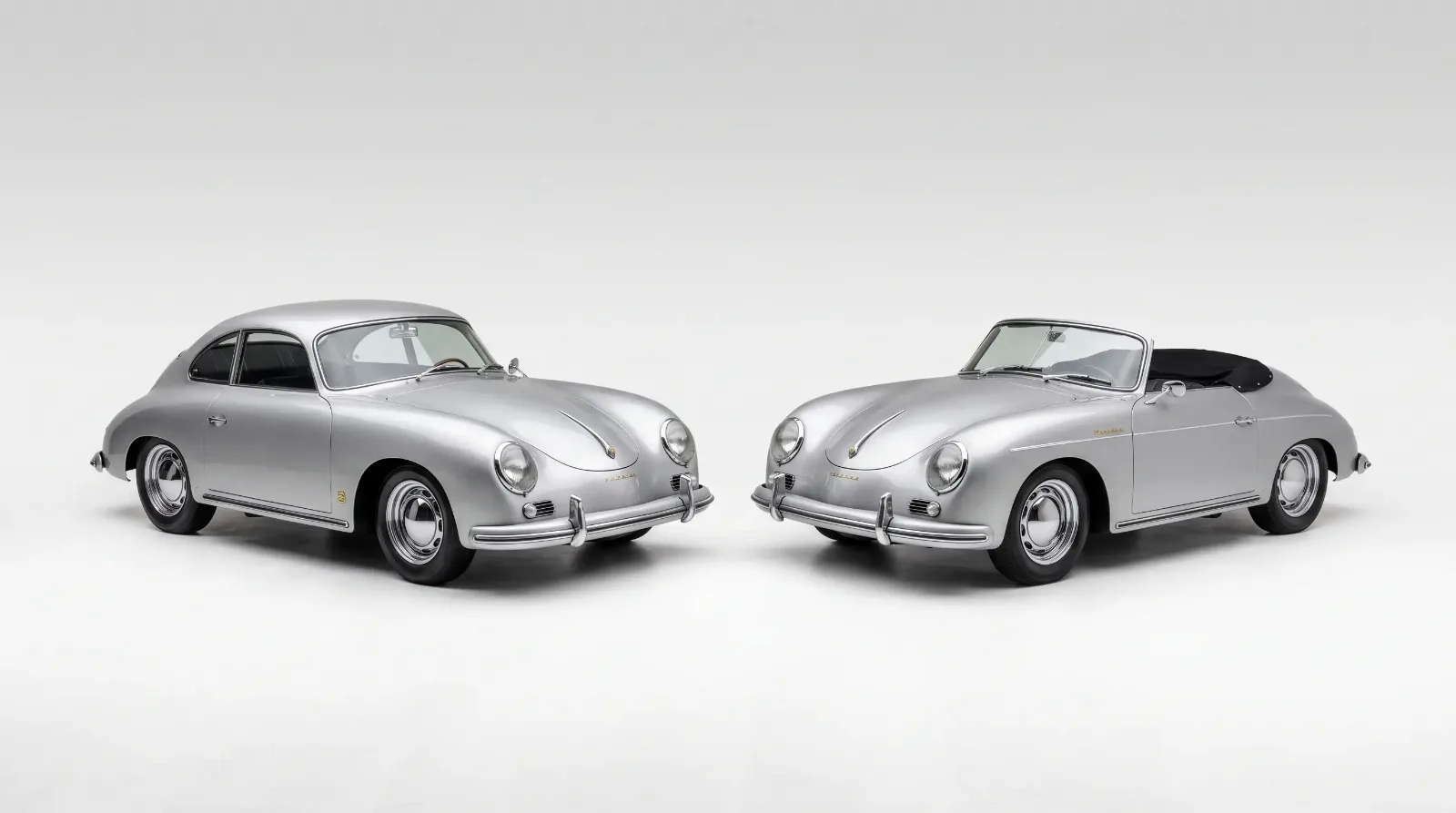
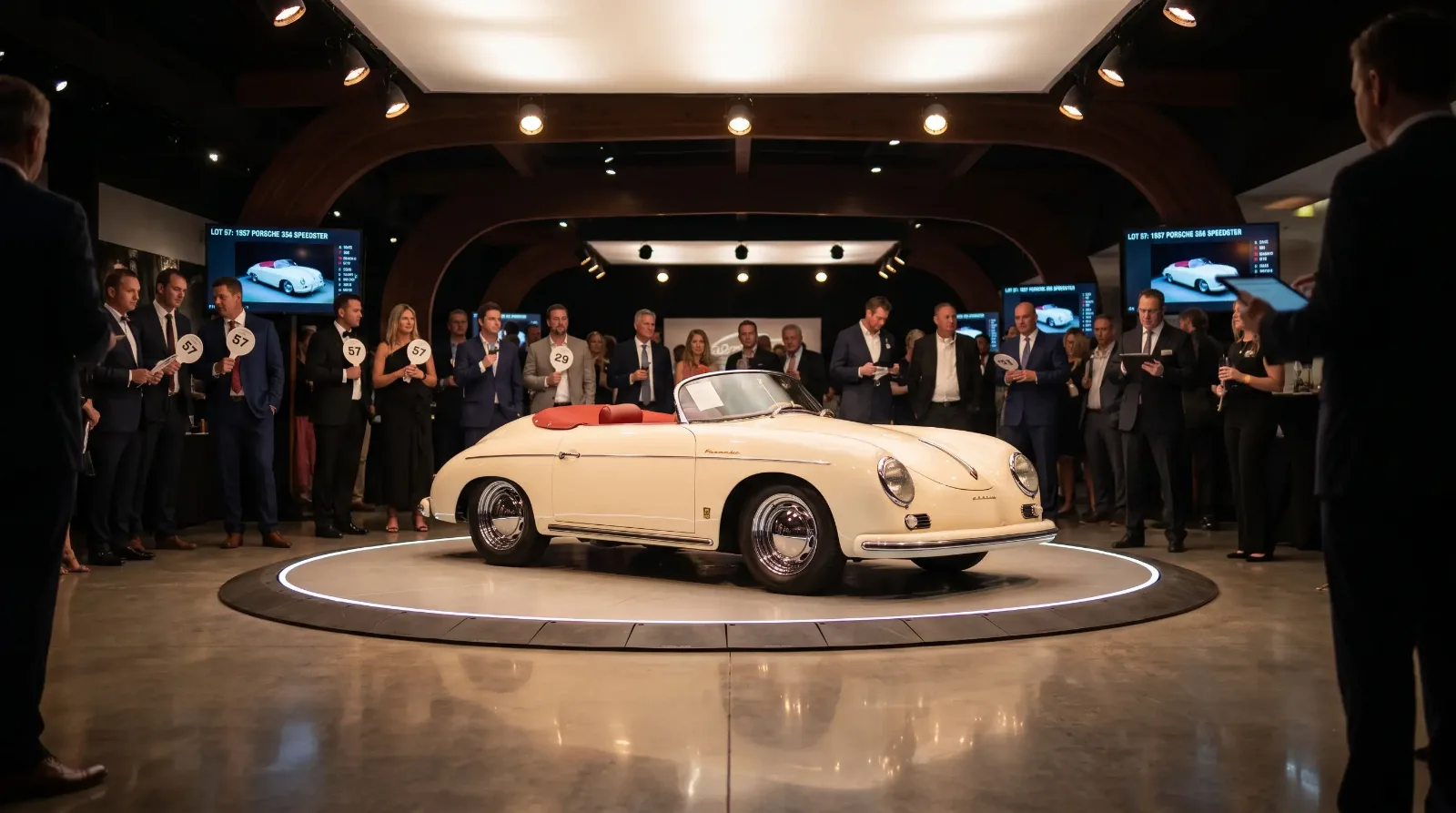
Reutter, Karmann, and Drauz did not build interchangeable bodies. Each coachbuilder left identifiable stamping patterns, trim details, and construction methods that a trained eye, or a body tag, can trace back to a specific builder and often a specific production run. That documentation matters enormously to value because it turns a car from a general example of the model into a specific, verifiable artifact. A Speedster with confirmed original Reutter bodywork and matching-numbers mechanicals is a different asset than a visually similar car with a replaced body panel or an undocumented repaint, even when both look correct in photographs. Concours judging exists precisely to reward that distinction, and the market has learned to price it accordingly.
Racing pedigree turned into a price premium
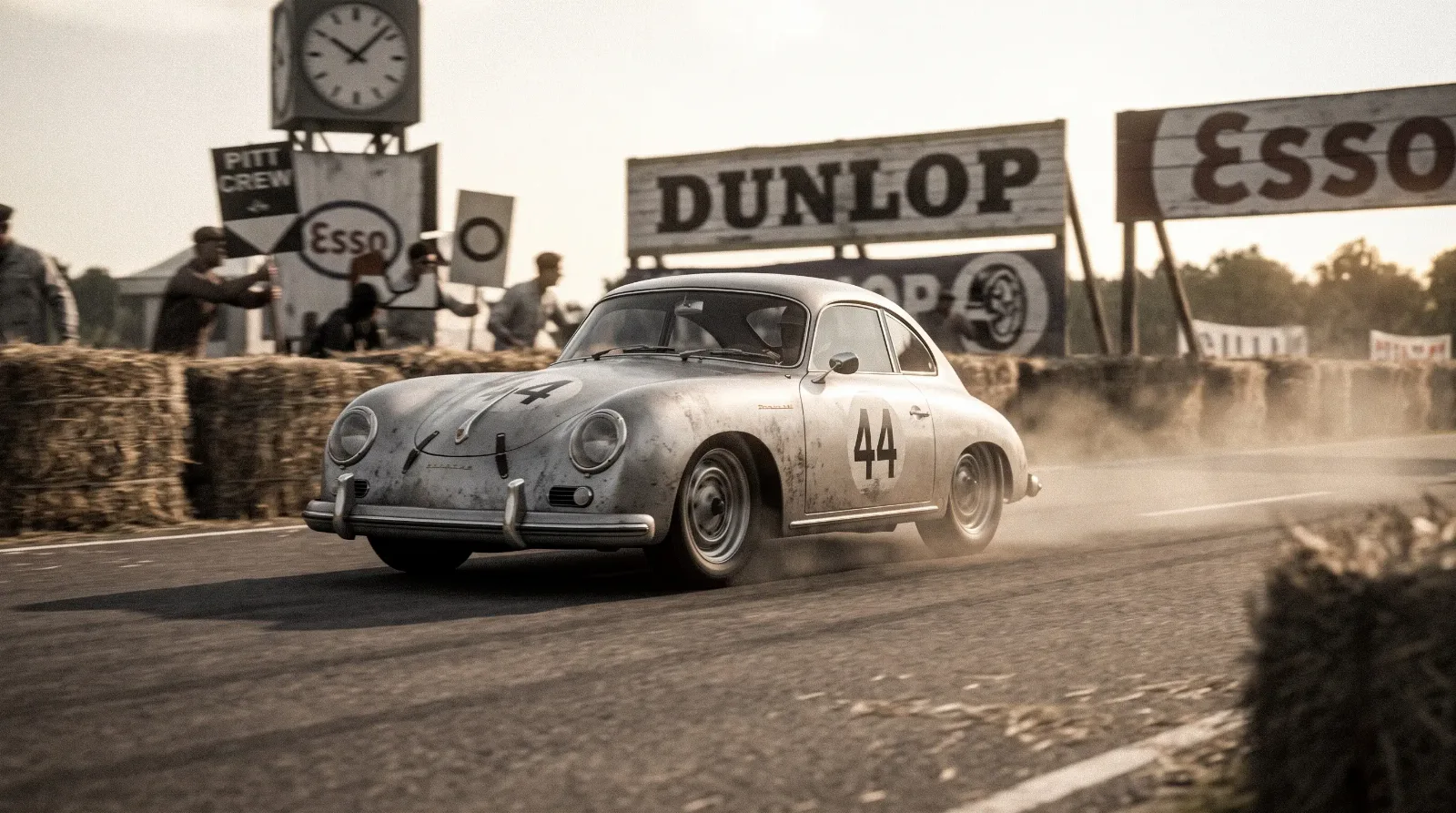
The four-cam Carrera engine and the model's competition record, from class wins at Le Mans to the Carrera Panamericana, gave certain 356 variants a mechanical rarity that compounds their historical scarcity. A Carrera-engined car is not simply an older, rarer version of the standard pushrod 356. It is a different, far more expensive engine to build, maintain, and now restore, and that complexity limited how many were built in period and how many survive in original mechanical condition today. Buyers chasing that lineage are paying for a genuine link to the racing program covered elsewhere in this series, not for a badge or a name alone.
| Variant | Relative rarity | Primary value driver |
|---|---|---|
| Pre-A Gmünd coupe | Around 30 to 32 survivors from roughly 44 coupes built | Founding-era provenance |
| Speedster | Moderate, but originality-sensitive | Documented Reutter body, correct trim |
| Notchback coupe | Very low production run | Body-style scarcity |
| Carrera (four-cam) | Low, mechanically complex | Racing-derived engine, restoration cost |
| Standard coupe, later years | Highest surviving numbers | Usability, entry-level collectibility |
Variant hierarchy: what separates six figures from seven
Most 356s that change hands today, including well-kept standard coupes, sell for prices that a broader classic car audience would recognize as accessible rather than exceptional. The jump into six-figure territory and beyond tends to require at least two of three things: a rare body style, documented originality, or a direct competition history. A Speedster with full documentation and an unmolested body can comfortably clear six figures at auction, with recent hammer prices commonly landing in the low-to-mid hundred thousands and top examples reaching well beyond half a million dollars, while a Carrera or a car with verified period racing history can move well beyond that. Standard coupes without those distinctions remain the platform's entry point, which is exactly why they are also the cars most commonly recommended to first-time 356 buyers, and why appraisers rarely discourage that entry point as a mistake.
"People ask me why one 356 sells for four times what an apparently similar one brought at the same auction house a year earlier. The answer is almost never visible in a photograph. It is in the body tag, the build sheet, and whether the car's history can be traced without a gap. Buyers are not paying for the car in front of them. They are paying for the paperwork behind it. That is not a cynical observation, it is simply how a mature collector market prices risk."
— Sarah Whitfield
Documentation, not nostalgia, drives the number
Restoration cost plays a quieter role in all of this too. Because 356 bodies rust in predictable places, particularly around the battery tray, floor pans, and lower fenders, a car that has avoided serious corrosion repair carries a real premium over one that required extensive metal replacement, even when both are cosmetically finished to the same standard. Buyers and appraisers alike know that a full rust repair, done properly, can rival the cost of the car itself, and that expense gets factored into the eventual sale price whether or not it shows up in a listing description.
The clearest pattern across every high-value 356 sale is how much of the price traces back to paper rather than sheet metal. Factory build sheets, coachbuilder stamps, period race entries, and an unbroken ownership chain do more to set a final price than condition alone. A beautifully restored car with a documentation gap will often sell for less than a rougher example whose history can be proven end to end, because buyers at this level are ultimately purchasing certainty. That is also why fraudulent or incomplete paperwork does more damage to a 356's value than almost any mechanical issue would. The car can be repaired. A broken chain of documentation generally cannot. For readers following this series in order, [the next story in this set] returns to the body styles themselves and how to tell them apart at a glance.
Sources and notes
- RM Sotheby's: 1957 Porsche 356 A 1600 Super Speedster by Reutter, Monterey 2024
- The Value: 1956 Porsche Super Speedster, RM Sotheby's 70th Anniversary Auction
- Wikipedia: Porsche 356/2 (Gmund)
- Hagerty: From One Early Porsche Model, an Extended Family
- FlatSixes: A Brief History of the Porsche 356
- Classic.com: Porsche 356 A Speedster Market