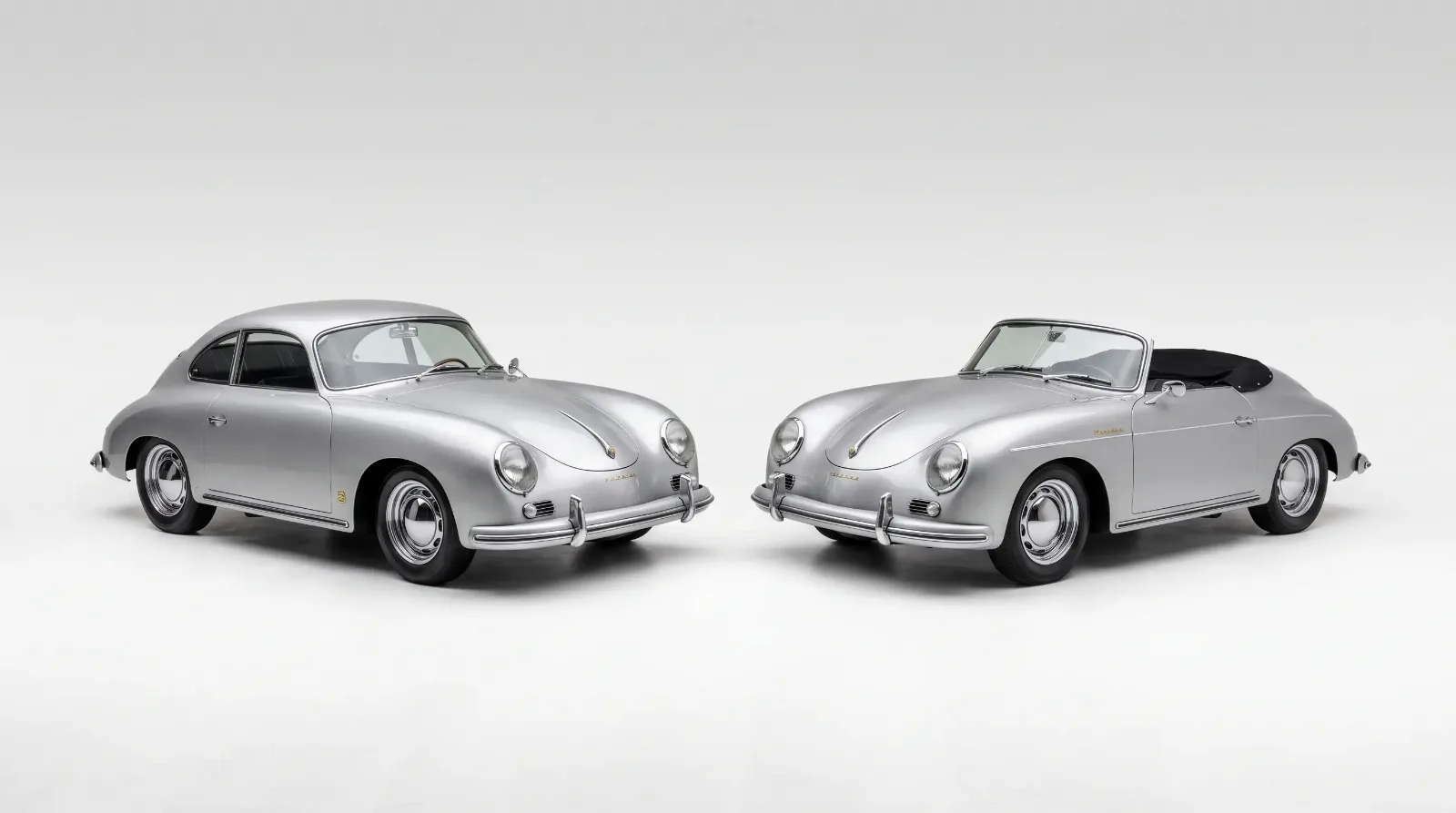
The Porsche 356 coupe cabriolet question is really two arguments happening at once. One is aesthetic: which roofline reads truer to Erwin Komenda's original shape. The other is practical: which body a given owner will actually enjoy on the road. Coupe and cabriolet 356s left the same small run of workshops, wore the same flat-four engines, and shared nearly every mechanical component underneath, yet they have settled into distinct identities over seventy years of ownership. Understanding why starts with who built each body and why.
Two bodies, one platform
From the earliest Gmund cars through the 356 C of 1965, Porsche never ran a single body plant, though the split was not as clean as the coupe-cabriolet line might suggest. Reutter, a Stuttgart coachbuilder that had bodied cars since before the First World War, built the great majority of both coupes and cabriolets through the Pre-A, A, and early B years, bringing a steel-fabrication discipline that suited the monocoque platform. Karmann in Osnabruck only entered the picture in 1961, building a notchback hardtop variant of the coupe, then expanded into standard coupe production from January 1962 onward specifically because Reutter's own factory could not keep up with demand, a capacity problem, not a specialization by body style. This was not a formality. A steel monocoque loses torsional rigidity the moment you remove a fixed roof, and Reutter had to solve that differently for its cabriolet bodies than for its coupes, with extra reinforcement in the sills, the windshield frame, and the rear bulkhead.
The practical result is that a coupe and a cabriolet from the same model year are not simply "the same car with a different roof." They are related but distinct engineering exercises, and anyone shopping classic Porsche 356 for sale listings should treat them as such rather than assuming interchangeable structure.
The coupe: Reutter's steel discipline
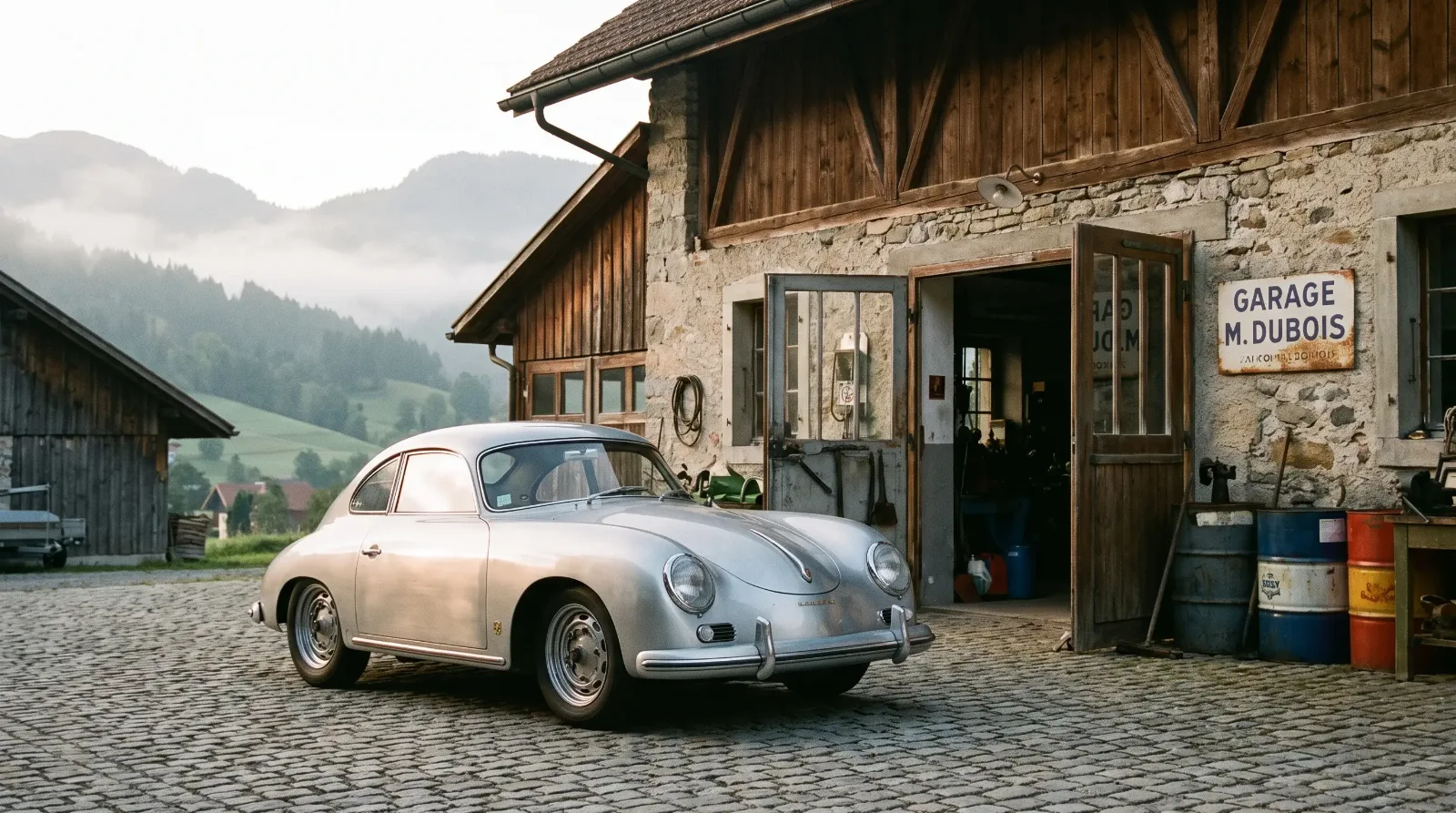
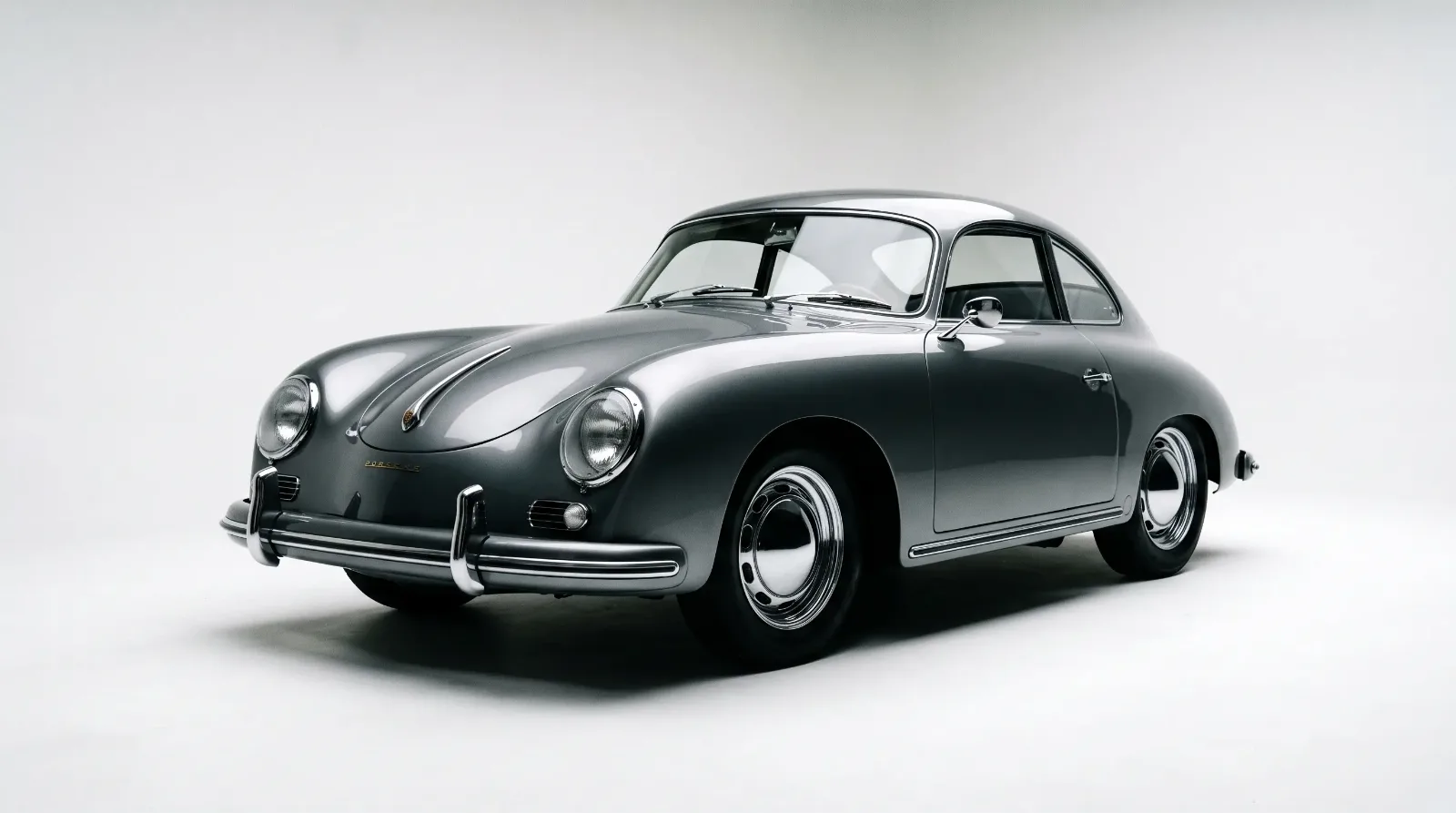
The 356 coupe is the shape most people picture when they hear the model name: a low, uninterrupted roofline running back from the split or bent windshield to a sloping rear deck. Reutter's coupe body used the roof structure itself as the primary source of rigidity, which is why a solid, unmolested coupe still feels tight over rough pavement in a way many open 356s do not. The trade-off is visibility and ventilation; early coupes have narrow rear quarter windows and a cabin that gets warm quickly without the optional sliding steel sunroof.
Reutter also built the vast majority of 356 production volume overall, coupe and cabriolet alike, for most of the model's run, which is one reason coupes, the higher-volume body style within that output, remain the more common survivor today. Collectors researching where Porsche began will find that the first customer cars, hand-formed in Gmund with aluminum panels before the move to Zuffenhausen, were coupes as well, which gives the body style a claim to being the more "original" expression of the shape even though open cars followed within a year or two.
The cabriolet and the Speedster question
Porsche's factory cabriolet, built by Reutter through most of the model's life with a proper folding top and roll-up windows, aimed at a buyer who wanted the open-air experience without giving up daily usability. Period specifications show the coupe and cabriolet ending up close in curb weight despite the extra bracing the cabriolet needed in the sills and around the windshield pillar to compensate for the missing roof structure, since Reutter's coupe carried its own weight in the roof structure itself. The Speedster is the body that actually shed real weight, running roughly 90 kg lighter than the standard cabriolet on the 356 A.
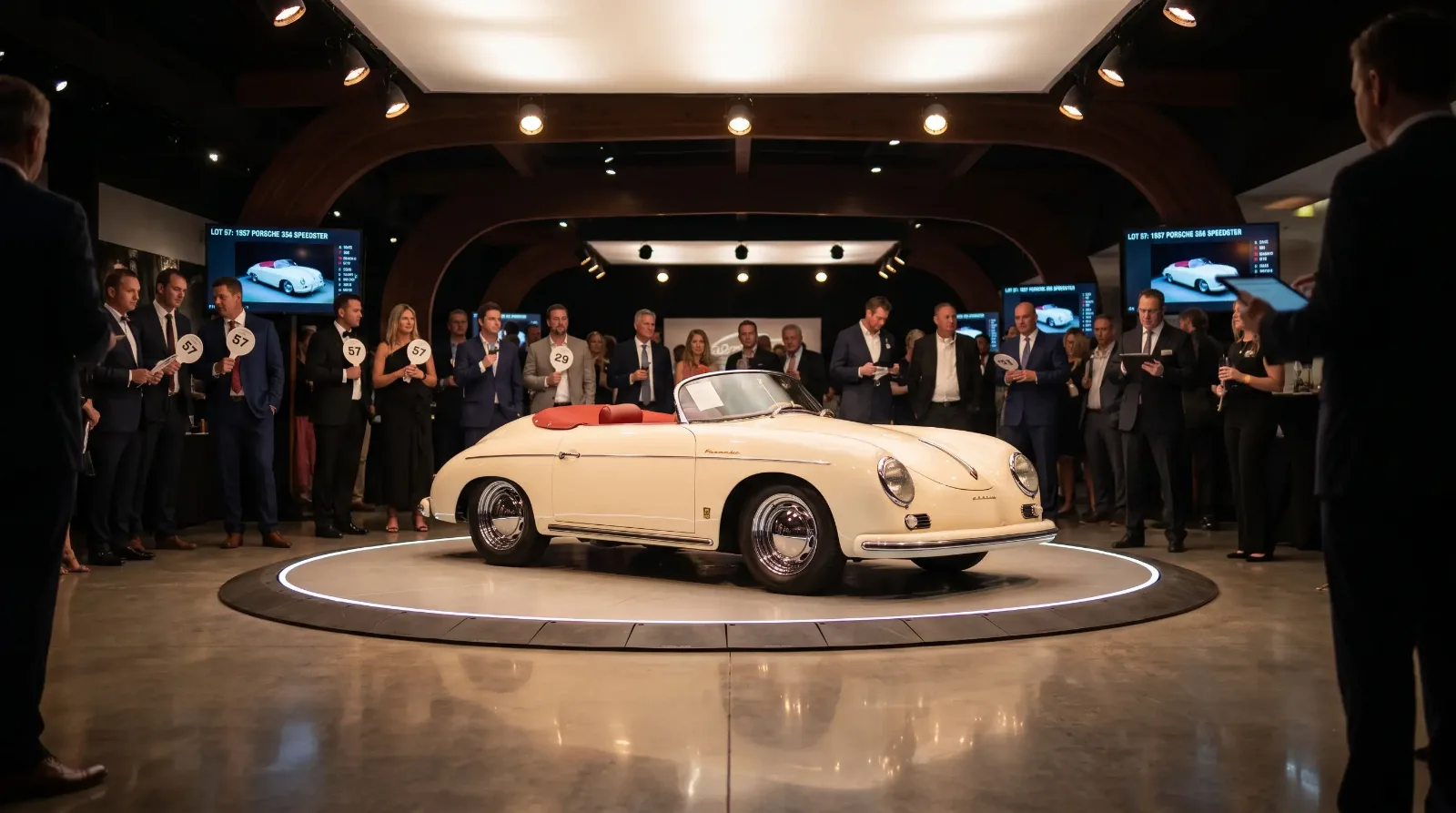
The Speedster complicates the cabriolet story rather than simplifying it. Introduced for the American market in 1954 at the urging of importer Max Hoffman, the Speedster was a stripped, low-windshield variant with a minimal top and side curtains rather than roll-up glass, launched at a base price of 2,995 dollars for club racers and weekend drivers. It shares the cabriolet's open-body engineering challenges but solves them with less weight and less comfort, which is exactly why period racers preferred it and why modern buyers treat it as a separate, more valuable category rather than a mere cabriolet variant.
"People ask which body is more authentic, and the honest answer is that authenticity runs through the coachbuilder, not the roofline. A correct Reutter coupe and a correct Reutter cabriolet are equally true to the car, and a correct later Karmann coupe is just as legitimate. What is not authentic is a cabriolet with a coupe's replacement sills welded in because someone found it easier to source steel that way."
— Sarah Whitfield
Cabriolet vs coupe: what collectors weigh today
Values between the two bodies have never tracked in lockstep, and the gap has widened as the market has matured and buyers have gotten more precise about what they are paying for.
| Factor | Coupe | Cabriolet |
|---|---|---|
| Body builder | Reutter (Stuttgart), joined by Karmann from 1962 | Reutter (Stuttgart) through most of production |
| Structural approach | Roof as primary rigidity source | Reinforced sills and cowl |
| Relative weight | Close to cabriolet | Close to coupe (Speedster roughly 90 kg lighter than both) |
| Surviving population | More common | Scarcer, especially early cars |
| Typical collector demand | Strong, values driven by originality | Strong, often commands a premium over equivalent coupe |
A well-documented open car, particularly a matching-numbers cabriolet with its original top frame and correct Karmann build tags intact, will usually bring more money than an equivalent coupe of the same model year and engine. That premium reflects genuine scarcity rather than fashion. Readers who want the full mechanical and stylistic context behind both bodies should look at a related deep-dive into how Komenda's original silhouette shaped every body variant that followed.
Which body style suits which buyer
The choice between coupe and cabriolet is rarely purely financial. A coupe rewards drivers who want the 356 as a tight, quiet, weather-tight companion for long-distance touring, while a cabriolet rewards those who bought into the car for the open-road experience Ferry Porsche's small team was originally chasing. Concours judges tend to treat both bodies with equal respect provided the car is correct for its coachbuilder, and neither style is penalized on points simply for being open or closed.
For a fuller picture of how the coupe and cabriolet fit into the company's early decades, from the Gmund workshop through the Zuffenhausen production lines, the complete Porsche history traces the decisions that put both bodies into production within the same few years of the company's founding.