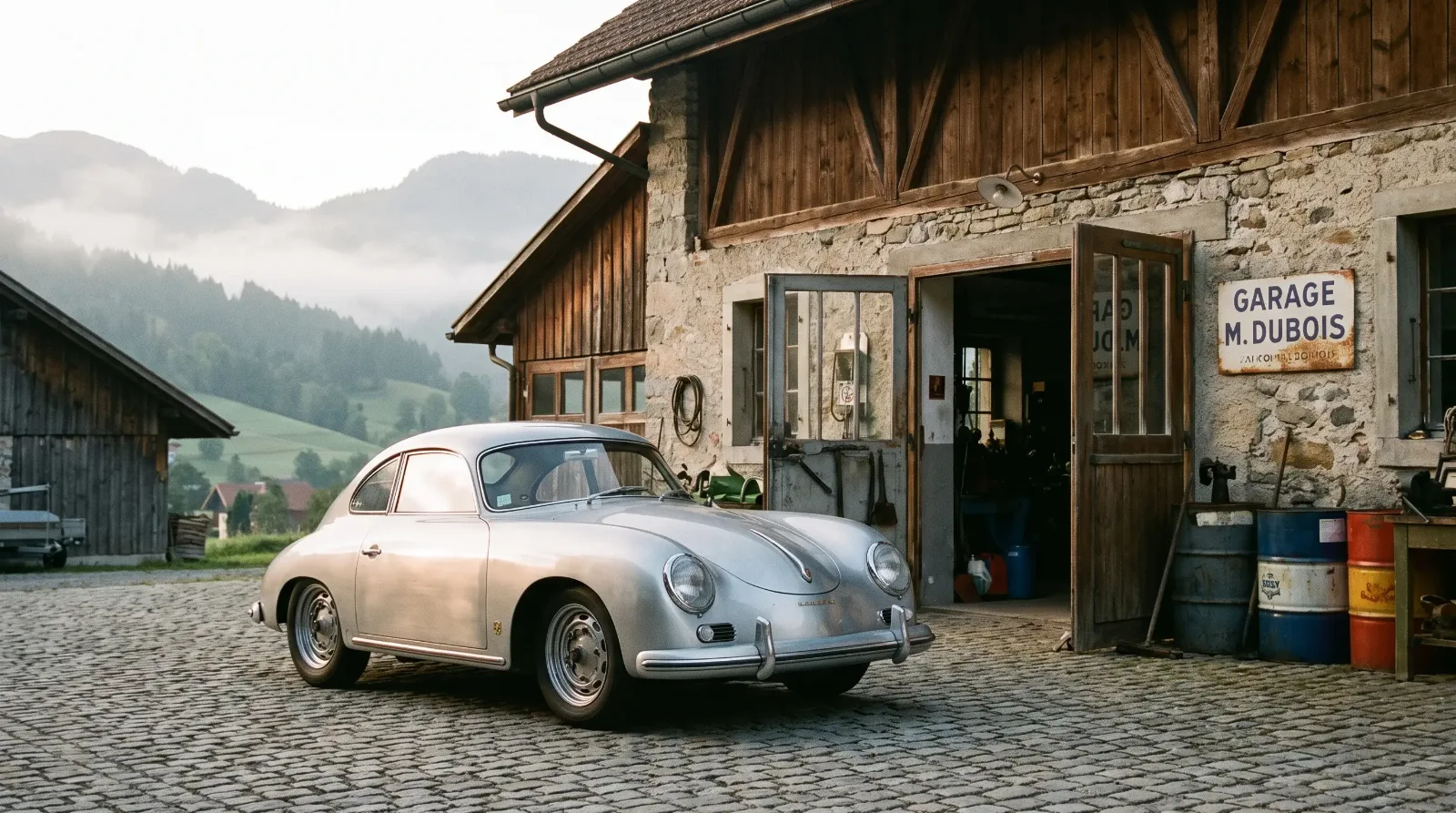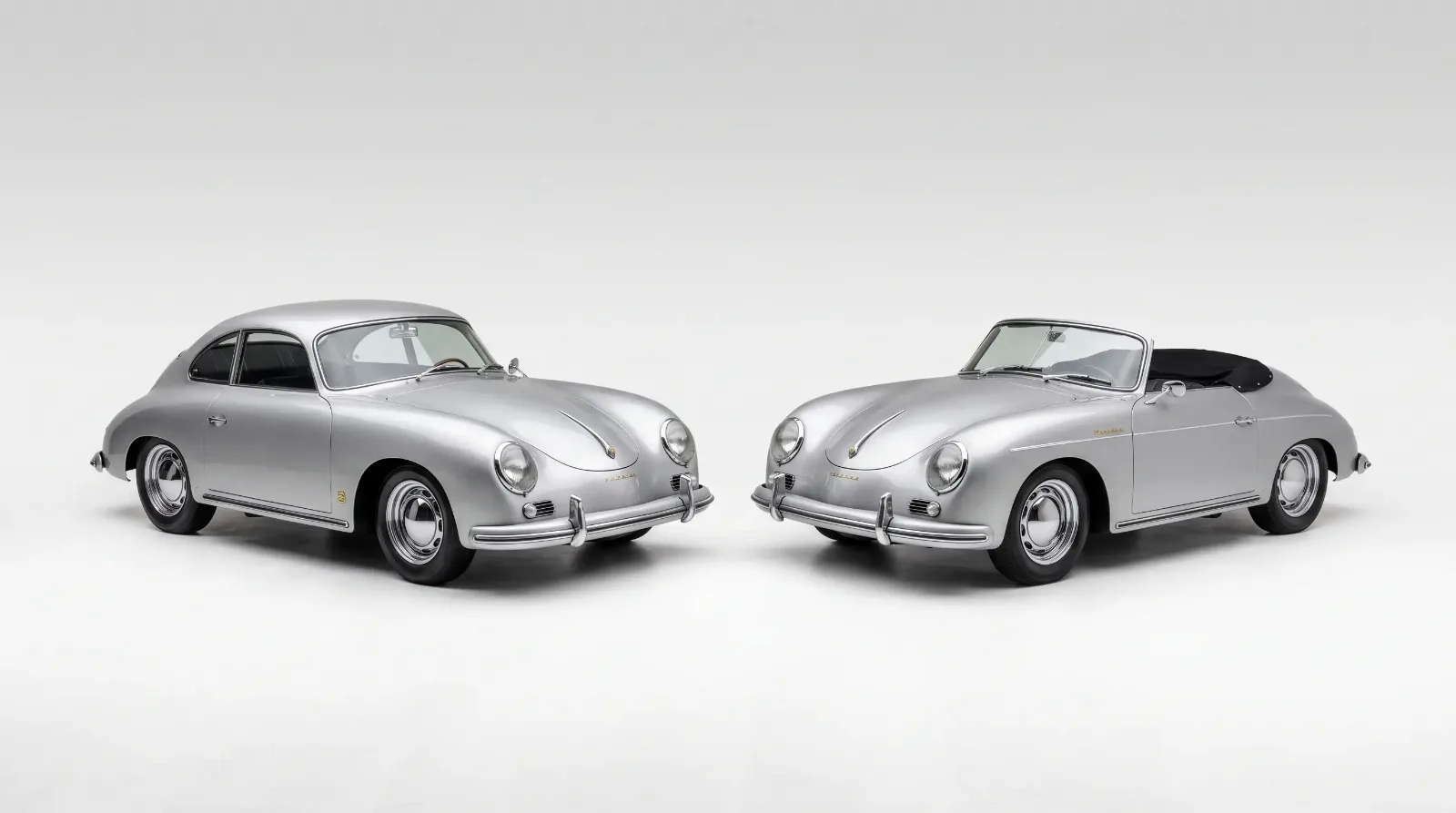
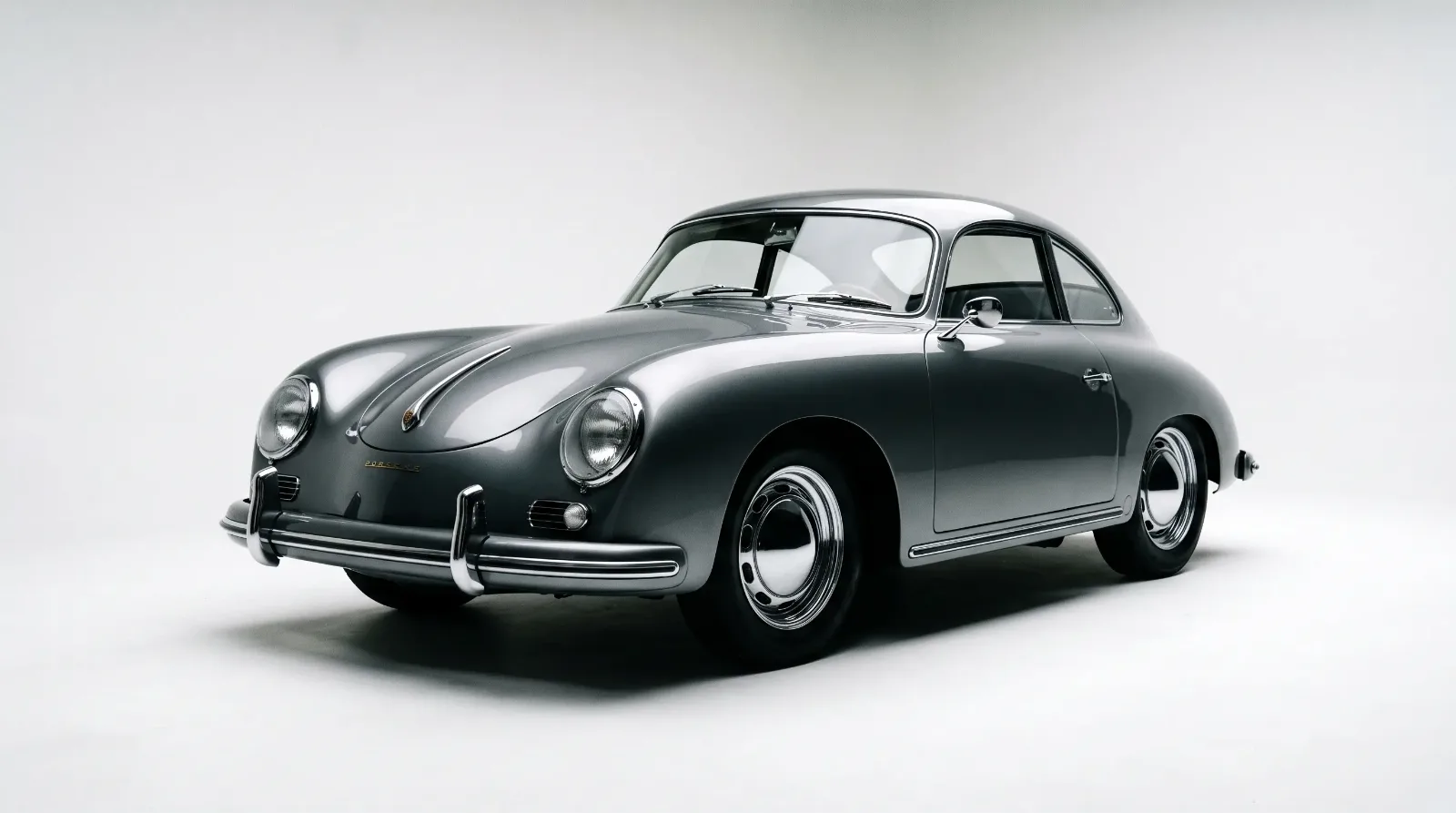
Porsche 356 design is often described as timeless, which is a word that hides more than it explains. The shape did not arrive fully formed and it did not stay static for the seventeen years the 356 was in production. What makes it read as a single coherent idea today is that every change, from the split windshield of the earliest cars to the bumpers of the last 356 C, was made in service of the same low, rounded, wind-cheating silhouette that Erwin Komenda drew before the first production car left the workshop.
Komenda's teardrop and where it came from
Erwin Komenda was already an experienced body engineer by the time he shaped the 356, having worked on the Volkswagen Beetle and on pre-war streamlined prototypes at Porsche's design studio. The 356's silhouette, a low nose, a steeply raked windshield, and a rear deck that tapers down toward the tail, drew directly on the aerodynamic research that had gone into those earlier projects. It is not a coincidence that the 356 shares its basic proportions and its rear-engine, rear-wheel-drive layout with the Beetle; the same small design office had spent years thinking about how to shape a car around an air-cooled flat engine mounted behind the rear axle.
What Komenda did differently for the 356 was pull the whole car lower and tighter. The Beetle's shape prioritized headroom and interior volume. The 356 sacrificed both in favor of a smaller frontal area and a silhouette that looked fast standing still, a decision that came directly from Ferry Porsche's brief for a genuine sports car rather than a sporting version of an economy car.
The windshield tells the whole story
If you want a single detail that tracks the entire evolution of 356 design, look at the windshield. The earliest cars, built in Gmund and the first Zuffenhausen production run, used a two-piece split windshield, a shape dictated as much by the cost and limits of curved-glass manufacturing in the late 1940s as by styling preference. By the early 1950s, Porsche moved to a one-piece bent windshield with a visible center crease, a transitional solution that still betrayed the tooling limitations of the era. Only with the 356 A of 1955 did Porsche adopt a genuinely curved single-piece windshield, and that change alone softened the entire front-end appearance of the car, rounding off what had been a slightly angular greenhouse.
The same pattern shows up in the headlights and the bumpers across the A, B, and C model runs. Headlights migrated from deeply recessed units to a flatter, more integrated position by the 356 B, and bumpers grew progressively larger and higher on the body to meet evolving safety expectations, changes that a purist eye can date a 356 by from thirty feet away.
Restraint as a design principle
What separates 356 design from most of its contemporaries is what Komenda and Porsche's studio chose to leave off the car. There is no chrome for its own sake, no ornamental grille since the engine sits behind the passenger compartment and needs no front air intake, and no applied brightwork beyond what function required. The car's visual interest comes entirely from surface, from the way sheet steel curves over the wheel arches and tapers toward the tail, rather than from decoration layered on top of a simpler shape.
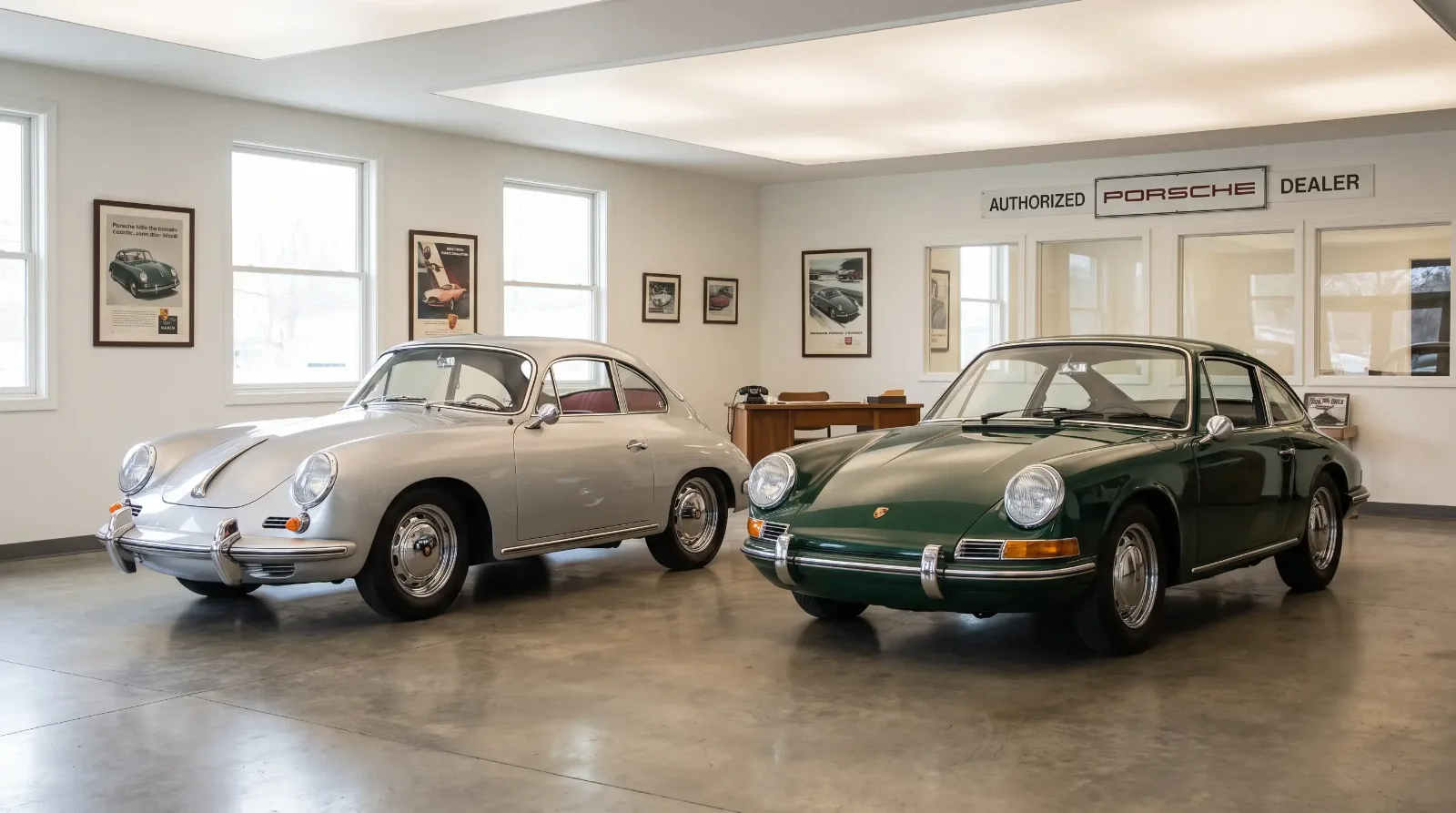
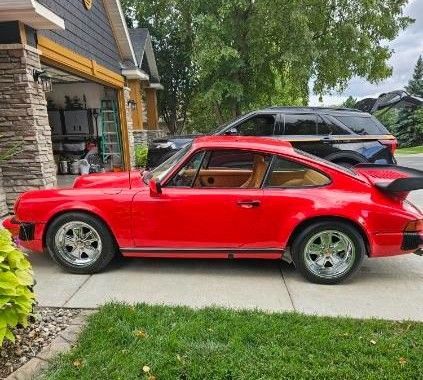
That restraint is precisely why the 356 has aged so well next to more heavily ornamented cars from the same decade. It also explains why the shape reads as a direct ancestor of the 911 rather than a car the 911 replaced outright. The relationship between the two, and how much of the 356's design language survived the handover, is covered in more from this chapter.
"The 356 does not have a single dramatic design gesture the way some of its contemporaries do. Its achievement is proportion. Every panel answers to the one beside it, and nothing on the car is there to be looked at rather than to work."
— Sarah Whitfield
Interior design followed the same logic
The cabin of a 356 tells the same restrained story as the exterior. Early cars used a simple painted metal dashboard with a small number of gauges set directly into the panel, no applied wood, no chrome bezels beyond what the instruments needed. As the model matured through the A and B series, Porsche added a proper padded dash top and reshaped the gauge cluster, but the changes tracked function rather than fashion: better visibility for the driver, a slightly larger glovebox, improved ventilation controls. Seats stayed thin and upright by later standards because the car's low roofline simply did not allow for much cushioning, and that constraint shaped the driving position as much as any deliberate styling decision did.
Door handles, window cranks, and switchgear followed a similar pattern of quiet refinement rather than redesign. Components that worked in the earliest cars tended to stay in service, sometimes with minor material or finish updates, for years afterward. That consistency is part of why a well-kept 356 interior feels coherent from front to back even across a model run that spanned three major revisions.
Design as the throughline of the 356's story
Across the 356's full production run, from the first Gmund cars through the final 356 C, the shape changed in dozens of small increments but never lost its essential proportions. That consistency is why the model still photographs as a single idea today, even though a 1948 car and a 1965 car share relatively few interchangeable body panels. The engine covers, hood lines, and even the shape of the horn grilles changed across the A, B, and C series, yet none of those revisions ever competed with the silhouette for attention, which is the clearest sign that Komenda's original proportions, rather than any single styling flourish, were doing the real work.
The full arc of that story, including how the earliest cars came to exist at all, is told in the 356 chapter, which sets the design evolution against the company's founding and its first customer deliveries.