The move from Porsche 356 to 911 is usually told as a clean handover, one model ending as the next begins. The actual timeline is messier and more interesting than that. For roughly two years, Porsche built and sold both cars side by side, and the engineering differences between them were large enough that "replacement" undersells what actually happened. The 911 was not a facelifted 356. It was a new platform that happened to arrive while the old one still had buyers.
Two cars on sale at once
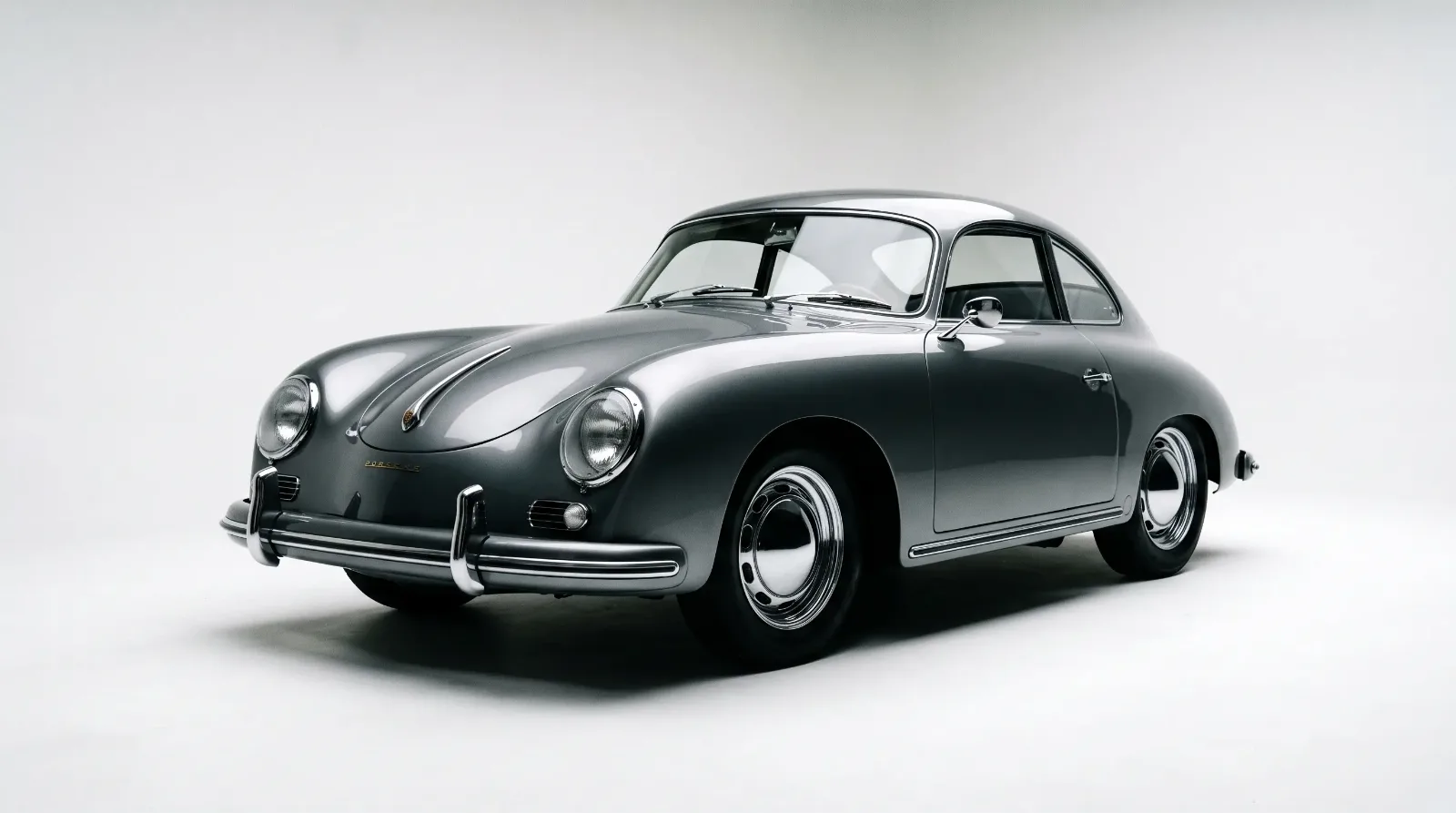
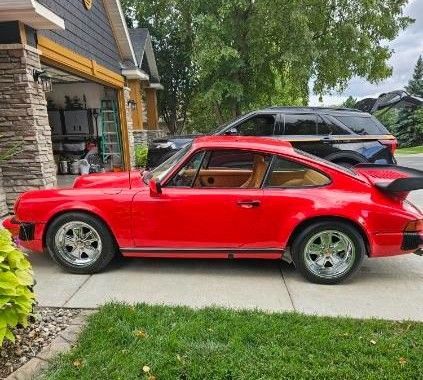
The 911, launched under the internal designation 901, went into production in September 1964. The 356, by then in its final C-series form, did not stop. Porsche kept building 356 C coupes and cabriolets alongside the new car through 1965, and dealers sold both from the same showrooms. This overlap was a deliberate business decision, not an oversight. The 901/911 was more expensive to build and to buy, and Porsche's management had no interest in walking away from a proven, profitable product line before demand for the new car was established.
Readers coming from the 356 story already know how long that product line had been paying its way by 1964: the model had been in continuous production since the late 1940s, through three major revisions, and it still had a loyal customer base that had no particular reason to pay a premium for an unproven successor.
What actually changed under the skin
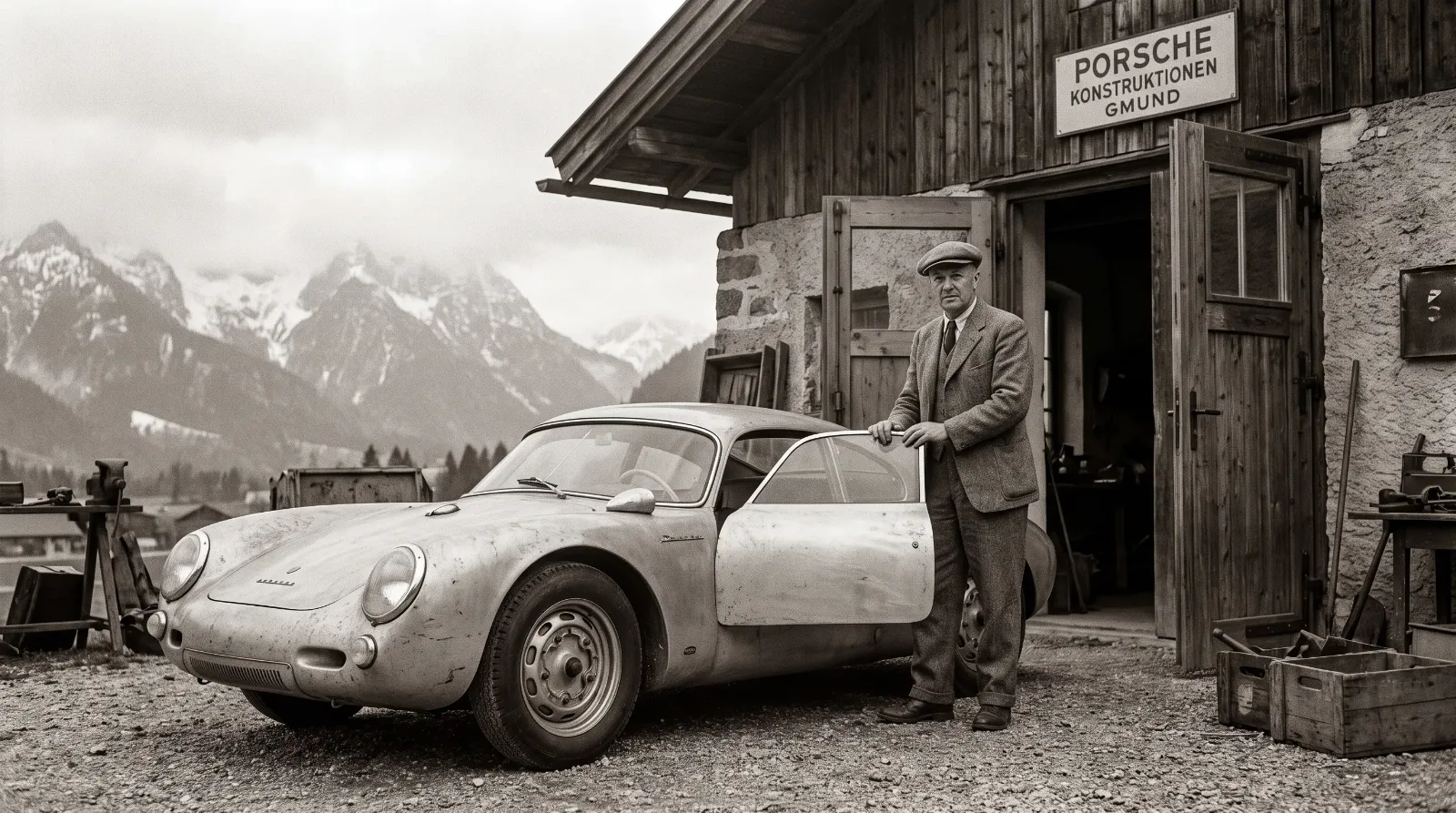
The headline mechanical change was the engine. The 356, in every version from Gmund to C, used an air-cooled flat-four descended from the Volkswagen Beetle engine, growing from roughly 1.1 liters in the earliest cars to 1.6 liters and beyond by the SC. The 911 replaced it with an entirely new air-cooled flat-six, larger, more complex, and built specifically for the new car rather than adapted from an existing design. That single change cascaded through nearly everything else: a longer engine needed a longer wheelbase, a stiffer unibody to manage the extra weight and power, and a completely reworked rear suspension to control it.
The chassis numbers tell the rest of the story. The 911's wheelbase grew to about 87.1 inches versus roughly 82.7 inches on the 356, and the car's dry weight climbed as well, trading some of the 356's featherweight agility for a stiffer structure. The original 2.0-liter flat-six made around 130 hp at 6,200 rpm in 1965, a figure that climbed considerably as the six-cylinder matured through the rest of the decade.
| Attribute | 356 C (1963 to 1965) | 911 / 901 (1964 launch) |
|---|---|---|
| Engine layout | Air-cooled flat-four | Air-cooled flat-six |
| Displacement | Approx. 1.6 liters | Approx. 2.0 liters |
| Wheelbase | Approx. 82.7 in | Approx. 87.1 in |
| Body construction | Reutter/Karmann steel monocoque | New-generation steel monocoque |
| Production status in 1965 | Winding down | Ramping up |
The 901 becomes the 911
The new car's original designation, 901, lasted only a few months on production cars. Peugeot held a trademark in France on model names formed from three digits with a zero in the middle, a naming convention it had used since early in the twentieth century, and it objected when Porsche's new sports car went on sale under that scheme. Porsche renumbered the car 911 rather than fight the claim, a change so early in the production run that only 82 cars, built between September and November 1964 and used mainly for testing and exhibition rather than customer sale, ever wore the original 901 badge.
"People assume the 911 obsoleted the 356 the day it appeared. It did not. For about two years the two cars were direct competitors on the same showroom floor, and the 356 held its own because it was lighter, simpler, and a known quantity. The 911 won on the merits of the new engine and chassis, not because Porsche stopped selling the old one."
— Emily Chen
Why some buyers still chose the 356 C
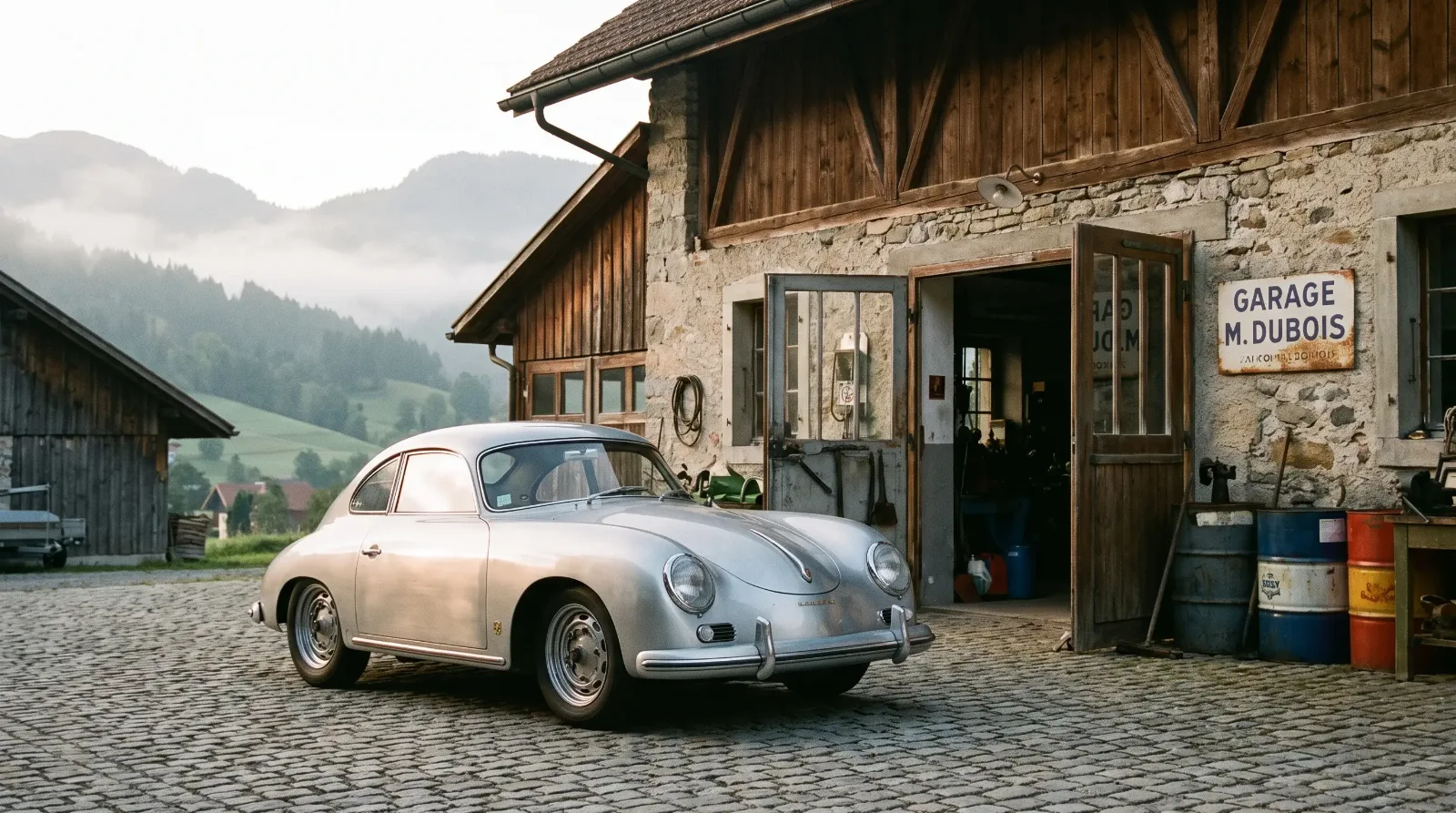
The 356 C's case during the overlap years was straightforward: it was cheaper, it was lighter, and its four-cylinder engine was simpler to service than the new flat-six, which needed specialized tooling and training that not every independent mechanic had yet acquired. For a buyer who wanted a proven, well-sorted sports car rather than the first examples of an unfamiliar platform, the 356 C remained a rational choice right up until Porsche ended its production in 1965.
That overlap period is also why so many 356 C survivors today are extremely well sorted cars. They were bought, in many cases, by owners who specifically preferred the established platform, and those owners tended to maintain their cars carefully rather than treat them as a stopgap before trading up. For the fuller arc of how the company arrived at this fork in its lineup, Porsche's full origin story lays out the founding decisions that made both the 356 and the 911 possible in the first place, and the next story in this set looks at the man whose original brief shaped the car the 911 eventually replaced.
Running two distinct platforms through the same dealer network for two years created real logistical strain. Parts departments had to stock engine components, suspension pieces, and body panels for both the 356 C and the new 911, and independent mechanics who had built their businesses around the flat-four's relative simplicity suddenly needed new training and new tooling to service the six-cylinder car properly. Some shops handled both without difficulty. Others specialized, and that early specialization is part of why certain independent Porsche shops today still trace their reputations back to which platform they mastered first during the mid-1960s changeover.
The overlap also shaped how Porsche priced the two cars. The 356 C, nearing the end of its production run, was discounted relative to its earlier years to keep moving inventory, while the 911 carried a premium that reflected both its higher production cost and its position as the flagship. That pricing gap widened the gulf between the two customer bases: buyers chasing value gravitated to the 356 C, while buyers chasing the newest engineering paid up for the 911, and Porsche was, in effect, running two separate product lines under one roof for the better part of two years.
An engineering handover, not a styling one
Viewed strictly on the numbers, the shift from 356 to 911 reads less like an evolution and more like a generational reset that happened to keep a familiar silhouette. The engine, the wheelbase, the suspension, and the unibody were effectively new. What carried over was the layout philosophy, rear engine, rear-wheel drive, low frontal area, and the design restraint that had defined the 356 since its earliest form. That is enough continuity to explain why enthusiasts see the two cars as one continuous story, even though very little steel or aluminum was shared between them.
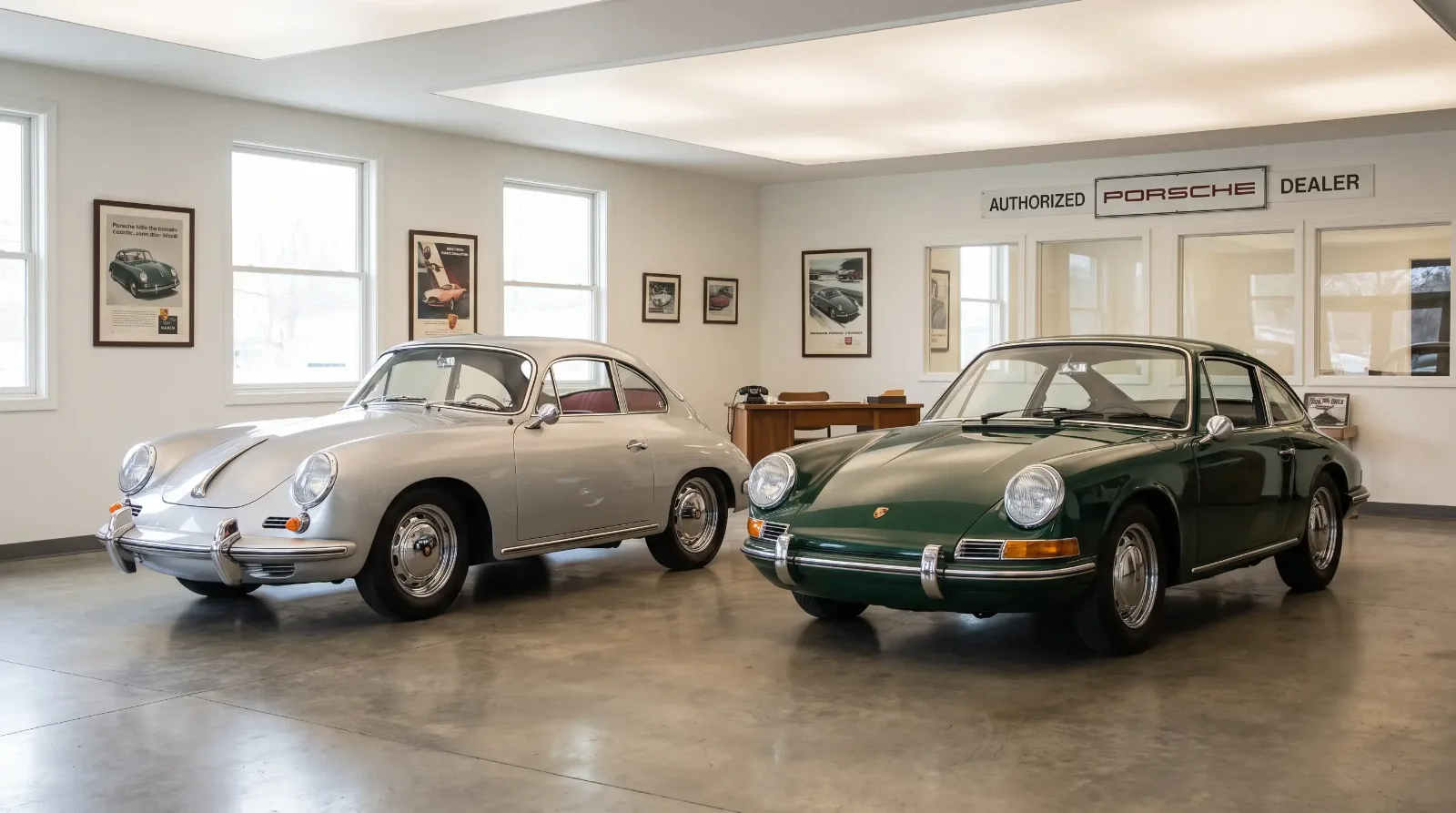
For the buyer shopping today, that distinction matters practically as well as historically. A 356 C and an early 911 demand different maintenance knowledge, different parts sourcing, and different expectations about what "correct" looks like under the skin, even though a photograph of the two parked side by side can make them look like close siblings rather than the generational break they actually represent.