
Stand behind an early 911 in a parking lot next to one of its 1970s successors and the difference jumps out before you've even read a badge. The nose sits longer, the bumpers are thin chrome blades instead of thick rubber-capped units, and the whole car reads lower and leaner. Collectors call this window the longhood era, roughly 1964 through 1973, and the early porsche 911 longhood cars from those years are treated today as a distinct species within the model's history, not just "old 911s." This piece picks up where the air-cooled 911 story leaves off and stays inside that specific nine-year window.
Car Features
6 min read
The Longhood Years: Early 911 Design 1964–1973
Between 1964 and 1973, Porsche grew the 911's engine three times, fixed its most dangerous handling flaw, and defined the slim-bumper shape enthusiasts now call longhood.
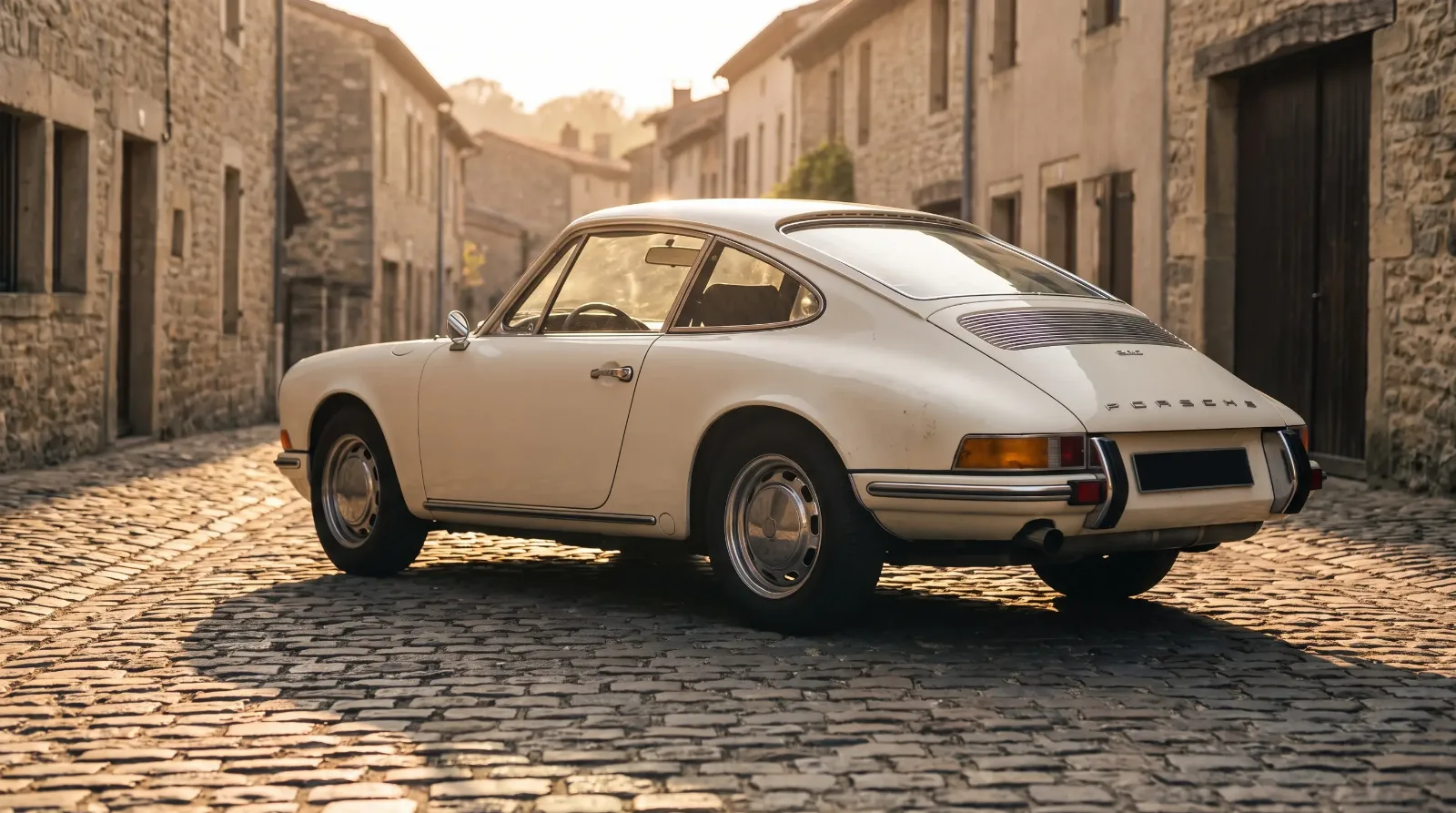
What "longhood" actually means
The nickname isn't poetic license. Before Porsche adopted the thicker, government-mandated impact bumpers for the 1974 model year, the 911's front end was a clean, unbroken line running from the headlights to a slim chrome bumper that barely projected past the bodywork. That shape, combined with a front hood free of the rubber bellows and body-color caps that followed, is what people mean when they say longhood. It's a bumper-and-nose distinction first, and everything else about the era, the engines, the chassis tweaks, the interior details, gets discussed underneath that umbrella.
Within the longhood years themselves, Porsche wasn't standing still. The factory ran through several internal chassis generations, commonly labeled by enthusiasts using letter codes tied to model year, and each one carried real mechanical changes rather than cosmetic refreshes. Treating "longhood" as one static car misses most of what actually happened between 1964 and 1973.
The engine growing under that long nose
The earliest cars left Zuffenhausen with a 2.0 liter flat-six, a reasonably modest unit by later standards but advanced for its class at the time. Porsche grew that displacement steadily rather than in one leap. By 1970 the base engine had moved to 2.2 liters, and by 1972 the standard six had grown again to 2.4 liters, with the 911S and other higher-output variants carrying different carburetion, compression, and cam profiles across those same years.
None of this was displacement for its own sake. Emissions rules were tightening in export markets, particularly the United States, and Porsche needed torque and driveability to survive that squeeze without losing the character that made the car worth buying. The longhood era is really the story of an engineering team fighting a rearguard action against regulation while still finding ways to make each generation genuinely quicker than the last.
The wheelbase fix that saved the handling
Early 911s earned a reputation, not entirely undeserved, for snap oversteer when a driver lifted off the throttle mid-corner. The rear-mounted engine's weight bias made the car rewarding when driven with care and genuinely dangerous when it wasn't. Porsche's answer arrived for the 1969 model year: a wheelbase stretched by 57 millimeters, achieved by moving the rear wheels rearward within the same basic body, which shifted weight distribution enough to calm the car's worst instincts without touching the shape that made it a 911.
It's one of the more underrated fixes in the model's history because it didn't require a new body or a public relations campaign. Owners of pre-1969 cars still talk about the difference in the same breath as the engine changes, and any serious buyer of a longhood car today needs to know which side of that 1969 line a particular example falls on.
| Model years | Engine | Chassis note |
|---|---|---|
| 1964 to 1968 | 2.0 liter flat-six | Short wheelbase, pre-1969 handling behavior |
| 1969 | 2.0 liter flat-six | Long wheelbase introduced (57mm), revised weight distribution |
| 1970 to 1971 | 2.2 liter flat-six | Continued long wheelbase |
| 1972 to 1973 | 2.4 liter flat-six | Continued long wheelbase, final pre-impact-bumper years |
Targa roofs and Sportomatic clutches, the era's oddities
The longhood years also introduced two features that split opinion at the time and still do now. The Targa, launched in 1967 with its distinctive stainless steel roll hoop and removable roof panel, was Porsche's answer to open-air motoring in an era when full convertibles were falling out of favor with regulators. It gave buyers a genuine middle ground between coupe and cabriolet, and it remained a fixture of the lineup well past the longhood era itself.
The Sportomatic transmission is a different story. A clutchless semi-automatic built around a torque converter and a four-speed gearbox, it let drivers shift without a clutch pedal while keeping some manual control over gear selection. Purists dismissed it then and mostly still do, but it sold steadily enough to stay in the catalog for years, evidence that not every 911 buyer wanted a full manual experience even in the car's most driver-focused decade.
Both features say something about how Porsche actually thought about its buyers during this stretch. The company wasn't building one narrow sports car for one narrow customer. It was quietly hedging, offering an open-roof option for people who wanted sun and wind without sacrificing structural rigidity, and a simplified transmission for people who wanted the shape and the sound without the demands of a clutch pedal in daily traffic. Neither choice diluted the six-cylinder cars that mattered most to enthusiasts, and both stayed available right alongside the standard coupe and manual gearbox for years.
"People romanticize the longhood cars as if Porsche built one perfect shape and left it alone for a decade. What actually happened is a company patching, lengthening, and re-engineering a car in real time, one model year after another, and somehow keeping it recognizable the whole way through."
Patrick Walsh
Why these years still set the standard
The longhood era ended for a mundane reason, new United States bumper-impact regulations that took effect for the 1974 model year, but the cars it produced still define what most enthusiasts picture when someone says "classic 911." The proportions, the engine note, even the handling quirks that Porsche spent years correcting, all of it happened inside this nine-year window. If you want to see where that development curve peaked mechanically before regulation reshaped the car for good, a related deep-dive covers exactly that moment. And if you're coming to this cold, it's worth backing up to see how the whole model got here in the first place, which the broader Porsche saga lays out from the start.
Sources and notes
- Wikipedia: Porsche 911 (classic)
- Stuttcars: Porsche 911 F-Series research hub
- Supercar Nostalgia: Porsche 911 A and B-Series, 1968-1969
- Porsche Club of America: Model Guide, the first Porsche 911s
- Hagerty: 1970 911T Sportomatic, Porsche's first move toward self-shifting
- RennDriver: Porsche Long Hood Targa (1967-1973) history and buying guide
Related Reading
Have a
Porsche
for Sale?
Reach thousands of serious classic car collectors across the US.
Sell It Here →
Are You a Classic Car Dealer?
List your full inventory and connect with targeted classic car buyers.
Join as a Dealer →

About the author
Patrick Walsh
Automotive journalist covering classic car shows, events, and the enthusiast community across North America.
Related Listings - Porsche
Comments
Be the first to comment on this article.