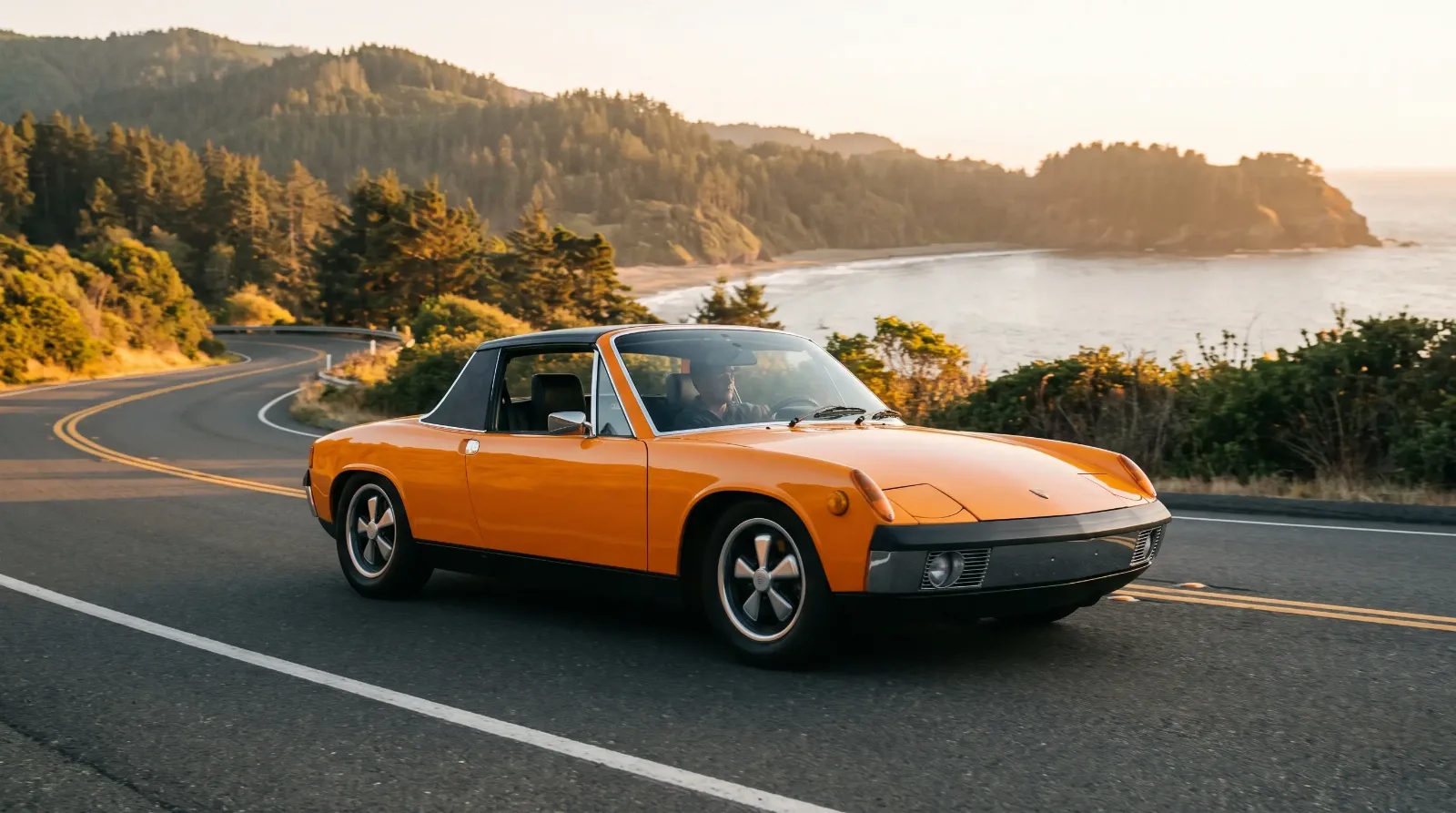
The Porsche 914/6 GT never had the glamour of a 911 in works colors, and that is part of what makes its record at Le Mans and Daytona worth revisiting. Built in small numbers for FIA Group 4 competition, the 914/6 GT took a car most enthusiasts dismissed as a badge-engineered VW and turned it into a genuine giant-killer, finishing ahead of cars that cost several times as much and carried far more prestige. Understanding why requires looking past the fiberglass flares and into the chassis engineering underneath.
What separated a GT from a road-going 914/6
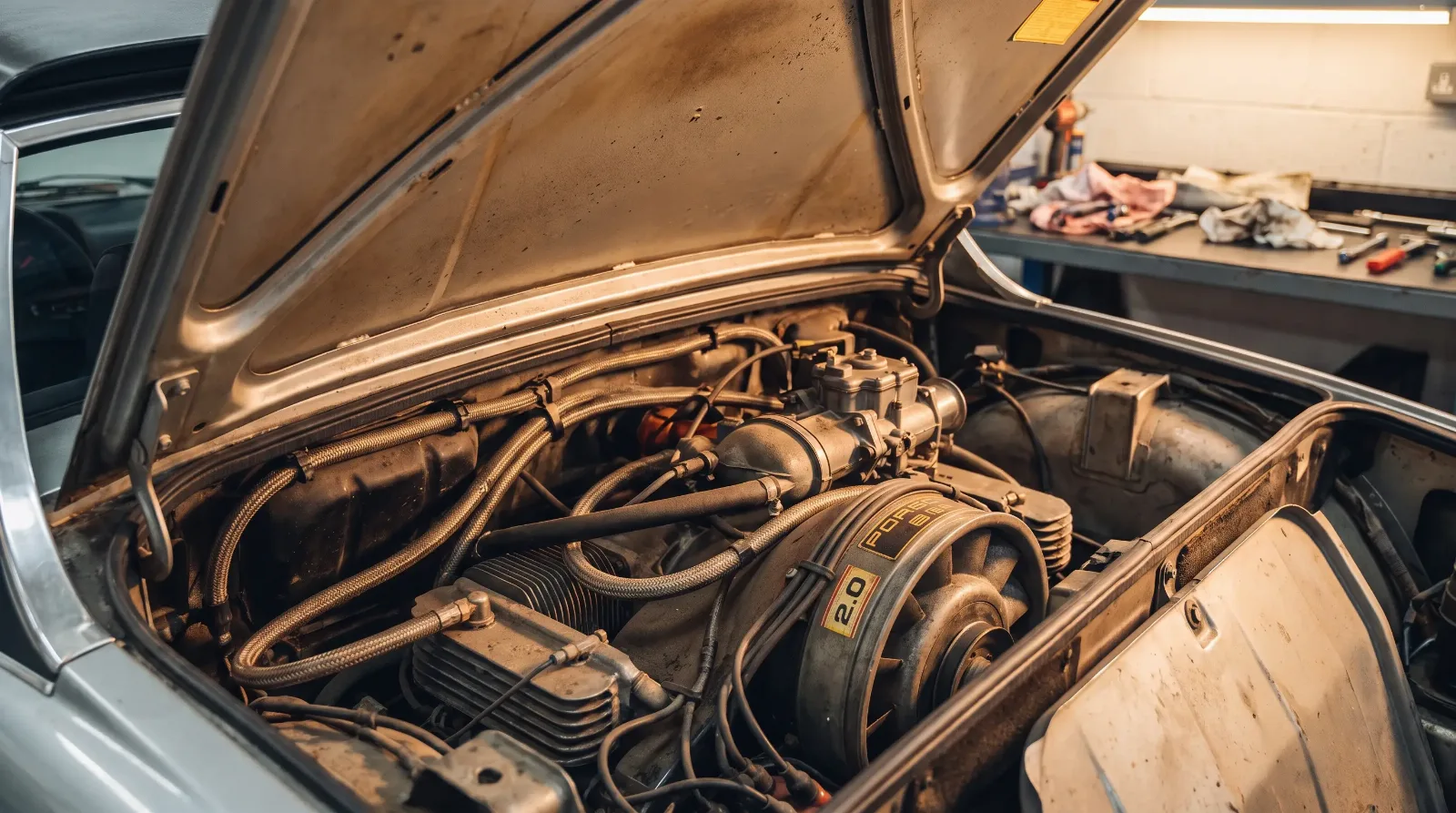
The road car, the VW-Porsche 914, was already an unusual proposition: a mid-engine chassis wearing a body built jointly by two companies that did not always agree on what the car should be. The GT variant took that chassis and stripped the compromise out of it. Steel fenders were swapped for bonded fiberglass flares to clear wider wheels, the floor and rockers were reinforced, and weight came out everywhere it could, with the competition car weighing just under 2,100 pounds (950 kg) ready to race. The 2.0 liter flat six, shared in spec with the contemporary 911T, was tuned with different cam timing and a reworked exhaust for more usable midrange power on long circuits.
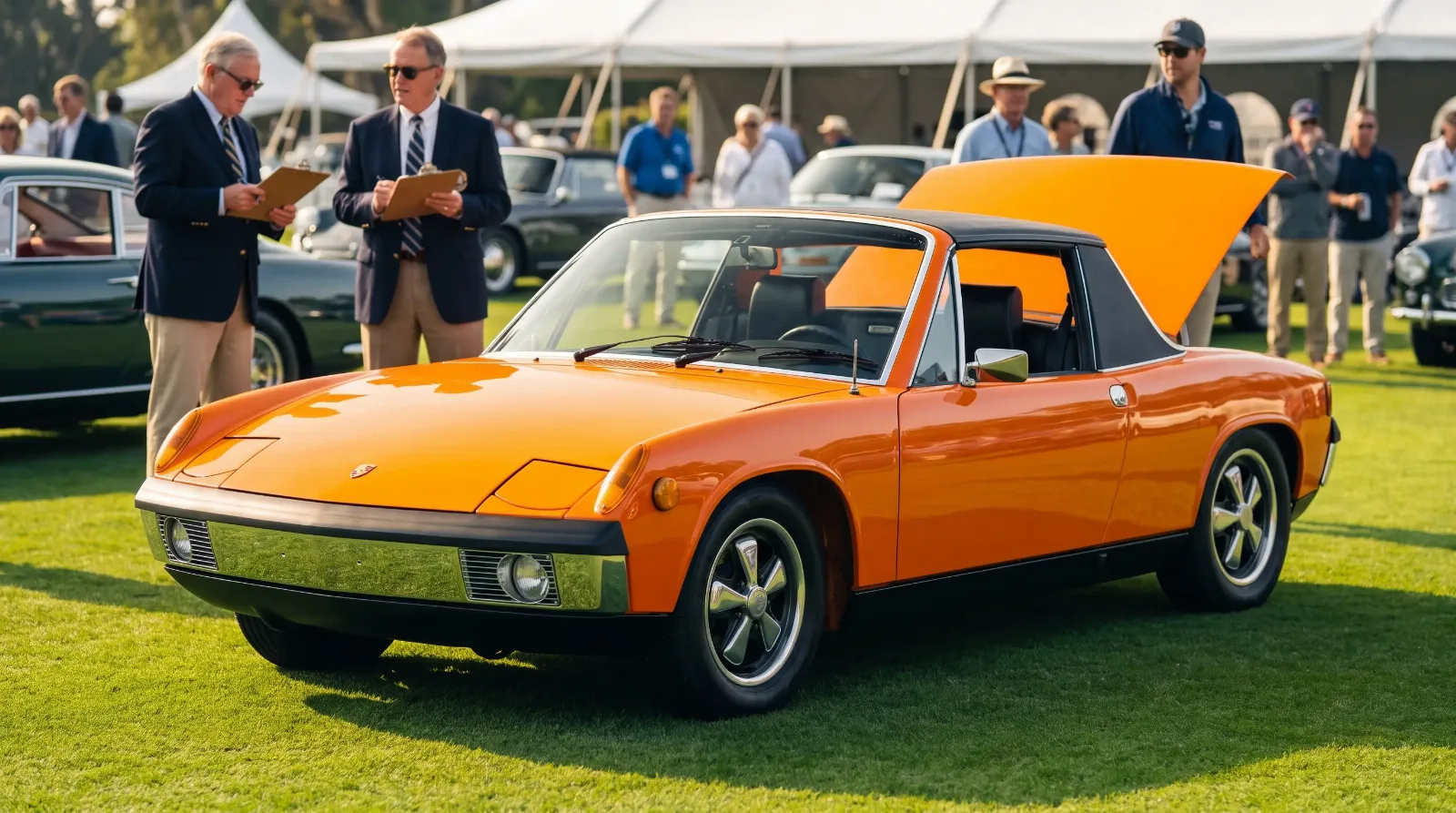
None of this happened by accident. Porsche's competition department treated the 914/6 GT as a serious homologation project, not a marketing exercise, which is why the surviving cars still command attention from concours judges who care about original racing history rather than just badge value.
Le Mans, 1970: the class result nobody expected
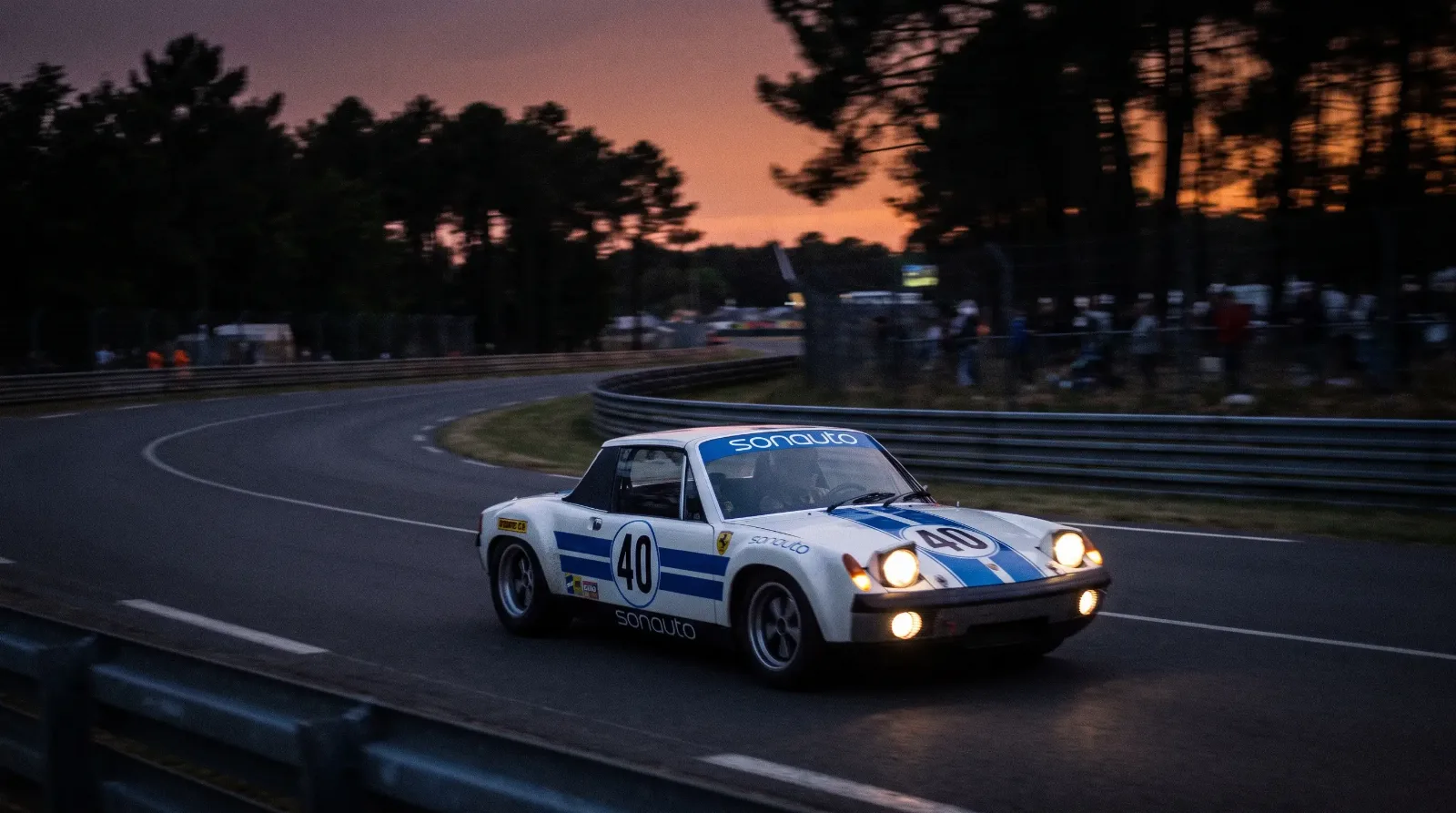
At the 1970 running of the 24 Hours of Le Mans, a trio of 914/6 GTs entered in the GT class, and the results surprised people who had written the model off as a parts-bin experiment. The cars finished the race running, which in an event known for attrition is itself a result, and they took class honors in a field that included faster, more expensive machinery. The Sonauto-entered car, numbered 40 and driven by Claude Ballot-Lena and Guy Chasseuil, finished sixth overall, having started 45th, and won not just its own GT 2.0 class but the larger GT 2.5 class above it, beating every factory-entered 911S in the process. The margin of victory in the GT class was less important than the fact these cars were still circulating at race pace after twenty four hours, a testament to the strength of the underlying chassis rather than outright speed.
What the record books tend to flatten is how differently the 914/6 GT achieved its result compared with a 911. The mid-engine layout gave the car a different handling character under braking into the Mulsanne chicanes and through the Porsche Curves, and drivers who came from front-engine cars had to unlearn habits before the car would reward them.
Daytona and the endurance calendar beyond Le Mans
Le Mans gets the attention, but the 914/6 GT's competition life extended into the American endurance calendar as well, including entries at Daytona. A factory-built 914/6 GT finished first in class and seventh overall at the 1971 24 Hours of Daytona, driven by Jacques Duval, Bob Bailey, and George Nicholas. The car's appeal to American privateer teams was straightforward: it offered genuine factory-influenced engineering at a fraction of the cost of running a 911 or a European GT car, and its parts commonality with production 914 and 911 components meant a well-connected team could keep one running through a full season without waiting on exotic parts.
That accessibility is exactly why the model built a following among privateers who wanted to race something with real pedigree without needing a factory budget behind them. The 914/6 GT was never going to out-qualify the fastest prototypes on the grid, but it consistently punished cars that should have finished ahead of it on paper.
"The thing people miss about the 914/6 GT is that it was never trying to be the fastest car on the grid. It was built to survive the race intact and beat cars that looked faster on a spec sheet. That's a different kind of engineering discipline, and it shows in how well the surviving examples have held up structurally."
— Sarah Whitfield
The privateer teams who kept the program alive
Factory support for the 914/6 GT program was never on the scale of what Porsche put behind the 911 in the same era, which meant privateer teams did much of the heavy lifting in keeping the model on grids through the early 1970s. These were operations run on modest budgets, often by owners who had bought a car specifically because parts commonality with the road-going 914 and 911 kept running costs manageable compared with fielding a purpose-built prototype. That accessibility shaped who actually got to race one, and it is a big part of why the model built a loyal following far beyond what its factory involvement alone would suggest.
French importer Sonauto fielded the Le Mans class winner, and in American IMSA competition privateer Walt Maas ran a 914/6 GT with regular success through the early 1970s. Team owners who ran the car described a machine that rewarded patience over aggression, a description that lines up with everything else known about the chassis. Drivers who tried to muscle the car into corners the way they might a front-engine GT car tended to find less speed than drivers who let the mid-engine balance do the work for them.
Why the 914/6 GT still matters to collectors
Surviving competition 914/6 GTs are rare, and their rarity is compounded by the fact that many were raced hard, crashed, repaired, and raced again before anyone thought to preserve them as historical objects. Documentation matters enormously here. A car with a verifiable Le Mans or Daytona entry, chassis records, and period photography carries a value multiple over a nicely restored road 914/6 with no competition history, and that gap has only widened as more collectors have come to understand the racing story properly. the another angle on the same car piece looks at why the mid-engine layout itself was such an engineering departure for Porsche, and it is worth reading alongside the racing history, because the two stories explain each other. The GT programs succeeded because the underlying architecture was sound, not despite it.
For anyone assessing a 914/6 GT today, the questions are less about horsepower than about provenance: which race, which chassis number, which repairs, and whether the fiberglass flares and reinforced structure are original to the car's competition life or a later addition meant to evoke it. The honest ones are rare, and rareness is precisely what makes them worth the scrutiny.