
Powder blue and marigold orange should not work as a race livery. It is not a national racing color, it does not match anything on a flag, and it started life as an oil company's corporate palette rather than anything to do with speed. Yet gulf oil porsche 917 machines from 1970 and 1971 are probably the most recognized racing cars of the entire era, more famous today than most of the drivers who raced them. The Porsche 917 wore a lot of liveries across its short competition life, but this is the one that ended up on posters, model kits, and eventually a Steve McQueen film.
Car Features
6 min read
Gulf Blue & Orange: The 917's Iconic Livery
Powder blue and marigold orange became one of racing's most famous liveries after John Wyer's Gulf-sponsored Porsche 917 team took to the track in 1970.
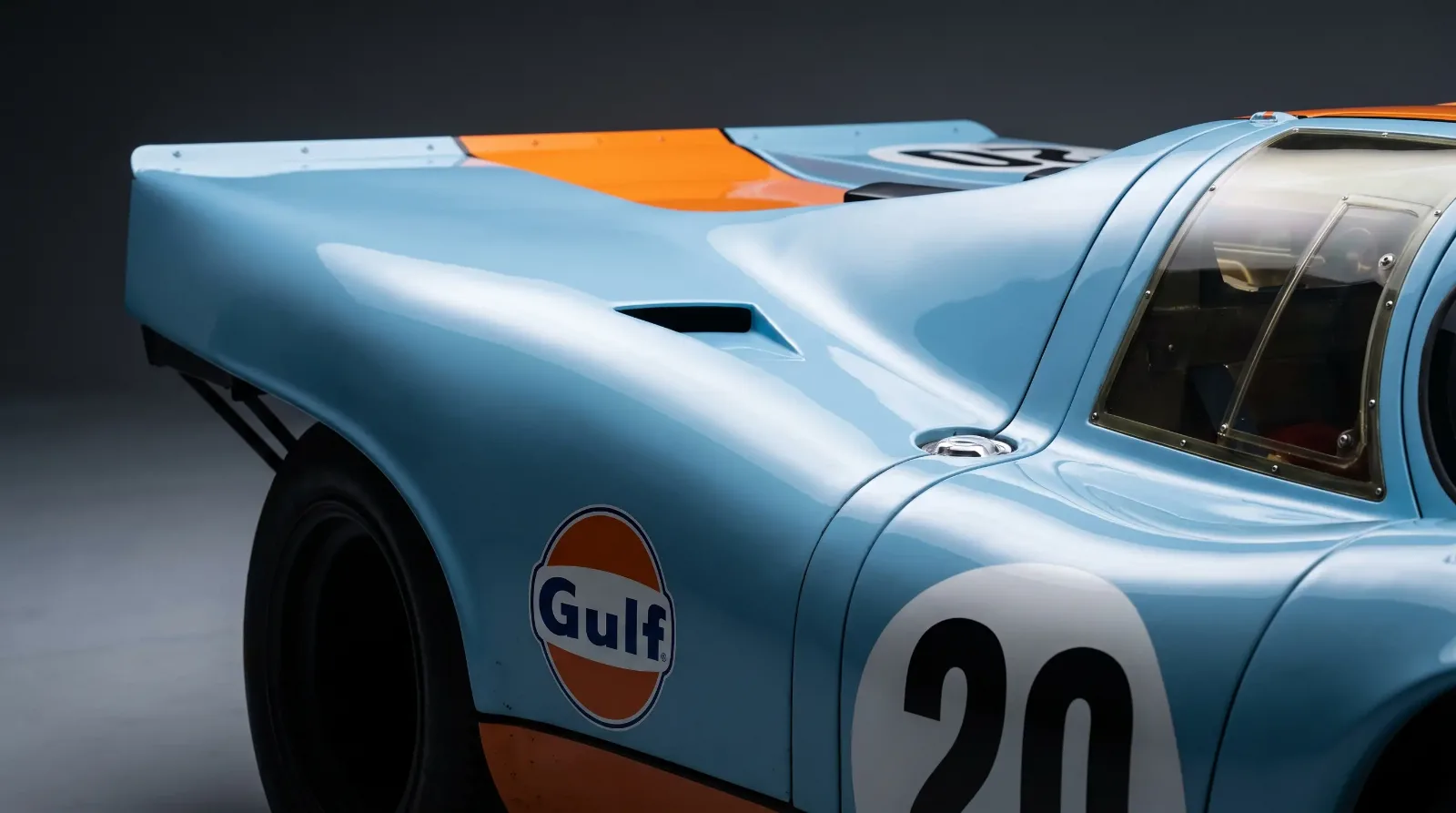
John Wyer's team and a color scheme born elsewhere
The Gulf livery did not start with the 917. John Wyer Automotive Engineering, known as JWA or simply Wyer's team, had been running Gulf-sponsored Ford GT40s since 1968, and when Wyer's outfit became one of two teams entrusted with factory-backed 917s for 1970, the sponsorship and its colors came along for the ride. Wyer himself was a meticulous, unsentimental team principal, an Englishman who had already won Le Mans multiple times with Aston Martin and Ford before Porsche ever came calling. He treated the Gulf contract as seriously as he treated engine specifications, which is part of why the paint scheme survived essentially unchanged for two full seasons.
The cars themselves were built by Porsche and prepared to factory specification, but raced under the JW Automotive banner rather than as pure works entries. That is a distinction covered in more detail alongside the 917 and Le Mans years, since the factory's decision to split its effort between multiple semi-independent teams shaped how the car's whole competition history played out.
Why the colors actually worked on track
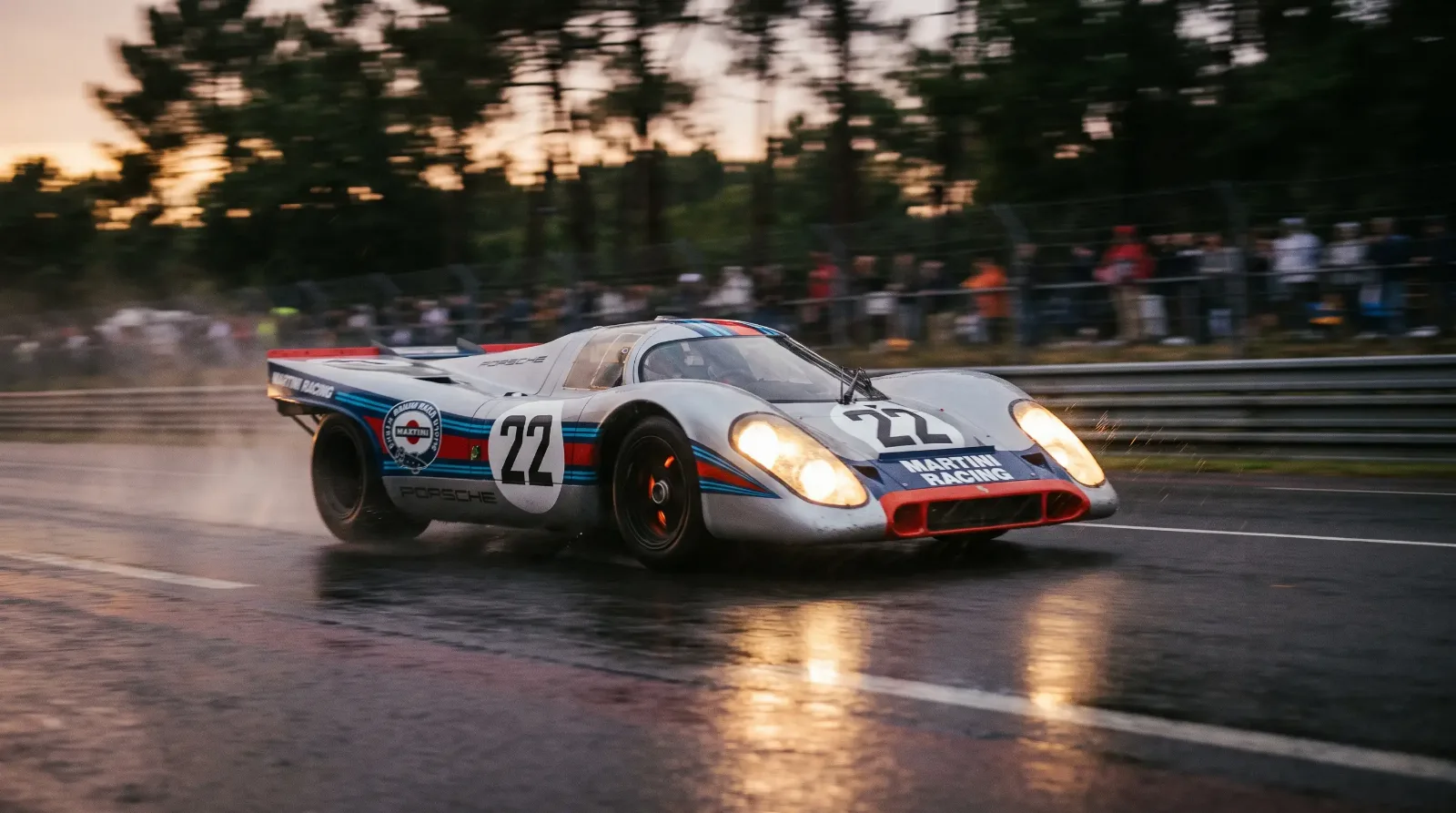
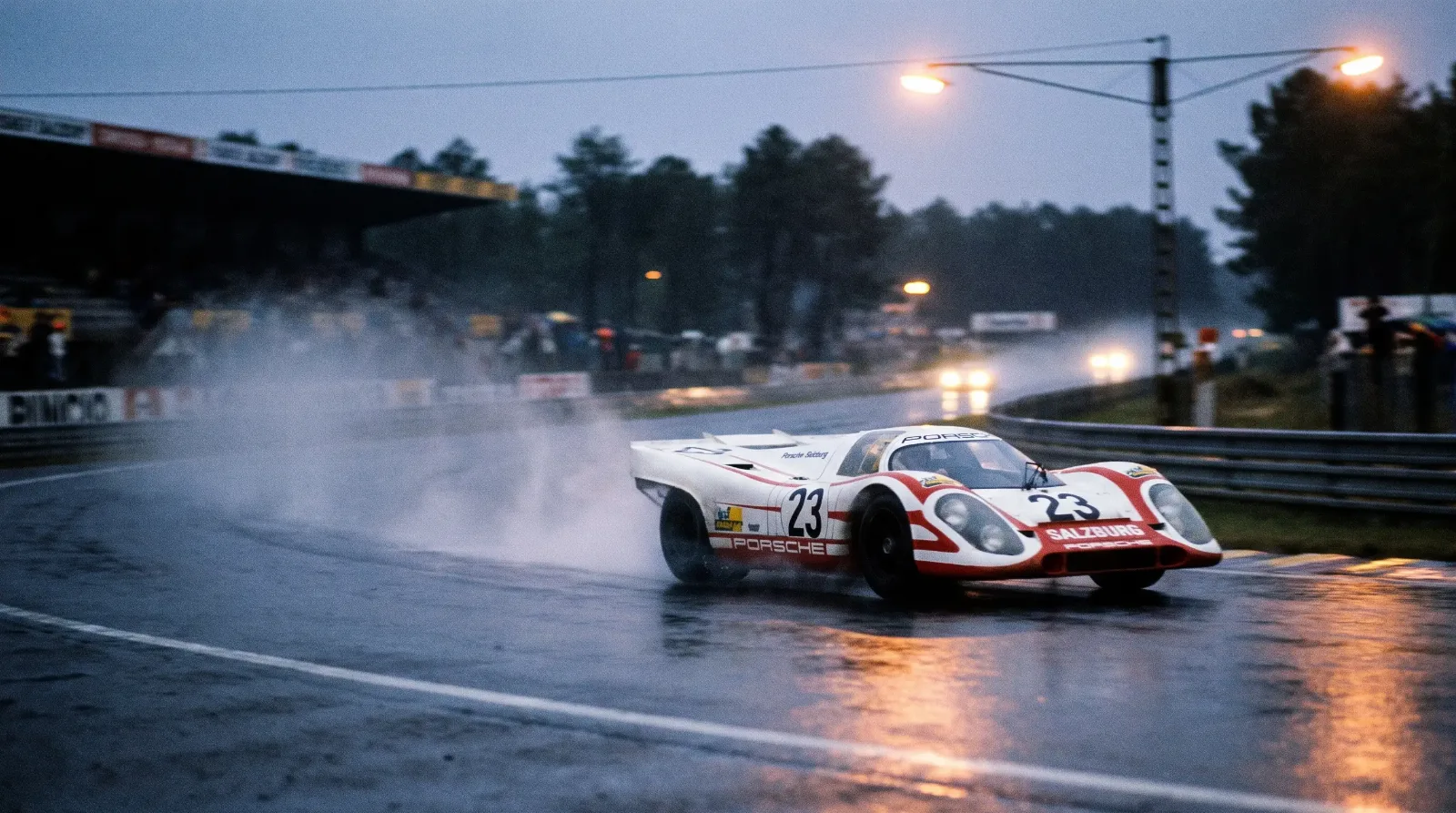
Beyond the visual appeal, the Gulf cars were genuinely competitive. Pedro Rodriguez, driving for Wyer's team, won the 1970 Daytona 24 Hours in a Gulf 917K alongside Leo Kinnunen and Brian Redman, often by margins that embarrassed the rest of the field. At Spa a few months later it was Rodriguez's Gulf teammates, Jo Siffert and Brian Redman, who took the win in the sister 917K after Rodriguez's own car retired with a gearbox failure. Rodriguez had a reputation for being fastest in the wet, and 1970 gave him plenty of opportunities to prove it. The Gulf cars did not win Le Mans itself in either 1970 or 1971, losing that particular battle to the Porsche Salzburg and Martini-backed entries, but across the wider championship season the Gulf-liveried 917s were often the car to beat.
The film that made it permanent
What cemented the livery in popular memory was not a race result at all. Steve McQueen's 1971 film "Le Mans" was shot largely at the actual circuit during and around the real race weekend, using real racing 917s and 512s, and McQueen's character drove a Gulf-liveried 917K on screen. The film was not a commercial hit on release, but it became a cult favorite over the following decades, and its slow-burn following did more to fix the Gulf blue and orange scheme in the public imagination than any actual championship result managed. People who have never watched a full endurance race can usually still identify a Gulf 917 on sight, which says something about how effective that combination of film and paint turned out to be.
"Racing liveries are supposed to be forgotten within a decade. This one got a second life it never earned on the track alone."
Patrick Walsh
What survives and what it is worth today
Genuine Gulf-liveried 917s, meaning cars actually raced by Wyer's team in period, are among the most valuable racing cars in existence, changing hands for eight figures when they do come up for sale, which is rare. The color scheme itself has outlived the cars, though. Gulf still uses variations of the same blue and orange on modern sponsorship deals, and countless replica liveries on unrelated makes borrow the scheme specifically to trade on the association with the 917. None of them carry quite the same weight as the real thing.
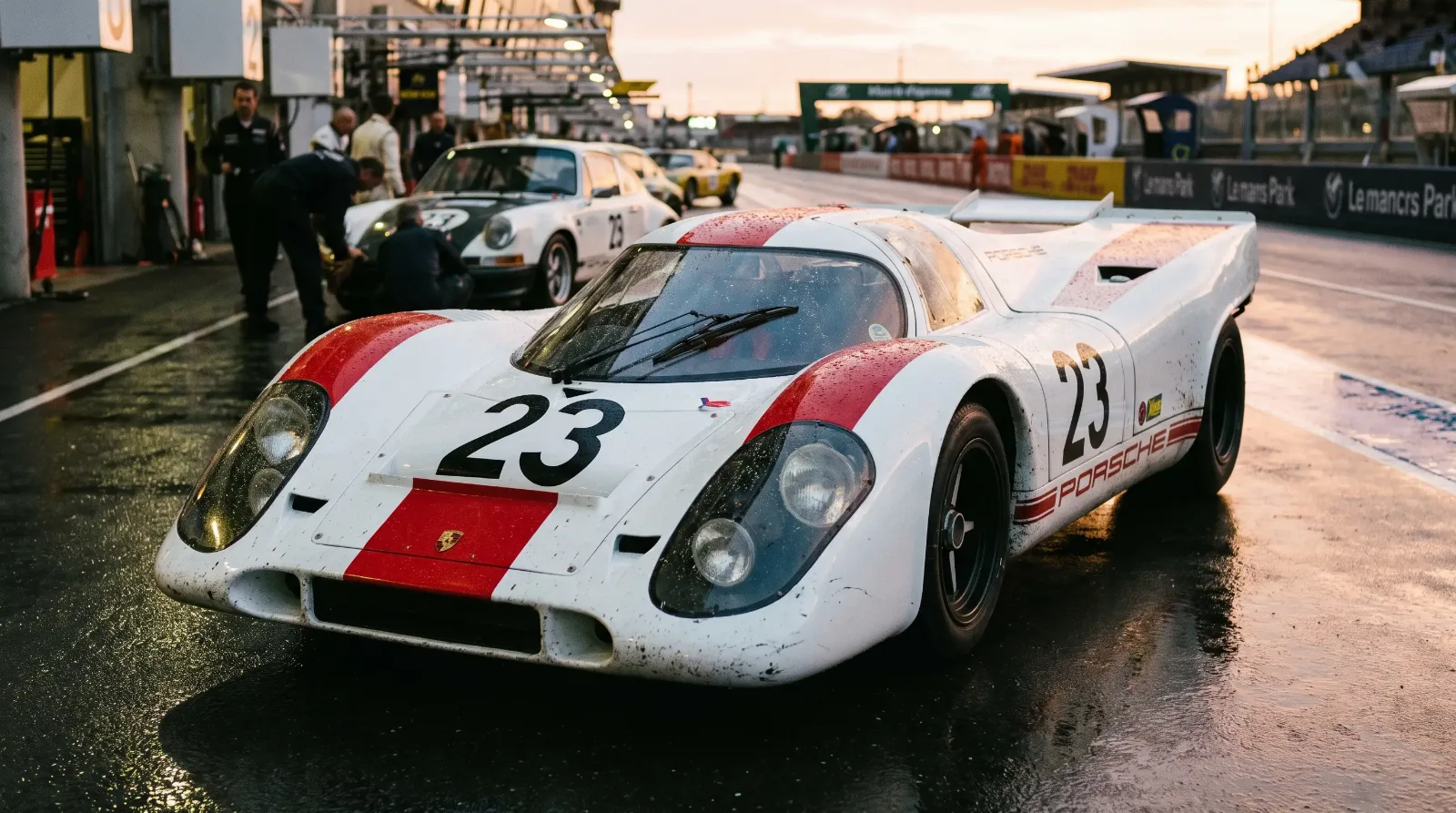
The story of this particular car does not stand alone either. Anyone following the 917's full competition history should also read a related deep-dive covering the rival team's red and white livery from the same era, since the contrast between the two paint schemes says almost as much about Porsche's 1970 season as the lap times did. For the wider picture of how this decade shaped the marque, the full Porsche story traces the arc from the early 356 through this exact period of factory-backed racing.
A livery that outgrew its sponsor
Gulf Oil got a marketing return on its 917 sponsorship that most companies can only dream about, one that has lasted more than fifty years and shows no sign of fading. That kind of longevity was never the plan. It happened because a genuinely fast car, a serious racing team, and an accidental film collided at exactly the right moment, and the resulting image proved stronger than the cars, the drivers, or the sponsor deal that created it in the first place.
Wyer's approach to running the team also deserves some credit for how well the whole package held together. He was famously unwilling to let sponsorship demands interfere with car preparation, and by most accounts he treated the Gulf branding as something to be applied cleanly and consistently rather than plastered on wherever space allowed. That discipline is part of why the livery reads as a coherent design today instead of a cluttered mess of decals, the fate that befalls a lot of period sponsorship liveries once you look at them closely.
Modern owners of genuine Gulf 917s go to considerable lengths to keep the cars exactly as they raced, down to the placement of individual sponsor decals and the specific stitching on the cockpit trim. Auction houses handling these cars routinely commission paint and panel analysis before a sale, partly to confirm originality and partly because buyers at this level expect documentation as thorough as the restoration itself. A car with even a slightly altered stripe width can lose real value with the small community of specialists who track these details closely.
Sources and notes
Related Reading
Have a
Porsche
for Sale?
Reach thousands of serious classic car collectors across the US.
Sell It Here →
Are You a Classic Car Dealer?
List your full inventory and connect with targeted classic car buyers.
Join as a Dealer →

About the author
Patrick Walsh
Automotive journalist covering classic car shows, events, and the enthusiast community across North America.
Related Listings - Porsche




Comments
Be the first to comment on this article.