
Every big win needs a color, and for Porsche's first overall victory at Le Mans in 1970, that color was a deep white and red rather than the powder blue everyone remembers from the Gulf cars. The salzburg red porsche 917 that crossed the finish line that June was not a factory works entry in the strictest sense. It raced under the banner of Porsche Salzburg, the family's own Austrian dealership, and its livery has become just as recognizable among collectors as any of the model's other paint schemes, even if it gets less attention from people outside the hobby.
Car Features
6 min read
The Salzburg Red 917 That Won in 1970
Porsche's first Le Mans win came not from a factory works entry but from a family-run dealership team wearing red and white instead of Gulf blue.
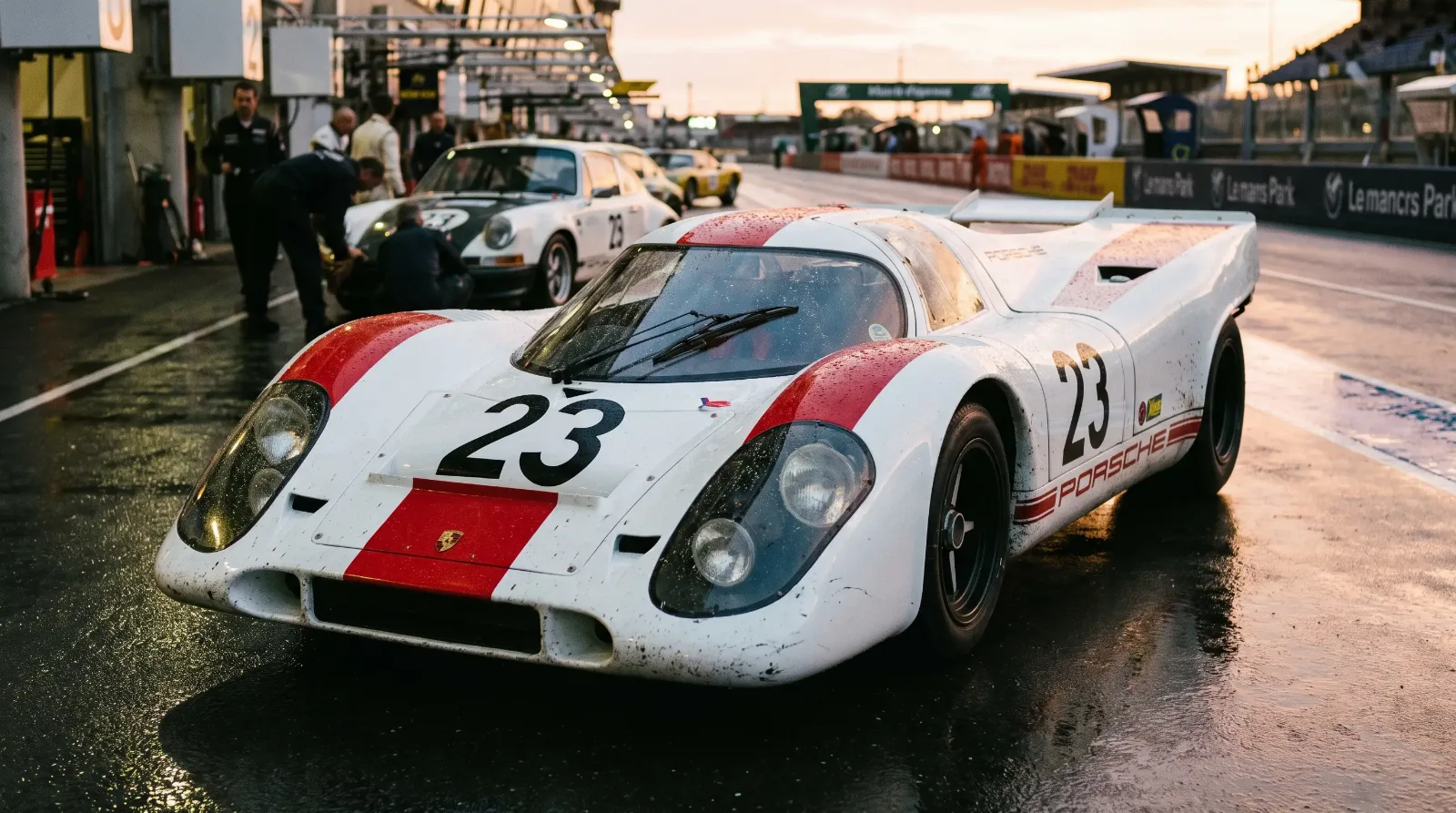
A dealership, not a race department
Porsche Salzburg was the official Austrian importer for Porsche cars, and it was run under the direction of Louise Piëch, daughter of company founder Ferdinand Porsche. Entering a Le Mans prototype under a dealership's name rather than the factory's own racing division sounds unusual today, but it reflected how tightly the Porsche and Piëch families controlled every part of the business in this period. Louise's son, Ferdinand Piëch, ran Porsche's competition department at the time, which meant the Salzburg entry was never really separate from the factory effort in practice, only in name and paperwork.
The car itself, chassis 917-023, wore white bodywork with a broad red central stripe running from nose to tail, a scheme distinct from the factory's usual racing colors and from the Gulf blue running on the rival John Wyer-entered cars that same weekend. If you want the full account of how those two very different liveries ended up on the same grid, Porsche's motorsport heritage covers the season's team structure in more depth than fits here.
The 1970 race itself
Rain dominated the 1970 24 Hours of Le Mans, and it thinned the field brutally. Faster cars, including several of the Gulf-liveried 917s and Ferrari's 512 entries, fell out through crashes and mechanical failures as the night wore on. The Salzburg car, driven by Richard Attwood and Hans Herrmann, simply kept circulating at a pace the conditions allowed, and by Sunday afternoon it was still running while much quicker machinery sat in the pits or the gravel. Herrmann, then 42 and a veteran of some of the era's worst racing accidents, had promised his wife before the race that this would be his last as a professional driver regardless of the outcome. He got his win on the way out.
| Detail | Salzburg 917, 1970 |
|---|---|
| Chassis | 917-023 |
| Entrant | Porsche Salzburg |
| Drivers | Richard Attwood, Hans Herrmann |
| Livery | White with red center stripe |
| Result | 1st overall |
Why the livery still matters to collectors
Restorers and concours judges treat the Salzburg scheme with the same seriousness they apply to the Gulf cars, partly because getting the exact red wrong is an easy way to lose points at a serious event. Original paint references are scarce, and most surviving discussion of the correct shade comes from a small number of period photographs and the handful of panels that have survived from cars broken up or repainted over the decades. Owners of tribute cars and replicas argue about it constantly, and the debate rarely gets settled cleanly.
"The Gulf cars got the poster and the movie. The Salzburg car got the actual trophy, and that ought to count for something."
Patrick Walsh
A family win more than a factory one
What makes the Salzburg story worth telling on its own is how personal it was. This was not an anonymous corporate racing program picking a livery for visibility. It was a family business, run by the founder's own daughter, entering a car prepared by relatives who also happened to run the factory's competition department, and winning the biggest race in the sport with it. That kind of overlap between family and factory would be almost unthinkable in modern motorsport, where sponsorship deals and works entries are kept legally and financially separate as a matter of course.
The story does not end with this one race either. The following season brought a very different, much stranger 917 livery into the picture, one covered in a related deep-dive that shows just how far Porsche was willing to go with paint schemes once the pressure of winning Le Mans for the first time had finally lifted. For readers who want the fuller arc of the marque across this whole era, our Porsche guide ties the racing history back to the road cars sold alongside it, and there are always classic Porsches for sale for anyone whose interest in this history turns into something closer to a shopping habit.
What the win meant beyond the trophy
Porsche's first overall Le Mans victory could have gone to either of its two lead teams that weekend, and it happened to go to the family-run Salzburg entry rather than the more commercially visible Gulf cars. That outcome shaped how the win gets remembered inside Porsche even now, as much a family achievement as a corporate one. The red stripe on white paint does not get the same instant recognition as Gulf blue and orange, but among people who know the full story, it carries at least as much weight.
There is also a quieter point worth making about how Porsche structured its racing effort in this era. Running the Salzburg car and the Gulf-liveried cars as separate, semi-independent entries rather than a single unified factory team gave Porsche two shots at the win with two different sets of drivers, strategies, and even chassis setups. If one team had a bad weekend, the other still had a chance. It is a hedging strategy that modern manufacturer programs still use, though rarely with the added complication of one entrant literally being family.
Attwood himself has spoken in later interviews about how unglamorous the actual driving felt that weekend, long stretches of rain, poor visibility, and a car that needed to be nursed rather than pushed. There was no dramatic overtaking move or last-lap heroics. The win came from consistency, from a car and two drivers who kept lapping cleanly while faster, more fragile machinery around them broke or crashed. That is a less cinematic story than the one Hollywood eventually told about the Gulf cars, but it is arguably the more honest picture of how endurance racing actually gets won.
Sources and notes
Related Reading
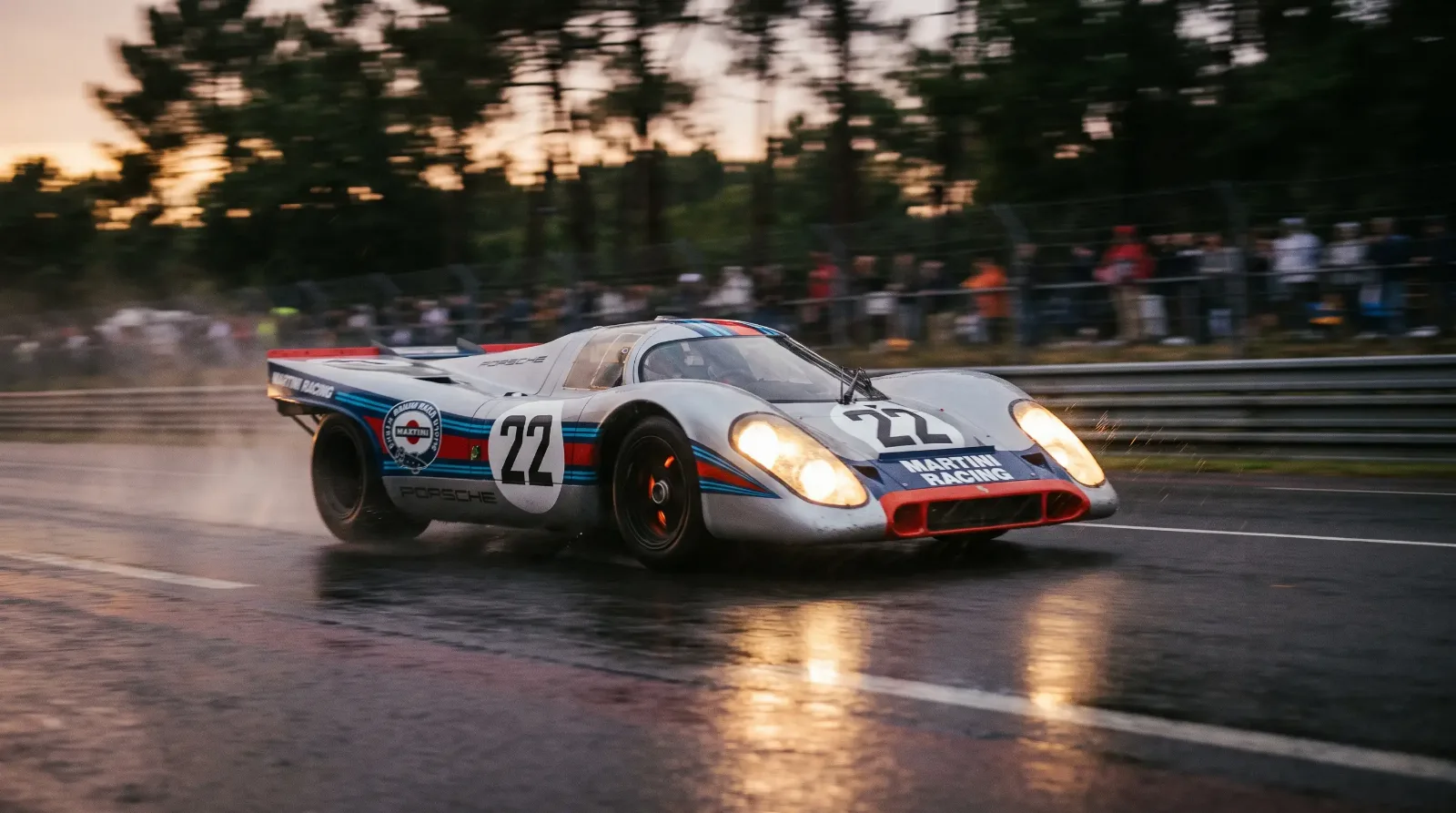
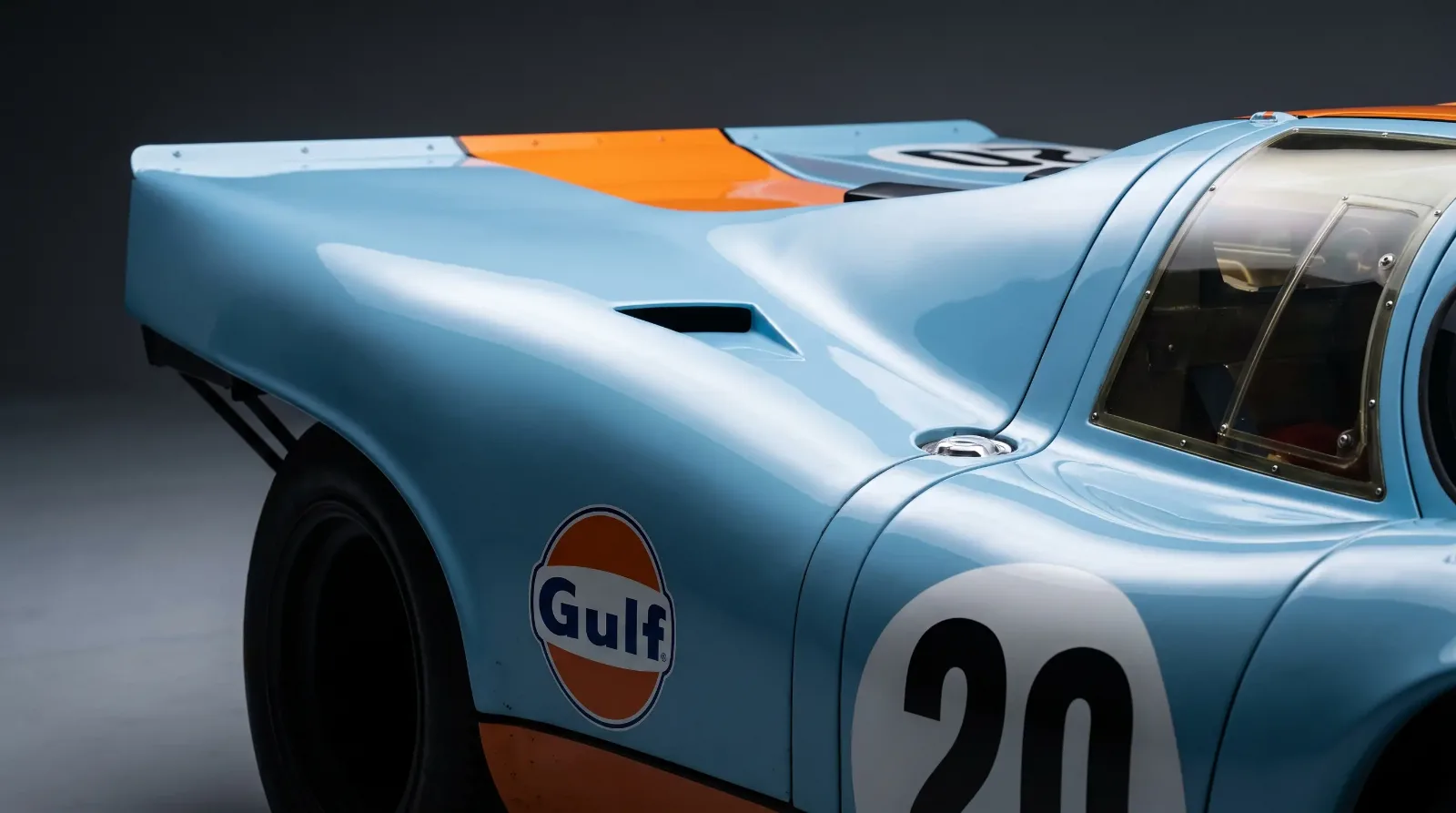
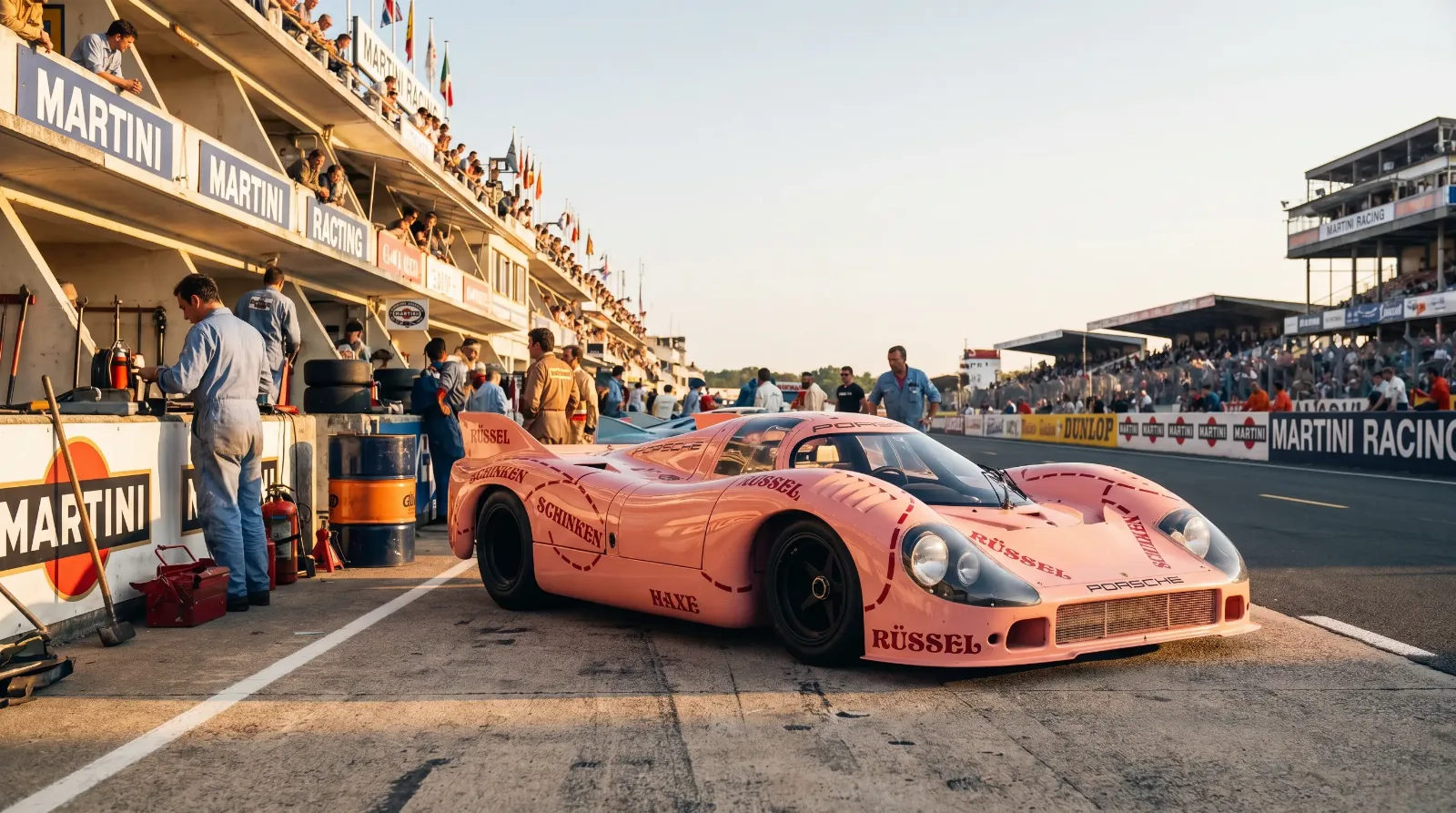
Have a
Porsche
for Sale?
Reach thousands of serious classic car collectors across the US.
Sell It Here →
Are You a Classic Car Dealer?
List your full inventory and connect with targeted classic car buyers.
Join as a Dealer →

About the author
Patrick Walsh
Automotive journalist covering classic car shows, events, and the enthusiast community across North America.
Related Listings - Porsche




Comments
Be the first to comment on this article.