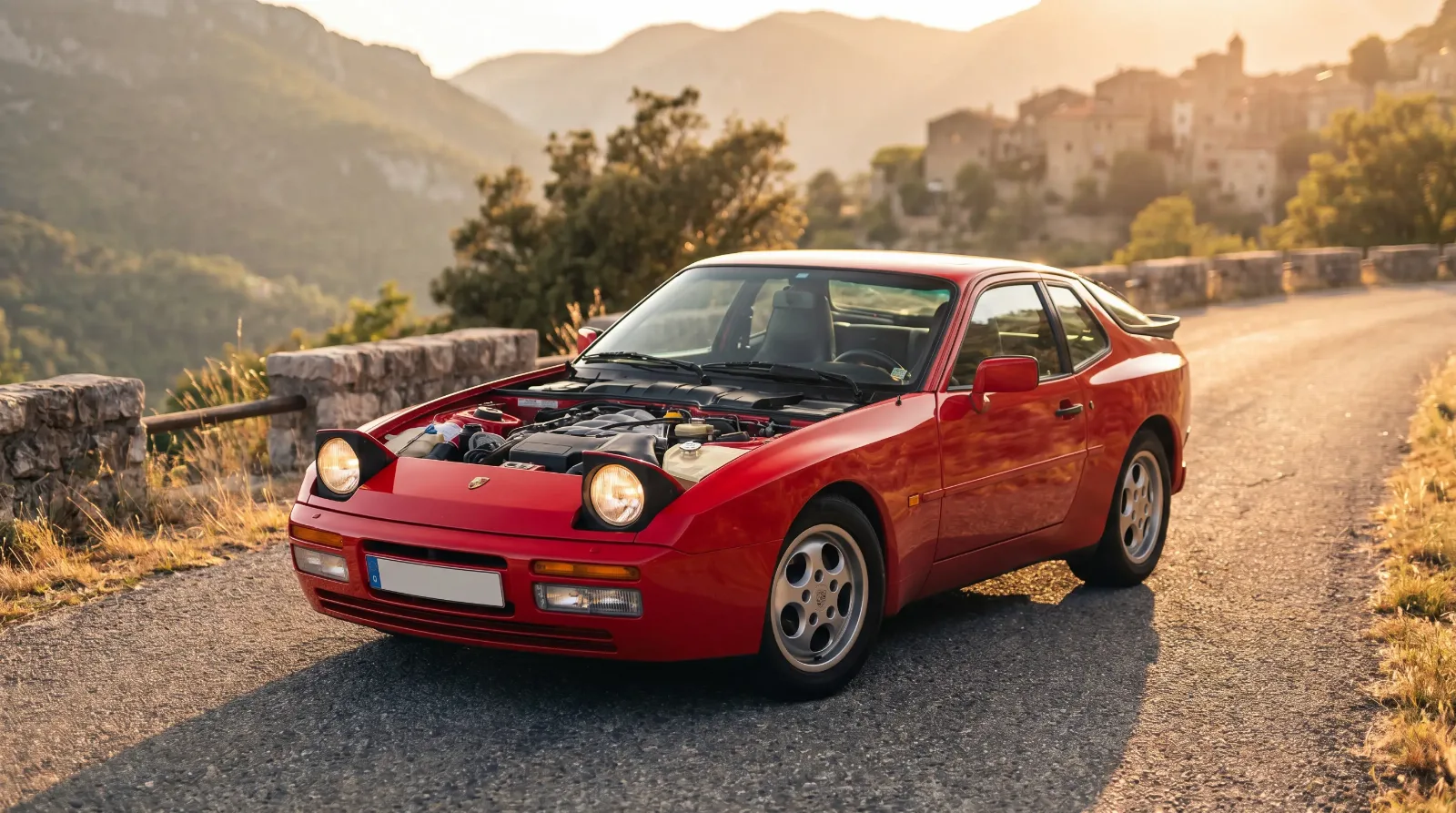
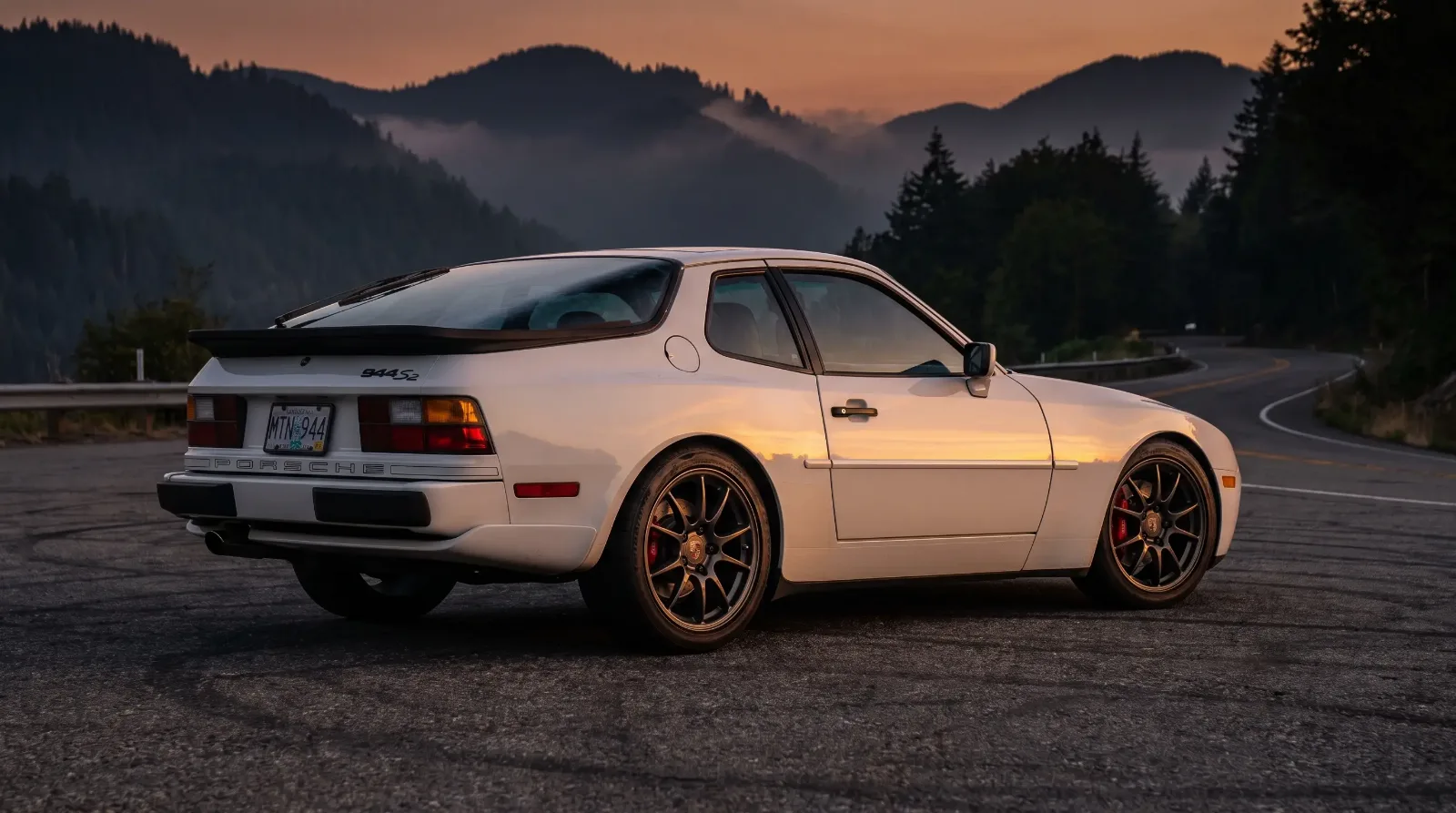
The Porsche 944 S2 made 208 hp from a 3.0-liter naturally aspirated four-cylinder, and that single fact tells you most of what you need to know about it. No turbo lag. No boost gauge to babysit. Just the largest production four-cylinder engine of its era, doing the work the old-fashioned way. The 944 S2 arrived in 1989 and ran through 1991, and it is the answer for anyone who wants transaxle Porsche handling without a turbocharger to maintain.
The number that matters: 3.0 liters, four cylinders
Porsche bored and stroked the existing 2.5-liter four to 3.0 liters for the S2, and the result was a genuinely large-displacement four-cylinder producing torque a smaller motor cannot match. Peak torque landed at 207 lb-ft, arriving low and staying flat across a wide band. That is the real story here, not the horsepower figure. A turbo car makes its number when the boost comes in. The S2 makes its number whenever you put your foot down, because there is no lag to wait through.
0-60 mph came in around 6.0 to 6.8 seconds depending on the source and test conditions, which is not turbo-quick but is close enough that most drivers on a public road will not notice the gap. Top speed sat near 149 mph. Those are respectable numbers for a naturally aspirated four-cylinder built in 1990, and they held up against six-cylinder competitors of the day.
Why naturally aspirated wins the maintenance argument
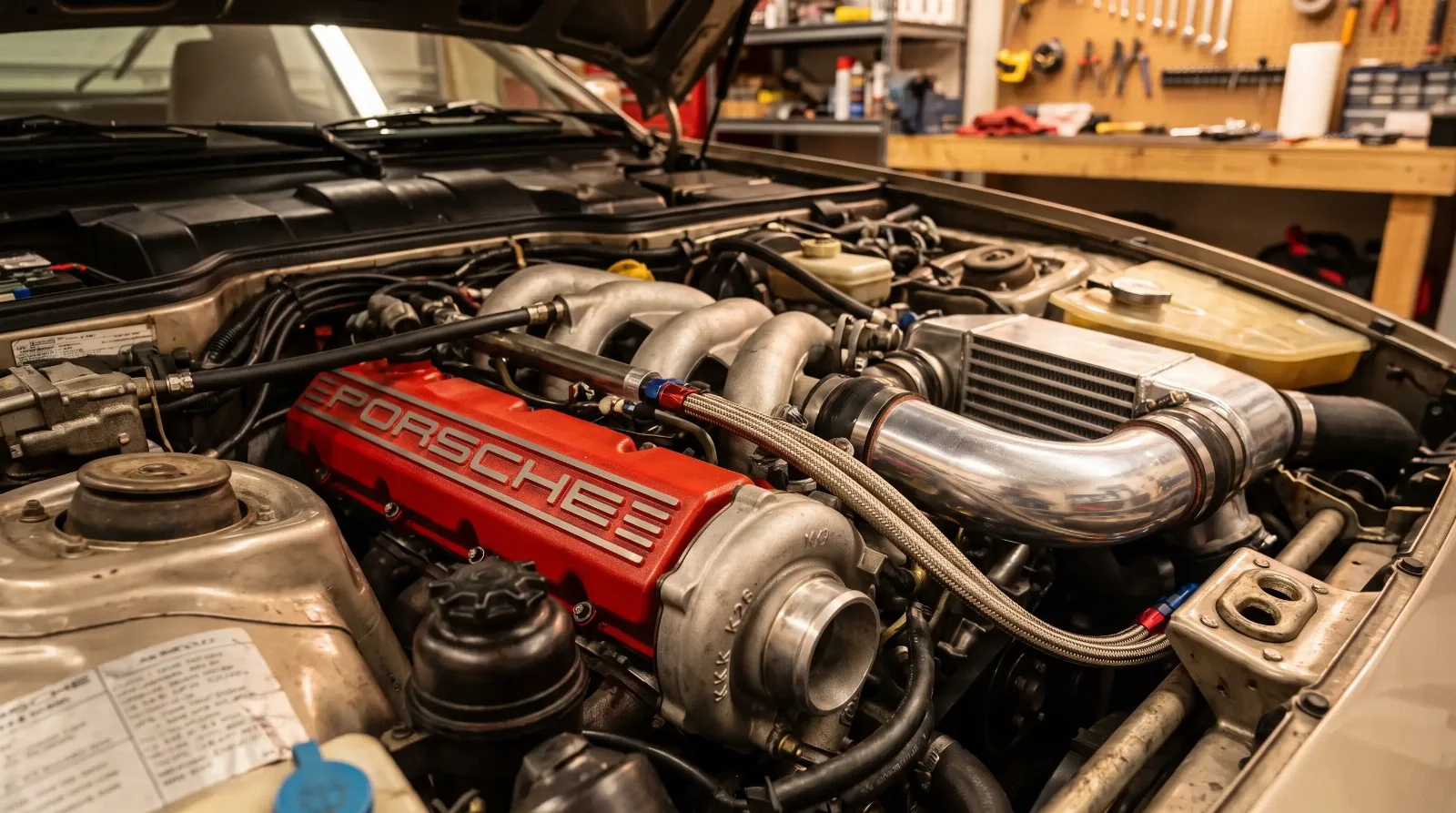
A turbo motor adds a turbocharger, an intercooler, boost plumbing, and a shorter service interval on the timing belt because of the added heat and stress. The S2's larger displacement engine skips all of that. You still have a timing belt and water pump on the same roughly 30,000-mile interval Porsche specified across the 944 range, but you are not also managing boost-related wear on the bottom end. Fewer parts that can fail under load is not a small thing. It is the entire argument for buying naturally aspirated.
The S2 also got a stiffer chassis and bigger brakes compared to the standard 944, closer in spec to the Turbo but without the extra plumbing. Cabriolet versions existed too, though the coupe is the stiffer, more track-capable body if that matters to your use case.
| Spec | Porsche 944 S2 (1989-91) |
|---|---|
| Engine | 3.0L naturally aspirated inline-four |
| Power | 208 hp |
| Torque | 207 lb-ft |
| 0-60 mph | 6.0-6.8 sec |
| Transmission | 5-speed manual, 3-speed auto optional |
Where the S2 sits against the rest of the lineup
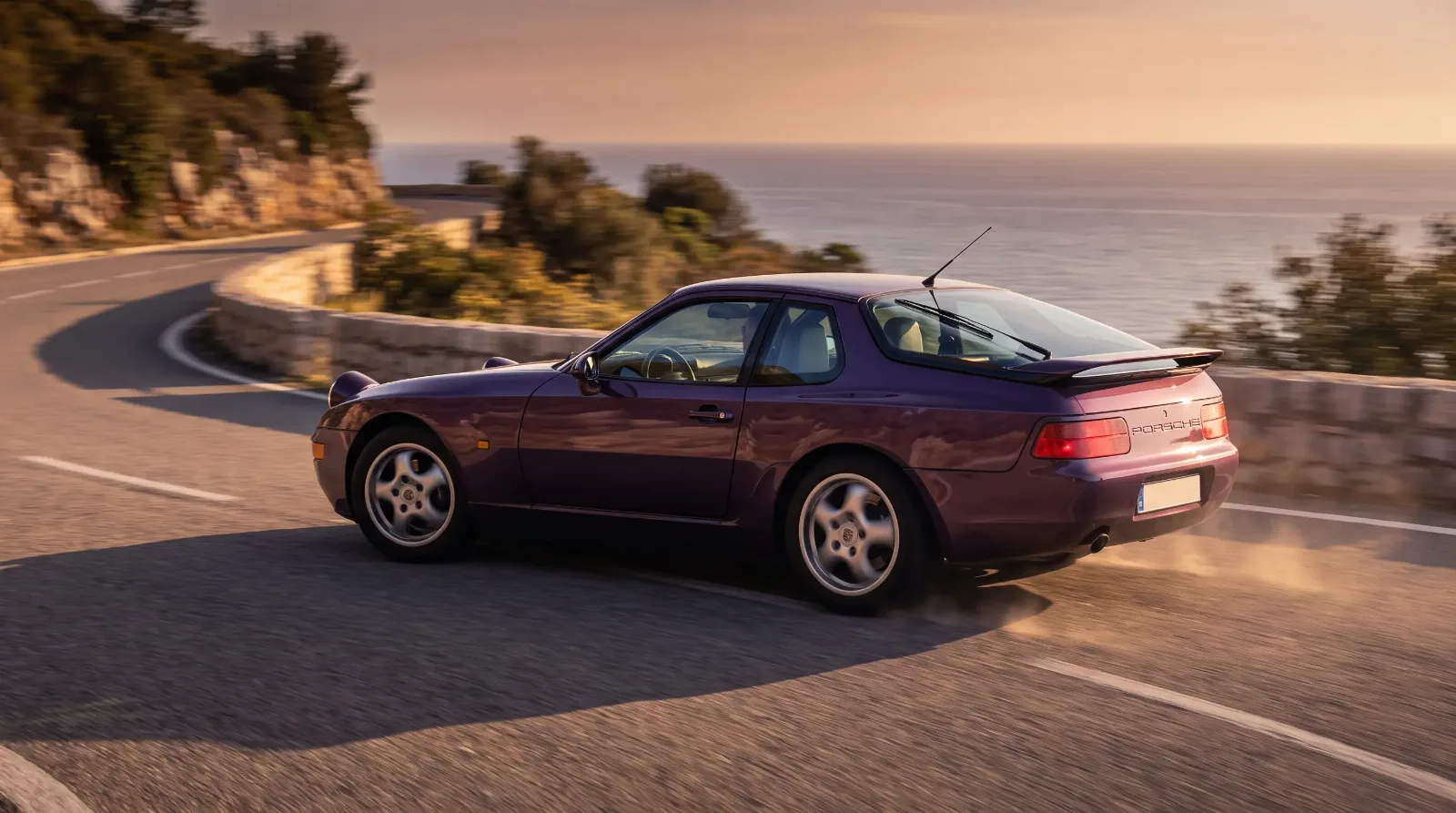
The S2 replaced the earlier 944S in the lineup and became the top naturally aspirated option before Porsche moved on to the 968 in 1992, the car that closed out the front-engine four-cylinder era entirely. The S2's 3.0-liter block and much of its chassis engineering carried straight into that next car, which is why the S2 reads less like a dead end and more like a rough draft of the 968.
Against the 944 Turbo, the S2 gives up outright acceleration but gains simplicity and, in most markets, a lower purchase price. That price gap has narrowed as buyers have caught on to what the S2 actually is. It is not the budget option anymore. It is the specific choice for someone who wants a transaxle Porsche and does not want a boost gauge on the dash.
What the extra displacement feels like from the driver's seat
Numbers on a spec sheet do not tell you how a car pulls out of a corner, and the S2's real advantage shows up there. Because the torque is already present at low rpm, the car does not need to be kept on the boil the way a turbo four does. You short-shift it without losing momentum. That makes the S2 a more forgiving car on a mountain road or a wet parking lot, where a turbo car's power delivery can catch a driver out mid-corner if the boost arrives at the wrong moment.
The tradeoff is character. Some drivers who came up on turbo cars miss the drama of boost building and the small mechanical hiss that comes with it. The S2 does not do drama. It does linear, predictable thrust, and for a lot of owners running one as a daily classic rather than a track toy, that predictability is worth more than the extra rush a Turbo provides.
There is also a cost side to this equation that rarely gets mentioned. Insurance on a naturally aspirated car with no forced induction history tends to price a shade lower than an equivalent turbo model in some markets, and parts availability for the non-turbo drivetrain is generally simpler since there is no intercooler plumbing or wastegate hardware to source when something ages out. None of that is dramatic on its own, but it adds up over years of ownership.
What to check before buying an S2
Timing belt and water pump records first, same as every 944. No records means budget for the job regardless of what the odometer says. Check the balance shaft housing for oil seepage, a known wear point on high-mileage examples. Look at the cabriolet's top mechanism if shopping a convertible, since worn seals and tired hydraulics are common and expensive to sort. Rust inspection points are the same as the rest of the 944 range: rear hatch, battery tray, front fenders.
"The S2's number is 3.0 liters. Everything else the marketing people say about it is decoration. A big four-cylinder with no turbo to fail is the whole pitch, and it's a good one."
— Dan Reeves
The S2 is the last word on naturally aspirated 944 power before Porsche handed the job to the 968, and if you want the full arc of that transition, keep reading the series. For the wider picture of how the S2 fits against every transaxle Porsche built, our Porsche retrospective covers the full lineup.