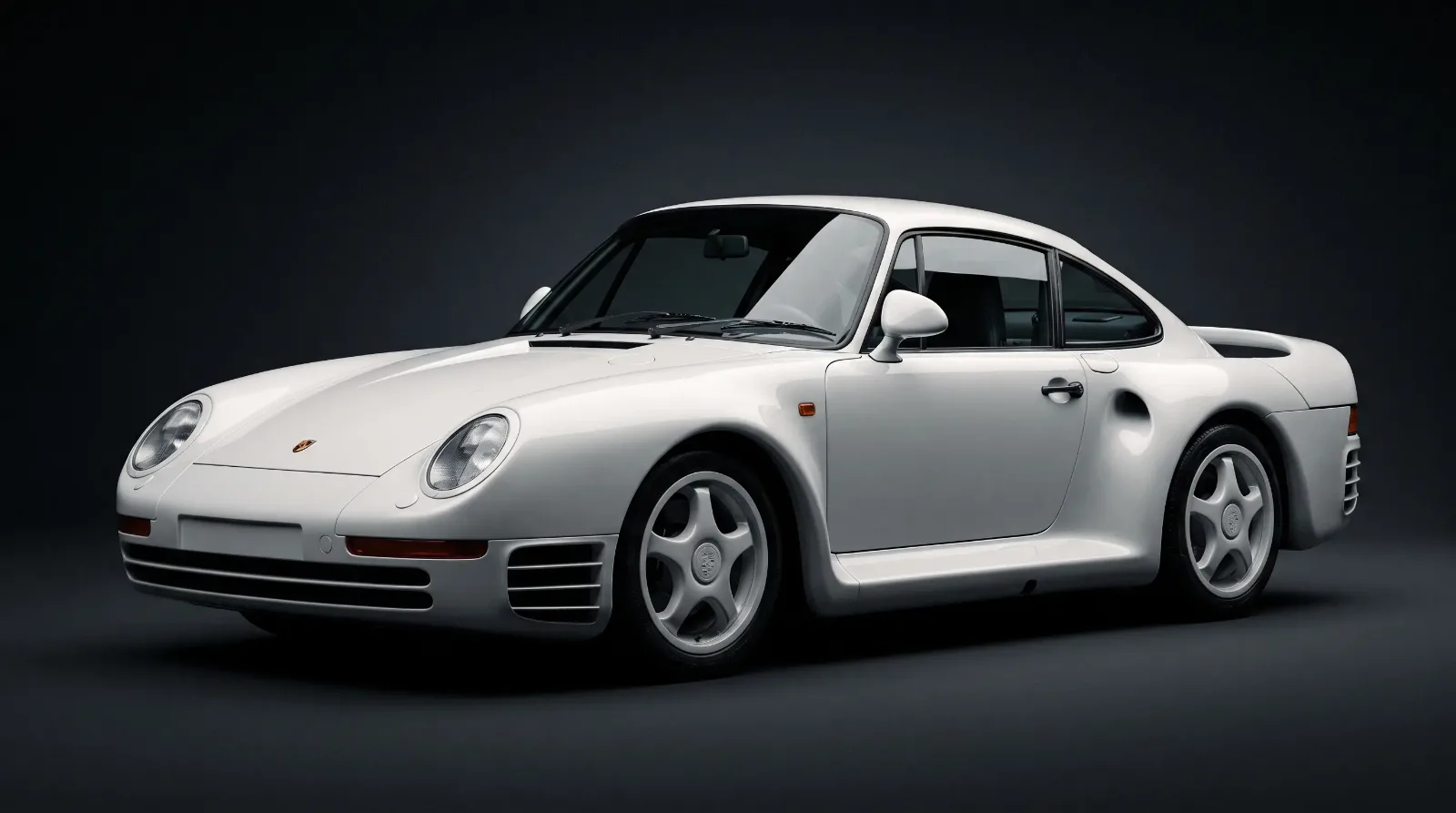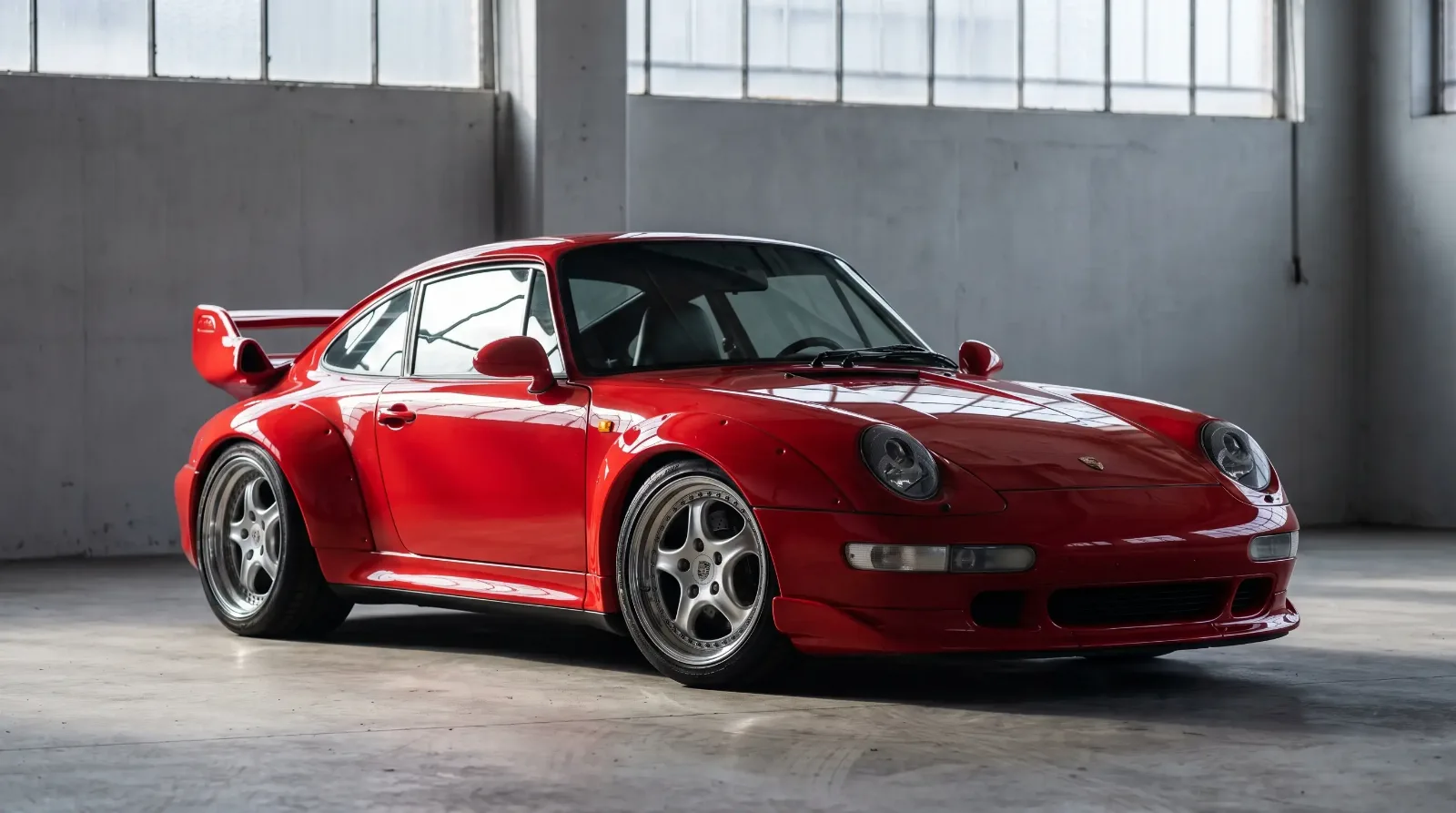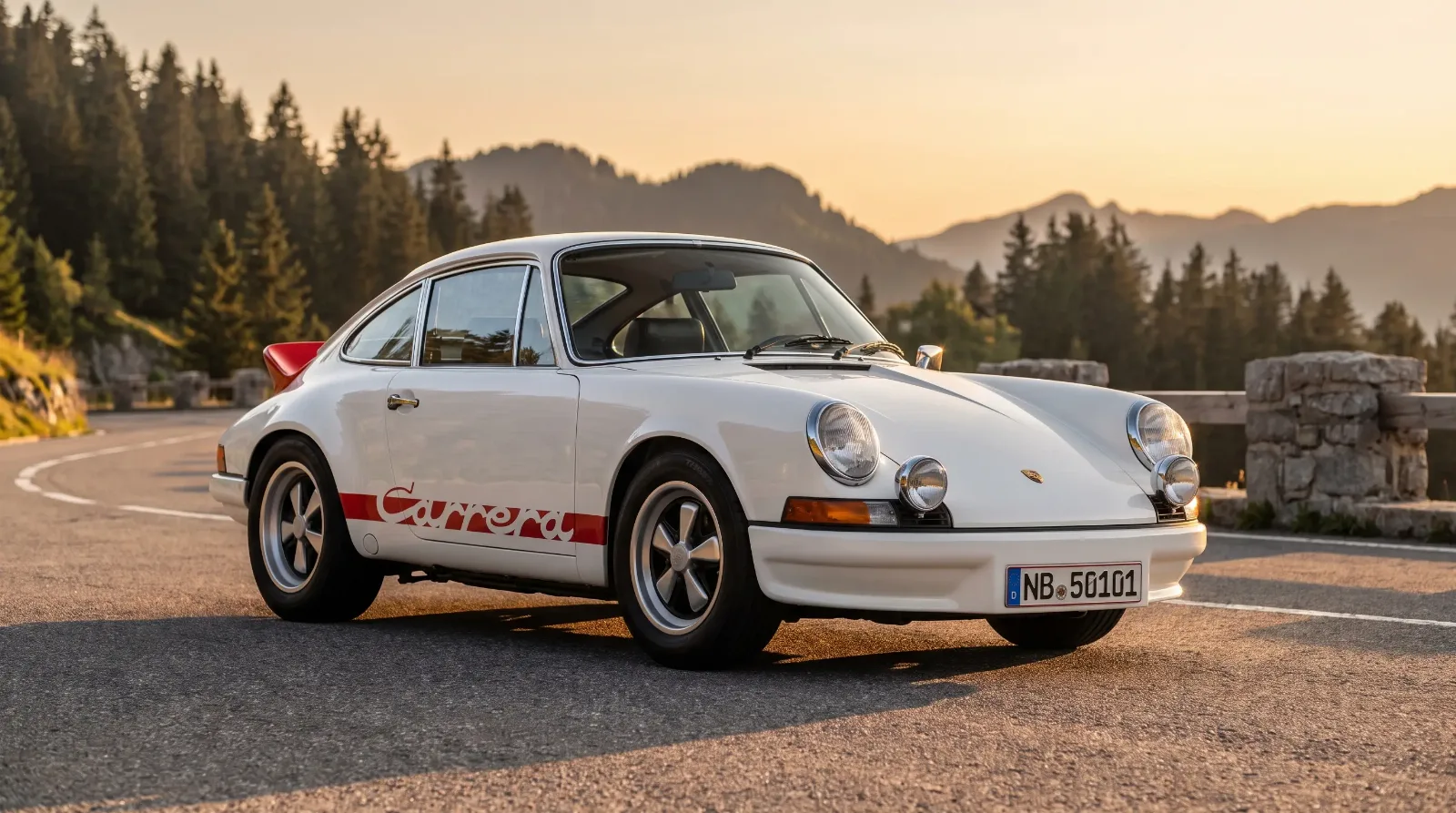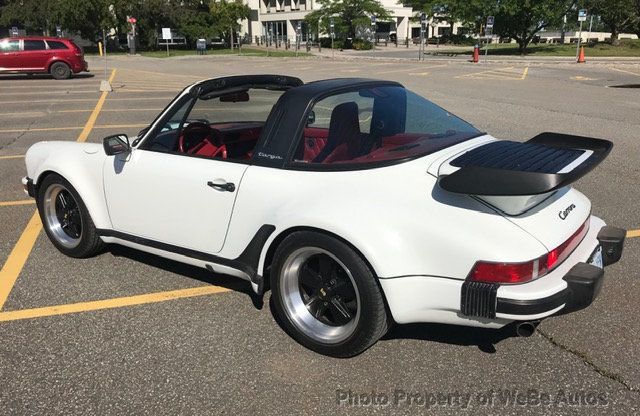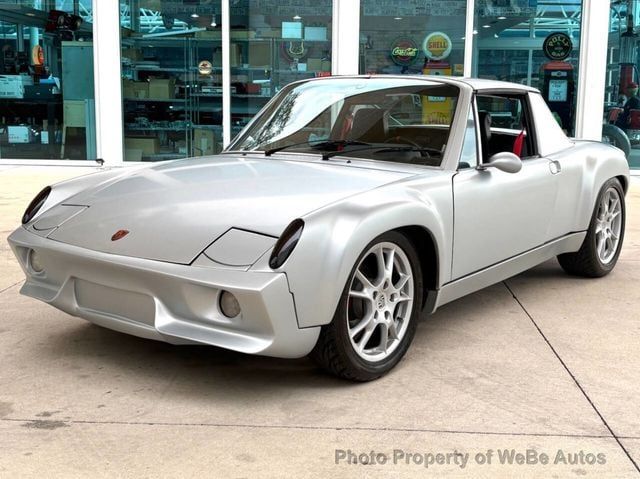
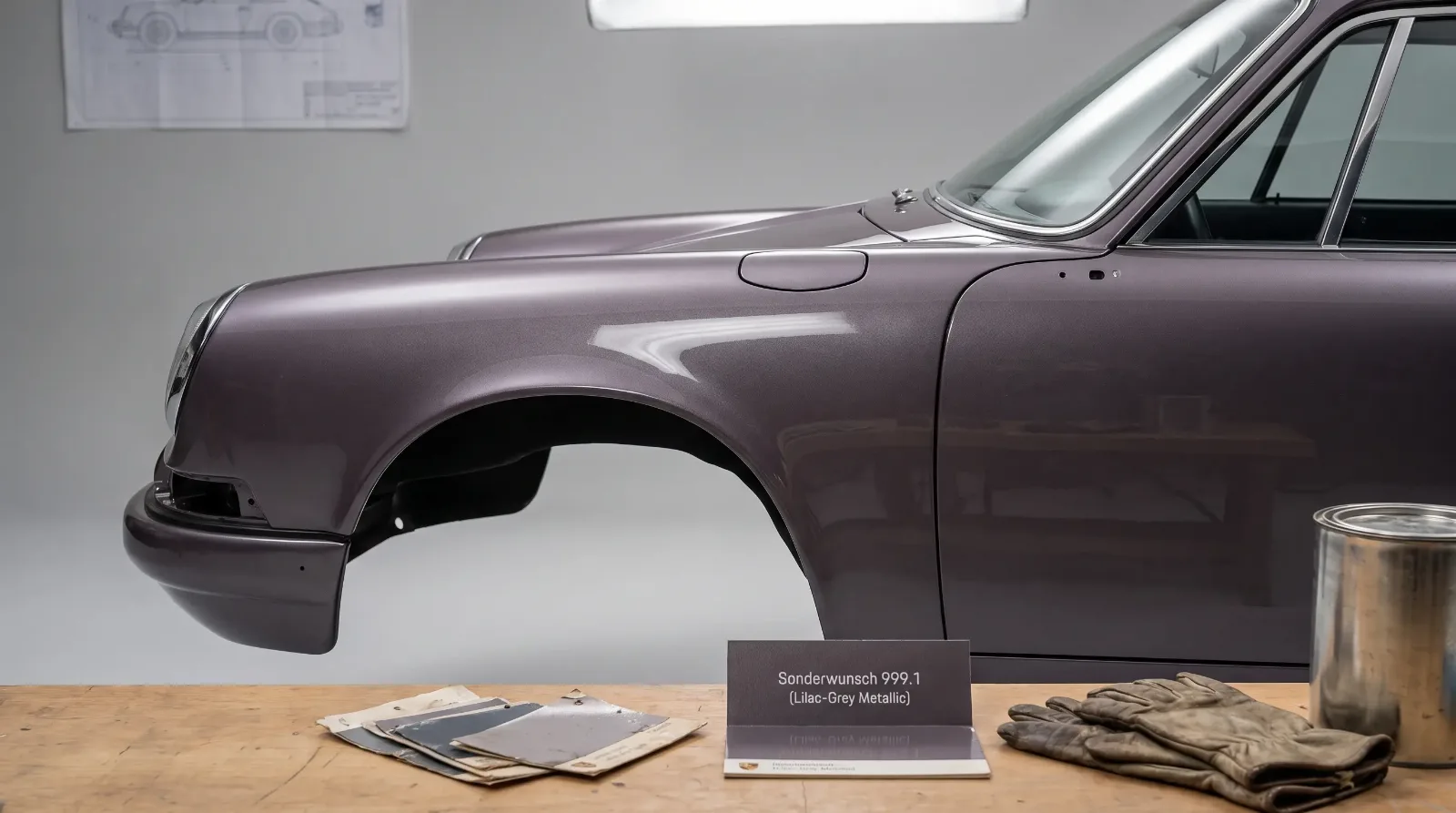
A paint to sample Porsche starts with a customer walking into a dealership, or writing a letter to Zuffenhausen, with a color that was not on the standard chart. Porsche's Sonderwunsch, or "special wish," program let buyers submit a swatch, a fabric sample, or sometimes an entirely custom mixed shade, and the factory would match it and spray the car in a hue that officially did not exist for that model year. Decades later, that decision by one owner in the 1970s or 1980s is the reason a handful of otherwise ordinary 911s and 928s carry six-figure premiums over identical cars in standard colors.
The program was never large. Porsche did not advertise it, dealers had to know to offer it, and the paperwork trail from that era is thin by modern standards. That combination, low volume plus poor documentation, is exactly the kind of setup that makes appraising a paint to sample Porsche one of the harder jobs in this market. The car is real, the color is real, but proving the color was factory-applied rather than a later repaint chasing rarity is where the actual work happens.
How Sonderwunsch orders actually worked
Standard Porsche colors of the classic era came from a fixed chart with defined paint codes. Paint to sample orders bypassed that chart entirely. A customer could submit almost anything, a favorite yacht's hull color, a piece of luggage, a shade from a different car brand, and the factory paint shop would mix a batch specific to that order. Some of these colors were later adopted into the standard catalog after enough demand, but many stayed one-off or nearly one-off, applied to a handful of cars before the order was never repeated.
This is where the documentation problem starts. A factory build sheet or Kardex record showing a non-standard paint code is the baseline proof a paint to sample car needs, and without it, a bright or unusual color is just a color, not a value driver. I have appraised cars where an owner insisted their shade was original PTS work with nothing but a hunch and the color itself as evidence, and that is not enough to move a number.
What actually moves the appraisal
Three things separate a documented paint to sample car from a repainted one dressed up to look special: a Kardex or factory certificate referencing the specific paint code, paint depth and layering consistent with factory application under the door jambs and other unseen panels, and continuity of that color through any prior restoration paperwork. A repaint chasing PTS money almost always shows inconsistent paint thickness or a mismatch between visible panels and the areas a detailer never bothers to correct.
| Evidence type | What it proves |
|---|---|
| Kardex / factory build record | Original paint code ordered, strongest evidence |
| Paint depth under trim and jambs | Factory application versus later repaint |
| Continuous ownership paperwork | Color has not changed since factory delivery |
| Color alone, no paperwork | Not sufficient on its own |
"Rarity without paperwork is just an opinion, and opinions do not survive a serious pre-purchase inspection," is the line I give clients who fall in love with a color before they have seen the Kardex. The market has become sharp enough about this that undocumented PTS claims get discounted, not rewarded, at auction. This is a direct continuation of the same collector logic that applies to the halo-car chapter of Porsche's history, where documentation and originality carry as much weight as the mechanical specification itself.
Why the classic era is where this matters most
Paint to sample requests were most active in the 1970s through the 1990s, before Porsche formalized a broader custom color program with clearer digital records. That makes the classic-era cars the hardest to authenticate and, correspondingly, the most rewarding to get right. A confirmed 1970s 911 in a genuine one-off Sonderwunsch shade is a different asset class from a common color car, and buyers who understand that distinction are willing to pay accordingly, provided the proof holds up.
Which models actually show up with PTS orders
Air-cooled 911s carry the largest share of documented paint to sample requests I see cross an appraisal desk, simply because production volume was highest and the ordering window stayed open longest. The 928 turns up too, often in muted or unusual metallics that suited its grand-touring brief better than the brighter shades some 911 buyers chose. Fewer 924 and 944 examples exist with confirmed PTS paperwork, not because owners requested it less, but because those cars were priced lower to begin with and fewer buyers spent the extra money or kept the records. None of that is a hard rule. It is a pattern, and patterns tell an appraiser where to look harder for supporting paperwork rather than where to assume it exists.
Regional differences matter as well. European-market cars from this era are somewhat more likely to carry surviving factory correspondence than US-market examples, partly because of how dealer paperwork was retained and partly because American buyers of the period were less likely to know Sonderwunsch was even an option to ask for. A seller pointing to a European delivery history alongside a claimed PTS color is offering a slightly stronger case than one relying on color alone, though it still is not a substitute for the Kardex.
None of this makes paint to sample Porsches a bad investment. It makes them a documentation-dependent one, which is a different risk profile than buying based on color alone. For collectors moving through this part of the market methodically, the next story in this set covers a related but distinct value driver, and the complete Porsche history puts both in context against the wider collector car story. Get the paperwork first, and the color takes care of itself.