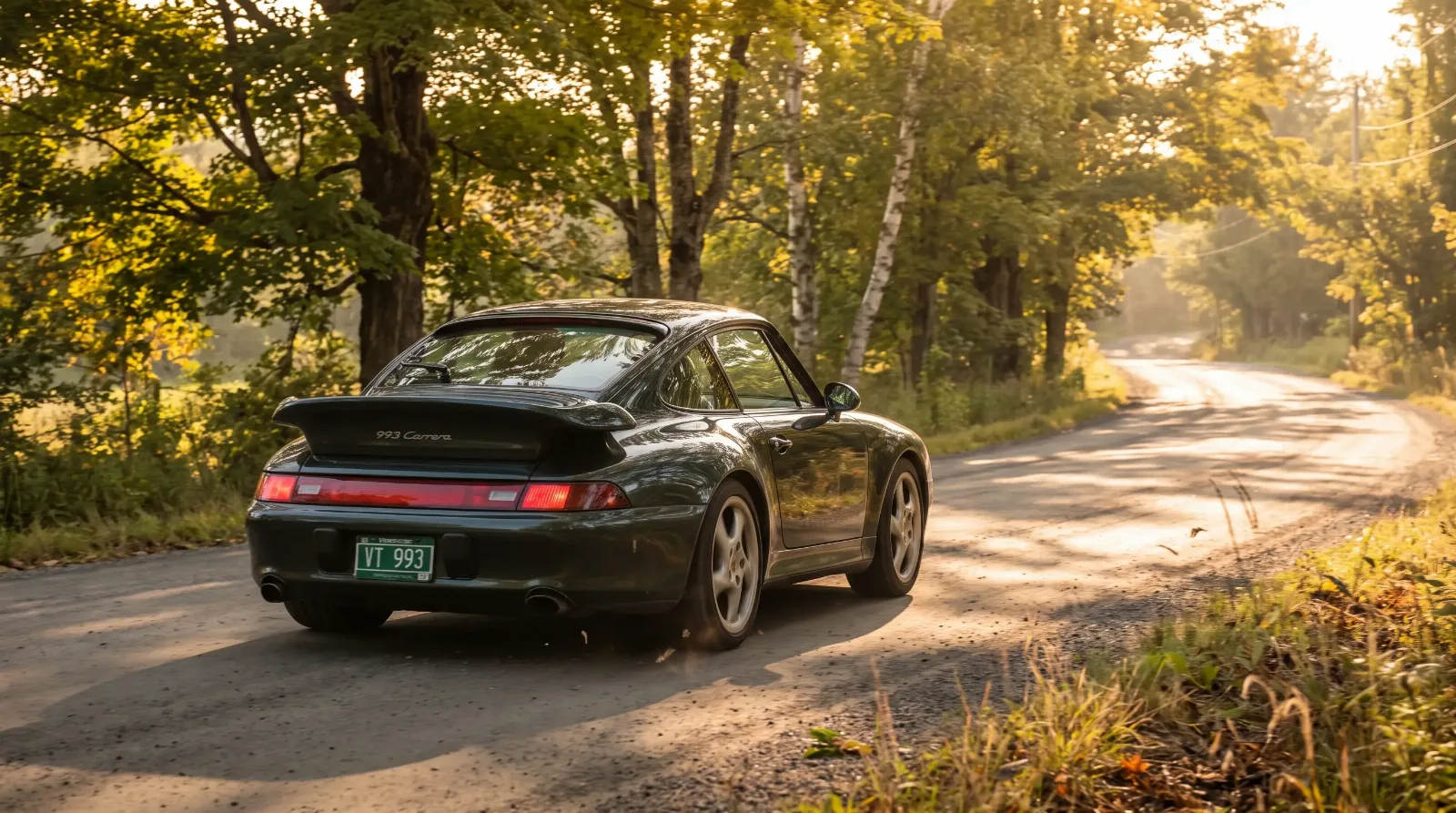
Her father kept the key on its own hook by the garage door, separate from the house keys, separate from the truck. She never asked why until the day he handed it to her and said the car was hers now. It was a 1997 Porsche 993, dark green, with a windshield full of bug marks from a Vermont back road he refused to name. He had bought it new, driven it every summer since, and never once let anyone else start the engine. "This is the last real one," he told her. "After this, they put water where the air used to be." She did not understand what he meant until she drove it herself, and heard what he had been protecting.
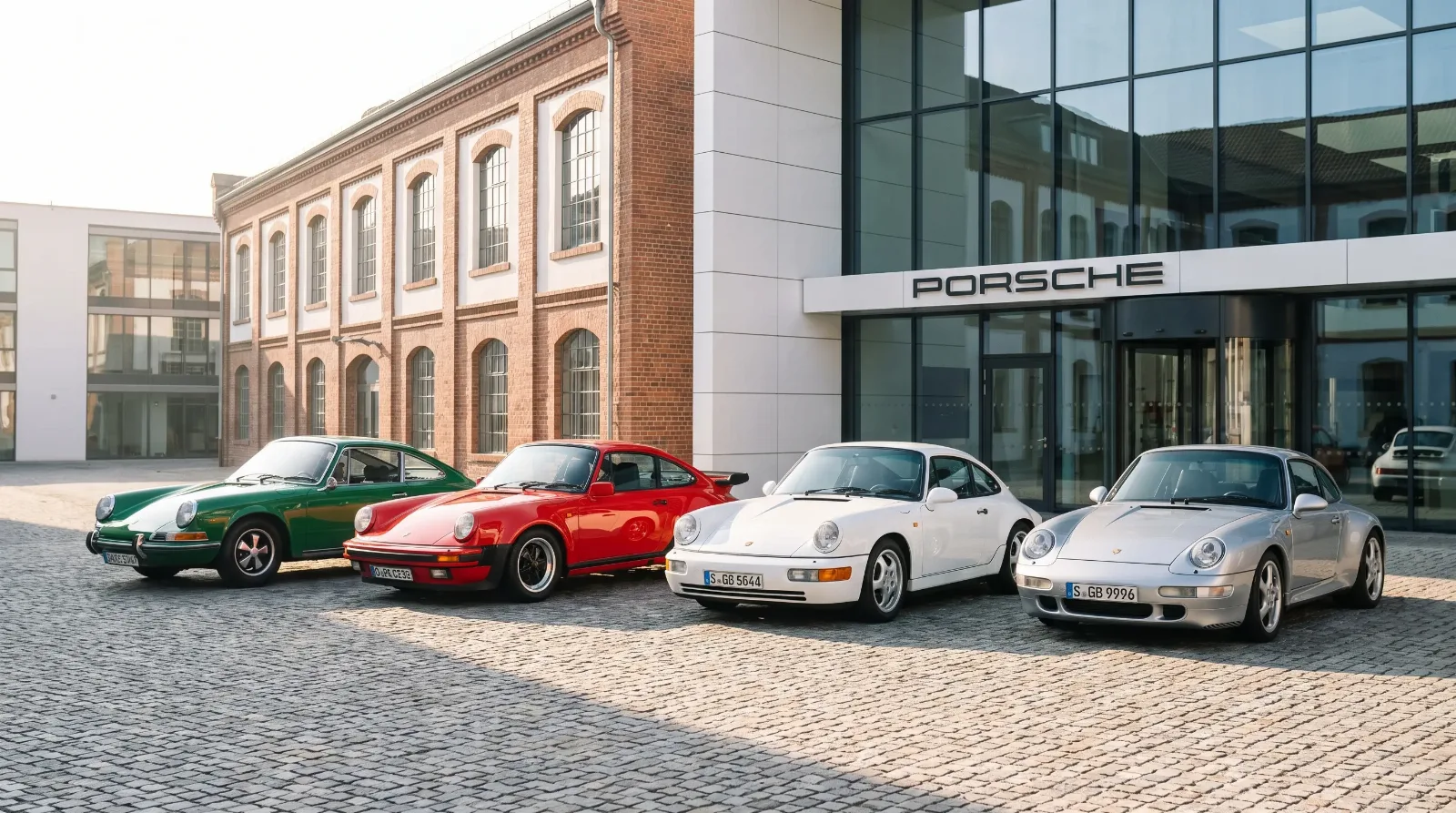
The Porsche 993 is the last generation of the 911 to use air cooling, built from 1994 through 1998 before the water-cooled 996 replaced it. That single fact has turned the 993 into something closer to a relic than a used car. People do not just buy them. They inherit them, chase them, and talk about them the way her father talked about his, like the car marked the end of something that would not come back.
A shape that still looks right
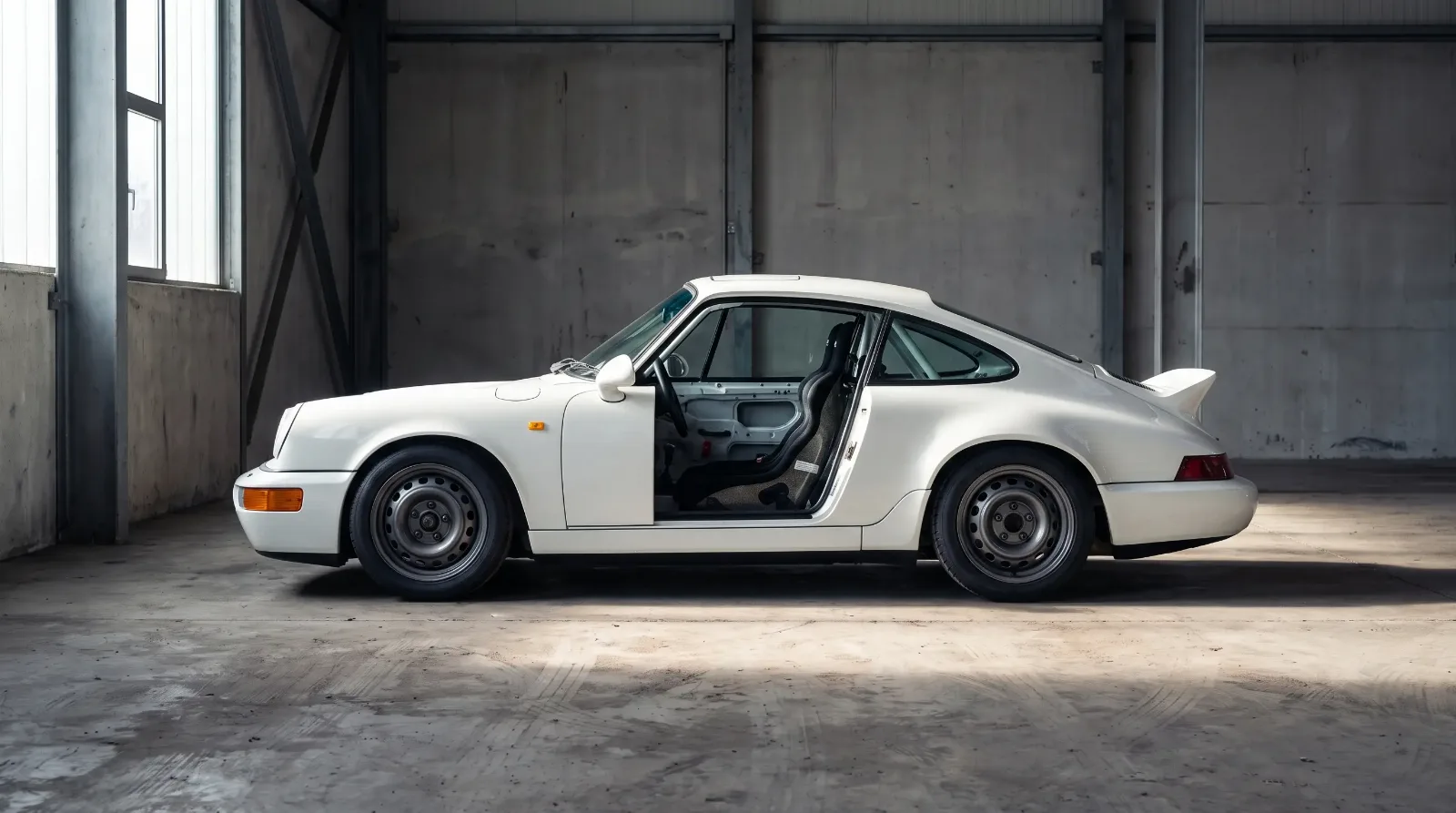
Tony Hatter, the designer credited with the 993's exterior, softened the 911's edges without losing the silhouette that had defined the car since 1963. The headlights swept back into the fenders instead of sitting bolt upright the way they had on the outgoing 964. The bumpers integrated into the body rather than bolting on as separate slabs. It was the same basic shape Porsche had been drawing for three decades, refined rather than reinvented, and it aged in a way the boxier 964 never quite managed.
Underneath the new skin, Porsche made a change that mattered more than the styling: a new multi-link rear suspension, sometimes called the Weissach axle, replaced the semi-trailing arm setup that had defined 911 handling, and its unpredictable snap of oversteer, since the very first cars. The 993 still moved its weight around behind the driver. It just stopped surprising people about it.
What the flat six sounded like
The 993 kept the 3.6 liter air-cooled flat six through most of its run, with variable valve timing arriving partway through production to sharpen response at low revs. Output settled around 272 horsepower in the standard Carrera, rising to 285 horsepower once Porsche added the VarioRam variable intake system for the 1996 model year, modest by today's numbers and entirely beside the point. What people remember is the sound: a hard-edged mechanical rasp under load, cooling fans audible at idle, none of the muffled hush that arrived with the 996's water jacket. Owners describe it less as a car noise and more as a specific, recognizable voice.
That voice is part of why the air-cooled 911 story keeps getting retold. The 993 sits at the hinge point of it, the last chapter written in the original dialect before the language changed for good.
The widebody cars and what they changed
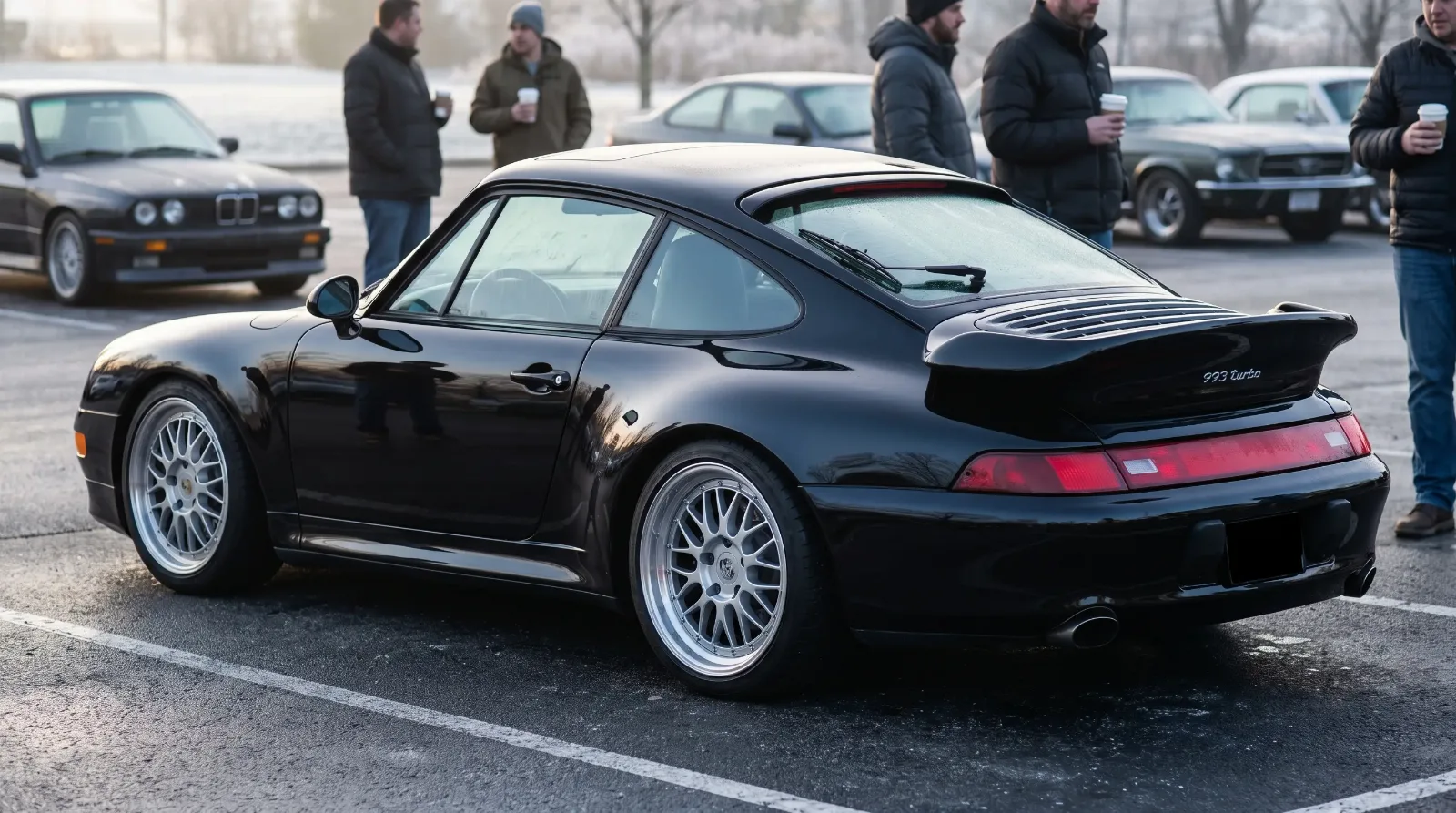
Midway through the 993's run, Porsche introduced the Carrera 4S, which took the wider fenders and brake package from the Turbo and wrapped them around the naturally aspirated all-wheel-drive Carrera 4. It gave buyers a way to get the Turbo's stance and presence without the turbocharged engine's added complexity and cost, and it proved popular enough that Porsche kept offering a widebody option on every 911 generation since. The regular Carrera and Carrera 4, by contrast, kept the narrower body that had defined 911s since the 1960s, which is part of why enthusiasts still argue over which shape represents the "real" 993 silhouette.
Inside, the changes were quieter but just as deliberate. Porsche softened the dashboard's harder edges, improved the ergonomics of the switchgear, and added a driver's side airbag as standard, a small concession to the era's growing safety expectations that still left the cabin feeling distinctly analog compared to what came after. There was no traction control light blinking for attention, no screen asking for input. Just gauges, a shift lever, and a windshield.
Buying into the last air-cooled generation
Prices for clean 993 Carreras have climbed steadily for years, driven almost entirely by that "last of" status rather than any single spec sheet number. A rough driver-quality coupe still trades for real money, and a well-documented example with service records and no rust in the rear quarters commands considerably more. The engine itself is a strong point: the 993's short, solid-bearing intermediate shaft is a different design from the failure-prone IMS bearing that would later trouble water-cooled 996 and early 997 models, so that particular worry does not apply here. Rust is the other concern worth chasing down, particularly around the rear wheel arches and the base of the windshield, since even a car with a spotless engine bay can be hiding trouble under the paint.
| Variant | Engine | Output | Years |
|---|---|---|---|
| Carrera | 3.6L air-cooled flat six | 272 hp (285 hp from 1996 with VarioRam) | 1994-1998 |
| Carrera 4 | 3.6L air-cooled flat six, AWD | 272 hp (285 hp from 1996 with VarioRam) | 1994-1998 |
| Carrera 4S | 3.6L air-cooled flat six, AWD | 285 hp | 1996-1998 |
| Turbo | 3.6L twin-turbo flat six, AWD | 402 hp | 1995-1998 |
For anyone weighing a Turbo against the naturally aspirated cars, there is a related deep-dive that walks through what the twin-turbo cars actually cost to own and what makes them different animals entirely.
Why the ending mattered
Porsche did not stop building air-cooled engines because the design had failed. Tightening emissions rules and the practical limits of cooling an engine with nothing but fins and fan blades made water cooling inevitable for the 996 that followed in 1999. The 993 was not an accident of timing so much as a deadline the engineers knew was coming, and they spent the car's short production run making sure the ending was a good one.
That is the part her father understood before she did. He was not just keeping a car running. He was keeping a specific, finite thing alive past its natural stopping point, one summer at a time. The 993 does that for a lot of people, and it is a large part of why it holds such a firm place within the broader Porsche saga, not as the fastest 911 or the rarest, but as the one that closed a door quietly and well.
"You don't drive a 993 to get somewhere fast. You drive it to hear an engine that isn't going to exist in this form again, and most owners know exactly what they're listening to."
— Nora Beckett
She still drives it every summer, the way he did. The bug marks on the windshield are hers now too.