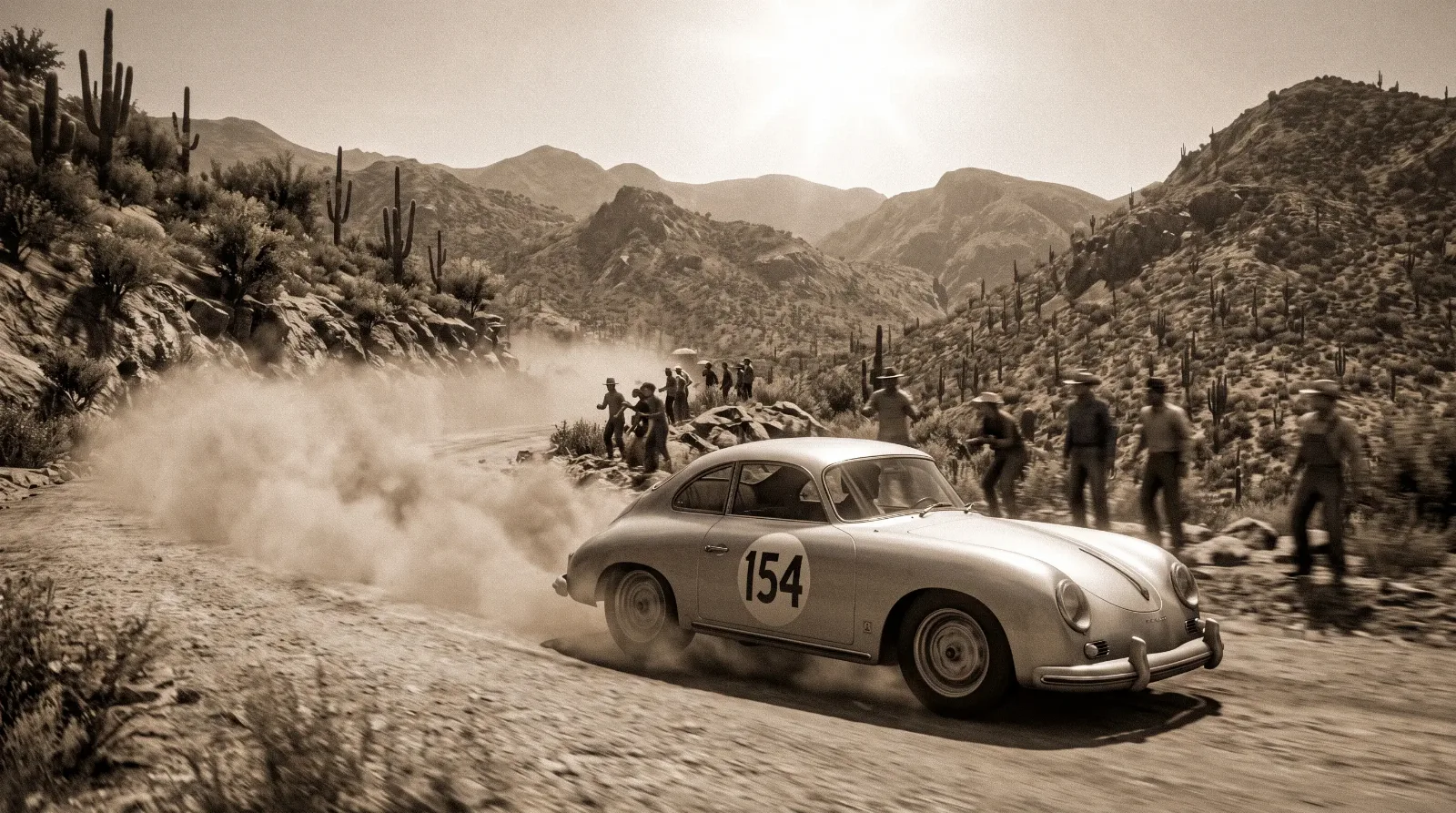
A dust cloud rising over a Mexican highway in 1953, a small silver coupe cutting through it at a speed nobody had asked a road car to sustain for hours at a time. That image, more than any spec sheet, is where the word Carrera entered Porsche's vocabulary. The race was called the Carrera Panamericana, a border-to-border sprint across Mexico that chewed up cars and drivers in equal measure, and Porsche's showing there gave the company a name it would use on its fastest models for the next seven decades.
The race itself predates Porsche's involvement by only a couple of years. It began in 1950, timed to celebrate the completion of Mexico's section of the Pan-American Highway, and it quickly became one of the most dangerous events in motorsport, run on open public roads through mountains, desert, and small towns where spectators sometimes stood closer to the racing line than anyone would allow today.
A small car among giants
Porsche arrived at the Carrera Panamericana as an underdog in every visible way. The field included Ferraris, Lancias, and American iron with engines several times the size of anything rolling out of Stuttgart. The Porsche 356, entered in the smaller displacement classes, was never going to win outright against that competition, and nobody on the Porsche team expected it to.
What the 356 could do was survive, and finish, and win its class, which mattered more than it sounds. A grueling multi-day race across a country with unpredictable roads and altitude changes punished mechanical fragility harder than it punished a lack of raw power. Porsche's class wins in the early 1950s told a quieter story than the outright winners' trophies: that these were cars built to actually last the distance, not just look fast on a start line.
Where the name came from
Porsche formally adopted the Carrera name in 1955 for the 356 A Carrera, a road-going model equipped with a four-cam engine derived from the racing program, and it has never really let go of that word since. Every generation of 911 has had a Carrera variant, and the name has quietly become the baseline expectation for what a proper Porsche sports car should be, rather than a special edition flourish.
There is something almost old-fashioned about a manufacturer naming its bread-and-butter model after a road race most of its current customers have never heard of. But that is exactly the point. The Carrera name is not decoration. It is a small, stubborn piece of memory, carried forward on a badge, of five days spent crossing Mexico in a car that was never supposed to survive the trip, let alone define a lineage.
The cars themselves
The 356 that raced through Mexico in the early 1950s looks almost fragile by modern standards: narrow tires, a small greenhouse, an engine that would be modest in a contemporary hatchback. Yet it is precisely that smallness that made the achievement legible. There was no brute force to hide behind. Every finish was earned through balance, through an engine that kept running when it had every excuse not to, through a chassis that held its line on roads that had no business being raced on at all.
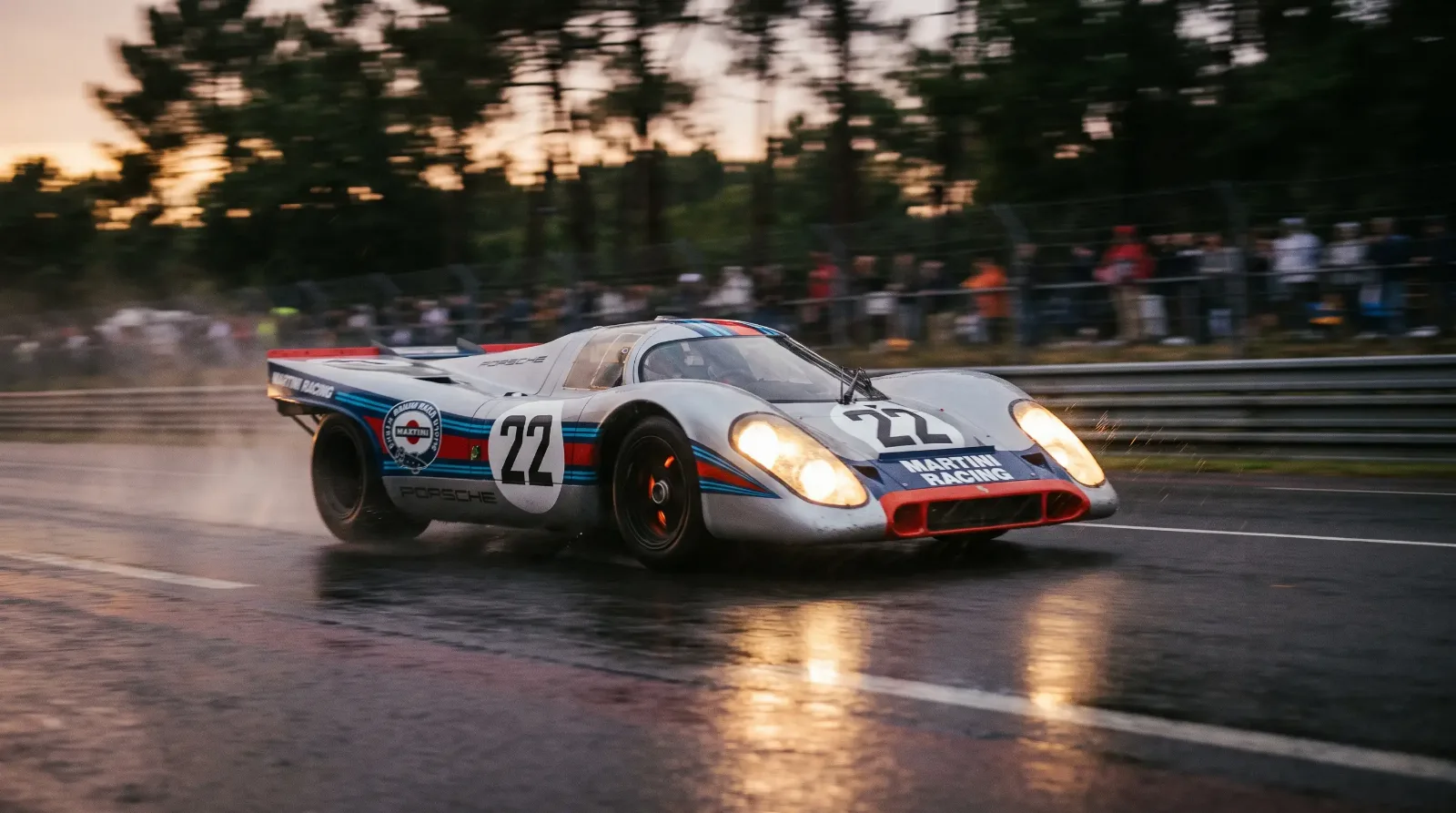
Anyone tracing the throughline from those early 356s to Porsche's later competition history will find the connections everywhere. Porsche's motorsport heritage at Le Mans and beyond grew out of exactly this instinct: build something light and reliable rather than simply powerful, and let the results speak for the engineering.
| Detail | Note |
|---|---|
| Race distance | Roughly 2,000 miles across Mexico, run in stages (the inaugural 1950 route covered about 2,178 miles) |
| Porsche's primary entry | 356 in small-displacement classes |
| Result | Class wins rather than outright victory |
| Legacy model | 356 A Carrera, 1955, named for the race |
A name that outlasted the road
The highway is still there, though the race in its original open-road form is not, at least not in the way it ran in the 1950s. What remains is the word itself, stamped onto decades of Porsche fenders, mostly unnoticed by the people driving them. A quiet inheritance from a race most of them have never studied.
Restorers and collectors who chase genuine Carrera-badged 356s today are, whether they realize it or not, chasing a specific piece of that Mexican highway. The four-cam engine that gave the 356 A Carrera its name was expensive to build and temperamental to maintain even when new, which is part of why surviving examples are scarce and valued accordingly. A car with documented Carrera history, showing the four-cam block and correct period equipment, sits in a different tier of the market entirely from a standard pushrod 356 wearing the badge without the mechanical substance behind it.
That distinction matters to buyers the same way it mattered to the drivers who finished the actual race decades ago. The name was never meant to be applied loosely. It described a specific achievement, a specific engine, and a specific willingness to keep a small car running across a country that offered no guarantees it would make it to the finish.
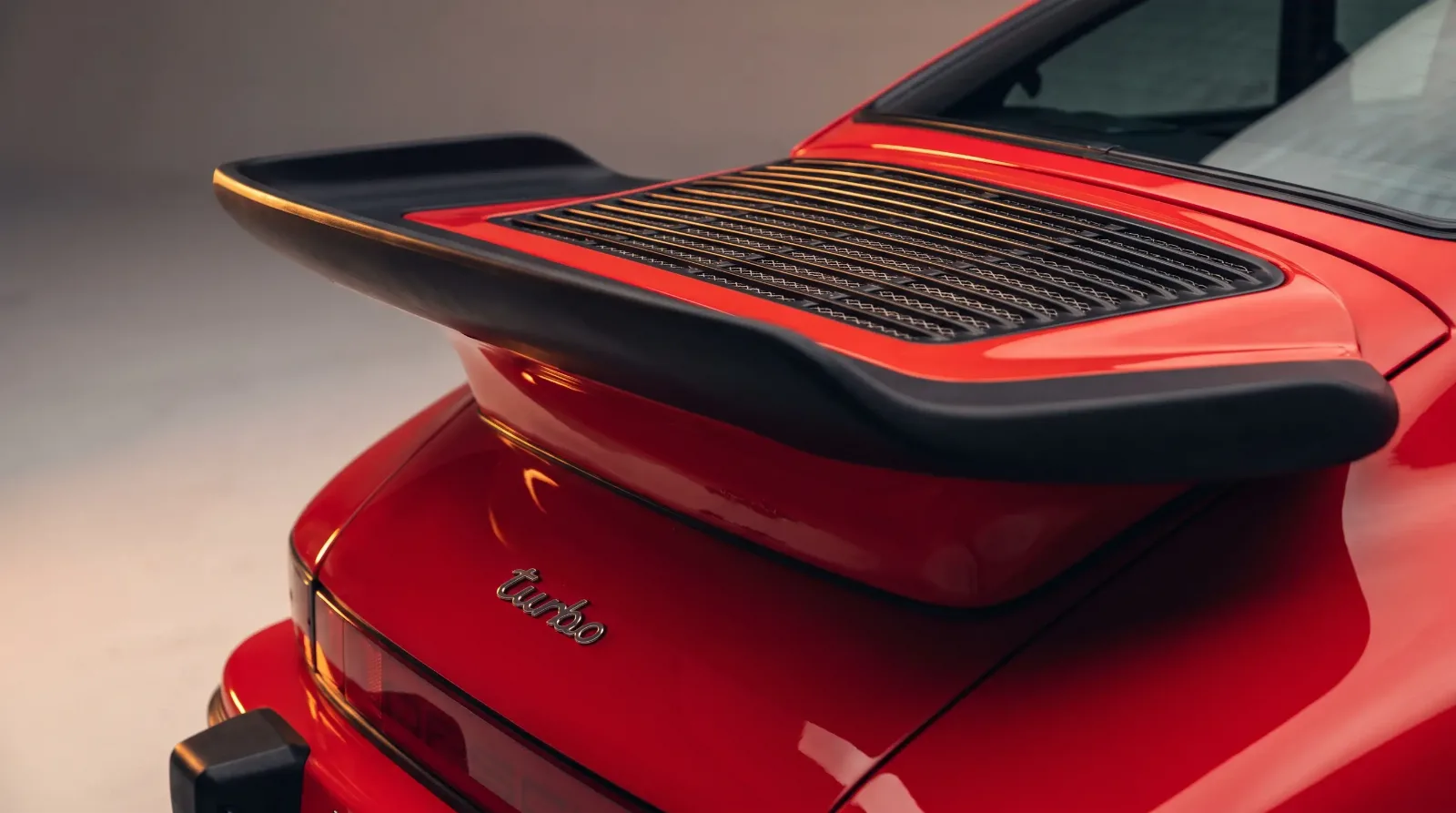
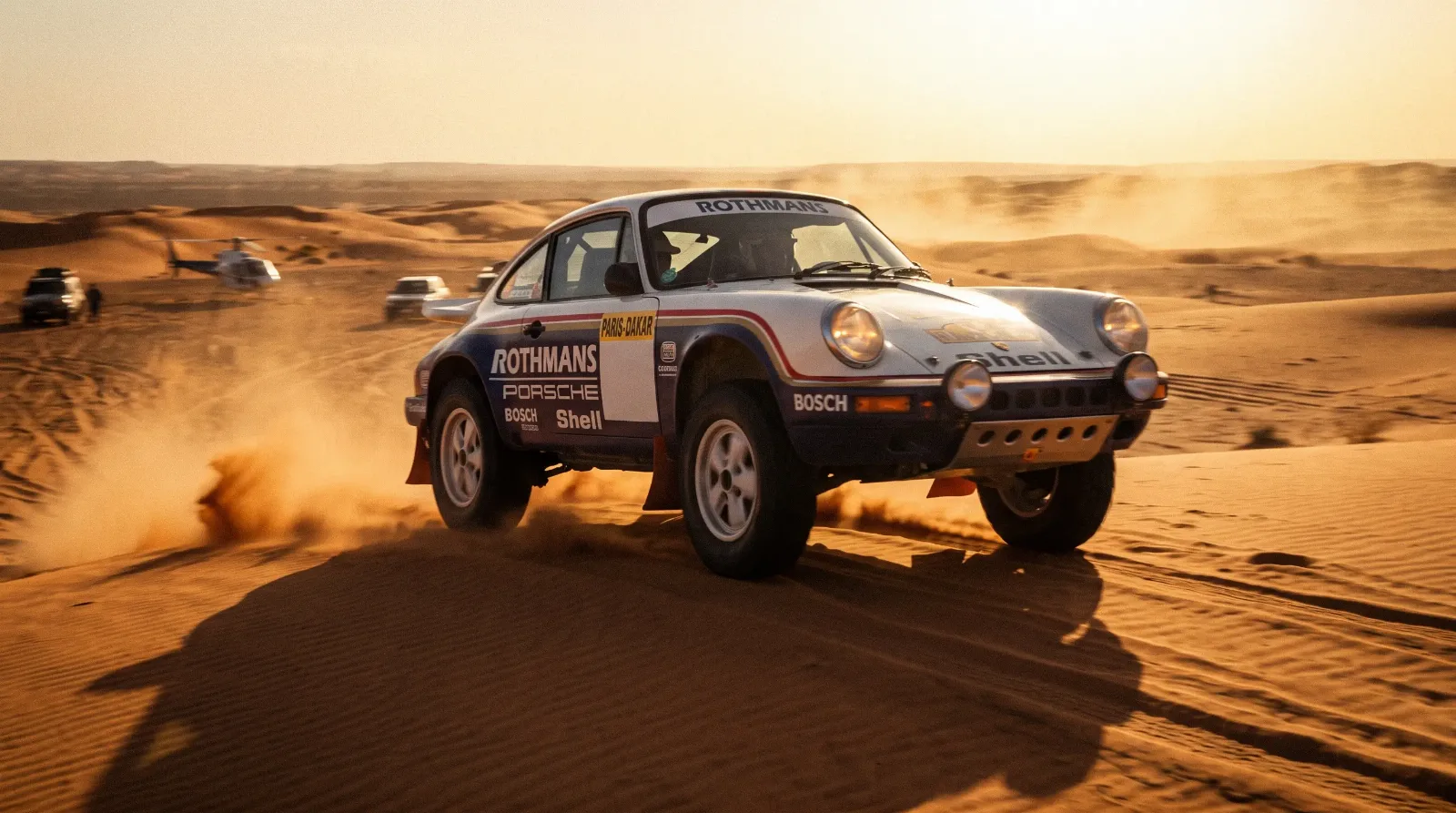
For a fuller picture of how this fits into the marque's wider story, our Porsche retrospective traces the line from those first 356 finishers all the way through the turbocharged era. And for those curious how Porsche carried the same endurance instinct into rougher terrain entirely, another angle on the same car picks up that thread in the deserts of the Safari Rally and Paris-Dakar.
"The 356 that finished the Carrera Panamericana was not the fastest car on the road that week. It was simply the one that refused to stop being a car when everything around it was falling apart."
— Nora Beckett
What lingers from the Carrera Panamericana is not the outright results, which faded from most memories decades ago, but the name itself, still riding on the flanks of cars built long after the last of those original racers rolled off the highway and into history.
Sources and notes
- Wikipedia: Carrera Panamericana
- Motor Sport Magazine: Five years of the Carrera Panamericana
- Porsche: The wild event that helped define Porsche
- Porsche Newsroom: Jose Herrarte, Carrera Panamericana 1953
- Porsche Club of America: How Porsche mastered the world's toughest races
- RM Sotheby's: 1956 Porsche 356 A Carrera 1500 GS Coupe