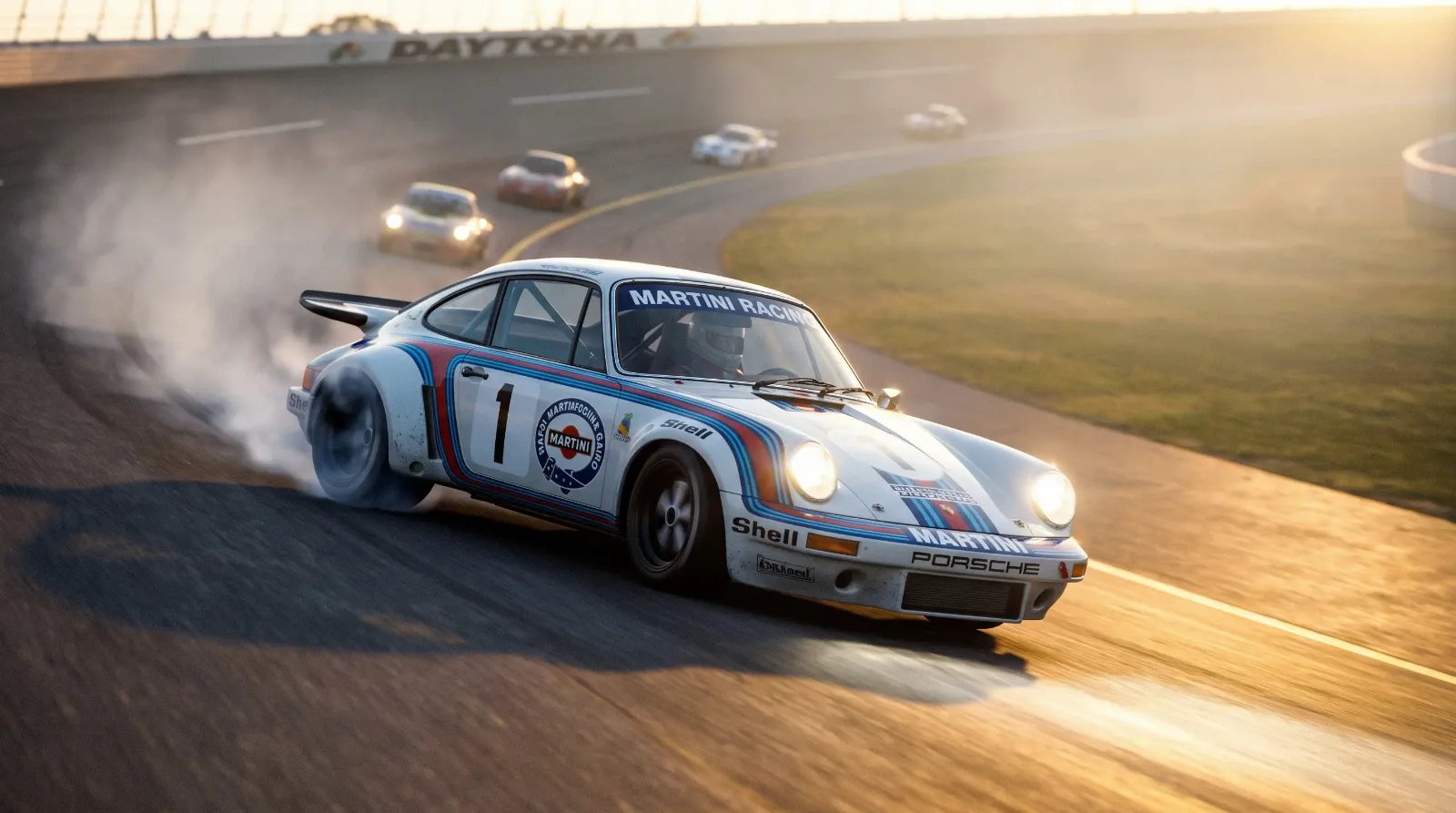
There is a photograph that circulates among Porsche people, grainy and slightly overexposed, of a white Carrera RSR sliding through the Daytona banking at dawn, headlights still cutting through the last of the dark. Nobody remembers which race it was for certain. What people remember is the sound, described by more than one mechanic who was there as something closer to tearing fabric than a normal engine note. The Carrera RSR earned that reputation the hard way, on tracks that punished anything less than total commitment, and it did it without ever pretending to be more than what it was: a 911 pared down, wound up, and sent racing.
A road car that refused to stay a road car
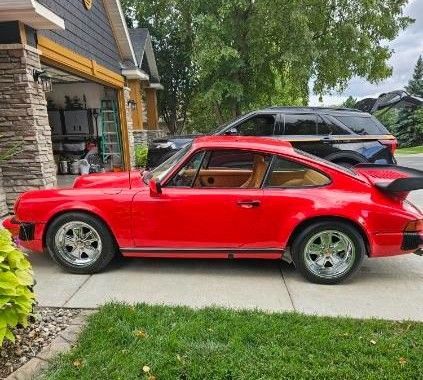
The RSR grew out of the 911 Carrera RS 2.7, itself already a stripped, lightened, spoilered version of the standard 911 built to satisfy homologation rules. Porsche's competition department looked at the RS and asked the obvious question: how much further could this go before it stopped being a road car altogether? The answer arrived in 1973 with a 2.8-liter flat-six pushed to about 300 hp, wider fender flares to cover racing rubber, and a chassis stiffened for circuits rather than commutes. It was, by any honest measure, closer to a race car wearing a road car's silhouette than the reverse.
The 1973 Carrera RSR finished fourth overall in the GT class at Le Mans that year in the hands of Gijs van Lennep and Herbert Muller, but its real coming-out party was winning outright at the Daytona 24 Hours and the Targa Florio, where its combination of light weight and reliability let it run down prototypes with considerably more raw power. That balance, doing more with less rather than simply adding displacement, became the RSR's signature and, arguably, the signature of Porsche's whole racing philosophy through the 1970s.
Building a bigger, meaner RSR
Success invited escalation, and by 1974 Porsche had answered with the 3.0 RSR, its displacement bumped again and its aerodynamics sharpened with a deeper front spoiler and a more aggressive ducktail. The 3.0 RSR carried that winning formula into IMSA and European championship rounds, taking outright victories at events like Road Atlanta and Mid-Ohio in 1974, often facing down factory efforts from Ferrari and BMW that had far more displacement on paper. Drivers who raced both generations back to back describe the 3.0 as noticeably more planted at speed, the extra downforce making up for whatever subtlety the smaller engine had offered.
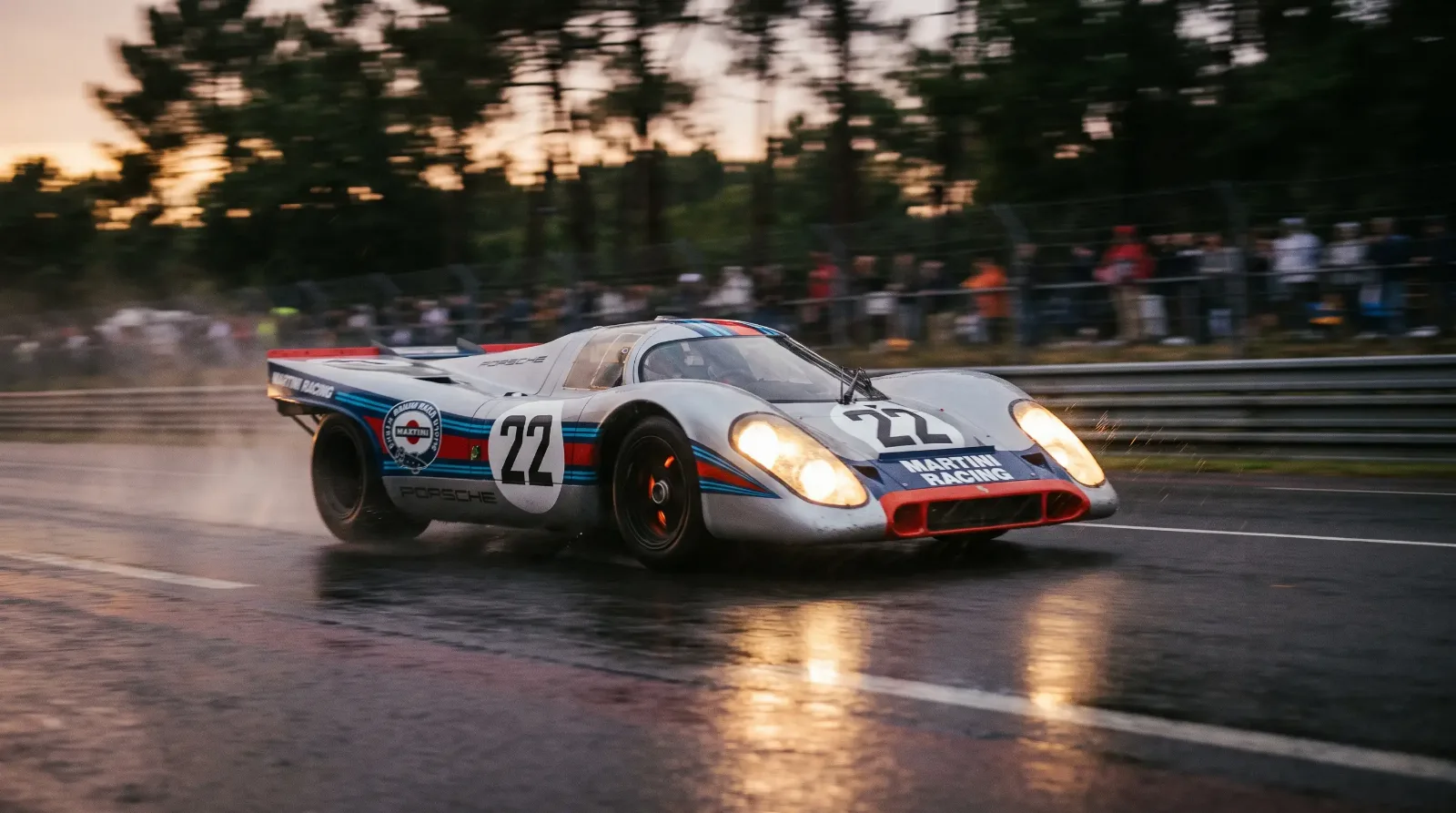
What's easy to miss, looking at spec sheets decades later, is how much of the RSR's success came from patience rather than brute engineering leaps. Porsche didn't reinvent the car each season. It refined the same basic recipe, lighter panels, careful weight distribution, an engine tuned for durability as much as peak output, and let consistency do the winning. That approach traces directly back to the 917 and Le Mans years, when Porsche first learned that outlasting the field mattered as much as outrunning it.
Privateers, IMSA, and a car that kept working
Part of what makes Porsche Carrera RSR racing history so rich is how long the car stayed relevant in customer hands. Well into the late 1970s, RSRs were still winning IMSA GT class races and showing up on European hillclimb entry lists, campaigned by teams that couldn't afford a factory 935 but wanted something that could still embarrass one on a good day. Brumos Racing ran RSRs in North America to considerable effect, and the car's simplicity, no turbocharger to nurse, no exotic materials to source, kept it accessible to teams working out of modest shops rather than factory garages.
That accessibility is a large part of why so many RSRs survive today in genuine, campaign-history condition rather than as later recreations. Collectors chasing a real period race car often find the RSR is one of the few Porsche competition models where an honest, documented example is still findable, if rarely cheap.
"The RSR never tried to hide what it was doing to you. Every corner, it told you exactly how hard you were pushing, and it forgave you just often enough to keep you brave."
— Nora Beckett
What sitting in one actually felt like
Strip away the marketing language and the RSR's cabin was closer to a lightly furnished steel shell than anything resembling a luxury sports car. Sound deadening was gone. Carpet was gone. The passenger seat, on many customer cars, was gone too, replaced by a fire extinguisher bracket and whatever spares the team could bolt down before scrutineering. Drivers who campaigned both a road-going 911S and an RSR back to back describe the difference less as an upgrade and more as an entirely different relationship with the road, one where every seam and camber change arrived through the seat and the wheel rather than being filtered out.
That rawness had a purpose beyond weight savings. Porsche's engineers wanted feedback, not comfort, because a driver who could feel the tires losing grip a half second earlier could lift, correct, and keep the car on the road rather than off it. It's a philosophy that shows up again and again across Porsche's competition history, favoring information over isolation, and the RSR is one of the clearest, earliest examples of that idea applied to a genuinely street-legal chassis.
| Variant | Year introduced | Displacement | Notable result |
|---|---|---|---|
| Carrera RSR 2.8 | 1973 | 2.8-liter flat-six | 4th overall, Le Mans |
| Carrera RSR 3.0 | 1974 | 3.0-liter flat-six | Outright wins, IMSA GT rounds |
Where the RSR sits in the wider story
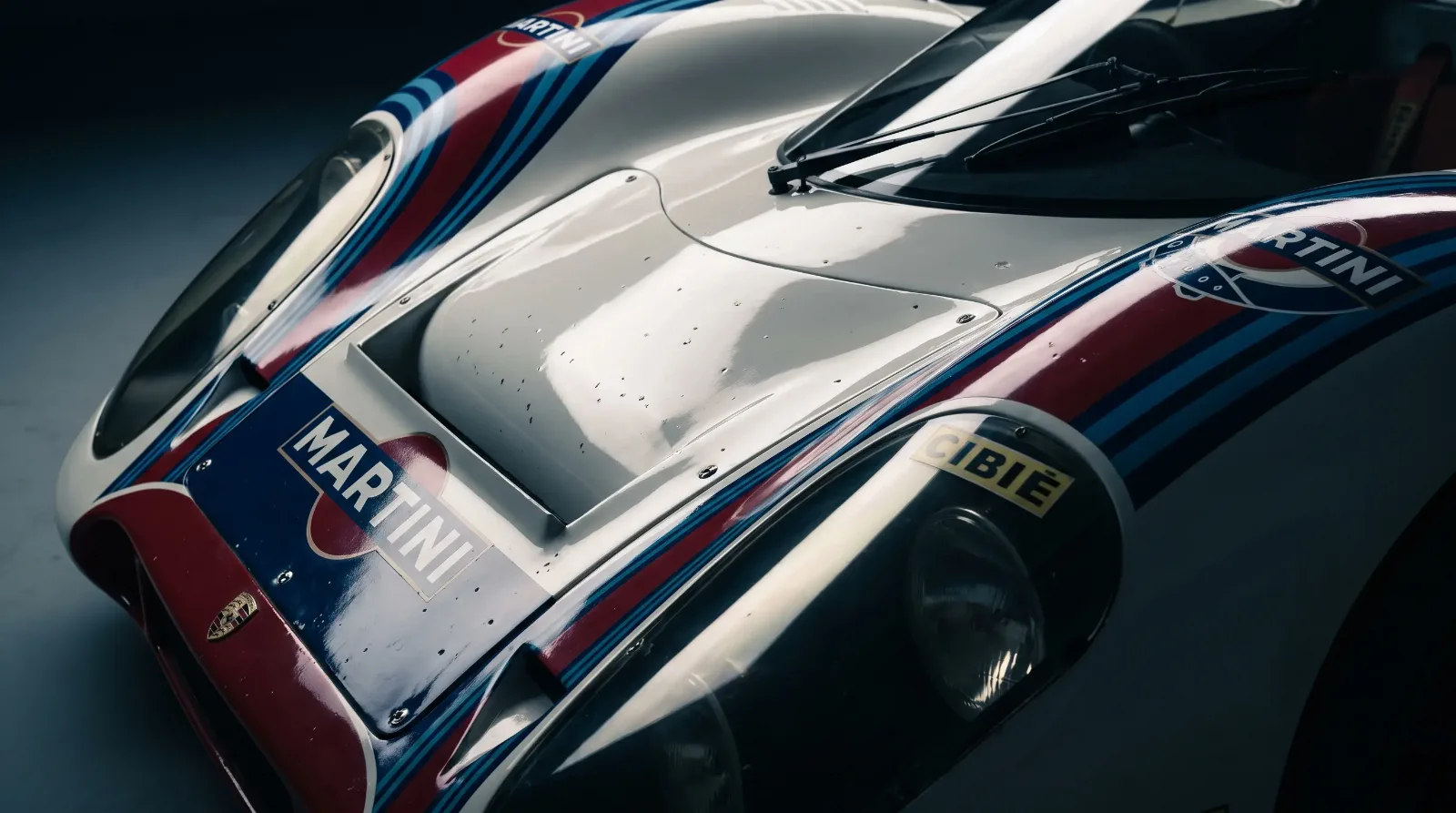
The RSR shares its era and much of its engineering instinct with the turbocharged cars that followed, and reading its history alongside a companion piece on the livery that came to define Porsche's works racing effort fills in how quickly the sport moved from naturally aspirated homologation specials to full works prototypes in barely a handful of seasons. For readers wanting the complete arc, from the earliest air-cooled sports cars to the RSR's era and beyond, the Classic Cars Arena Porsche guide is the place to start.
What lingers about the Carrera RSR, more than any single result, is how directly it connects the ordinary 911 in a customer's garage to the cars fighting for overall wins at Daytona and the Targa Florio. Few manufacturers have ever let that line stay so thin, or so honest.
Sources and notes
- Porsche Newsroom: Porsche 911 Carrera RSR
- StuttCars: Porsche 911 Carrera RSR 2.8 (1973)
- StuttCars: Porsche 911 Carrera RSR 3.0 (1974-1975)
- Petrolicious: 1973 Porsche 911 RSR, from the Targa Florio podium
- Motor Sport Magazine: Targa Florio 1955-1973
- Petersen Automotive Museum: 1973 Porsche 911 Carrera 2.8 RSR