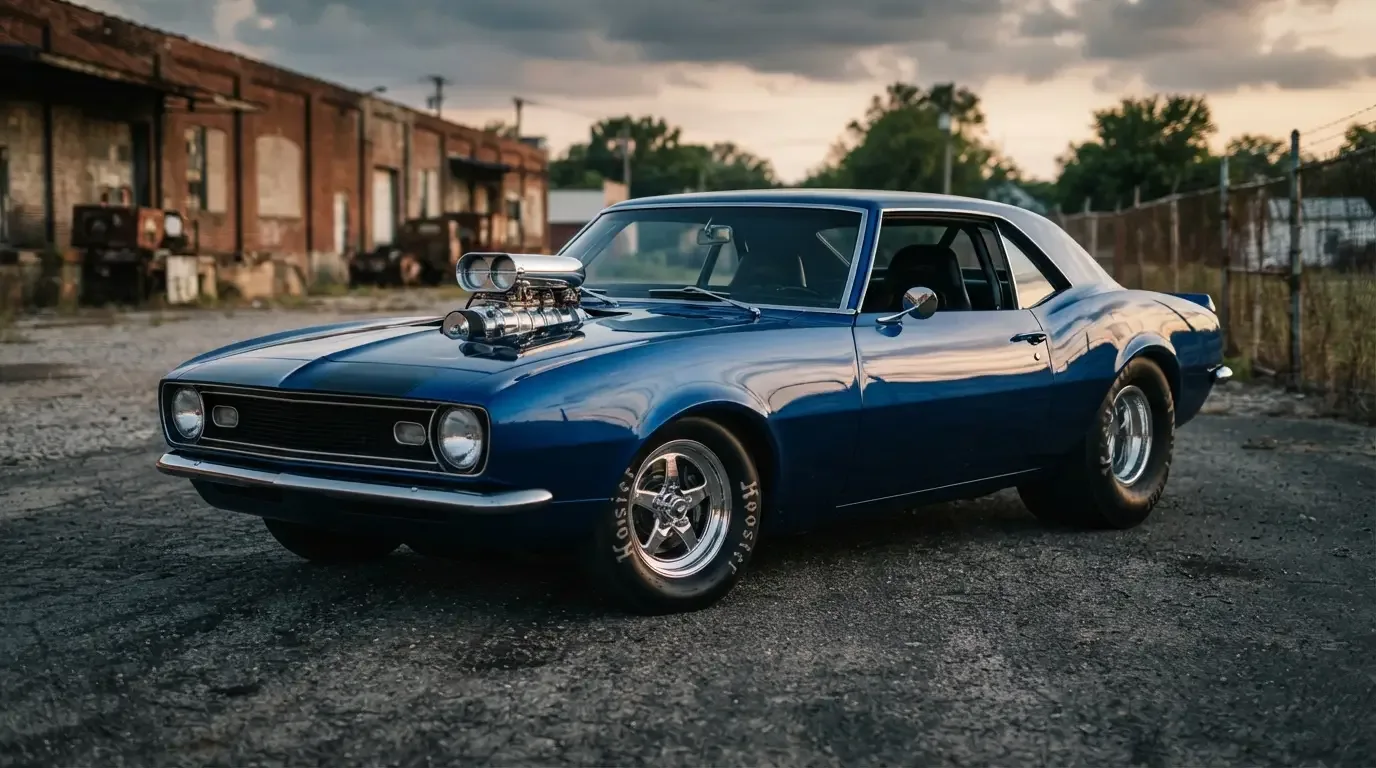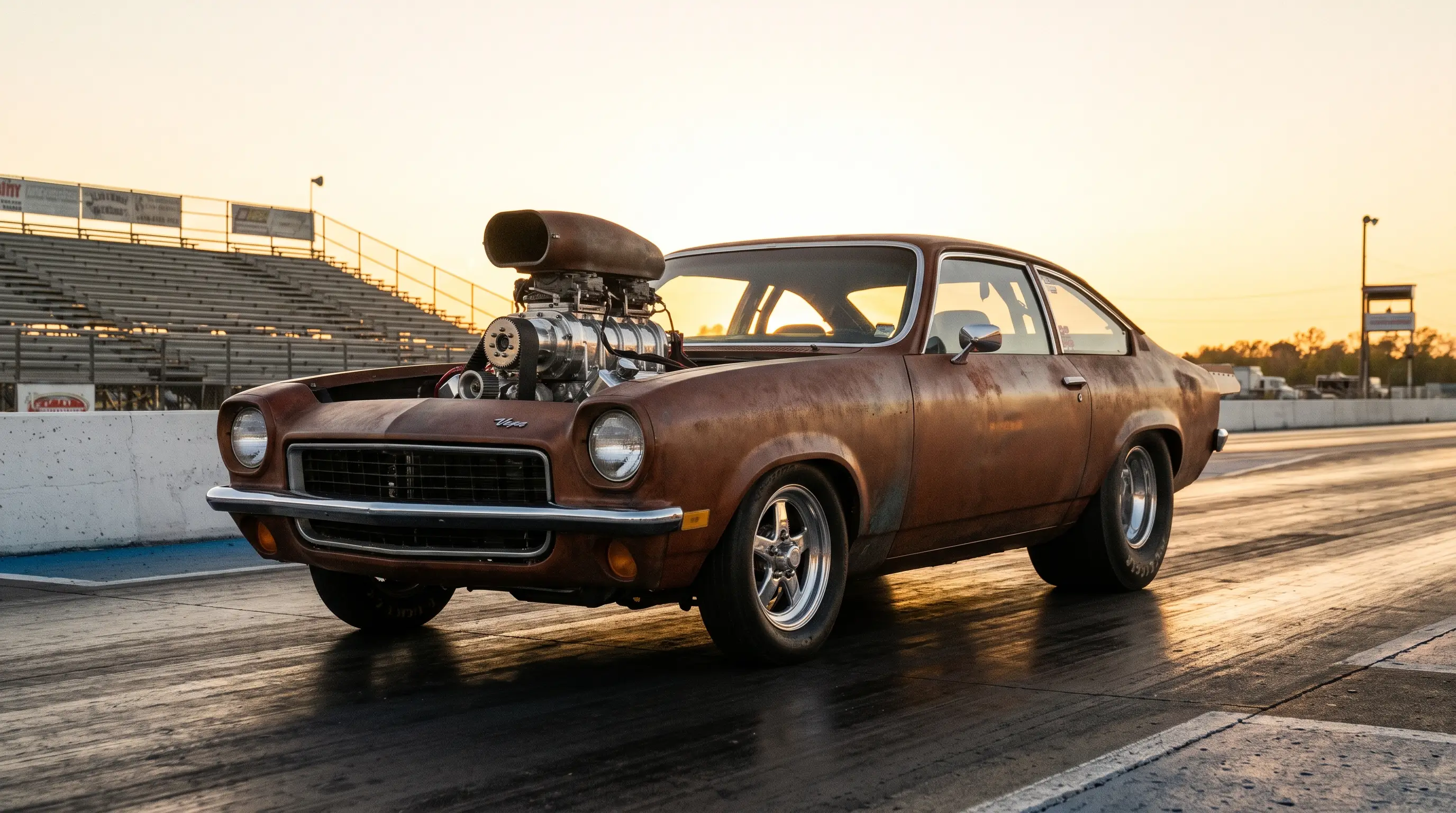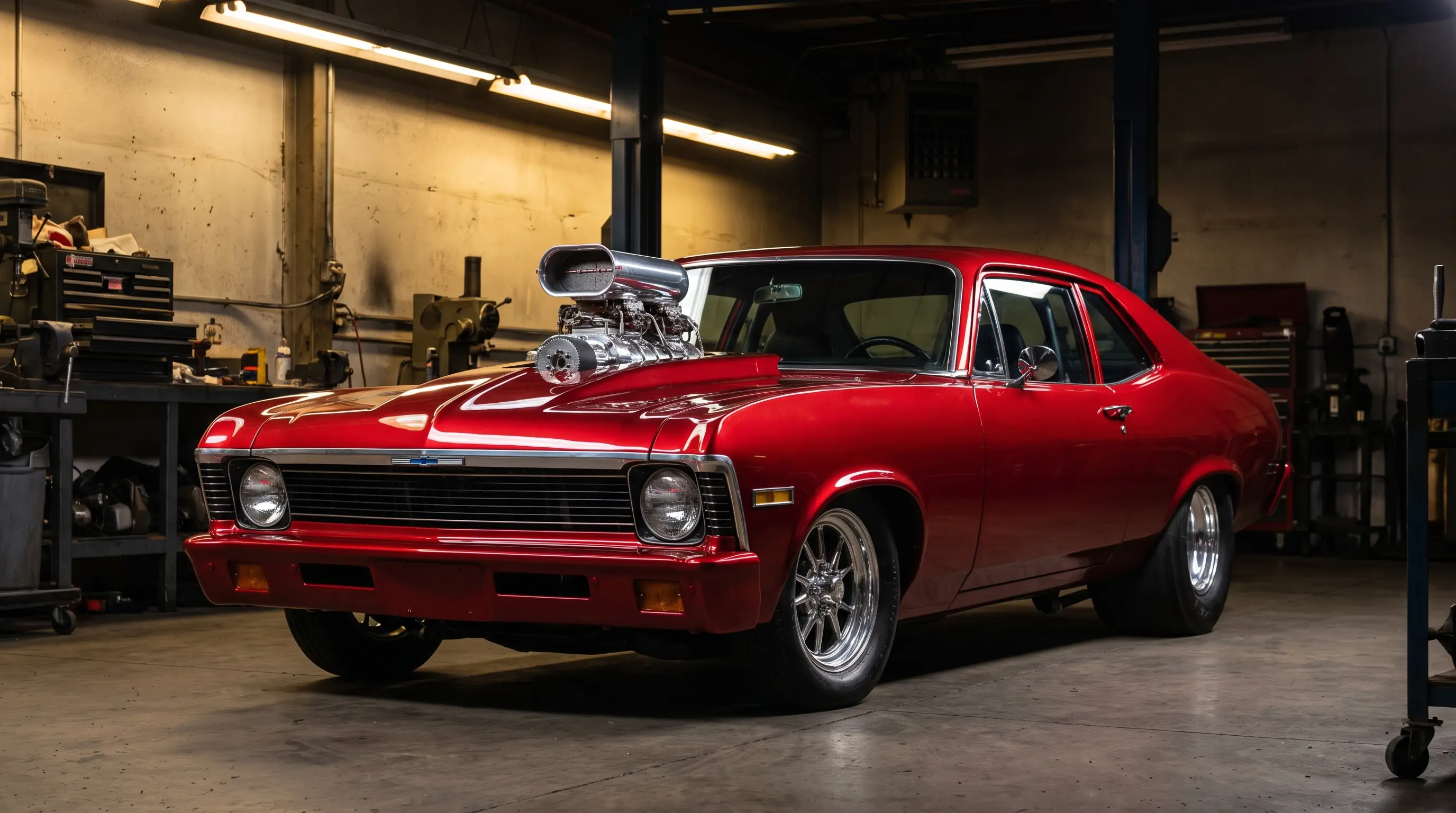
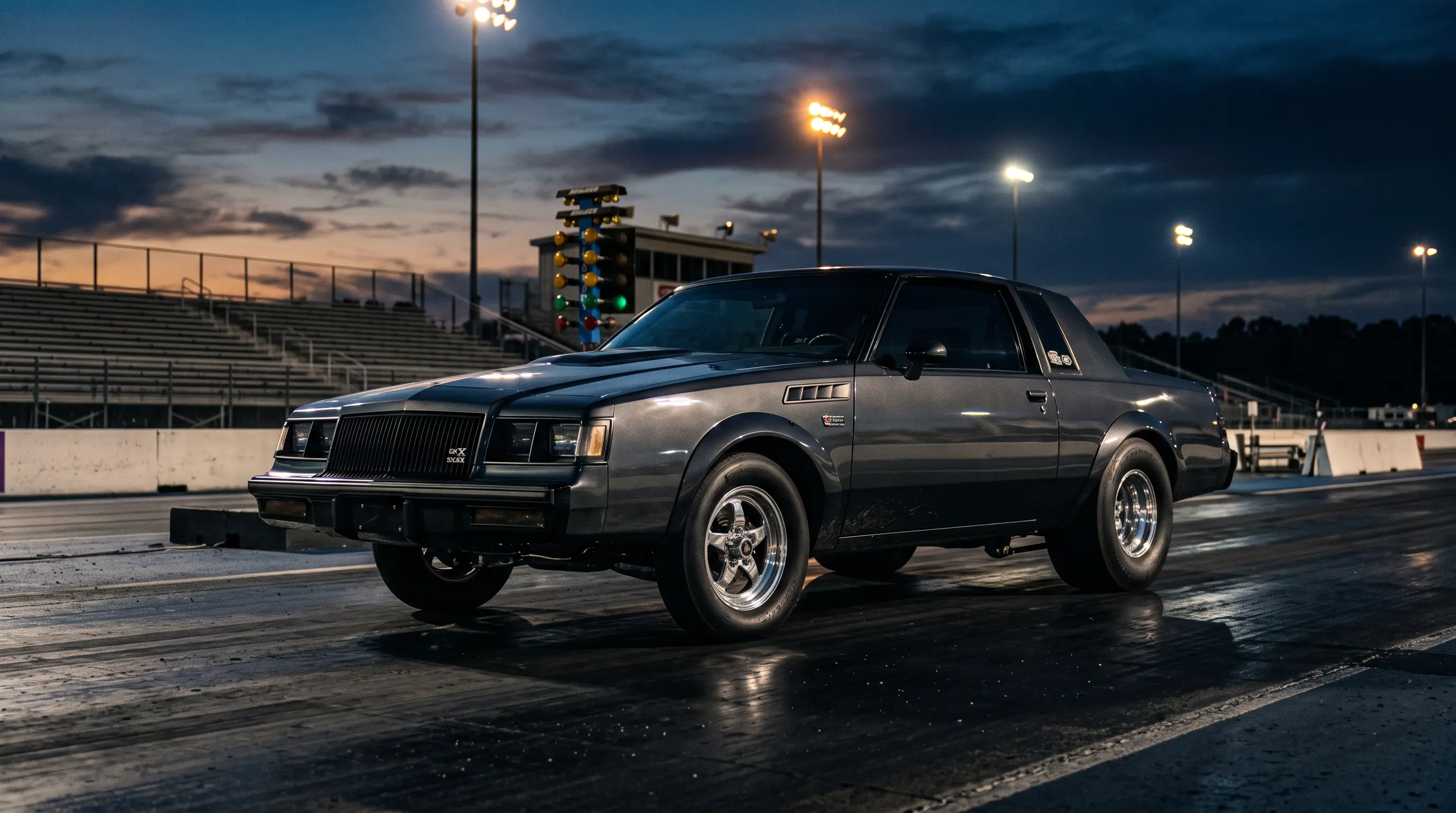
Most Pro Street builds start with an engine swap. The pro street grand national is the rare case in the whole movement where builders had to work to keep the factory engine relevant instead of just ripping it out and starting over. Buick's turbocharged V6 was already fast in stock form by the mid-1980s, fast enough to embarrass small block Chevy owners at stoplights who assumed a six-cylinder could never hang with a proper V8. That reputation changed how builders approached the car entirely, treating it as something to protect and enhance rather than gut and rebuild from scratch.
A factory hot rod that arrived late to the party
Buick built the Grand National from 1982 through 1987, based on the G-body platform shared with the Regal, and its turbocharged 3.8 liter V6 became one of the most respected factory performance packages of the entire decade. By the time the Grand National appeared, the original Pro Street movement of the late 1970s and early 1980s had already established its core identity around big block Chevy power in tubbed compact bodies. The Grand National arrived as something different, a factory car that was already quick without any modification, which put Pro Street builders in an unusual position when they turned their attention to it later in the 1980s and into the 1990s.
Why builders kept the turbo V6 instead of swapping it
On most Pro Street donor cars, the factory engine was seen as a starting point at best, something to be pulled and replaced with a proven big block. The Grand National flipped that logic. Its turbocharged V6, especially in the final 1987 GNX variant built with help from ASC/McLaren, produced factory horsepower and torque figures that rivaled or beat contemporary V8 muscle cars, and the turbo setup responded extremely well to aftermarket boost, fuel, and engine management upgrades. Builders quickly realized that pushing the factory turbo six further often delivered more performance per dollar than tearing it out for a big block swap, especially once the aftermarket turbo tuning scene matured through the late 1980s and 1990s.
That meant Pro Street Grand Nationals split into two camps. Some builders stayed loyal to the turbo V6 platform, chasing bigger turbos and more boost while keeping the car's factory identity intact. Others still pulled the V6 for a big block Chevy or Buick V8, chasing the traditional Pro Street formula regardless of what the factory engine had already proven it could do.
The G-body's role in the wider movement
The Grand National's G-body platform connects it to a broader story about how GM's mid-size cars fed the Pro Street movement across multiple decades and multiple brands. Where this started traces the platform choices that shaped the whole scene, and the Grand National represents one of the later, more unusual entries into that lineage, arriving well after the movement's classic muscle car era had already defined most of its conventions.
Because the G-body shared structural DNA with the Regal, Cutlass, and Monte Carlo, builders working on Grand Nationals could borrow fabrication knowledge from those more common platforms even while dealing with the turbo V6's unique packaging demands under the hood.
Turbo culture versus traditional Pro Street identity
The rise of the turbocharged Grand National within Pro Street circles reflected a broader shift happening in performance car culture during the late 1980s and 1990s, as turbocharging moved from a novelty into a genuinely respected path to serious power. Builders who embraced turbo Grand Nationals were early adopters of a technology that would eventually become mainstream across the whole performance car world, while the traditionalists who swapped in a big block were holding onto the formula that built the movement in the first place. Both camps produced legitimately fast, well-documented cars, and the debate between them still comes up at shows whenever a Grand National rolls in, usually within about five minutes of it parking.
| Build approach | Turbo V6 retained | Big block V8 swap |
|---|---|---|
| Factory identity | Preserved | Lost |
| Aftermarket support era | Grew through late 1980s-90s | Mature since 1970s |
| Sound and character | Turbo whistle, boost spool | Traditional V8 rumble |
| Weight distribution | Lighter engine package | Heavier nose |
"I've had guys tell me swapping a V8 into a Grand National is a sin, and I've had other guys tell me keeping the factory six is just showing off a stock engine with a bigger turbo strapped to it. They're both a little bit right, honestly."
- Mike Sullivan
Fabrication quirks specific to the turbo package
Building a Pro Street Grand National that keeps its factory turbo V6 requires solving packaging problems that a big block swap simply does not create. The turbocharger, intercooler plumbing where fitted, and the factory computer-controlled fuel system all need room and cooling that a traditional carbureted V8 build never has to account for. Builders who tubbed the rear end for wide tires while keeping the turbo six intact often found themselves rerouting factory wiring harnesses and relocating the battery or computer modules just to clear the modified chassis, work that a V8 swap builder rarely had to think about since the aftermarket had already solved most V8 packaging questions decades earlier.
That extra complexity is part of why fewer Grand Nationals kept their factory drivetrain through a full Pro Street conversion compared to how many Novas or Camaros kept a Chevy small block. The ones that did pull it off, with clean wiring, functioning boost control, and a chassis that could handle the power, represent some of the more technically demanding builds in the entire Pro Street catalog, blending old-school tub-and-tire fabrication with genuinely modern engine management long before that combination became common elsewhere in the hobby.
What to look for if you are shopping
A genuine, well-documented Pro Street Grand National, whether it kept the turbo six or went the V8 route, carries real weight with collectors today given the model's factory performance pedigree and its relatively short production run. Verify whether a car retains matching numbers on the turbo V6 if that history matters to you, since the GNX variant especially commands attention when its build sheet and documentation checks out cleanly. For buyers who want to compare what is currently on the market, you can shop classic Pro Street car listings and see how Grand Nationals stack up against the more traditional big block builds that dominate the rest of the field. Either way you build it, or buy it, this is one of the few Pro Street platforms where the factory engineers deserve nearly as much credit as the builder who cut and welded the finished car together in their own garage.
Sources and notes
- Buick Regal (Grand National/GNX) - Wikipedia
- Buick GNX Specs - Examining the Ultimate Grand National - Classic Industries
- How Many Buick GNX Were Made - The Complete Story - Buick Insights
- History Of The Turbocharged Buick 3.8L V6 - DrivingLine
- 1987 Buick GNX 0-60, quarter mile, specs - Acceleration Times