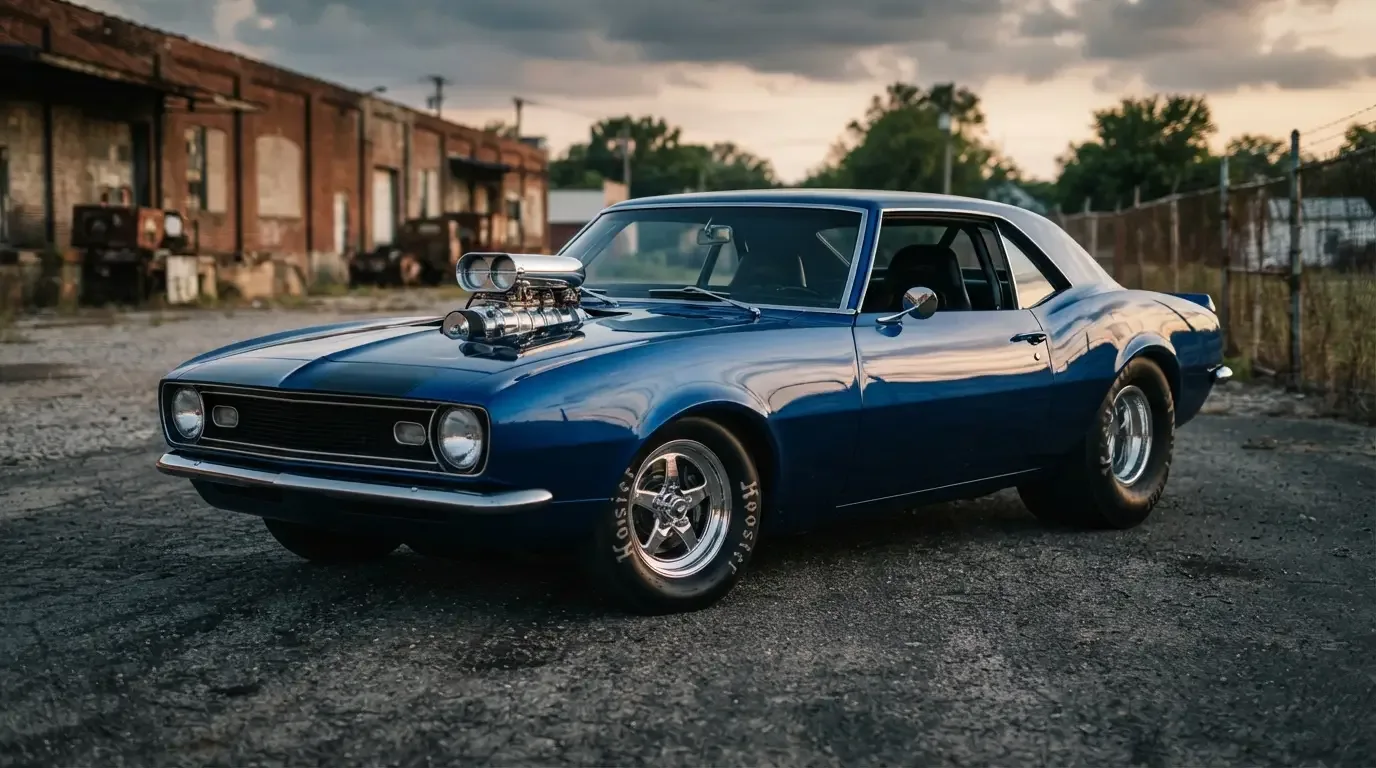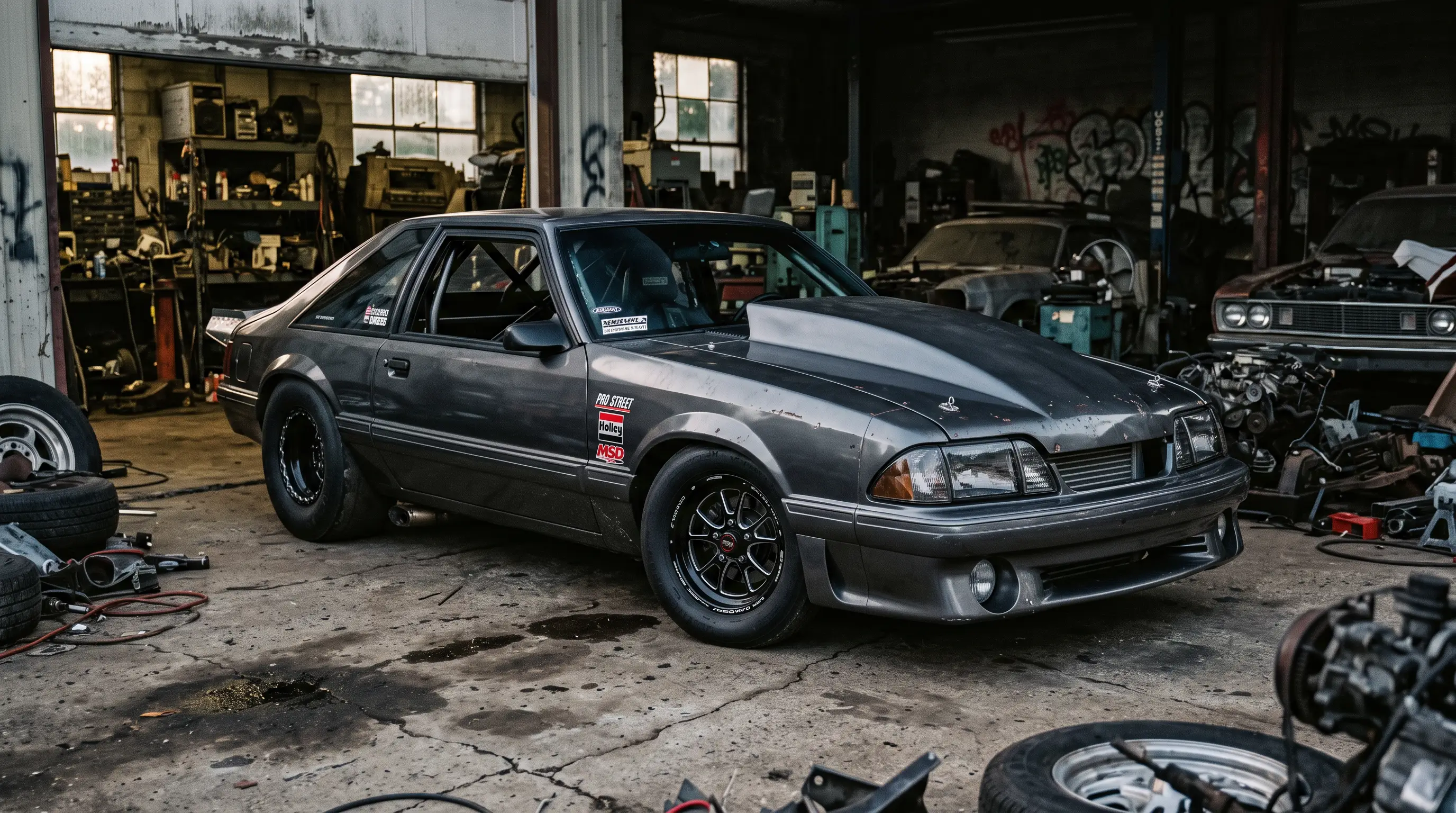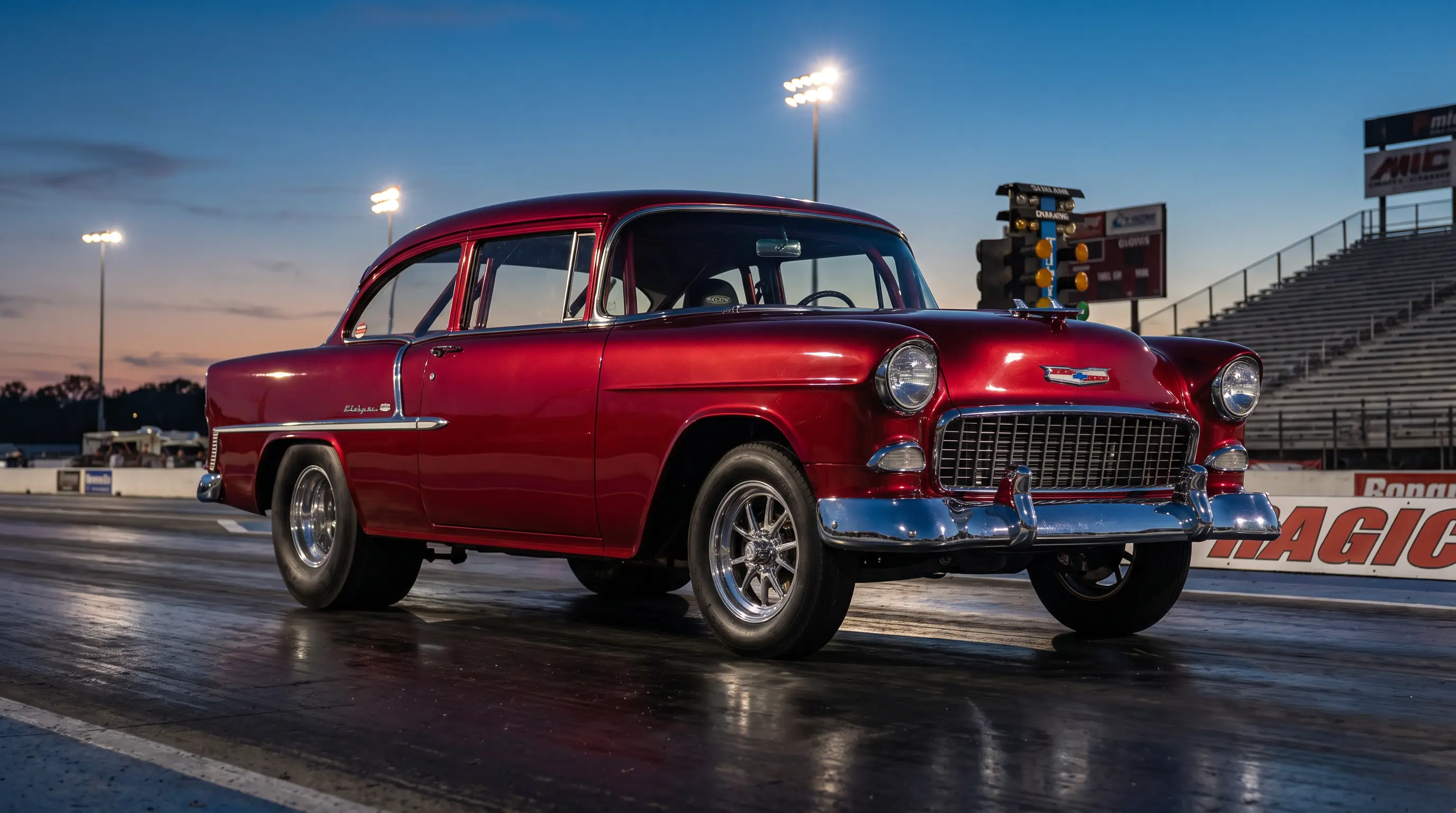
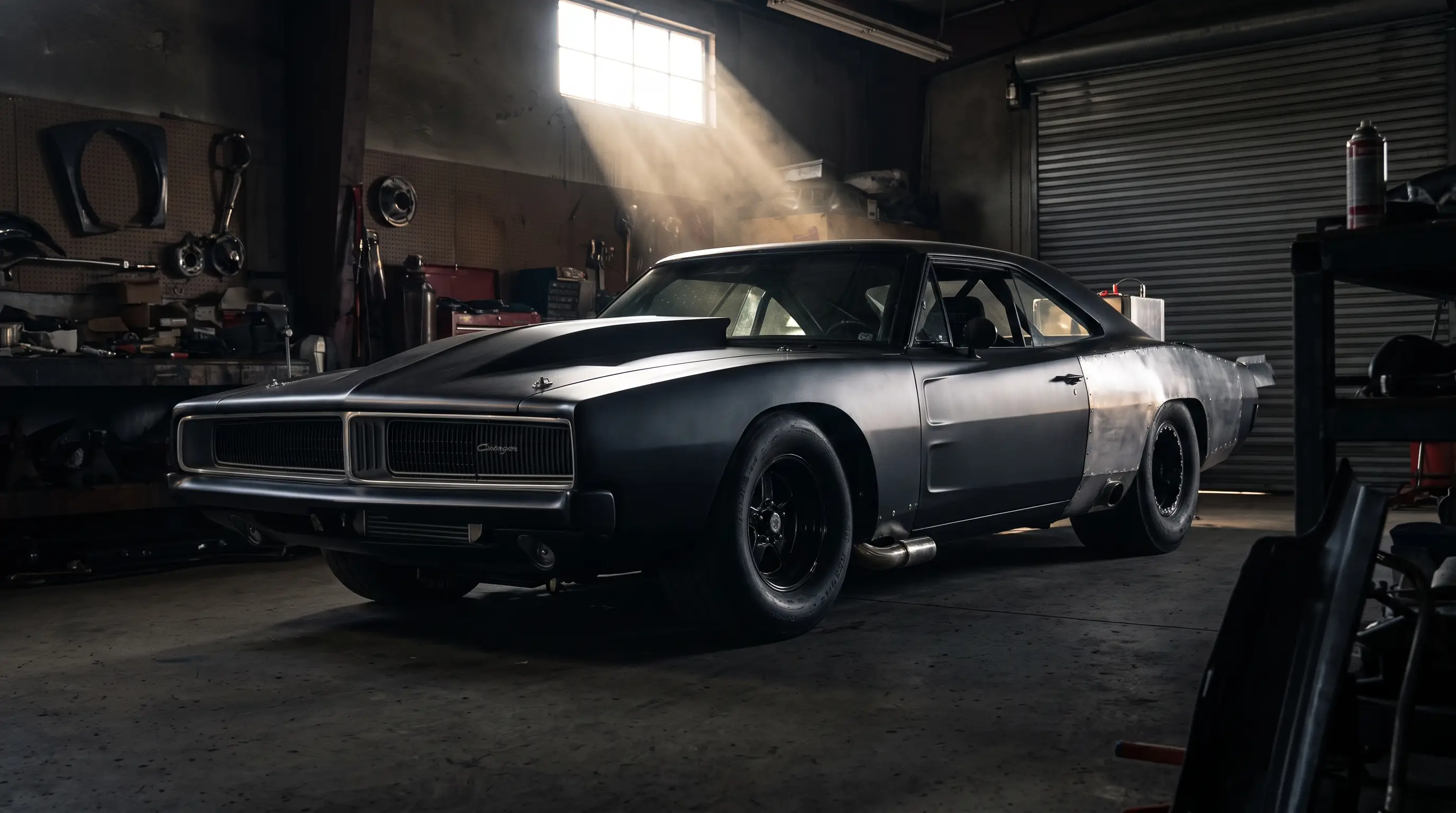
A pro street mopar always stood out for a simple reason. There were a lot fewer of them. Chargers and Cudas never sold in the same numbers as Camaros or Mustangs to begin with, and by the time Pro Street builders were scouring junkyards for donor cars in the 1980s, good Mopar E-body and B-body candidates were already getting scarce and expensive compared to the GM and Ford alternatives.
Working with a smaller parts pool
Mopar builders faced a version of the same problem Ford builders dealt with, an aftermarket that developed Chevy parts first, but worse, because the raw number of Mopar donor cars was smaller from the start. A Charger or a Cuda that had already been picked over by muscle car restorers looking for numbers-matching survivors left slim pickings for a Pro Street builder willing to cut into a car that a purist would consider too valuable to modify.
That scarcity forced Mopar builders to get resourceful. Some adapted back-half kits designed loosely for the platform's dimensions rather than buying an exact bolt-in solution, and others simply fabricated custom tub structures from scratch because no catalog part existed yet for their specific chassis. It was slower, more expensive work, and it meant Mopar Pro Street builds carried a reputation for being genuinely hand-built rather than assembled from a parts list.
Hemi bragging rights and small-block reality
Every Mopar Pro Street conversation eventually turns to the Hemi, and for good reason. A tubbed Charger or Cuda running a big Hemi represented the platform's absolute ceiling, delivering a combination of rarity and raw power that no small-block GM or Ford build could match on paper. But real Hemi engines were expensive and increasingly hard to source even in the 1980s, which meant most Pro Street Mopar builds actually ran a small-block 340 or 360, or a big-block 440, rather than the engine most people picture when they hear the name.
That gap between reputation and reality did not hurt the platform's standing. A well-built 440 Cuda still hit hard, still sounded right, and still carried the Mopar name that meant something specific to a segment of builders who were never going to be satisfied with a small-block Chevy no matter how well it ran.
"You didn't build a Mopar because it was the easy choice. You built one because nothing else sounded the same pulling up to the line."
- Mike Sullivan
Charger versus Cuda as build platforms
The Charger and the Cuda drew different crowds even within the smaller Mopar builder community. The Charger's longer wheelbase and heavier B-body construction gave it more in common with a Chevelle, favoring builders chasing a bigger, more substantial-looking car with room for a big-block up front. The Cuda's shorter E-body proportions put it closer to the Camaro and Mustang in spirit, lighter and tighter, appealing to builders who wanted the Mopar sound and rarity without the extra bulk of a full-size B-body.
Both platforms shared enough mechanical DNA that a builder experienced with one could usually adapt that knowledge to the other, though the actual tub geometry and back-half fabrication differed enough that true dual-platform specialists were rare even within the small Mopar Pro Street world.
Where Mopar fits in the bigger platform story
Mopar builders were fighting the same core battle every Pro Street builder faced, just with fewer donor cars and less aftermarket support to lean on. Seeing how that scarcity shaped the Mopar side of the movement makes more sense next to the parallel stories of the GM and Ford camps, where donor availability and parts support followed a very different trajectory. For the full story of how all these platforms developed side by side, the Mopar chapter reads as the scrappiest and most self-reliant of the bunch.
That self-reliance is part of why surviving Mopar builds carry such a distinct reputation among collectors today. A builder who fabricated custom tub work because no catalog kit existed left behind a car that, almost by necessity, could not be easily replicated by someone just ordering the same parts.
Buying a Pro Street Mopar today
Genuine period Mopar Pro Street builds are rare enough that finding one for sale takes real patience, and the smaller original builder community means fewer surviving examples overall compared to Camaro or Mustang builds from the same years. When one does surface, documentation matters even more than usual, since custom fabrication work without paperwork can be genuinely difficult to verify or date without a builder's own records.
If a Mopar is what you are after, expect to wait and watch listings closely rather than expecting a quick find, and when one does show up you will want to move on it since good examples do not sit long. Browse classic Pro Street car listings regularly and you will be ready when one appears.
Scarcity as the platform's real signature
The Pro Street Mopar was never going to be the common choice, and that was never really the point. Builders who chose Charger and Cuda platforms did so knowing they would fight harder for parts and pay more for a starting car, and the result is a corner of Pro Street history defined by exactly that kind of stubborn commitment.
Model years that mattered most
Certain Mopar model years carried more weight with builders than others, largely tied to which body styles offered the cleanest lines for a tub job and which years produced the highest original sales volume, meaning more donor cars survived into the Pro Street era in the first place.
| Mopar platform | Builder notes |
|---|---|
| 1968 to 1970 Charger | Most recognizable body style, favored despite full-size B-body weight |
| 1970 to 1974 Cuda | E-body proportions favored by builders wanting a lighter Mopar build |
| 440 big-block | More attainable than a real Hemi, common power choice for both platforms |
Cuda numbers were always smaller than Charger numbers to begin with, which is part of why a genuine Pro Street Cuda from the golden era draws even more attention from collectors today than a comparable Charger build. Both platforms remain the rarest corner of the entire Pro Street collector market, and prices reflect that scarcity whenever a documented example actually comes up for sale.
Engine bay dimensions on both the Charger and the Cuda accommodated big-block Mopar power reasonably well by factory design, which spared builders some of the clearance headaches that plagued big-block swaps into smaller GM platforms. That factory-friendly geometry is one of the few advantages Mopar builders actually had over their Chevy and Ford counterparts, even as they struggled with everything else the smaller parts pool made harder. It is a small consolation, but builders who lived through those years will still bring it up when the conversation turns to why Mopar was worth the extra trouble.