
Pro street scenes never looked the same from one state to the next. A tubbed Nova sitting on a lift in a Midwest garage in January carried a different attitude than the same style of car parked outside a California car show in July, even though both cars were chasing the same idea: skinny front tires, huge rear rubber, and a motor that made the whole thing worth the trouble. The build style traveled fast once magazines started printing it, but the way each region interpreted it stayed local for a long time.
Car Features
7 min read
Regional Pro Street Scenes Across America
Pro street never looked the same from state to state. Here is how Midwest garages, California show culture, Southern strips, and Northeast winters each built the movement differently.
Where the wrenching actually happened
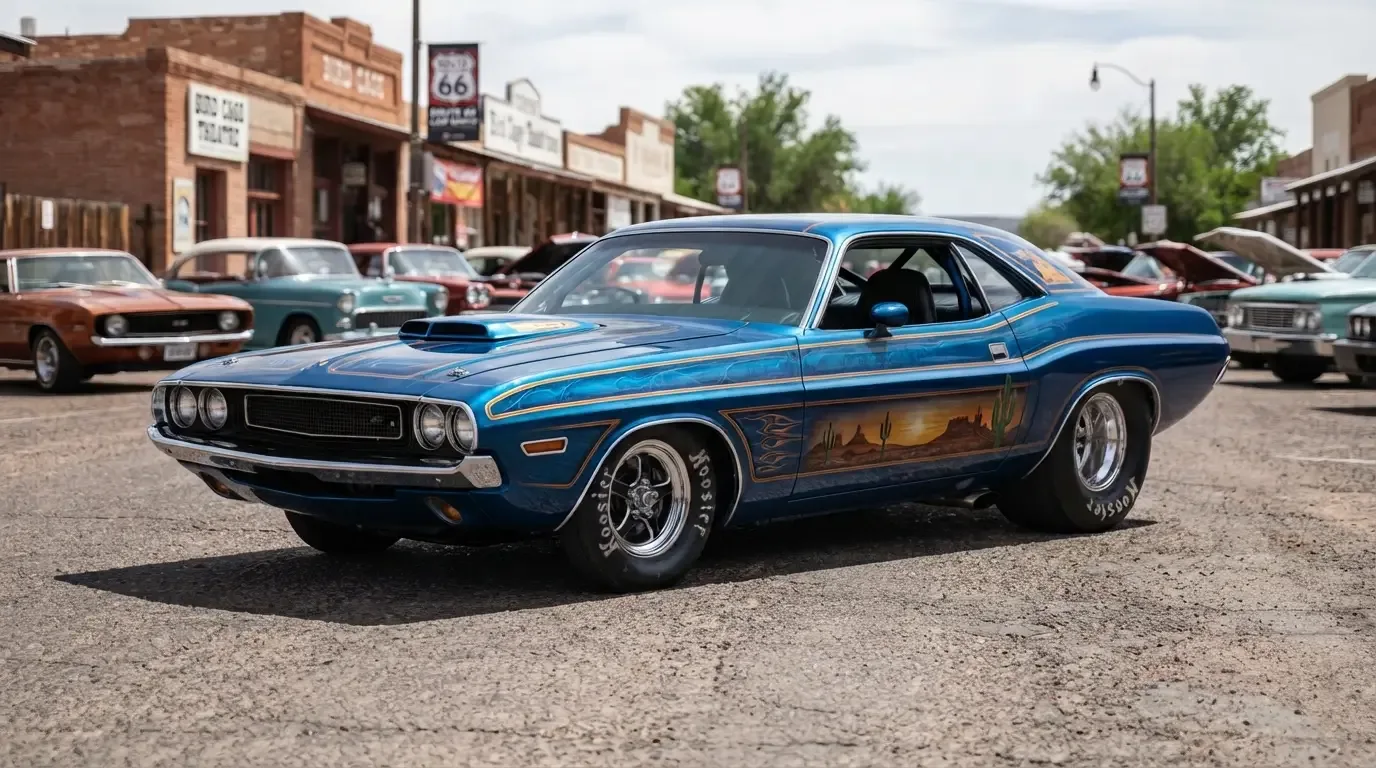
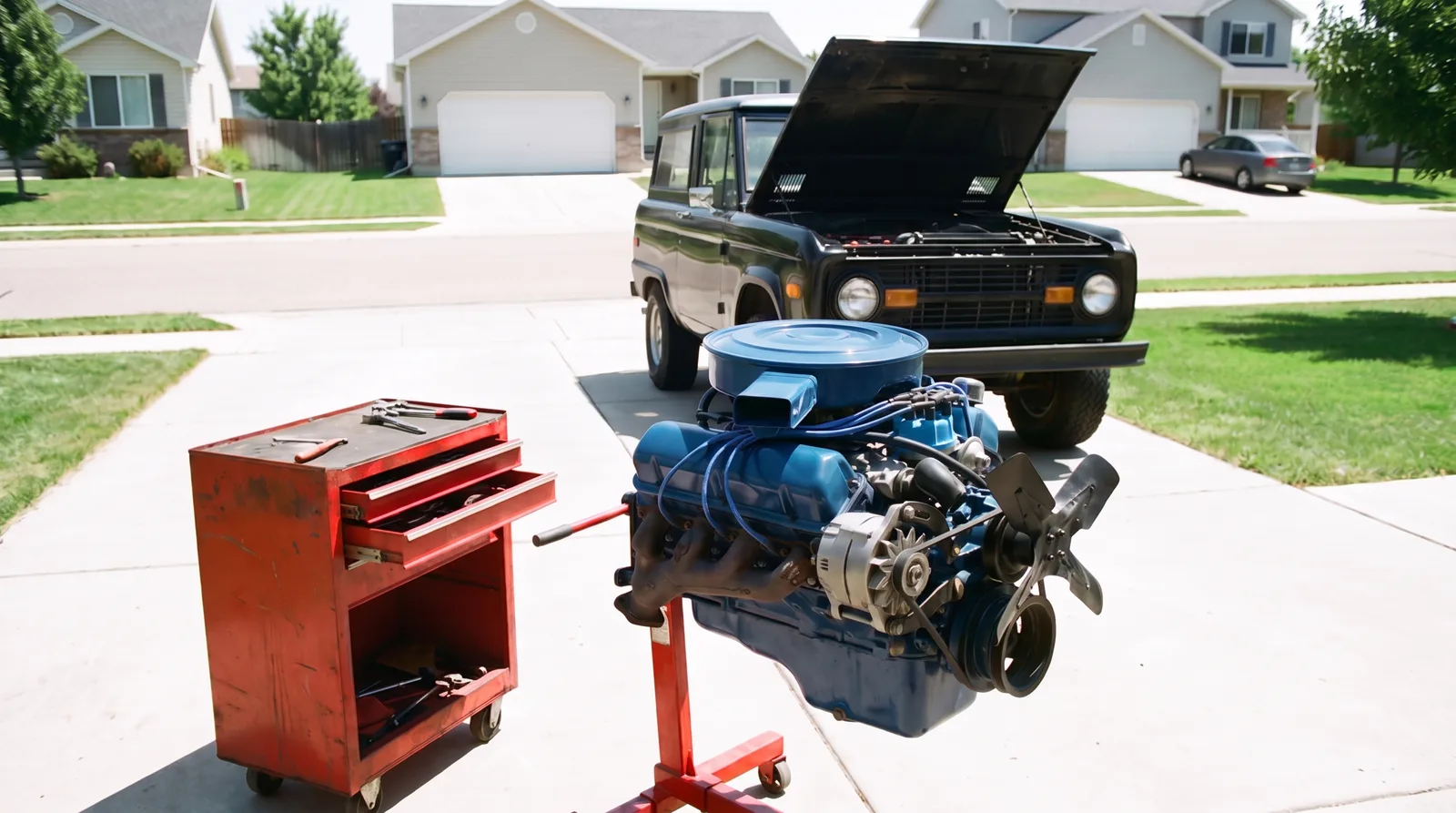
Indiana and Ohio produced more than their share of serious pro street work, and not by accident. That corridor already had a deep drag racing base, cheap shop space, and a culture that respected a car built by the guy who owned it rather than a car built by a check. Scott Sullivan worked out of Indiana, and his cars set a bar that plenty of regional builders spent years chasing without ever quite getting there. You can read our complete history of the movement for the full arc, but the short version is that the Midwest treated pro street as a craft discipline first and a trophy chase second.
Garages in this belt tended to be small, personally owned, and stubborn about doing bodywork in house rather than farming it out. That produced a look: tight panel gaps, deep paint, and back half tubs that disappeared into the sheet metal instead of looking bolted on. It was slow, unglamorous work, and it showed in the finished product.
California ran on a different clock
The West Coast scene grew up next to the magazine industry itself, since Hot Rod and Car Craft both ran editorial out of Los Angeles for decades. That proximity meant California builders got featured fast, and it meant the style there absorbed influences from street machine culture, lowrider paint houses, and drag strip regulars all at once. A California pro street car was more likely to carry a wild paint theme, because the builders there were often competing for magazine covers as much as they were competing for trophies at a local show.
The climate helped too. Cars could be driven and shown year round, so a California build got more miles and more public exposure than a car that spent five months a year parked under a cover in the snow belt. That constant exposure pushed builders to keep refining paint and stance, since the same car might get photographed a dozen times in a single season.
The South built for the strip first
Georgia, Texas, and the Carolinas leaned harder into function than either coast did. Big tire, big motor, and a real interest in what the car ran at the local strip on a Friday night. Pro street scenes in the South stayed closer to the class's drag racing roots longer than most other regions, partly because there were more active strips within an easy drive and partly because the culture there never fully separated the show car from the race car the way California sometimes did.
That is not to say Southern builders ignored paint and finish. Plenty of them did both well. But if you asked a Georgia builder in 1987 what mattered more, a mirror finish or a good sixty foot time, you were going to get a straight answer, and it usually was not the paint.
"You can tell where a car was built by how it was built. A Midwest car hides its work. A Southern car proves it at the strip. Neither one is wrong, they just answer different questions."
- Mike Sullivan
The Northeast worked around the weather
Cold winters and road salt made year round pro street builds impractical in the Northeast, so the scene there leaned toward indoor show season. Cars got trailered to winter events in convention centers rather than driven, and that changed the priorities again. A car that only had to survive an indoor show floor could push paint and interior detail further than a car that had to actually cover miles, and Northeast builders used that advantage. The tradeoff was a shorter, more concentrated season and a smaller pool of active builders compared to states with better weather.
That smaller pool had a side effect worth mentioning. With fewer active builders competing for attention at any given event, a Northeast car that did stand out tended to get remembered longer within that regional community, since there was less turnover in who was showing up year after year. A car owner who put in three seasons of work on a single Nova or Camaro was going to be the guy everybody knew at the indoor circuit, in a way that might not have carried the same weight in a bigger, faster-moving scene further south.
How the parts network shaped regional style
Where a builder lived also decided what parts were easy to get and what parts required a long drive or a mail order wait. Midwest builders sat close to the supply chain that fed drag racing generally, since so much chassis and driveline hardware moved through Indiana and Ohio anyway on its way to strips across the country. That made certain tube chassis components and rear end setups a common sight in Midwest cars simply because they were the parts sitting on a shelf twenty minutes away. California builders had faster access to the custom paint houses and body shops that fed the entertainment industry as much as the car hobby, and that access shows up in how much more experimental West Coast paint schemes tended to be. None of this was planned out as a strategy. It was just what was close, what was affordable, and what a builder could get his hands on without waiting six weeks for a truck to show up.
Regional differences that still show up today
The modern revival has smoothed some of these lines out, since builders now trade photos and ideas online instead of waiting for the next issue of a magazine to land in the mailbox. But you can still spot the regional fingerprints if you look closely at current builds. Midwest cars still tend toward restrained paint and heavy bodywork investment. Southern cars still tend toward a real interest in what the car does at the strip. West Coast cars still chase the loudest visual statement. None of that happened by coincidence, and none of it is likely to fully disappear even as the internet flattens the distance between regions.
If you want to see how those differences play out in real inventory rather than just in old magazine pages, it is worth taking time to browse classic Pro Street car listings and comparing build style against where a given car came from. The regional habits tend to hold up.
Why the regional split mattered
None of the regional pro street scenes operated in a vacuum, and cross pollination happened constantly through magazine coverage, national events, and builders who simply moved. But the differences were real enough that a knowledgeable eye could often guess where a car was built just by looking at how it was finished. That kind of regional character is part of what makes studying the movement worthwhile today. It was never one uniform style handed down from a single source. It was a dozen local answers to the same basic question, and each answer left a mark that is still visible on the cars that survived.
Sources and notes
Related Reading

About the author
Mike Sullivan
Detroit-area muscle car enthusiast and restoration specialist with three decades of hands-on experience working on American iron.
Comments
Be the first to comment on this article.